This is a little write-up of the 13 mile meander I went on earlier this week, and I’m not sure how interesting I can make that sound. I shall do my best, but I didn’t exactly walk through Las Vegas, put it that way. Incidentally, I’ve just looked at the title of this blog post and “little potter” is a definition of the walk, not a place name. I’m not changing the title though, I like it, there’s something reassuring about going for a little potter about. I sound like I’m about 80 now, but there we go.

My walk started off from Norwich city centre going towards Thorpe, this is one of the mile markers that I’ve never noticed before. I was so shocked that I’ve included some of my finger in the photo. I’m not sure if they’ve actually put markers along the whole route, or just shoved this one here in Thorpe village. For those who prefer, there are other ways to walk to Great Yarmouth…..

Exhausted after my first mile of walking, I had a little sit down to watch the ducks and sit looking at my phone. I then thought it’d be nice to own a boat, before realising I hate driving boats, the water would annoy me and they’re too expensive. So, thought I’d go to Greggs instead later in the week.

The Griffin pub, which the council refused to give permission to demolish last year. Then there was a fire, of which I make no comment, and the council have now given permission to demolish this property. This is a viable location for a pub, it’s another loss of amenity to the local residents.

The Griffin had been a pub since the end of the eighteenth century and the owners had it up at an annual rental of £50,000 per year before the fire, but at that stage it was already in a dilapidated state. Its fate was sadly settled some time ago.

One of the landscaped areas of Broadland Business Park, it’s quite an attractive little area.

At this point, I realised that I hadn’t visited the churches in Great Plumstead and Little Plumstead, so I thought that I’d go there. It’s not the most beautiful of landscapes here, although in times long gone, Mousehold Heath used to reach out nearly this far.

Here’s a Google Streetview image from ten years ago at the same spot when this was a much busier road. The 40mph sign is a bit irrelevant now, for reasons mentioned shortly, but it was handy to get a location fix as a comparison photo.

Here we have a little problem. The council have built themselves a bloody great big road and have just closed off the smaller roads that once went across it.

This is the same spot ten years ago, with a rather lovely countryside feel.

I decided not to be one of the people who just ran across the road, it was far too busy for that. And also, those barriers are higher than they look and I’d likely fall over one of them before I even got onto the road.

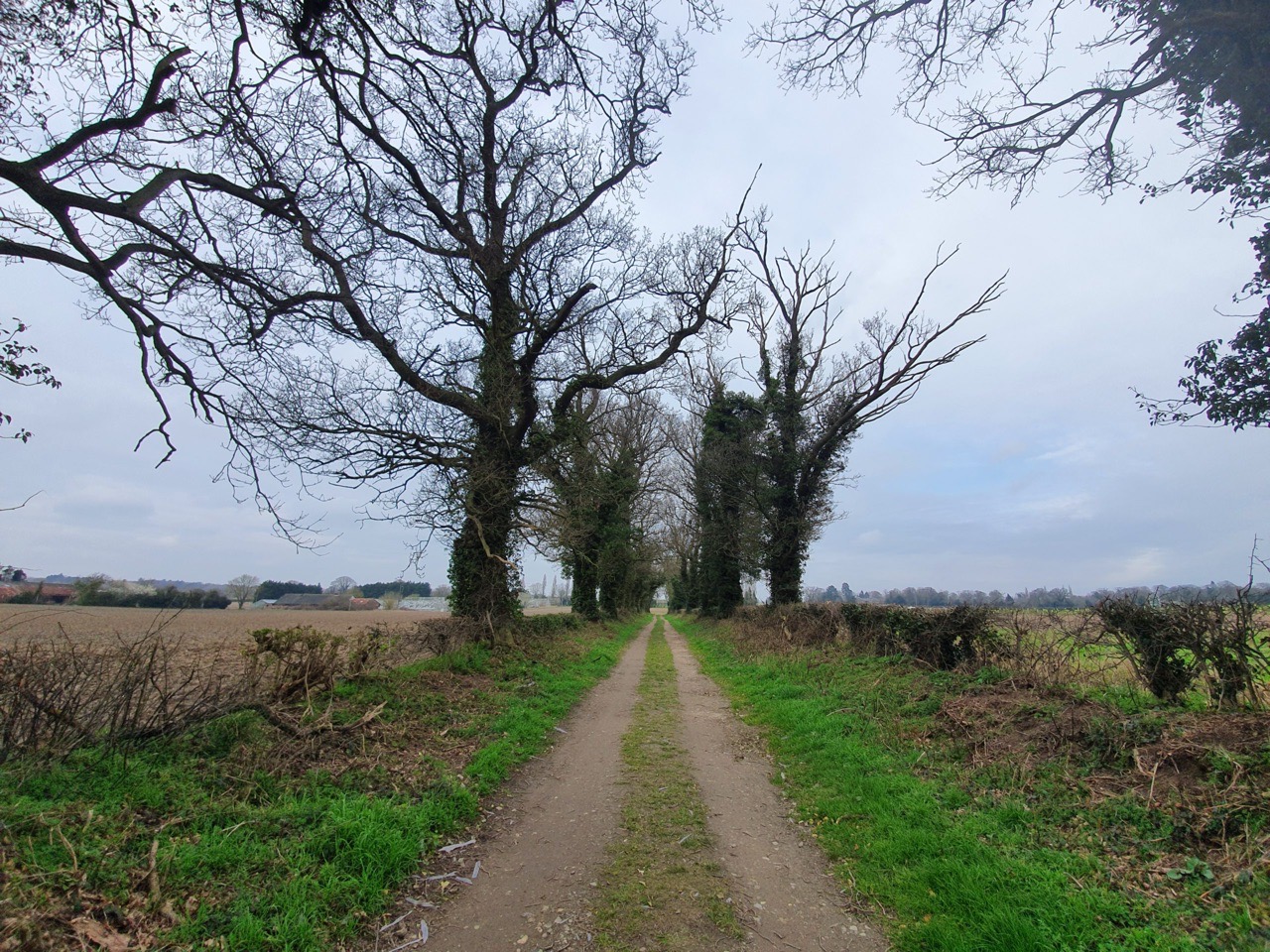
To be fair to the council, they had diverted pedestrians and cyclists down a track so that the delights and pleasures of the Plumsteads could still be reached.

I think it’s fair to say that these greenhouses are past their best.

Another closed off road.

At this point, here’s the lovely new way into Plumstead. It can be noted from the photo that the council didn’t bother putting a path up to the road (well, there is one, but it’s a faff) so people have made their own.

And here’s the lovely path that walkers have created for themselves. Councils forget walkers way too easily…..

Sad.

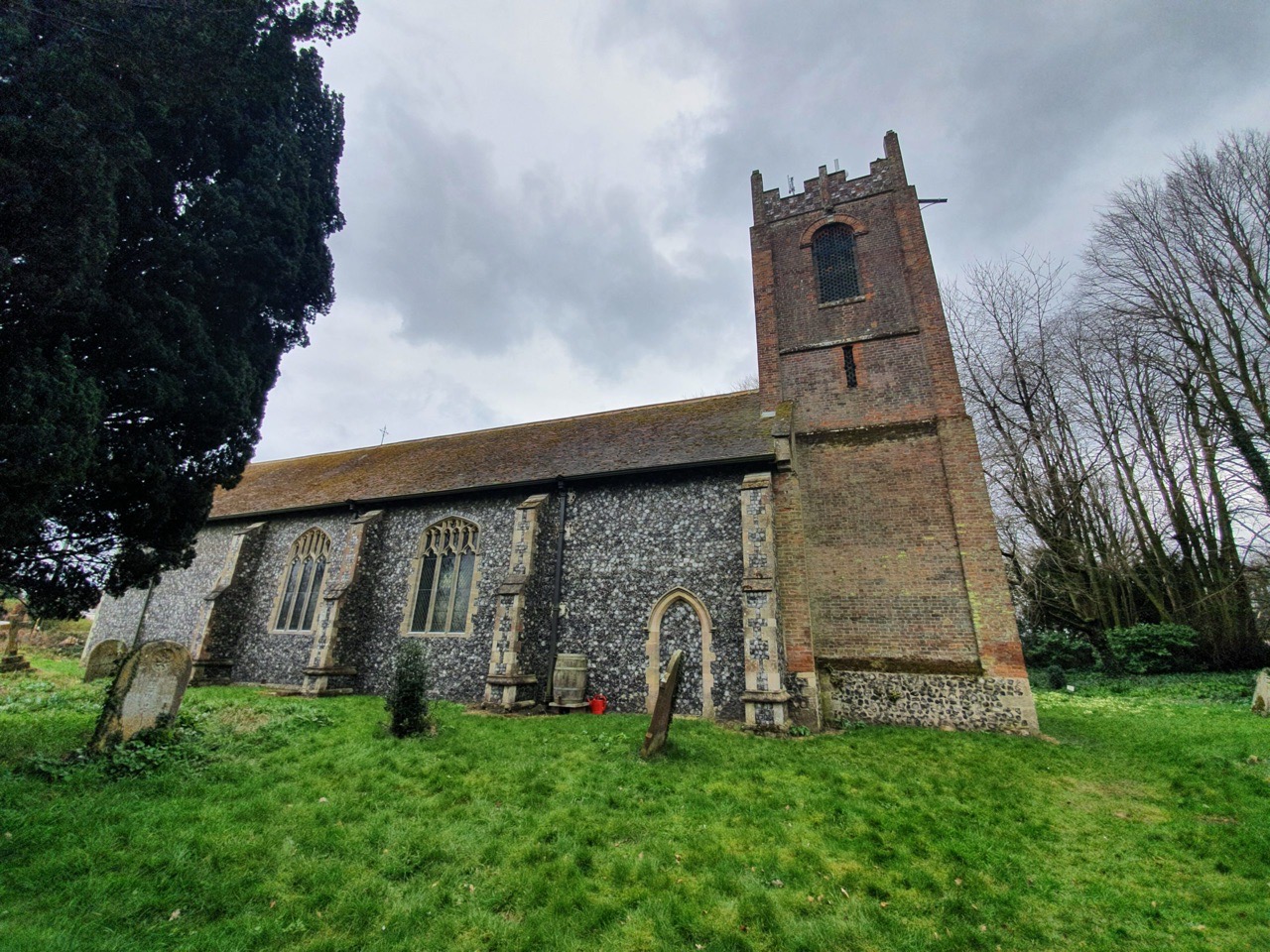
And, I arrived safely into Great Plumstead. I say that I arrived safely, but it’s not exactly inner city Los Angeles around these parts. There are two parishes here, Great Plumstead and Little Plumstead, also known in the past as Plumstead Magna and Plumstead Parva. There’s been human activity in the area since Neolithic times and it was a relatively substantial settlement by the time the Domesday Book was written in the late eleventh century.

I wrote up more about St. Mary’s Church in Great Plumstead separately. The village origins are what it suggests from its name, it means that it’s ‘the settlement by the plum trees’.

This is the lovely Walled Garden where I got a sausage roll and Fanta before sitting in a bus shelter to eat my lunch. It’s exactly not the stuff of Alan Whicker and Michael Palin, but I liked the Walled Garden and have already written about that.
There is a church in Little Plumstead, but there was a sign at the main entrance saying that it was dangerous to enter. I assume that there was some work going on rather than that being organised by some renegade and militant atheist group. I did try and pop into the churchyard via the back entrance, but I could see some men in hi-vis and so I didn’t want to be ordered out so I left. What was probably happening is that they were pinching the lead off the roof for all I know, but put a sign down and wear hi-vis, you can get away with nearly anything.

A dusty road…..

I haven’t yet worked out how this lane got its name.

This is the railway line between Norwich and Sheringham, with trees removed from the side of the embankment. I’m always slightly surprised when people are horrified by this, railways really aren’t the best place to have trees growing next to, nor was it usual in most areas to have allowed that to happen. Fallen trees on railway lines aren’t really ideal if I’m being honest.
And then the walk back into Norwich, including stopping at Aldi to reward my efforts with some jelly babies and beer. OK, so this isn’t the most exotic and interesting of walk reports, but it’s the best I’ve got at the moment given lockdown. Next week means I can get buses to other places in Norfolk, so I can ensure that the nation is riveted by my tales from Acle or similar….