In preparation for my next visit to Gdansk in a couple of weeks, I’m trying to refresh my memory of where I’ve actually been. Unfortunately, the photographs from my visit here four years ago aren’t exactly, well, very good, but they’ll have to do for the moment…..

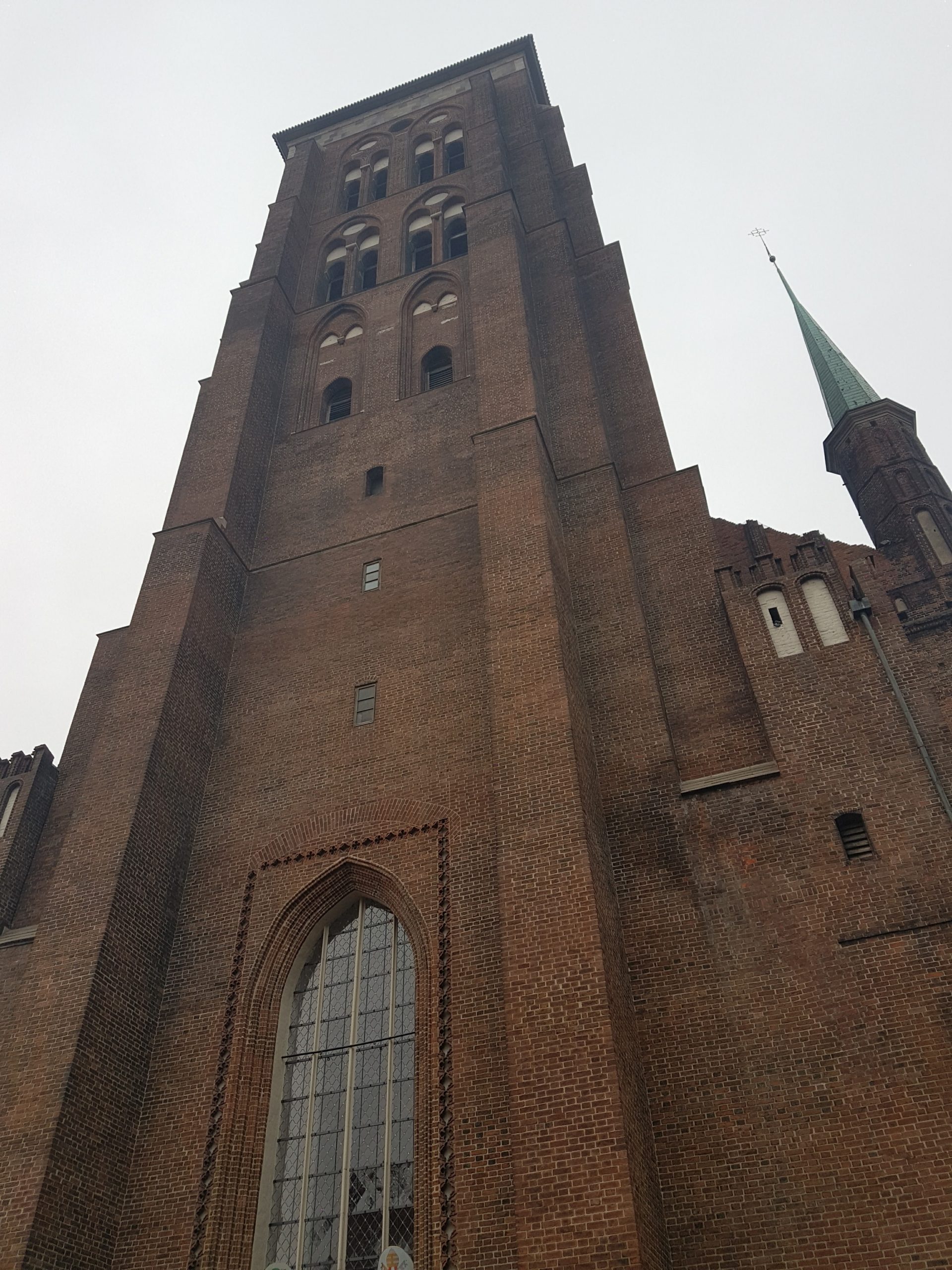
It’s a grand church and work commenced on it during the mid-fourteenth century. Constructed as a Catholic church, it was used between 1536 and 1572 for both Protestant and Catholic services, although that situation inevitably changed over the following centuries. The building survived relatively intact until March 1945, when the Soviets attacked it, although the church was swiftly reconstructed after the end of the Second World War. There’s also a story that the Soviets smashed tombstones in a bid to loot the bodies underneath, although I’m unsure as to the veracity of that. In 1965, the church was elevated to the status of a minor basilica and it remains the largest church in the city centre of Gdansk.


There are seven portals, or doors, to the church, which makes it exciting when trying to work out how to get in.

The interior, which is modern due to the reconstruction necessary after the Second World War. It’s a little plain inside, but the height of the nave adds to the atmosphere and it’s possible to climb the tower. The tower climb was closed when I visited before, although having seen photos of the stairs I think I’m glad that I didn’t try and get to the top.
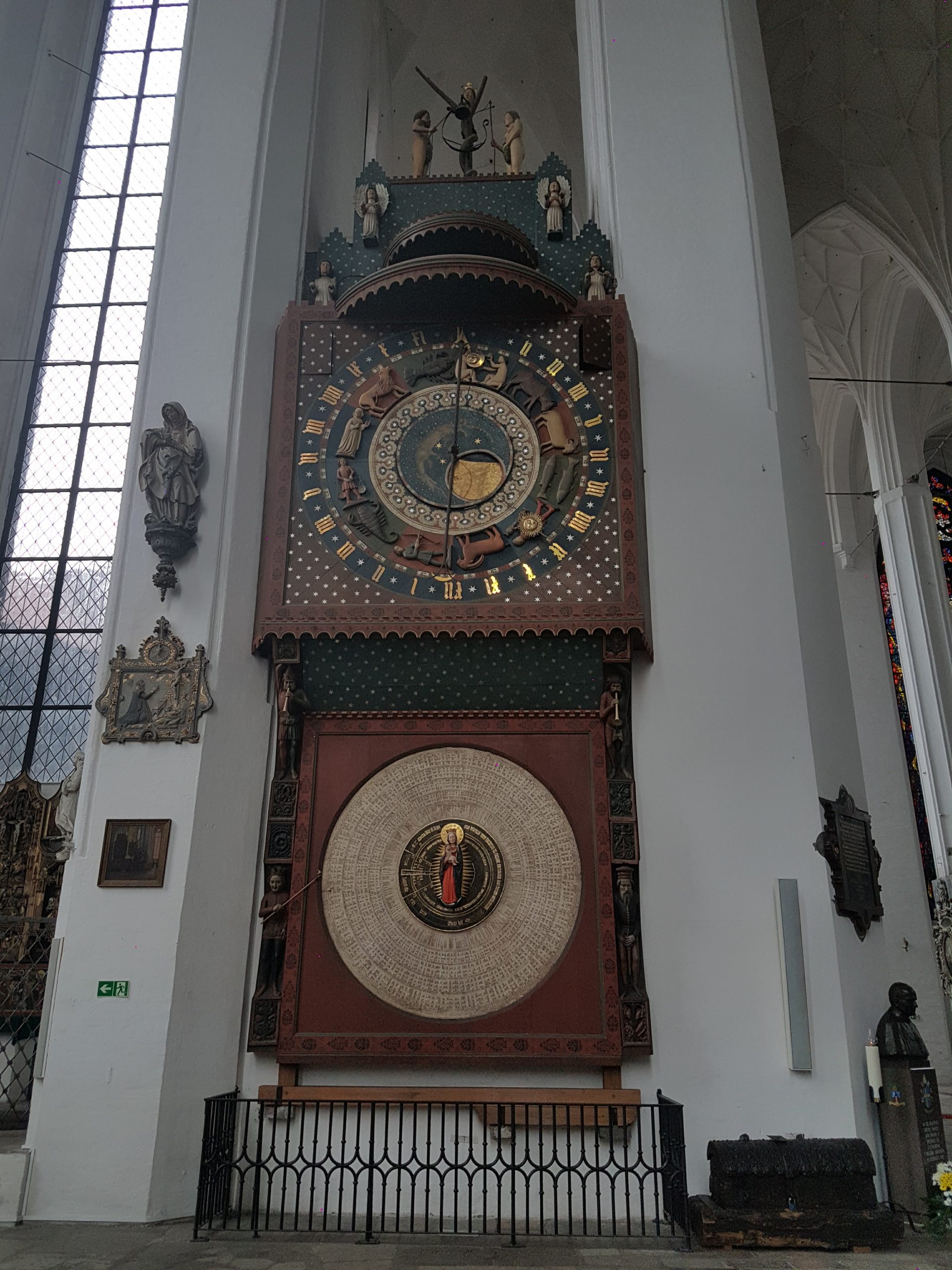
The beautiful astronomical clock is also still in the church, a fifteenth century wooden clock which was the largest in the world when it was installed.

Another highlight of the building is the Maria Coronation Altar, an enormous five metre high altar from the early sixteenth century. It’s located in the presbytery and it weights three tonnes, dominating the space in which it’s housed.
An impressive building and it’s one of the largest brick churches in the world. The reviews are very positive on-line, other than for the:
“The churchbells rings all day AND all night. We lived nearby and the bells woke us up several times every night.”
How inconsiderate of the church, they should perhaps stop ringing bells which they have done for centuries…. And, this one:
“I appreciate the church is currently undergoing a renovation but I thought the interior was bland and was a bit of a dump.”
A bit of a dump…. A building with that much heritage, but perhaps they could install something to amuse visitors, such as strobe lighting or maybe some arcade machines if that would help some visitors. I do sometimes suspect that people forget that many old churches are primarily religious buildings used by the congregation rather than historic relics which should cater for the whims of tourists.