Tag: Funchal

  • Funchal – Sacred Art Museum of Funchal (Saint Benedict)

    Funchal – Sacred Art Museum of Funchal (Saint Benedict)

    20251209_101941

    There’s a lot to be said for paintings where the gallery isn’t actually sure who is in the image, that ensures that there’s room for some debate. The gallery knows it’s from Funchal Cathedral, they think it’s from Portugal, they think it’s fifteenth century and they think it might be St. Benedict.

    20251209_101947

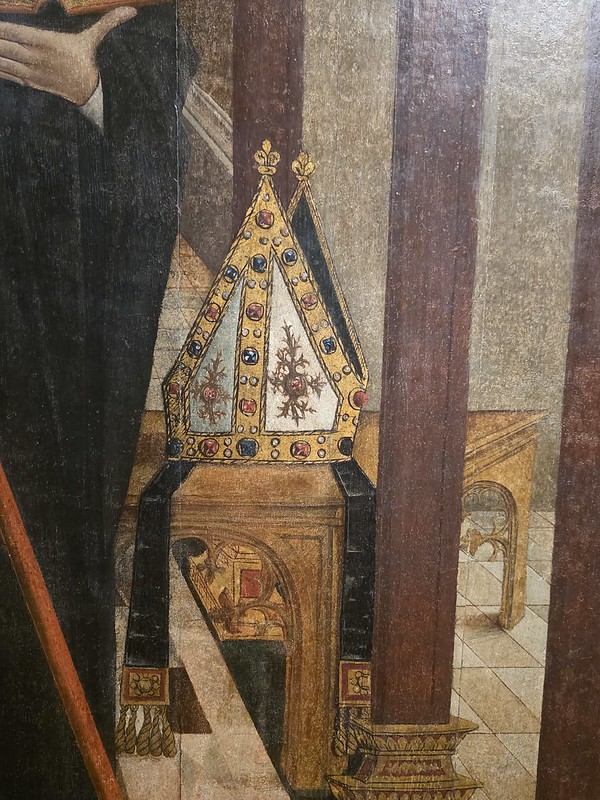
    A close-up of the mitre and ChatGPT agrees, noting:

    “This is almost certainly St Benedict of Nursia. The clues are the black monastic habit (Benedictines are traditionally shown in black), the open book (his Rule, or monastic learning more generally) and the abbot’s crozier (the staff, marking him out as an abbot or founder figure rather than just “generic monk”). The very calm, frontal pose in a grand architectural setting is also a common way Renaissance and late medieval painters present major founders and reformers: not mid miracle, more “here is the authority figure, in his element”.”

    Incidentally, Benedict is known for his guidelines on how to be a decent monk, and I rather like the:

    “Chapter 30 directs that a wayward brother who has left the monastery must be received again, if he promises to make amends; but if he leaves again, and again, after his third departure all return is finally barred”

    Even Christians have their limit of tolerance it seems.

    Going back to AI, which I know is now a running theme on this blog, but I asked it about the age of the painting and it noted:

    “Visually, it’s very much in that early Renaissance habit of showing a saint as a solid, frontal presence in a carefully constructed architectural space. The big tell is the perspective: the receding arcade, the coffered or ribbed vaulting and the tiled floor are all doing that 15th-century “look, I can do depth properly” thing. The gilded decorative bits around the arches feel like a hangover from late medieval taste, which is also common in the earlier part of the Renaissance rather than the later, more fully naturalistic 16th century. I would put it plausibly at say 1480 to 1510.”

    That’s entirely in keeping with what the gallery thinks and I rather like the way in which this logic on dating is being explained. Work on Funchal Cathedral was coming to an end in 1508, so my best guess (helped by AI) is that they acquired this for when it opened.
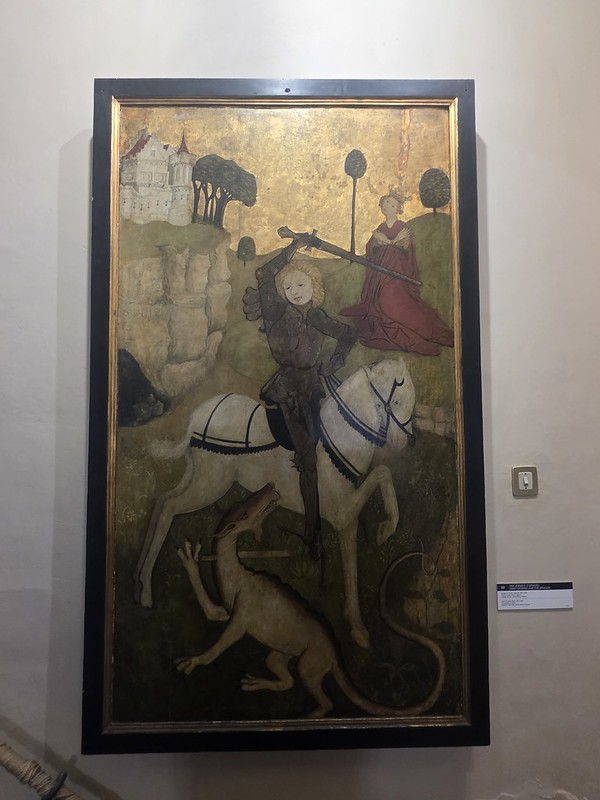
  • Funchal – Sacred Art Museum of Funchal (George and the Dragon)

    Funchal – Sacred Art Museum of Funchal (George and the Dragon)

    This is a painting of George and the Dragon and the museum doesn’t know the artist, although it suggests that it was painted between 1401 and 1425 in northern Europe. That gold background, likely using gold leaf, was used to indicate heaven, so this is a sacred story and not a bit of Norfolk everyday weather.

    Despite it showing claws and teeth, I’m not entirely sure that the dragon was perhaps as scary looking as it could have been, nor, I think it’s fair to say, is the artist exactly George Stubbs with that horse painting. But, it’s got that rather positive imagery of the brave St. George saving the princess from the nasty serpent, I can imagine this quite sizeable artwork being displayed in a medieval church.

  • Funchal – Sacred Art Museum of Funchal (Sculpture of Saint Blaise)

    Funchal – Sacred Art Museum of Funchal (Sculpture of Saint Blaise)

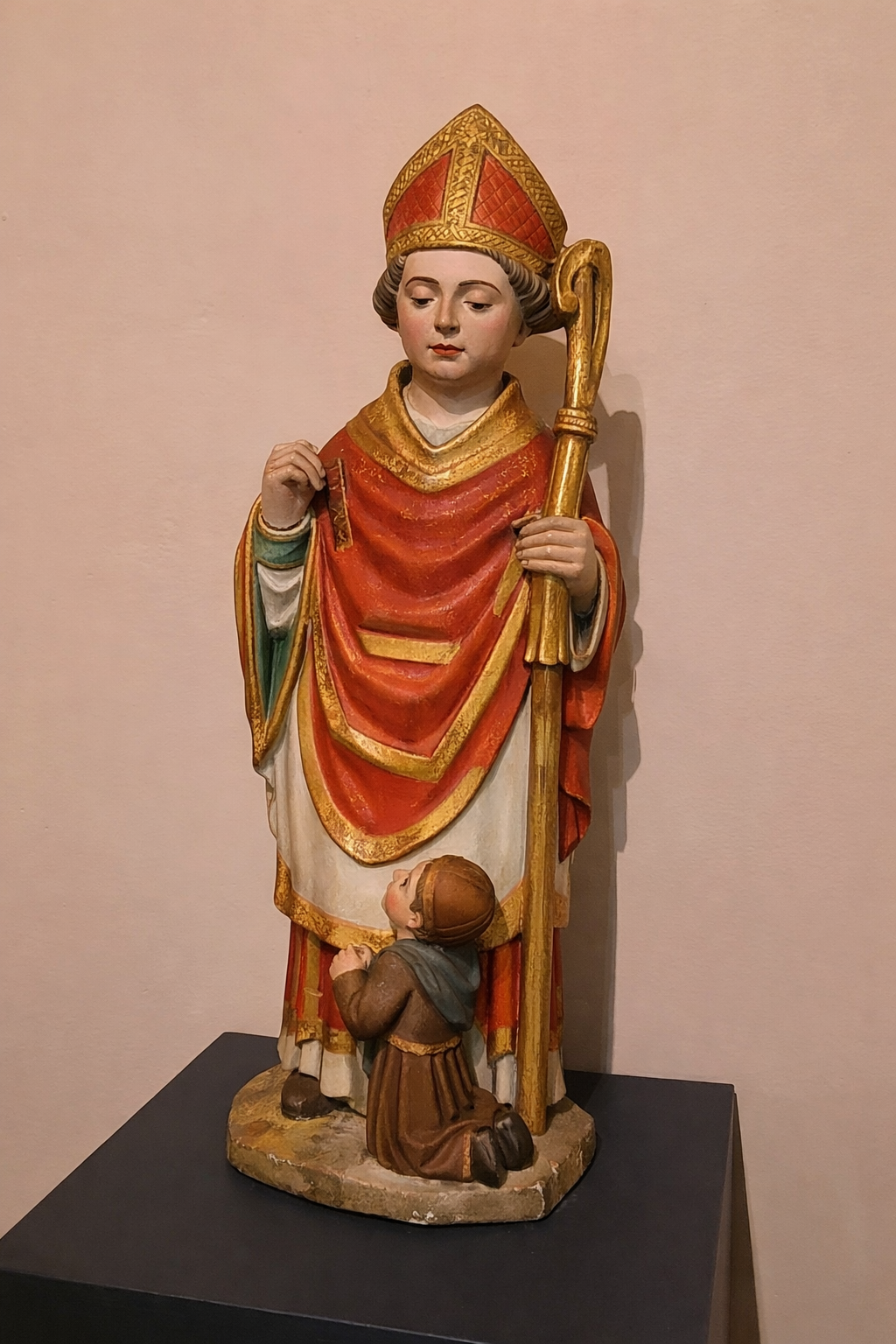
    This is a limestone sculpture from the period 1490 to 1510, once in the church in Gaula, Santa Cruz which is on the island of Madeira. It depicts Saint Blaise who became famous because he saved a child who had a fish-bone stuck in their throat, apparently by praying enthusiastically. He was then known as someone quite good at dealing with toothache, throat issues and general health issues relating to the head. He’s the patron saint of Dubrovnik and the English town of St. Blazey is named after him.

    Emperor Licinius, who was meant to be quite helpful towards Christians initially, didn’t entirely like Saint Blaise, so he had him beheaded. That feels slightly unreasonable, but I suppose they were different times.

    But, back to the limestone sculpture that I liked. There are some polychrome traces, so this was once painted rather than being bare limestone. The church in Santa Cruz opened in 1530, although it was later replaced with a more substantial affair. I assume that this was once located in a niche in the church, but I’m not sure how it made its way to the museum.

    And I’ve gone to AI to show me what this sculpture might once have looked like when painted. This seems like a remarkably decent attempt at recolouring the sculpture, it genuinely feels like it has been brought back to life.

  • Funchal – Sacred Art Museum of Funchal (Balcony and Tiled Panel)

    Funchal – Sacred Art Museum of Funchal (Balcony and Tiled Panel)

    20251209_111144

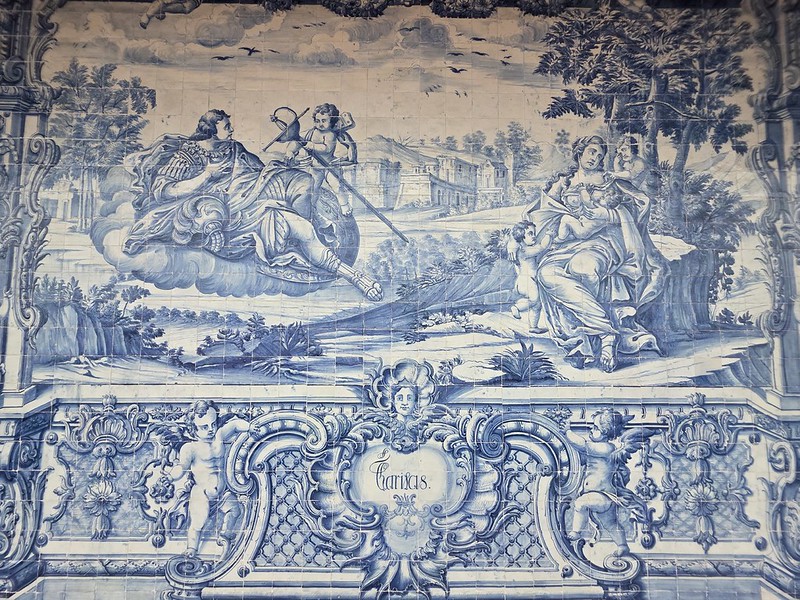
    The next series of posts will be from the Sacred Art Museum in Funchal, which holds extensive collections relating to religious art. It’s housed in the former Bishop’s Palace, which is a suitably grand affair, and which has this rather impressive tiled installation on the upstairs balcony.

    20251209_111122

    There are three panels which are titled ‘Faith, Hope and Charity’.

    20251209_111105

    It’s decoratively beautiful.

    20251209_111930

    It also offered views over Funchal and there is one of the cruise liners that flock to the city in the background. The weather was terrible and this was about the best visibility I had seen during the morning.

    20251209_111137

    The city and Funchal Cathedral.

    20251209_111133

    I’m sure that the sea would look beautiful if it was visible.

    20251209_110948

    And another photo of over foggy Funchal.

  • Funchal – The Snug Smoke House

    Funchal – The Snug Smoke House

    20251209_124302

    It might not look like it from the photo, but there was torrential rain in Funchal when I was there and so I decided to head into a restaurant for lunch. This smoked meat restaurant was well reviewed online and had some craft beer so that’s the one that I opted for.

    20251209_115426

    The decor was modern and comfortable, but as I was the only diner in the restaurant I decided to sit in one of the more decadent booths. I remained the only person in the venue until just before leaving, so I’m not sure that this was one of the more profitable lunch-time services that they’ve offered.

    20251209_115022

    The restaurant had a beer fridge so I went to investigate that and this is the Vila Maria from Oitava Colina. It’s a blonde beer from this Lisbon based brewery, the beer was soft, gentle and inoffensive.

    20251209_120504

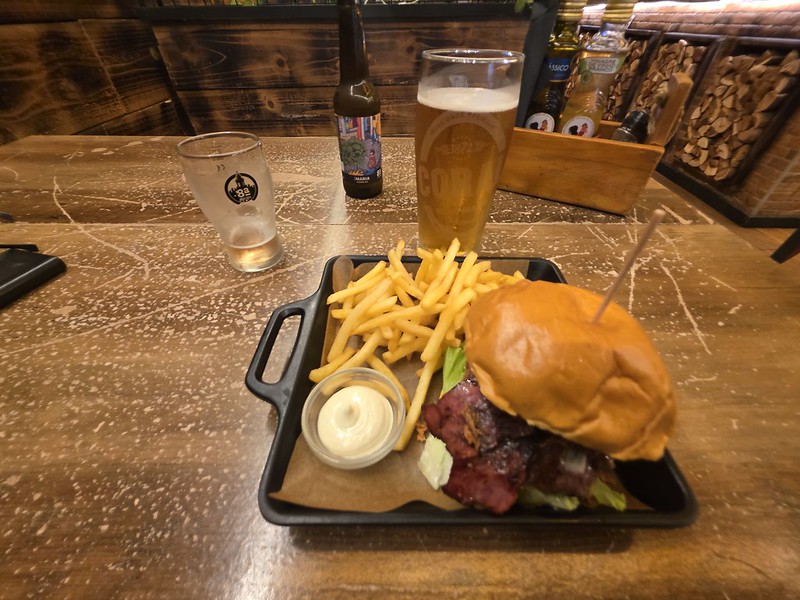
    I went for the blue cheese burger with bacon and this surprised and delighted me. The burger was tender, the bacon had a richness of taste and the gherkin added some texture. The chips were suitably salty and the blue cheese on the burger added some punch to the whole arrangement.

    I went for some of the local lager on draft, this is the Coral, and it had some slight sweetness although was ultimately a bit generic and unexciting. I do like trying at least one local beer and Coral was the only one that I could find.

    I really rather liked this venue and the atmosphere was comfortable even though it wasn’t exactly packed with customers. The service was friendly and the food and drink all met my expectations.