Tag: Fitzwilliam Museum

  • Cambridge – Fitzwilliam Museum (William Glendonwyn by Sir Henry Raeburn)

    Cambridge – Fitzwilliam Museum (William Glendonwyn by Sir Henry Raeburn)

    The reason I pondered this painting is that I’m not sure that by today’s standards that Sir Henry Raeburn (1756-1823) has portrayed Glendonwyn well. There’s not much to be readily found out about Raeburn’s subject, other than Glendonwyn was a wealthy Scot and his surname is linked to the Glendinning family.

    The notes by the painting mention that the light falling on his forehead is deliberate, it’s meant to show that the subject has intelligence. I’m not sure that this effect still holds, although this was painted in the 1790s and things were just a little different then and now he looks more aloof. Raeburn, who became the official portrait painter in Scotland to King George IV, painted over 1,000 artworks during his career and he rarely used preliminary sketches.

    The painting came up for sale at Christie’s on 22 February 1890 and was then in turn acquired privately by the Fitzwilliam Museum in 1892. At the same auction in 1890 the accompanying portrait to this, that of Glendonwyn’s wife, was sold, but the whereabouts of that are unknown.
  • Cambridge – Fitzwilliam Museum (After the Wedding by Laurence Stephen Lowry)

    Cambridge – Fitzwilliam Museum (After the Wedding by Laurence Stephen Lowry)

    This artwork was painted by LS Lowry (1887-1976) in 1939 and as the name suggests, it’s themed around the wedding that is taking place. Well, and the Corner House pub. Lowry had started to paint these matchstick men in the early 1920s and they became the imagery that is mostly now seen to define his career. I’ve been meaning to visit the Lowry Gallery in Salford, but have never quite got round to it.

    I can’t add much to this as the Fitzwilliam’s image database is down for security issues, so all I know is that it was given to the gallery by Mrs FJ Collard in 2002. I don’t know whether the Corner House pub actually exists, or whether it was a figment of Lowry’s imagination. I like that, despite the overall theme, the top half of the artwork is all about pollution and industry, the wedding isn’t given automatic prominence here. And, indeed, even the wedding party aren’t seen as the main central characters, everyone seems to have a purpose here and is no more important than anyone else.

  • Cambridge – Fitzwilliam Museum (A Village Festival by Pieter Brueghel the Younger)

    Cambridge – Fitzwilliam Museum (A Village Festival by Pieter Brueghel the Younger)

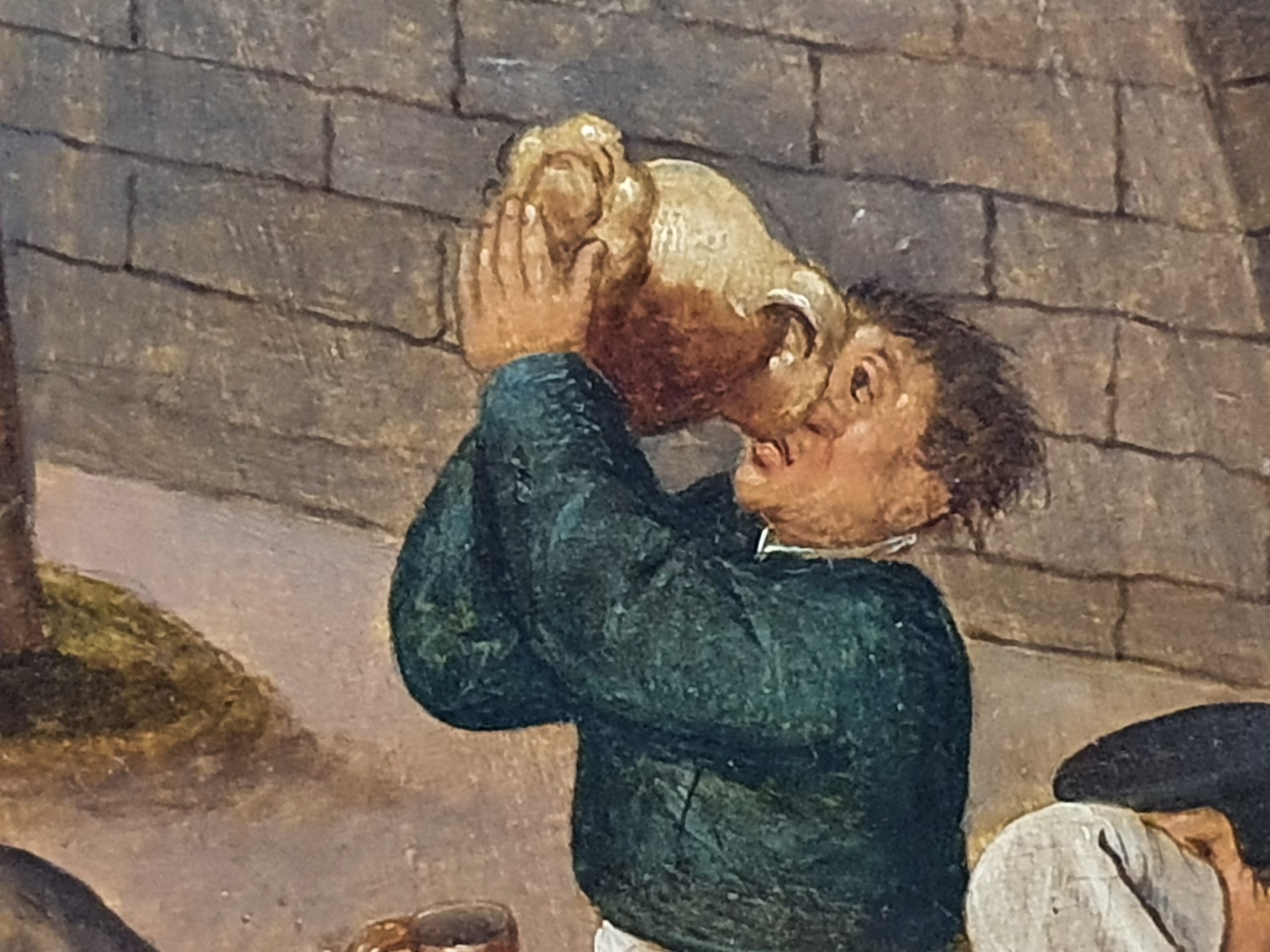
    This painting by Pieter Brueghel the Younger (1564-1638) is my favourite in the Fitzwilliam Museum, with its full title being “a village festival with a theatrical performance and a procession in honour of St. Hubert and St. Anthony”. It was painted in 1632 and came into the collections of the Fitzwilliam in 1927 when it was donated by the first Viscount Rothermere. Actually, that’s an awkward thing for the museum, as the politics of Rothermere are controversial to say the least, but there’s not much that can perhaps be done by the museum about that now.

    My photo of the painting isn’t great, but there’s so much going on that it’s like some epic by William Hogarth. It looks like a night out in the city centres of today, but then again, that’s often what fairs were like and the authorities were frequently appalled at what people got up to at them.

  • Cambridge – Fitzwilliam Museum

    Cambridge – Fitzwilliam Museum

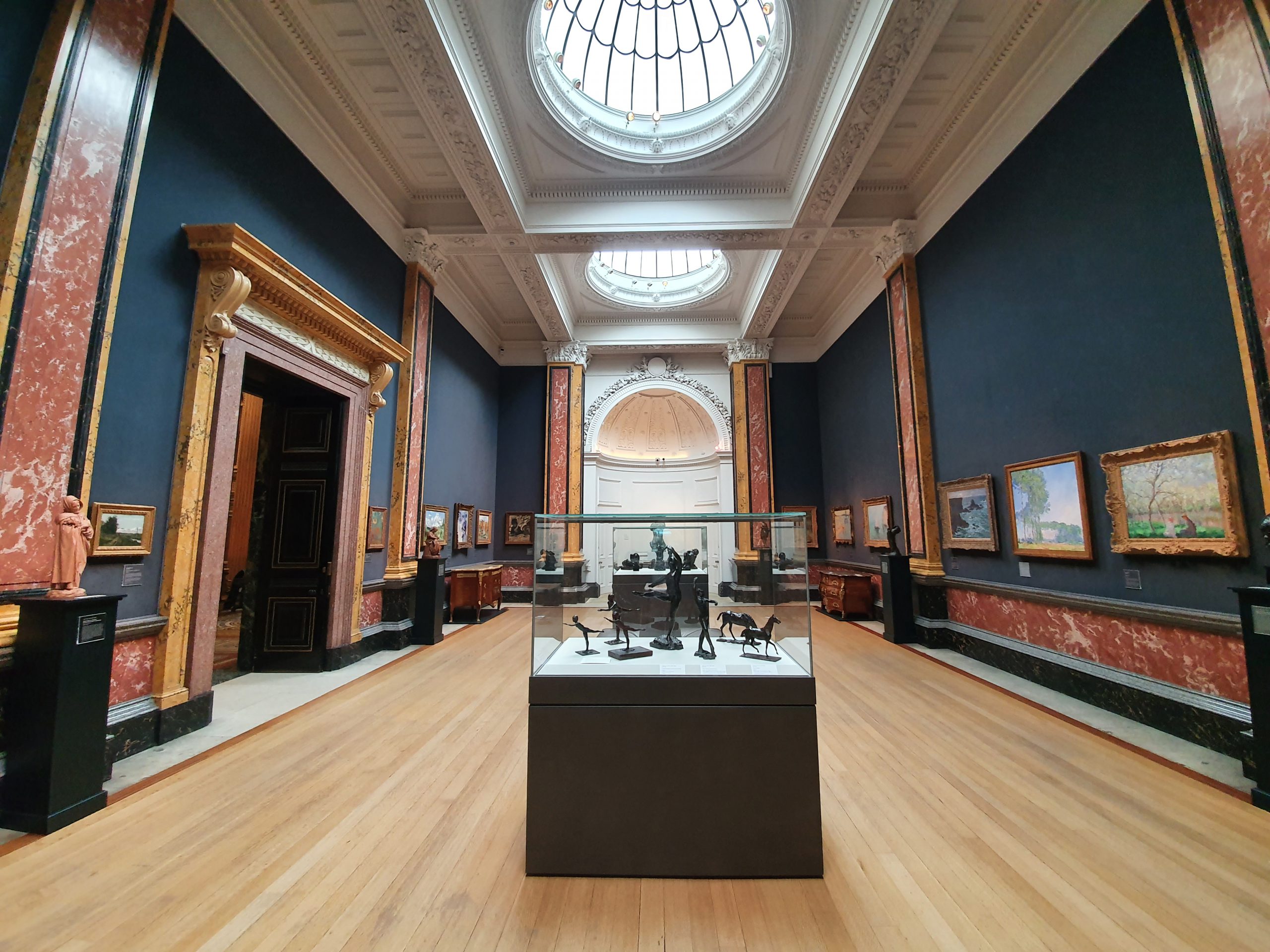
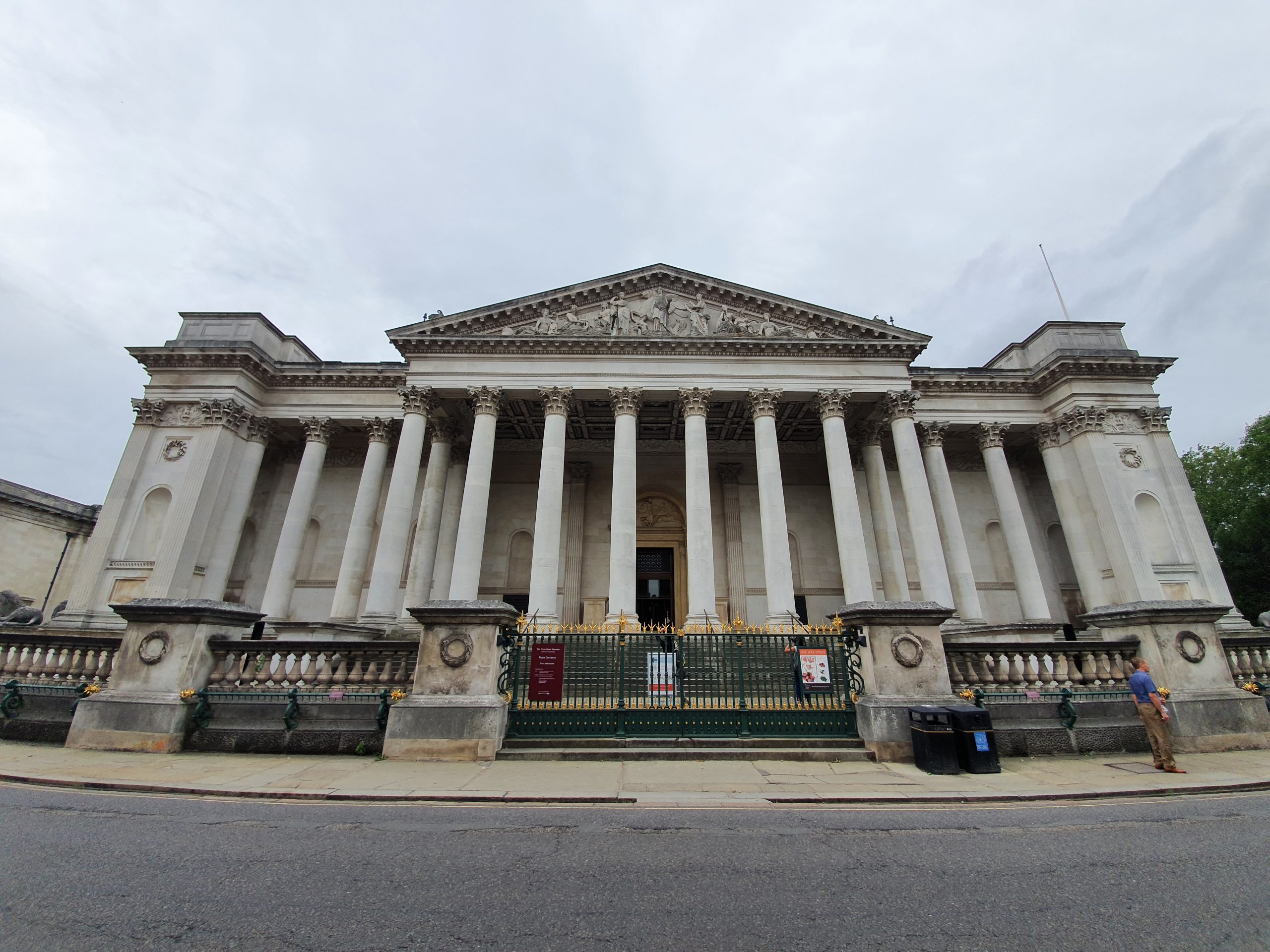
    I’ll write about some individual items in the collection that I think are interesting in separate posts (everyone should contain their excitement….) but it’s fair to say that the Fitzwilliam Museum in Cambridge was as quiet this morning as I’ve ever seen it before.

    I had a ticket, which are free of charge, to get in at 10:00 and the staff here are really very friendly and most welcoming. Some visitors were turned away as they didn’t have tickets and the museum clearly wanted to be very much in control of the numbers. I noted that backpacks had to be carried by hand, which would have been fine, but the most helpful lady near to the entrance was more than happy for me to use their free lockers and that made things much easier.

    I spent a couple of hours in the museum and, certainly, for the first hour, there were more staff members than there were visitors. Everything was spotlessly clean and it’s clear that great efforts have been made to try to work out the visitor flow. It’s not always obvious, but it mostly is, with the entrance being shifted to the courtyard rather than the standard main entrance area.

    Anyway, some photos of how the museum looked……