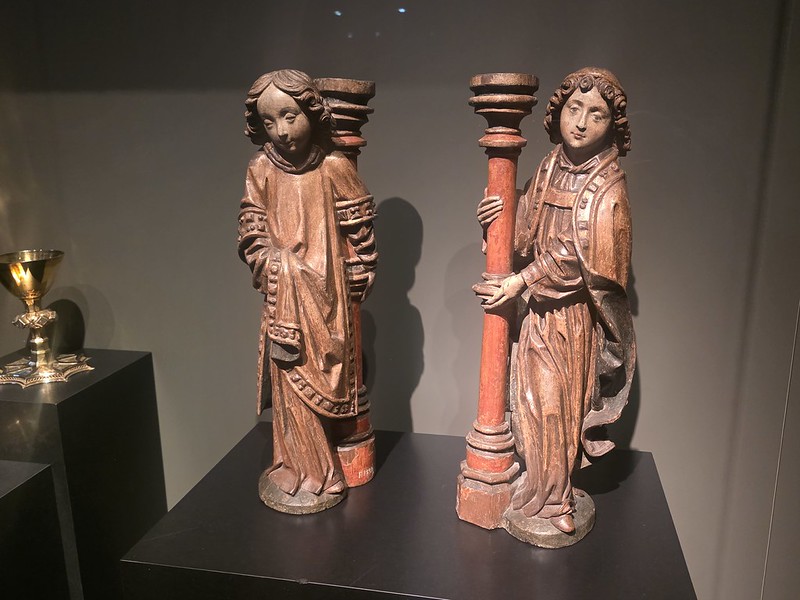
These are two angels and their columns would have been used to place candles on. Apparently angels tended to be placed in pairs from medieval times, but I suppose that they don’t much want to be lonely. They date to around 1500 and were made in the Rhineland region, perhaps in Cologne itself.
The original location of the angels is lost to history, but they would have likely stood either side of an altar. They’re called Leuchterengels in German, the Leuchter means candle and is the same word origin as ‘light’ in English.
I think they’re well decorated without being overstated, it’s just a shame that the heritage of where they were once housed has now been lost.
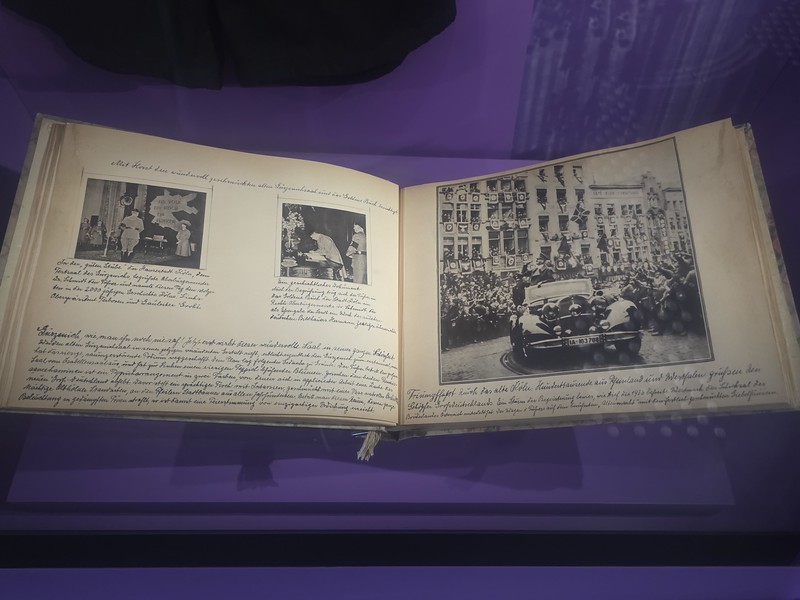
This is a family photo album from the 1930s and the museum uses it as an example of how people were manipulated by the Nazi regime. The text here talks about “the creator of Greater Germany” and the photo is of a “triumphal drive through old Cologne”. I don’t know if the creator of the album survived the Second World War, but I wonder whether they thought it was all such a good idea with millions dead, German’s size reduced by 25% and Cologne left in ruins.
This particular visit appears to be from when Hitler visited Cologne on 30 March 1938. He toured the city in his car and then gave a speech to 60,000 people at the Cologne Exhibition Hall. The museum doesn’t give more information about the album but it appears to be on loan from the city’s NS-Documentation Centre.
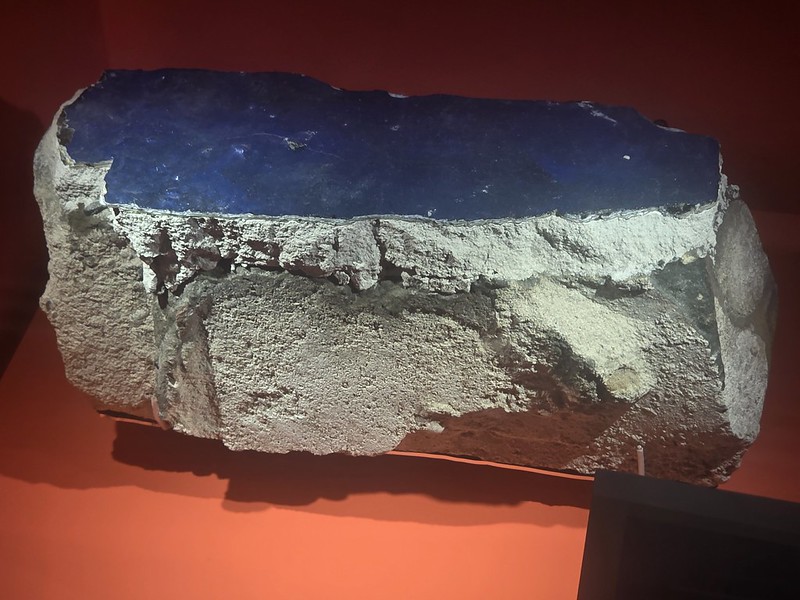
This is a quirky little exhibit in the Kölnisches Stadtmuseum which is effectively just a bit of the frontage of the former Underground club in Cologne. I mentioned that it was a brick in the title of this post, although it feels more of a clump. The museum notes that the Ehrenfeld district used to be an industrial area which wasn’t particularly well-off, although looking at Streetview images, it seems to have been gentrified a fair bit now.
Underground opened in 1988 and became an important part of the local rock scene, with the graffiti on the front changing regularly. As I doubt they had a focus on craft beer I can’t imagine I would have ever gone there, but I like things that are a bit edgy and on-trend.
The building was demolished in 2017 and the site is now used for a school. But it’s rather nice to know that one little clump of that frontage is safely placed in the museum as a memory of the whole arrangement.
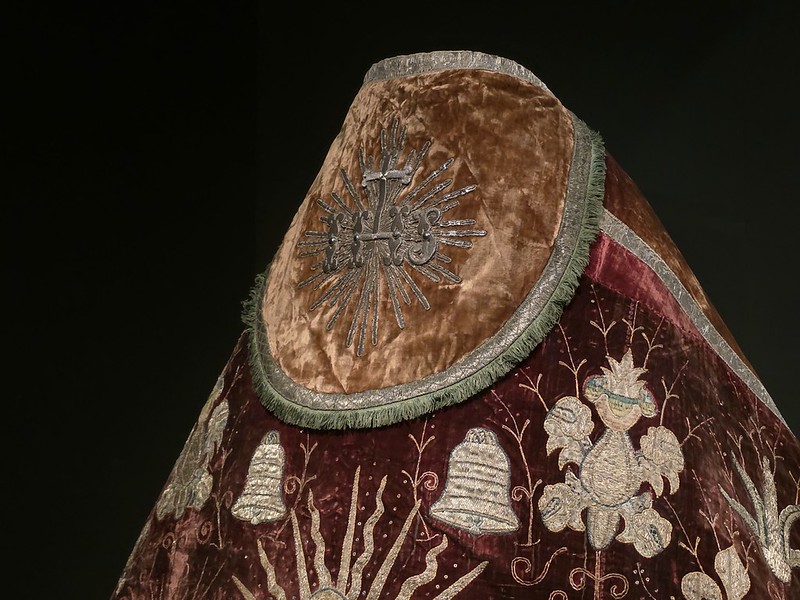
I’m not usually much interested in vestments, in the same way as weapons, ceramics and silverware never really attract my attention in museums. But this one had an interesting story, and I can’t resist something with a bit of an intriguing history.
The cope, which is namely a ceremonial cloak, was made in England in the early sixteenth century. It was designed to be made for export and it’s quite a glamorous little effort which was initially destined for the Carthusian order near Grenoble. And it would have stayed there if it wasn’t for the Napoleonic troops that were storming across France closing down monasteries and seizing their possessions.
The last prior of the monastery in Grenoble evidently wasn’t entirely convinced about this end of Catholicism so he fled and took this cloak with him. His destination was Dorsten in Westphalia and the cope remained at St. Agatha’s Church in the town until 1910, when it was acquired by the museum. I can sort of imagine this being packed up by an angry French prior who was probably very happy where he was without all this moving hassle.
I quite like that this is an English cope, designed to be used in a French monastery but which ended up in a German church for various political reasons. And the museum seems very proud of this exhibit which depicts the Virgin Mary in the centre surrounded by the trappings of angels and bells. Very decadent.
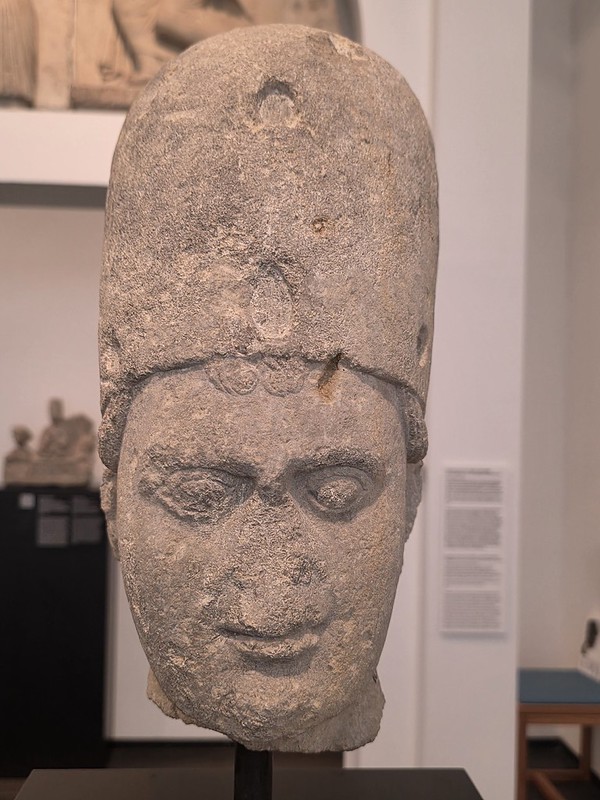
This is appropriate for a British visitor to the museum, it’s likely the head of St. George, the brave knight who fought a dragon that he found somewhere. The stone is actually Roman, but as recycling was quite big in the medieval period, it was repurposed in around 1200 to be used at the Church of St. George in Cologne.
The head fragment was found at the church in 1928 when a major renovation and restoration was taking place and it was likely part of a larger statue. Unfortunately the church was nearly destroyed during the Second World War, but it has now been rebuilt.
The head was once painted and I’ve had AI produce what it thinks it might have looked like. Although I don’t suppose that it did actually look like this, it seems an interesting recreation at least.
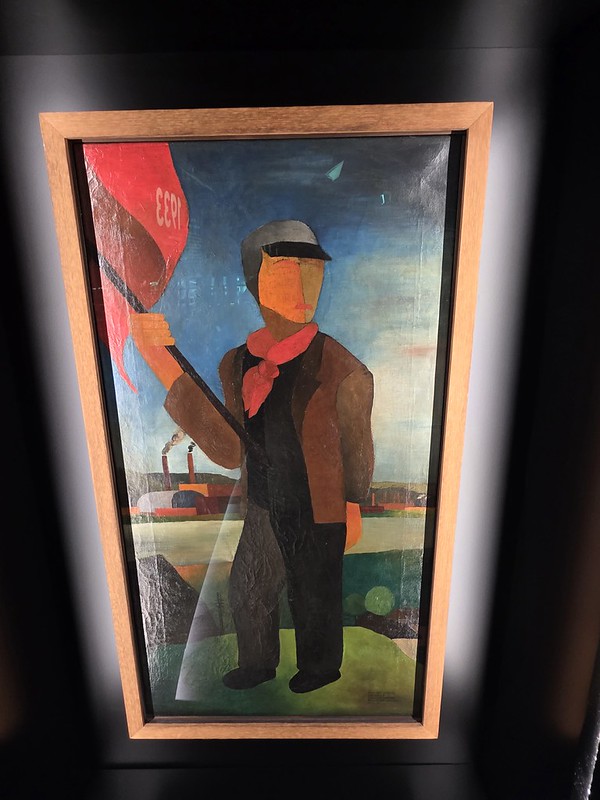
This artwork is by Franz Wilhelm Seiwert (1894-1933) who was a member of the Cologne Progressives who hated Hitler. He fled to the German mountains after Hitler took charge, but was brought back to the city by friends due to illness and Seiwert died on 3 July 1933.
The Cologne Progressives were artists and they were political, focusing on the rights of the workers. This artwork was painted by Seiwert in 1927 and the museum is using it to represent the entire movement which also included artists such as Gerd Arntz (1900-1988) and Heinrich Hoerle (1895-1936).
The works of this group were defined as “degenerate art” by the Nazis and promptly removed from museums and generally banned. Nearly all of Seiwert’s works in Cologne museums were destroyed, so it’s perhaps fortunate that this particular painting has survived at all.
On the theme of challenging things for German history museums to tackle, this is a tefillin capsule as used by the Jewish community in prayer. It was likely made in the eighteenth century, but this isn’t really why the exhibit is important in this museum, it’s more what it represents.
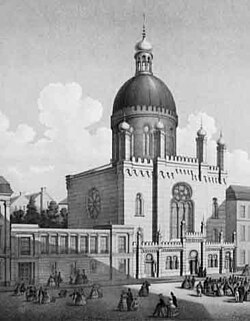
On the 9 to 10 November 1938, Kristallnacht took place where Jewish businesses and homes were damaged and often destroyed. Synagogues were burnt to the ground and many Jews were physically attacked, with many killed and arrested. This exhibit was found in the wreckage of Glockengasse synagogue which was destroyed on that evening of terror. It had been built between 1857 and 1861 and was a beautiful building internally, one of numerous synagogues used by the Jewish community in Cologne.
Today, the city’s opera house has been built on the site of the former synagogue, although there is a plaque there to commemorate what was once here.
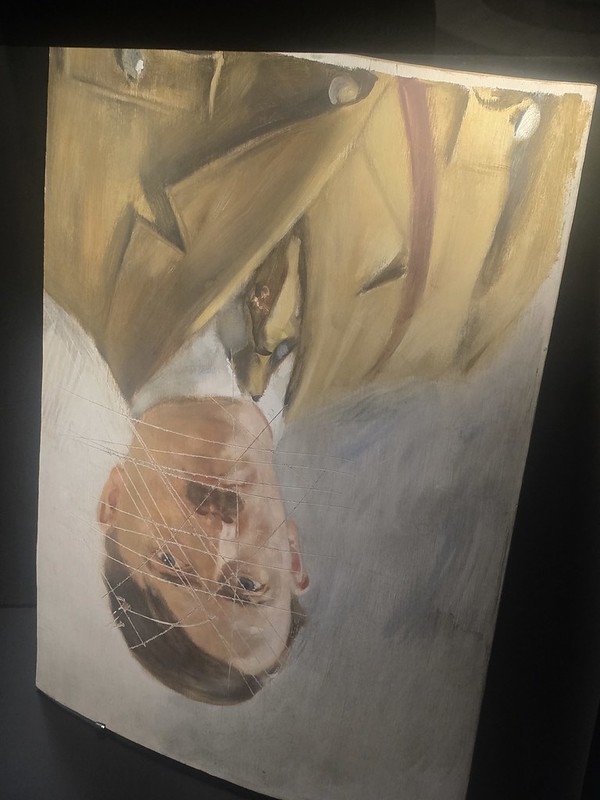
German history museums do have a problem in how to tell the story of Hitler and his rise to power, along with the damage that was done to the country. It’s not possible to just airbrush him out of history, but they don’t really want displays that become shrines.
This is a very clever way of dealing with the problem, they’ve displayed the picture upside down. It was painted by Karl Rickelt (1857-1944) who moved to Cologne in 1936 and who was Hitler’s portrait painter. It is thought that the scratches to this artwork, which was a preparatory piece for a larger image at the city hall, were made by Rickelt’s wife.
In total he painted 29 artworks of the Fuhrer, more than any other individual. His own politics aren’t entirely clear, although it’s clear that he had sympathy for Hitler as a person. For his wife, who outlived him, she was left to deal with the reputation of what her husband had done in glorifying the German leader, so it’s no surprise perhaps that she vandalised this painting.
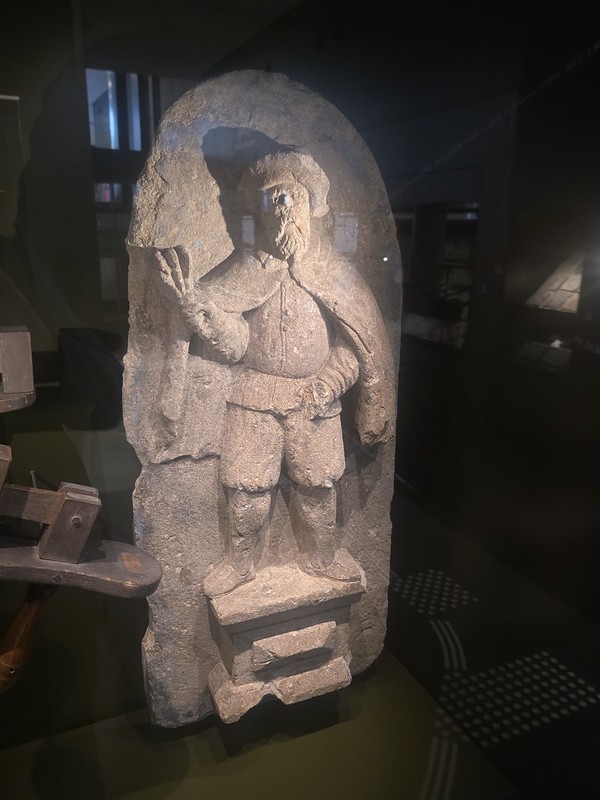
Melaten is Cologne’s great cemetery, but before it became a nineteenth century burial ground, the area was associated from the twelfth century with a medieval leper hospital and the communities pushed to the edge of urban life. This relief from around 1629 is a small but rather direct reminder of that older rather hidden history, as lepers were not at all welcome in the city centre. As is visible in the relief, any lepers who were potentially getting close to others were expected to shake a rattle to alert everyone as to their presence. Seems rather less than ideal for those with leprosy, especially as it isn’t actually that contagious.
Leprosy was not just a slightly sub-optimal medical condition in the medieval imagination, but a moral and communal category as well, wrapped up in ideas of sin, contagion and charity to try to mitigate the guilt. It’s something of a reminder that although the inhabitants of the leper hospital were to be helped and prayed for, they were also going to be shut away.
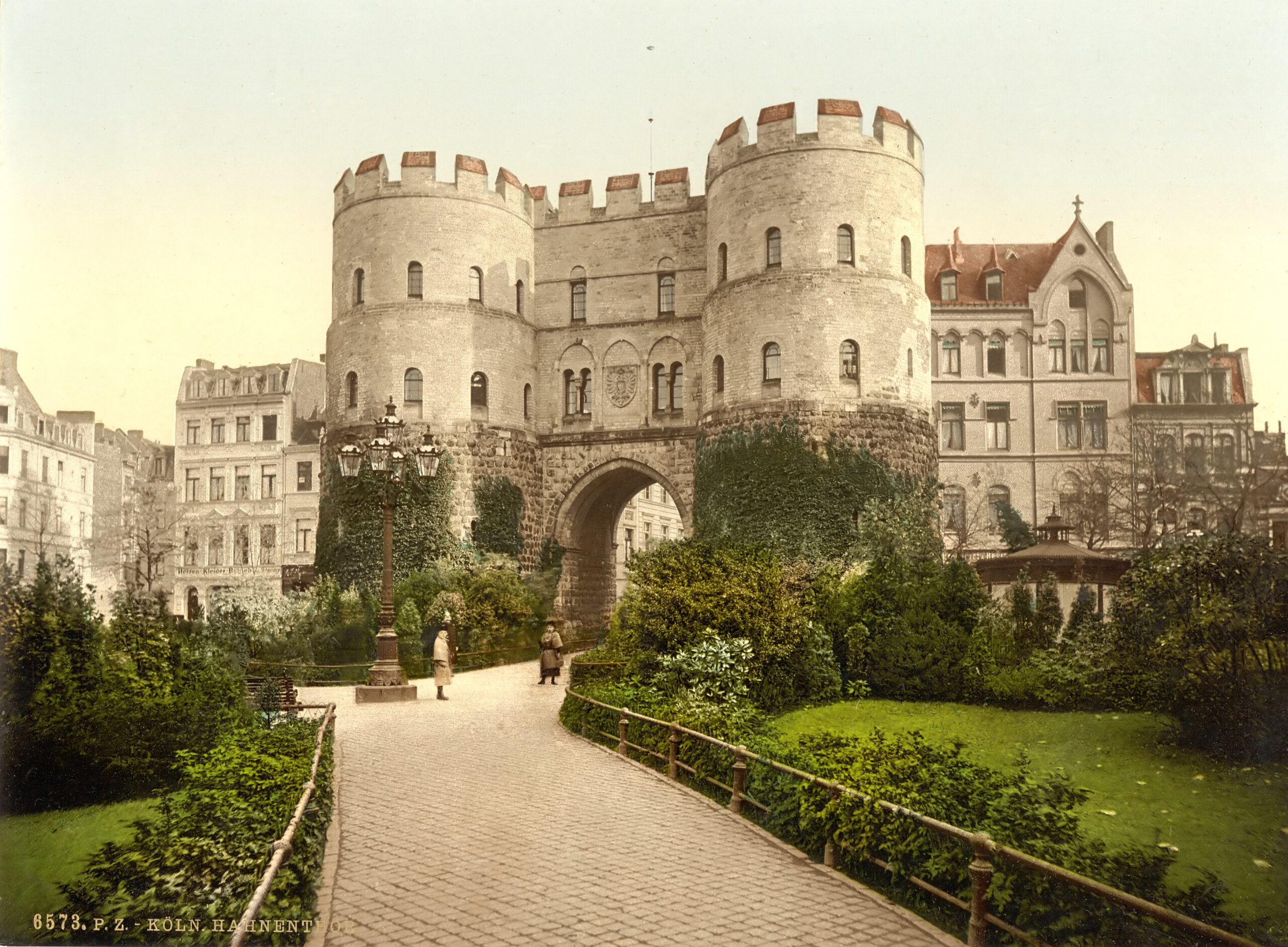
The Hahnentorburg is one of the surviving medieval city gates of Cologne and it does look quite impressive from this side. It was built in the thirteenth century as part of Cologne’s vast defensive wall and it once marked the western approach to the city. The twin rounded towers and heavy basalt base do suggest strength, but the gate is today looking a little adrift in the landscape.
I think it’s fair to say that this postcard showing the gate at the turn of the twentieth century does make it look rather more impressive. Unfortunately, the gate was badly damaged during the Second World War, so the whole arrangement is today somewhat less decadent.
This is the other side of the gate today, it has very much lost its former glory. But, it has stubbornly held on when other city gates have been entirely lost and it’s a useful reminder of the street layout that Cologne once had, somewhat now battered by post-war developments.