Tag: British Museum

  • London – Camden – British Museum (Rosetta Stone)

    London – Camden – British Museum (Rosetta Stone)

    This was from my visit to the British Museum a few weeks ago, the most viewed object in the collections apparently. This has meant that I’ve never really seen it that clearly before, it’s like the Mona Lisa at the Louvre, there are nearly always other visitors standing there and taking photos in front of it. Hence why I took so many photos of it this time with the museum being so empty when I visited in late October.

    There’s not much point writing much about the Rosetta Stone, it’s done much better in countless other places. But it dates to 196BC and it was rediscovered by the French in 1799, with the British deciding that they wanted it in 1802. The stone went to the British Museum in the same year and it has been there ever since. As visitors kept fiddling with it, the stone was barriered off in 1847, not that this stopped some people. Since 2004 it has been placed behind a rather more secure screen.


  • London – Camden – British Museum (Misaligned Healed Fracture)

    London – Camden – British Museum (Misaligned Healed Fracture)

    This doesn’t look quite as painful as the damaged spine, but this badly reset right femur must have been awkward as well. The bone was found in Upper Egypt and was acquired by the British Museum in 1902. The bone is from a mummy, so I’m not sure where the rest of the body is.

  • London – Camden – British Museum (Roman or Brazilian?)

    London – Camden – British Museum (Roman or Brazilian?)

    I like random exhibits like this, which is on the theme of mistaken identity at the British Museum. These pots were found off Herne Bay in Kent in 1776 and were presented to the museum. They weren’t thought to be of a good enough quality to be Roman, so it was decided that they were “probably Brazilian”. I’m not quite sure what that says about what the thoughts were of the time about Brazilian pottery, but it transpired later on that these were indeed Roman and a ship had been wrecked whilst bringing this Samian ware over from Gaul.

  • London – Camden – British Museum (Early Prosthetic Toe)

    London – Camden – British Museum (Early Prosthetic Toe)

    This is thought to be one of the earliest prosthetics used in the world, dating to around 1070BC to 664BC and it was found in Egypt. It’s not known whether the person had this toe when they were alive, as it’s possible that it was to fix a little accident caused by the mummification process. There was once something in the toenail bed (is that a proper term?) to recreate the nail, but that has been lost. The item was purchased in 1881 from Rev Greville John Chester, a clergyman who decided he fancied partaking in some adventures in Egypt in the mid nineteenth century.

  • London – Camden – British Museum (Mummy of a Young Bull)

    London – Camden – British Museum (Mummy of a Young Bull)

    I’m not sure quite what this young bull would have thought of spending his life in eternity like this, but he lived in the period after 30AD. The bull was found in Thebes, an ancient Egyptian city, and was acquired by the British Museum in 1821 from the archaeologist Henry Salt. Salt did a good job at sourcing items for the museum, forming a strong relationship with the ruler of Egypt, the Pasha Mohamed Ali, with large numbers of items leaving the country.

  • London – Camden – British Museum (Tuberculosis in the Spine)

    London – Camden – British Museum (Tuberculosis in the Spine)

    I’m not a medical expert, but I can write with some confidence that this isn’t ideal. It’s the spine of a female, aged between 20 and 34, who was suffering from tuberculosis of the spine, with the damage being so severe that the vertebrae have fused together and collapsed. The museum notes that this would have “significantly affected her mobility”, which is no doubt true, but I can’t imagine how painful this must have been as well. The body was found in Sudan, but the aging is quite wide, the lady could have lived during any period between the fourth and fifteenth centuries.

  • London – Camden – British Museum (Nubian Book Page)

    London – Camden – British Museum (Nubian Book Page)

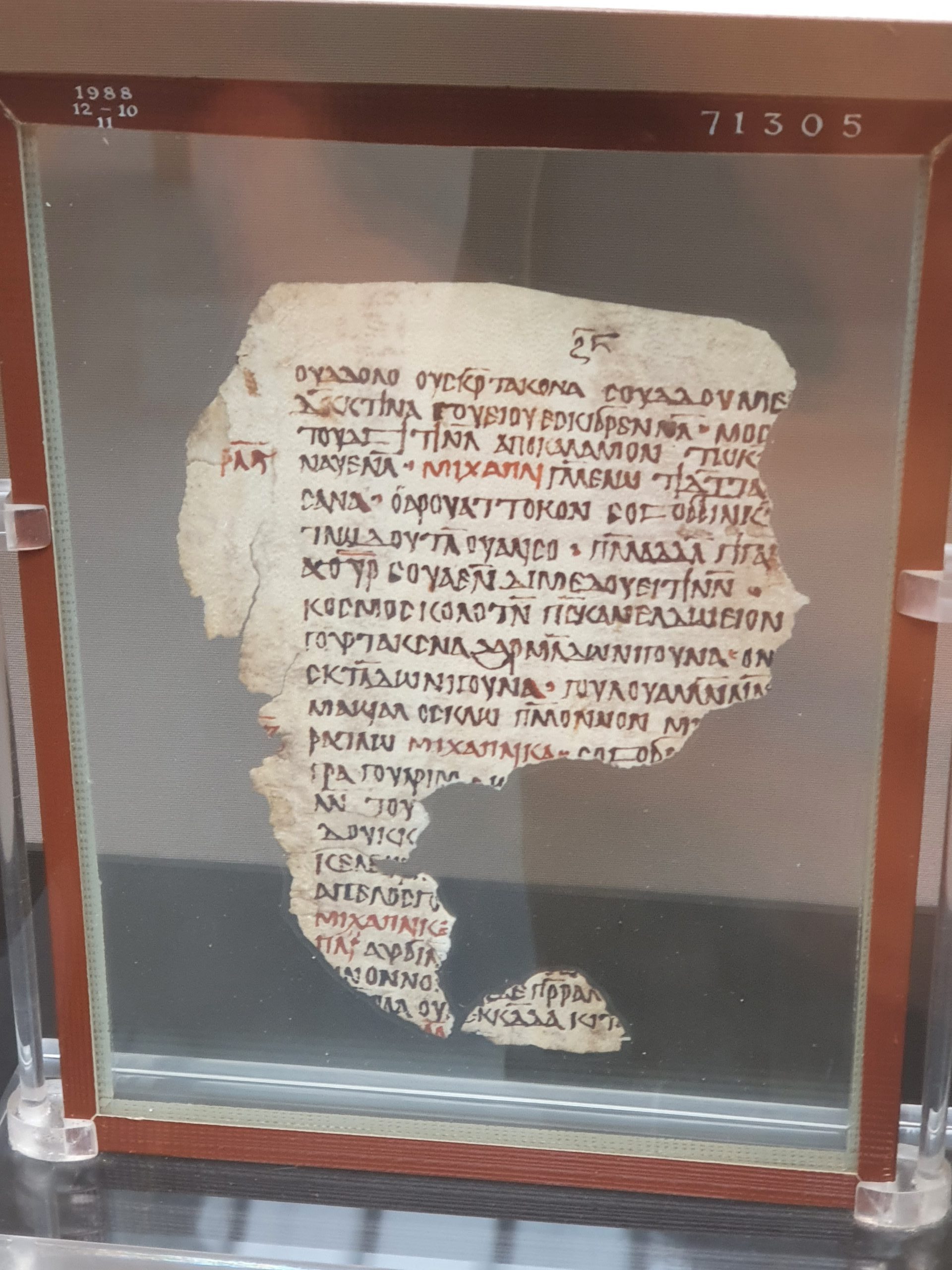
    I like a nice book, although this isn’t exactly a big chunk of documentation. It’s a parchment dating to around the ninth or tenth centuries from the Nubians, a population who lived in what is now northern Sudan and southern Egypt. The word in red is the ‘Archangel Michael’ and I hadn’t realised that the Nubians had converted to Christianity (but, it’s not something I’ve given a great deal of thought to in the past), although today this population is mostly Islam.

  • London – Camden – British Museum (Beer for the Workers)

    London – Camden – British Museum (Beer for the Workers)

    This is rather sweet and is one of the oldest examples of writing to have been found. It dates from around 3300 to 3100BC and, even more excitingly, it’s a beer token issued by a temple for workers. It’s from Uruk in Mesopotamia and when this token was issued, the settlement was likely the largest urban area in the world. The drink the workers received was barley beer, although they weren’t fortunate enough to be able to express their views on it using Untappd.

  • London – Camden – British Museum (King’s Library)

    London – Camden – British Museum (King’s Library)

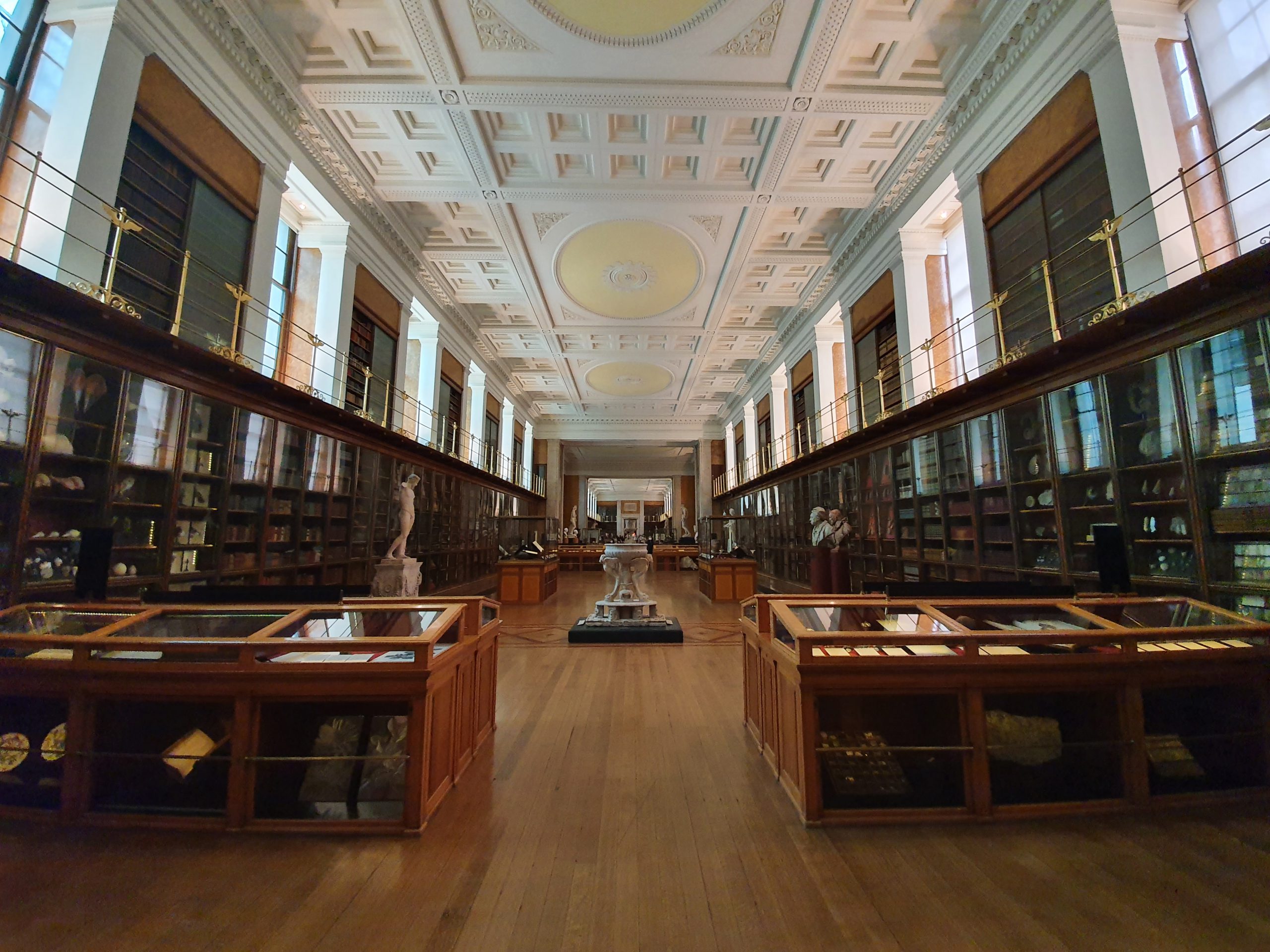
    I didn’t get to see this room last time I was in the British Museum, which was just after it re-opened, either because it wasn’t open or I got muddled up with signage. Probably the latter. It’s the room which housed the King’s Library between 1827 and 1998, with the books now moved to a new display area at the British Library at its new site nearby.

    It held the library of books that were collected by King George III and which were given to the nation by his son, King George IV. It’s suspected he did this mainly to avoid paying to maintain them, but either way, the nation benefitted from this legacy. He made the demand that the collection must be kept separate from the rest of the library’s volumes, which has been honoured. Unfortunately, a few hundred books were destroyed during air raids in the Second World War, but most of the collection has survived the last 200 years.

    The room is used today by the British Museum as an “Enlightenment Gallery” which is interesting, although there’s not a great deal of linkage to literature. But, I suppose, that’s the job of the British Library now. Anyway, it’s a beautiful room and the bookshelves have all been left in situ.

    A drawing (© The Trustees of the British Museum – https://www.britishmuseum.org/collection/object/P_2003-0227-1) by Eugene Armand Roy from 1851 and it’s the earliest known colour representation of the old King’s Library in the British Museum.

  • London – Camden – British Museum (South Metopes)

    London – Camden – British Museum (South Metopes)

    I have no in-depth knowledge of these, but there’s plenty of information at https://en.wikipedia.org/wiki/Metopes_of_the_Parthenon about these metopes. They were carved in around 446BC and have had quite the adventure over the centuries.

    But, the bizarre situation now, and without getting political, is that the main sections of some of them are in the British Museum and the heads of these figures are still in Athens (and some are dotted around other parts of Europe).

    This is South Metope VI (SM7) and the catalogue description for this reads as follows, split into three different sections.

    Parthenon SM.7 (Acropolis)
    Title: Parthenon, South Metope 7
    Collection: Athens, Acropolis Museum
    Subject: Centaur head

    Parthenon SM.7 (Paris)
    Title: Parthenon, South Metope 7
    Collection: Paris, Musee du Louvre
    Subject: Head of Lapith
    Subject Description:
    The head of a young Lapith belongs to metope S7, now in the British Museum. He has short hair, large eyes rimmed with thick lids, a mouth with a full lower lip and no beard. The head is represented in an almost frontal view, though the left side is not completely finished.
    Condition Description:
    Head in relief, broken across back. Nose in broken and worn. Heavily weathered

    Parthenon SM.7 (London)
    Title: Parthenon, South Metope 7
    Collection: London, British Museum
    Subject: Lapith and Centaur
    Subject Description:
    Centauromachy: Lapith (left) charges against Centaur with left arm forward, mantle clasped at right shoulder. Centaur (right) rears up, his left foreleg against stomach and groin of Lapith, his cloak flying out to right.
    Form and Style:
    Note veins in left arm of Lapith — a Severe Style trait.
    Condition Description:
    Missing: upper right corner of slab, most of right leg, left foot, right hand, and lower mantle of Lapith, left rear foreleg and left arm of Centaur. Heads in Athens and Paris (Louvre Ma 737). Surface abraded.

    So, anyone who wants to see study this metope will have to pop along to the Louvre, the British Museum and the Acropolis Museum. It’s not ideal….