Tag: Bialystok

  • Bialystok – Young Zamenhof Monument

    Bialystok – Young Zamenhof Monument

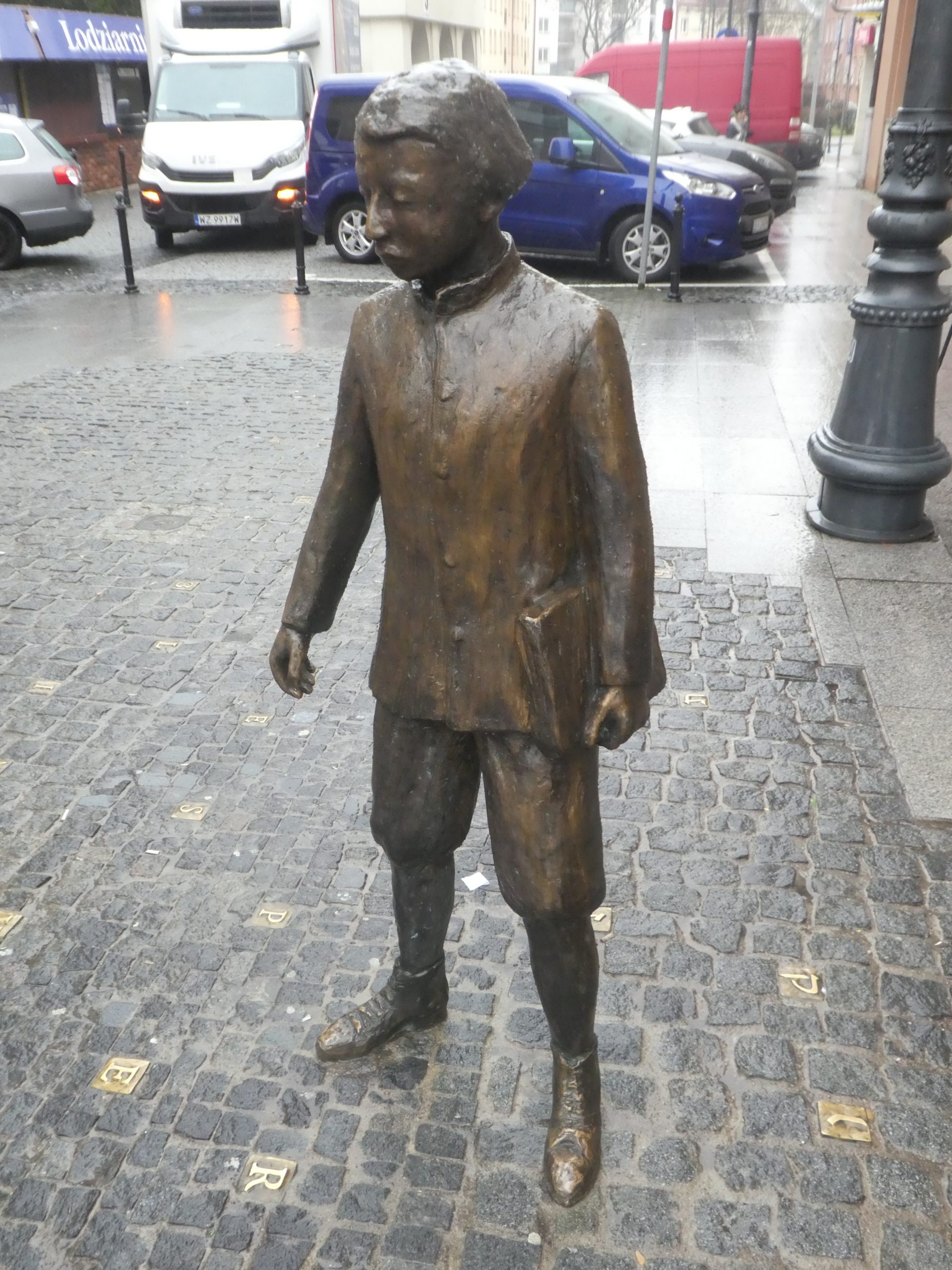
    This interesting statue is of the young Ludwik Lejzer Zamenhof, the man (or boy at the time) who invented the international language of Esperanto. It’s a relatively recent addition to the street scene, having been unveiled on 14 April 2019, the 102nd anniversary of Zamenhof’s death.

    The plaque located near to the statue, in an area which has now been pedestrianised since it was unveiled. It’s located at the end of the street named after him, ul. Zamenhofa, where it meets the market square.

    Letters around the statue.

  • Bialystok – 1939 Video

    This is quite sad in many ways, as nearly all the Jews in this film would have been killed in the years after this video was made. Some of the footage is from 1939 and the city’s Great Synagogue is also in the film.

  • Bialystok – Great Synagogue

    Bialystok – Great Synagogue

    This is the memorial to the Great Synagogue of Bialystok which once stood here, sadly destroyed by the Nazis.

    A postcard of how the building, constructed between 1909 and 1913, once looked. At the time, around half of the city’s population was Jewish and there was a strong community which seems to have integrated relatively well, although there were some points of difference between the Polish population and the Jews. The Germans took over Bialystok at the beginning of the Second World War, but it was handed back soon after to the Soviets as part of the Molotov–Ribbentrop Pact. That subsequently fell apart and the Germans took the city back again on 27 June 1941.

    The Nazis took little time in attacking the city’s Jewish community on the same day they took Bialystok, and Jews were forced into the streets and some were killed immediately, but many took sanctuary in the synagogue. Over 2,000 men, women and children were in the synagogue when the Nazis set fire to it, blocking the exits at the same time. Nearly all of those people died, along with another 1,000 Jews who had been killed elsewhere in the city on the same day.

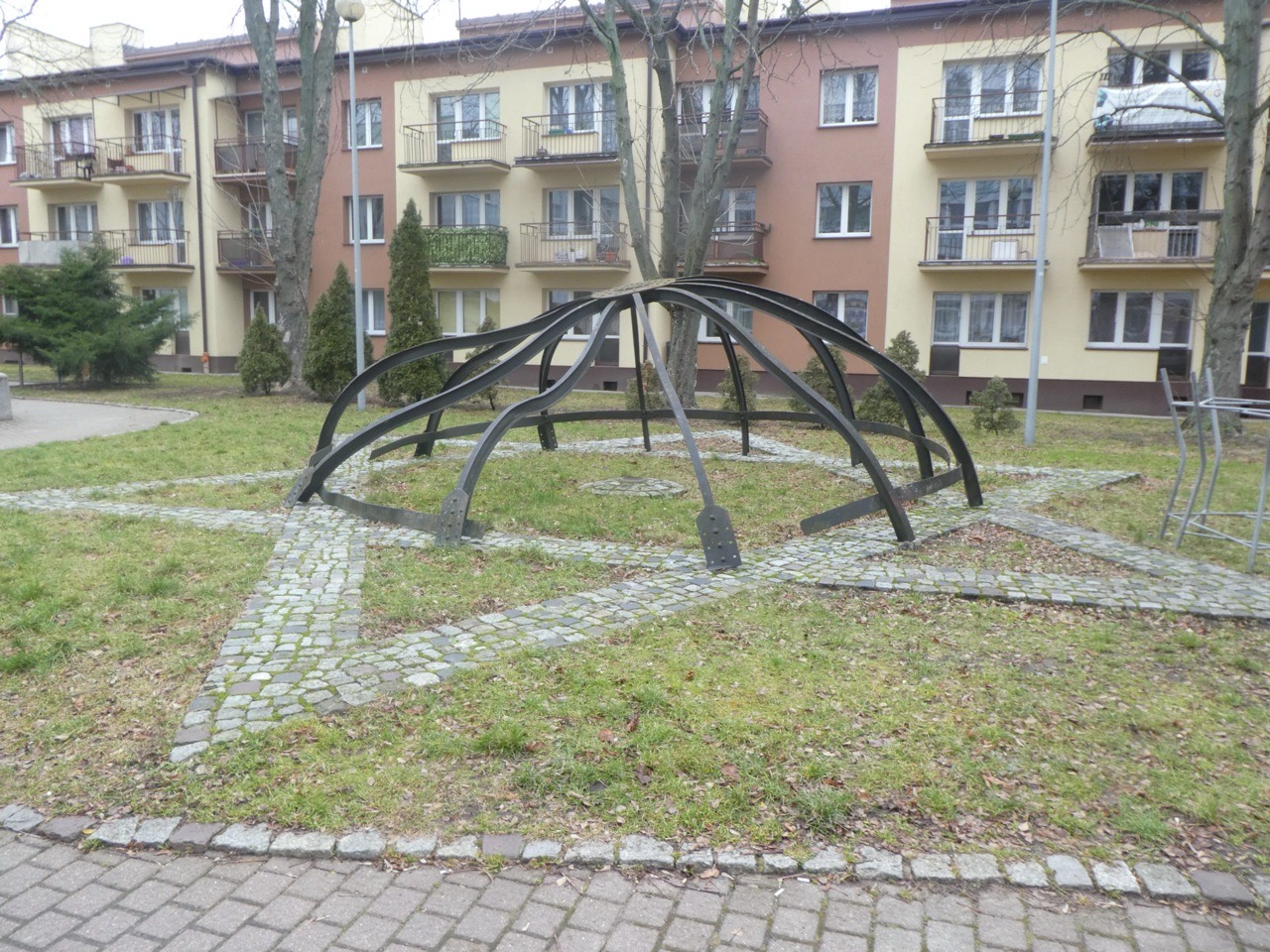
    The memorial was added in 1995 and comprises of this stone and the metal structure in the top photo, which depicts what the synagogue roof looked like after it had collapsed following the end of the fire. It’s nicely done, but it’s not that easy to find, with little signage towards to it. It’s also hard to understand where the footprint of the original building was, as the monument is in the middle of a courtyard area today.

    I tried to look at how the international media reported the incident and it’s clear that it took some time for the details to come out. Initially, the reports said that 500 Soviets were held in the synagogue until a ransom was paid by their families, and after  few days of non-payment, they were killed. There was a reference to the scale of the murder in late 1941 and separately the British United Press and Reuters also mentioned that 300 Jews had been killed after being held for three days without food. So although the information had got out in part, it was only in late 1942 that the details of the killing were widely reported. Perhaps few people could have believed at that stage that the Nazis would commit a crime of such a scale.

  • Bialystok

    Bialystok

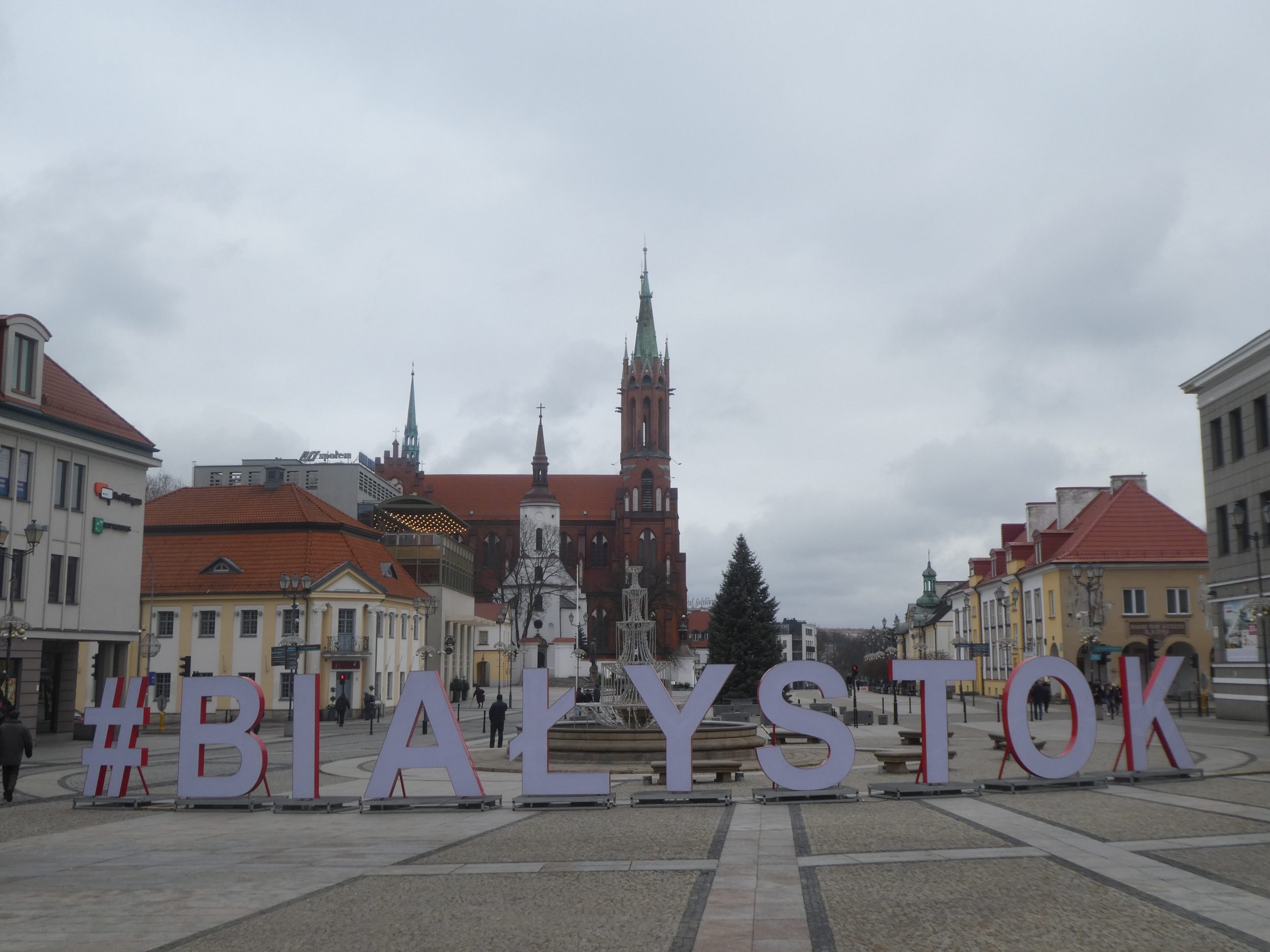
    Bialystok doesn’t get many tourists, although the European Union and the local authorities are trying hard to change that. Cities such as Krakow, Warsaw and Gdansk capture the international travellers and many who come to this part of Poland are heading for the Masurian Lakes.

    Bialystok seems proud of its heritage, which is complex and from many different communities, as the city says on information boards, “Poles, Jews, Germans, Russians, Belarusians, Lithuanians, Ukrainians, Tatars and Gypsies lived here side by side”. In the late nineteenth century, 75% of the population were Jews, although little of that heritage remains in the city today. It’s also the city where Esperanto was established, another reminder of its multi-ethnic heritage, with L. L. Zamenhof creating the language when he was still at school.

    The city feels to me almost more Russian (and until 1918 it was Russian) or Ukrainian than Polish, not because of its people, but because of its architecture, its businesses and its general vibe. And it doesn’t feel as wealthy as other Polish cities that I’ve been to, perhaps Lublin feels the most similar to it from the places that I’ve been.

    Although without exception they have been polite, I’ve yet to have visited a Polish city with as many people begging or asking for money. Given that these men and women are clearly not expecting tourists to donate to their cause, their persistence in approaching locals is admirable. There are also plenty who are looking for money in other ways, street musicians are relatively common in Bialystok and the locals seem to reward them for their efforts.

    There’s clearly a lot of money coming into Bialystok, there have been huge efforts to improve the Palace which is of substantial economic importance and funding has been made available for new museums. That will no doubt help with visitor numbers, although the whole tourist industry is underdeveloped, not least in the provision of cafes and bars that might appeal to those from outside of Poland. Although, this is another challenge, this is something of a border area, so the city is just as focused on attracting visitors from Belarus, Lithuania and Ukraine as it might be from western European countries.

    I’ve yet to experience an unfriendly Polish city, but Bialystok seems to be one of the most welcoming to visitors, it just has that slightly soft edge to it. That’s might be slightly surprising given that the city otherwise seems quite hard-edged with most other things, but perhaps it is hopeful of attracting more visitors and bringing in more wealth. Unemployment was high in the area, but is on its way down, but there’s progress to be made.

    There are two shopping centres, which both appear to be popular, although the main shopping street doesn’t have the same vibrancy. It also perhaps needs pedestrianisation as it’s a grand main street and most Polish cities, and indeed international cities, have taken the steps to try and take cars away to improve the shopping and recreation options. And certainly much more needs to be done to promote the heritage of the city, although it’s clear that efforts are underway to improve signage.

    So, Bialystok is a wonderfully friendly and charming city, but I can’t help thinking that in ten years it’ll be very different.

  • Bialystok – White Bear Cafe

    Bialystok – White Bear Cafe

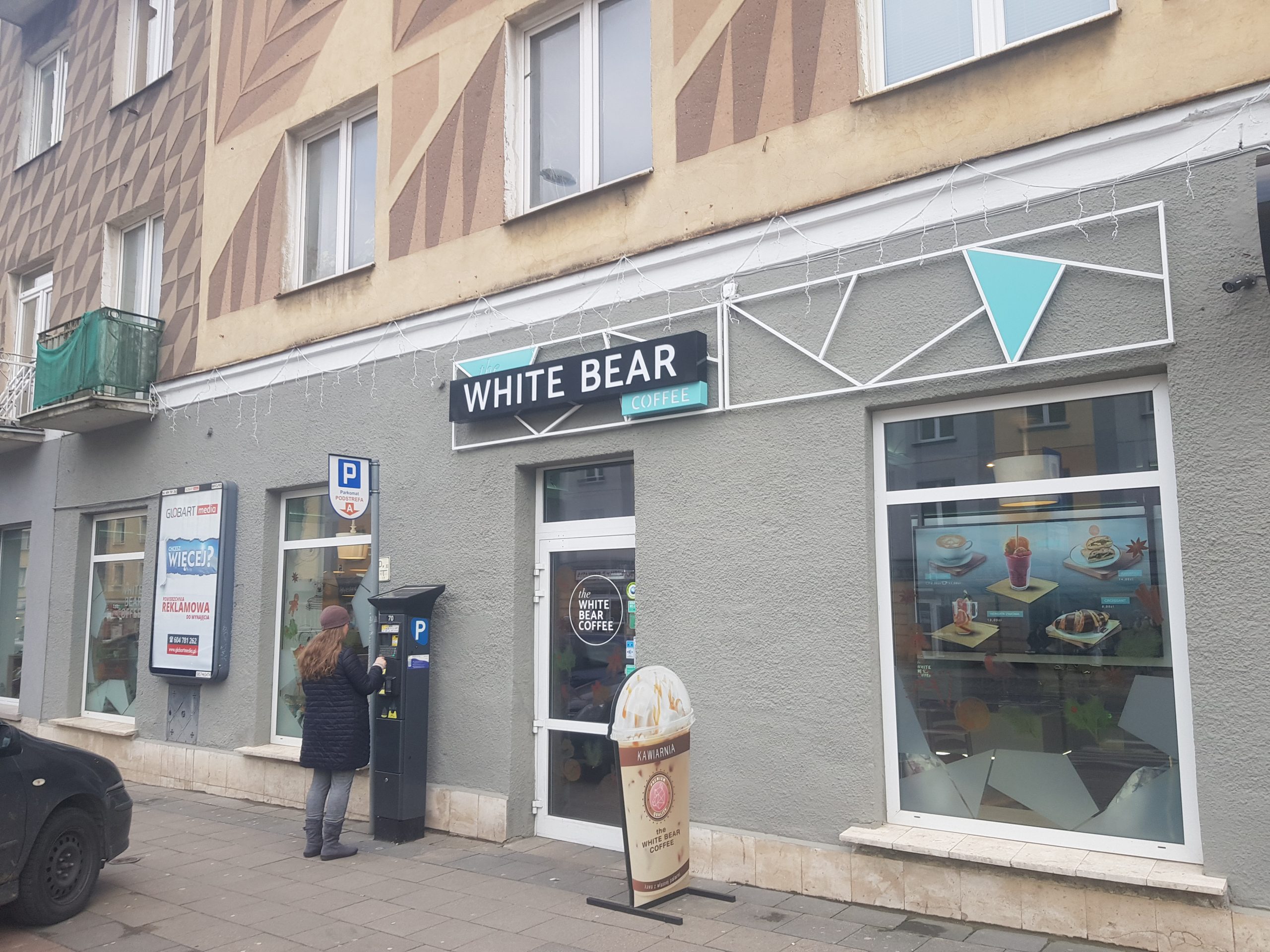
    There are not many locations in Bialystok which have a branding and styling which makes them appear accessible for visitors to the city. This very well-reviewed cafe gave me the impression of being a contemporary place to visit, and it didn’t disappoint in that regard. Or indeed, in any regard come to think of it.

    There’s a bit of a bear theme….

    The selection of cakes. Ordering is at the counter and the staff member was welcoming and engaging, with customer names being called out when the order is ready.

    I’m not entirely sure what I ordered here, but it had a pleasant taste and I don’t see red currants as often as I once did.

    Very lovely coffee, a richness of taste and it was served at the appropriate temperature, namely not one that was boiling hot. I don’t quite understand the linkage, but the cafe owners appear to be involved with the coffee industry and that might explain the quality of the drink.

    This is another one of those cafes where it’s clear that it’s popular with locals and visitors to the city. There were people meeting for a coffee, someone working on their laptop and someone reading a book, all suggesting a comfortable environment where customers feel welcome. The prices are reasonable and, perhaps without even trying to be, this is beautifully on-trend.

  • Bialystok – That Which is No More (Barbican Mission Church)

    Bialystok – That Which is No More (Barbican Mission Church)

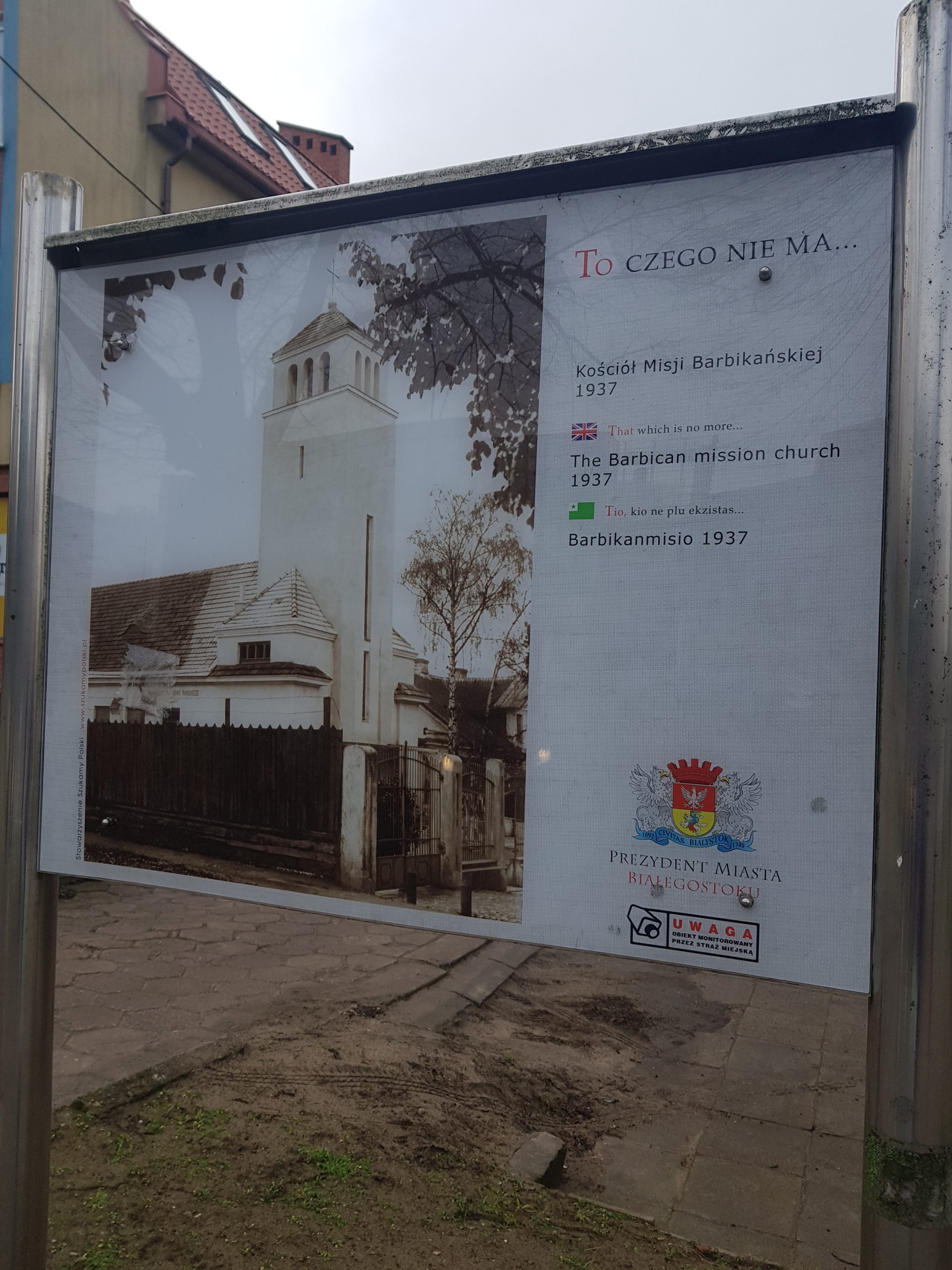
    Another in the “That Which is No More” series which are located around Bialystok, this is a photo of the Barbican Mission Church from 1937. The church was built between 1927 and 1930 and it was designed to convert Jews to Christianity, something which seems to have been not uncommon in this part of the country.

    And here’s what is here now, or at least, this is where the sign is. The building also seems to have been known as the Anglican Mission Church, although I’m unsure of when it was demolished.

  • Bialystok – Pomnik Bohaterów Ziemi Białostockiej

    Bialystok – Pomnik Bohaterów Ziemi Białostockiej

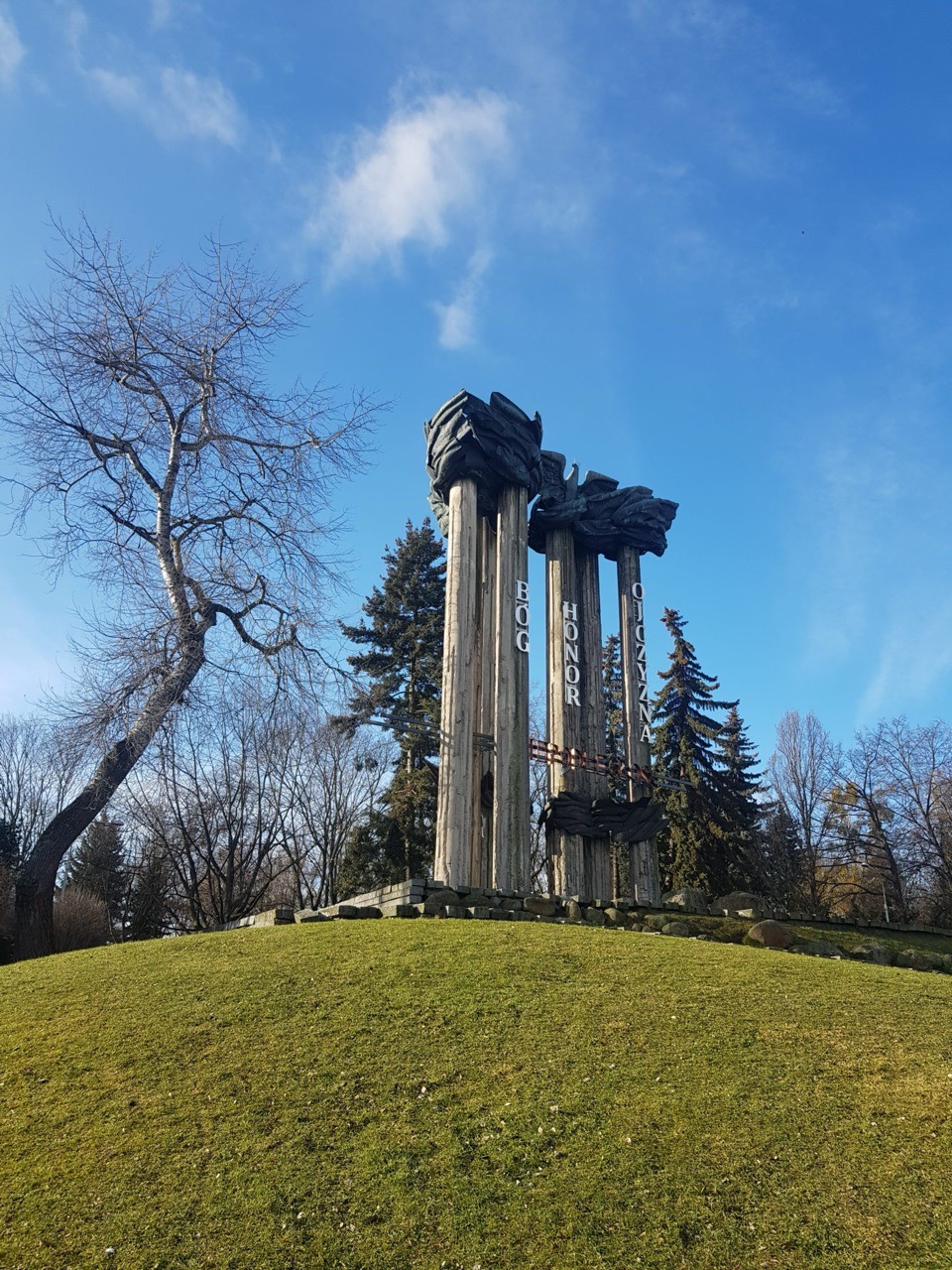
    This subtle little centrally located monument was erected in 1975 and commemorates those who were killed fighting for a free Poland. Unveiled in October 1975, it’s made of concrete and stands seventeen metres in height. The words on the pillars mean “God, Honour and Homeland”, although these are more modern additions which have been controversial to say the least.

    More photos of the monument, which is in need of some repair judging by the state of some of the concrete.

  • Bialystok – That Which is No More (The Zaludowski’s House)

    Bialystok – That Which is No More (The Zaludowski’s House)

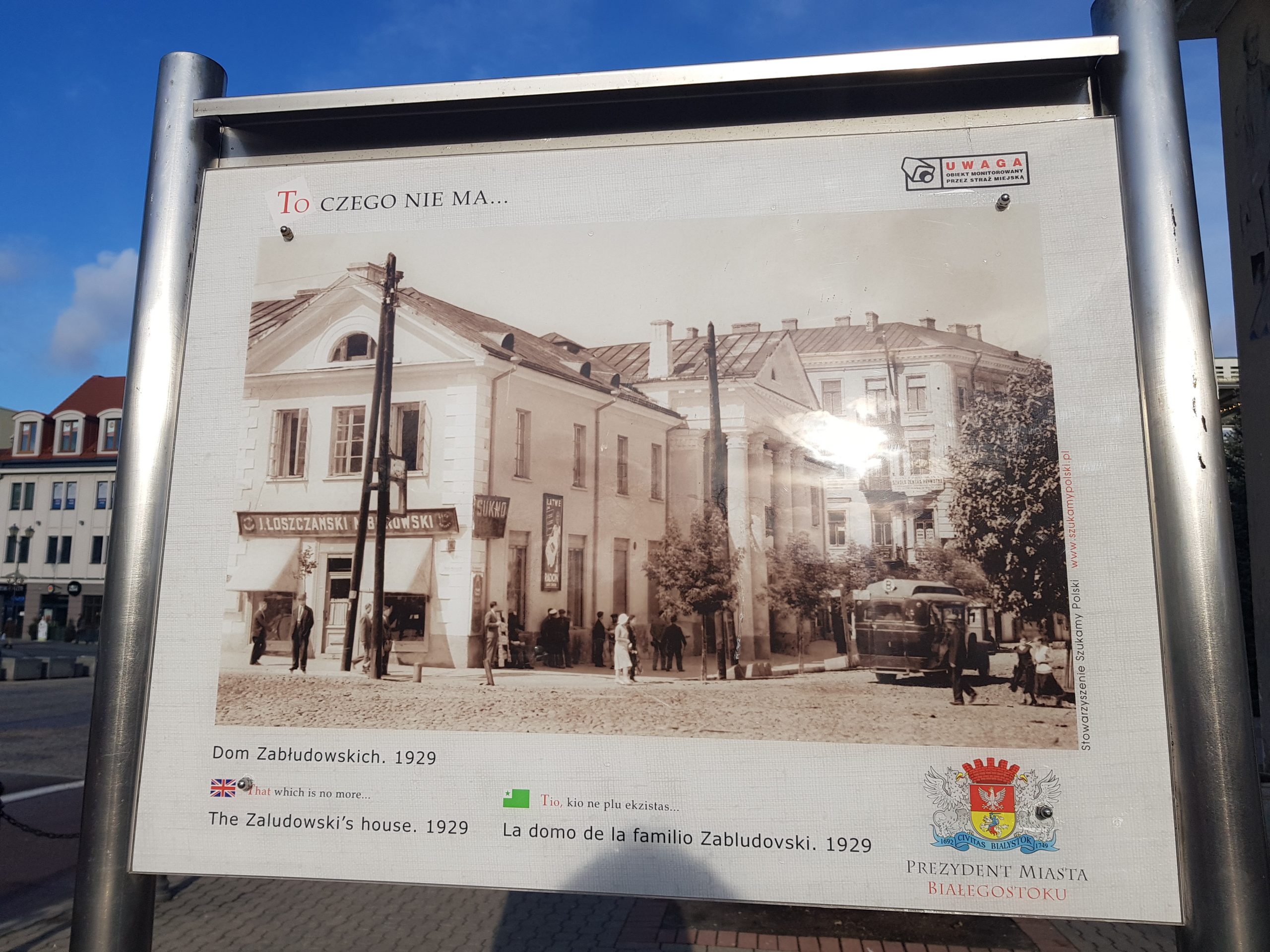
    I know nothing more about this project, other than it’s a reminder of what was once here in Bialystok that no longer stands. There was a large Jewish population in Bialystok before the Second World War, and its decimation meant much inevitably changed, let alone all the other upheaval which took place in the post-war city. The above photo was taken in 1929, but the only downside is that I can’t locate at the moment any more information about this building.

    I think that this is the area today, but there are no anchors to really pin down where the property once stood.

  • Bialystok – Kinooko

    Bialystok – Kinooko

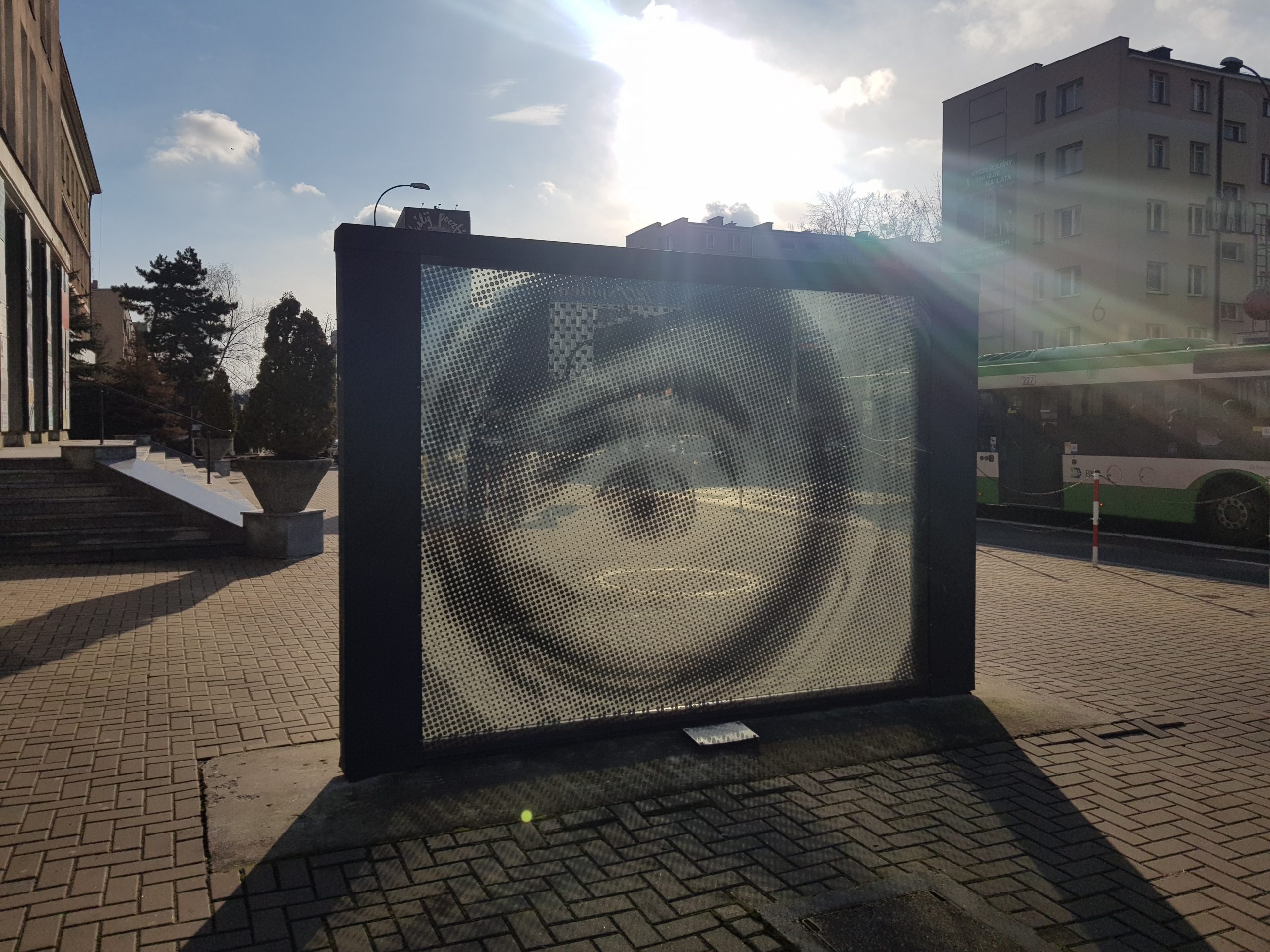
    This urban art project was installed in 2011, designed by Aleksandra Czerniawska, a local artist. The artwork is meant to show different things depending on which the direction the viewer looks at it from. From one side it’s a eye in a camera frame.

    From the other, it’s some sort of dish. At least, I think that’s what it’s meant to be, this is one of the art installations which doesn’t have an English translation to explain the concept a bit more. Indeed, I suspect that I might have made that bit up, but that’s what it looks like to me. Anyway, it’s eye catching though, but excuse the pun there… It’s apparently a nod towards the work of Dżiga Wiertów, a Soviet documentary maker who was born in the city.

  • Bialystok – Puppet Sculpture

    Bialystok – Puppet Sculpture

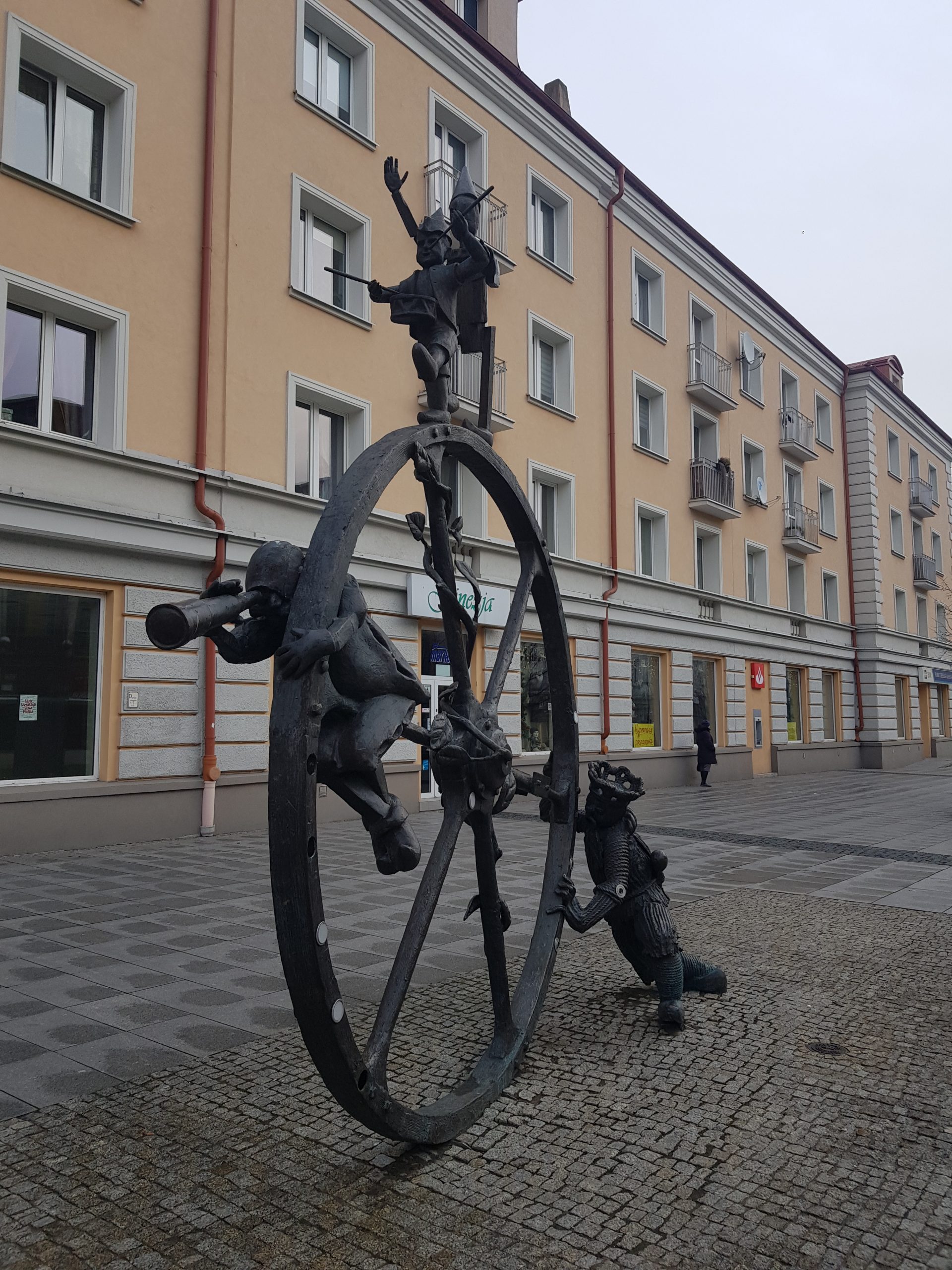
    This considerably sized bronze sculpture weighs over a ton and is a reminder of puppetry in the region over the centuries.

    There is also a puppet theatre in Bialystok which was opened in 1953, moving into its own premises in 1979, which was the first purpose built puppet theatre building in Poland.