
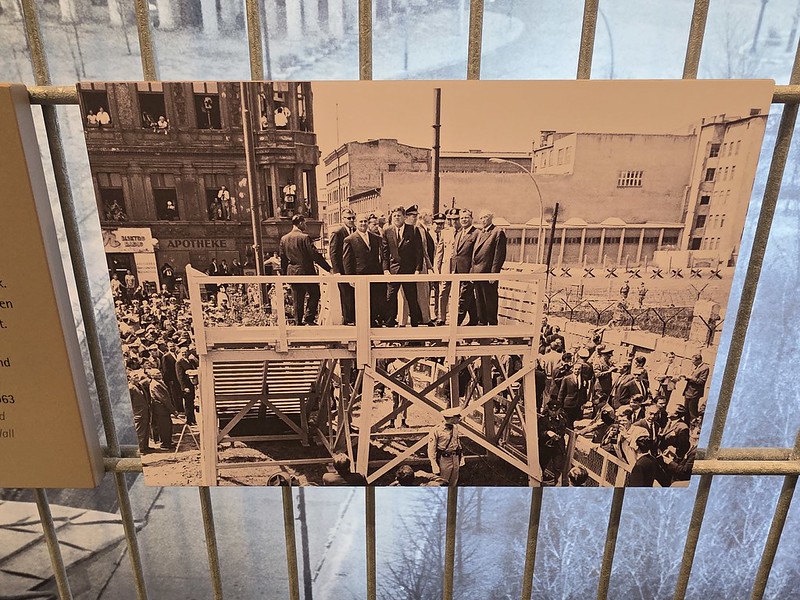
Continuing my riveting account of the Willy Brandt House in Lübeck, this is a photograph of Brandt along with JF Kennedy and Konrad Adenauer on 26 June 1963. This is was when Kennedy made the speech:
“Two thousand years ago — Two thousand years ago, the proudest boast was ‘civis Romanus sum.’ Today, in the world of freedom, the proudest boast is ‘Ich bin ein Berliner.’”
Although I rather like his line in the same speech:
“Freedom has many difficulties and democracy is not perfect. But we have never had to put a wall up to keep our people in.”
Anyway, Brandt was here in his role as the fourth governing Mayor of Berlin, a role that he held from 3 October 1957 until 1 December 1966.
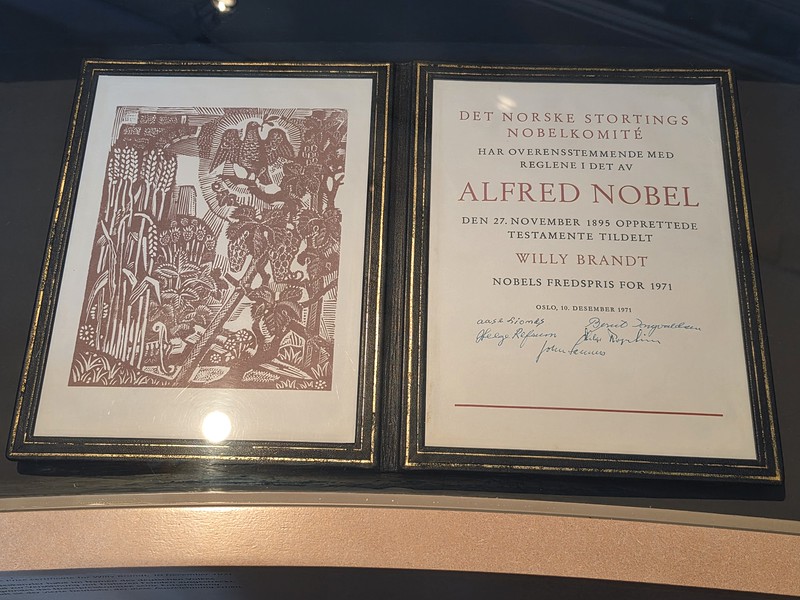
The Nobel Peace Prize that was awarded to Willy Brandt on 10 December 1971. He was awarded the Peace Prize for both his work in unifying Europe and the development of the EEC, as well as reconciling West Berlin with the countries in eastern Europe.
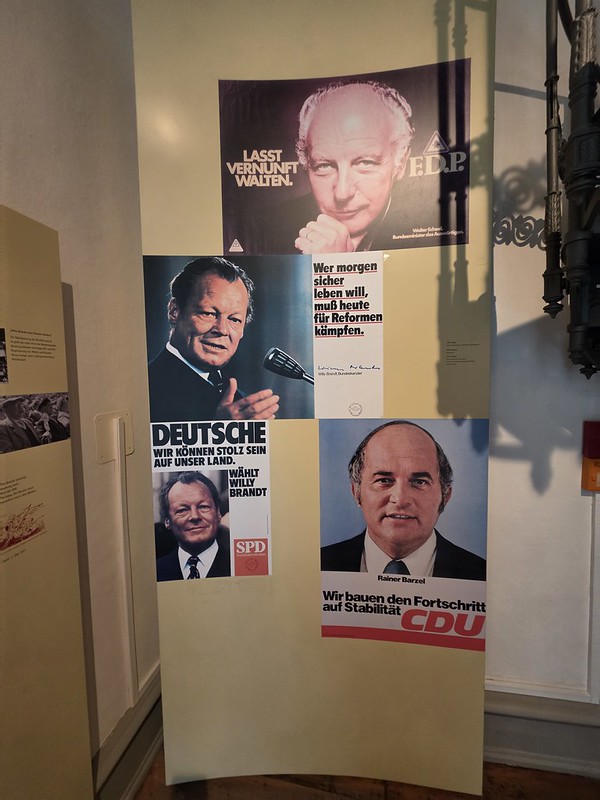
Political campaigning posters.
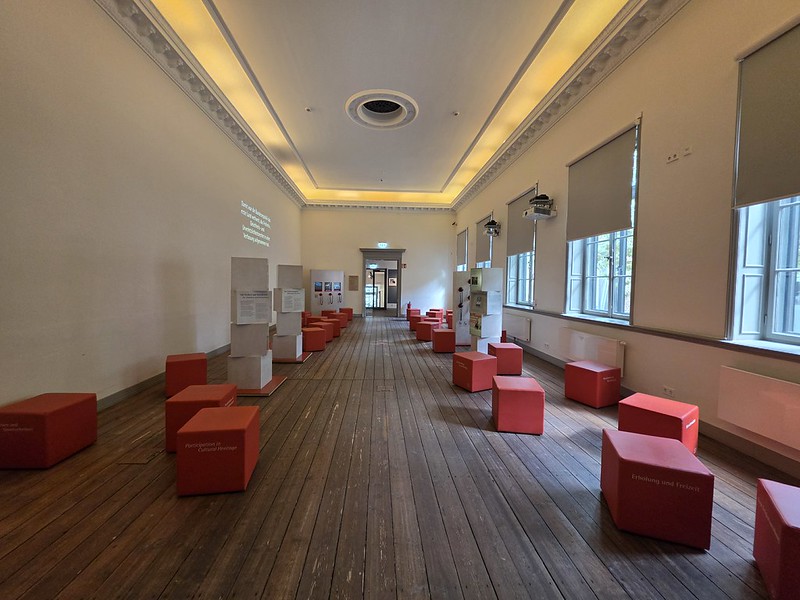
This large space was used to put some televisions on as part of a media room, but it did feel like they were trying to stretch their exhibits out a little bit. There’s probably much more that could be done in a space like this. There were lots of interesting film clips here telling the story of Brandt being the Chancellor of West Germany between 22 October 1969 and 7 May 1974. His resignation came about following the Günter Guillaume scandal, he was one of Brandt’s advisers who it was revealed was a Stasi informant.
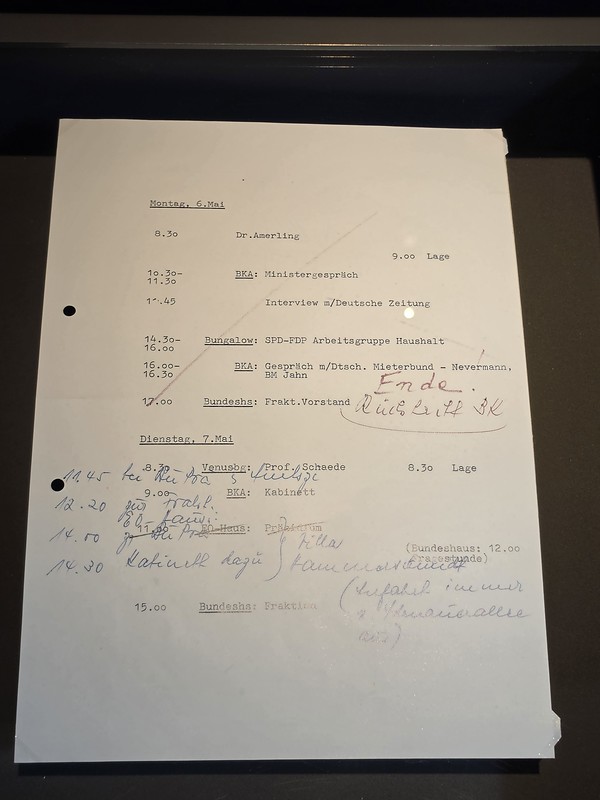
Brandt’s schedule for his last day as Chancellor.
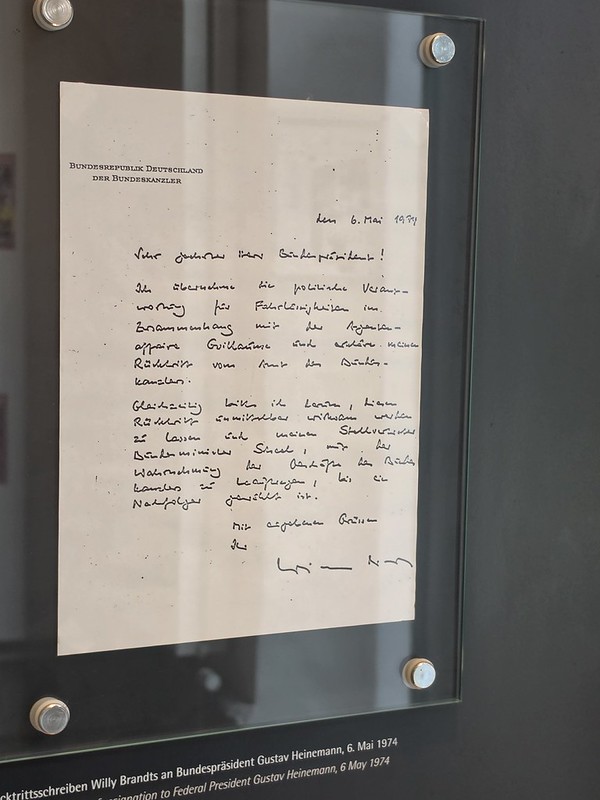
Brandt’s resignation letter to the Federal President Gustav Heinemann on 6 May 1974.
It was the end of an era, but his work on foreign policy was hugely significant and hence the Nobel Peace Prize. Brandt’s Government also pursued domestic reforms, including expansion of education, welfare and civil liberties, all leading towards a more socially liberal and outward-looking West Germany. His time of office saw Germany becoming more democratic, more self-confident and more honest about its past.
The thing that I learned was that his kneeling at the Warsaw Ghetto memorial in 1970 became one of the great symbolic gestures of post-war reconciliation. I will look out for the memorial to his visit which is in Warsaw and I hadn’t noticed before, but he knelt as a sign of atonement for the Nazi damage to Germany. It was controversial amongst Germans, but shifted the entire debate. Very brave.