
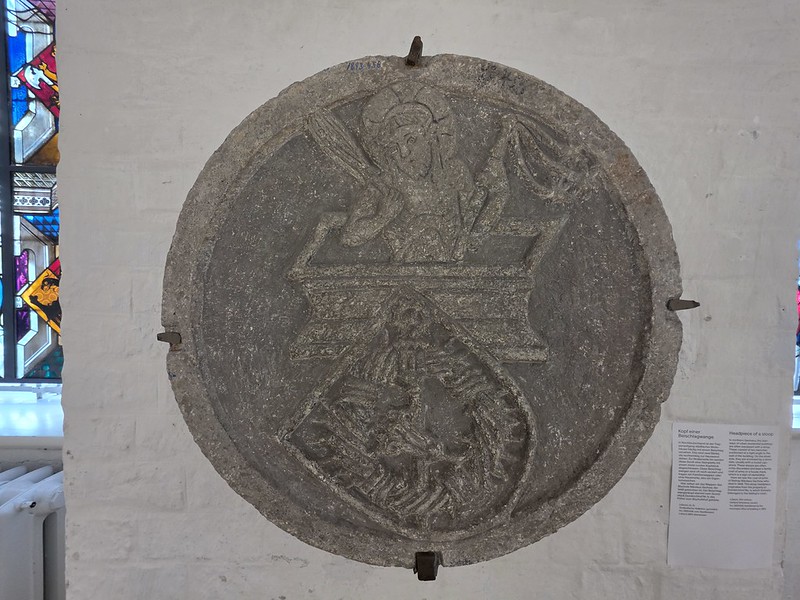
In the prosperous merchant towns of northern Germany, status was displayed not through grand façades, although those came later, but through elaborate architectural fittings attached to residential buildings. The stoop, or Beischlagwange, was one such statement of intent, and I find the whole arrangement rather intriguing although I must admit that I thought it was a manhole cover at first such is my architectural prowess.
A stoop consisted of two benches positioned at a right angle to the building’s wall, creating a small gathering space where the street met your home. The benches were typically enclosed by a stone slab on one side, often richly decorated with heraldic coats of arms or the symbols of a building’s owner. To sit on someone’s stoop was to acknowledge their status in the town and to commission an ornate one was to announce it loudly. So my friend Richard would have a very big porch, whereas I wouldn’t want visitors and I wouldn’t.
The stoop in the photo above dates from the fifteenth century and comes from a merchant’s house in Lübeck, originally belonging to the family of Bishop Nikolaus Sachow. It’s modest enough now, removed from its original context and mounted on a museum wall, but I find myself rather drawn to what it once represented.
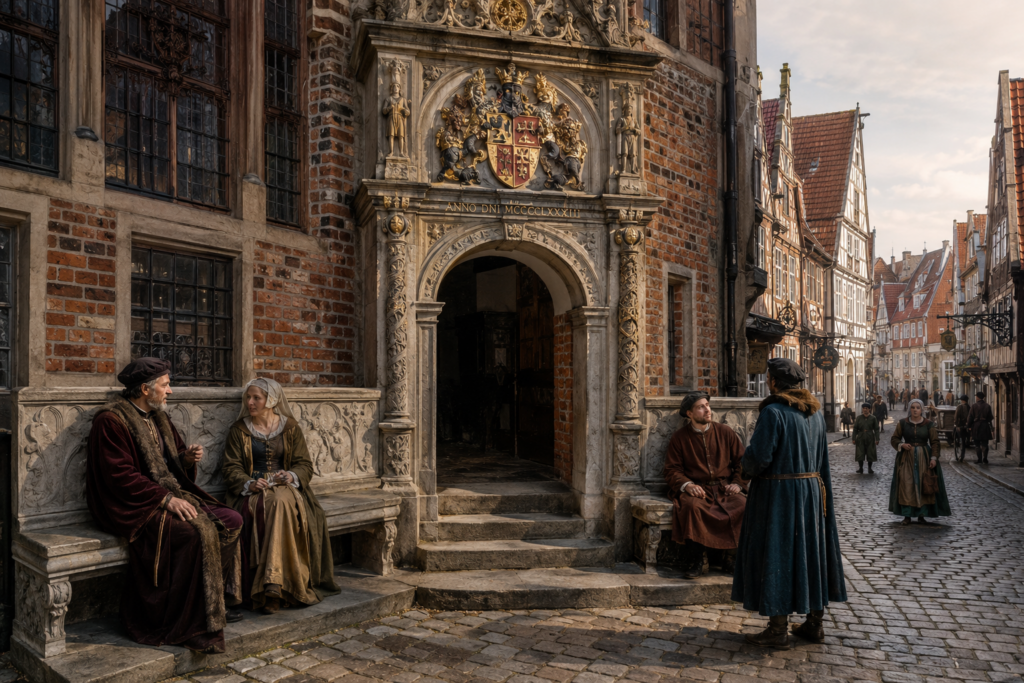
The example above is how this whole arrangement might have worked, a little bit of decadence….