
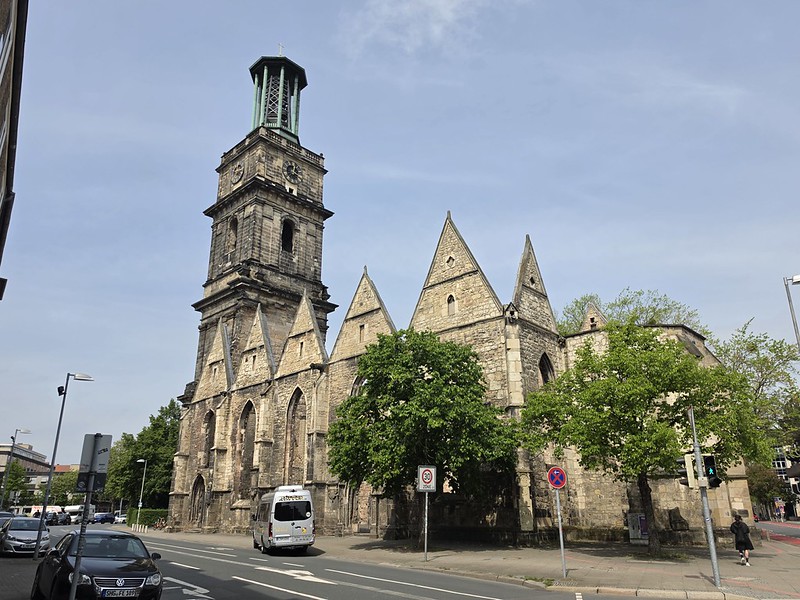
The Aegidienkirche probably began as a small chapel in the tenth century, though it wasn’t until 1163 that a three-aisled Romanesque church was formally documented at the site, mentioned during a court feast of Henry the Lion (c.1129-1195). The Gothic building that most people would have known was begun in 1347 and dedicated to Saint Giles (or Aegidius), one of the Fourteen Holy Helpers.
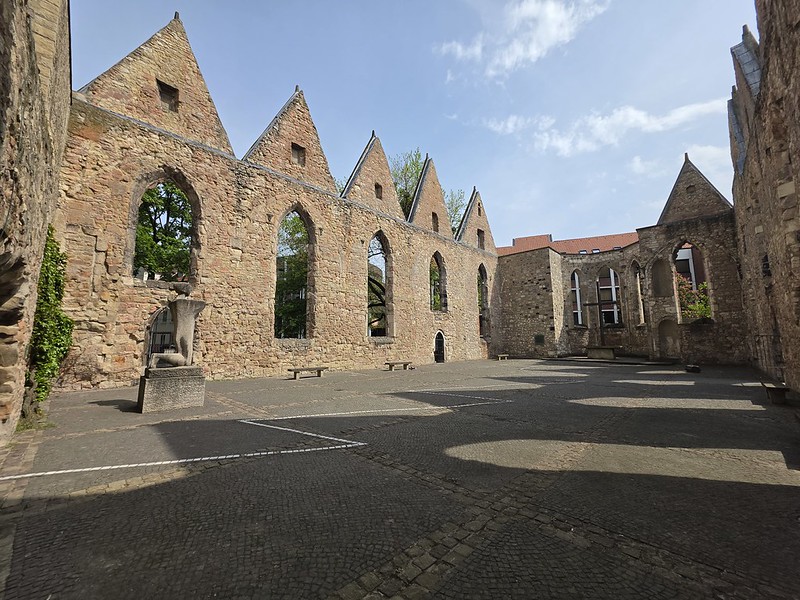
Hanover’s sixteenth century Reformation began in the Aegidienkirche giving it some religious significance. The church then went through the usual cycles of modification that such religious buildings do. Between 1703 and 1711, the steeple received a slightly decadent Baroque facade designed by Sudfeld Vick, and then between 1826 and 1829, Georg Ludwig Friedrich Laves remodelled the interior to modernise matters a little, with the introduction of cast-iron columns in the nave. By the beginning of the twentieth century, the Aegidienkirche was one of the three great churches of Hanover’s old town.
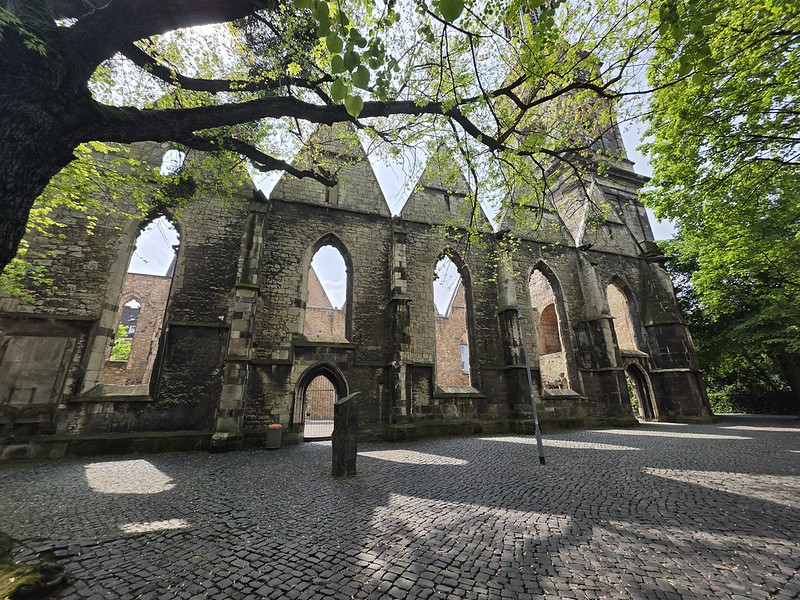
On the night of 8 October 1943, over 500 British Royal Air Force warplanes conducted an aerial bombardment of Hanover and the Aegidienkirche was effectively destroyed in the raid with the only the blackened shell remaining standing. The Aegidienkirche wasn’t alone, the other two great churches, the Marktkirche (Market Church) and Kreuzkirche were also destroyed.
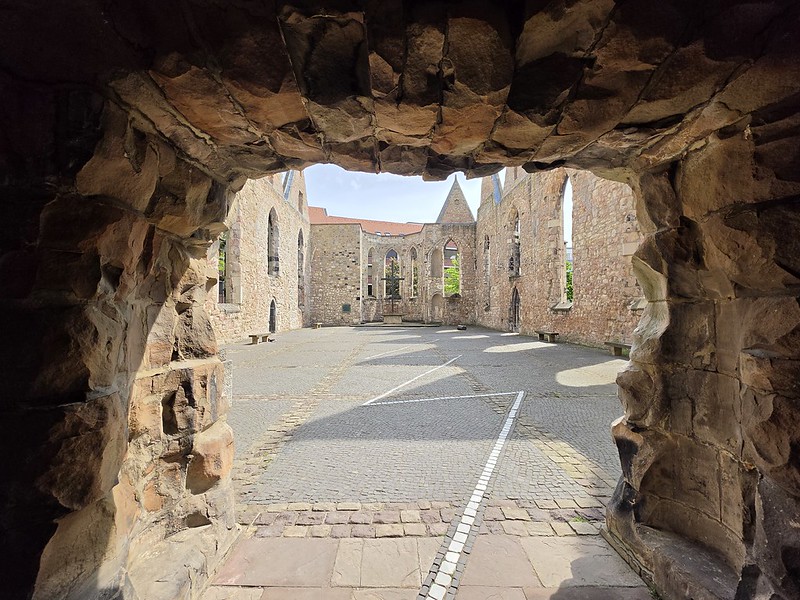
In 1952, nine years after the bombing, the decision was made to preserve the ruins rather than rebuild. The church became an official war memorial dedicated to the victims of war and of violence. The Marktkirche and Kreuzkirche were rebuilt, but this one feels so much more powerful because of the visible reminders of the Second World War.
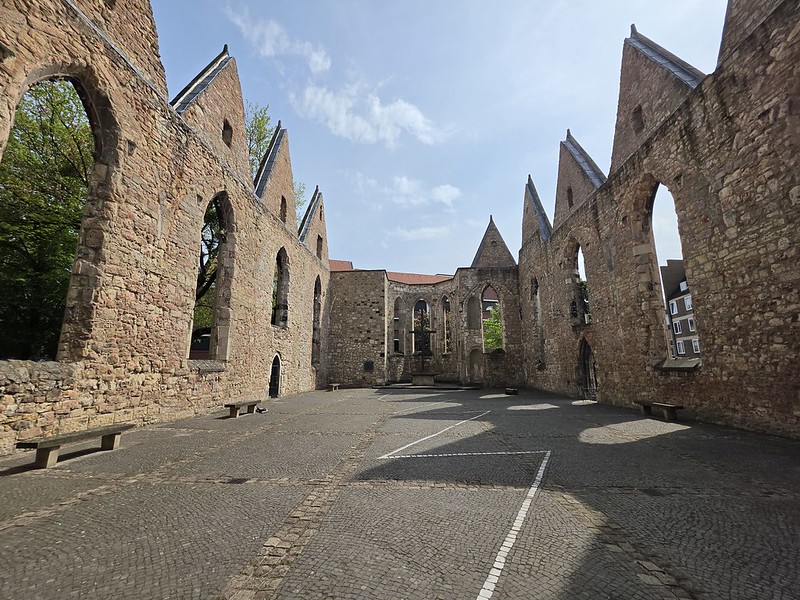
The site was reasonably busy when I visited, although there were moments of peace and quiet which gave time for contemplation. Certainly one of the most powerful reminders of the Second World War in the city and it was worth the little meander to go and see it.