
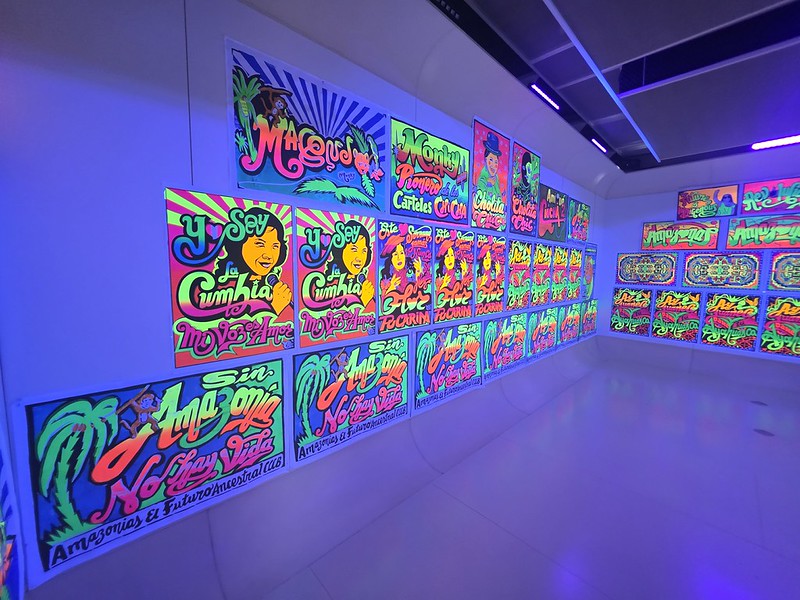

I’ll be mentioning this a few times, but I found this museum slightly hard work as the curation seemed a little muddled to me. But, understanding is important, so I’ve used AI to try and piece together the messaging the museum was trying to display. I’d add that I’ve scoured the museum’s website, but they haven’t really burdened themselves with explanations, so I’ll have to make them up as best as I can.

ChatGPT comes up with a meaning:
“So the museum piece is probably doing two things at once. It is showing individual posters as graphic art, but it is also recreating the overwhelming feel of seeing them in numbers, as part of a visual environment rather than as one polite framed object. In other words, the installation is preserving something that originally lived on streets, walls and music scenes, and bringing that noisy, popular world into the rather cleaner and more controlled arrangement of a museum gallery. That contrast is part of the point.”
Google Gemini goes with:
“The exhibit also explores the intersection of local struggle and global solidarity, as seen in the juxtaposition of traditional tropical cumbia icons with modern civil rights imagery like the “Black Lives Matter” movement. This layering of meaning transforms the posters from simple concert advertisements into complex political artefacts that advocate for justice and recognition for marginalised communities. By placing these works in a museum context, the display validates a form of “street” aesthetics as a sophisticated language of resistance, proving that the bold, clashing colours are not merely decorative but are essential to the visibility of those who have historically been sidelined by mainstream culture.”
I’m not very artistic and I had to look the word ‘cumbia’ up, but apparently it refers to a number of musical rhythms and folk dance traditions of Latin America.

I’ll go with that, it’s an art form with a political message that is relevant to visitors. It gives visibility to those who perhaps need it the most and it also looks visually appealing in the museum. So there we go, I think that makes sense.