
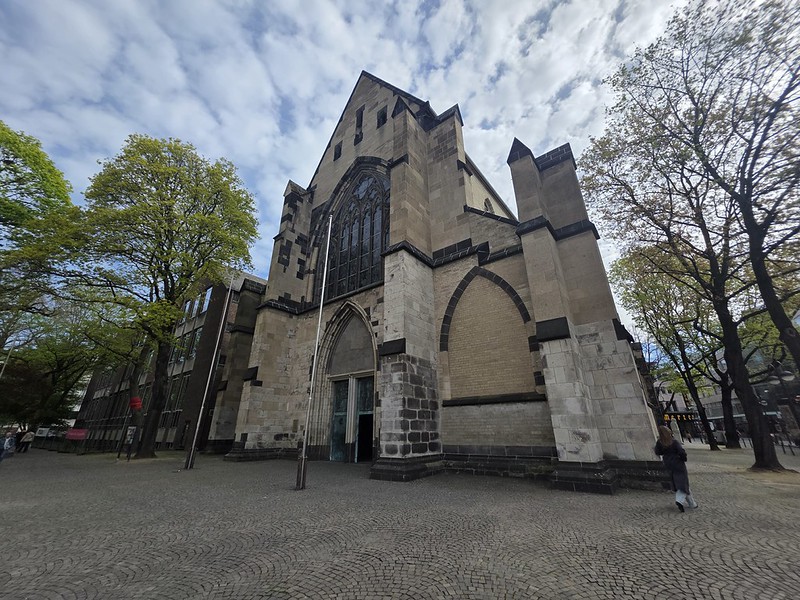
The Minoritekirche in Cologne (St. Mariä Empfängnis in German) might look slightly understated, but it has a long heritage. It was built for the Franciscans, or Minorites, in the thirteenth century which meant some relative architectural restraint, though ‘restraint’ in medieval terms still left room for a very handsome Gothic interior. The Franciscans came to Cologne in the early thirteenth century and their church developed into one of the major mendicant foundations in the city.
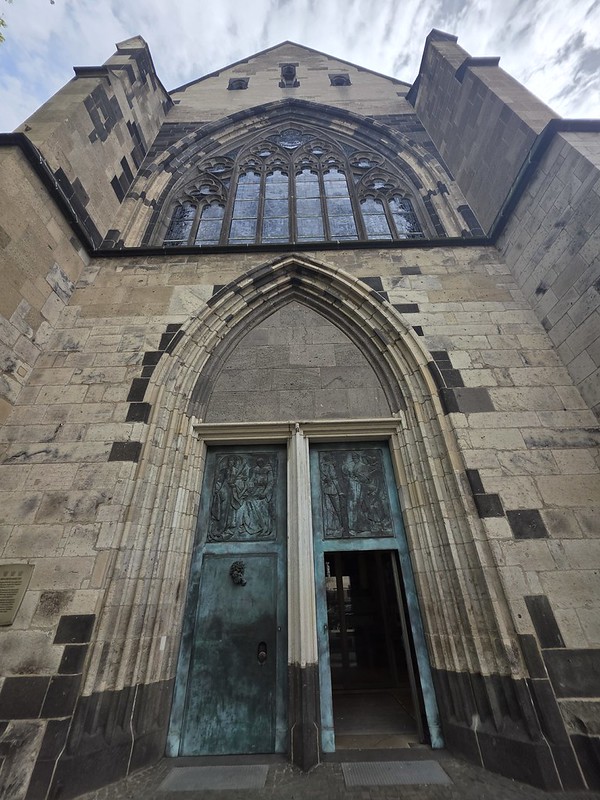
After the Franciscans split in 1517, the Cologne house belonged to the Conventual branch and the church was later reshaped in the seventeenth and eighteenth centuries, before suffering badly under French occupation and the secularisation that followed. During this period, the friars were expelled and the building was put to more utilitarian use. It was saved in the 19th century, badly damaged again by bombing in 1942 and then rebuilt after the Second World War.
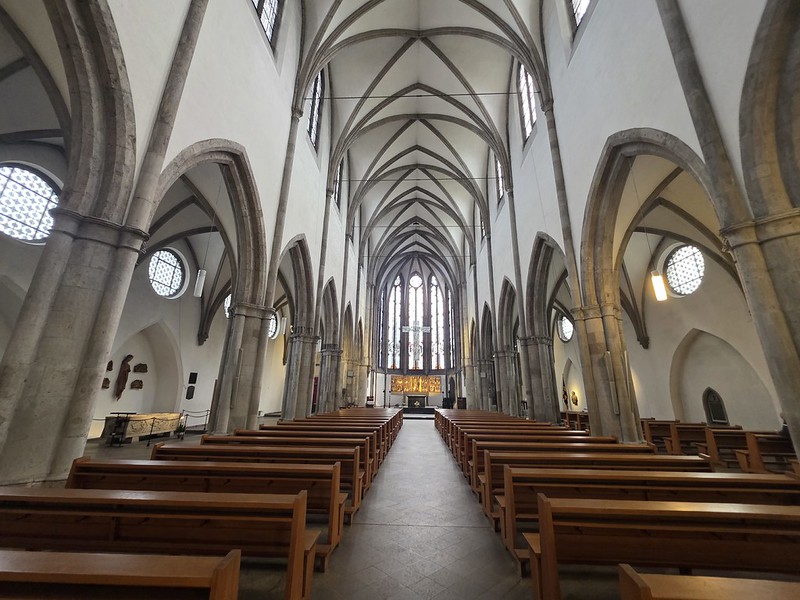
The nave of the church, which was peaceful and quiet. I had just been to the city’s grand cathedral which was beautiful, but that was anything but quiet. It’s only a short distance away and in 1846, the church was handed over to the cathedral and it was used for confirmations and ordinations.
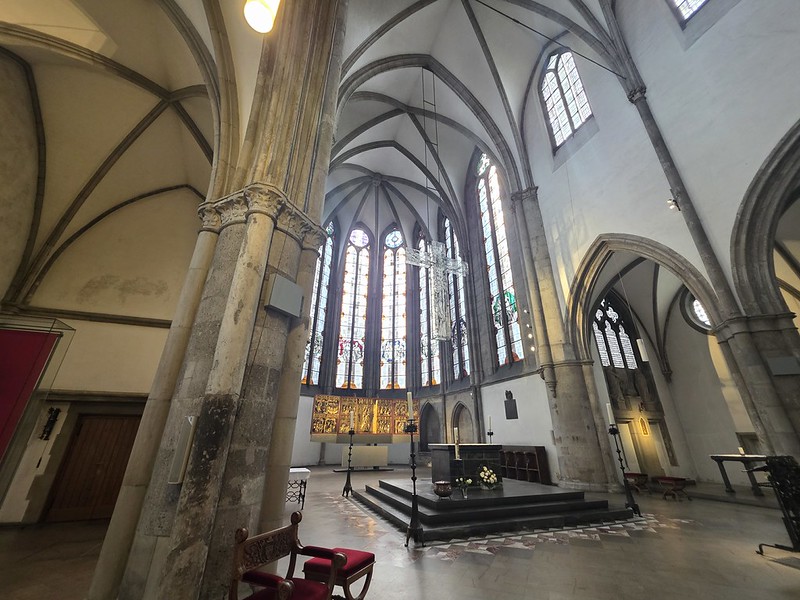
The chancel and it feels well proportioned and light.
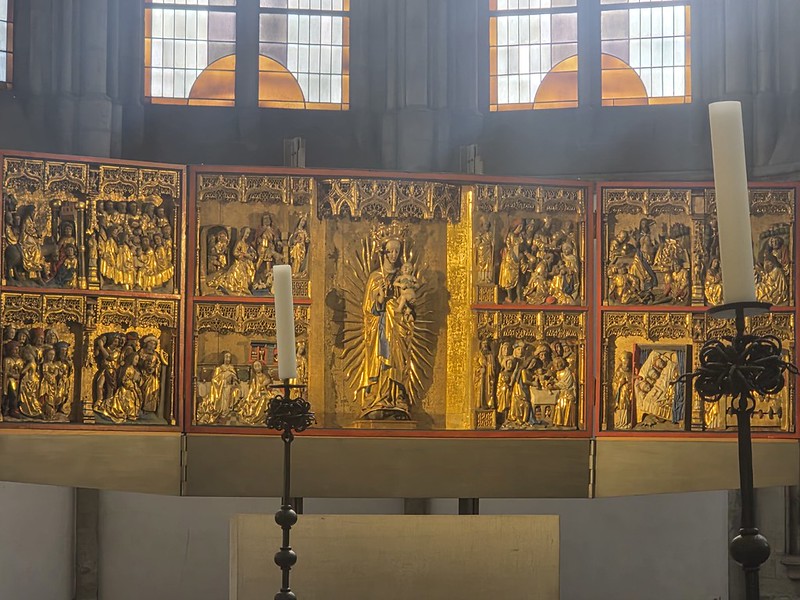
The rather grand altarpiece.
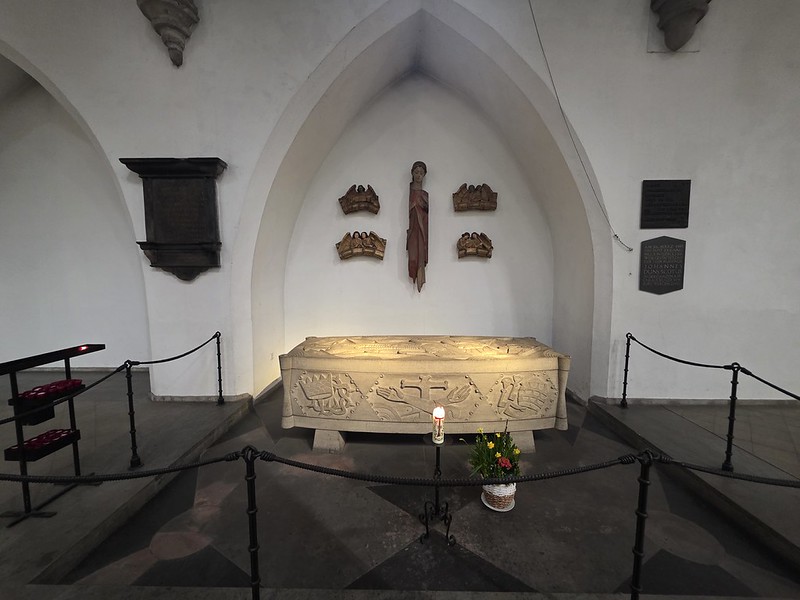
This is the tomb of Duns Scotus (1263-1308), medieval Franciscan philosopher and academic theologian. Known as the “Subtle Doctor”, he specialised in arguments of extraordinary complexity, suggesting a mind that found straightforwardness a rather unappealing little arrangement.
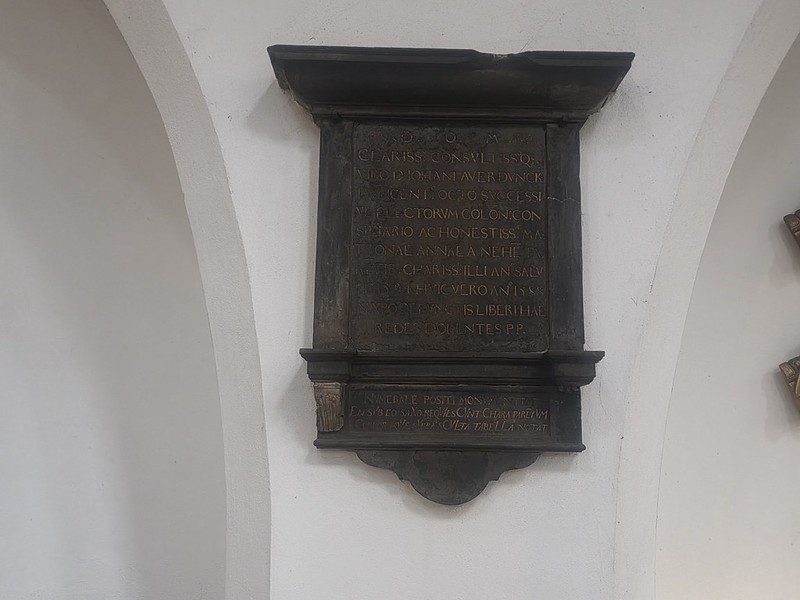
This memorial tablet is an epitaph for Johann Averdunck, a distinguished local legal and administrative figure. The monument is written in Latin and follows the traditional “D.O.M.” (Deo Optimo Maximo) dedication, which translates to ‘To God, the Best and Greatest’.
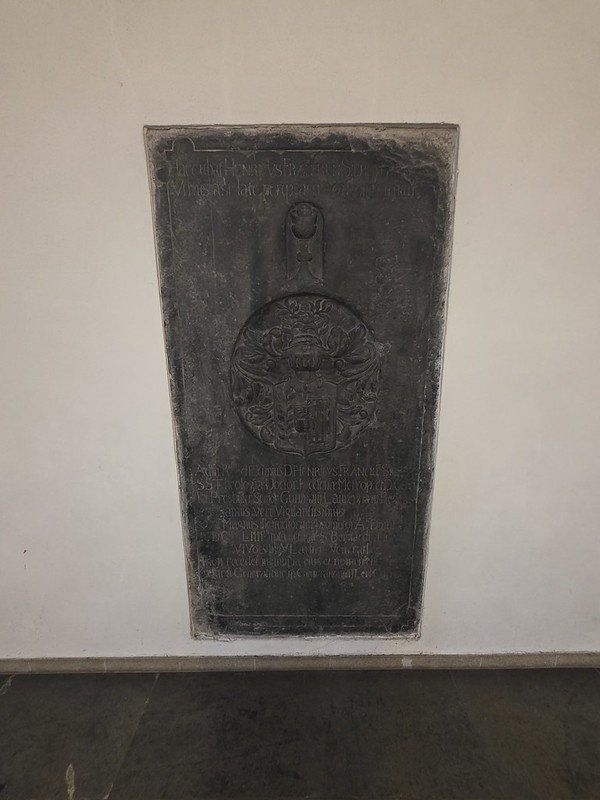
This is the seventeenth century Latin memorial tablet dedicated to Henricus Francis (Henry Francis), a notable scholar and clergyman.
As a note about just how observant I clearly am, the church also has the tomb of Adolph Kolping (1813-1865) who founded the Kolping Association. He was ordained to the priesthood in this church in 1845, but his father died the previous evening, so that must have been something of an emotional challenge.
I found this to be a rather lovely understated and quiet church, very much a contrast to the cathedral. The building had been knocked about so many times over the centuries that in many ways it feels quite modern, but the heritage is evident in other ways.