
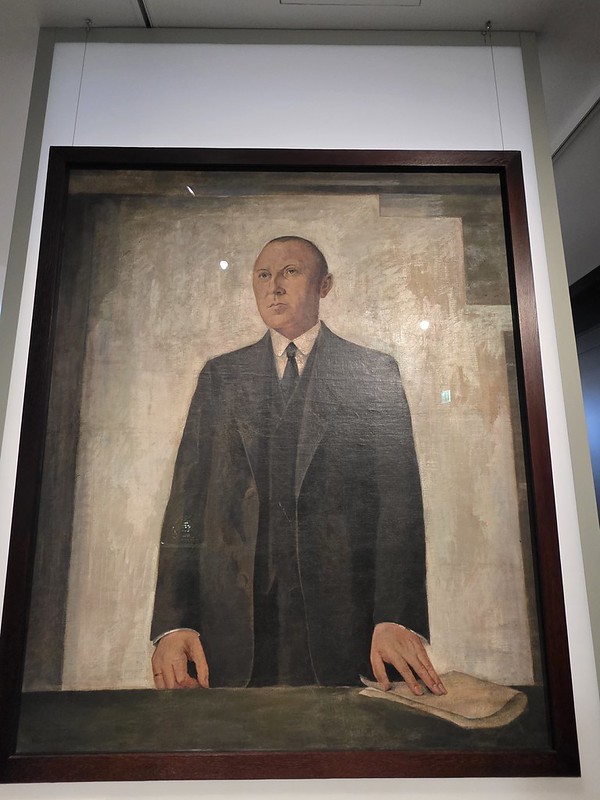

Before the Second World War, Konrad Adenauer was best known as a Catholic politician of the Centre Party and as the long serving mayor of Cologne, where he developed a reputation for administrative competence, modernisation and a rather practical approach to urban Government.
Born in 1876, he rose through local politics during the German Empire and the Weimar Republic, helping shape Cologne’s infrastructure and civic life while also serving in wider Prussian politics. He was conservative, anti extremist and not remotely enchanted by the rise of National Socialism, which led to his removal from office after Hitler came to power in 1933. It seems that Hitler respected his ability to get things done, but his politics were too far removed for him to be allowed to remain in office. During the Nazi period he lived under suspicion, was at times arrested and remained politically sidelined.
After the war, Adenauer became one of the central architects of the new West Germany and a far larger figure than the pre war municipal politician might have suggested. As the first Chancellor of the Federal Republic of Germany from 1949 to 1963, he tied West Germany firmly to the West through NATO, European integration and close relations with France, Britain and the United States. He died in 1967, at the age of 91 and remained as a member of the Bundestag until his death.
In post war history he is often seen as one of the founding fathers of modern democratic Germany and is also regarded as one of the founding fathers of the European Union. That’s quite a handy list of achievements and in a poll of Germans he was voted as the greatest of them all.
The painting is by Eduard Horst (1893-1966) and was painted in 1928, when Adenauer was Mayor of Cologne. The museum seems to be a little more guarded about his reputation, the information panel by the painting notes:
“He was assertive and sometimes authoritarian. On occasion, his political actions pushed the boundaries of legality.”
That’s not entirely a glowing summary of your life’s work.