

The Deutz Suspension Bridge, which was later renamed the Hindenburg Bridge in 1935, was once a pioneering feat of engineering that defined the Cologne riverfront. Completed in 1915, it was a self-anchored suspension bridge utilising massive eyebar chains rather than the wire cables common today. Its design was so influential that it served as the direct architectural inspiration for the ‘Three Sisters’ bridges in Pittsburgh and the Kiyosu Bridge in Tokyo. For decades, it provided a vital link between the Cologne city centre and the district of Deutz, carrying motor vehicles, trams and pedestrians across the Rhine.

The demise of the bridge was a dramatic and sub-optimal affair that occurred in the closing months of the Second World War. On 28 February 1945, while Cologne was under heavy Allied pressure and suffering from frequent air raids, the bridge unexpectedly collapsed into the Rhine. Unlike many other Rhine bridges that were intentionally demolished by retreating German forces to slow the Allied advance, the Hindenburg Bridge failed during urgent repair works intended to fix damage that had been sustained in previous bombings. The collapse was a catastrophic event that reportedly resulted in many civilian casualties, as hundreds of people were allegedly on or around the structure, with many fleeing the city, when the weakened chains finally gave way.
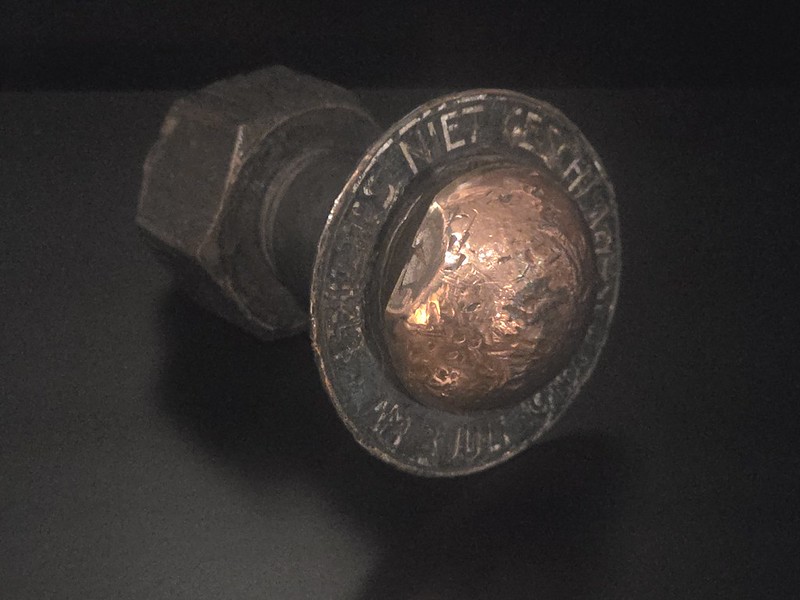
In the museum there is one of the rivets from the collapsed bridge, one of the many thousands that once held the structure up. If it hadn’t collapsed it would have been blown up by the retreating German army just a few days later, but without the huge loss of life. It’s a rather small survival from such a substantial structure, but it still tells the story of the disaster.