Category: UK

  • Bixley – Saint Wandregesilius Church (Rectors)

    I have more on the ruins of Bixley Church, but below is a list of rectors from the parish from over the centuries.

    1294 : Roger de Bykerwyke

    1304 : John de Brigham

    1316 : Richard de Linnbandesheye

    1318 : William de Overtone

    1349 : John de Hardleston

    1349 : Gilbert Arches

    1361 : John de Thornham

    1367 : John de Esterford

    1419 : Thomas Benny

    1421 : John Samson

    1426 : William Wyverton

    1467 : Thomas Maystyr

    1482 : Robert Murcoth

    1485 : Henry Bele

    1490 : John Custance

    1497 : John Dalle

    1513 : Robert Hubbard

    15?? : George Troghleye

    1528 : Ronald Johnson

    1540 : John Alen

    15?? : Ralph Hayton

    1570 : William Bainbrigge

    15?? : Henry Lynney

    1601 : John Holden

    1615 : David Thaxter

    1625 : Robert Cowell

    16?? : Thomas Watts

    1672 : Thomas Frost

    1674 : Richard Webster

    1682 : Giles Wilcox

    1690 : William Dylke

    1728 : David Fleming

    1747 : Henry Goodall

    1781 : William Dowson

    1800 : Samuel Hudson

    1810 : Peter Wallond Moore

    1813 : John Bowman

    1848 : Charles Brereton

    1876 : Henry Cecil Fellowes

    1878 : Charles Turner

    1887 : Alfred Edward Alston

  • Bixley – Saint Wandregesilius Church

    Sadly, this church was destroyed by fire on 14 May 2004, even more unfortunate was that it was an arson attack. There has been a church here since Saxon times and it seems enormously sad that a church set fire 15 years ago is still in this state. Realistically not much can now be done other than to knock down most of the nave and just keep the tower.

    The tower is perhaps the most interesting part of the church, not just because it’s mostly what is left standing, but also because it’s the oldest remaining part. The tower dates to the fourteenth century whilst most of the rest of the church dates to 1868.

    The church was once quite influential and important, and it is the only one in the country which is dedicated to Saint Wandregesilius. And this in itself is a slight mystery, as why does a church in rural Norfolk have a dedication to a Benedictine abbot from France? Wandregesilius, or Vandrille, went on a pilgrimage to Rome and then, to allow himself a religious life, he left his wife. History doesn’t record exactly what she thought of this. He then became a hermit before going to live and work in the Benedictine monastery at Montfaucon. After that he went to St. Ursanne, Jura, which is now in Switzerland, and then became a hermit.

    However, back to the question of why the church is dedicated to him. Wandregesilius also founded the monastery of Fontenelle, and it’s that which is one possibility. The Norman conquerors of the area came from Normandy (obviously given the name) and the name and reputation could have come over at that time.

    But there’s another solution suggested by a former vicar of the area, AE Alston, who said that the church likely fell into disuse by the late thirteenth century and it was refounded by William de Dunwich. It’s suggested that he possessed a devotion to, or a relic of, Wandregesilius and that is why the church was rededicated to him.

    On another matter, once upon a time there was a medieval village in the area, but this has now gone and so have the roads and footpaths which served the church. The church was also once an important pilgrimage centre, so this was a significant location.

    The damage to the porch, with the former nave being unreachable as there are barriers up to prevent entry.

    Although the church was heavily modernised when it was restored, and indeed rebuilt, in 1868, it hadn’t changed a great deal since then until it was hit by the fire. Back in the sixteenth century there were two bells in the tower, but the mid-nineteenth century there was just one, with an inscription reading:

    “I to the church the living call, and to the grave summons us all”.

    Very cheery.

    It seems that the oak rood-screen survived the 1868 restoration, although I assume that it was either missing before the fire or destroyed during it. The register of burials, marriages and funerals was reported to still exist in 1900, with the book dating back to the seventeenth century and it contained the baptisms since 1575, the marriages to 1563 and the burials to 1593. I shall try and locate where that book is now…..

    For anyone who wants a list of rectors of the church (and I’m not expecting this to hit the tens of millions if I’m being honest) then they’re here.

  • Thetford – Stocks

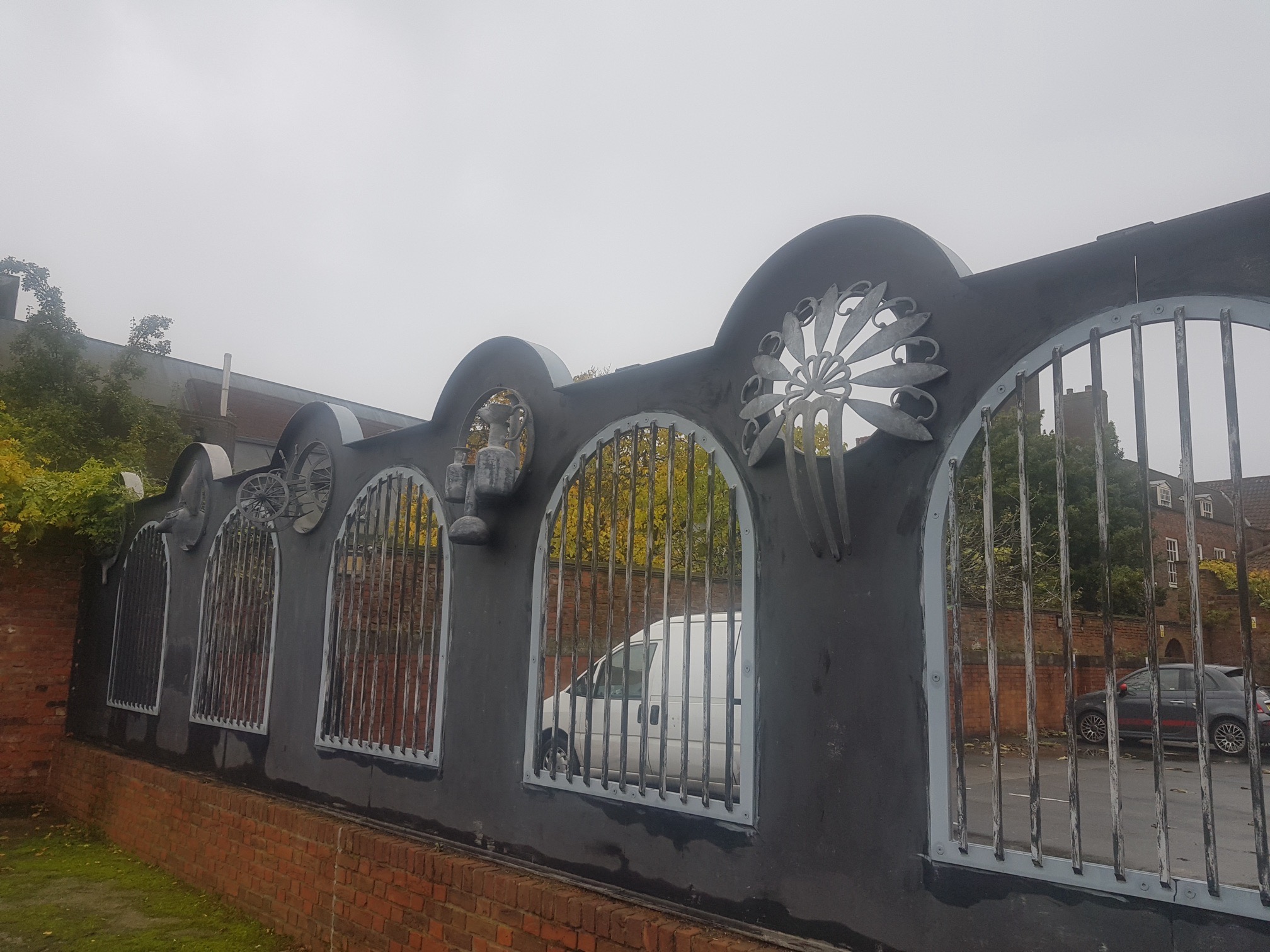
    The Thetford cage and stocks were located over the road on Cage Lane and were originally opened in 1581. The building was larger and it’s infuriating to know that the council demolished it in 1968, salvaging only the window arch and placing this in its current location over the road as part of a new public toilet complex.

    The cage remained in use until the nineteenth century and the council then decided it would flog off the stocks, which had long since fallen out of use, at the local market. Their whereabouts were unknown for some time, but it transpired that they Mr. Barclay’s Park in Norwich, and they were fortunately returned again to the cage.

  • Thetford – Thetford Mill

    Thetford Mill, located on the appropriately named Watermill Lane, which was used as a corn mill and closed in the late 1950s. It was originally built in the early nineteenth century on the site of a former pit mill. It’s also known as the Coffee Mill which most reliable sources suggest is just because of what was stored there, but some web-sites are saying that coffee was also ground here. Anyway, it’s one of those two options no doubt…..

    Although all of the machinery has now gone from within the building, the mill bridge structure still performs the role of regulating the flow of the River Thet.

  • Thetford – Church of the Holy Sepulchre

    This priory was founded in 1148 and it takes its name from the Augustinian order of the Holy Sepulchre, of which there are no other remains in the country. The order didn’t have the wealth of other religious establishments, such as St. Mary’s Priory, and failed to grow in size and power. They did own the comb of Thomas Becket though as one of their most holiest of relics.

    The Reformation inevitably wasn’t kind to the order  and the building was seized by the Crown and the order dissolved in 1536. The nave survived and was turned into a barn, but the structure of the building continued to decline.

    This entrance was built in the eighteenth century when the building was used as a barn, and then subsequently blocked off. Parts of the building were also used as ornamental gardens.

    There was a lot of structural work going on when I visited in 2018, with some of the information signs being inaccessible. The site is now managed by the English Heritage, with no charge being made for admission.

  • Thetford – Thetford Grammar School

    Thetford Grammar School is, as the plaque notes, one of the oldest schools in the country. It has been educating children for over 1,400 years, which is quite a claim for any educational establishment to have.

    The actual date of the school’s foundation is rather unclear, which is inevitable given the sort of periods of history that are being referred to. There are some who claim it was founded in 631AD as it’s known that Sigebert, the King of the Angles, wanted a school creating in his court.

    Some date the school to the late eleventh century and relate the school to being run by Herbert de Losinga. He is an important figure in Norfolk as he was the first Bishop of Norwich, but he had previously been the Bishop of Thetford. The Cathedral of Thetford, which is a strange concept to write, existed from 1072 to 1094 and Thetford Grammar School was built on the site of the building.

    The school had some turbulent times around the period of Reformation, but it continued in operation in its one room until the late eighteenth century. The facilities were improved at that point, in conjunction with the Victorian Girls’ Grammar School which was opposite, with the two schools later merging.

    Perhaps one of the most well-known of the school’s former students, and I’m sure many would disagree, is Thomas Paine. A controversial figure who went from a quiet upbringing in Thetford to being one of the Founding Fathers of the United States, before he upset lots of Americans with his religious views.

  • Thetford – Captain Mainwaring Statue

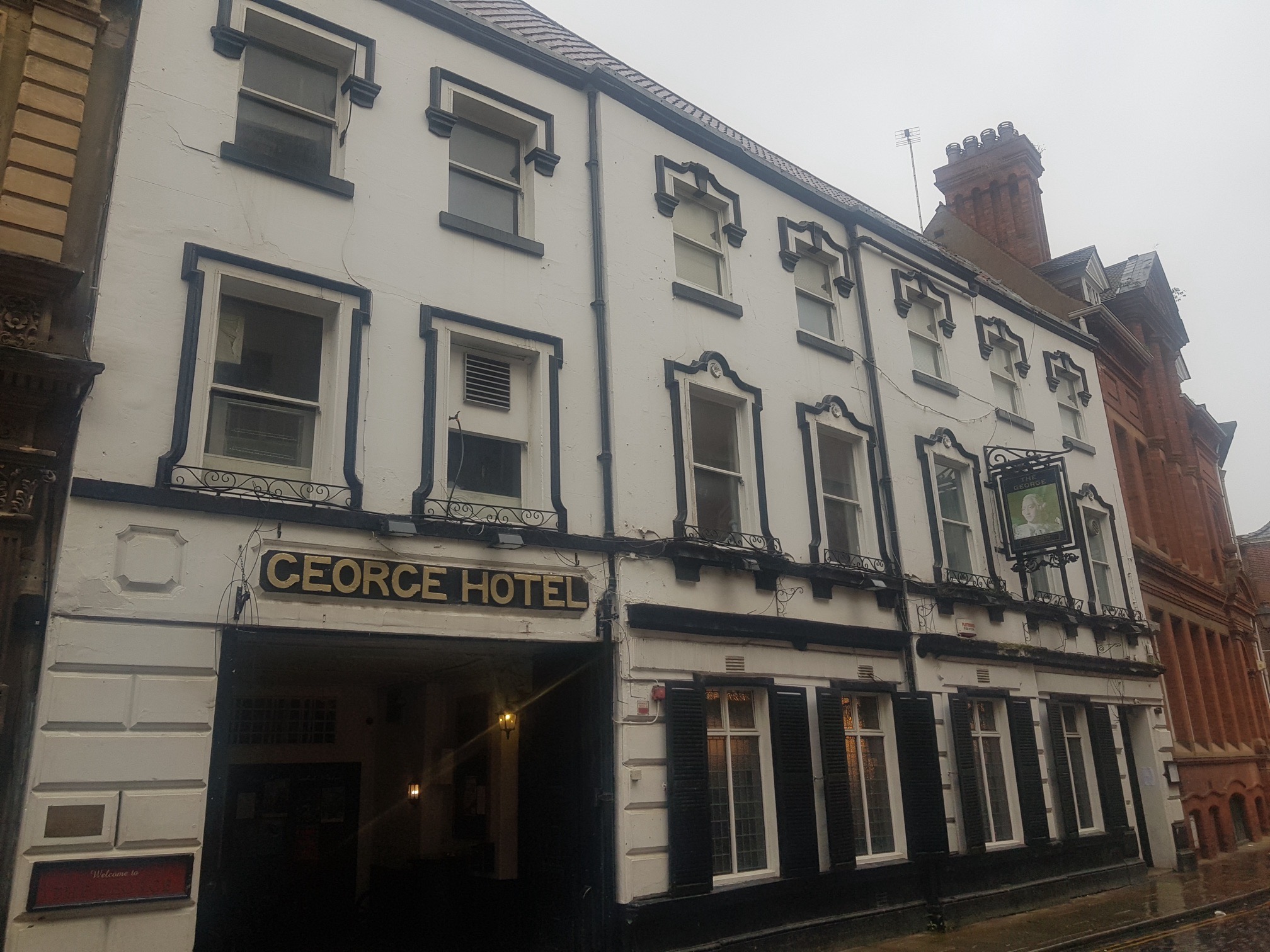
    This statue of Captain Mainwaring from Dad’s Army was unveiled in 2010 and it was located next to the Anchor Hotel in Thetford, where many of the actors stayed when filming. This was a wonderful (although admittedly a little run down) eighteenth century building which appeared in the opening scene of the first episode of Dad’s Army, so it was a very suitable location.

    There had been a hotel and pub on the site for 400 years, so Breckland District Council bought the site and knocked the hotel down. The site is now home to a bland Travelodge, but not to worry, they’ve put a plaque up in the hotel to note the area’s history. And at least the area is decently landscaped now.

    A close-up of the statue and visitors to the area can sit next to it on the bench. The statue was unveiled in the presence of Bill Pertwee, who sadly died in 2013, who played the ARP Warden Hodges in the series.

  • London – Forgotten Streams by Cristina Iglesias

    This photo dates back to January 2018 and it’s an art installation by the Spanish artist Cristina Iglesias which is located at the relatively new Bloomberg HQ in London. It’s designed to mark where the Walbrook River once flowed, a river which was covered over relatively early on, during the fifteenth and sixteenth centuries.

    The art installation is made from cast bronze and there are strands of this material used throughout, so the water flows to create small pools.

  • Leek – Cobblers

    This small pub is located on a side street near to Leek town centre and it had a welcoming and community vibe to it. I liked the pub’s policy that there are no televisions, something I’d prefer most pubs to do….

    There were a few real ales to choose from, although nothing that really interested me as everything was either a bit generic or quite light. However, the beer I ordered was well kept and was at the appropriate temperature.

    There was a little snug area to the rear of the pub which had a number of board games, including Connect 4, Guess Who, chess, dominoes and so on. There were a few dogs in the pub and most customers seemed to know each other, so I imagine it’s a popular pubs amongst locals. All in all, this is a decent community pub and the prices were towards the lower end of the scale. Friendly, clean and comfortable, all rather lovely.
  • Leek – Google Car

    This is the first time I’ve seen the Google Streetview car in some time (it’s not very clear in the photo, but it’s the lane to the left of us at the front). Unfortunately, it doesn’t seem to have been recording…..