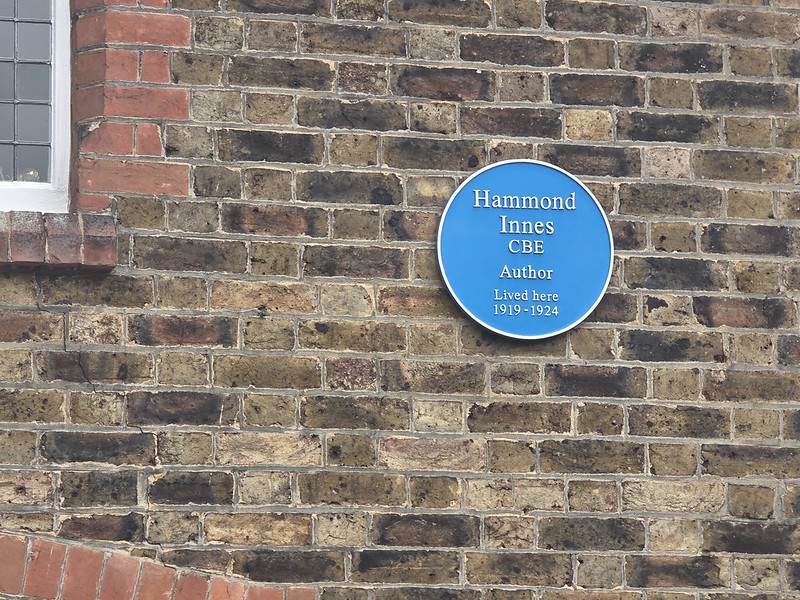
Not that I have time to read anywhere near as much as I once did, but Hammond Innes (1913-1998) was one of my favourite authors. Whilst walking down The Causeway in Horsham, I was pleased (and moderately delighted) to see a blue plaque in his honour.
Hammond Innes lived in this property as a child, when he was attending a local primary school before he went off to study at the Cranbook School in Kent. Innes had been born in Horsham, but after he married his wife, Dorothy Mary Lang, they spent most of their lives residing in Kersey, in Suffolk.
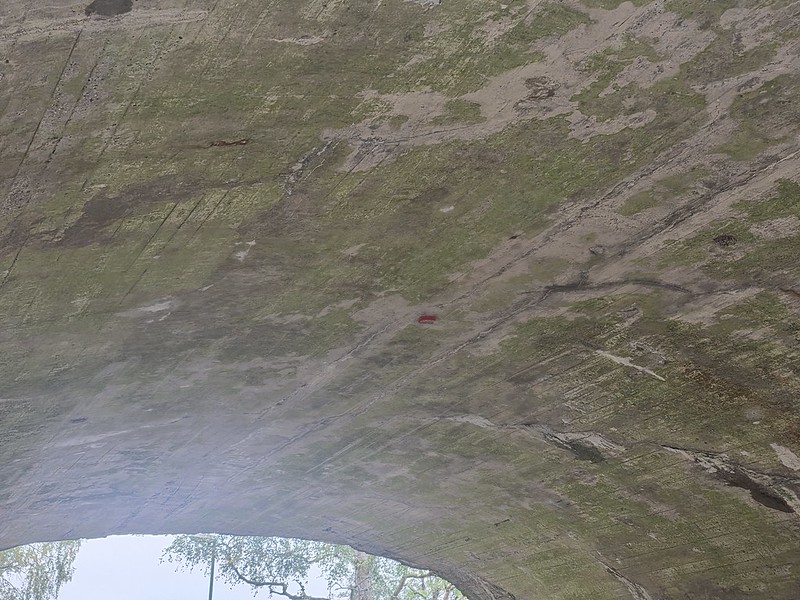
This was a Nathan discovery, but that likely won’t surprise anyone that knows him. It’s a proper bona fide tourist attraction now with a Google business profile and everything. It’s a railway bridge with something special attached to it.
The anticipation mounted as I got closer to the main exhibit. It’s one of those anonymous artworks and I think it’s best that the artist isn’t yet known, as that would only mean someone would pinch the jelly and a chunk of the railway bridge to sell at auction. I don’t think society is ready for a whole new crime of jelly theft at the risk of transport infrastructure damage.
And there we are, perhaps the highlight of the weekend! Fortunately the locals haven’t all caught onto this new tourist attraction so the queueing situation wasn’t too bad when I visited. Well, I was the only person there, but I suspect that there will soon be queueing barriers and everything set up. As another highlight, if it’s quite busy when someone visits, they’ve established 24 hour opening to try and spread the queues out a bit.
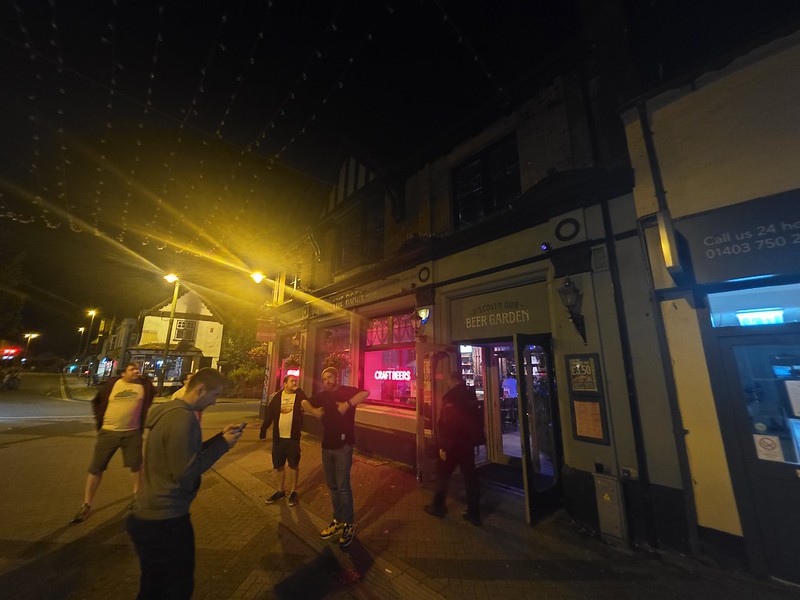
The next pub (and final one for me, I can’t be doing partying until the early hours) was the Rock, which is part of the Brewhouse & Kitchen chain.
The beer selection, although this didn’t seem to entirely tie up with the range on the actual bar. The selection of beers was very reasonable and cut nicely across the beer styles, although the prices were a little towards the high end of the scale.
I rather liked the design of these keg lines.
The beer tap toilets.
This is the Waterbeach Weisse Mango & Passion Fruit from Pastore which is incredibly tart, but the flavours were agreeable. Pastore are known for their tart sours, so this was as I expected it to be. Nathan went for the Party Bag from Queer Brewing which I can’t say was the greatest beer that I’ve had. Although I read Nathan’s Untappd review and full marks for getting the words/phrases of “furniture polish”, “methylated”, “tricky”, “terrible” and “pomegranate” into the same description and after he’d had numerous drinks.
Full credit to Nathan for being so supple to get in this position so quickly. He might be over 30 now, but he’s still got the moves. Note his shirt as well, it’s him that got me my Goose Island addiction and I still think they’re the best brewery in the world. I fancy another Chicago trip, but I digress….
We were going to stay a little later, but the venue was closing early and so the heavy drinkers amongst the group (I won’t name him as I’m discreet like that) had to drink up quickly. There was the suggestion from one of our party that perhaps the doorman could go and speed up the other customers to give us a few more minutes, but it quickly transpired that we were the only customers let.
I rather liked this venue, they didn’t have music blaring out and it was a clean and comfortable environment. A slight shame they didn’t open a little later, but the team members were friendly and engaging, so it felt like a welcoming venue. They serve food during the day before catering for the late-night crowd (late-night as in most customers, not Oscar) and I’d merrily go here again.
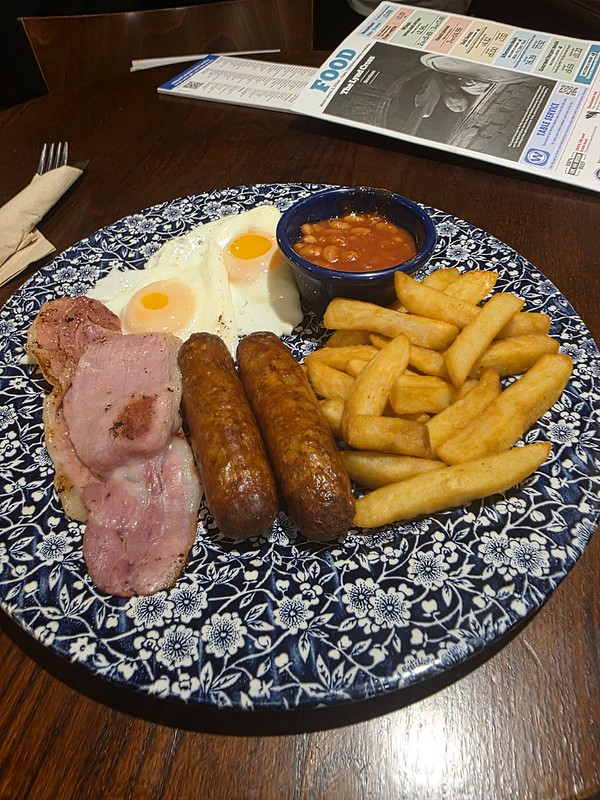
As I hadn’t eaten at the Burger King at the services, as the prices were far too decadent, I decided to get food and drink at the Lynd Cross pub in Horsham whilst waiting for the others (Nathan takes hours to do his hair). It’s a JD Wetherspoon venue and it was relatively busy when I entered, although it felt like a safe enough pub.
Before I go further, I’d add that I was going back for breakfast the next day so thought I’d get some riveting photos for this blog. Unfortunately, the damn thing was shut as they had a water leak, so the imagery on this blog is rather limited.
The chain, who at least make an effort to explain their history, notes:
“The Lynd Cross was the 14th-century name of the junction between the Bishopric and Springfield Road, now the site of this Wetherspoon pub. The first record of a building at this address is in the 1930s, when it was the Old Horsham Bakery.”
To my slight surprise, the venue is on the lowest price band for the chain, so this meal cost just over £6 and included a pint of beer. The group of lads on the table next to me were quite excited about that I had ordered a breakfast on a Friday night, although I pointed out that the chips quite rightly made this an evening meal. They also helpfully gave me some suggestions for other pubs in the town, one of which the others were about to go to. The food tasted fine, particularly at that price point, and was sufficiently filling and all at the appropriate hot temperature.
The drink never arrived at the table but the time I had finished my late night breakfast and so I just went to the bar to collect it. The Elvis Juice from Brewdog was its reliably grapefruity quality. There were six real ales available, but I wasn’t tempted on this occasion. Unfortunately, this pub isn’t in the Good Beer Guide, so I couldn’t tick another one off.
The service generally was a bit all over the place with the staff just standing talking rather than doing any table orders. I mention this as the venue has rather poor reviews for a Wetherspoon venue, which nearly all fit into the 3.8 to 4.1 stars on Google Maps (yes, I’ve analysed it that much). This one sits at 3.7, which indicates there’s likely a local issue going on so I’ve decided that it’s a great use of my time to read the reviews.
“So My Husband and myself are sitting outside Weather spoons in Horsham as I write this , with our 5 months old puppy on our laps , We know dogs are not allowed inside . Hence we are outside , We have been asked to leave because dogs are not allowed anywhere on the premises , I’ve never experienced anything so ridiculous. She’s as quiet as a mouse not disturbing anyone . So we can sit in any pub garden , but we not allowed to sit outside scruffy old weather spoons sitting on a rented public thoroughfare”
I’m not entirely sure that a lot of customers realise that the ban is on dogs generally, it’s not “no dogs, but we allow quiet dogs” as that is, unsurprisingly, difficult to enforce. And if you don’t allow dogs, then you can’t really have them in beer gardens or outside, as how do you get them through the pub or how do you go to the toilet or whatever unless you have someone else to look after them?
“Warning no dogs accepted outside. Even the staff member had trouble locating the sign. Even well behaved dogs. There loss of a £45 order. Other pubs in area dog friendly and excellent service”
I’ve seen pubs with “well behaved dogs welcome” signs but how are we defining a well behaved dog? One that doesn’t bark? One that doesn’t jump on tables or chairs? One that doesn’t bite other customers? And, in the same way as people think their child is an angel, I’ve met lots of dog owners who think that their dog is well behaved and IMO self-evidently isn’t.
“Terrible experience here. Ordered food while the app said there was a waiting time of 12 minutes. 25 minutes later asked at bar, very unhelpful. In the end we had food 39 minutes from ordering, had to rush to eat then go to an appointment. Also had to go to bar to get coffee cups as they didn’t arrive. Staff couldn’t care less.”
and
“Absolutely horrendous service 45mins it took for 2 small food meals & 10+ minutes for 2 pints of apple juice to arrive the atmosphere is dull”
There are a lot of these reviews from the last few weeks, something seems to be sub-optimal with this particular JD Wetherspoon.
“Dump and the lowest of low customers, even had one guy called Peter come up and Insult us, quite funny but would not set foot in here again”
This rather says more about the reviewer, but there we go.
“Surely one of the worst managed pubs in the Wetherspoons franchise. Service at the bar is nearly always slow; tables are rarely cleared; app orders take forever. They are seemingly always understaffed, and consequentially even on quiet afternoons they struggle.
In addition, whilst staff are friendly, there is quite a cliquey atmosphere amongst them collectively. Off duty staff can often be found performing ad-hoc duties, and there is a general atmosphere which can make customers feel like they are imposing upon the staff.
The pub just needs a reset, with a better manager in place who can help it realise its potential.”
This is one of the recent reviews, it feels quite balanced. But that’s enough of my commentary on this matter….
Anyway, as the pub was shut the following morning I couldn’t work out whether things were better when it was quiet and nor could I take a photo of the carpet (I didn’t say I was interesting). It’s quite a small venue for the chain, but it opened in March 1998 before they started opening much larger outlets as almost a standard. But, I have to note that the food and drink represented excellent value for money, so I left happy although maybe I’m just easily pleased….
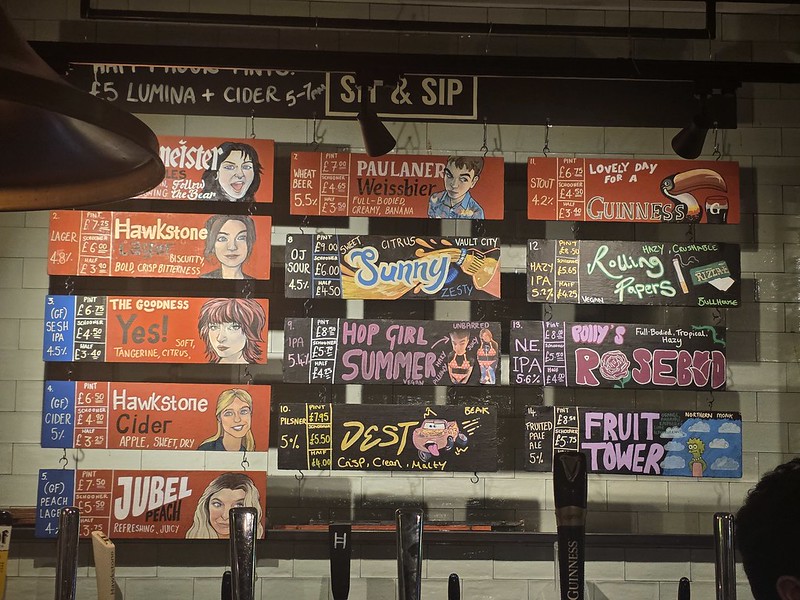
The next pub visited in Horsham was Sit and Sip which is part of a very small chain (well, it’s this and another venue in Wokingham).
The beer list which has some interesting keg options alongside the mainstream ones. The prices are pushing towards the higher end of the scale, but at least they’ve made an effort to provide some comfortable surroundings.
This is the Sunny from Vault City, lots of orange and suitably smooth. Perhaps this should be an option on hotel breakfast buffets….. And there’s Oscar. He had the Rolling Papers from Bullhouse and we agreed that it seems to be better in cans. It’s perhaps just one of those peculiar mysteries of brewing, like how Guinness tastes better in Dublin or why some beers lose their sparkle when poured by anyone called Derek.
The bar felt rather on-trend and the customer base was a mostly younger one. It’s more of a cafe bar on weekends with light snacks being available, but in general, they’re aiming to be a cocktail and craft beer bar. The only downside is that they closed at midnight, rather earlier than Oscar would have ideally liked, which meant we had to look for somewhere else. Between my two blog readers and myself, Oscar’s idea of a fun evening involves bars that only close when the sun comes up or when the staff finally beg him to leave. Or both.
Anyway, all rather lovely and I’m pleased to have been to half the Sit and Sip pub empire now.
Nathan had one of his good ideas that a group of bar billiards players should go to the 3rd Inter-County 4-pin bar billiards challenge. He collected some of the best Norwich players and as a tactical masterstroke I also invited myself to the event. Suffolk couldn’t make the event, so there were five teams in the competition with some experienced and quality players. Also, it was an honour to know that one person outside of Norwich (who are mostly bored hearing about this blog) knew about this blog 🙂
The venue was held at the Inn on the Green in Ockley. We’d gone down the night before and I’ll finish the write-up of those pubs soon enough. Nathan and I also thought it was a marvellous idea to see how many underground stations we could name at 03:15, but I’ve never been convinced that we’re very sensible if I’m honest.
Firstly, let’s deal with the beers. There were a few keg and cask choices, perhaps the best was the reliable Steady Rolling Man from DEYA.
And Guinness, it’s good to have a energy drink in the afternoon.
Before I get to the bar billiards, let’s deal with the most important element, which was lunch. Others had their meals in the evening, but I couldn’t be waiting for that long and so I went for the sausages and chips at lunch. Decadent, rich and meaty.
OK, right, food and drink out of the way.
My two teammates, Nathan and Fraser, we were Norfolk ‘A’. The other Norwich team had Pete, Zak and Oscar on, playing as Norfolk ‘B’. Nathan agreed to sacrifice doing very well by having me on the team which was very honourable of him. Norfolk ‘B’ managed to arrive at the event late, but Norfolk ‘A’ were very conscientious and punctual.
Nathan excitedly waiting for the balls to drop.
And Nathan in action. It’s like looking at a young John Higgins.
The prizes were on show all day to tempt us. This was kind as there was no entrance charge for the event, the organisers were very generous.
The final game which Nathan stormed. There will be some videos going up on YouTube as Pete had cameras going on both the tables which were used in the competition.
And here are the final results. I was slightly surprised to do this well (I did think that I’d lose every match which has been known), although my first match was against Oscar “I’m better at coaching than playing” Gerdes so that was an easy victory. In fairness, he beat me when we happened to play again, which transpired to be his own victory of the day. I think he exhausted himself with the second battle against me.
Nathan did the best out of all the Norwich players, but he secretly knew that he would although he was disappointed that he didn’t average 2,000 points in each game. Fraser had bought two brownies to eat after winning a match, but he just had to eat the second one at the end of the day. His average score was higher than mine though….
So, what this meant was that Norfolk ‘A’ managed to come third…. This surprised and delighted our team. I’m not saying that Fraser didn’t love his trophy, but Nathan and I were positively clinging onto ours on the journey home so we could pretend we’re really good at this (actually, Fraser was driving, so it was probably best that he wasn’t clinging onto his trophy). I definitely heard a yelp of genuine pain when Nathan briefly couldn’t find his trophy.
After all the games, here was the award ceremony with Oscar still buzzing with the excitement of it all. He’s thinking of putting his fifth place award up in his pub. I was surprised that the venue didn’t give Oscar an award for finishing a keg of Steady Rolling Man on his own, but perhaps next year.
Oscar collecting the awards for his team as they’d cleared off home. Zak had performed brilliantly during the day despite being, er, tired.
Oscar took over the videoing after Pete had gone home. Oscar had just had a half hour conversation whilst in the venue’s conservatory which did a marvellous job of echoing the noise around the pub so that at least one of the two tables was shaking.
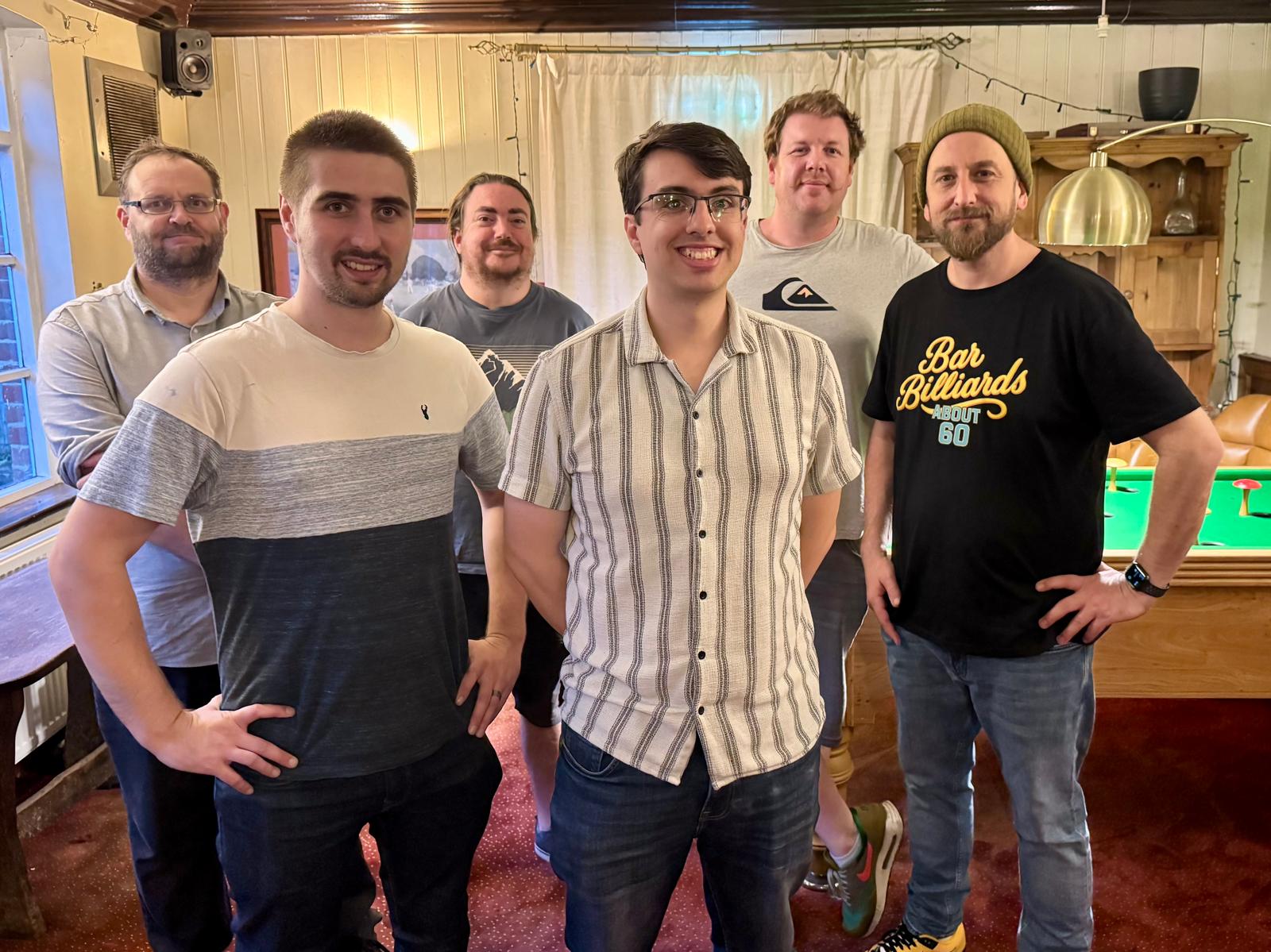
The six Norwich players. So very brave, especially for Pete who had a very painful handshake when his finger nearly fell off. Zak is standing at the back as he needed to be propped up.
The Birchanger stop on the way home as Oscar was craving KFC. We probably can’t go back to these services since he managed to get the napkin container stuck on his hand, but Fraser, Nathan and I didn’t say anything in case we got some free chicken from him in the car. I’m pleased to say that we did. Thanks to Fraser for his very professional driving, even though he’s been put off going to Leicester for ever.
This was a rather lovely weekend and the plan is to go back next year assuming that we’re actually invited back. Everyone was very friendly, the food and drink was excellent and Nathan and I want another trophy for our new trophy cabinets we’re building this week now that we’ve got something to put in them.
Very many thanks to the organisers and all of the other players, but big thanks to Nathan for planning this!
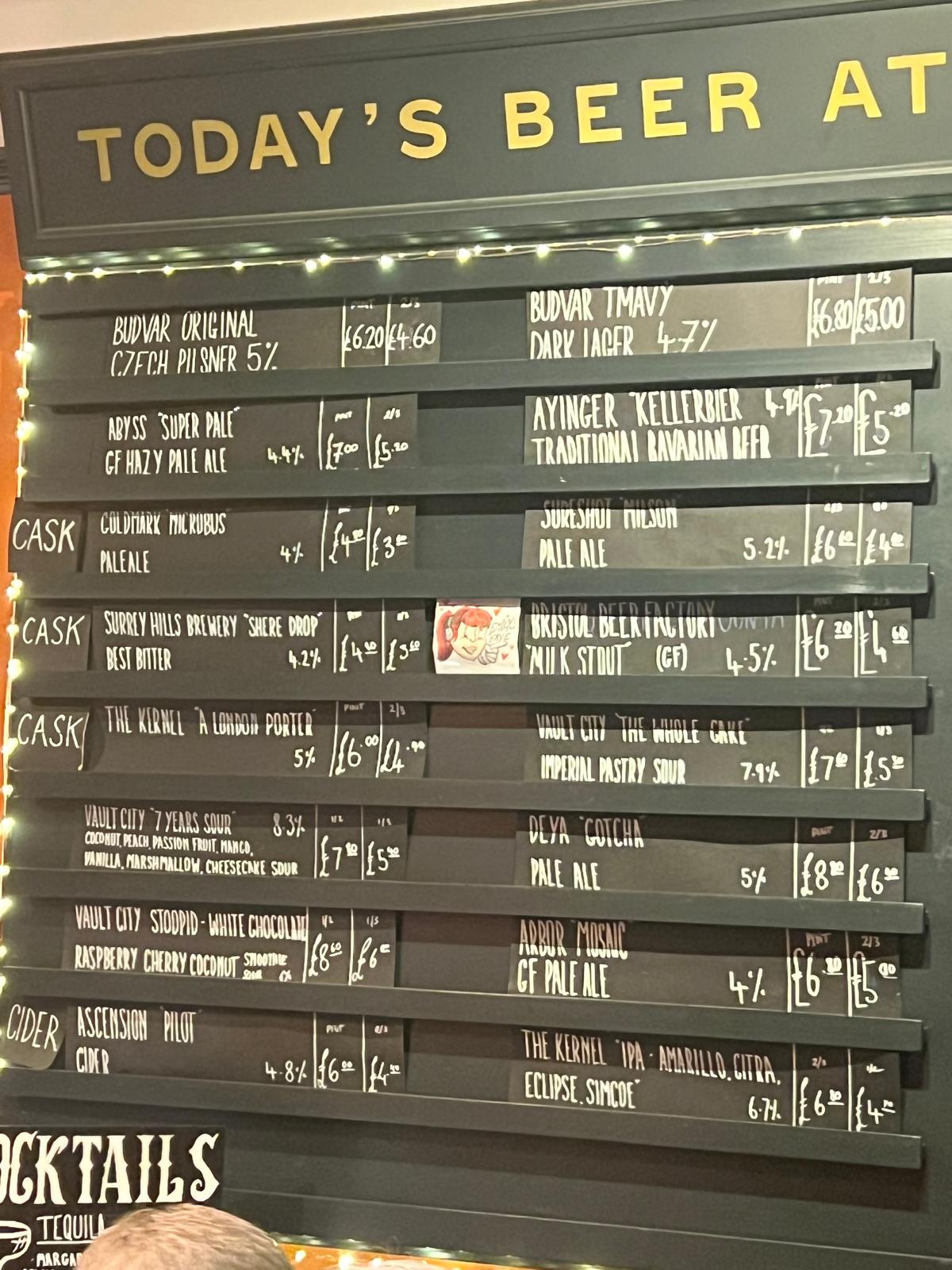
The Anchor Tap was the first pub we visited during our weekend of bar billiards in Surrey and I was pleased to discover that it is in the Good Beer Guide, so that’s another ticked off. And that’s an impressive selection of beers there, cask and keg. I think that’s a well curated beer list, numerous different beer styles and clearly laid out. As another plus, the venue is Untappd verified so I could see the beer list online.
Excuse the blurry Oscar, Pete and Nathan in the background. This is the Stoopid White Chocolate Raspberry Cherry from Vault City and I remember the delights of when the brewery released the standard version of this beer. It pours like a smoothie and is a light, gentle, fruity and creamy.
It was a busy pub and it takes its name as it was the former tap room of the Anchor Hotel. The building itself is late Victorian and CAMRA note:
“Having been closed for 30 years, this pub was reopened in February 2016 by Dark Star Brewery, but with the sale of that brewer to Fuller’s in March 2018, the pub became free-of-tie. It continues to be popular with customers both local and from afar. Refurbished in an early-20th century style.”
Although it was busy, the service was prompt and friendly, with the venue taking cards and cash. The prices are towards the higher end of the scale, but the beer quality and range is high.
The Whole Cake from Vault City, which had flavours of raspberries and mango whilst being creamy and fruity.
My next beer was the 7 Years Sour from Vault City (there’s a theme here for the eagle eyed reader) but Nathan doesn’t like the photo of him behind the beer and so I won’t use it here. Another beautiful beer with lots of mango and passion fruit, lots of depth and really quite decadent. But, all is not lost, the beer is visible in this photo.
It’s not a huge venue, this is the front room and there’s a small back room, with the nearby toilet space also being quite limited in size. This is where the pub that the local branch of CAMRA was formed in a few decades ago.
It was a really lovely venue and quite rightly in the Good Beer Guide, a perfect on-trend venue with cask and keg options. It’s well reviewed online and it had an informal and welcoming atmosphere, but given its relative small space it gets busy quickly.
James and I are visiting every food stall at Norwich market this year and we’re very nearly there, with this visit being to the cafe B’s T’s. I think we have an admission here, this unit was trading when we did this same project in 2023 but we don’t appear to have visited. So, this is one of four cafes on Norwich market and they’re the traditional stalls which sell hot drinks, burgers, rolls, hot dogs, breakfasts and the like. There seems to be a constant demand for these stalls as they’ve all been busy when we’ve visited them this year.
The menu board, but I don’t have a comparison from two years ago since we forgot to go there. It’s evident from the stickers on the menu that there have been some price increases though. There was a friendly welcome and the ordering system seemed easy to understand, with the stall taking both cards and cash.
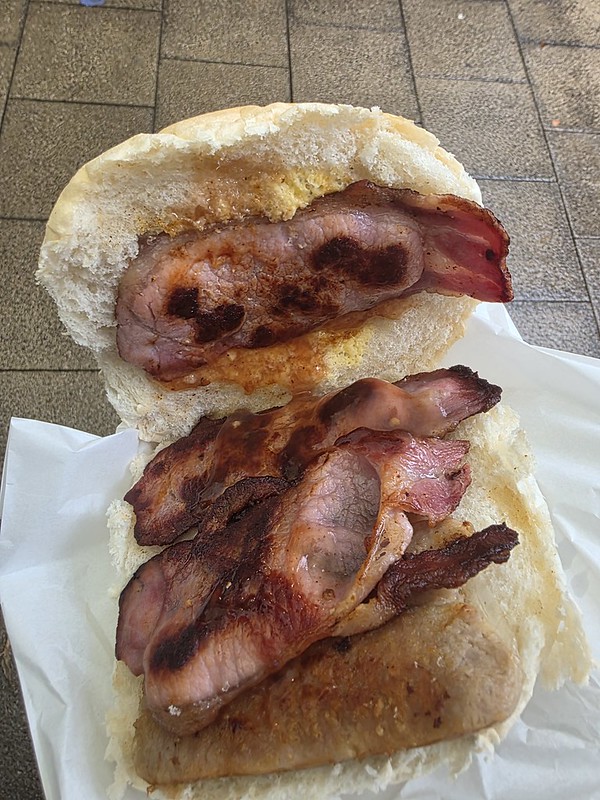
In my helpful way, I asked for a burnt bacon and sausage roll, which the staff member engaged with in a positive manner. Although she clarified that I really just wanted well done, she continued to reference the term burnt. I like this sort of engagement as it makes it easier for customers to return and be remembered by the stall holders. Anyway, it wasn’t greasy and the bacon was satisfactorily cooked and it meant that I had only a minimal need to remove excessive fat. The staff member did forget to add on the sweet chilli sauce that she meant to, although I had some ketchup in sachets with me anyway (it’s essential when travelling….). The sausage was meaty and juicy, although it was under the bacon and so a little hard to see in the photo. The roll was also soft and fresh, so another point there.
James had a cheeseburger and I can’t remember half of what he said about it, but he said it didn’t beat the best one he’s had in the market this year, but it was better than the last couple that’s he had. So, let’s go with he thought that it was above average. I’ll pay more attention to what he’s saying next time but a polite pigeon distracted me during the food testing phase of our visit.
Overall, I liked this stall and the service, it felt informal and friendly. The roll cost £4 which seemed reasonable for the market, although the market stalls are perhaps going to struggle a little with the onslaught of meal deals from national chains at the moment which are mostly priced at £5 to £6. I would repeat though for those looking at the photo and thinking the bacon has been overcooked, that was to my request and now they usually do it….
[I originally posted this in August 2018, but have reposted it to fix the broken image links]
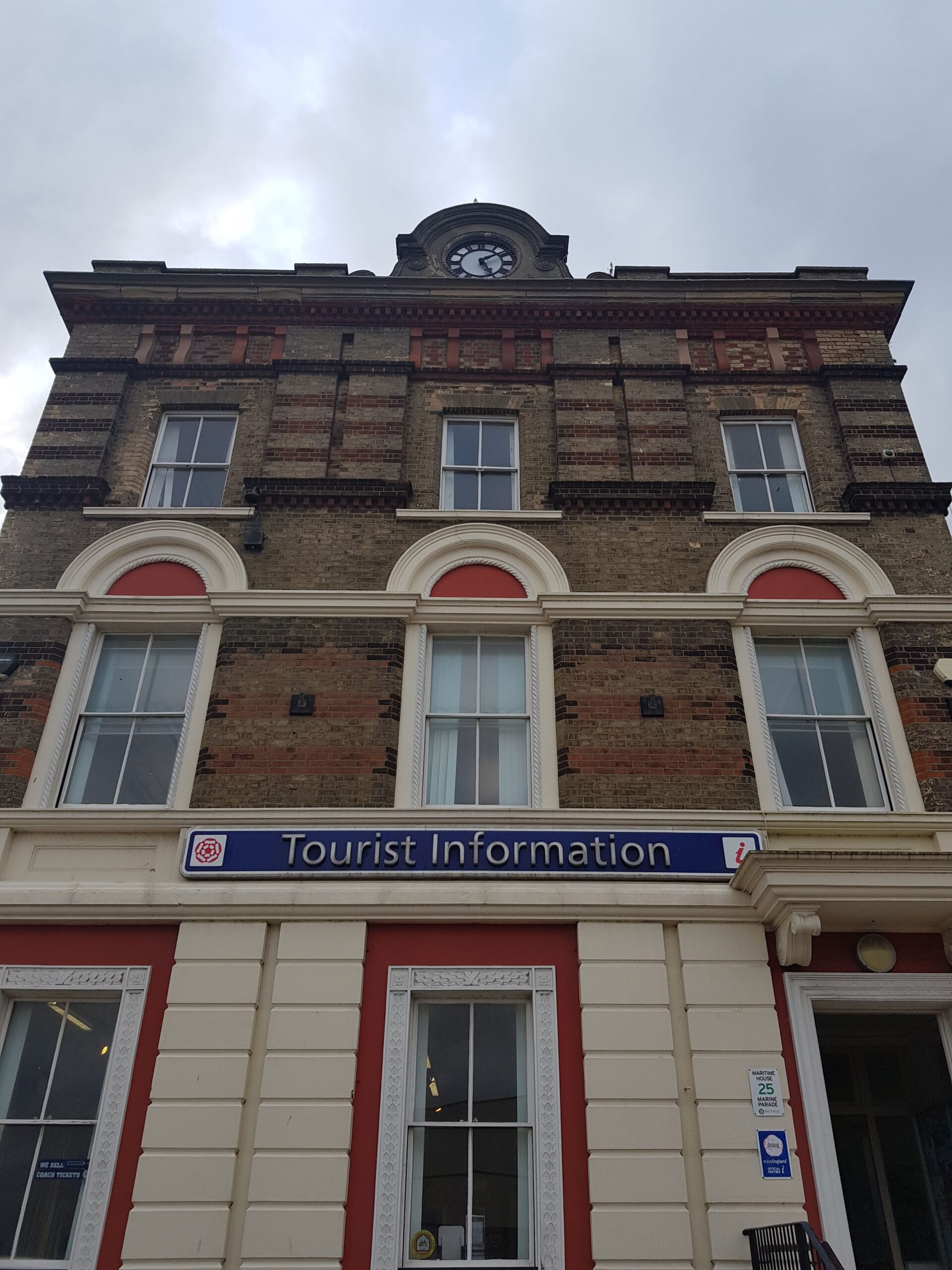
This building isn’t of historic interest just because it’s a tourist information centre (although I’m sure it is a lovely little service for visitors to the town), but because it was the Sailors’ Home from 1861 until 1965. During the time which it was open it looked after over 11,000 shipwrecked sailors from 29 different countries. I’m sure that I remember this building being used as a Maritime Museum for a while in the 1980s.
There doesn’t seem to be any specific connection with this building and HMS Lutine, other than it sailed from Great Yarmouth in 1799. The boat was carrying today’s equivalent of £100 million of bullion and coin and it sank, which must have irritated its owners. Although not overly irritated them as they had the sense to insure it, so Lloyds of London paid out for the losses. Lloyds have since salvaged some of the gold, although much is still underwater, and they also got back the ship’s bell. This bell, the Lutine Bell, is now pride of place in the Head Office of Lloyds in London. Although it occurs to me that if I sent a salvage crew to collect my gold I’d rather they returned with that rather than the bloody ship’s bell.
[I posted this in August 2018, but have reposted it to fix the broken image links]
I’ve walked by this church on Regent Road hundreds of times over the years, but never actually gone in it. The church opened in 1850 after three years of construction, replacing a small chapel which couldn’t cater for the growing congregation. At the time this was the only building on Regent Road and it now looks a little out of place with the mainly tourist orientated shops and restaurants that are on the street today.
The church was designed by Joseph John Scoles, who also designed St. Peter’s Church in the town. It was built for the Jesuits, although was taken over by the Diocese of East Anglia in the mid-twentieth century. When the church opened it had a congregation of over 800 people, showing why the previous building had been of an inadequate size.
The font is from the 1850s and was also designed by Scoles.
There are numerous of these painted artworks around the church and there are information sheets (well, pieces of paper stuck to the wall) which give information as to what they represent. The information sheets are though useful and give a little bit more context about the building’s history.
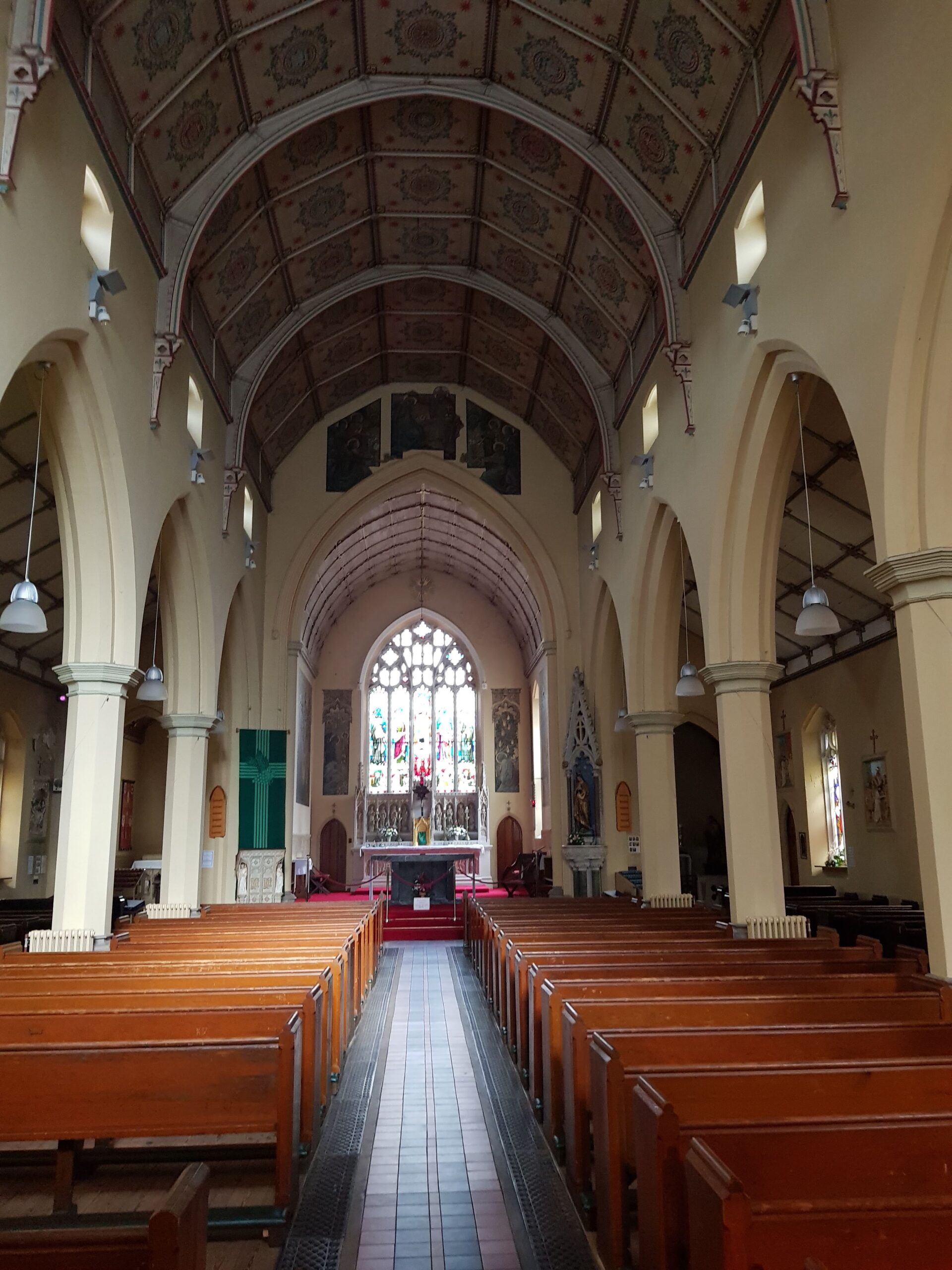
The impressive interior, which is relatively unchanged since the church was built, with some interesting roof decorations. There are over 800 carved roof bosses in the church and there are a few of the original mid-nineteenth century pews remaining in situ.
The pulpit was apparently designed by Pugin, although there seems some doubt on this, and it was installed under the supervision of George Myers.
The stained glass window, which I think is from the mid-nineteenth century.
The organ dates from the late nineteenth century and has 1,032 pipes.
I had wondered why there were numerous CCTV signs and warnings of alarms, but assumed it was a general security measure. Unfortunately though it now makes sense, as some yob tried to set the church on fire earlier on in 2018. Fortunately the damage wasn’t too severe and the idiot was caught and charged with committing hate crimes.
It’s a peaceful and quiet environment in the church, in contrast to the rather busy and noise shopping street outside. I can’t imagine this church when it was located on a little quiet road which led to the beach, but I’m pleased that it has survived intact.