

Another one of my random posts, but this has become something of a Norfolk & Suffolk LDWA group phrase. I blame Simon…..
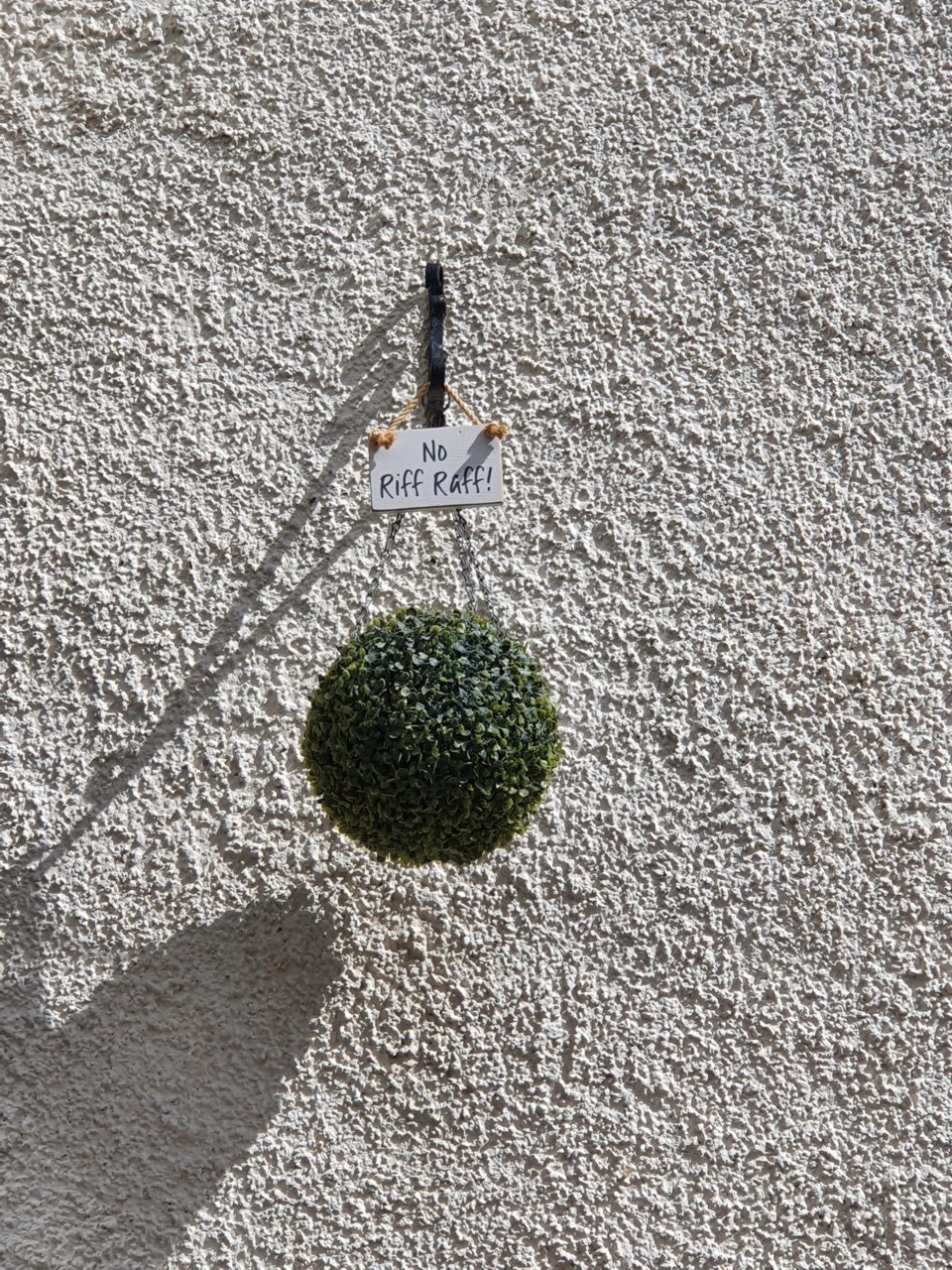
Another one of my random posts, but this has become something of a Norfolk & Suffolk LDWA group phrase. I blame Simon…..


This grave is located in St. Lawrence’s Church in Eyam, marking the life of Harry Bagshaw who lived from 1859 to 1927. According to Wikipedia, as let’s face it I’m not really a cricket expert, he was a first-class cricketer for Derbyshire and he was also a cricket umpire. He was born in Foolow, a village just outside of Eyam and his gravestone is an impressive affair with some cricketing imagery. During his lifetime he worked as a lead miner and his gravestone has the words:
“For when that one great scorer comes
To write against your name
He writes – not that you won or lost
But how you played the game”
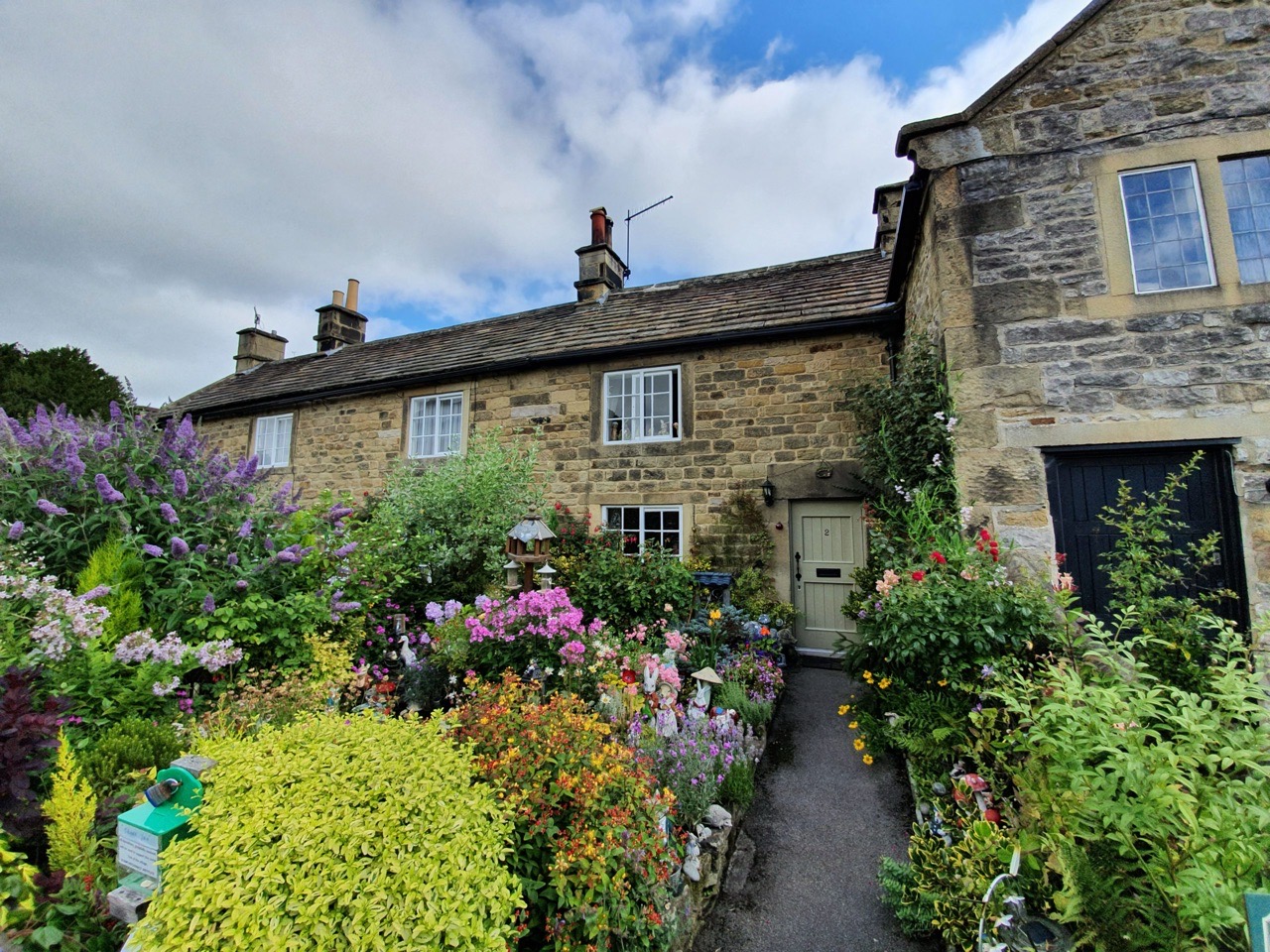

I’m not sure that this must be the most delightful place to live, but what is now known as the Plague Cottage was lived in by George Viccars who was the first person to die of the plague in Eyam in 1665. He worked as a tailor and he brought the disease to the village in a box of cloth that had fleas which were infected with the plague. Reports say that when he opened up the box he commented on how damp it smelled, but he hung the cloth up to dry and soon reported that he felt ill. I have to say, this wasn’t an ideal situation for all concerned.

The house looks beautiful today with its floral displays, but there is a real sense of tragedy to it. As the sign notes, George Viccars, the employed hand who brought the cloth in, was the first to die on 7 September 1665. Mary Hadfield, who had children with her previous husband, saw her son, Edward, die on 22 September 1665 and her son, Jonathan, die aged 12 on 2 October 1665. Alexander Hadfield, her new husband, died on 3 August 1666, a surprising gap between the deaths. Mary Hadfield survived the plague, but she lost thirteen of her relatives during the disaster.
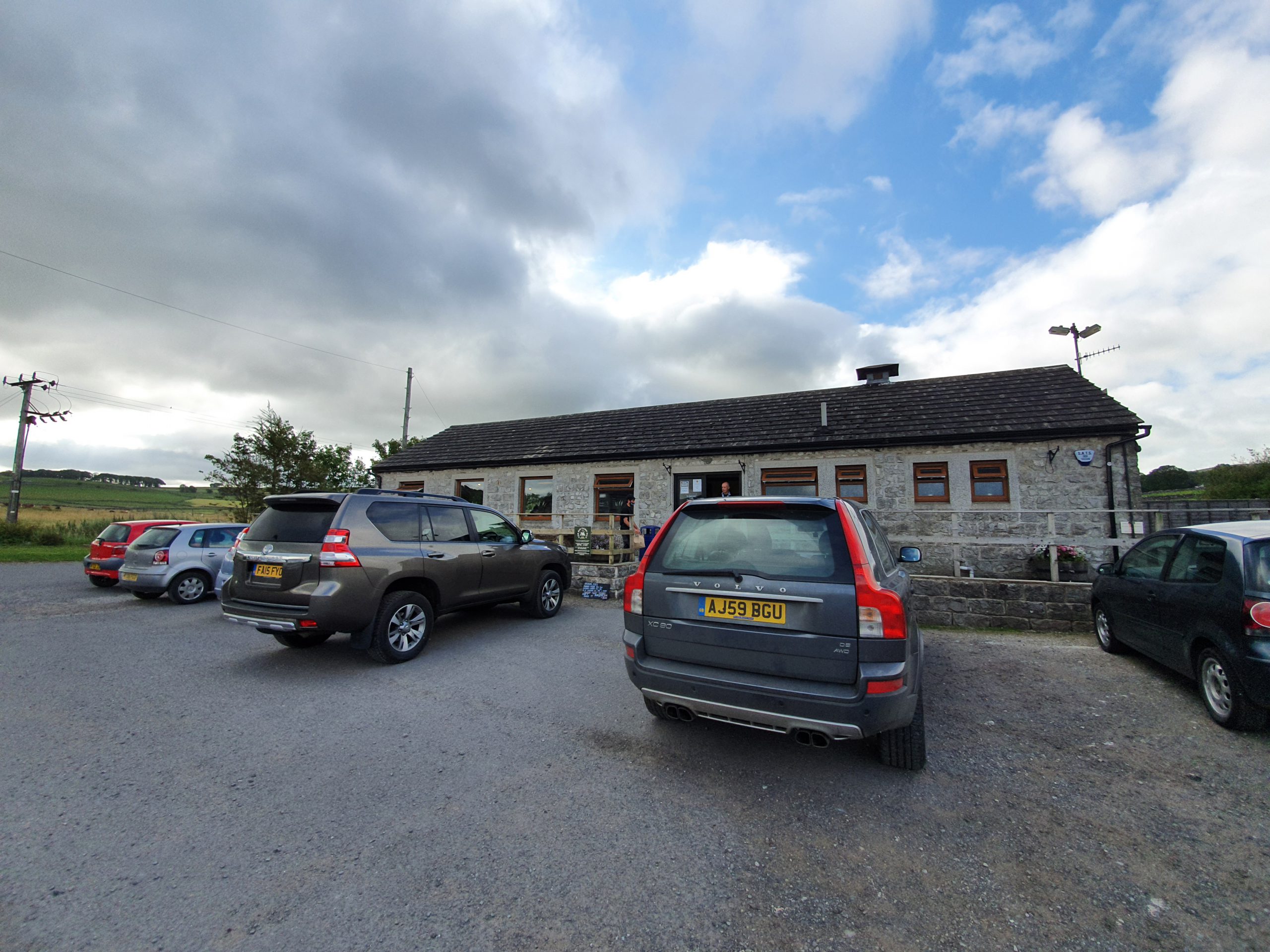

So, Jonathan and Steve had their fancy porridge pots in the morning, whereas Richard and I didn’t have anything. Richard demanded breakfast, so off we shot at 07:50 to get to the Yondermann Cafe at 08:00 just as it opened. This was probably a good thing as not only were we the first people there, it also started to get busy and I was able to get the table nearest to the plug socket. Some things in life are the most important.

The staff seemed pleased and welcoming to discover we were there just as they were opening up, just the kind of friendly first impression that’s so refreshing to see in the morning. And since I’d already been up hours, refreshing seemed sensible. Richard was very impressed with the selection, so what with him happy at the food choices and me happy at the power situation, life seemed complete. Oh, Jonathan and Steve were just happy that we were happy, it’s nice when people are like that, very selfless.

The cake selection.

I had the small Yondermann breakfast, which came with a filter coffee. Reasonably priced, and brought over promptly, it was cleanly presented. The quality of the ingredients was high and even the black pudding, something which I’m rather delicate over as blood is not one of my most favourite things, was pleasant tasting. The sausage was a little small, but had a richness of flavour, the bacon didn’t have much fat on and was nicely salted, the egg was cooked perfectly so I could dip the bread into it and the tomatoes were from a tin and just as I like them. I’m not sure about oatcakes as part of the breakfast, but this was as good tasting as I think they come and it soaked up some of the beans and tomato juices. All entirely satisfactory as far as I was concerned, a very useful way to start the day. The bread was unexciting and the spread seemed a bit margariney rather than buttery, but you can’t have everything.

This photo was taken just as I sat down to plug my phone in, but it didn’t stay like this for long. Everything was clean and the whole social distancing situation was being well managed.

I’m not entirely sure that this sign in their car park was as absolutely clear in its message as it could have been.
Overall, this was all rather lovely and I was content with my choice. We always felt welcome, we were never rushed, the food and drink was all suitably hot and the environment was clean. There was a bit of a motor-biker feel to the cafe, so I assume that they get a passing trade from them, as well as from the nearby campsite (nor the one that we’re at). The cafe is well-reviewed and


Some good news from SAVE’s Britain’s Heritage who have issued a statement today about Brandon railway station. I must admit I’m surprised, although having written that, I couldn’t get any answer from Greater Anglia about this and they didn’t seem to really know what they were doing. They couldn’t even tell me if there was to be any salvage attempt at the building or whether any of the frontage could be kept.
Anyway, SAVE’s press statement notes:
“A delightful country station dating from the golden decade of railway building and used in the filming of Dad’s Army has received a reprieve from imminent demolition. A High Court order issued today quashed the decision by Breckland District Council to allow the demolition of the 1845 station building at Brandon on the Cambridge to Norwich line. This follows judicial review proceedings launched by SAVE Britain’s Heritage seeking the quashing of the Council’s decision.
The Council had issued a lawful development certificate which said that Greater Anglia could construct a new car park under the railway permitted development rights. The Council accepted that they had failed to apply the legal test for what was railway land and overlooked SAVE’s representations.
In its response to the legal challenge the Council consented to the quashing of the certificate. Greater Anglia did not resist the Court order. SAVE will now work with the Suffolk Building Preservation Trust on new plans for repairing this historic station and bringing it back to use. A listing application has also been submitted to Historic England – supported by SAVE – and we are expecting a recommendation imminently.”
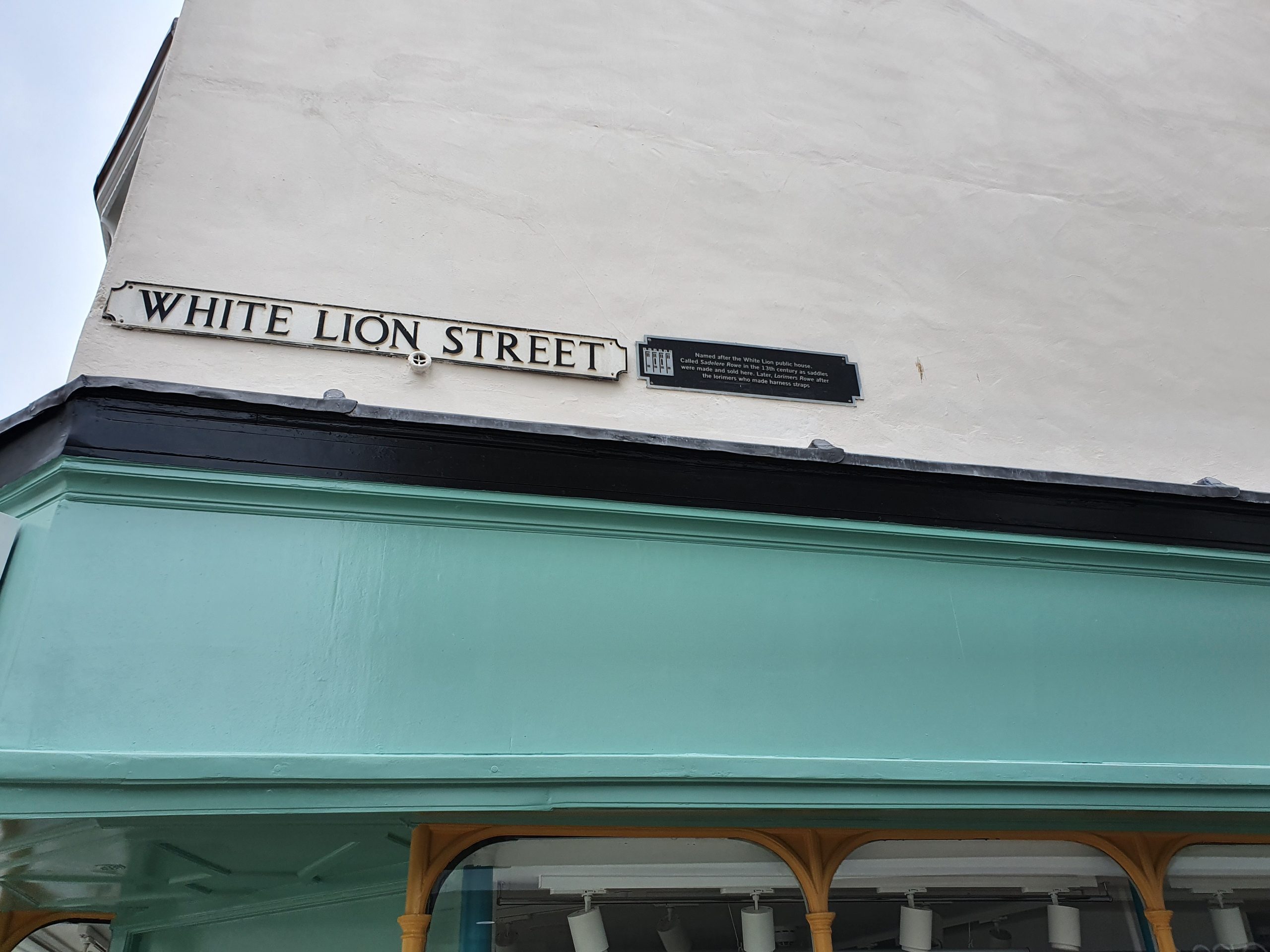

This news story is from 1860, when a robbery took place on White Lion Street in Norwich.
“William Marsham, on bail, was charged with stealing a coat, the property of Mr. George Womack, clothier, White Lion Street. Mr C. Cooper, who prosecuted, said the intent with which the prisoner took the coat did not seem to be a felonious one, and, therefore, with the Recorder’s permission, he should not offer any evidence. The Recorder, addressing the prisoner, said he entirely believed the statement the prisoner made to the policeman, that he had never known a happy moment since he took this coat, and he entirely believed that the prisoner had no felonious intention. That was evident from his going to the shop and putting the coat on before the eyes of all the shopmen. It was a case of drunken dash and daring, and he hoped the prisoner, having placed himself in such jeopardy by his intemperance would be wiser for the future, and abandon a vice which to young men in his position was often the first step to theft. The prisoner was then discharged”.
I can’t tell whether it was the father or son George Womack, but the former died in 1860 at the age of 72, whilst the son died in the Thorpe Rail Disaster of 1874, a tragedy where 15 people were killed. William Marsham was lodging at a property in Porter’s Square in Norwich a year later, working as a bricklayer, but I can’t work out where he went after 1861.
But, I do like the pragmatism of the Norwich courts at the time, as well as the phrase “drunken dash and daring”.
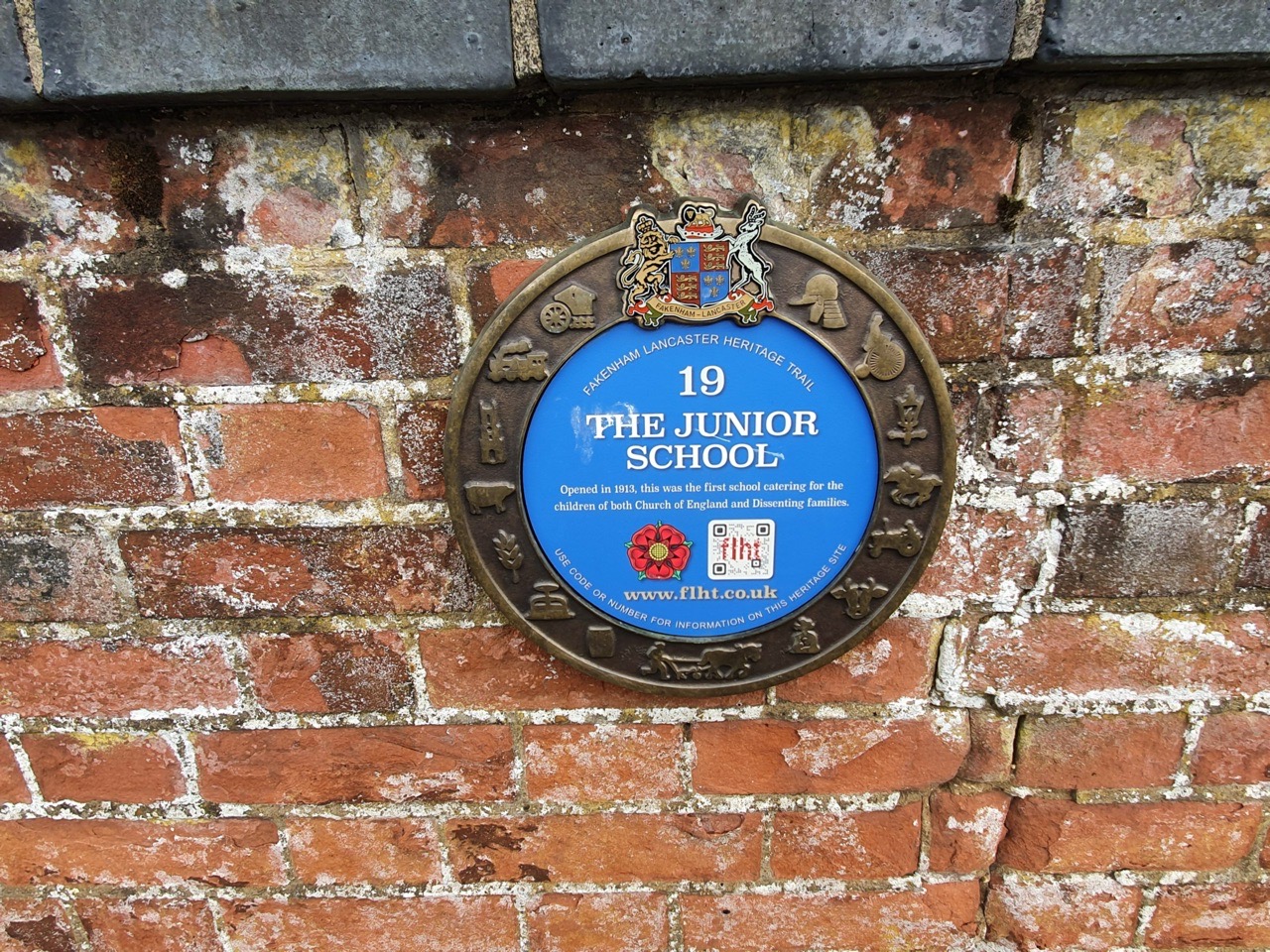

Part of the Fakenham Heritage Trail that I’m working my way slowly around, this is number 19. The school was built in 1913 as a school for boys, girls and infants, with a big dividing wall between the boys and girls. This was removed in 1935 and now serves as Fakenham’s junior school.

This is part of the marvellous railings project that was designed by the children to mark their centenary and there’s a full text of the wording at the heritage trail’s page at https://www.flht.co.uk/19-junior-school.html. As a little side, I’m a little disappointed that the school’s web-site manages to make no reference to their history and a search term of the word ‘history’ produces no results on their pages at all.
Another event to mark the centenary was the appearance of Michael Palin, whose grandfather Dr Edward Palin was present at the opening of the school on 21 May 1913. Palin’s father was also born in Fakenham, so there something fitting about his presence at the event.
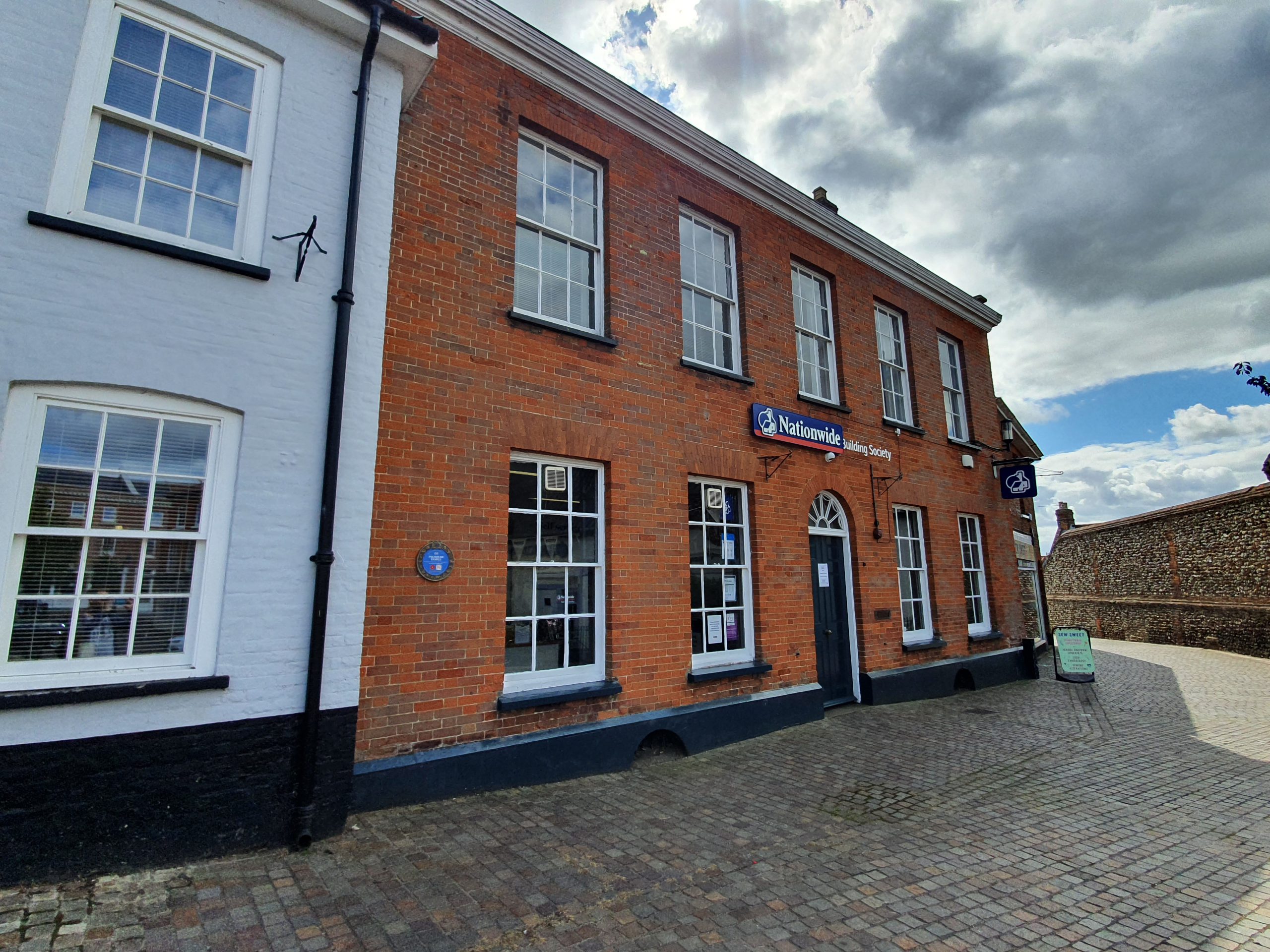

Working around Fakenham’s heritage trail, this is number 9 and it represents the Peckover family. The property that the plaque is located on is 14, Market Place and was originally known as 14, The Square. Used today by the Nationwide bank, it’s an eighteenth-century building which was owned by the Peckover family.
The Peckover family were Quakers who became important business people in Fakenham and Wisbech and owned much property in both locations. Peckover’s Bank was created in what is today’s the town’s Boots, which later became merged with Gurney’s Bank and then in turn this became part of Barclays Bank. Some of the family moved to Wisbech to set up banking operations there, with Peckover House being a large country estate which is now managed by the National Trust.


There has been a church here since the Saxon period, although the current building primarily dates from between the thirteenth to fifteenth centuries.

The church is relatively sizeable, with aisles on both sides of the building. The church is built with flint and pebbles, with an extensive Victorianisation taking place in 1872, as well as a long-needed repair to the dilapidated thatched roof, which was replaced with slates. There’s a modern-day extension to the building which is used by the parish, but it’s not particularly sensitive and it perhaps disrupts the feel of the churchyard.

The church has put protection up on its windows, I assume due to past problems with vandalism. It’s sad to see a priest’s door with an iron grille up outside of it though, but best to be safe than sorry. On the left is the south porch, which was reconstructed in 1872. If I had visited this church 200 years ago it would have looked probably quite beautiful with its thatched roof, extensive churchyard and medieval feel, but much has changed since then.

The three-stage church tower, which is from the thirteenth century and is quite understated with its relatively small windows.

I have no idea what is going on with the churchyard, but there is some ridiculous spacing going on of the gravestones. Normally, gravestones are vaguely near to each other, but for reasons unknown to me there are sizeable gaps between them all. I can only imagine that someone has been moving them about, or taking some out, unless for centuries they seem to think that the dead are somehow anti-social.
There was a theft here in 1909, when Edward Lighton of 20 Nile Road in the town wrote to the press to report that his books had been stolen from the box where he placed them under one of the pews. Although his box shouldn’t have been there, he found it convenient to store his prayer and hymn books. Not wishing to become a cold case crime detective, I just get the suspicion that another parishioner didn’t like him doing that. Lighton wrote in his letter that “two wrongs don’t make one right, and although I illegally left them, it cannot justify a thief in stealing them”.
The church was open to visitors when I meandered around it, but there was a funeral taking place and so it hardly seemed an appropriate moment to pop inside.
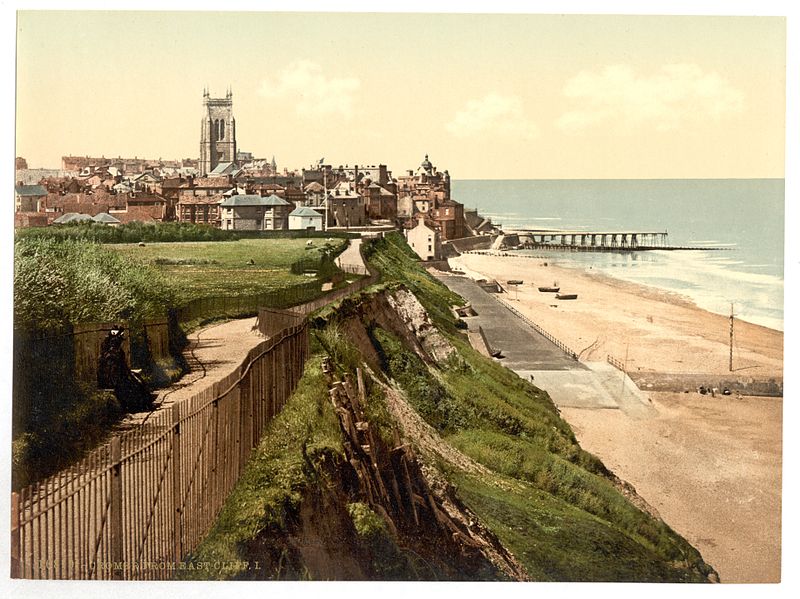
I liked this very Victorian letter I found on the British Newspaper Archive which was sent from an anonymous contributor in Cromer to the Norfolk Chronicle, who published it on 19 September 1863. The railway didn’t reach the town until 1877 and the contributor was clearly worried about the “profane vulgar” rushing in….
The letter:
“Sir, Is there no summary way of dealing with the offences against decency that visitors at the sea side are compelled to witness: or must we do nothing and consent to place among the social evils that are inevitable the practice of nude bathing at mid-day on our public promenade? I am writing this from a small and much frequented watering place, not at present accessible by railroad, and, therefore, comparatively speaking, unknown to the class commonly called the profane vulgar. The objectionable practice is, however, not the less in full force here, and ought to be remedied.
What adds to the culpability of the local authorities is the fact that there is an almost unlimited extent of sea beach, and therefore no obstacle to a wide separation between the machines set apart for the use of the sexes. The fact is that fifty yards at furthest is the space dividing them, the piles of the breakwater running between, affording convenient seats for the lady visitors who, strange to say, select that portion of the beach as the spot most agreeable to work and to read in. The naked male figure is doubtless an interesting object of contemplation, but although we have seen the paint brush in the hands of some of the fair visitors on these occasions, we cannot suppose that they posted themselves exactly on this spot at this hour in the interests of high art. Let them be told that apart from the inconvenience caused by their proximity to the machines set apart for men, but which gentleman naturally avoid – the sober sense of English husbands and brothers revolts at the spectacle of women of all ages seated within speaking distance of naked men, disporting themselves in the water.
Things may be, and I believe they are worse, in some parts of England, than they are here. Nearer London a certain reciprocity prevails in this species of libertinism, making the sea-beach, which is meant for all, forbidden ground to modest women. We do not want French manners and customs over here, but surely there is some safe, middle course which might be adopted in the matter of bathing. As things are it is common decency that is outraged. It is morality that is endangered. Even a New Zealander has some sense of propriety in his ablutions. If what we daily witness here were seen on the continent of Europe, the person offending would run the risk of being flogged and imprisoned. The evil with us is of long standing, so are many other abuses – but that is not the point. We must mend our bathing manners. A word from you would suffice to remedy the evil, and cause some regulations to be adopted (for there are none at all now) with regard to the placing of the machines, and the proper time and place for bathing from the beach.
I remain, Sir, yours obediently
A visitor.”
The newspaper replied under the letter, saying that they agreed, adding:
“We have ourselves witnessed with amazement the preference shown by some ladies for the break-water during bathing hours, and have been reminded often of the old usher’s shrewd remark, when ordered by the judge to clear the court of all women during the hearing of a particularly objectionable cause, and when, in spite of orders, a few still seemed inclined to “sit it out” – “My lord, all the modest women are out of court” – Editor.