Category: UK

  • London – Kensington and Chelsea (Borough of) – Brompton Cemetery (John Wisden)

    London – Kensington and Chelsea (Borough of) – Brompton Cemetery (John Wisden)

    This is the grave at Brompton Cemetery of John Wisden (1826-1884) who was a world class cricketer, but is perhaps best known for Wisden’s Almanack. The headstone was changed in 1984 to reflect his cricketing life and who some said was arguably the best all-rounder of his day.

    I find this photograph slightly amazing, as it looks quite recent in terms of its quality, but it dates to 1859 when the English team were touring North America. Wisden is in the centre row, the person sitting down on the left-hand side. Their tour caused much interest, but unfortunately the American Civil War prevented any return matches and during that time baseball rather took over as a national sport.

  • London – Kensington and Chelsea (Borough of) – Brompton Cemetery (Henry Breakspear)

    London – Kensington and Chelsea (Borough of) – Brompton Cemetery (Henry Breakspear)

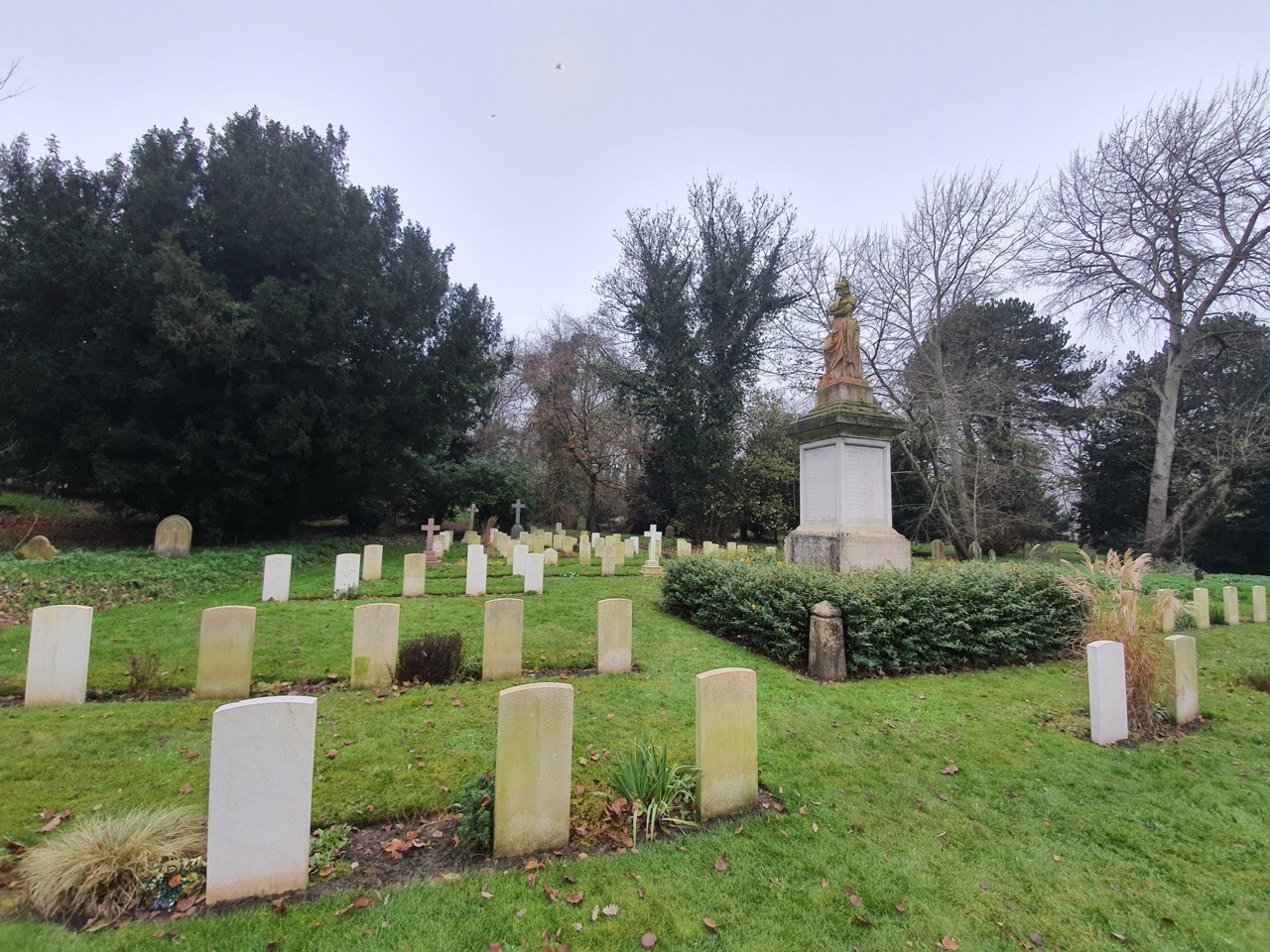
    This grave is located at Brompton Cemetery in London and commemorates the life of Henry Breakspear. There’s not a lot of information at the Commonwealth War Graves web-site, but as is noted on the grave, his service number was 2273 and he was a trooper in the 1st Life Guards of the Household Cavalry. He was born in Handborough in Oxfordshire and enlisted at Oxford.

    He was married to Mary Breakspear on 26 October 1903 and they had two children, Olive Mary (born 22 December 1903) and Stella Elizabeth (born 5 May 1907). For some reason they were with their uncle and aunt’s on the day of the 1911 census, at Tamworth Street in Fulham. The family though usually lived in West Brompton, hence why he’s buried here.

    His military records remain and it notes that he had served as a soldier before, signing up on 13 September 1900. He served in France between 15 August 1914 and 23 May 1915, then again between 17 March 1916 and 8 August 1916 when he received injuries on the battlefield.

    Henry returned to the UK and was admitted to the London General Hospital on Denmark Hill, which was also known as the Fourth London General Military Hospital or King’s College Hospital. His medical notes record that he died of septicemia from his wounds, which the doctor confirmed was related to his injuries.

  • London – Kensington and Chelsea (Borough of) – Brompton Cemetery

    London – Kensington and Chelsea (Borough of) – Brompton Cemetery

    Formerly known as the West of London and Westminster Cemetery, this site was opened in 1840 to take pressure off churches where space for new graves had pretty much run out and it was also presenting problems to human health. There are now 35,000 monuments here and burials continue, with an estimated 200,000 people buried at the cemetery. The site was previously used as a market garden and there was more of a countryside feel to the area at this time.

    There were numerous other similar cemeteries build for the same purpose around London and they received the name of the ‘Magnificent Seven’. Most were on hills and so were easier to present as an interesting landscape, but this area was flat and so more buildings were added here to add character.

    The cemetery is now managed by Royal Parks and they’ve put together a list of 100 things to see, mostly graves but also some trees and memorials. There’s a map as well on-line and although a few graves were marked in the wrong place, it was otherwise a useful way of exploring the enormous cemetery. After spending a couple of hours here I rather exhausted myself out with reminders of the dead, still only getting around halfway through the highlights of the cemetery.

    Lots more photos to follow, but here are a few…..

  • London – Camden – British Museum (Misaligned Healed Fracture)

    London – Camden – British Museum (Misaligned Healed Fracture)

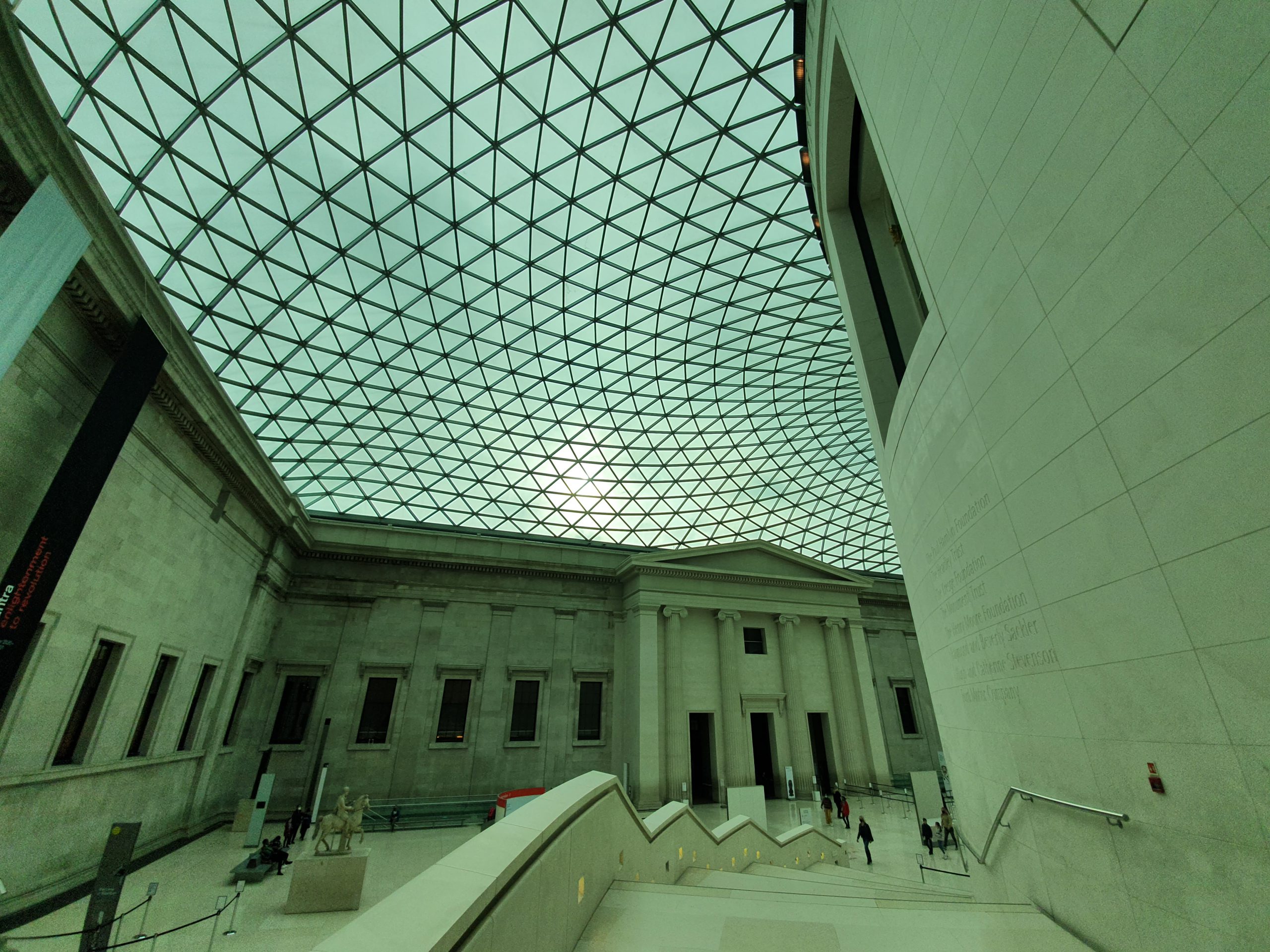
    This doesn’t look quite as painful as the damaged spine, but this badly reset right femur must have been awkward as well. The bone was found in Upper Egypt and was acquired by the British Museum in 1902. The bone is from a mummy, so I’m not sure where the rest of the body is.

  • London – Camden – British Museum (Roman or Brazilian?)

    London – Camden – British Museum (Roman or Brazilian?)

    I like random exhibits like this, which is on the theme of mistaken identity at the British Museum. These pots were found off Herne Bay in Kent in 1776 and were presented to the museum. They weren’t thought to be of a good enough quality to be Roman, so it was decided that they were “probably Brazilian”. I’m not quite sure what that says about what the thoughts were of the time about Brazilian pottery, but it transpired later on that these were indeed Roman and a ship had been wrecked whilst bringing this Samian ware over from Gaul.

  • London – Reform Club Dress Code

    London – Reform Club Dress Code

    I’ll firstly note that I’m not trying to join or visit the Reform Club, I was just reading something that the formidable and brilliant Michael Palin had written about the club so was meandering through their web-site. I just liked how the club are clearly so appalled at the thought of hiking boots crossing their threshold that they’ve listed them twice in the prohibited list, alongside trainers and sports style footwear, as the thought of such depravity is clearly too much to bear. But, to be fair this is why I’ll never join a club like this, they wouldn’t have someone like me and that is probably for the best…..

  • London – Camden (Borough of) – Wellcome Collection

    London – Camden (Borough of) – Wellcome Collection

    I can’t really be negative about places which don’t charge for admission, as that feels unfair. But, I really didn’t connect or engage with the Wellcome Collection at all, although I think to be fair to them, the gallery on medicine that might have interested me hasn’t re-opened yet. The staff were helpful at the entrance to the collection, although they are heavily over-staffed for the number of visitors.

    The most interesting element to me was the interior design of the building. And a note on the directional arrows, they entirely confused me as they went around in circles. I think I left via the entrance door, but I have no idea as the exit just kept pointing visitors back around to where they started. It’s fair to say that I am hopeless at following directions if they’re not clear, but now the British Museum has made everything obvious, I thought I was getting there. Anyway, I digress.

    I don’t have much to really write about the Being Human permanent gallery, I struggled to drag out any stories at all on anything. It was all too obscure and old-fashioned in its style for me to really engage with.

    There’s a video of a McDonald’s flooding which is meant to have lots of meanings. I watched about fifteen seconds, but if anyone is enthralled by this concept, then there’s more at https://www.youtube.com/watch?v=gsJsb2BKBLE. I’m guessing the symbolism is meant to be that McDonald’s aren’t doing enough on climate change.

    These are discs which are made out of HIV positive blood. I have no idea what they’re supposed to represent, but I went to the Wellcome Collection’s web-site catalogue to find out more, but they’re not listed.

    I think part of my lack of engagement is the gallery is focused on audio, and I don’t like exhibits which exclude, ideally just have both audio and text. I’m puzzled how the gallery claims they are inclusive, but there we go. It’s well-reviewed, so others liked it a lot more than I did. It was all a bit over-engineered for my liking, but maybe the Medicine Man is a bit more engaging and that re-opens in November.

  • London – Brent (Borough of) – Wembley – Ibis Wembley

    London – Brent (Borough of) – Wembley – Ibis Wembley

    The Accor offer that I wrote about the other day appears to be working, so this stay cost me around £16 for the night, which I don’t think is too bad at all. It’s located near to Wembley Stadium and just a short walk away from the underground, so it’s all convenient to get to. I wasn’t a fan of their reception desk though, it’s in a strange place tucked into a corner which isn’t immediately obvious and it’s not near the bar and so their staff need to keep traipsing over. But, to be fair, I have more things in life to worry about than the design of hotels and where they’ve put the reception desk. Although I’ve now written about it, so perhaps I don’t. Anyway, I digress.

    This is a standard Ibis room and was clean and comfortable. The television, which had the annoying habit of switching itself on randomly, allowed me to cast my phone so that I could watch Netflix on it. I don’t normally ever switch the television on in hotels rooms (I didn’t have a choice here since it seemed to like being on, but perhaps it needed the company) so this was a nice little change.

    The view from my hotel room, which was on the top floor.

    I didn’t have breakfast, but this sounds a little bland and the choice of eggs is unnecessarily limited and where’s the bacon? There’s no religious sensibility here, they were serving it until a few months ago. Anyway, breakfast is too much hassle at the moment, so I went to get a free smoothie from Pret instead with my subscription.

    The choice of beers, which was adequate if not exceptional. The Midway IPA from Goose Island was decent enough though, although if you’re paying for it then it’s pricey at £5.75 a pint. I was pleased to get mine free as a welcome drink and also pleased to have a choice of most drinks.

    The bar area, all clean and organised, with a few customers to the right out of my photo. The staff here were excellent, friendly and helpful, everything was done efficiently and without unnecessary delay. The hotel was quiet internally and externally, although I can’t imagine that they filled that many of their 210 rooms. The hotel picks up a fair number of negative reviews that I would describe as quite picky for a three-star hotel, but I suspect this is because when an event or match is on at Wembley then the price of rooms soars, so expectations rightfully increase.

    I liked the clearly exasperated response from the manager to one grumbling review about the room being too small:

    “I appreciate that you felt the room was too small; regrettably this is not something we are able to change easily.”

    Anyway, as a hotel, I liked this one, which is fortunate as I’m going back there tomorrow….

  • London – Camden (Borough of) – Euston Railway Station – The Doric Arch

    London – Camden (Borough of) – Euston Railway Station – The Doric Arch

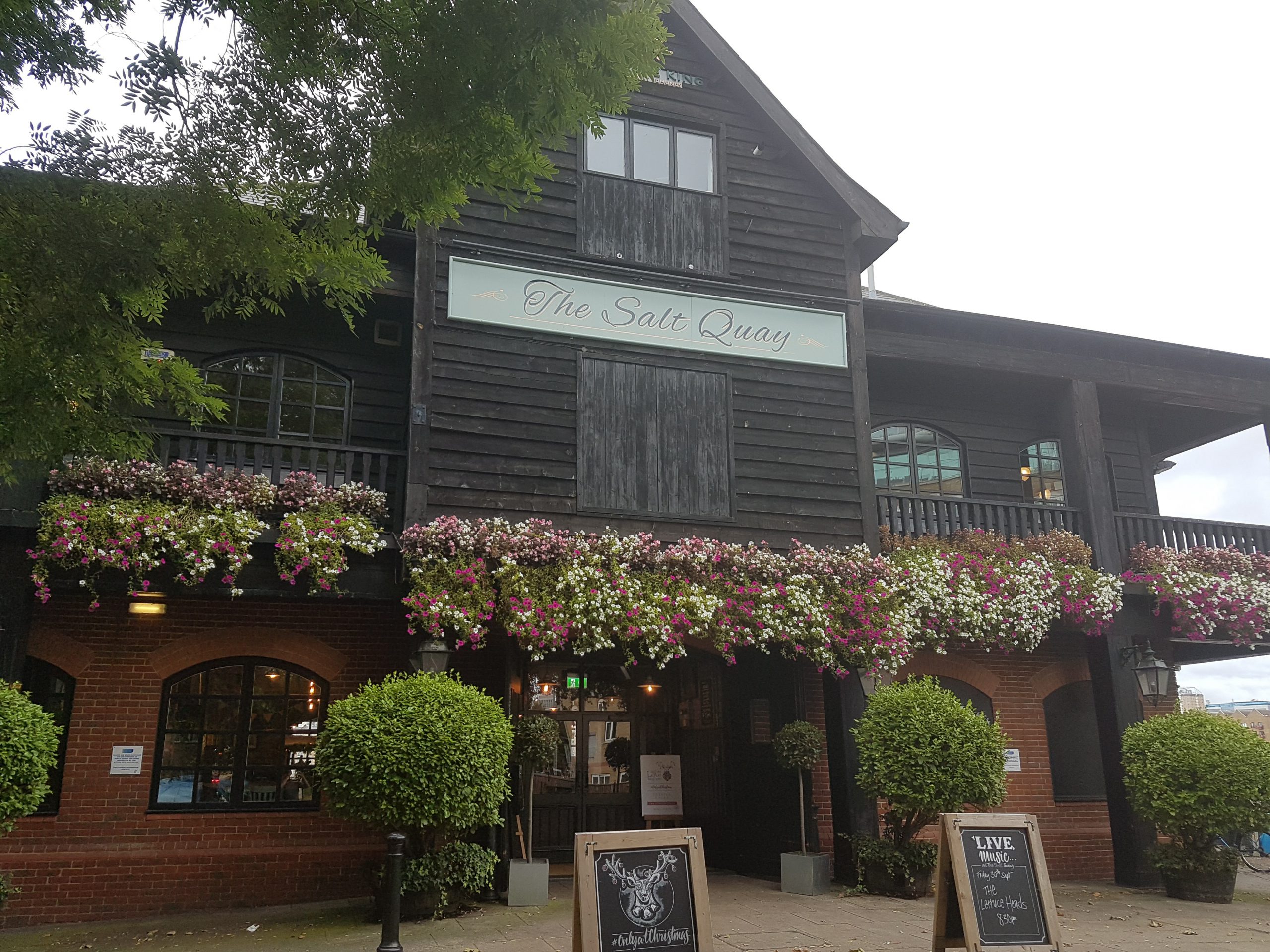
    This pub is named after the Euston Arch, which was of a doric design. The arch was pulled down in 1961, an error which haunts the drab railway station to this day, with numerous attempts considered to get the stone back from out of the River Lea where it was dumped. This was all the decision of the horrendous Ernest Marples, who I’d argue did more to damage public transport than any other figure over the last two centuries. I think that’s a polite way of putting his conduct in office. But, I digress and will limit my political grumpiness at Marples and British Rail for the moment. Anyway, at least the pub recognises the importance of the arch in its name.

    The pub has quite a bland design in terms of its external architecture, but it has been turned into a friendly, laid-back and comfortable pub by Fuller’s. I’m not one for bus spotting, but the upper area where I was sitting provides a marvellous opportunity for anyone that does enjoy looking at London buses. The service in the pub was excellent, it was pro-active, warm and helpful, so I felt welcome. I was on an long LDWA NEC Zoom meeting and was pleased to find a quiet corner as it started to rain and I felt that I’d done enough walking around outside in parks.

    There’s lots of railway memorabilia around the pub.

    I treated myself to mini cheddars and half a pint of ESB, which I liked more than I thought I might (the ESB I mean, I knew that I’d love the mini cheddars). This reminds me that I had the HSB from Fuller’s a few weeks ago, which was better than I had anticipated as well. The prices were reasonable for a railway station pub outlet and they do cooked food as well, although are apparently operating on a smaller menu to usual at the moment. The pub was very quiet when I got there, but an hour later when I left it had around ten people in, so I assume just about worth opening. Anyway, if I was at Euston railway station again, then I’d likely pop in here.

  • London – Camden – British Museum (Early Prosthetic Toe)

    London – Camden – British Museum (Early Prosthetic Toe)

    This is thought to be one of the earliest prosthetics used in the world, dating to around 1070BC to 664BC and it was found in Egypt. It’s not known whether the person had this toe when they were alive, as it’s possible that it was to fix a little accident caused by the mummification process. There was once something in the toenail bed (is that a proper term?) to recreate the nail, but that has been lost. The item was purchased in 1881 from Rev Greville John Chester, a clergyman who decided he fancied partaking in some adventures in Egypt in the mid nineteenth century.