Category: UK

  • London – Hackney (Borough of) – Shoreditch – Goose Island (Fourth Visit)

    London – Hackney (Borough of) – Shoreditch – Goose Island (Fourth Visit)

    I perhaps need to stop coming here, but this bar is a constant delight to me. I won’t repeat all the stuff I’ve mentioned in my previous three visits (all of which I’ve written up, to ensure people can be surprised and delighted with my ramblings). I booked a table for tonight, and they dealt with that helpfully by e-mail, although I didn’t really need to book as it was very quiet. I was offered a choice of table (as in pretty much any table in the entire place), but I sat at the rear bit for the first time, next to some of their brewing equipment.

    Some more of the decor…. The service was, as ever, engaging, knowledgeable, helpful and friendly. For a central London bar to be this consistently reliable is an achievement in my admittedly slightly irrelevant opinion.

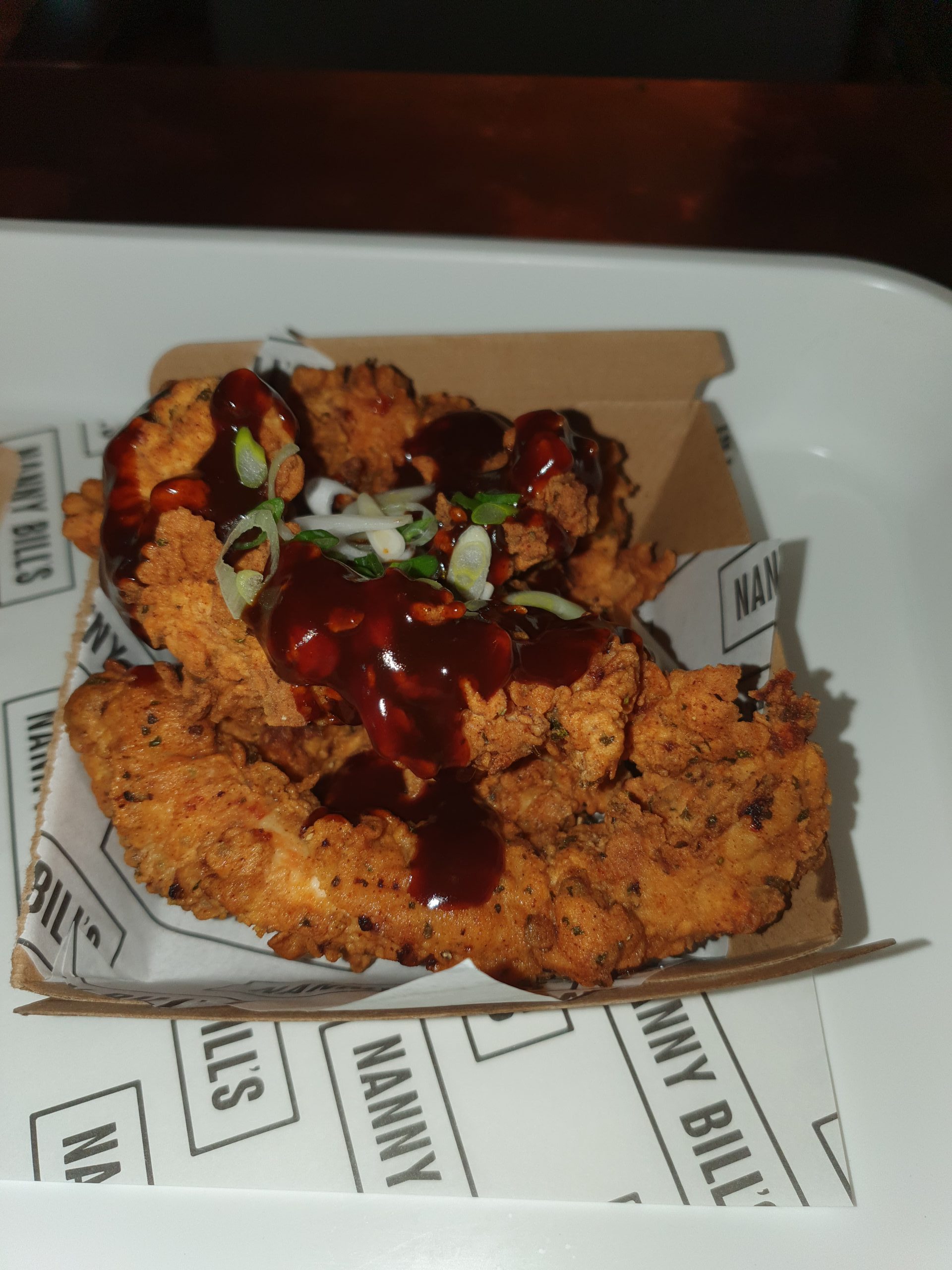
    In London, and in other Tier 2 areas, it’s essential to order a substantial meal with any alcoholic drink. So, I ordered buttermilk chicken strips and they were delightful, a light coating which was soft and not overly crunchy, with tender chicken. The BBQ sauce added flavour and richness, the spring onions some extra texture. The staff member explained that they’ve reprinted the menu to show which dishes are classed as substantial meals and it’s evident they’re staying firmly within the rules and the spirit of the rules. They don’t class chips as a substantial meal.

    But, putting the food to one side, I’d had my eye on one beer all day, which was the Big Trouble in Little Gateshead from The River Brew Co. up in Gateshead. The reviews were very positive on Untappd, although I was nervous about a 14% stout, as too much alcohol can be just too rich and hide any flavours. This one was decadence in a glass, and I shall do my flowery words again which likely go too far. But, there were different flavours, an initial creamy taste, rich in body, but with sweet afternotes and that ABV didn’t hide anything. It remained a powerful drink though, one that allowed me to sip it for the best part of an hour. All a third of a pint of it. Perhaps I need to get out more.

    As a bonus, the drink was £5 for a third of a pint. To my delight though, Amex have started to operate another Shop Small, so I got £5 off the bill. So, thank you very much Amex for funding this rather beautiful stout. And Goose Island didn’t disappoint me at all. I think I might go back. Again.
  • London – Tower Hamlets (Borough of) – St. Mary’s Park / Altab Ali Park

    London – Tower Hamlets (Borough of) – St. Mary’s Park / Altab Ali Park

    This park is of some considerable importance in the history of the Whitechapel area of London, as it’s where St. Mary Matfelon church once stood. This church was created as a chapel at ease in around 1250 and it stood until 1286, with this being a simple structure which was covered in whitewash, hence the name of White Chapel. A more substantial church, St. Mary Matfelon, was built in 1329 and this was extended and expanded numerous times over the next few centuries. As an aside, I like the idea of the Head of Parks having a 24-hour phone number.

    Here’s what it looked like around 100 years ago, but unfortunately the church was bombed during the Second World War and knocked down a few years later. A new church had been built in 1877 (partly on top of the earlier churches), but, and this isn’t ideal, it burnt down in 1880. A new one was constructed and that’s the one that was lost during the bombings on 29 December 1940.

    An interesting park entrance with that stone. There was an archaeological dig a few years ago and amongst the items found there were some Roman items and evidence of Roman cremations, with this once being the route of the main Roman road from London to Colchester.

    The Whitechapel Road side (which is the old Roman road), with what appears in places to be an older wall for the church.

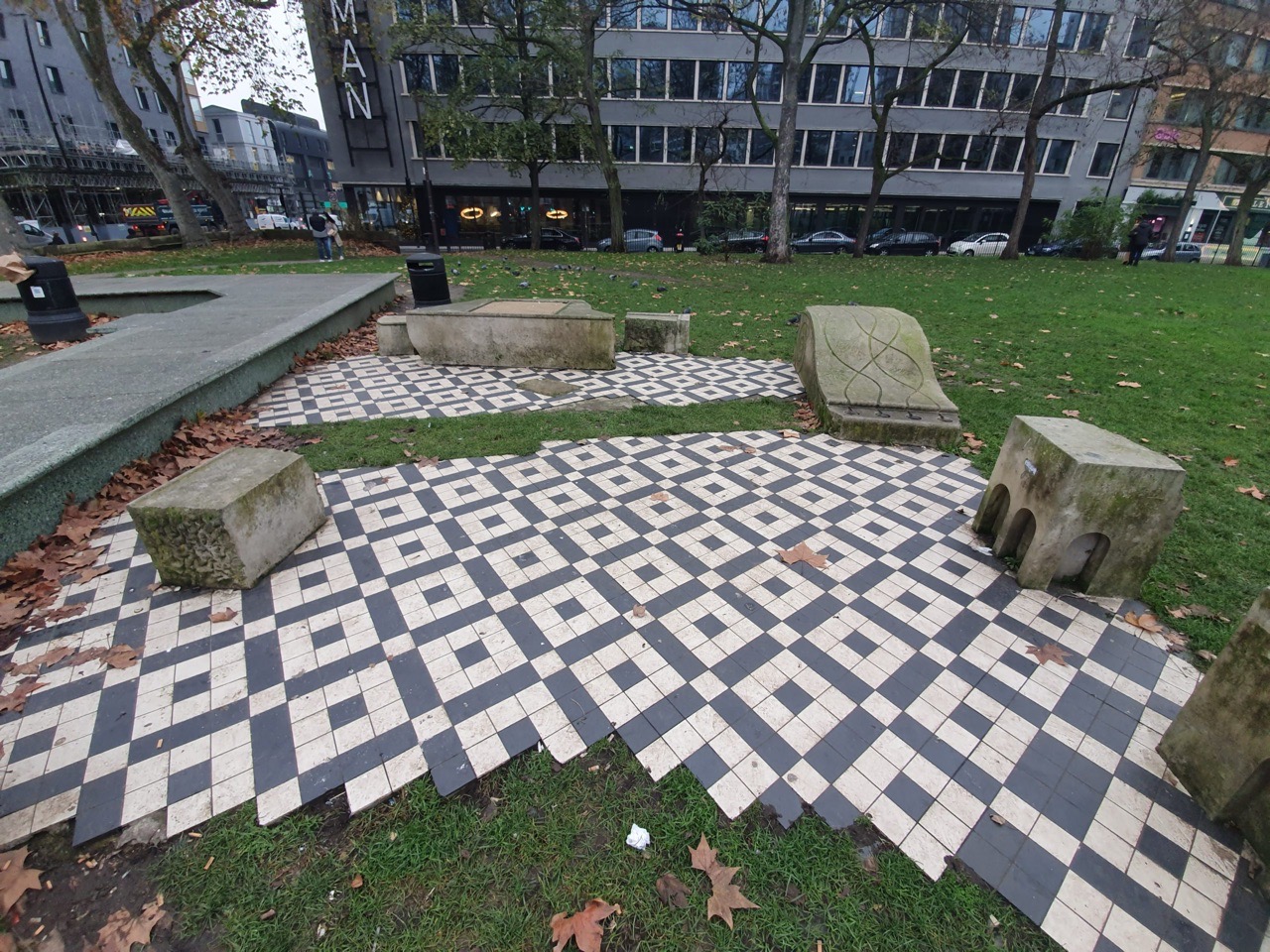
    Some of the floor tiles and structure of the church are still in situ. The tiles don’t seem to be as protected as they could perhaps be.

    There are very few burials here now (well, there probably are, but they’re unmarked), this is one of the grand box tombs.

    Although my interest in this park was initially its history, it would be remiss of me not to mention that it is no longer formally known as St. Mary’s Park, instead being known as Altab Ali Park. Ali was a 25-year old Bangladeshi man who was murdered near here in 1978 in a racist attack, something that was causing problems and fear in London at the time. His death has been seen as a turning point as there was a large demonstration with 7,000 people on a few days later to protest about the racist attacks, with awareness raised of the huge challenges that existed.

  • London – Tower Hamlets (Borough of) – Spitalfields Column

    London – Tower Hamlets (Borough of) – Spitalfields Column

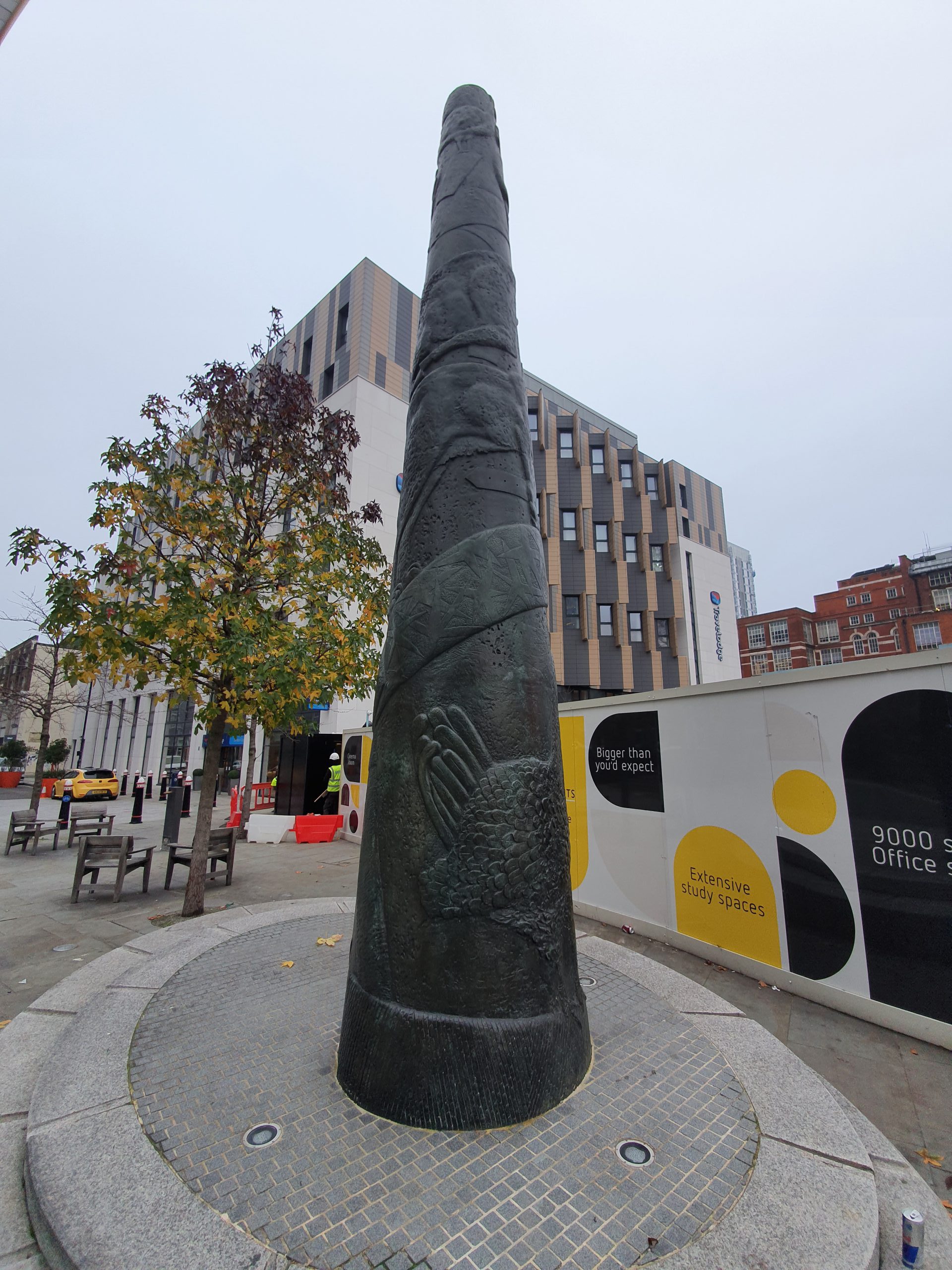
    I’m not entirely sure that the official name of this is “the Spitalfields Column”, but that’s what it seems to be called by some locals and so that’s good enough for me. It’s a totem pole type structure and it was placed here in 1995, designed by Richard Perry and he hasn’t given the sculpture a name on his web-site. The depictions on the column are meant to represent the items that would have been traded in the Whitechapel area of the city over the last few centuries. Shame there’s not a nearby information panel to add some details and background to this though.

  • Greater Anglia : Norwich to London Liverpool Street

    Greater Anglia : Norwich to London Liverpool Street

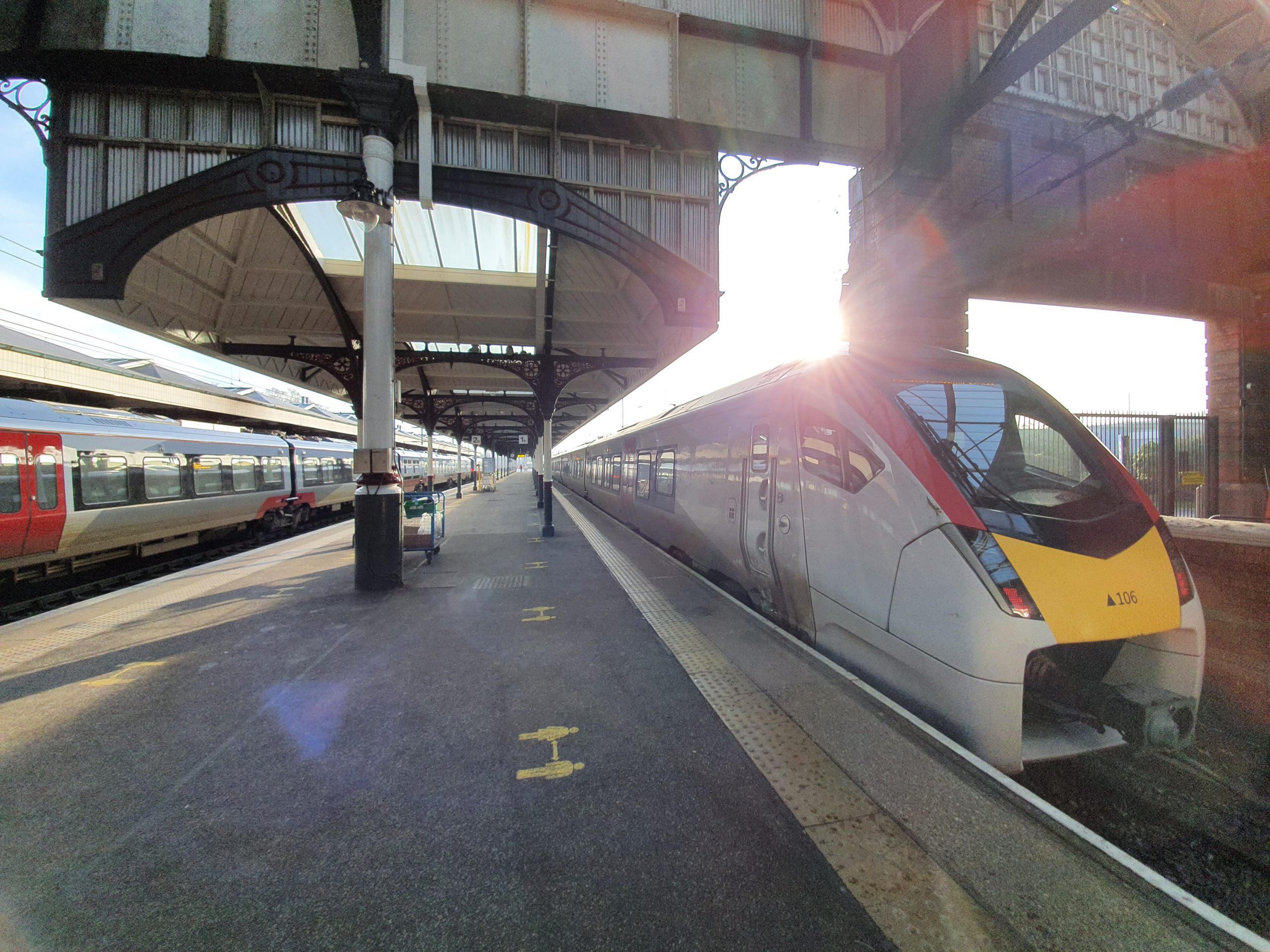
    Norwich station now that travel has been opened up again, the 11:00 service to London. The railway station wasn’t particularly busy, but there were plenty of staff available. This was a £10 fare booked directly with Greater Anglia, but I only seemed to be able to get a ticket downloaded to my phone rather than a paper ticket.

    The train was ready and waiting on the platform, and, it still looks beautiful.

    And then I realised this is one of Greater Anglia’s Stansted Express trains, dumped onto the mainline between Norwich and London. I don’t like these trains as there are no tables, so people have to prop laptops and food on their laps and it just leads to drink spillages and people putting their feet on the seats. Unbelievably, or at least to me, Greater Anglia say the reason is “it makes the carriages feel very open and spacious”. I’m really not convinced that customers prefer it like this, but, even if Stansted customers hate tables then there’s always the risk that the trains get used elsewhere. Like on this journey.

    Anyway, moan over, I expect this was another one of Jamie Burles’s little ideas.

    The train remained pretty quiet until near London. As it’s the train from Stansted, there’s no buffet car, but there was a trolley service for customers. For the first time in months, the conductors are checking tickets again, which I think surprised a few customers. One didn’t have their railcard, but after much debate, the conductor decided that this wasn’t a problem. I’m not sure why he made it a problem in the first place, but I quite enjoy drama like that.

    And safely into London. The train broke down for 13 minutes at Diss, but they were able to make up much of that time, which annoyed me again as I was hoping for a delay repay claim, although it was handy to arrive nearly on time. Anyway, the next debacle then starts as Greater Anglia’s lovely new ticketing system doesn’t work, so there’s a queue of customers who have to have their tickets on phones checked manually by gate staff. Lesson learned for me, I’ll get a paper ticket next time…..

  • Great Melton – All Saints’ Church (exterior)

    Great Melton – All Saints’ Church (exterior)

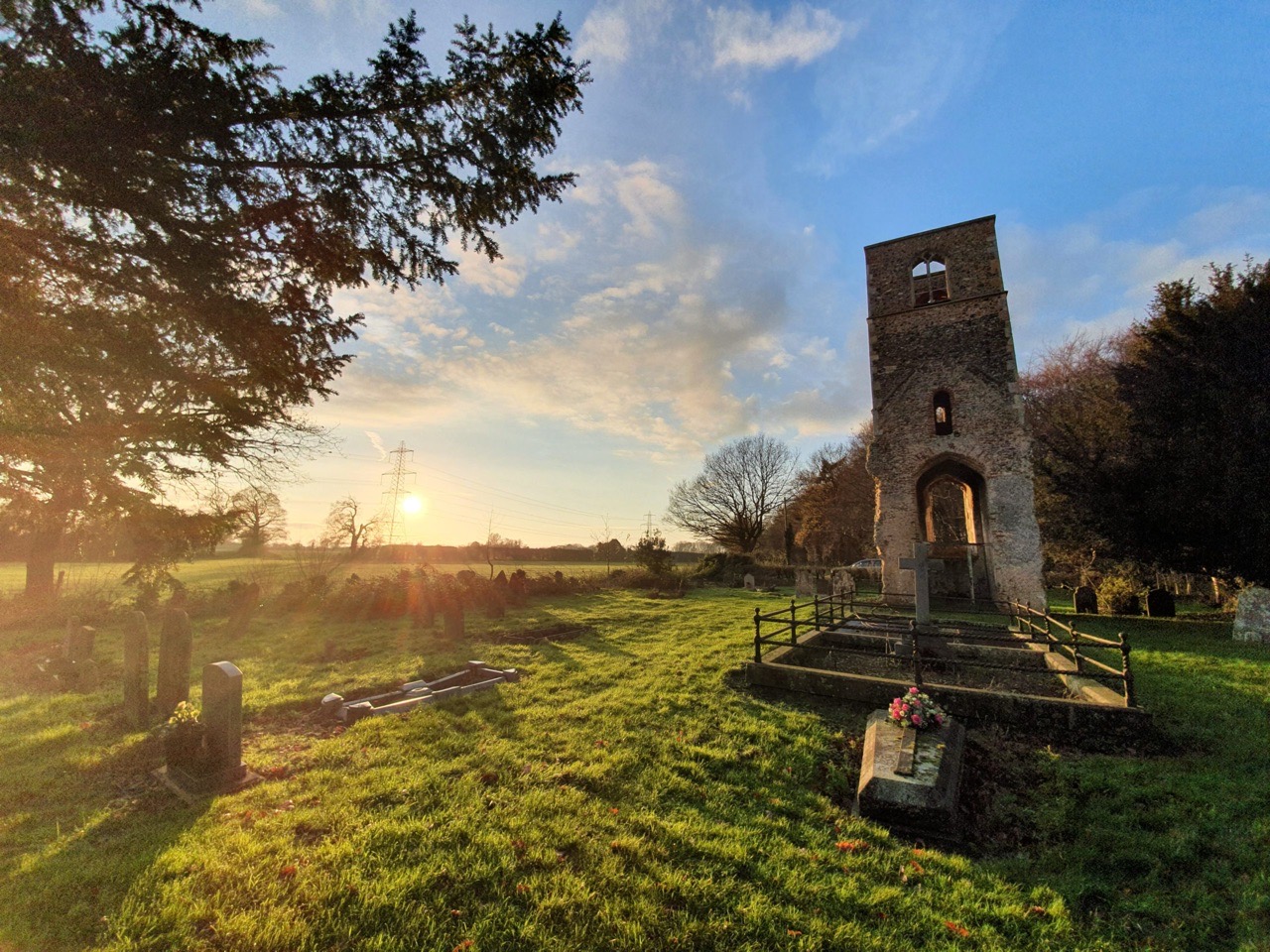
    There are two churches in the same churchyard in Great Melton, the other is the now ruined St. Mary’s, visible in the above photo.

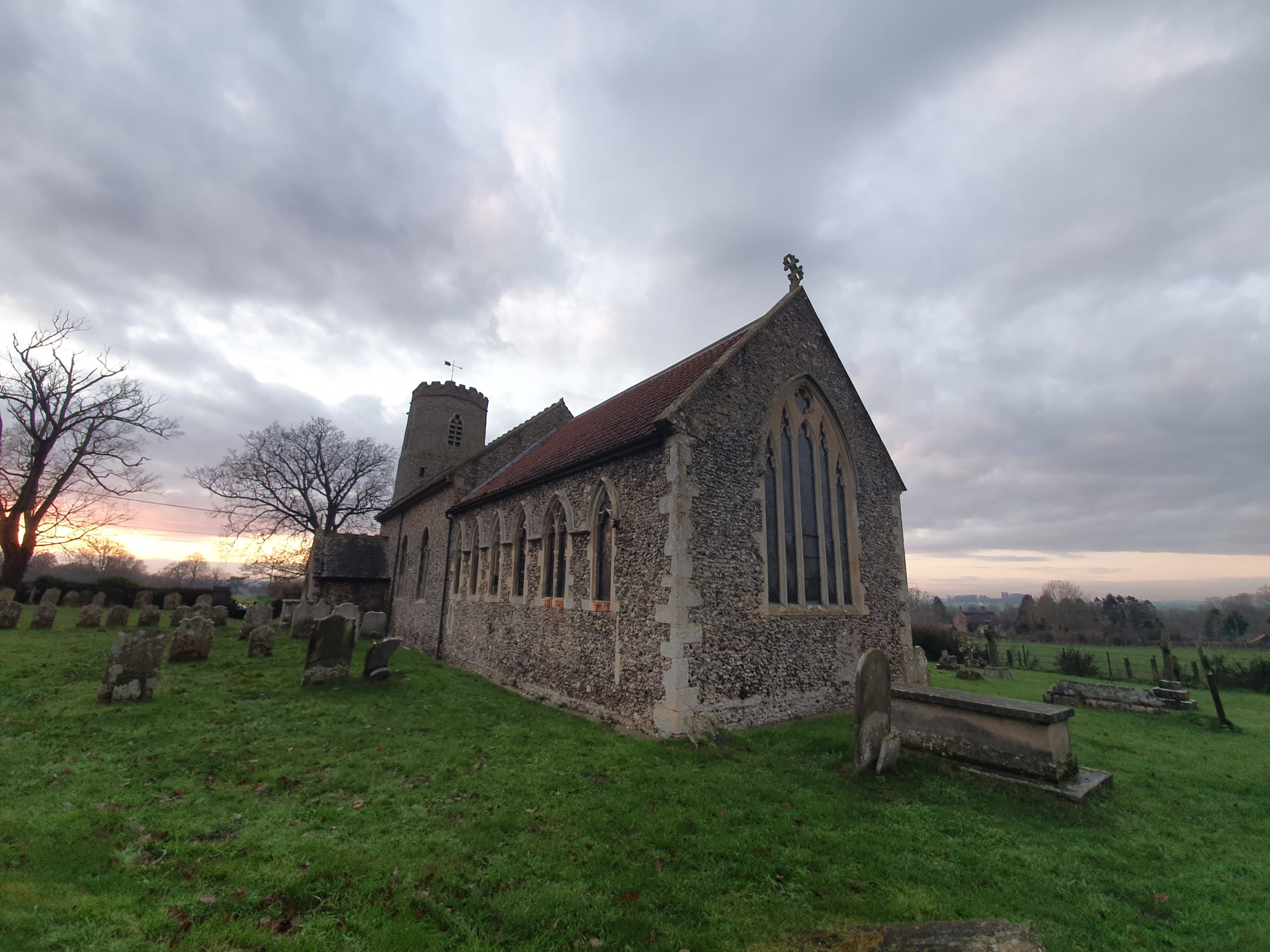
    And this is All Saints’ church, which is still in use and there may have been a religious building here since the eighth century, although the earliest part of the current church is from the eleventh century. The churches were both independent until the eighteenth century, but then it was decided to merge the two and just use St. Mary’s. A decision was later made that St. Mary’s was too small, so they decided to fix up the by now roofless and slightly fallen down All Saints’ Church. And to do that, they knocked all of St. Mary’s down other than the tower, then reused much of the building material at All Saints’.

    This is the quite understated entrance to the joint churchyard.

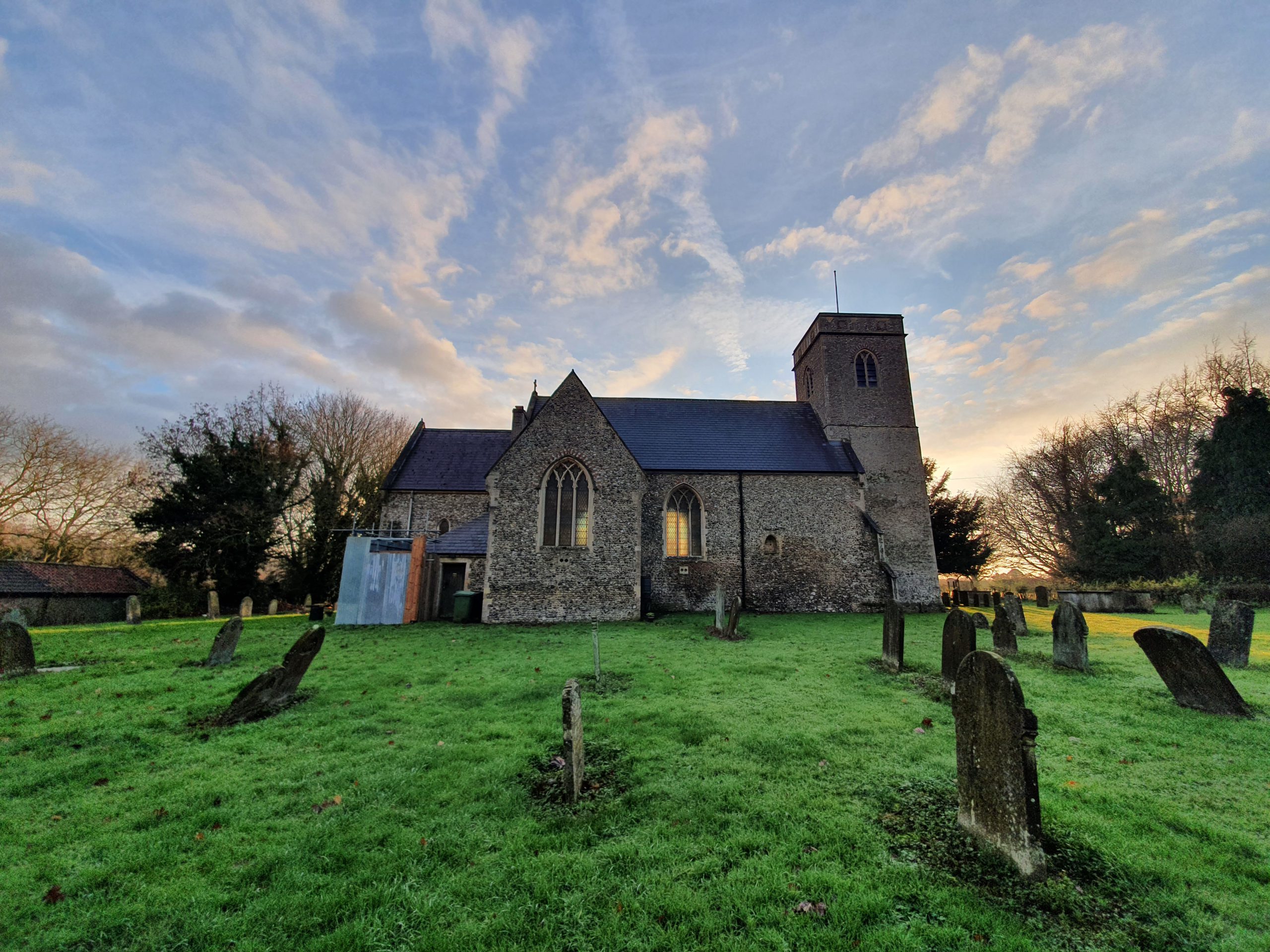
    The church originally had a round tower, but was replaced by this in the mid-fifteenth century. There’s some good news as well about the church’s future, as it has now been removed from the Heritage at Risk Register as numerous organisations came to together to fund some much-needed repairs.

    I’m not quite sure what they’re doing here, the metal mars the beauty a little, but it’s still a graceful church and that structure looks temporary. The nave is the oldest part of the church, dating to the eleventh century, whilst the chancel is later, dating to the fifteenth century.

    That looks like Roman brick to me on this now closed up doorway. Incidentally, this church had no roof for over 170 years until the nineteenth century repairs, but the walls still remained standing, a testament to the early builders.

    And a niche, although this looks out of place and has perhaps been moved or maybe was a window at one point.

    We were fortunate enough to be able to look inside the church as well, more on that in another post.

  • Wramplingham – St. Peter and St. Paul Church

    Wramplingham – St. Peter and St. Paul Church

    Wramplingham has had a church on this site since at least the early eleventh century, but it probably has Saxon origins. The probable situation here is that the nave is the oldest part of the church, then the base of the tower and then the chancel and then the top of the tower. Views differ though to make things more complex.


    The tower with its lancet window is likely thirteenth century with a later fourteenth century octagonal top section, although some have dated the whole lot to the fourteenth century. My limited knowledge of architectural history doesn’t allow me to have a view either way…..

    The join between the tower and the nave, the latter of which dates from the eleventh or twelfth century.

    That Norman door looks out of place there on a Victorian extension, but that’s because they moved it from its previous location opposite the south door.

    And here is the plan of that, designed by Augustus Edward Browne in 1872.

    The rather beautiful chancel (I liked it, hence the multiple photos), which must have looked quite the thing when it was installed. It’s later than the nave, dating from the mid-fifteenth century.

    Internally, looking back towards the tower, and I was pleased that the church was open when we visited.

    The quality of the chancel work is visible inside, allowing light to flood in (well, it doesn’t when you visit at near sunset to be fair).

    The former steps to the rood loft screen. There’s an article about the church by FR Barff which is located near to the entrance (in very small type) and he mentions that the rood loft survived until 1843, when it was removed by the first of two Victorian restorations. That seems to be a relatively late survival, shame it was taken down.

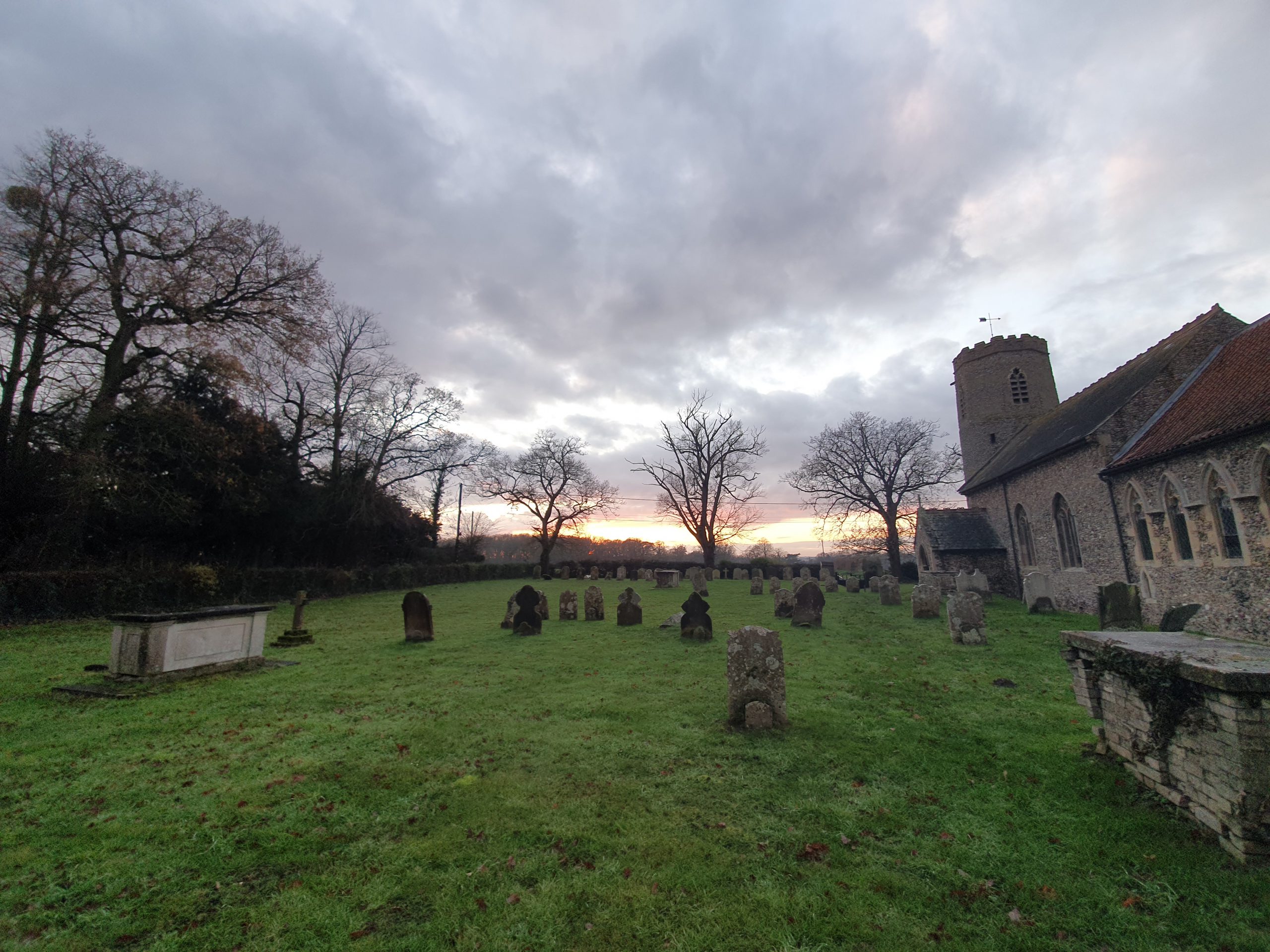
    The peaceful setting of the churchyard as the sun starts to set. There are some very neat lines of graves, particularly near to the tower, with rather large gaps nearby, so I do wonder whether some of them have been reset.

    In June 1873, the rector, Charles Philip Paul Jodrell, took the Great Eastern Railway to court on behalf of the church. The church had sold lead from its roof, which was apparently in excellent condition, and they despatched over 6 tons of it by rail. On that journey, the rail network managed to lose 8lbs of it and the church wanted that value back, so they demanded in court 8 shillings and 6 pence (about £28 today). The railway said that this was a perfectly reasonable loss given how much they carried and thought that there was no case. The judge agreed with Great Eastern Railway, but he clearly didn’t want to upset God too much and so he refused costs to be awarded to them.

    Anyway, a remote church which has retained its beauty.

  • London – Kensington and Chelsea (Borough of) – National Army Museum (Hellfire Corner Sign)

    London – Kensington and Chelsea (Borough of) – National Army Museum (Hellfire Corner Sign)

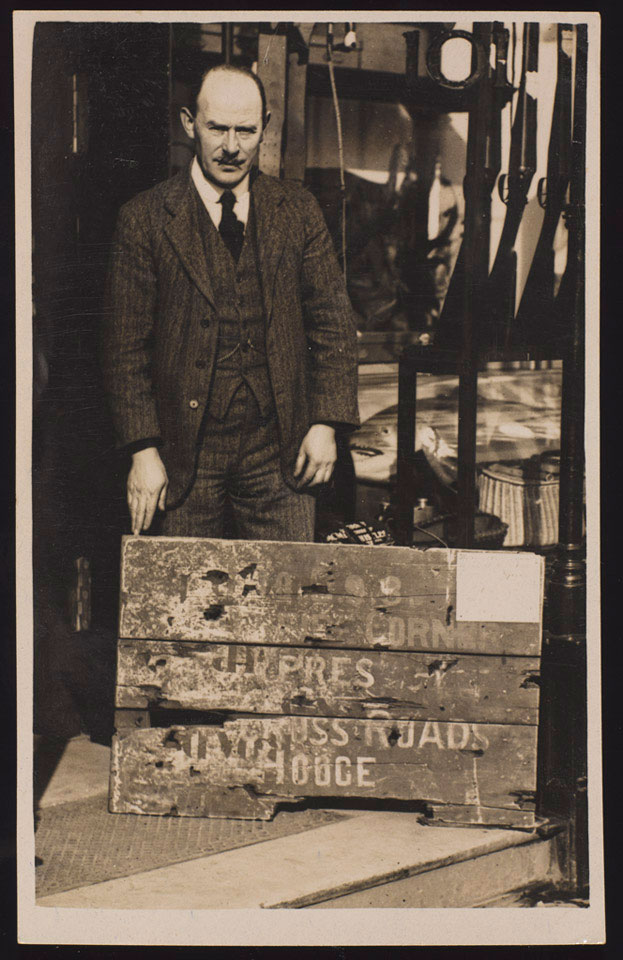
    The National Army Museum is very proud of having this item in its collections, it’s an original wooden sign that was in a dangerous location at a junction on the Menin Road leading from Menin to Ypres. Many soldiers would have gone by the sign during the First World War, but the area was under near constant attack by German soldiers whose nearby defences meant that they had good visibility and it became a very dangerous stretch of road.

    There’s a stone marker at the site now, an otherwise innocuous roundabout on the outskirts of Ypres. The marker is one of a series which show the furthest point that the German troops were able to reach.

    The sign was brought back from Belgium by William Storie (above) and he used it as a promotional device to encourage sales at his shop in Edinburgh. The above photo was taken in March 1920, with the sign being seemingly nearly undamaged since then, although it seems to have spent much of its life in a storeroom before being donated to the National Army Museum in 1996.

    There’s an interesting video above which shows Hellfire Corner (i) during the First World War, (ii) before the roundabout was constructed and (iii) how it looks now. It’s possible to see an earlier Hellfire Corner sign in the video, but the National Army Museum believes the one on display is the final one from that location.

  • Wramplingham – Name Origin

    Wramplingham – Name Origin

    I’m quite intrigued by the village name of Wramplingham, particularly how it hasn’t lost its ‘W’ over the years if it’s not pronounced. As an aside I’ll mention now, from 2003 until 2013, Bill Bryson lived in the village, quite a claim to fame (for the village I meant, although perhaps for him)…. Anyway, back to the village name, The Concise Oxford Dictionary of English Placenames notes:

    Wramplingham, Norfolk. Wranplincham in Domesday Book, Wramplingham in 1185. The first element is a tribal name, connected probably with words such as wramp ‘a twist’ (17th century), wrimpled (wrinkled, c.1430). It may be derived from a nickname formed from the base of these words.

    I think it’s fair to say that no-one has a clue exactly how this village got its name. It’s just that someone likely had a nickname of Wramp, and this was his homestead and that of his followers. But back to why this village name hasn’t become Ramplingham over the centuries. It seems (I had to look this up) that the ‘W’ was pronounced until sometime around the sixteenth or seventeenth centuries. As I understand, it was more of a hard ‘V’, so it might have been pronounced as Vramplingham.

  • Wramplingham – War Memorial

    Wramplingham – War Memorial

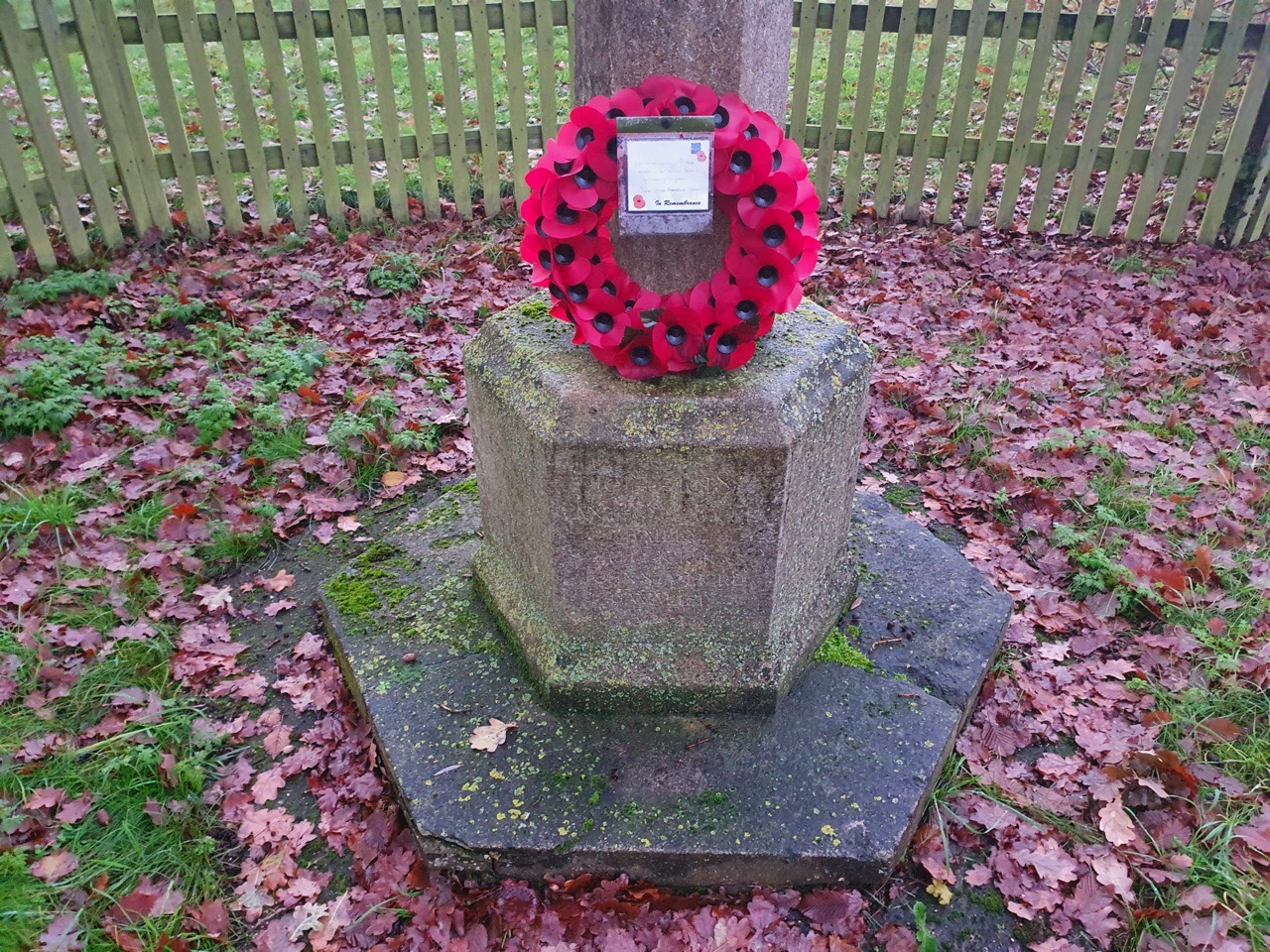
    Wramplingham War Memorial, which was unveiled in 1920 and is quite a tall and slender piece of stone. There were seven men killed from the parish during the First World War and one during the Second World War. This seems quite a high number for such a small village, especially as there were no Pals Regiments from Norfolk where friends were fight (and often die) together. Some of those who died didn’t live in the village, but had relatives here, but, it must still have been a great loss for Wramplingham.

    The names of those who died are listed on the stone, although they’re a little hard to read and some attention is needed here to restore them. Those who died in the First World War were:

    Arthur Yorke Bailey

    John Stanford Cavalier

    William Robert Collings

    John Robert Howes

    Frederick William Mitchell

    John Robert Oldfield

    Percival Ernest Thompson

    And, the following servicemen died during the Second World War:

    William Leonard Tolver

    There’s no point in me working through the histories of these individuals, as it has already been done at http://www.roll-of-honour.com/Norfolk/Wramplingham.html.

  • Great Melton – St. Mary’s Church

    Great Melton – St. Mary’s Church

    St. Mary’s and All Saints’ share a churchyard in the village of Great Melton, similar to the situation in South Walsham.

    This is where the nave of St. Mary’s once stood (I’m standing in front of the tower to take the photo), with All Saints’ visible on the left. The churches were both independent until the eighteenth century, but then it was decided to merge the two and just use St. Mary’s. A decision was later made that St. Mary’s was too small, so they decided to fix up the by now roofless and slightly fallen down All Saints’ Church.

    The church remained in use until 1883, it’s a shame in my view that the Victorians decided to take down most of the building, although I understand that some of the stone was used in the rebuild of All Saints’. It was reported in the Thetford & Watton Times in 1883 that the locals did want to keep both, but given the lack of finances they wanted to preserve what they considered to be the more historic of the two churches, and that was All Saints which had Saxon origins.

    A trig mark at the base of the tower.

    Looking up at the tower, which is in pretty good shape. Well, bar the big holes in it. I understand that English Heritage have provided some money to secure it, which I think relates to the brickwork at the top as opposed to the bit of wood propping the walls up at the front of the photo.

    Rather beautiful….

    The tithe map, with St. Mary’s being the lower of the two churches.

    The enclosures map.