Category: UK

  • Norwich – Rosary Cemetery (Henry Brett)

    Norwich – Rosary Cemetery (Henry Brett)

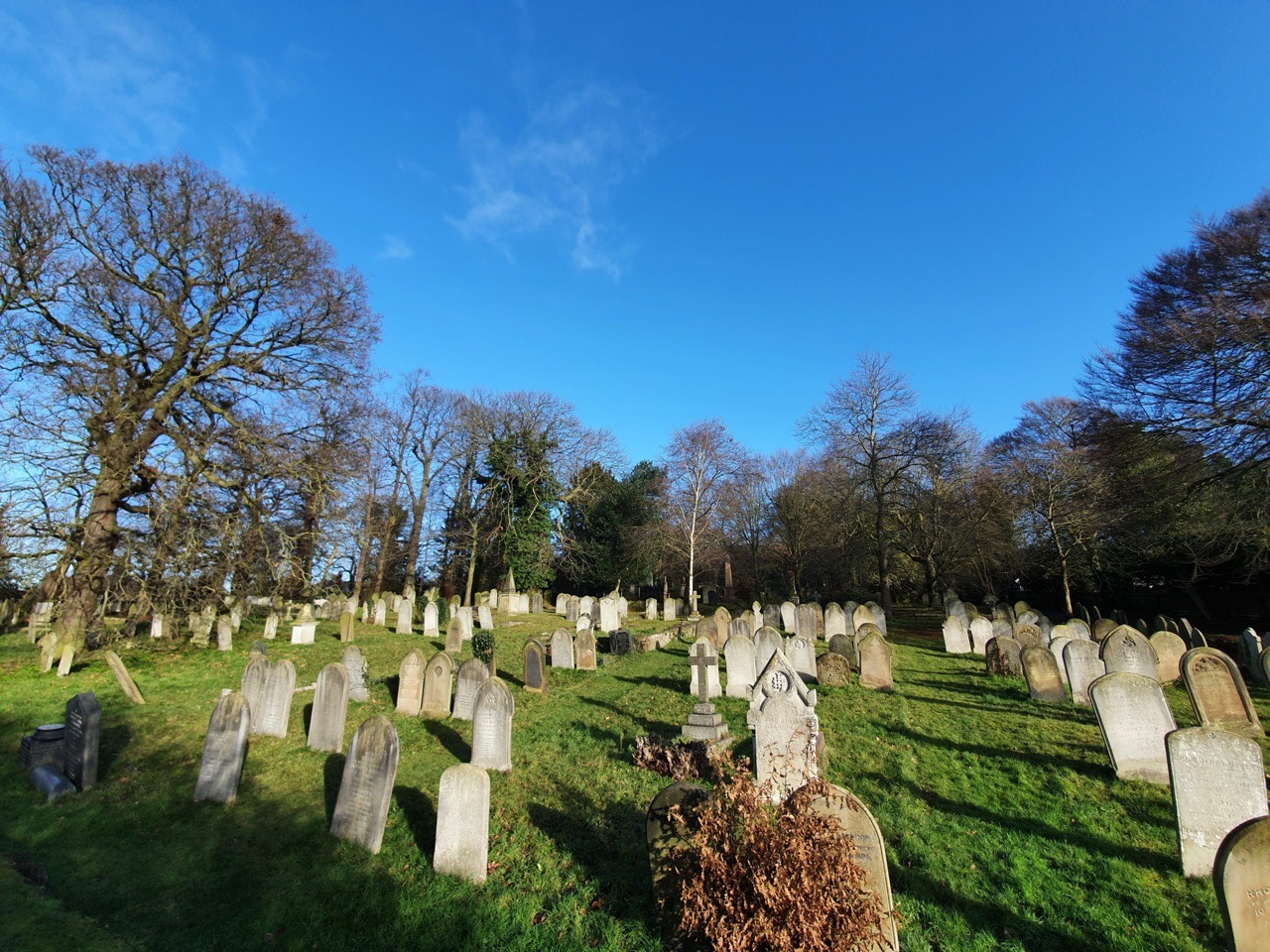
    Since I’ve been grounded again by the Government, I thought I’d meander around the Rosary Cemetery located near to me in Norwich, in an attempt to see what stories lie there. It might not be the most fascinating blog content, but it’ll keep me quiet for a few weeks….

    henrybrett

    Unfortunately, there’s not much story to be told here. But, on the grounds that I might find something else in the future, or someone might tell me more in the years to come, this is what I know so far.

    Henry was baptised on 27 October 1797 in Swaffham, the son of William Brett and Elizabeth Brett.

    He was probably married (by probably, I mean I’m not sure it’s the right person, rather than this being some kind of half marriage) to Ann Reynolds in Plumstead by Holt church on 19 October 1819. If this is the correct couple, neither of them could read or write, which wasn’t uncommon, but suggests a background of limited money in the families.

    In the 1841 census, he’s listed as living on Mousehold Heath, along with his wife Ann, their daughter Elizabeth and two 15-year olds who I don’t know the link to, Ann Royall and Edward Fake (I think the transcriber might be wrong on that name, but I can’t read it either to improve on it).

    Henry passed away on 4 May 1844, at the age of 47 years old. The Norfolk Chronicle duly reported this, adding that he was a farmer in Thorpe Hamlet. The gravestone has been attacked by foliage or weeds over the decades, so the bottom half is too hard to read.

    So, annoyingly, that’s it for the moment, but I’m intrigued by who this farmer was on Mousehold Heath and where exactly he lived.

  • Micro-Adventures (Norwich)

    Micro-Adventures (Norwich)

    Unfortunately, the whole lockdown thing has meant that Nathan and I haven’t made much progress with our GeoGuessr project. That’s picking a random place using GeoGuessr and then just going there using public transport, wherever in the UK that place might be. The aim is less the destination, more the journey. We’ve only done two, but the idea of finding a story anywhere has worked out so far.

    Since I can’t go very far at the moment, that reminds me that I should try something vaguely similar by walking (no needless travel during lockdown….) to some places that I’ve been meaning to go for a while. And then seeing if I can possibly find a story from the journey there, which might be pushing it, but we’ll see how we go. If I can’t, the story will entirely be about the destination.

    With the help of the listed building map, I’ve found these scheduled monuments and/or listed buildings. My plan is to walk to these separately over the next few weeks, so:

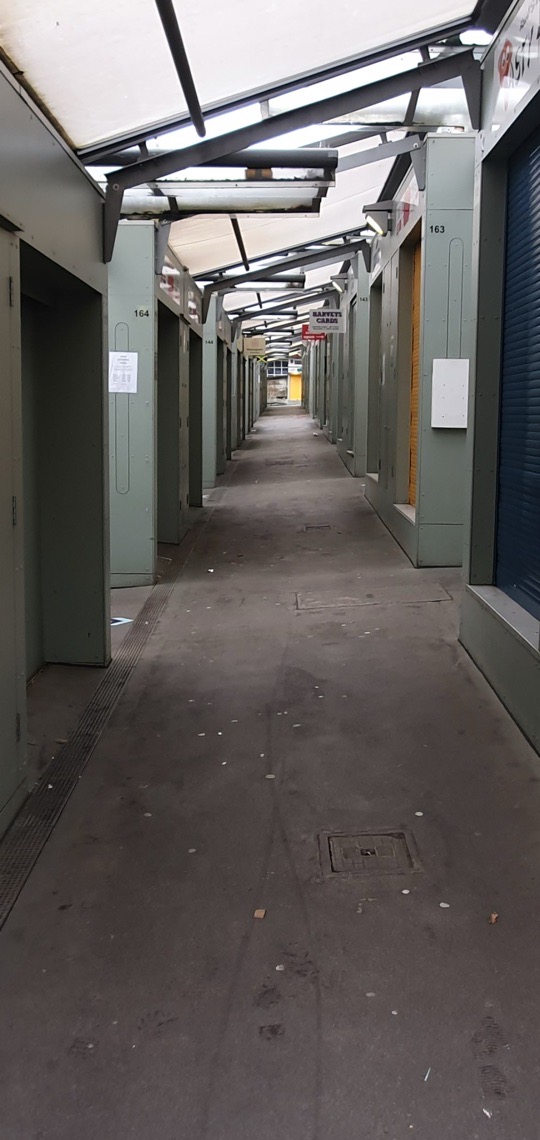
    (i) Old Lakenham Parish Church (hence why there’s a screenshot of Lakenham as the image….)

    (ii) Earlham Cemetery

    (iii) Remains of St. Bartholomew’s Church

    (iv) Boundary Cross on Drayton Road + Standing Cross at St. Mary’s, Hellesdon

    (v) Intwood Church

    (vi) Cringleford Bridge

    (vii) Tumuli at Eaton Heath

    I had wanted to visit a Saxon cemetery, Second World War listening post and other sites that were scheduled monuments, but they seem inaccessible without straying off footpaths. And I don’t want to be doing that just at the moment…

    I’ll come back to this page and link these walks in when I’ve done them (and they may be incredibly boring, but there we go…..).

  • Scottow – Scottow Cemetery (Alan Towle)

    Scottow – Scottow Cemetery (Alan Towle)

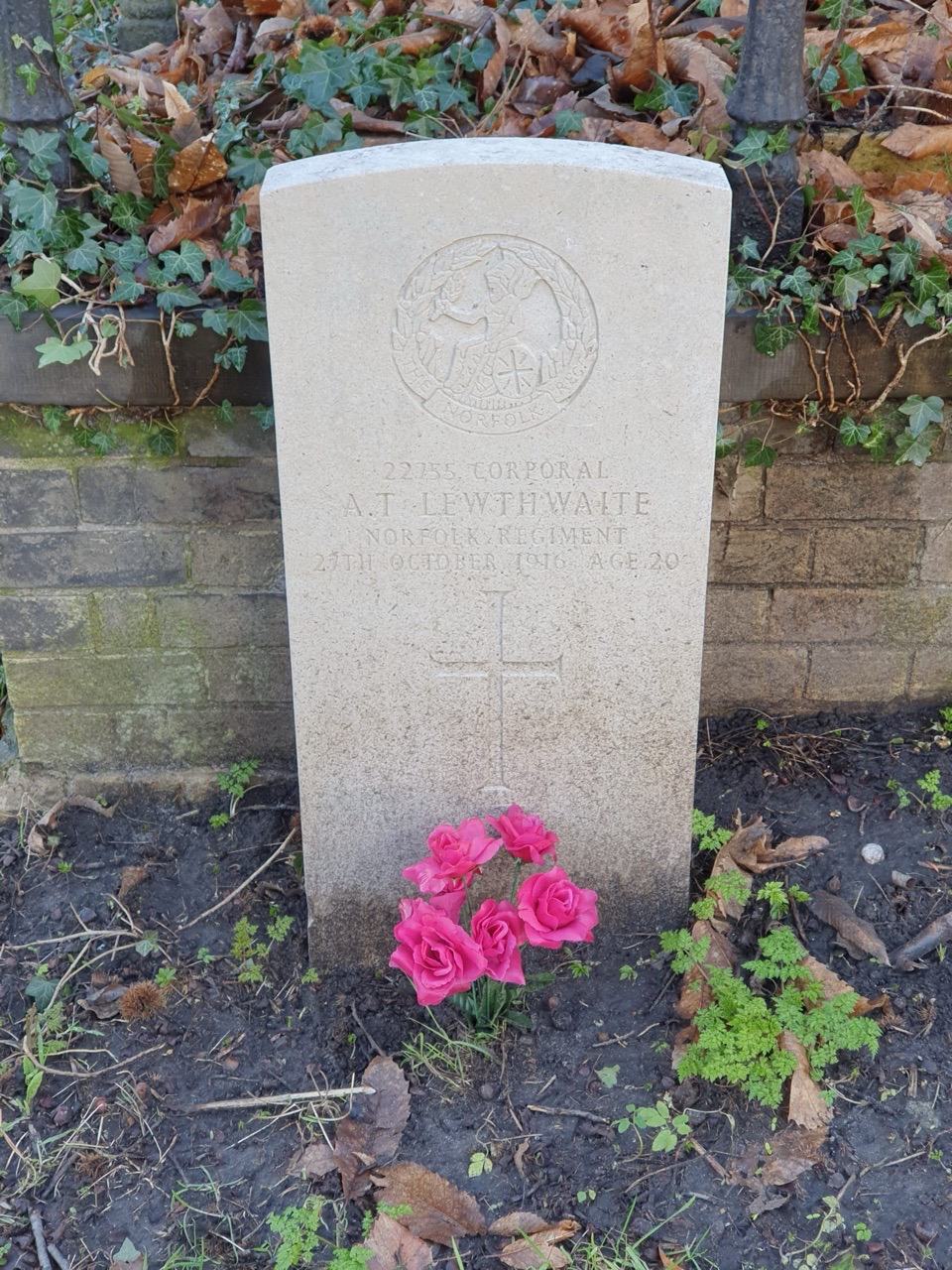
    This grave at Scottow Cemetery commemorates the life of Flying Officer Alan Towle. His address is listed as St. George’s Avenue in Bridlington, but he was married to Barbara Towle, who lived at Fern Cottage, Lower Street in Horning.

    Towle died at the age of 24 on 29 December 1953, when his aircraft crashed at a location between Darlton and Tuxford in Nottinghamshire. He was flying in a De Havilland Venom Jet, a relatively new aircraft that was still being launched across the RAF, replacing the Vampire Jet.

    The Yorkshire Post reported an eye-witness who said:

    “I was half a mile away on the top of a hill when I saw the plane flying low. The pilot appeared to be trying to make a forced landing. The plane, however, suddenly lifted sharply and rocked, and having lost flying speed crashed and burst into flames”.

    The newspaper added:

    “Another eye-witness, Mr. H Murdock, a farmer, of Darlton, said ‘the pilot was thrown clear of the blazing portion of the plane, but still trapped in some wreckage. One of our men, Reg Turner, ran up and pulled the pilot clear, but he was already dead”.

    The Aviation Safety web-site has more information on what went wrong on that night:

    “DH.112 Venom NF.2 WL829 was first flown at De Havilland’s at Chester on 11/08/53. On 29/12/53 the aircraft had been collected from 48 MU at RAF Hawarden, Chester, for delivery to 23 Squadron at RAF Coltishall, Norfolk. While en route on the delivery flight, the pilot reported that he was experiencing difficulty with the engine and could not get more than 5,000 rpm from the engine, with consequent reduced power. The pilot therefore decided to divert to RAF Worksop in Nottinghamshire.

    He then next reported that the engine problems were getting worse, and he would not be able to make RAF Worksop. He then decided to attempt a forced landing into a field 2.5 miles north-east of Tuxford, Nottinghamshire. On final approach, during this attempted emergency landing, the nose of the Venom lifted, the aircraft stalled and crashed, diving into the ground at a low altitude and killing the pilot.”

  • London – Westminster (Borough of) – White Horse

    London – Westminster (Borough of) – White Horse

    This isn’t a recent visit, I went to this Nicholson’s pub in Soho back in August, when things looked a little more hopeful for the hospitality industry…..

    I like pubs which have signs explaining their history, including why so many pubs have the name ‘The White Horse’. Incidentally, there are lots of pubs called ‘The Black Horse’, many of which are named after Dick Turpin’s horse because of the mystery and intrigue that caused. In short, this pub was rebuilt in 1939, replacing the earlier 1718 pub of the same name, and the exterior of the new building has some Art Deco features.

    Everything felt safe and there was a staff member at the front door welcoming customers and taking them to their seats. I visited in the early afternoon and it did get a little busier, although the outside seating area was always busier with customers people watching (on my visit I preferred sitting inside phone watching in case anything exciting was happening on social media).

    I have to add here that Nicholson’s gave this pint away to me via a promotion on their app, so I can’t much complain about the range of drinks. But, there were no dark ales and another customer later asked for the same, we were both told that they had Guinness and that was it.

    This was the Nicholson’s Pale Ale (made for the company by St. Austell Brewery), perhaps just a little unexciting, but drinkable with a depth of taste to it at least. Nicholson’s seem to have a habit of pushing drinks that aren’t beer, instead particularly advertising gins and other spirits, but they do have some marvellously historic pubs in their estate that are worth visiting in their own right.

    As an irrelevant aside here, I’m moderately confused why the pub has this on the front page of their web-site:

    “It’s only 12 minutes on foot from Bond Street Underground Station.”

    It’s also only four minutes walk (according to Google) from Oxford Street underground station, which is on the same line and around the corner from the pub. Strange…

    Anyway, most of the recent reviews are positive and the staff here were friendly and helpful. Food is a bit richly priced, but the White Horse focuses on their selection of pies which is part of the Nicholson’s aim to push a certain style of food in each of their pubs. I’m not entirely sure I’d return here as the beer selection isn’t really exciting enough (even before the current restrictions) in an area with plenty of competition.

  • London – Kensington and Chelsea (Borough of) – Brompton Cemetery (Ernest Wedgwood Harper)

    London – Kensington and Chelsea (Borough of) – Brompton Cemetery (Ernest Wedgwood Harper)

    This is the grave of Ernest Wedgwood Harper, located at Brompton Cemetery in London.

    Ernest was born in Burslem on 21 May 1898, the son of Ernest (born on 11/04/1865) and Florence Mary Harper (born on 16/09/1872). He went to Middleport Council School and Longport Council School between 1911 and 1912 and he then went to Hanley Municipal Secondary School between 10 January 1912 and 15 July 1916. He took the Oxford Local Seniors Honours Exam (a system of external grading) where he received a third class award.

    At the 1901 census, the family were living at 179 Newport Lane in Burslem, an area of the city which has now been heavily changed and most of the residential properties demolished. At this point, he was aged two years old and he had a little sister who had just been born, Dorothy May.

    At the 1911 census, the family had moved to Grove Pit, Green Lane in Wolstanton, with the older Ernest working as a school teacher. There was a new addition to the family, Byron, who was aged 2 at the time of the census.

    Leaving school at 18 in Burslem, Ernest might have felt a long way from the military action when signing up. He joined the third battalion of the Grenadier Guards as a guardsman, service number 28840. It appears he did see some service in France in 1916, but there were medical problems with his heart and he was sent back to London and was admitted to Tooting Hospital. He was readmitted to his unit, but instead took on clerical duties and wasn’t going to be sent back to the front line.

    The story becomes endlessly sadder here, on 24 July 1918 Ernest shot and killed himself at his rifle barracks. An inquest found that he feared that he had spotted fever, but the doctors had told him that he hadn’t despite numerous tests. Florence, his mother, went to the inquest and told them how Ernest had been a clever boy and the family were very proud of him. The verdict was announced by the inquest of “suicide during temporary insanity in consequence of valvular disease of the heart”.

    One can only speculate about the mental challenges that Ernest went through, clearly scarred by the conflict and perhaps having no other way of dealing with the worries about his own medical condition. I’m not sure that his service records survive, but perhaps he experienced significant trauma in France and he would be one of many who did.

    At the time of his death, Ernest was part of no.8 company, 5th reserve battalion of the Grenadier Guards, with his parents living at The Grove, Wolstanton, Stoke-on-Trent. It must have been a traumatic event for his mother to travel to Westminster to attend the inquest. Ernest’s family didn’t have any connection with the area, but he was buried at Brompton Cemetery because he had died at the nearby Chelsea Barracks.

    As an aside, Ernest’s little brother Byron was married in 1934 and their parents were there at the marriage ceremony. As was Ernest’s sister Dorothy May, who was the bridesmaid to the bride, and I wonder how much they thought about the one member of the family who hadn’t made it. Byron lived until 1988, remaining in the Stoke-on-Trent area.

  • Norwich – Rosary Cemetery (William Ford + Emily Ford)

    Norwich – Rosary Cemetery (William Ford + Emily Ford)

    Since I’ve been grounded again by the Government, I thought I’d meander around the Rosary Cemetery located near to me in Norwich, in an attempt to see what stories lie there. It might not be the most fascinating blog content, but it’ll keep me quiet for a few weeks….

    I nearly gave up with my researches into this family, as I was struggling to find anything of much interest relating to William Ford and his wife Mary Ford. That is, except from the very sad nature of the lives mentioned on the gravestone. Mary Ford, William’s wife, died in 1845 at the age of 58, having already lost their daughter Lucy in infancy, but then their children Hannah and Marianne both died in 1846, at the ages of 18 and 17 respectively.

    I also struggled to work out where this couple lived in 1841, as I found a census record, but Mary was listed as Lucy, so I assumed it was a different family as there were no children and they only lived with their housemaid Emily Stacey. Although, everything else fitted together. William Ford worked as a shoemaker in Norwich and had premises at Colegate Street, St. George’s and he lived at Heigham Cottage.

    Given the lack of obvious story, I thought I’d abandon this one, until I paid attention to the name of Emily Ford at the base of the gravestone. Emily was born in 1823, which didn’t quite make sense to anything in terms of being a child or sister of William. It then transpires that she was William’s second wife, marrying him in 1852 and living with him until he died on 23 October 1858.

    Emily died on 20 December 1881, at the age of 59, and she appeared in the 1861 and 1871 censuses with her occupation being listed as living off property income. But then, something about that strange 1841 census came back, namely I realised that William had married his much younger housemaid. That’s quite impressive, marrying someone who is thirty years younger, but I wonder what Mary Ford would have thought about this arrangement.

    Emily died when living at 32 Queen’s Road in Norwich, where by all accounts she lived a life of such comfort. Her death was reported in the local paper, noting that she was the relict (the archaic word for widow) of William Ford, but giving no more information. And, once again, I do wonder what Mary would have thought that her former housemaid would end up sharing a grave with her.

  • Scottow – Scottow Cemetery (Otto Walter Kanturek)

    Scottow – Scottow Cemetery (Otto Walter Kanturek)

    This is a rather unusual gravestone, or at least the inscription element of it, at Scottow Cemetery. Otto Walter Kanturek was born in 1897 in Czechoslovakia and worked as a film-maker in Germany and the United States, specialising in aerial photography during the early years of the Second World War.

    Otto was at RAF Coltishall as he was filming some scenes of aircraft for the film A Yank in the R.A.F. which was being produced by Twentieth Century-Fox Film Studios. One of the shots they were trying to film was in the air, with Otto in one plane filming two Hurricane planes that would fly by. Unfortunately, one of the Hurricane aircraft crashed into the plane which Otto was in, and although the pilot was able to eject to safety, everyone else was killed.

    The sad incident was reported in the press at the time, also noting that Jack Parry, another videographer, was killed in the incident. It was mentioned in the media of the time that Otto had been the cameraman to all of the Gracie Fields films which had been made in the UK. This story was also featured by the BBC Inside Out television programme in 2006, who were able to interview one of his colleagues, Bryan Langley (then aged 97), who said:

    “If it wasn’t for Otto, I wouldn’t have been a Director of Photography for many years. He helped me with my career, a wonderful man”.

  • London – Hammersmith and Fulham (Borough of) – Hammersmith Bridge

    London – Hammersmith and Fulham (Borough of) – Hammersmith Bridge

    This is from my visit to London a couple of weeks ago and there’s something of a debacle about this whole Hammersmith Bridge arrangement. The bridge was first constructed here in 1827 and was paid for by tolls, with these charges finally being removed in 1880. All looked rather well for the local denizens, they had their bridge and they didn’t have to pay to use it. So, all rather lovely.

    Anyway, then a boat ran into the bridge in 1882, so it was thought that it had better be replaced. Joseph Bazalgette, best known for his construction of the London sewers, designed a new bridge and this sat on the same pillars as the previous structure.

    The bridge has struggled to cope with the weight of traffic placed on it throughout the twentieth century, it was never designed to deal with such volumes. It also hasn’t helped that the IRA have tried to blow it up in 1939, 1996 and 2000, all of which hardly helped with the structural integrity of the bridge.

    In 2014, the bridge was temporarily shut to motor traffic because of concerns about the safety of the structure, with this temporary closure effectively becoming permanent. A single bus was allowed to go over at any one time, but then Transport for London decided to remove its staff who were monitoring this, before an agreement was made. There has been a lot of arguing between Transport for London and the local council about this whole matter and who is paying for what, which seems to be the real reason for the delay. Cyclists and pedestrians were allowed to keep using the bridge, but then on 13 August 2020, this was then banned as well.
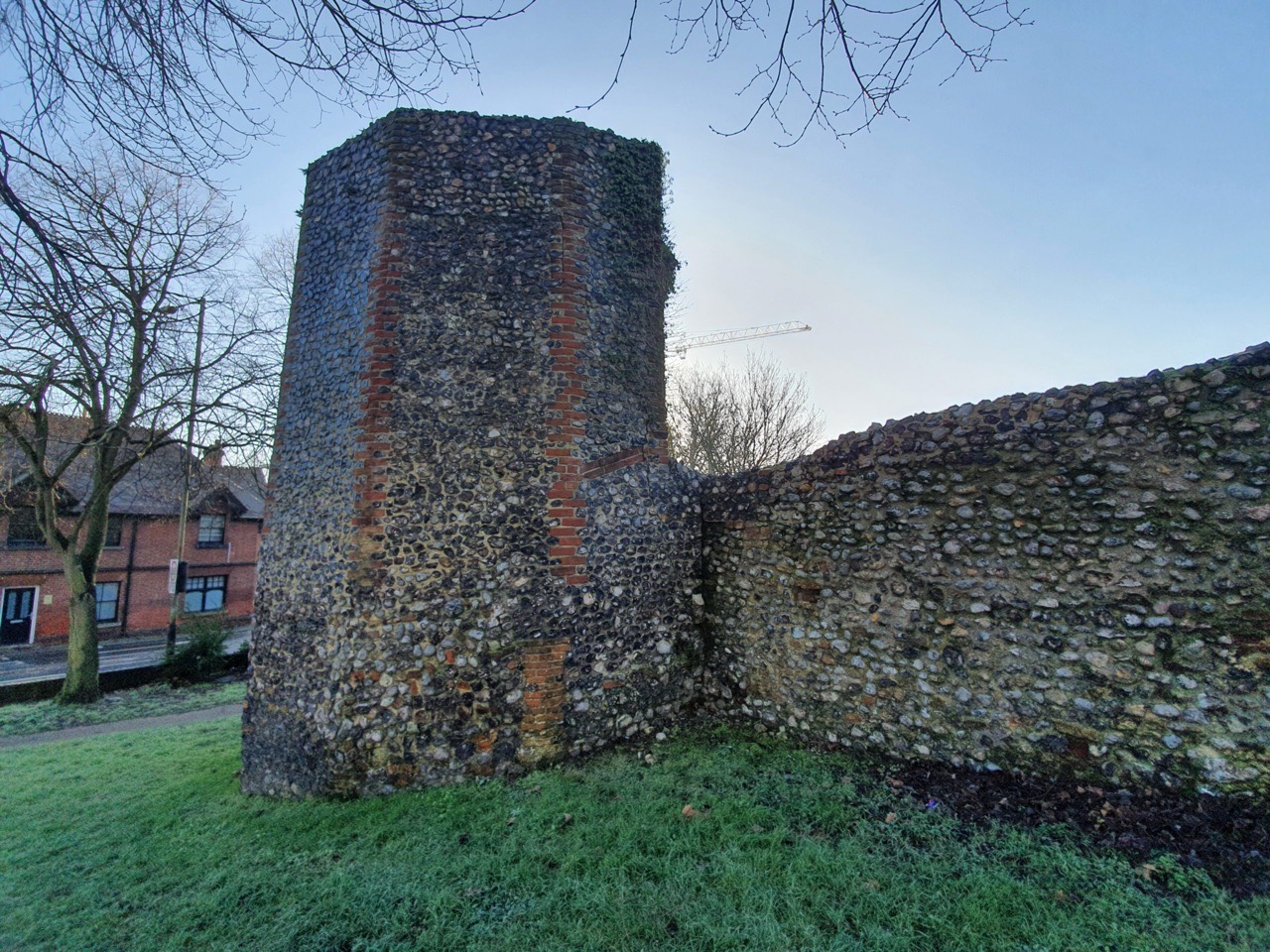
    The Government announced it was going to come up with a solution, but to cut a long story short, it announced that motor vehicles won’t be returning until at least 2027. I’m not sure how it takes that long to fix a bridge, but then I’m not a civil engineer…..

  • Norwich – Rosary Cemetery (Emma Jane Sendall + Herbert Sendall)

    Norwich – Rosary Cemetery (Emma Jane Sendall + Herbert Sendall)

    Since I’ve been grounded again by the Government, I thought I’d meander around the Rosary Cemetery located near to me in Norwich, in an attempt to see what stories lie there. It might not be the most fascinating blog content, but it’ll keep me quiet for a few weeks….

    This grave tells a story immediately, the death of a mother aged just 21, with her baby dying shortly afterwards at just a few months old. It commemorates the life of Emma Jane Sendall, born as Emma Abel and baptised on 27 July 1851. She was the daughter of James and Martha Abel of the Cranworth with Letton parish and she had a sister.

    At the age of 9, she was listed on the 1861 census as living at Gressenhall, as a pauper in a workhouse. She was with her father and sister, with her father being an agricultural labourer. That children were living in workhouses was ridiculous, but she was there just too early, as it wasn’t until the late 1860s that Thomas Barnardo started to open homes for impoverished children to live.

    This couldn’t have been a pleasant life for Emma Jane, but by the time of the 1871 census, she was living at Hammond’s Yard with her grandparents and sister, back in Cranworth, near to Mitford.

    In the late 1860s, a man called James Sendell married a local lady in Mitford, and I wonder whether Emma Jane somehow met his brother at that time, Arthur Sendall (born in around 1847). She married him in 1872 and perhaps this was looking like a new start for Emma Jane, something a little more positive. She had a child with Arthur in early 1873, named Herbert Sendall. Unfortunately, Emma Jane died in April 1873 and her only child died on 11 June 1873, with both being buried in the same grave.

    It’s perhaps possible to think of Arthur standing by this grave, mourning the loss of his wife, with perhaps their child also present. And then Arthur would have been back just weeks later, to bury their child. There was never much chance of any information being available about Emma Jane given that she spent much of her life as a pauper. And she would have likely remained anonymous, had it not been for her marrying Arthur, who seemed to have had at least a little money so that he could pay for a gravestone.

  • Norwich – Rosary Cemetery (Thomas Swindell)

    Norwich – Rosary Cemetery (Thomas Swindell)

    Since I’ve been grounded again by the Government, I thought I’d meander around the Rosary Cemetery located near to me in Norwich, in an attempt to see what stories lie there. It might not be the most fascinating blog content, but it’ll keep me quiet for a few weeks….

    This grave commemorates the lives of three people, Hannah Swindell, her husband Thomas Swindell and his second wife, Caroline Swindell.

    Thomas Swindell was born on 1 February 1815 and was baptised at the Baptist Church in Knutsford on 26 February 1815. He was the son of Thomas and Elizabeth Swindell and he married Hannah Witter on 4 February 1843. They had five children, which I’ve listed on the post I wrote about Hannah, with Thomas working as a Primitive Methodist Minister.

    There’s a mass of material on Thomas, not least that provided at https://www.myprimitivemethodists.org.uk/content/people-2/primitive_methodist_ministers/s-2/thomas_swindell where there’s a photo of him. There’s no point my copying material over from that very useful site (which also has information about his son, Theophilus Witter Swindell who became an important figure in Great Yarmouth), but it’s of note that he travelled around the country with his preaching, including Preston, Bolton, Wrexham, Great Yarmouth, Docking, Upwell, Aylsham, Swaffham, Cambridge, Thetford and ending up in Norwich in 1875.

    At the 1871 census, Thomas was living on Arnold Street in Lowestoft, along with his wife Hannah and three of their children. He had moved to Norwich in the 1870s to live at Bloomsbury Place, before moving to Essex Street in Norwich by the 1881 census, when he lived with his son Arthur Swindell (by then a Professor of Music) and his second wife, Caroline Swindell. Hannah had died on 23 January 1876, with Thomas marrying Caroline Simpson (1828-1899) in the summer of 1878.

    By the time of the 1891 census, Thomas was living with Caroline at a property on Grove Road in Norwich. He was still living at this residence when he died, on 8 November 1897. Caroline was to die a couple of years later, but I can sort of picture her at Rosary Cemetery at what was likely a well attended funeral given the size of Thomas’s family and his reputation in the Methodist Church.