
Category: Brigstock

  • Brigstock – Lyveden New Bield and the Botched National Trust Purchase of the Manor House

    Brigstock – Lyveden New Bield and the Botched National Trust Purchase of the Manor House

    This is the manor house at Lyveden, a site which is perhaps best known for the incomplete Lyveden New Bield. The National Trust have owned the latter for over a century, but in 2013, they also acquired this manor house. Not much is known about the manor house that Sir Thomas Tresham lived in, this one dates to after 1615 and after his death.

    In my radical view, that no-one will care about as I complain about many things, I think that the National Trust has rather botched this. They’ve acquired, at significant expense, this entire property and they’ve done pretty much nothing of note to it that explains the history of the site.

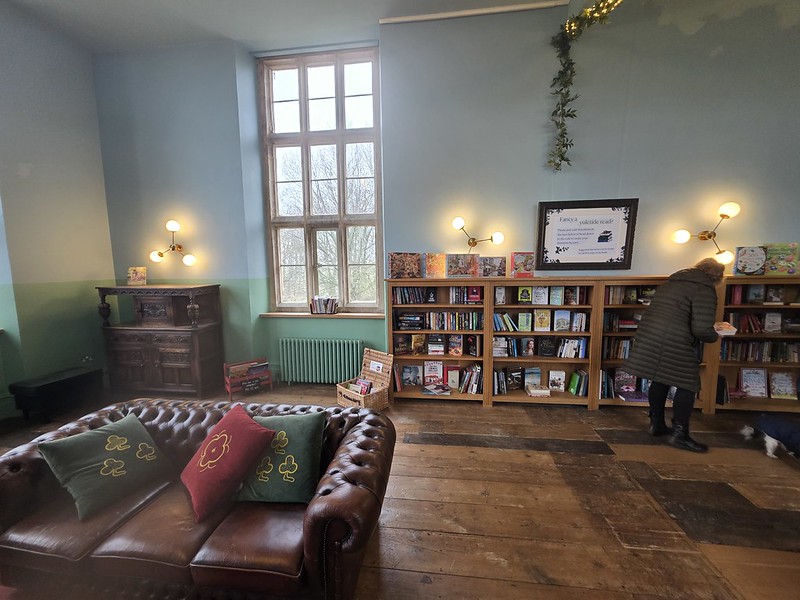
    They’ve got one room painted in bright colours which is a very potted history of the estate, but it seems that they’ve primarily taken the opportunity to build themselves a substantial cafe, numerous offices for their own usage and some empty rooms. There is so much potential for more imagery, deeper histories, maps and just information about the site.

    I got free access as I’m a National Trust member, but this site costs around £13 per person to get in and that gives access to the exterior only of the unfinished building, along with entry into this former manor house. If a family came here because a child was interested to see the former manor house, I’d suspect they might feel conned by the cost of entry. It’s £33 for a family and although I know the National Trust price entry highly to get people to join, this feels like they’ve taking advantage at this point.

    “Very little to see for the money, only 3 rooms open in the manor house, one used to sell books, one for the cafe and the other painted a garish magenta colour had a few info boards on”

    I don’t disagree with this review….

    What appears to have actually happened is that the National Trust has acquired this property to operate as a cafe. Lovely as that is, it would be nice if they gave some sort of priority to the telling of history and explaining what is happening at the site.

    Absolutely interesting, but does this have to be shoved at the bottom of the stairs?

    Anyway, in fairness, I’m not entirely grumpy and I liked this exhibit. Although I wasn’t overwhelmed with things to look at in the house, other than the fine selection of scones.

    They had some books for sale in a room that I felt was really being used as an overflow area for the cafe.

    No expense has been spared with the television that they’ve put in the fireplace.

    Anyway, the next post is about the cafe, as I think that’s what the National Trust would like visitors to focus on.
  • Brigstock – Lyveden New Bield

    Brigstock – Lyveden New Bield

    My friend Richard loves scones and I love historic properties, so that meant we decided to go to a National Trust property for the day in mid-January. We opted for Lyveden New Bield, which is located near to Oundle, so roughly it’s somewhere inbetween Corby and Peterborough.

    Lyveden New Bield was conceived in the late sixteenth century by Sir Thomas Tresham, a wealthy Northamptonshire landowner and devout Catholic. Tresham designed the building during a period of intense religious persecution under Queen Elizabeth I, intending for it to serve as a secret oratory and a powerful symbolic expression of his faith. Tresham’s vision was partly for a nice summer house when not as his main manor house just down the road, but it was also for a physical manifestation of his religious devotion at a time when taking part in Catholic services was a criminal act punishable by imprisonment or even death.

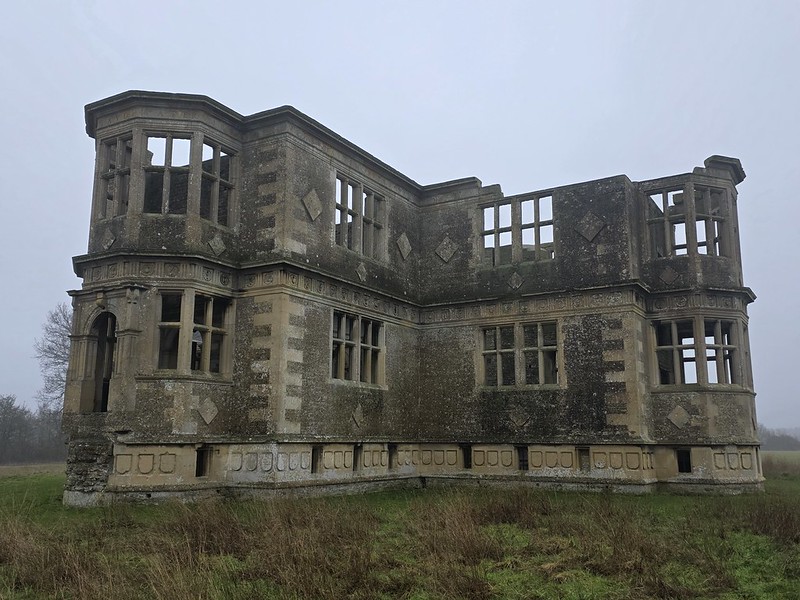
    Full credit to the builders of this structure, it’s still in really quite decent condition centuries on, despite never having had a roof. Unfortunately, there’s no public access to the interior now, the National Trust have decided that it’s too risky.

    The planned main entrance to the house. Construction on the New Bield began around 1595, but the project was never brought to completion as the work came to an abrupt halt following Sir Thomas Tresham’s death in September 1605.

    Just months after Thomas’s death, his son and heir, Francis Tresham, became embroiled in the Gunpowder Plot, the failed Catholic conspiracy to blow up King James I and the Houses of Parliament. Francis died in the Tower of London on 23 December 1605, just before he could be executed, and the family’s estates were subsequently heavily fined or confiscated. Deprived of the funds and the leadership necessary to finish the intricate stonework and roofing, the house was left as an empty shell, preserved exactly as the builders had left it over four hundred years ago.

    The site remained a ruin for centuries, eventually passing into the care of the National Trust in 1922. The survival is something of some note as it would have been easy for the building to be demolished at any time, or for it to be repurposed into a cattle shed or something.

    I had to take this photo through the hole in the locked gate, but I did want to go and explore inside…… It’s not clear if the National Trust will ever allow entry again, they say that the closure is temporary but they don’t seem to be rushing to resolve the problems of what they claim is falling masonry.