Category: Norfolk

  • Streets of Norwich – Redwell Street

    Streets of Norwich – Redwell Street

    Part of my Streets of Norwich project….

    Redwell Street today doesn’t quite make sense, it goes from Princes Street at the top of the above map, down to Queen Street, which is where Brewdog is located.

    Redwell Street makes more sense in this map from the 1880s, as some buildings were demolished to allow for St. Andrew’s Street to be extended, allowing trams to use the road. This cut Redwell Street in two and the lower half is really now part of St. Andrew’s Street in terms of the road layout.

    The street used to be known as St. Michael’s Street, because of St. Michael-at-Plea Church which is located here. In the seventeenth century a pump was added to an existing well by the church, which likely had a red covering and surround, and it became known as Red Well Street. That, over time, became corrupted into the current name of Redwell Street.

    This is Boardman House, which has a Redwell Street address, but its frontage and a connected building is on Princes Street, so more on that another time.

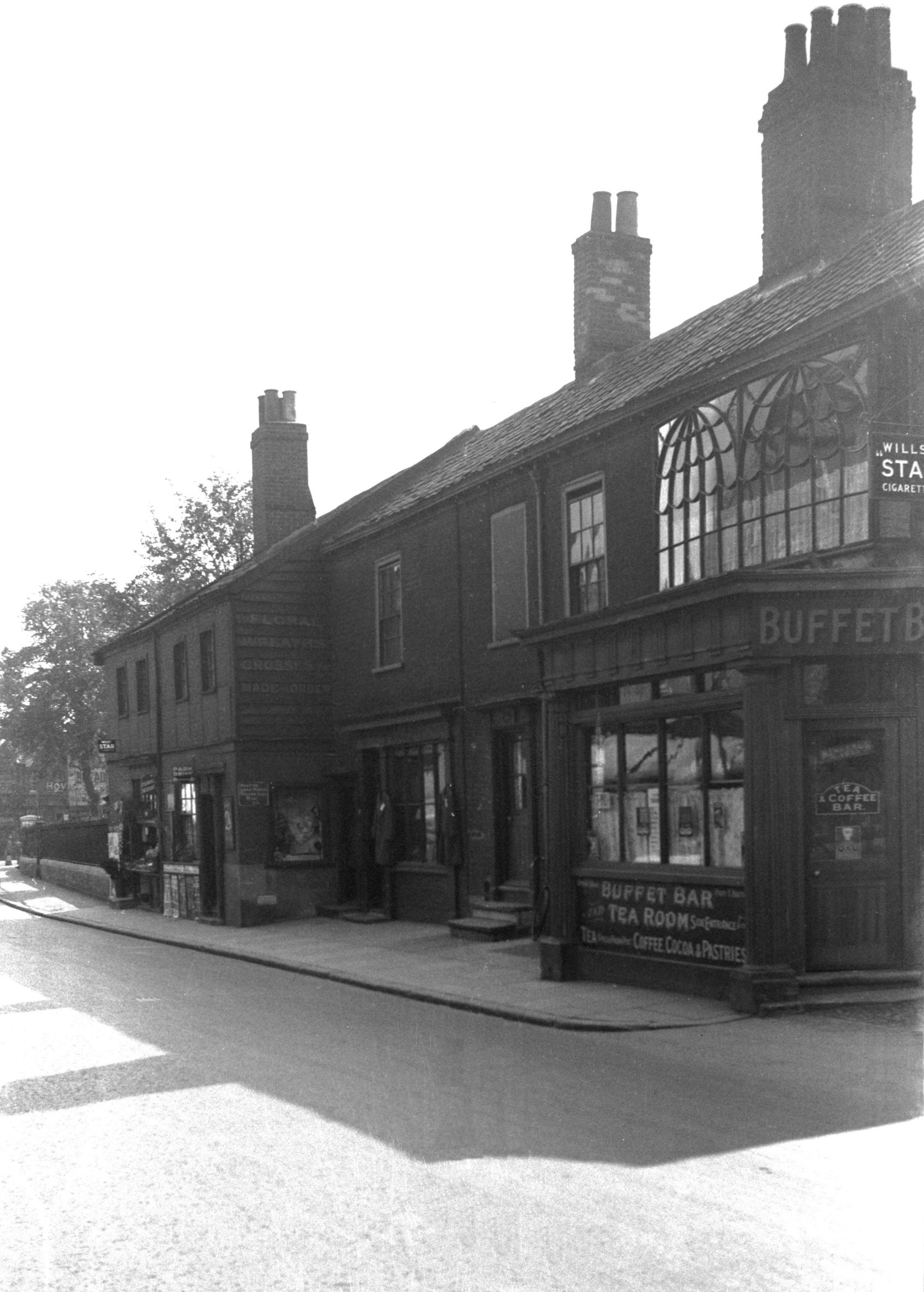
    Not much of huge historic interest here, although the building on the far right is 8 Redwell Street, which retains its nineteenth century frontage.

    The building on the right-hand side was built in 1957 for the Norfolk News Company, sadly demolishing a fair chunk of its heritage during the process. Given that the first provincial newspaper was published here at the beginning of the eighteenth century, it’s a shame that there’s nothing more than a plaque to mark the event.

    This is the building to the right-hand side of Jackson-Stops, the entrance to Clement Court.

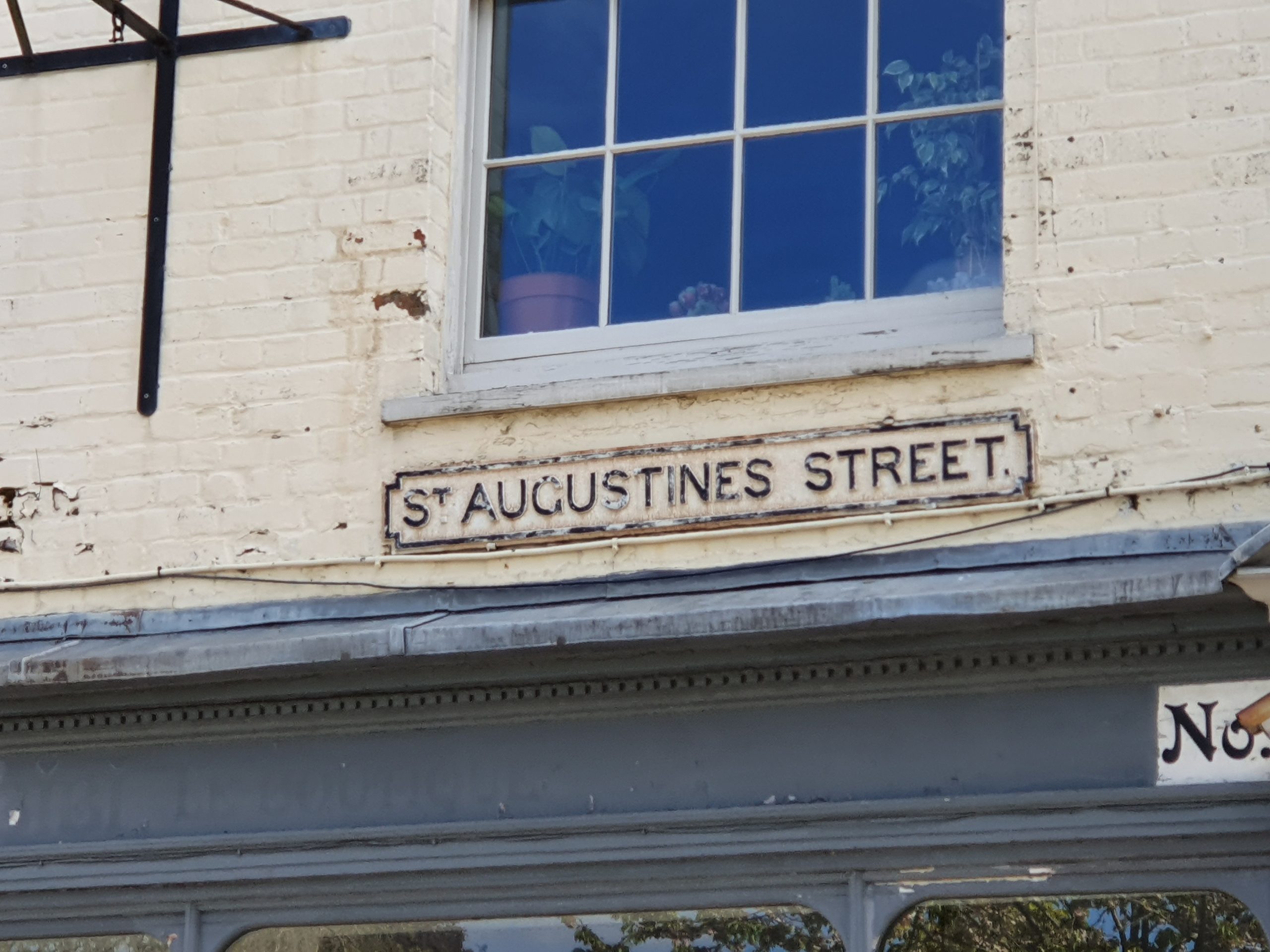
    The signs show where Bank Plain and Redwell Street meet. The building on the right is interesting, this is 2 Redwell Street, which has a fifteenth century undercroft. The shopfront is original from the nineteenth century and the undercroft and cellars project underneath the Redwell Street pavement.

  • Norwich – Romani DNA

    Norwich – Romani DNA

    This is the sign on the back of the Castle Quarter (or Castle Mall as I’m still calling it), opposite the Woolpack pub. It notes a discovery in the 1990s during the Castle Mall development when archaeologists excavated what transpired to be an eleventh century graveyard. It was important as it found Romani DNA, which is much earlier than anything else that had been discovered in the British Isles, around 500 years earlier than previous evidence.

    There were 118 dental extractions from 59 skeletons which were sampled during the 1990s, although the results weren’t published until 2006. They took the DNA from tooth pulp, as the enamel on the teeth had helped to preserve it. Those buried had been Saxon Christian and the original report noted:

    “If the rare TA haplotype found in ancient Britain instead suggests the presence of people of Romani ancestry in tenth century England, this is in surprising contradiction to historical evidence indicating that the Romani first left India—as mercenary soldiers or camp followers—at around AD 1000 (Hancock 2002). Some suggest that emigration from India could have been as early as the sixth century (Fraser 1992; Hancock 2002), and others have proposed much earlier routes via Egypt (see Kendrick 2000), but these theories are much less well supported.

    One possible explanation would be if Romani women were enslaved by Vikings during trade expeditions to the Byzantine Empire, or formed liaisons with them during common association in Varangian army camps (in Byzantium) in the ninth and tenth centuries (Graham-Campbell 1994; Hancock 2002). These associations could also have been with Anglo Saxons, though known associations of Anglo Saxons with Varangian camps began only in the late eleventh century (Hancock 2002; Shepard 1973). Second generation Varangians are also known to have returned north (Hannestad 1970), and the mtDNA haplotype could have been introduced in this way. The gravesite at Norwich is typical of late Saxon, Christian sites with no grave goods and an east–west orientation, but this does not necessarily exclude Norse burial (Hadley 2002), and Viking artefacts were found nearby.”

  • Streets of Norwich – Church Alley

    Streets of Norwich – Church Alley

    Part of my Streets of Norwich project….

    Church Alley is a small street, or well, alley, which is located off Redwell Street and is behind St. Michael-at-Plea Church.

    On the left is Boardman House, which I have some internal photos of somewhere as I toured this on a Heritage Open Days weekend a couple of years ago. On the far left, not really visible in the photo, is the rear of the United Reform Church. On the right is St. Michael-at-Plea Church and it’s possible in theory to walk down this alley and through another courtyard, coming out on Tombland (I resisted on this occasion given the Coronavirus situation).

    The road goes between the old Sunday School (now Boardman House) and the church, with the boot and shoe manufactory now demolished. On a side note, the word manufactory used to be a common word for a factory, but it’s pretty archaic now.

  • Streets of Norwich – Chalk Hill Road

    Streets of Norwich – Chalk Hill Road

    Part of my Streets of Norwich project….

    Chalk Hill Road is located roughly between the S and V of Wensum, going from the river and meeting Rosary Road in this 1830 map.

    By the 1880s, the street still didn’t exist, it is located just on the bend of Rosary Road, behind Aspland House.

    The street today, which was built at the end of the nineteenth century, looking towards the Wensum River.

    Looking back to 1939, the register of the street revealed:

    1 – Vacant

    2 – Bullock household

    3 – Anderson household

    4 – Morter household

    5 – Vacant

    6 – Vacant

    7 – Vacant

    8 – Nutt household

    9 – Ducker household

    10 – Holdstock household

    11 – Sadler household

    12 – Nickalls household

    13 – Lynes household

    14 – England household

    15 – Wilson household

    16 – Woodrow household

    17 – Sexton household

    18 – Hannant household

    19 – Knowles household

    20 – Westland household

    21 – Fisher household

    22 – Frostick household

    23 – Rudd household

    24 – Wright household

    25 – Bridgens household

    26 – Vacant

    27 – Jermy household

    28 – Norton household

    29 – Reeve household

    30 – Cooper household

    31 – Rumball household

    32 – Hill household

    33 – Howes household

    34 – White household

    35 – Benison household

    36 – Amers household

    37 – Coombs household

  • Streets of Norwich – Clement Court

    Streets of Norwich – Clement Court

    Part of my Streets of Norwich project….

    There’s not much history left in Clement Court, but it does still exist behind the locked gates and the street name by its entrance remains.

    One of the most important pieces of history here is that Francis Burges published the first English provincial newspaper on 6 September 1701, the Norwich Post. The newspaper was published between 1701 and 1713, although unfortunately the earliest surviving copy is from 1707.

    This map from the 1880s shows that there was a Plymouth Brethren meeting room in the court, which could seat 260 people. The buildings around the court were mostly destroyed in 1957 when the Norfolk News Company extended their premises.

  • Streets of Norwich – King Street (upper end between Rose Lane and Prince of Wales Road)

    Streets of Norwich – King Street (upper end between Rose Lane and Prince of Wales Road)

    Part of my Streets of Norwich project….

    King Street is one of the longer streets in the city centre, with this section running between Prince of Wales Road and Rose Lane.

    This is how the street looked like in the 1880s.

    The building on the left is, I think, the former Royal Oak public house, in operation between the 1850s and closed in 1921.

    The building which has what looks like a black frontage (behind the blue sign) was the Cock pub which was a licensed premises between the mid-eighteenth century and 1975 when it finally closed. It’s located at 32 King Street and the frontage is an original pub frontage from the nineteenth century.

    What is now the Last Pub Standing, which is a reference to it being the last public house on King Street, but was formerly known as Kings, Bar Rio, Tusk and the Nags Head. The building, which is at 27-29 King Street, was formerly two residential properties from the seventeenth century.

    The building on the left is the side of Hardwick House, which was built as a bank, before becoming the city’s main Post Office.

    The stretch of King Street was once the main road through, but this section has now been mostly pedestrianised.

  • Streets of Norwich – The Nest

    Streets of Norwich – The Nest

    Part of my Streets of Norwich project….

    This is quite an easy street in terms of the history of the buildings on it, as they were all built over the last couple of years.

    It’s located off of Rosary Road, which is a much older street, with The Nest being located around where it says ‘Lime Kilns’ on the above map from 1830.

    By 1885, the current location of The Nest is pretty much where the buildings were located under the Brick Works site.

    The street takes its name from The Nest, which was Norwich City’s football ground between 1908 and 1935. Although the street isn’t on the site of the former ground, it is relatively near.

  • Streets of Norwich – School Lane

    Streets of Norwich – School Lane

    Part of my Streets of Norwich project….

    School Yard is located off of Bedford Street, just to the left and above of the letter B of Bedford in the above map from 1885.

    This map from the 1830s suggests that this street was then known as the Hole in Wall Lane, with 27 representing the Girls Charity School. It’s from this that I assume the street takes its current name.

    This leads through to St. Andrew’s Street, although I’m not sure that there is a right of way down there.

    The building on the right is a former granary, but its frontage is on Bedford Street.

    The sign with white writing on a black background denotes that this is the boundary of St. Andrew’s parish.

  • Streets of Norwich – Old Post Office Yard

    Streets of Norwich – Old Post Office Yard

    Part of my Streets of Norwich project….

    Looking into Old Post Office Yard, which is accessible from Bedford Street. Bedfords Bar now takes up much of this little arrangement, they’ve also got a fourteenth century undercroft in their building, which is all to the right once going through the arch. This building was saved in the 1980s and George Plunkett’s archive has a photo of what it once looked like.

    The building on the left-hand side of the arch was once the Nelson Tavern, with Bedfords Bar being on the other side to this. There was a Bedford Arms, but that was further down Bedford Street. The Norfolk Pubs web-site mentions that the Nelson Tavern was in operation from the mid-nineteenth century until it was closed down in 1918, during the period when the Government wanted to cut down on the number of licensed premises. It was also known, quite ridiculously perhaps, as the Pink Dominoes in 1881 (that’s almost a gastropub name from today) and as Klondyke towards the end of its existence as a pub. History often comes full circle though and it’s now a licensed premises once again, known as Frank’s Bar.

    The Post Office connection is better described from St. Andrew’s Street (which is what the court backs on to), so more on that another time.

  • Streets of Norwich – Opie Street

    Streets of Norwich – Opie Street

    Part of my Streets of Norwich project….

    Norwich in the 1880s, with Opie Street not having change much since then. It connects Castle Meadow to London Street. The name of the street did have to be changed, as the legacy of the medieval period was that it was called Gropekuntelane, for reasons of prostitution, so it was changed in the 1860s to be named after Amelia Opie. Opie was a local woman who was a Quaker, a writer and she also involved herself in politics, particularly in the anti-slavery movement.

    The street had also been called Devil’s Alley.

    On the wall just to the left of the hairdressers on the right-hand side of the photo is a stone plaque dating from around the 1930s marking where a sedan chair stood for hire in the early nineteenth century.

    The street is a little steep (especially for Norfolk) and at one point there were steps along part of its route up to Castle Meadow.

    A post-box from the reign of King Edward VII. One thing I didn’t know until today, and it’s one thing that I didn’t really need to know, is that the Post Office don’t need planning permission to put a new post-box up. So they can shove them where they like, which must be an exciting possibility.

    What is now Trailfinders was once The Queen public house.

    In the 1939 register, Louis Marchesi was living at number 6 Opie Street, a man who founded the Round Table movement in 1927. There’s also a pub named after him opposite the Erpingham Gate, fortunately reverted back recently after it was briefly renamed to Take 5.