Category: Norfolk

  • Bramerton – Church of St. Peter

    Bramerton – Church of St. Peter

    Unfortunately, the current situation means that the interior of churches can’t be visited, so I’ll have to come back again for that. There has been a church here since around the end of the thirteenth century, but much of the current structure is from a reconstruction in the 1460s, funded by a legacy from Richard Medewe.

    The lychgate at the entrance to the Church of St. Peter in Bramerton. The gate is relatively modern and was installed at the beginning of the twentieth century.

    These quite bulky diagonal buttresses date from the 1460s reconstruction, so were part of the original design plan. The clock on the tower was installed in December 1928, designed by Smiths of Derby and this originally had to be wound up every week, but the process has since been automated.

    Aesthetically, I do wonder what they were thinking when they inserted that Priest’s Door in the early part of the seventeenth century. They had to chop the bottom half off the window to do it and it hardly fits in, but I suppose religious convention of the time demanded it.

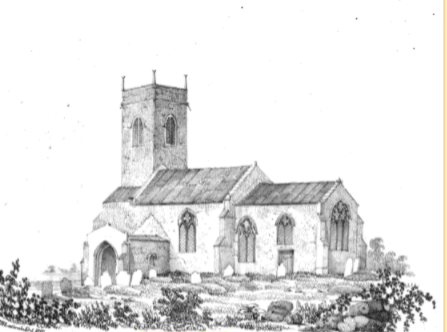
    This is a pencil drawing of the church from the early nineteenth century,

    The porch.

    The west side of the church all looks a bit out of proportion, primarily due to the construction of a vestry in the nineteenth century. This work was undertaken in 1866 and also increased the capacity of the church to 180 people, pretty much the entire population of the village.

  • Whitlingham – Trowse Newton Hall

    Whitlingham – Trowse Newton Hall

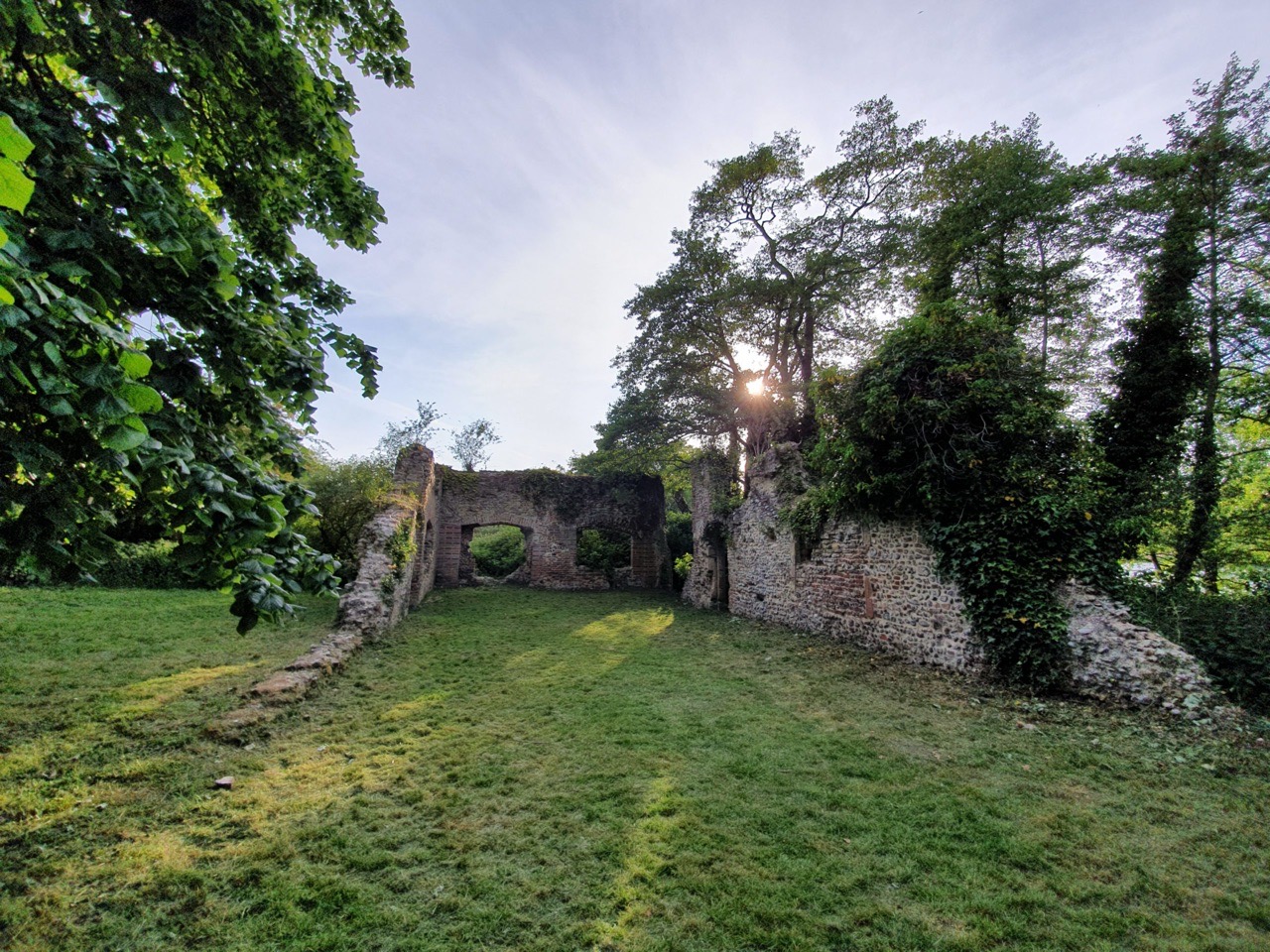
    The former entrance to Trowse Newton Hall, it’s in a beautiful location by Whitlingham Lake today, but it was previously in a more private area of land as the lake is a more recent man-made creation.

    The current hall was constructed in the mid-fifteenth century to be used as a country house by the priors of Norwich, but this replaced an earlier building. This previous structure had been visited by Edward III and his wife Philippa in 1335 and they arrived in a grand procession along the River Yare.

    The privilege of the priors was also used by the Deans of Norwich Cathedral following the reformation, but the property was let out to tenant farmers from the seventeenth century. The building was badly damaged following the Norwich food riots of 1766, caused by an increase in bread prices and a misplaced notion that bakers were making a fortune, and it was later mostly demolished in around 1860.

  • Norwich – Meadows Near the River Yare

    Norwich – Meadows Near the River Yare

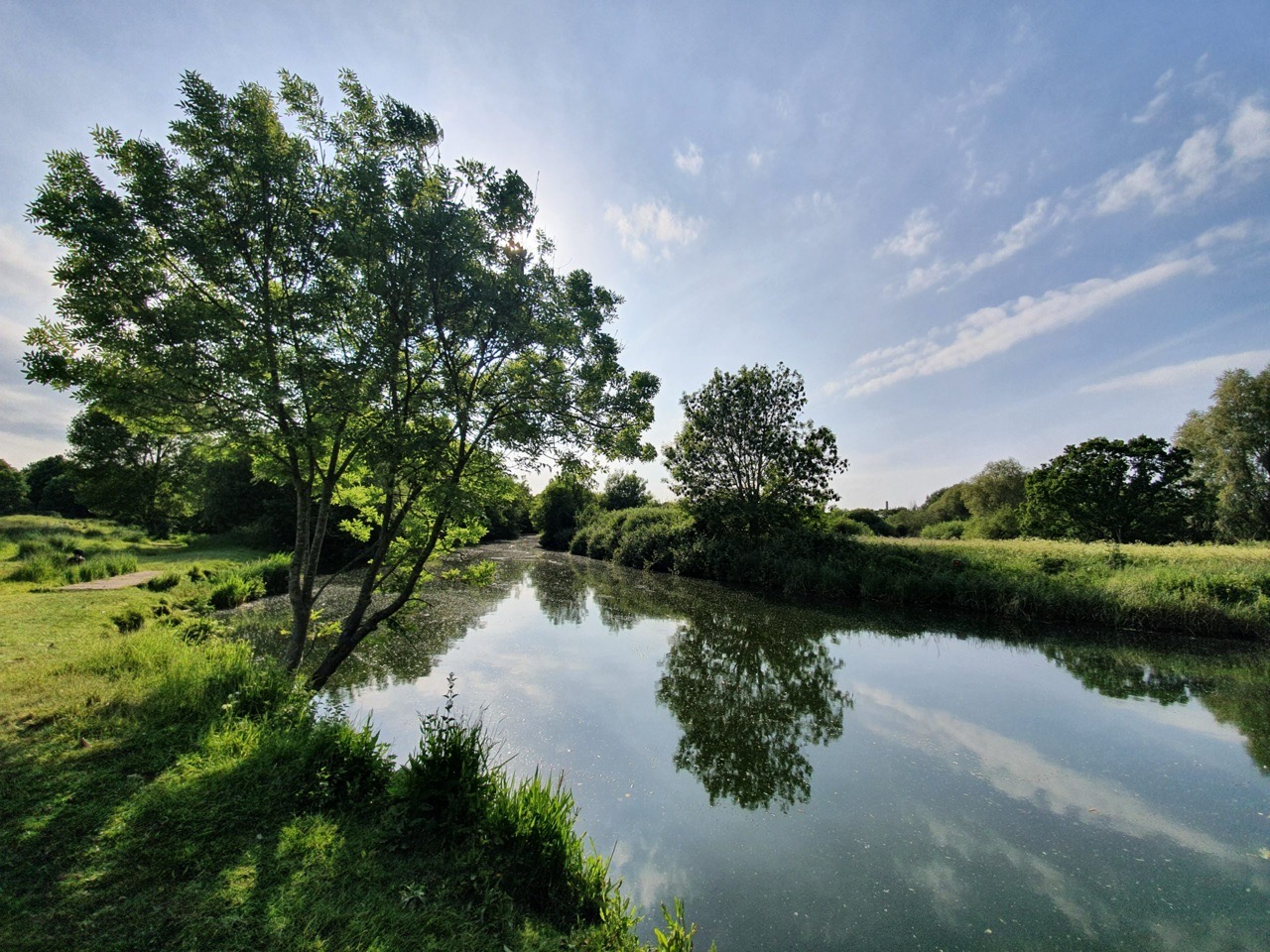
    Just photos, but this is the meadow area between Trowse and Whitlingham Lake, just by the River Yare. I’ve never walked on these meadows, although they were peaceful and there were a few small groups sitting by the river.

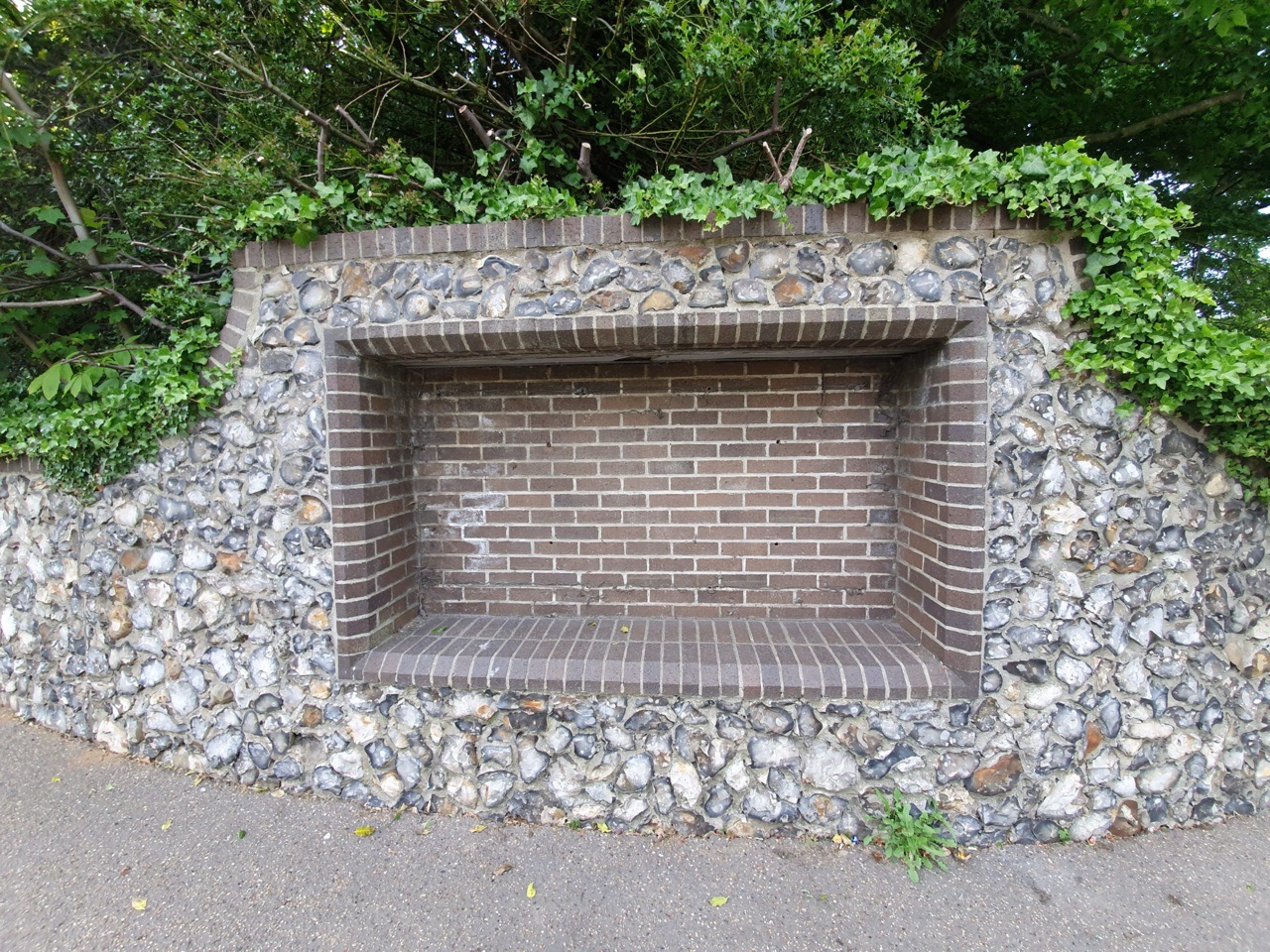
    Not the most welcoming of introductions though.

  • Norwich – Colman’s

    Norwich – Colman’s

    Last week, Unilever closed the Carrow Works factory that has been used by its Colman’s brand since 1856, marking the end of the connection with Norwich.

    I noticed that the Colman’s branding has been removed from the site now, with production mostly moving to Germany. I have no idea what they’re going to do with the huge site, although there are some listed buildings within the complex, so it’ll likely be turned into housing. Some of the site is currently available for short-term let, although I’m not sure who would want such a large site for 18 months.

  • Lingwood – Lingwood Railway Station

    Lingwood – Lingwood Railway Station

    We meandered on a training walk for the LDWA 100 through the village of Lingwood, about eight miles from Norwich, which retains its railway service on the Norwich to Great Yarmouth line.

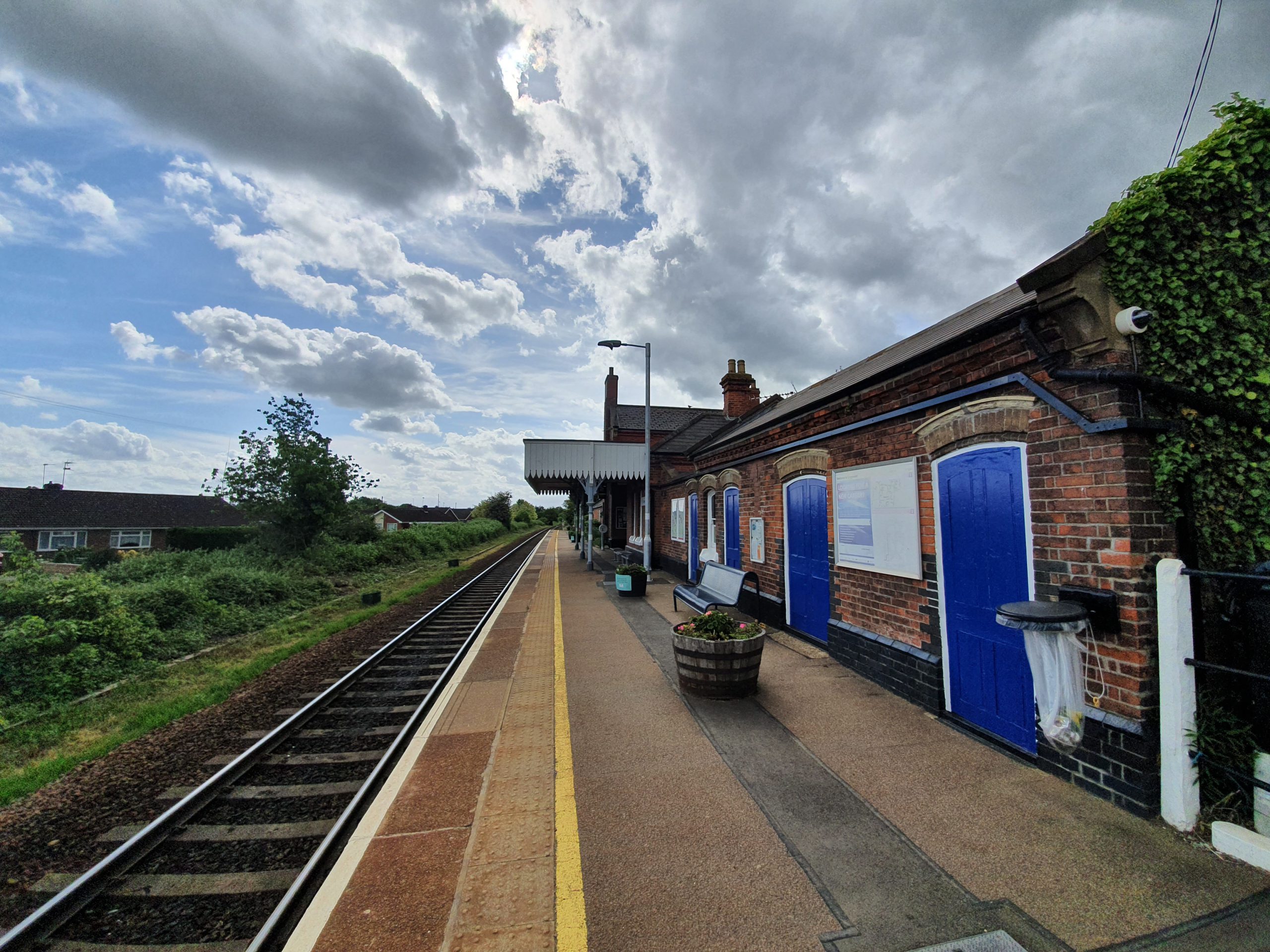
    Not much has changed in terms of the railway in Lingwood, although some of the associated buildings have fallen out of use.

    The station building survives and is now a B&B, remaining in use for passengers until the 1960s. The railway station was originally built in 1882 by the Great Eastern Railway (GER) and it sits between the stations of Brundall and Acle. The railway station building isn’t currently listed and perhaps it and the associated structures should be.

    The station’s only platform. In 1891, GER allowed the placing of a box at the railway station where locals could deposit information about the local workhouse, a building which had been constructed in 1837. It’s a reminder of the community value that the stations once had, with the workhouse buildings surviving until 1976, when they were demolished for housing for the elderly.

    The train line, looking towards Great Yarmouth. In February 1888, a man was killed when crossing the line to get home, leading to a bizarre situation involving a smacksman named William Benns. He saw the man, Richard Frosdick, had been injured and likely killed without the train driver knowing, but only mentioned this to a station porter after Benns had realised that he had missed his own train. Benns then went to the pub for three hours to wait for his next train and he made no inquiries as to what had happened.  The coroner referred to the behaviour of Benns as “extraordinary and inhuman”, with suggestions made that perhaps Benns knew more than he was willing to admit to.

    A short distance from the railway station is this building where the crossing operator would once have lived and worked from. A new crossing system has just been installed by Network Rail (not least because a train ran into it a few years ago), so it all looks new and shiny, with the crossing until very recently being operated manually. This three-bedroom cottage is still owned by Greater Anglia and is currently available to be rented for £5,000 per year, it would prove handy for those who use the railway frequently.

    Also looking new and shiny is the train itself, heading from Norwich to Great Yarmouth.

    Hopefully looking back on these photos in a few years, rules and requirements such as this will be just a distant memory. At the moment, we can’t use the railway network for the purposes of getting to and from walks, but hopefully that situation will change in the relatively near future.

  • Brundall – Brundall Gardens Railway Station

    Brundall – Brundall Gardens Railway Station

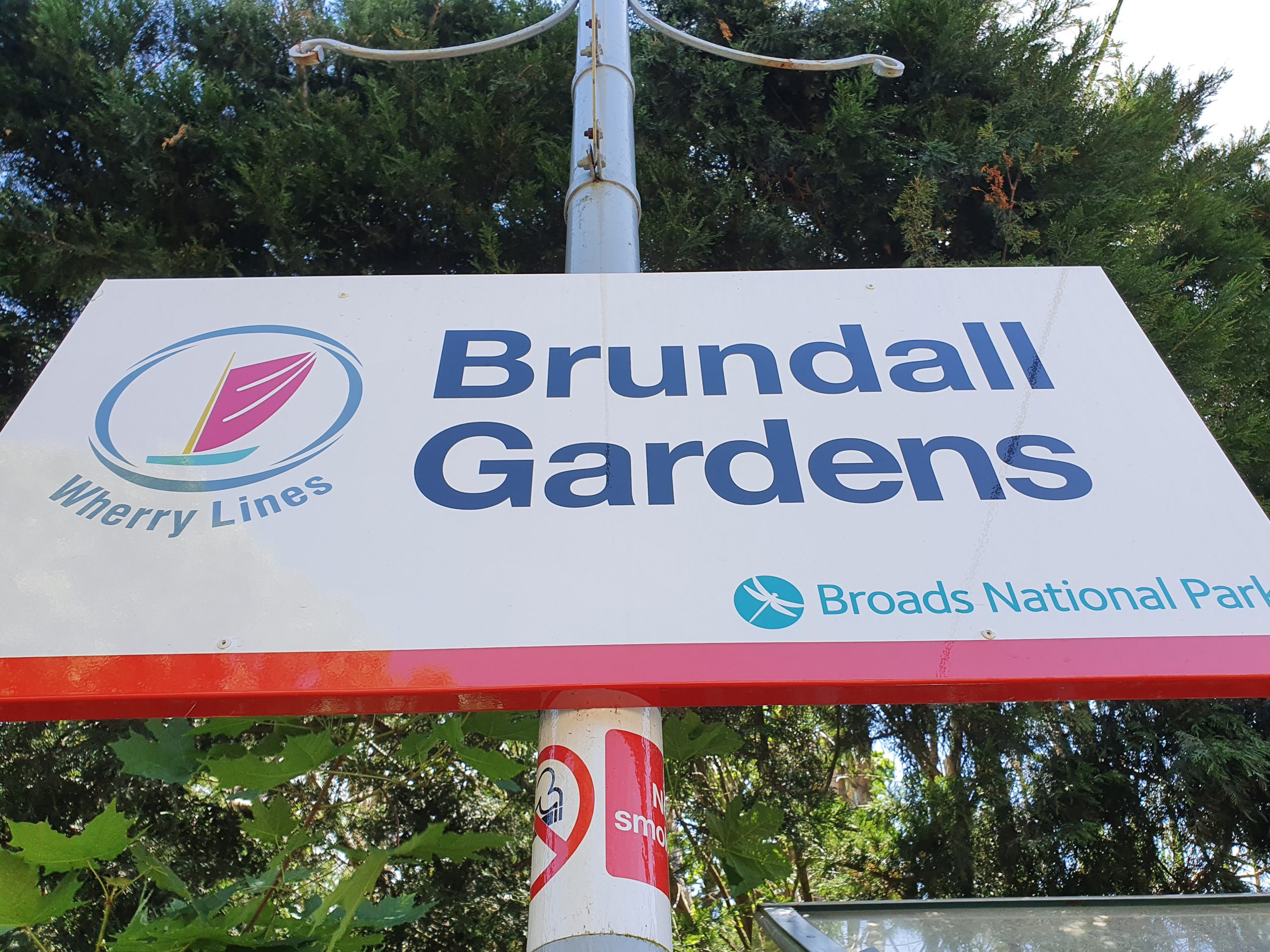
    We went through this railway station on our third training walk for the LDWA, it’s one of two stations in Brundall.

    Brundall Gardens is a little unusual as a railway station as it’s a more modern station that was added to an existing line. It was built in 1924 on the Norwich to Great Yarmouth line, located around four miles from Norwich and less than one mile from Brundall’s main railway station. On the above map from 1900, the railway station is just above the field which is numbered 7.

    Standing on the southern platform, this is the line to Great Yarmouth. Operated by London and North Eastern Railway (LNER), the railway station opened on 1 August 1924 to allow access to the nearby 76-acre site of Brundall Gardens. It was originally known as Brundall Gardens Halt and was renamed as simply Brundall Gardens in 1948.

    The gardens that the railway station was built for had been purchased by Michael Beverley in the 1880s and he had laid them out to include waterways and lakes. Frederick Holmes-Cooper, who had made his money from the cinematic industry, bought them in 1921 and the gardens were being visited by 60,000 people in 1922. The installation of the railway station cost £1,733 and Cooper gave LNER £150 per year to fund a stationmaster. There’s a map of the gardens at http://www.brundallvillagehistory.org.uk/maps.htm.

    Still standing on the south platform, this is the line to Norwich. A booking office was placed on the north platform, with a waiting room and passenger accommodation installed on the south platform. Only the booking office now remains, other than for a basic shelter on the south platform.

    On the footbridge, looking in the direction of Great Yarmouth.

    On the footbridge, looking in the direction of Norwich.

    There’s a footpath that goes from Postwick towards the station.

    A section from the 1939 LNER railway timetable.

  • Brundall – Church of St Michael and All Angels

    Brundall – Church of St Michael and All Angels

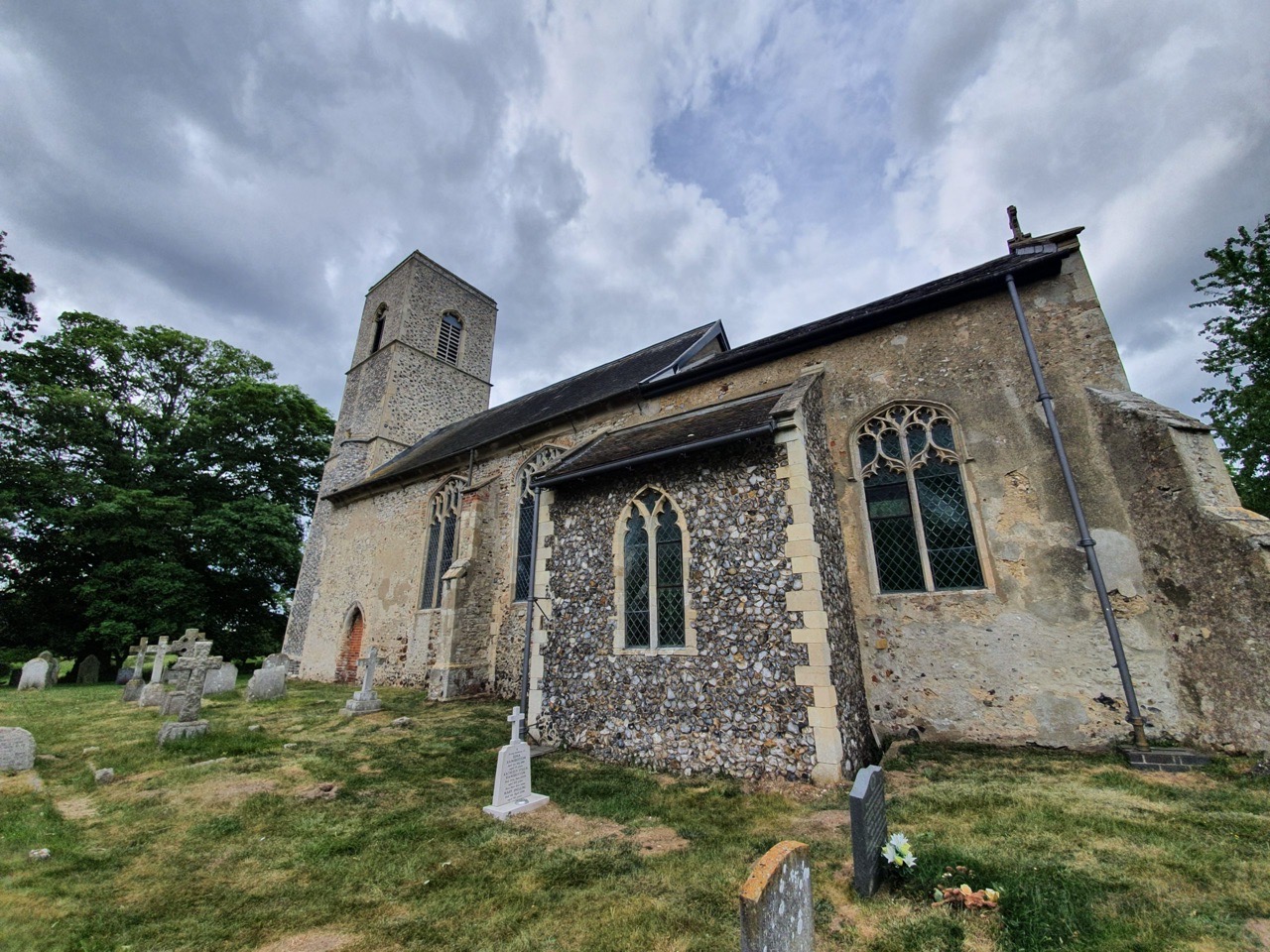
    We visited here on our third training walk for the LDWA 100 next year, and it’s the Church of St Michael All Angels on the edges of Brundall, in what is the deserted medieval village of Braydeston. Although nothing now remains of Braydeston, this settlement was listed in the Domesday Book in 1086 and it’s known that there were ten households here in 1428. The date of this means that the village wasn’t abandoned due to the Black Death, it was probably just a change in either the fishing or farming needs of the local community.

    The village of Braydeston was located in the field by the church and this building dates to the thirteenth century, although has some Saxon structure within it. For such a relatively small settlement, it’s a substantial church and the tower was added later following a bequest from John Berney in 1440. The roof line of the church was also lifted at the same time at what appeared to be the height of the building’s fortunes.

    Due to the current situation, there was no access to the interior of the church, but it does hold one of the few bread ovens which remain in church buildings.

    An early medieval doorway which was bricked up in the nineteenth century. The church had fallen out of usage in the seventeenth century, but as part of the Victorian resurgence of religion, services were again held here and a new organ was installed.

    One of the railed-off tombs.

    I’ve seen many grave markers like this, although they’re normally older. This one commemorates the life of Elizabeth Mary Theobald and Harold Thomas Theobald.

    At the front of the church, there was a footpath query in the early twentieth century, something a little rarer then. This related to the meadow path which crosses into Brundall and although it was defined as a footpath, cars started to use it, not least hearses getting to the church. The local council said that cars could use the track, although wiser heads have since prevailed and it’d be quite difficult to get a hearse along that track today.

  • Caistor St Edmund – War Memorial (Walter Ellis)

    Caistor St Edmund – War Memorial (Walter Ellis)

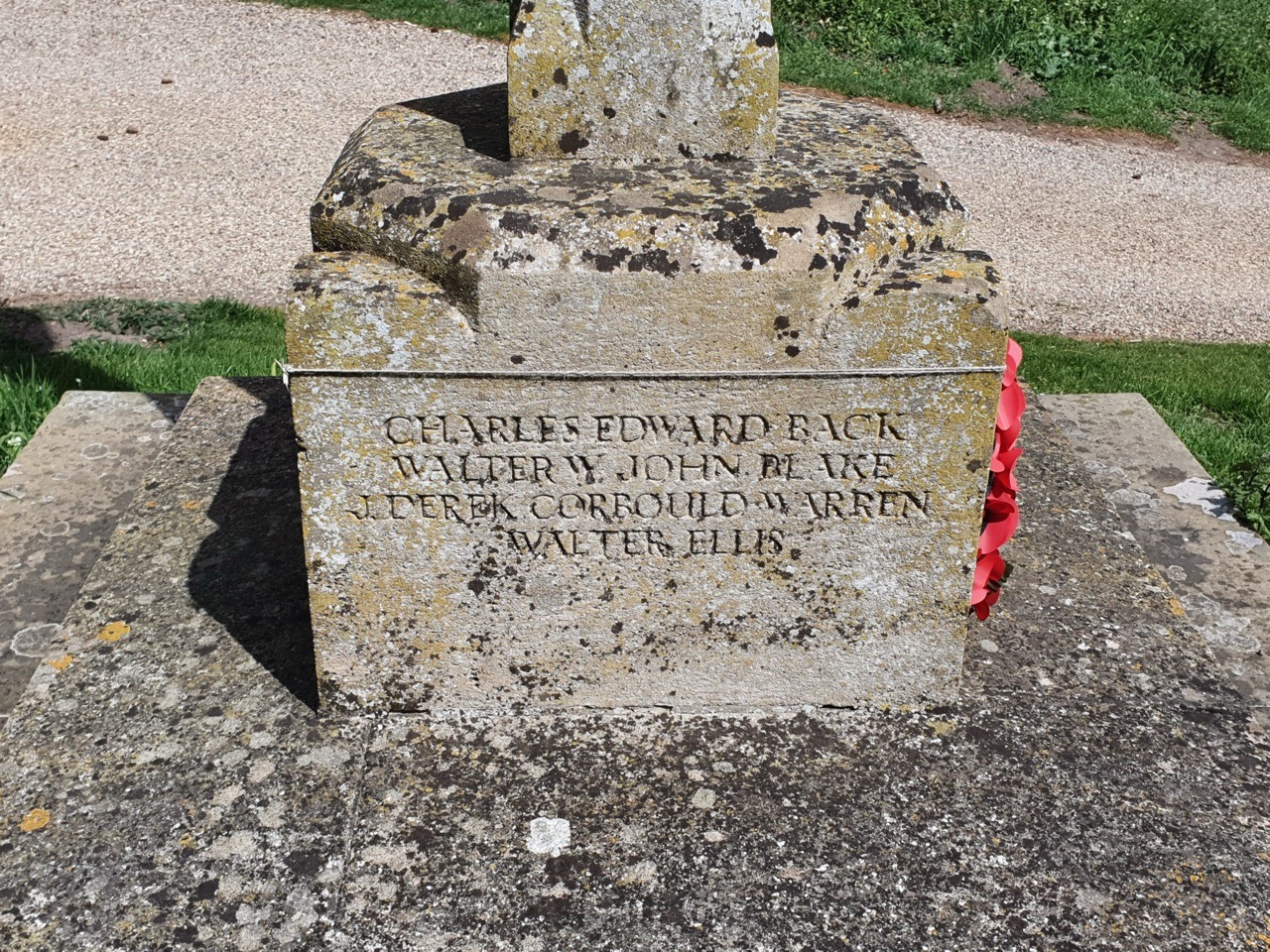
    Walter Ellis is one of the names listed on the war memorial in Caistor St Edmund.

    Walter Ellis was born in 1897, the son of George and Eliza Ellis who lived in Markshall which is effectively part of Caistor St Edmund. He joined the 5th Battalion of the Norfolk Regiment and was killed in action in Palestine, on 19 April 1917.

    There was a major action, which was the Second Battle of Gaza, which took place between 17 and 19 April 1917 between the British Empire and France against the Ottoman Empire and the Germans. The 54th (East Anglian) Infantry Division were part of the military force, with the Norfolk Regiments losing a large number of men.

    I’m not sure that Walter lies entirely at peace at Gaza War Cemetery, which is in the troubled Gaza Strip and which has been damaged twice by Israeli bombs over recent years, although they paid for the repairs to be completed to the graves. He’s a long way from home here in a place that he perhaps hadn’t even heard of when he was sent to fight there.

  • Streets of Norwich – St. John’s Street

    Streets of Norwich – St. John’s Street

    Part of my Streets of Norwich project….

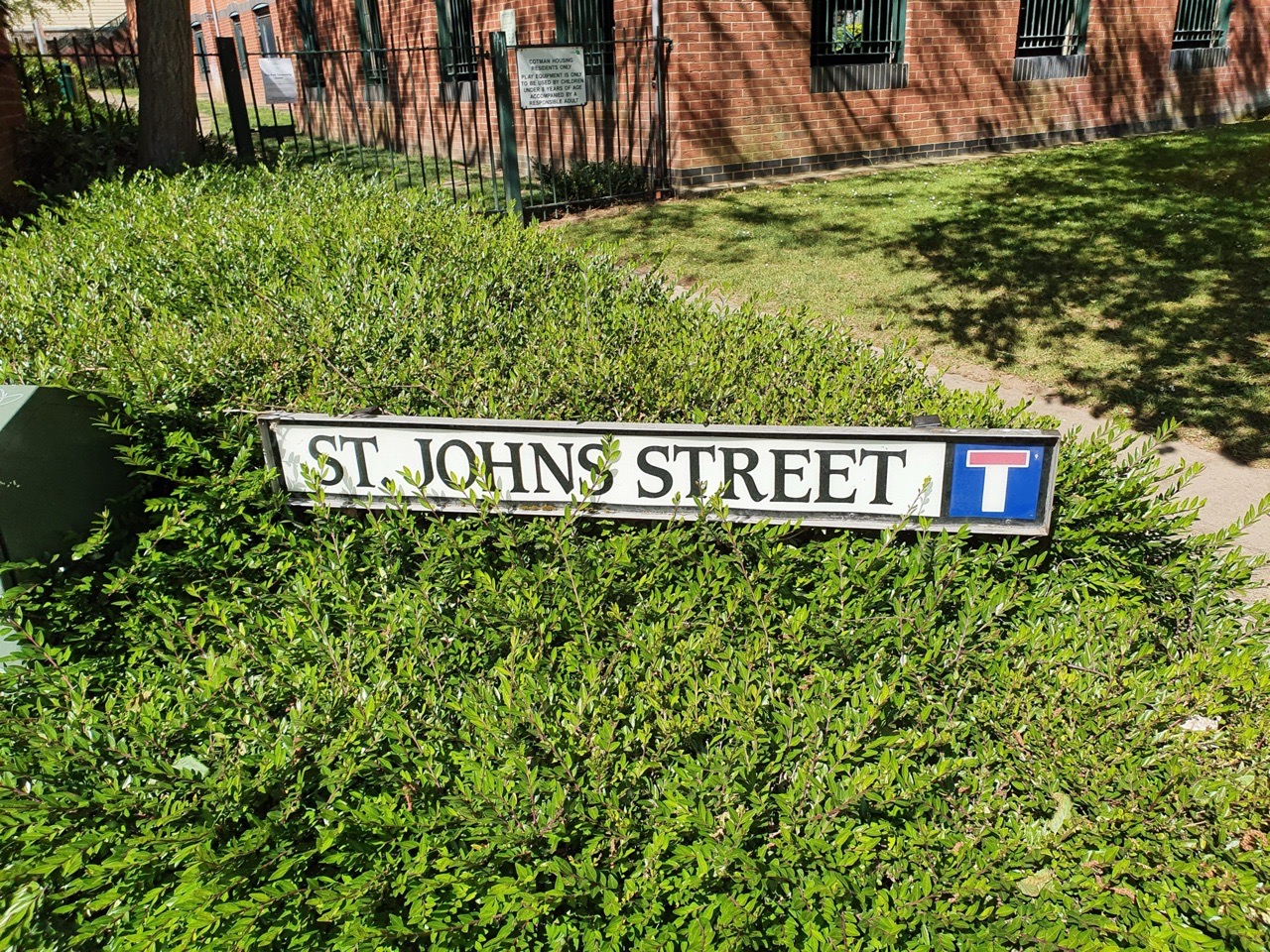
    There’s not much to write about St. John’s Street, which is located off of Mountergate. The current St. John’s Street used to be called Orchard Street (named after the Orchard Tavern pub), and the rest of it has since been lost to development.

    The buildings that were either side of what was Orchard Street have also gone, with car parking on the right-hand side and Parmentergate Court housing project on the left-hand side.

  • Streets of Norwich – St. Martin at Palace Plain

    Streets of Norwich – St. Martin at Palace Plain

    Part of my Streets of Norwich project….

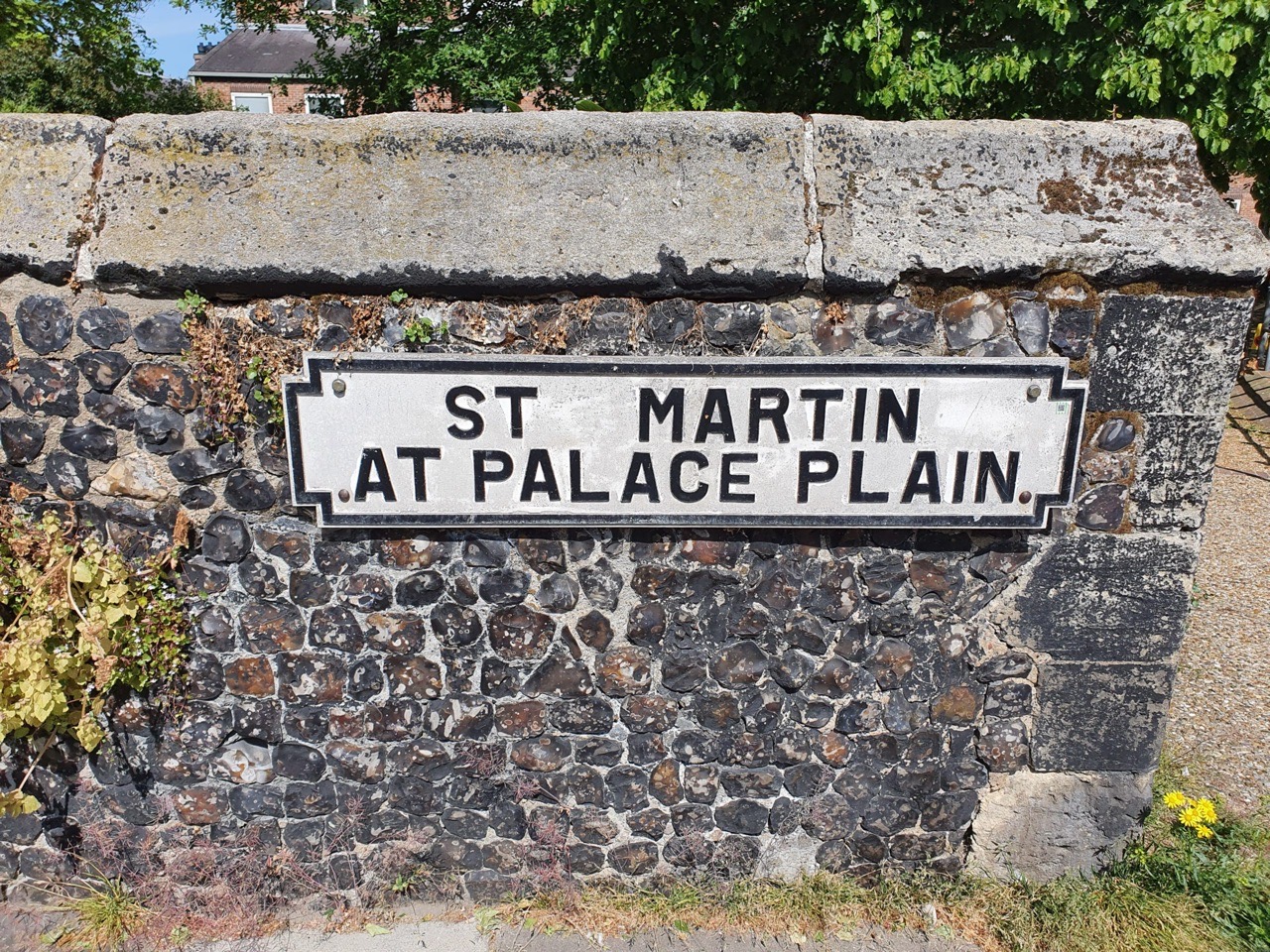
    I’ve realised today how little bloody attention I pay to things, given that I’ve been calling a road I thought that I knew by the wrong name. It’s only a marginal error, but I’m moderately irritated that I hadn’t realised, Bishopgate ends earlier than I thought and becomes St. Martin at Palace Plain. Now, this is hardly of much relevance to anything of global importance, but the quirky layout is due to how things have shifted over the last century.

    In the above map, St. Martin at Palace Plain covers part of the square, then the road down to where it looks like there is a pub in the middle of the road, before going up to another pub. Today, that is the entrance to the courts and the road and Worldsend Lane have all gone, so St. Martin at Palace Plain is effectively just the stump of road between the church and the entrance to the Bishop’s Great Gate and not that much further. Indeed, I’ve noticed that some properties have been moved out of St. Martin at Palace Plain on the listed buildings register and placed under other streets.

    But, despite this street now just being a bit of a stump, it has a tremendous amount of history packed into it.

    This is the view from the end of St. Martin at Palace Plain, looking down towards Bishopgate.

    The sun gave me problems taking this photo, but this is the Bishop’s Gate, a structure constructed in 1436 to give access to the Bishop’s Palace. I’ve been in the chapels at the top of the Erpingham Gate and the Ethelbert Gate, but I don’t know what the set-up is with this one. The old Bishop’s Palace is now used by Norwich School, but there’s a new palace used by the bishop which is just the other side of this gate.

    This is St. Martin’s Church, which has spent its lifetime literally overshadowed by the cathedral. No longer really having any congregation of its own as the nearby housing had gone, the church stopped being used for services in 1971. Since then it has been used to store church furniture, as offices for the Probation Service and is now used by the Norwich Historic Churches Trust. More on this in another post as I’ve been on a guided tour of this church, and it’s one of my favourites in the city.

    This was once the wall of the Bishop’s Palace, although there has been some building just inside of it over the last century.

    On the wall in the previous photo is this plaque, which marks where Lord Sheffield was killed during Kett’s Rebellion in August 1549.

    The Kett’s Rebellion was started by the desire of some landowners to enclose land for their own financial benefit. That’s a slightly shortened version of the enclosure process, but that’s the upshot of it. The locals didn’t like that, so on 8 July 1549 some denizens at Wymondham ripped up the landowners’ lovely new fences. The owner of the manor of Wymondham was Robert Kett, who should have been most aggrieved at the damage done to property. But, he decided to back the rebels and he became their leader.

    Kett decided that he would march on Norwich to show the authorities that the locals weren’t happy and that it was the poorest who would suffer the most. Perhaps unfortunately for him, he had thousands of people with him, turning a little local dispute into one of the largest protest marches that East Anglia had ever seen. He reached Bowthorpe, a suburb of Norwich today, on 9 July 1549 and Sir Edmund Wyndham, the Sheriff of Norwich, popped out to tell Kett that he should perhaps go home. Kett ignored that.

    Instead of going home, Kett led his men to set up camp at Mousehold Heath, on the edges of the city centre, on 12 July 1549. Although this location was outside of the city walls, it offered views into Norwich and this is where they established their camp for six weeks whilst issuing their demands for a fairer society. By now, there were 16,000 people at this camp, which was presenting a problem for Norwich, as although it was the second-largest city in the country at the time, it still only had a population of 12,000.

    The authorities agreed to listen to the demands that Kett had, which took some time, as there were 29 grievances that Kett wanted dealing with. Some of these were fiercely ambitious and only one related to the enclosure process, which is what had started this all off. During this time, the city hadn’t closed off its gates, so the people at the camp could enter Norwich to buy food and supplies, with something of a party atmosphere going on at Mousehold Heath by all accounts.

    On 21 July 1549, the city authorities got fed up with this and they shut the gates. Faced with the camp having to break up due to a lack of supplies, Kett led an attack on the city. Despite having a strong artillery and city defences, Kett’s rebel forces won and took control of the city. This was a serious threat to King Edward VI now, so he ordered 1,500 troops led by the Marquess of Northampton to retake Norwich.

    The relevance of this story to the street I’m writing about is that one of the military leaders was Lord Sheffield. He had had what I assume was a lovely breakfast at the Maid’s Head, a hotel which is still trading today, and led a mounted attack on rebels to force them back along St. Martin’s at Palace Plain to Bishopgate and then back out of the city. Unfortunately, he fell off his horse into a ditch. The rules of engagement at the time said that in such circumstances, the fallen man should be taken and held for ransom. Unfortunately for Lord Sheffield, a butcher decided to hit him on the head and kill him. And, today the location of Lord Sheffield’s death is marked by the plaque on the wall.

    Just to finish the tale, the rebels could never win this, the Monarch was too strong. He despatched the Earl of Warwick and 14,000 men, including some rather rough mercenaries, to take back control (there’s a phrase….) and after a series of battles, the rebels lost. Although the Earl of Warwick’s army lost 250 men, there were over 3,000 rebels killed during the fighting. Many surviving rebels were promptly executed and Robert Kett and his brother William were taken to the Tower of London to face trial. They were, unsurprisingly really, found guilty and Robert Kett was sent back to Norwich to be hanged on the walls of Norwich Castle, whilst his brother was hanged on the west tower of Wymondham Abbey.

    Was the rebel sacrifice worthwhile? Probably not. Little changed, other than the city announced it would mark a day of celebration every year on 27 August to celebrate the defeat of the rebels, with this party carrying on for well over a century.

    Anyway, after that story, back to St. Martin’s at Palace Plain. The other building that is now situated off this road is the modern court complex, which has one of the city’s oldest buildings in its cellar, the Norman House. But more of this when I find those photos….