Category: Norfolk

  • Ridlington – Name Origin

    Ridlington – Name Origin

    Ridlington is a small village in North Norfolk and after I had a little visit to their church, this is what The Concise Oxford Dictionary Of English Placenames say about the origins of the name.

    Ridlington, Norfolk. Ridlinketuna in Domesday Book, Redlington in 1199 and Ridelington in 1254. May be derived from a person, Hrethel.

    I’m not sure who this person might be, but it’s the settlement or enclosure of Hrethel and his people. It’s not the most descriptive of place names, I like the ones which say they’re up a hill or something, but it’s an old English name that has stuck relatively unchanged for nearly 1,000 years.

  • Ridlington – St. Peter’s Church

    Ridlington – St. Peter’s Church

    Ridlington’s church is located nearby to the glorious churches of Witton and Crostwight, but this one didn’t seem to me to have quite the magic and quirkiness of those buildings. The current building mostly dates from the fifteenth century if the listed building record is to be believed, although there would have been something here before then, with substantial changes made both internally and externally during the Victorian period. The church still has its thirteenth-century font, a reminder of its earlier existence.

    In 1760, the church was rebuilt with red brick at one end which was to protect the structure. The chancel floor started to collapse in 2001, with an investigation finding that the Victorian restoration had reused stone and medieval tiles in its repair, but this had been laid above unprotected wet ground. There was once thatching to both the nave and chancel, although this roofing now only remains in the latter and the church mentions that it’s one of the few remaining which has reeds from the Norfolk Broads.

    The three-stage tower is also fifteenth-century, the previous incarnation of the church may well though have had a round tower.

    The church’s own web-site gives an earlier date for the construction of the church, suggesting that the nave was built in the early fourteenth century and the chancel was completed later on in the fourteenth century. I’m not very good at dating walls so I’m happy with either date.

    The south porch, where the church has at least filled in the empty niche where the previous statue was likely removed following the Reformation.

    One other interesting snippet from the church is that some of the stained glass windows were blown out during the First World War when a Zeppelin attacked on 24 April 1916. I suspect the locals must have considered themselves quite unfortunate to have suffered that slightly random attack, especially as it also partly damaged the chancel end of the church. Although at least no-one was injured, or no human at least, as a bullock was killed during the raid. The Zeppelin used during the raid was L23, which had been brought into service on 8 April 1916 and which survived until it was shot down over the North Sea on 21 August 1917.

  • Crostwight – All Saints’ Church (Hubert Arthur Francis)

    Crostwight – All Saints’ Church (Hubert Arthur Francis)

    Crostwight lost one person during the Second World War and five during the First World War, but this post is about the former conflict.

    The lower memorial, which is beautifully presented in the church, is to Hubert Arthur Francis, who died on board HMS Royal Oak on 14 October 1939. The HMS Royal Oak was built in 1914 to serve during the First World War and was one of the older ships still in the fleet by 1939. At the beginning of the Second World War, it was stationed at Scapa Flow, at the Orkney Islands in Scotland, which was thought to be a safe place.

    The Germans had plans for Scapa Flow and they planned an attack on it using their submarines early on during the war. Submarine U-47 fired torpedoes at the Royal Oak and seriously damaged it, but more seriously setting off an explosion of armaments which caused a fireball to rush through the submarine. 835 men were killed with the sinking of the ship, including 134 boy seaman who weren’t even 18 years old. The majority of bodies couldn’t be recovered and they remain there today, the wreck is a war grave and divers are not allowed near it.

    Hubert was born in Henstead which is near Norwich, Norfolk on 18 August 1919 and his parents were Stanley and Minnie Francis (nee Merry), who lived in Ramsgate in Kent. Stanley lived from 1882 until 1948 and Minnie lived from 1884 until 1965.

    Hubert joined the Royal Navy in 1939, with service number P/JX 142485. He was on board the ship when it was sunk, dying at the age of just 20 and he is commemorated at Portsmouth Naval Memorial. What he was doing in Crostwight I don’t know, the 1939 register didn’t include servicemen, so his address isn’t clear.

  • Crostwight – All Saints’ Church (Interior)

    Crostwight – All Saints’ Church (Interior)

    I wrote more about the history of this church earlier on, but we were also fortunate enough to be able to see inside as well. As an aside, it’s now a Grade I listed building, which makes the taking down of most of the church tower due to ivy growth seem almost unforgiveable today.

    The lighting inside doesn’t entirely do these wall paintings justice, but they are delightful and a fair chunk of them survive. They’re a passion sequence, so telling in pictures the story of Jesus Christ’s last few days of life. As with many churches, they were whitewashed over when they went out of favour, a reminder from when church interiors used to be more colourful and stories were told in images. There’s no electricity in this church, meaning that everything has to be lit using oil lamps, but that adds to the atmosphere and cosiness.

    The font, which appears to be quite battered and worn, but it is some centuries old and is made from Purbeck marble.

    The church’s chancel.

    This photo was taken in the chancel, looking back down the church, with the rood screen visible. There was a bit of a renovation in the Victorian period, although not as brutal as in some other churches, when the roof was also repaired.

    The church notes that this chair on the left-hand side dates to the period of Oliver Cromwell, with the red carpet being from the mid-nineteenth century. I find that quite amazing, the church notes this is because “only brushes and carpet sweepers have ever been used on it”.

    The end wall, where it meets the church’s once more substantial tower. Near to here, there is a memorial to the one man from the parish who died during the Second World War, but more on Hubert Arthur Francis in another post, as well the five men who died during the First World War. Interestingly, the church notes that they believe that their floor is made from willow bundles and bales of wool, which has the disadvantage of moles being able to burrow upwards. That’s an actual problem incidentally, not my humour.

    The room under the church tower, with the bells now located just above here, as they had to be lowered when the top of the tower was lopped off at the beginning of the twentieth century. The records for this church have been deposited at Norfolk Record Office, so I must pay a little visit there when they’ve back open and accessible to the public. As a church, this is beautiful and it’s one of my favourite ones, somehow a timeless reminder of generations gone by.

  • Dereham – Church of St. Nicholas (Robert Larner)

    Dereham – Church of St. Nicholas (Robert Larner)

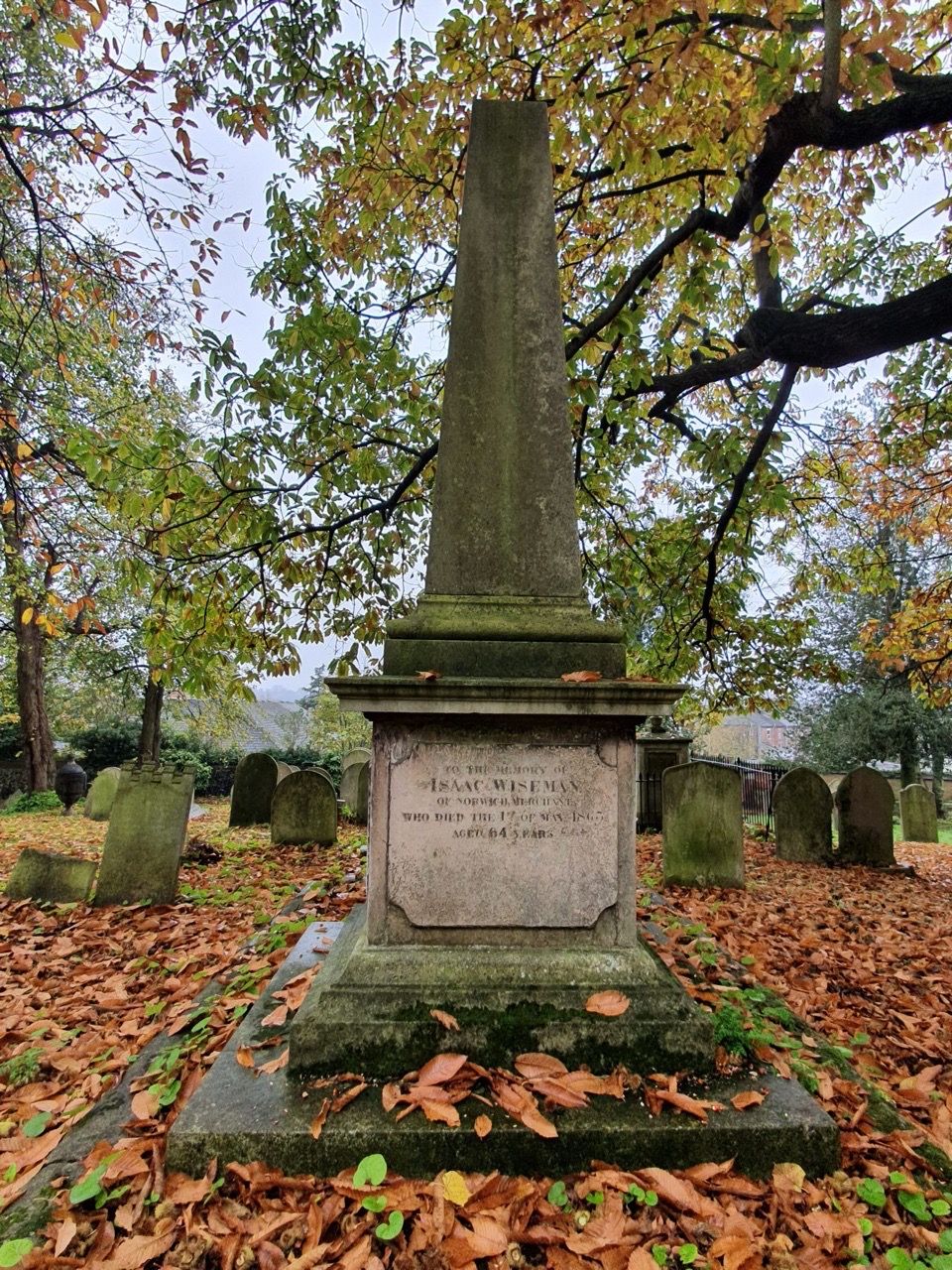
    Located in the churchyard of Dereham Church is this gravestone commemorating the life of Robert Larner. He was born in 1819 and was married to Sarah Yull in 1847.

    At the 1851 census, Robert lived at Toftwood Common, along with his wife Sarah, who was five years younger than him. They had two children at this time, Richard who was aged 2, and Matilda, who had only just been born, with Robert working as a farm labourer. Matilda was married in 1879, sadly after the death of her father.

    Robert died on 17 May 1868, at the age of 48, and was buried on 21 May 1868. Unfortunately, the words at the bottom of his grave are no longer readable and his age in the church’s burial book states that he was 49.

    So, there’s not much that I could find out, but I can almost imagine a 19-year old Richard and a 17-year old Matilda standing there on a Thursday afternoon (and I checked, it was a Thursday….) burying their father. And on 6 August 1879, Matilda would have no doubt have walked over to the gravestone when she was married in the same church, to a William George Hall from Hove in Brighton. I think my imagination is getting a bit vivid with the stories I’m creating in my mind here…..

  • Dereham – Church House

    Dereham – Church House

    Church House overlooks Dereham Church and was built in the late seventeenth century to be used by a representative of the church.

    In the early nineteenth century, the property was lived in by James Philo who served as the parish clerk between 1779 and 1829. The sign on the property notes that he featured in George Borrow’s book ‘Lavengro’, the sequel of which was Romany Rye, now the name of the JD Wetherspoon pub which stands around twenty metres away.

    The rear of the property, which backs onto the churchyard. The building is still used by the church and is now the parish office.

  • Dereham – Former Manor House

    Dereham – Former Manor House

    This property is located opposite the entrance to Dereham Church and was originally the Manor House of Oldhall and Syrricks, which sounds very grand. This building dates to the seventeenth century, although was refaced and modernised in the eighteenth century. The pedimented doorcase is apparently original, although I’m going off the word of others here on that….

    The building is also known less excitingly today as 27 Church Street and it has been converted into flats. It’s a larger building than it appears from the front, as there’s a long section behind the property as well. One of the flats came onto the market recently and I like how they’ve converted the attic space.

  • Dereham – Church of St. Nicholas (Where are the Older Gravestones?)

    Dereham – Church of St. Nicholas (Where are the Older Gravestones?)

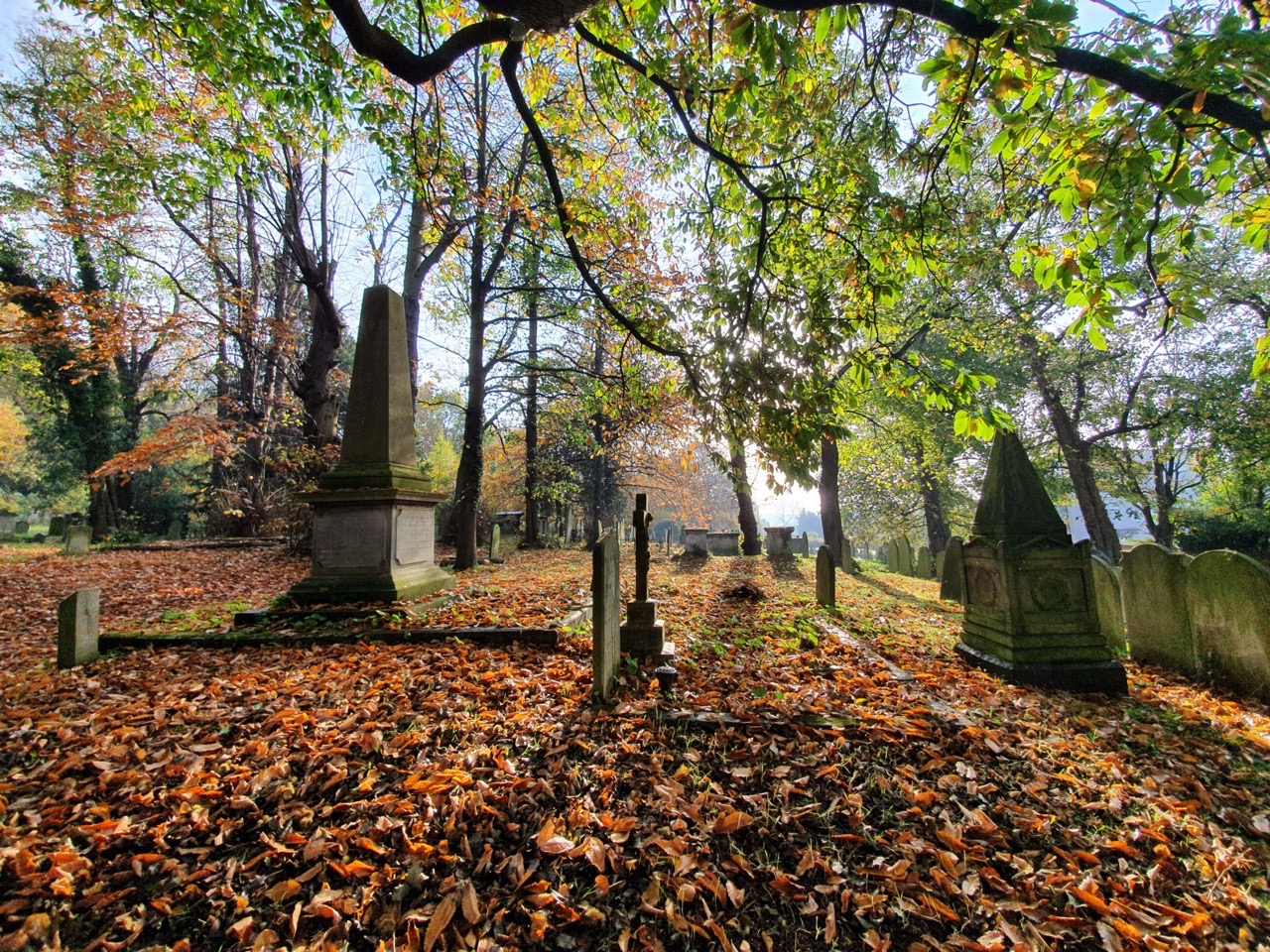
    One mystery that Richard and I have been discussing on our church walks is where are the gravestones from before 1800? The Hancock Cemetery in Quincy, Massachusetts has many gravestones from the eighteenth century surviving, but in most (but not all of course) churchyards in the UK, there is relatively little before 1800. There are usually some tombs inside churches that are older, but it’s rare to see gravestones from that period outside.

    And so I’ve been reading up on this…. The answer seems to be complex, as history usually is.

    The first element is practical, gravestones aren’t necessarily that resilient and weren’t really designed to last for hundreds of years. Stone erodes, gravestones fall and sometimes they have to be removed because they’re badly damaged.

    The second element is that grave markers before 1800 were often made from wood, which is unlikely to last for much more than fifty years. They were ornately carved in many cases, but not designed to be in their place for centuries. There are some of these at the churchyard in Matlock, but they’re relatively rare now.

    The third element is that most people couldn’t afford a stone gravestone, they’d be expensive and the stone would often have to be imported into the area. Transporting lumps of rock isn’t cheap, it all adds to the cost and a poor family couldn’t have necessarily afforded this. In some areas, rock is more prevalent and this was evident in churchyards such as those as Eyam in Derbyshire, where there are more stones from before 1800.

    The fourth element is that in some churchyards, there wasn’t that much space. Anything older might have been removed in an effort to create space for new burials.

    So, with all those elements combined, it’s more surprising that there are any stones left at all. But, they are there, I found a handful of eighteenth-century gravestones standing in Dereham’s churchyard whilst meandering around today. I also found something I haven’t seen before, eighteenth-century gravestones (and some later ones) which have been laid down and have since been mostly covered over by grass.

    These stones are hard to read, but I could make out a few eighteenth-century dates. They appear to have been moved here at a later date, for reasons that are unknown to me. But, this was an interesting example of where in a churchyard the stones have gone, a handful are still present, a handful have likely been lost and a few have been left to be covered over.

    I suspect I shall return to these thoughts again as I debate with myself exactly where gravestones in Britain have gone….

  • Crostwight – Name Origin

    Crostwight – Name Origin

    This is the beautiful church at Crostwight, albeit with its shortened tower thanks to ivy damage.

    Crostwight, Norfolk. Crostwit in Domesday Book, Crostweit in 1211. Clearing by a cross.

    Firstly, I love the name Crostwit, what a shame that didn’t stick for longer. Secondly, this is exactly the same meaning as for Crostwick, another Norfolk village.

  • Crostwight – All Saints’ Church

    Crostwight – All Saints’ Church

    With the exception of the neighbouring rectory, this church stands alone in the fields but it’s clear that it’s still much loved by what local community there is. And, it’s a glorious church, albeit looking a little strange with its squat tower.

    I had many theories for what had happened here, including perhaps a church building project that was halted mid-way through. It was clear from the lower part of the structure that there should be a taller tower here, and that was indeed the case, but it was taken down in 1910 as it was in risk of falling and was covered in ivy. I remember many years ago that there were a fair few churches covered in ivy, but now there are nearly none, they have learned from history.

    There were warnings though even at the time, a Mr Haughton from Church Farm in nearby Ridlington wrote to the Eastern Daily Press in 1905 saying:

    “Sirs, I am much concerned to see the damage which is being done to some of the churches in East Norfolk from ivy being allowed to grow over them. It is difficult to understand the apathy of the archdeacon, rural deans, clergy and churchwardens in allowing such a state of things, which in time must end in the ruin of these fine buildings. Ivy easily roots in these walls, gradually loosens the face flints and slowly but surely the work of destruction goes on.

    I see ivy growing more or less strongly on the churches of Irstead, Crostwight, Walcott, East Ruston, Honing and Witton. Amongst these, the most notable example of the mischief which is being done is in Crostwight Church, strong growing ivy being now nearly to the top of the tower, which in consequence will soon be in a very bad condition.”

    How right he was…. But he wasn’t the only one, in the previous year the Norfolk News had reported that Mr JC Cox had conducted a survey of churches in the area and he was worried about the state of the ivy at Crostwight. He noted “the notion that ivy holds up a building is one of the fond superstitions of Norfolk”. And that is likely why the ivy remained in so many places, many people were thinking that it actually supported and strengthened the building.

    And here’s what the church used to look like, the church tower twice as high as it currently stands.

    Most churches have access to walk alongside the nave, but this one was a little tighter.

    The bulk of the current building dates from the fourteenth century and the exterior hasn’t much changed over the centuries. There’s some real charm to this building, a remote structure with no access to electricity.

    The south porch was added in the fifteenth century, a homely little addition. I had a feeling that this church would be open, so I went into the porch with some confidence that this would be the case. And, it was, but more about this in another post, as there are some treasures inside.