Category: Norfolk

  • Great Melton – All Saints’ Church (exterior)

    Great Melton – All Saints’ Church (exterior)

    There are two churches in the same churchyard in Great Melton, the other is the now ruined St. Mary’s, visible in the above photo.

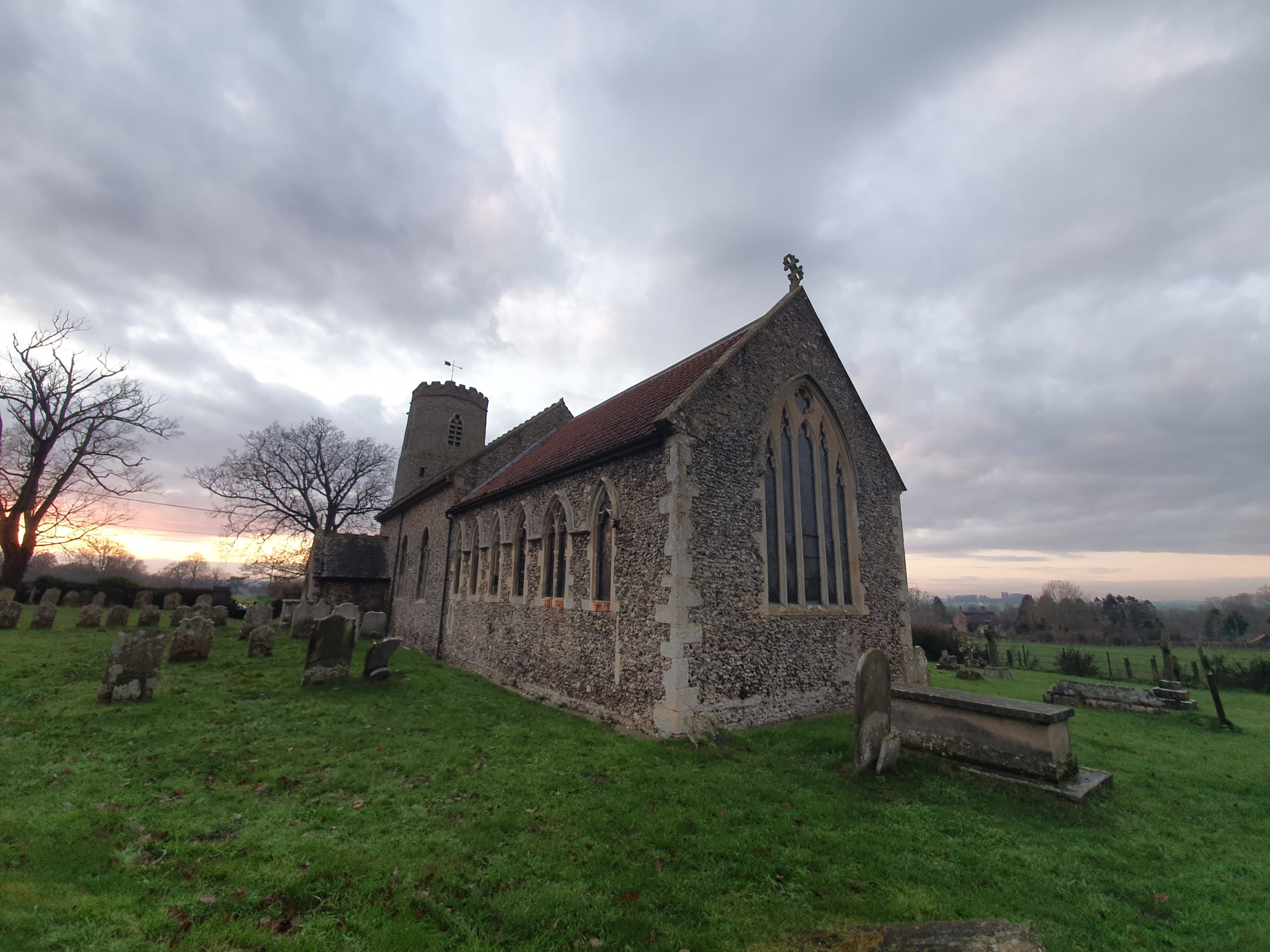
    And this is All Saints’ church, which is still in use and there may have been a religious building here since the eighth century, although the earliest part of the current church is from the eleventh century. The churches were both independent until the eighteenth century, but then it was decided to merge the two and just use St. Mary’s. A decision was later made that St. Mary’s was too small, so they decided to fix up the by now roofless and slightly fallen down All Saints’ Church. And to do that, they knocked all of St. Mary’s down other than the tower, then reused much of the building material at All Saints’.

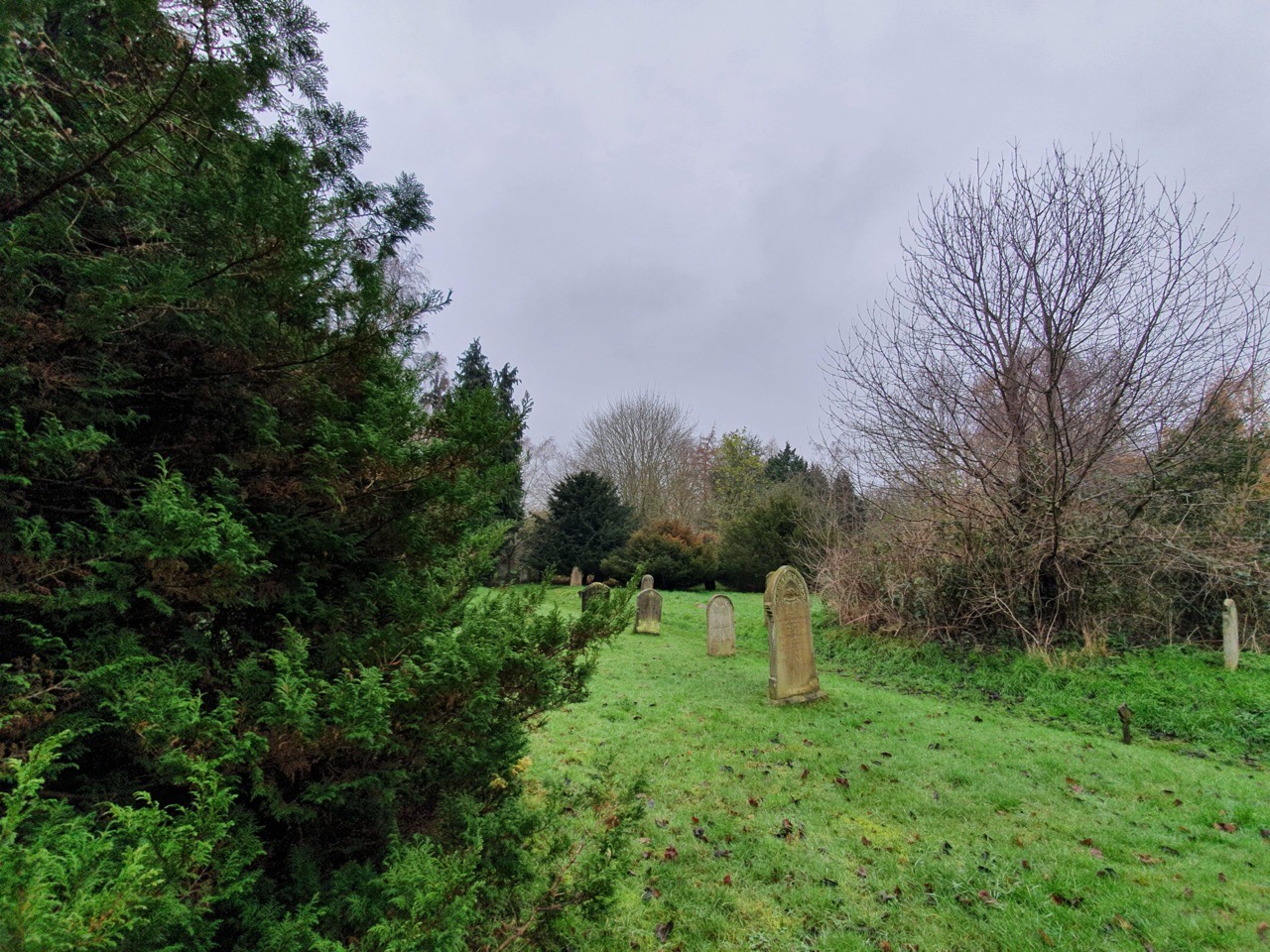
    This is the quite understated entrance to the joint churchyard.

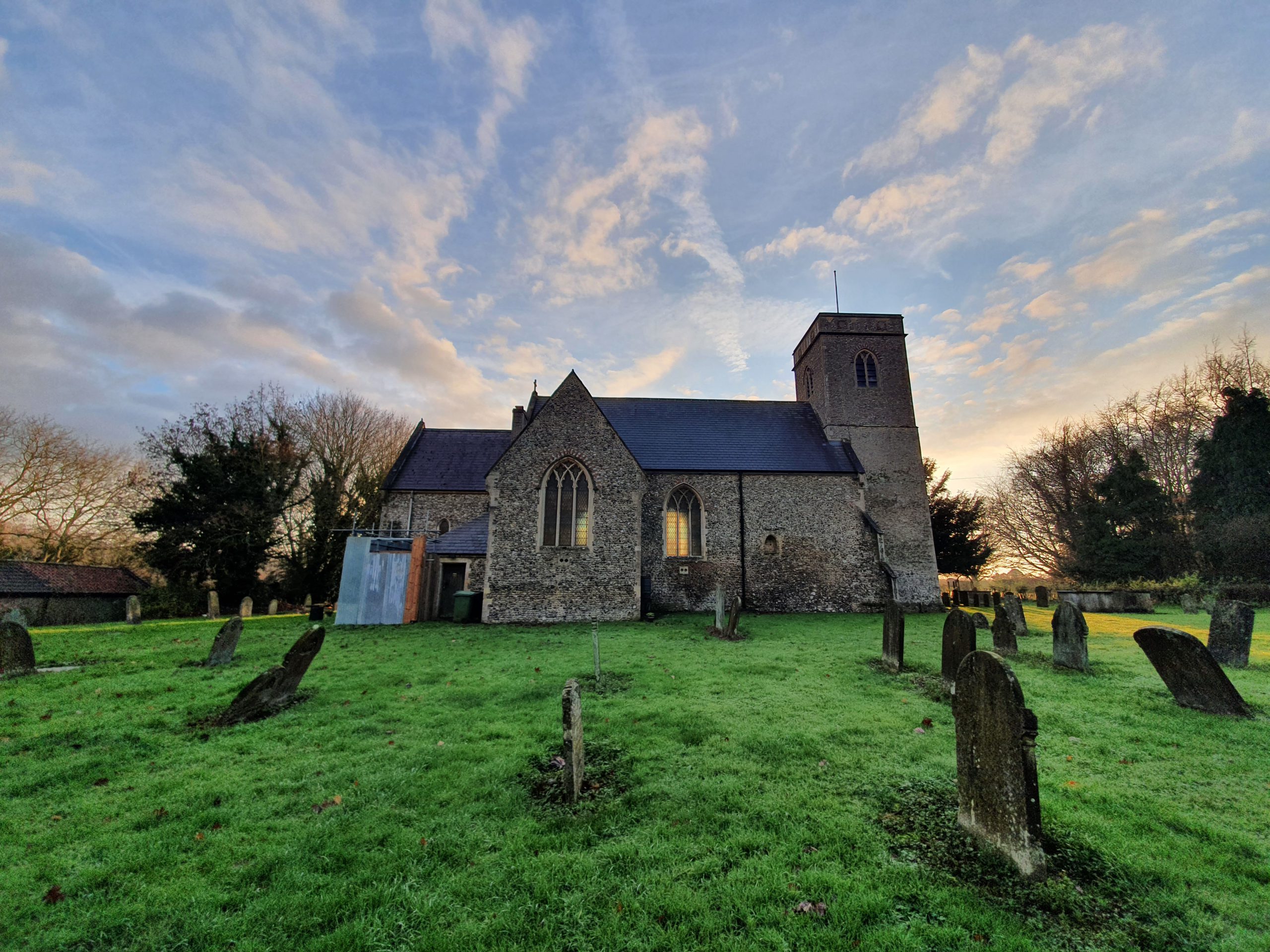
    The church originally had a round tower, but was replaced by this in the mid-fifteenth century. There’s some good news as well about the church’s future, as it has now been removed from the Heritage at Risk Register as numerous organisations came to together to fund some much-needed repairs.

    I’m not quite sure what they’re doing here, the metal mars the beauty a little, but it’s still a graceful church and that structure looks temporary. The nave is the oldest part of the church, dating to the eleventh century, whilst the chancel is later, dating to the fifteenth century.

    That looks like Roman brick to me on this now closed up doorway. Incidentally, this church had no roof for over 170 years until the nineteenth century repairs, but the walls still remained standing, a testament to the early builders.

    And a niche, although this looks out of place and has perhaps been moved or maybe was a window at one point.

    We were fortunate enough to be able to look inside the church as well, more on that in another post.
  • Wramplingham – St. Peter and St. Paul Church

    Wramplingham – St. Peter and St. Paul Church

    Wramplingham has had a church on this site since at least the early eleventh century, but it probably has Saxon origins. The probable situation here is that the nave is the oldest part of the church, then the base of the tower and then the chancel and then the top of the tower. Views differ though to make things more complex.


    The tower with its lancet window is likely thirteenth century with a later fourteenth century octagonal top section, although some have dated the whole lot to the fourteenth century. My limited knowledge of architectural history doesn’t allow me to have a view either way…..

    The join between the tower and the nave, the latter of which dates from the eleventh or twelfth century.

    That Norman door looks out of place there on a Victorian extension, but that’s because they moved it from its previous location opposite the south door.

    And here is the plan of that, designed by Augustus Edward Browne in 1872.

    The rather beautiful chancel (I liked it, hence the multiple photos), which must have looked quite the thing when it was installed. It’s later than the nave, dating from the mid-fifteenth century.

    Internally, looking back towards the tower, and I was pleased that the church was open when we visited.

    The quality of the chancel work is visible inside, allowing light to flood in (well, it doesn’t when you visit at near sunset to be fair).

    The former steps to the rood loft screen. There’s an article about the church by FR Barff which is located near to the entrance (in very small type) and he mentions that the rood loft survived until 1843, when it was removed by the first of two Victorian restorations. That seems to be a relatively late survival, shame it was taken down.

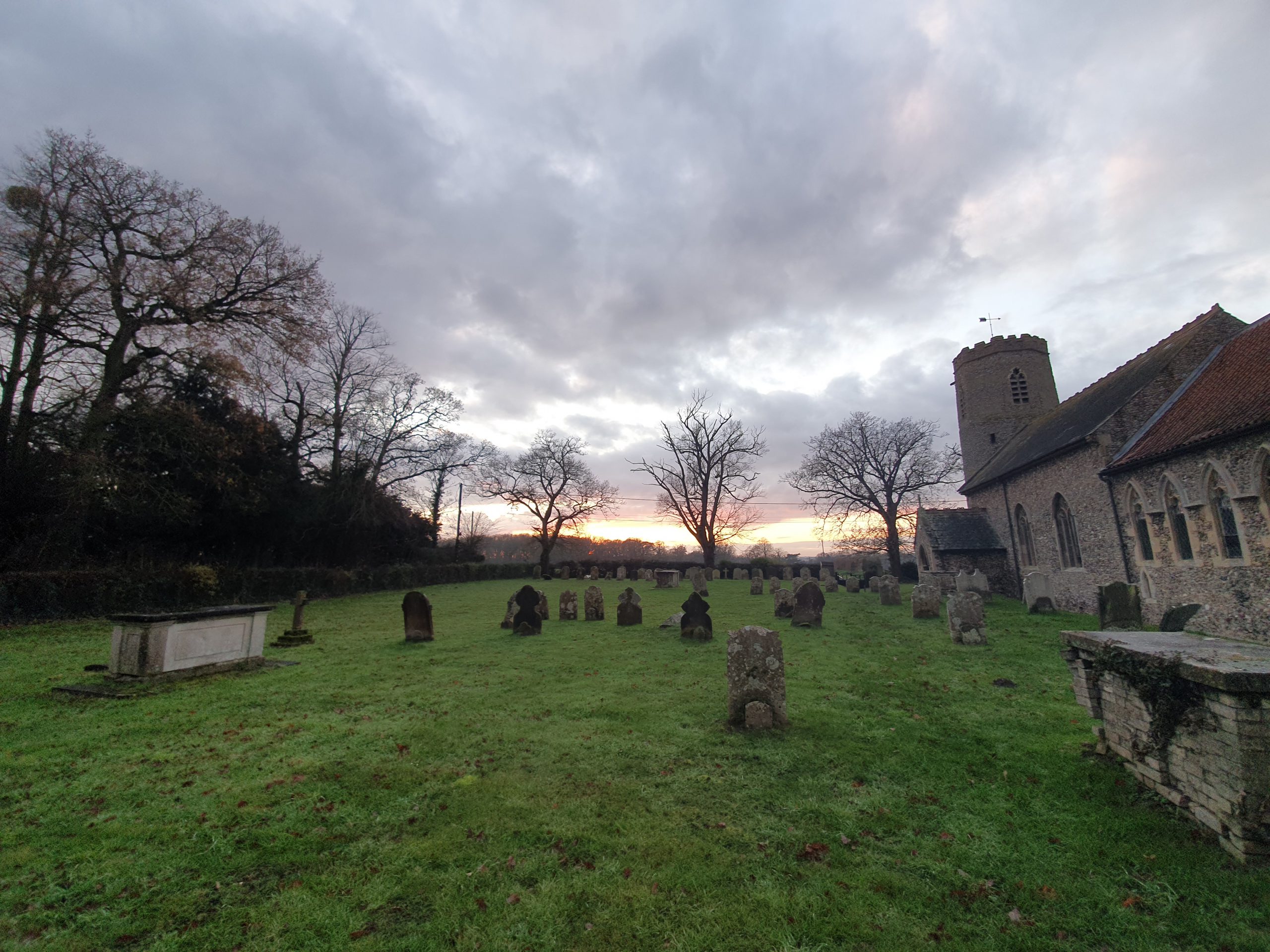
    The peaceful setting of the churchyard as the sun starts to set. There are some very neat lines of graves, particularly near to the tower, with rather large gaps nearby, so I do wonder whether some of them have been reset.

    In June 1873, the rector, Charles Philip Paul Jodrell, took the Great Eastern Railway to court on behalf of the church. The church had sold lead from its roof, which was apparently in excellent condition, and they despatched over 6 tons of it by rail. On that journey, the rail network managed to lose 8lbs of it and the church wanted that value back, so they demanded in court 8 shillings and 6 pence (about £28 today). The railway said that this was a perfectly reasonable loss given how much they carried and thought that there was no case. The judge agreed with Great Eastern Railway, but he clearly didn’t want to upset God too much and so he refused costs to be awarded to them.

    Anyway, a remote church which has retained its beauty.

  • Wramplingham – Name Origin

    Wramplingham – Name Origin

    I’m quite intrigued by the village name of Wramplingham, particularly how it hasn’t lost its ‘W’ over the years if it’s not pronounced. As an aside I’ll mention now, from 2003 until 2013, Bill Bryson lived in the village, quite a claim to fame (for the village I meant, although perhaps for him)…. Anyway, back to the village name, The Concise Oxford Dictionary of English Placenames notes:

    Wramplingham, Norfolk. Wranplincham in Domesday Book, Wramplingham in 1185. The first element is a tribal name, connected probably with words such as wramp ‘a twist’ (17th century), wrimpled (wrinkled, c.1430). It may be derived from a nickname formed from the base of these words.

    I think it’s fair to say that no-one has a clue exactly how this village got its name. It’s just that someone likely had a nickname of Wramp, and this was his homestead and that of his followers. But back to why this village name hasn’t become Ramplingham over the centuries. It seems (I had to look this up) that the ‘W’ was pronounced until sometime around the sixteenth or seventeenth centuries. As I understand, it was more of a hard ‘V’, so it might have been pronounced as Vramplingham.

  • Wramplingham – War Memorial

    Wramplingham – War Memorial

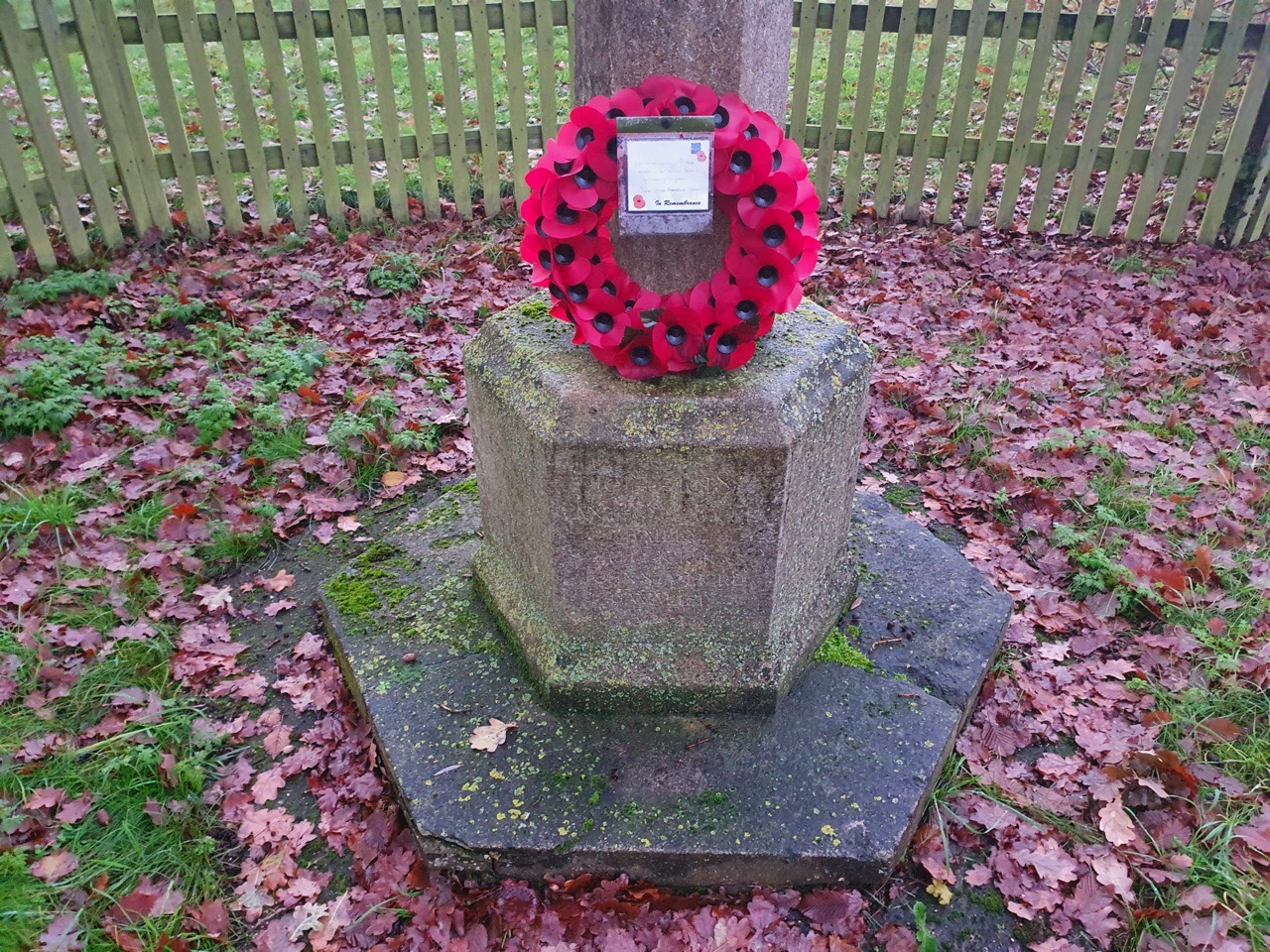
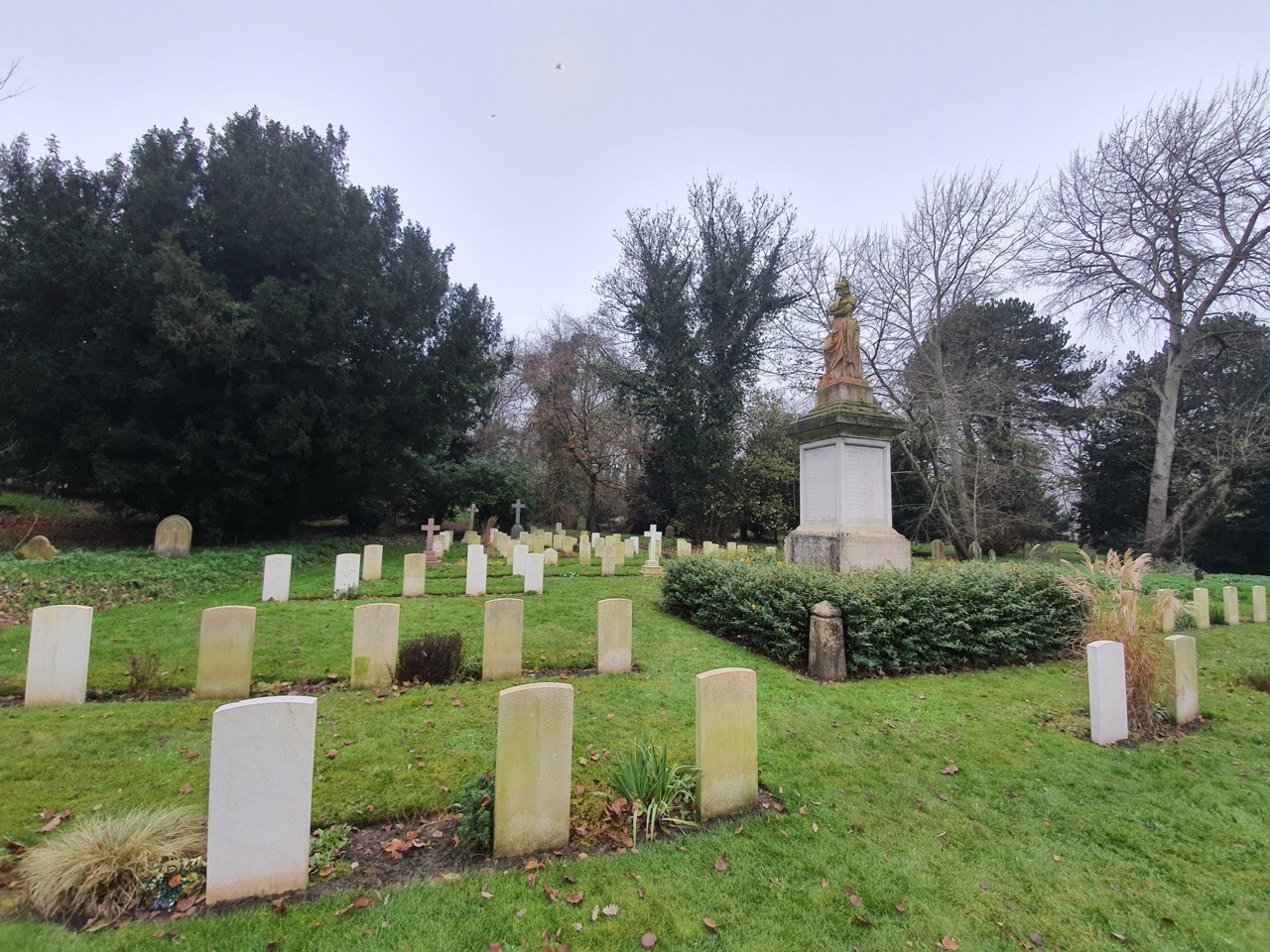
    Wramplingham War Memorial, which was unveiled in 1920 and is quite a tall and slender piece of stone. There were seven men killed from the parish during the First World War and one during the Second World War. This seems quite a high number for such a small village, especially as there were no Pals Regiments from Norfolk where friends were fight (and often die) together. Some of those who died didn’t live in the village, but had relatives here, but, it must still have been a great loss for Wramplingham.

    The names of those who died are listed on the stone, although they’re a little hard to read and some attention is needed here to restore them. Those who died in the First World War were:

    Arthur Yorke Bailey

    John Stanford Cavalier

    William Robert Collings

    John Robert Howes

    Frederick William Mitchell

    John Robert Oldfield

    Percival Ernest Thompson

    And, the following servicemen died during the Second World War:

    William Leonard Tolver

    There’s no point in me working through the histories of these individuals, as it has already been done at http://www.roll-of-honour.com/Norfolk/Wramplingham.html.

  • Great Melton – St. Mary’s Church

    Great Melton – St. Mary’s Church

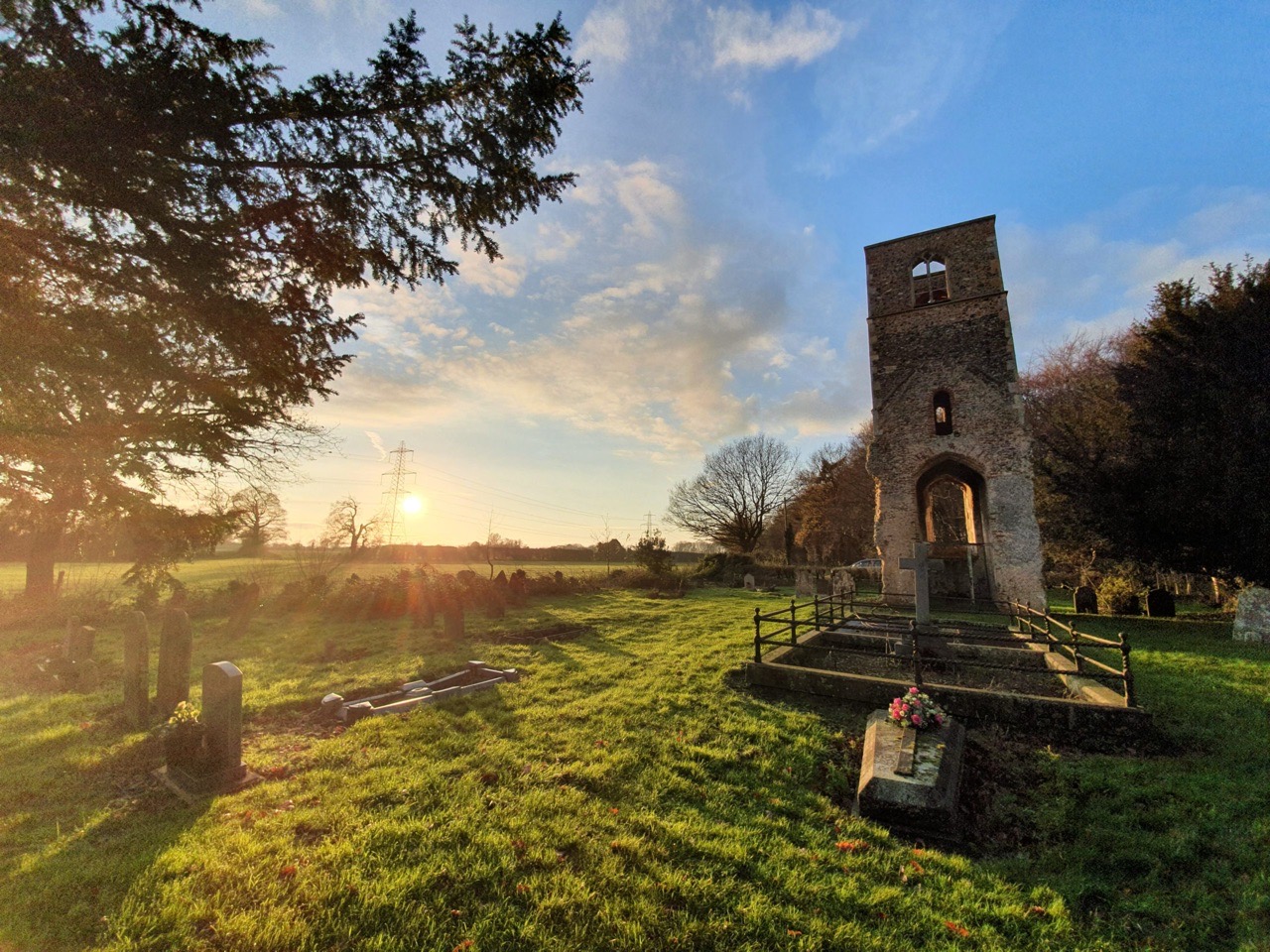
    St. Mary’s and All Saints’ share a churchyard in the village of Great Melton, similar to the situation in South Walsham.

    This is where the nave of St. Mary’s once stood (I’m standing in front of the tower to take the photo), with All Saints’ visible on the left. The churches were both independent until the eighteenth century, but then it was decided to merge the two and just use St. Mary’s. A decision was later made that St. Mary’s was too small, so they decided to fix up the by now roofless and slightly fallen down All Saints’ Church.

    The church remained in use until 1883, it’s a shame in my view that the Victorians decided to take down most of the building, although I understand that some of the stone was used in the rebuild of All Saints’. It was reported in the Thetford & Watton Times in 1883 that the locals did want to keep both, but given the lack of finances they wanted to preserve what they considered to be the more historic of the two churches, and that was All Saints which had Saxon origins.

    A trig mark at the base of the tower.

    Looking up at the tower, which is in pretty good shape. Well, bar the big holes in it. I understand that English Heritage have provided some money to secure it, which I think relates to the brickwork at the top as opposed to the bit of wood propping the walls up at the front of the photo.

    Rather beautiful….

    The tithe map, with St. Mary’s being the lower of the two churches.

    The enclosures map.

  • Wramplingham – Village Sign

    Wramplingham – Village Sign

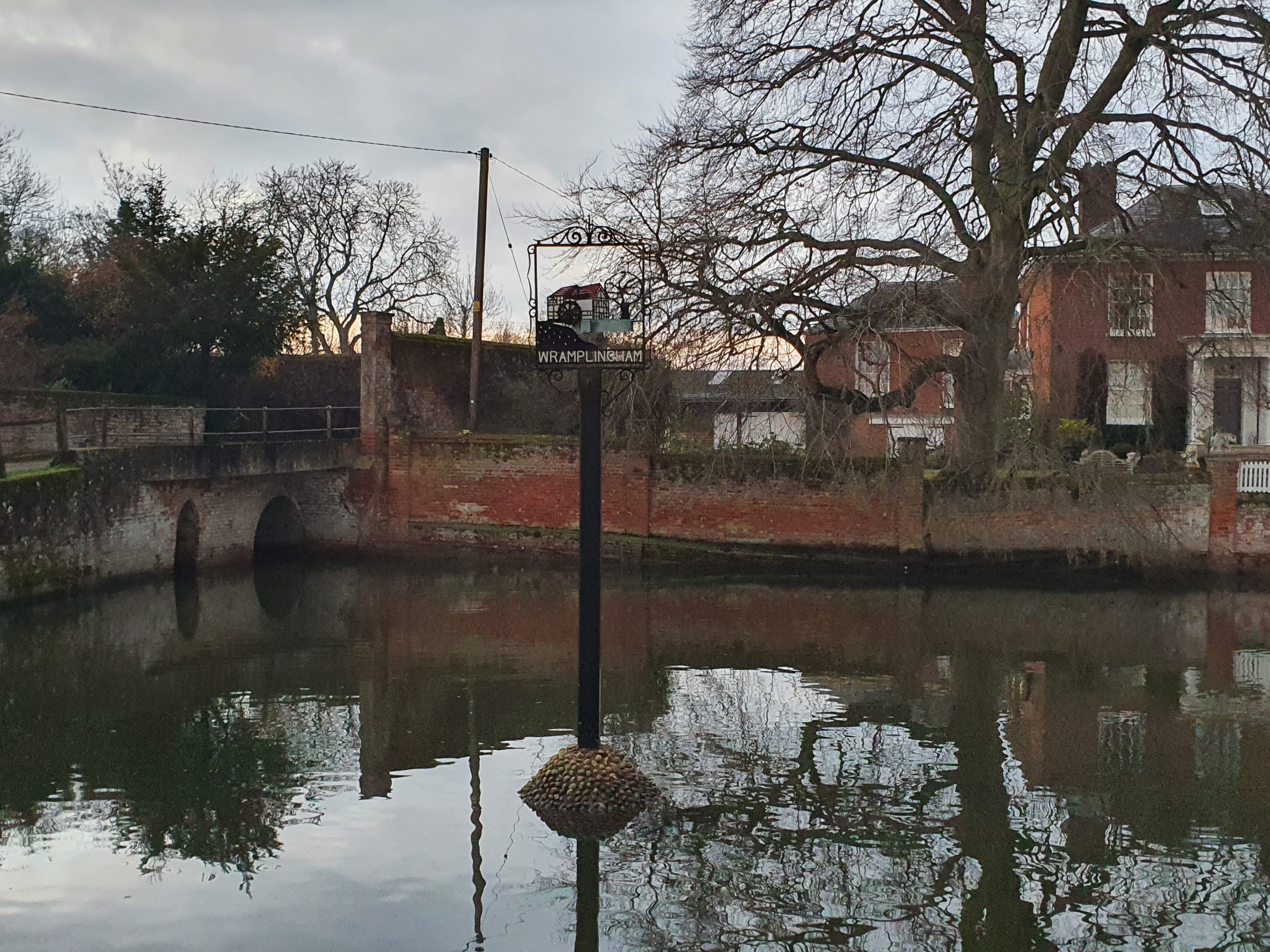
    I like this, Wramplingham village has, by design, placed its sign in the River Tiffey. I say by design as it’s in the water in all the photos that I can see.

    The sign itself features the water mill on which much of the village’s history is around, although the rather lovely mill itself was knocked down in 1945.

  • Norwich – Earlham Cemetery (Alan George Gibling)

    Norwich – Earlham Cemetery (Alan George Gibling)

    This is the war grave of Alan George Gibling, located at Earlham Cemetery in the main area and not within the military section. I can’t find out anything about his period in the First World War itself, but the story here (for me anyway) is that this is the first time I’ve submitted a request for the CWGC to change information on their web-site.

    But, going back a bit, Alan was born on 3 June 1896, the son of George Joseph Gibling and Ellen Gibling (nee Dix). At the 1901 census, he was living with his parents and his brother John Charles and his sister Margaret Ellen, as well as a servant Baldry Gibling, although it’s confusing why she shared the same surname with no obvious family links. They lived at 191 College Road in the city and Alan was educated at Avenue Road School and then at the City of Norwich School between 1 September 1908 and 20 July 1912.

    At the 1911 census, the family were still living in the same property and this time the family has been joined by Geoffrey Dix, with the servant now 19-year old Alice Nichols. This census also reveals that George and Ellen lost one child at some point during their marriage.

    Alan’s war records seem to have been lost in the fire during the Second World War, as so many were, but he joined the Norfolk Regiment, but I’m not sure whether or not he would have seen active service. Alan died on home soil on 17 October 1915 at the age of 19.

    Back to the CWGC, the record on their web-site lists him as Allen George, and I wonder whether someone has looked at his mother’s name and got muddled up. Mistakes are not uncommon due to the challenging way that the information was gathered around a century ago, with the CWGC noting they make changes to their database most days based on details provided. All of the other war details, mentions on war memorials, his school records and censuses have him listed as Alan George. I was going to just leave the CWGC record incorrect rather than spend time compiling the evidence that they required, but it seemed the right thing to do for Alan’s permanent record to be correct.

    Although we’ll likely now find out that I’ve misunderstood something and no change is needed, but we shall see….

  • Norwich – Earlham Cemetery (Valorous John Wright)

    Norwich – Earlham Cemetery (Valorous John Wright)

    This is the war grave of Valorous John Wright, buried in the older military graves area of Earlham Cemetery. Incidentally, my photo of this grave is at an angle as there’s a big bush in front of it.

    Valorous is a wonderful name and it’s because he was born on HMS Valorous, a Royal Navy paddle frigate built in 1851, on 24 December 1866. He went to North Road Boys /Steynton School at Milford Haven and his school records remain from 1878 and 1879.

    As is this document which I very much like about the school’s progress and the students clearing off home, with Valorous mentioned at the bottom.

    At the 1881 census, Valorous was living with his mother, Mary Jane Wright, at Robert Street in Steynton, his father having already died. There were two lodgers in the property as well with Valorous and his mother, Richard Wakeham and William Tinkham.

    He joined the army at Pembroke Dock on 14 June 1883 at the age of 16, although he declared on his form that he was 18 years and 5 months old. He asked to join the Royal Welsh Fusiliers and his medical was the next day and magically he declared his age to be 19. The records show that he was 5’6″ in height and weighed 8.7 stone.

    During his time in the army, Valorous married Martha Huggins on 10 September 1896 at the Church of St. Ethelreda in Norwich. At the 1891 and 1901 censuses, Valorous was away in the army, whilst his wife Martha was living with her father John Huggins, on King Street in 1891 and at 54 Argyle Street in 1901.

    Whilst in the army, Valorous fought in South Africa, but was mostly stationed in the UK and he was uninjured in battle during his service. He was promoted to Colour Sergeant on 25 February 1900, moving to the Norfolk Regiment on 27 February 1906 and then leaving the military entirely on 31 July 1909.

    Valorous died on 11 December 1910 at the age of 43, leaving his wife who was ten years younger than him, with his burial being on 17 December 1910. During their final year the couple lived at 115 Sprowston Road, a house perhaps more notable today for being opposite the rather lovely Brewery Tap pub. But, my favourite part of this story is really the name, and I think it’s not unusual for people born at sea to be named after the boat that they are on.

  • Norwich – Earlham Cemetery (Robert Love Gracie)

    Norwich – Earlham Cemetery (Robert Love Gracie)

    This is the war grave of Robert Love Gracie, buried in the older military graves area of Earlham Cemetery. Robert was a Canadian who born on 9 March 1893, the son of Elizabeth Gracie. The real story behind this post is though the excellent state of the Canadian archives, all freely accessible and with substantial documentation retained for members of their armed forces. Robert’s war records are 78 pages long and contain more information about his medical condition than anyone could perhaps ever need to know.

    Robert was single and he worked as a clerk at Eaton’s department stores, living at 124 Hogarth Avenue in Toronto, a property which is still there, and he had a brother and two sisters. We know from his sign-up medical that he was 5’8″, had a dark complexion, had brown eyes, black hair and declared his religious belief to be Presbyterian. Robert was given the service number 404091 and he joined the 14th Battalion of the Canadian Infantry.

    On 4 June 1915, Robert sailed from Montreal to the UK on the SS Metagama, a new cruise ship which the Canadian military had requisitioned as a troop carrier. He remained in the UK until 20 January 1916, when he sailed to Le Havre and from there he was sent to the front line with his unit on 2 February 1916.

    I wonder when writing these wills what the soldiers thought, as Canada at this stage didn’t have conscription, so Robert signed up voluntarily. Robert was placed on the front line for the first time on 2 February 1916, but on 9 March 1916, he was seriously injured with shrapnel wounds to his right hand and his right leg.

    He was taken to a field hospital on 9 March and an operation was undertaken and x-rays were also taken, which has survived in the archive. I don’t know what I’m looking at here to be honest, but on 13 March it was decided that Robert needed to be returned to a hospital in England.

    The above is his temperature chart for the time that he was at the field hospital.

    The hospital that Robert was sent to was the Norfolk War Hospital in Thorpe (St. Andrew’s Hospital) and on 15 March he was seen by the doctors there. It was noted that a shell had blown off some of his fingers and the stump of his hand had gone septic. His knee and leg were very swollen and there was a penetrating wound to the upper part of his calf.

    On 16 March, the doctors noted that Robert’s leg remained very swollen, but by 19 March, although the swelling was going down, he remained in a poor condition. However, on 20 March, Robert suffered from a secondary haemorrhage and his leg was amputated at the thigh, where it was discovered that his thigh muscles were riddled with pus. Unfortunately, at 10:45 on the 20 March 1916, Robert died at the age of 23.

    The authorities seemed to take care of providing a suitable burial, checking if his next of kin wanted his body returning to Canada. He was buried at Earlham Cemetery, a long way from home, at 14:30 on Friday 24 March 1916, with a contingent from the military and a bugler present.

    And it’s not often that there are photos available of those who died in the First World War, but this is Robert. I don’t know why he wanted to serve in the army, whether it was because he felt it was his patriotic duty or whether he wanted adventure. But, he joined at a time when it was clear that the war wasn’t going to be over quickly and he would have been aware of the loss of lives that was taking place. Either way, he seems like a hero to me.

  • Norwich – Earlham Cemetery (David McSweeny)

    Norwich – Earlham Cemetery (David McSweeny)

    This is one of the earliest graves in the old military burial area at Earlham Cemetery in Norwich. This story particularly interested me as the funeral was so well covered in the local press that it gave me quite a picture of what the burial must have been like.

    It’s not clear whether it’s David McSweeny or David McSweeney, I suspect it’s the latter, although the grave uses the former spelling. He was born in around 1839 and he joined the military in 1858, serving in the 7th Queen’s Own Hussars and he had reached the rank of Paymaster Sergeant.

    It is the death of David that received much local press attention, including the inquest and the burial of his body. On the evening of 24 June 1875, he was in a rowing boat with his friend David Couper and they were nearby to St. Anne’s Staithe in Norwich (pretty much opposite the Queen of Iceni, nearby to the new St. Anne’s housing development) when a steamer hit them. David’s body was pulled out of the water a few minutes later, but he was already dead, aged just 36.

    A coroner’s court took place in July 1875 at the Cinder Oven pub on King Street, in Norwich (a building now demolished, but it once jutted on to the city wall near to the Carrow Bridge boom tower). The Deputy Coroner heard evidence from numerous witnesses, but there was confusion as to how David had fallen into the water and died. Captain Thompson from the army said “it seemed rather odd that no-one appeared to see the deceased get into the water”.

    One of the witnesses was WR L’Estrange, a brewer at the Bullards brewery, who said that there was no need for David to have jumped into the water as he would have been safe given the low speed of the steamer. When asked, he put his decision to jump as being “out of terror”. Captain Thompson confirmed that David hadn’t drunk alcohol for 15 years as he was tee-total, so a poor decision due to drink was ruled out, and he also confirmed that David was able to swim. The whole thing was a bit of a mystery and a verdict of accidental drowning was given.

    David wasn’t married, but the non-commissioned officers clubbed together to pay for a headstone for him, a rather lovely gesture. And this is how the Norfolk News reported David’s funeral:

    “On Monday afternoon, the remains of the Sergeant were interred at the Norwich Cemetery. The firing party was followed by the body of the deceased borne on a gun-carriage, the coffin being covered by a velvet pall upheld at the sides by six Sergeants of the regiment. Next came deceased’s charger, followed by the men of the troop. The military procession was succeeded by three mourning-coaches containing the relatives and friends of the deceased, who was unmarried. The bands of the regiment played a dead march, and several thousand persons assembled to watch the mournful procession on its route to the place of burial”.

    The thought of that number of people watching and paying their respects is quite a picture to build up in the mind. The backdrop to this though is that the military were held in high repute by most locals and the period when David died was one where there were relatively few British military deaths. Over 10,000 had lost their lives in the Indian Rebellion in the 1850s, but the next major loss of life wasn’t until the late 1870s with the Second Anglo-Afghan War and the Anglo-Zulu War.

    This does all mean that although David died relatively young at 36, his death was at least marked with respect and dignity.