Category: Norwich

  • Norwich – Freemasons Arms (Two Julians)

    Norwich – Freemasons Arms (Two Julians)

    20230906_141207

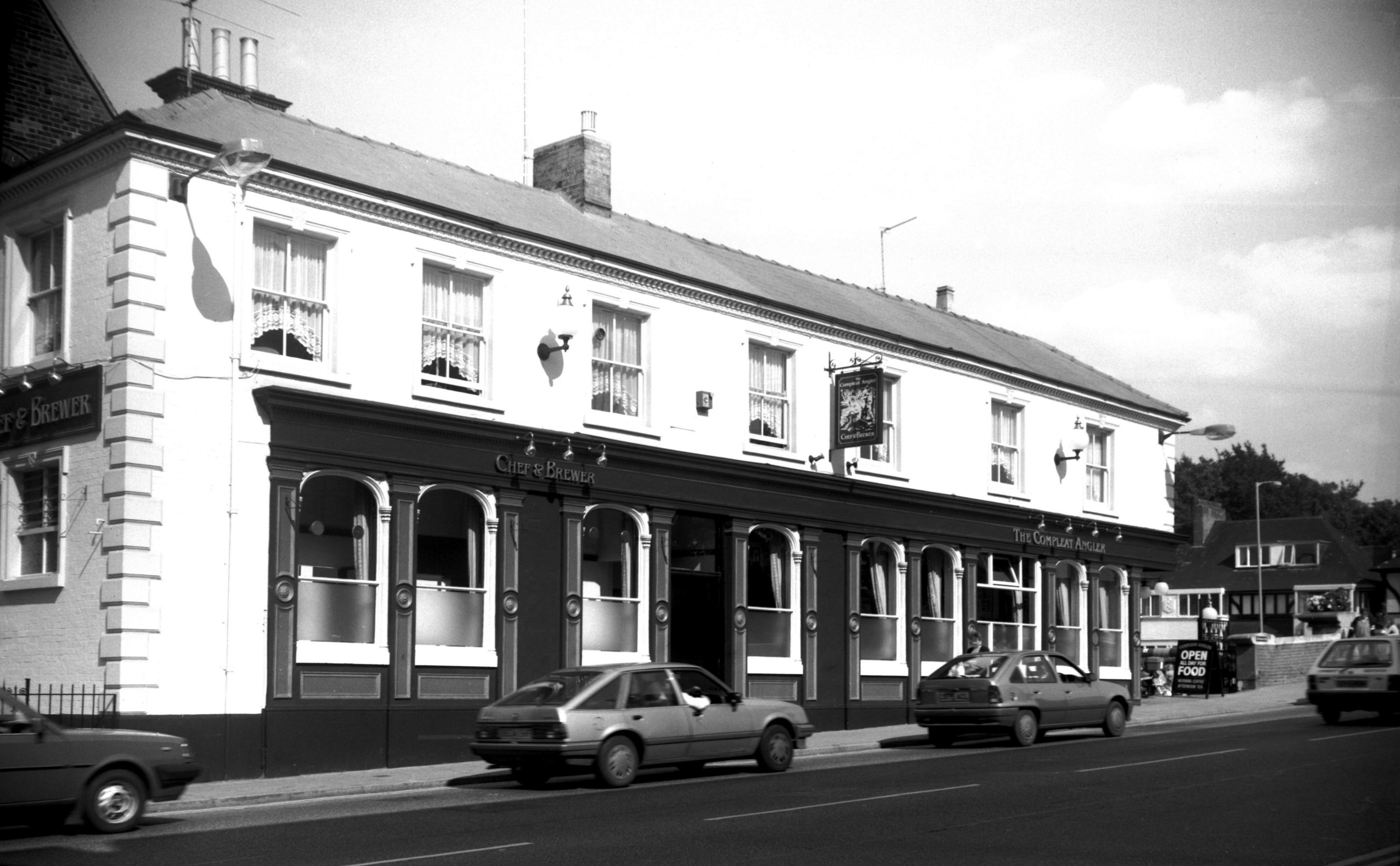
    As part of our meanderings around Norwich pubs, the next on the list for Julian and I was the Freemasons Arms on Hall Road. This has been a pub since the early nineteenth century, although was known as the Billy Bluelight between 1994 and 2005 during the period that it was owned by Woodfordes. Billy (1859-1949) was a runner who used to amuse those on pleasure boats on the Broads by racing them into the city using footpaths by the river. Although I don’t suggest he isn’t worthy of having a pub named after him, I’m not overly keen on licensed premises changing long held names, so the reversion back to the original name seems entirely sensible to me.

    20230906_142058

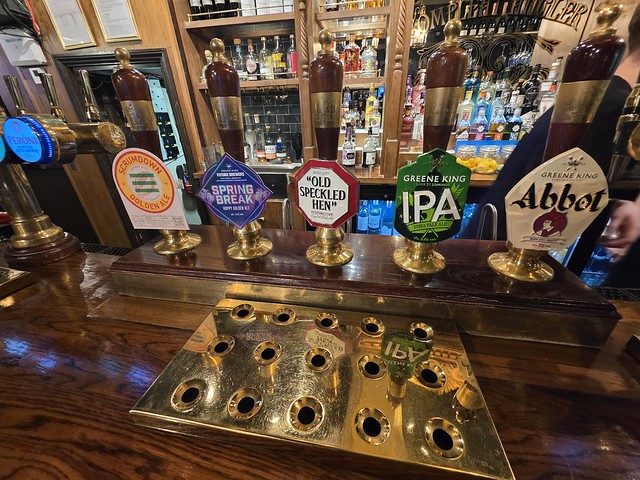
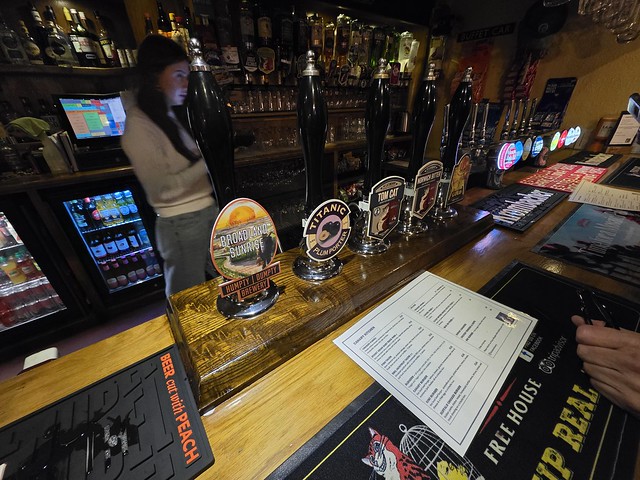
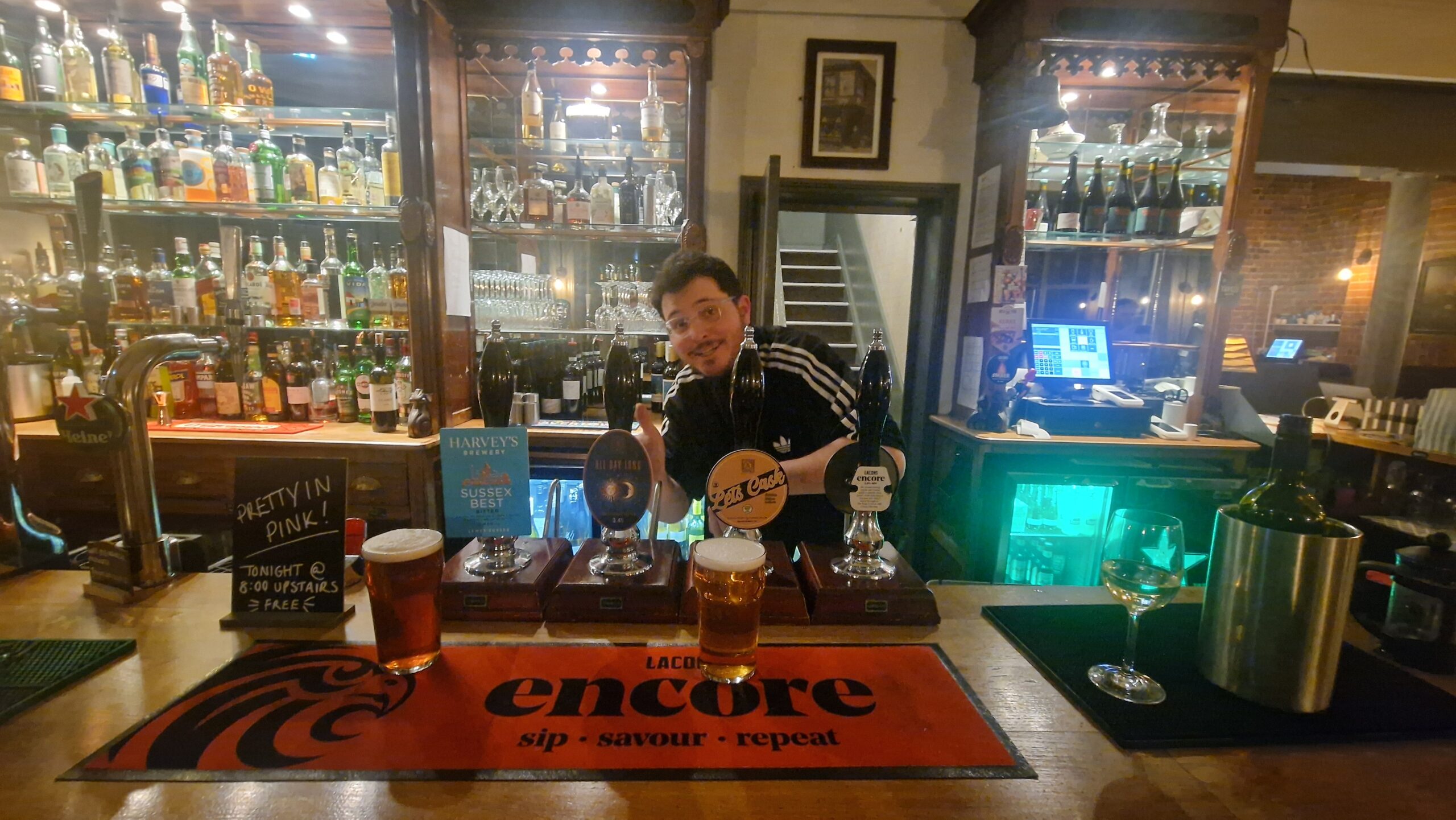
    The bar had a wider range of beers that I had anticipated, including three cask options which were from Mr Winters, Cloudwater and Lacons. The service was friendly, immediate and inviting with the pub having a comfortable and laid-back feel to it.
    20230906_141453

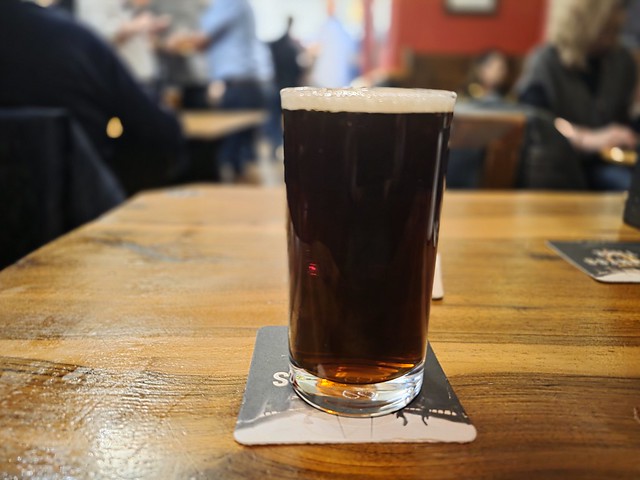
    I went for the SoCal from Cloudwater, a beer that I hadn’t had before, and it was well kept, at the appropriate temperature and was suitably refreshing. The day that we went was exceptionally hot, so refreshing was quite high on my list of priorities. This football table is sensible located away from the main part of the pub, but with access to the main bar. This would also make a rather lovely space for a bar billiards table, but I won’t digress too much on that matter.

    20230906_141521

    There’s a pleasant beer garden which was clean and organised. It was far too hot for me to sit in, but it’s a useful resource for the pub.

    20230906_141523

    I hadn’t realised before how substantial this beer garden was, but that’s the purpose of these rigorous research study tours.

    20230906_141529

    I’m a little unsure of the set-up here, I think Julian thought it was formerly a skittles alley but it doesn’t seem to be attached to the pub now and there’s no mention of it on their web-site.

    20230906_141703

    It’s not a large pub, but they’re making an effort in their food offering which seems appropriate for the venue.

    20230906_142811

    It didn’t impact us as we had already been served, but the venue was without any visible staff for some time and a couple of customers came over to us to ask how they could get a beer. Their patrons weren’t put off though and they waited patiently.

    20230906_143056

    We occupied ourselves with some of the pub games. These were nearly entirely beyond me.

    20230906_143520

    It kept us amused anyway.

    20230906_143720

    Evidence that I worked how to separate at least one of these things, which I understand was the aim of the arrangement. Julian seemed to manage with a little more success than I did if I’m being honest.

    20230906_145843

    There were a lot of good ideas in this venue which was purchased by a small pub company earlier on in the year. I’m suitably impressed by their efforts, they’ve got a decent selection of beers, the pub was clean, the service was friendly and it had the feeling of a community pub.

    20230906_145915

    The frontage from another angle, this pub is certainly worth a visit and I wouldn’t complain if this was my local. My memories of it over recent years are that it has at times been a little beat-up and tired, but it feels refreshed and more at ease with itself now.

  • Streets of Norwich – Fishergate

    Streets of Norwich – Fishergate

    Part of my Streets of Norwich project…. [updated in October 2023]

    1260360

    Fishergate is one of the streets in Norwich which has retained its street line and its name over the last few centuries, connecting Whitefriars to Fye Bridge Street.

    1260362

    The Church of St. Edmund, a fifteenth century building which was modernised (and, just a little bit ruined in my view) in the Victorian period, although it was built on the site of an earlier church which was likely Saxon. The number of residential properties in the area fell during the later part of the nineteenth century and the church fell into disuse during the early twentieth century. It was later used as a store for Norwich Puppet Theatre, although it now appears to be back in use as a religious building.

    1260370

    One of the Viking Norwich signs, of which there are several in this area. The street has been known as both Fishgate and Fishergate, both with the same original meaning of ‘street of the fishermen’.

    1260367

    The building painted light blue in the above photo is interesting, it’s the former Duke of Marlborough pub. It was closed in 1969 having been a licensed premises since at least the beginning of the eighteenth century.

    To the right of the Duke of Marlborough was the Rampant Horse pub, long since demolished. This was a casualty of the removal of licenses from properties at the beginning of the twentieth century, an act which closed thousands of pubs throughout the country. To the left of the Duke of Marlborough, now no longer accessible, was Thoroughfare Yard, although this is still accessible from another entrance point.

    On the matter of pubs, there was once a Carpenters Arms located on Fishergate but the records suggest it was only there in the 1830s and it’s not clear exactly where it was. There was also the Golden Fleece which was a licensed premises between sometime in the 1830s and 1867.

    1260369

    Formerly the offices of J Bugg Ltd, boot and leather manufacturers.

    1260368

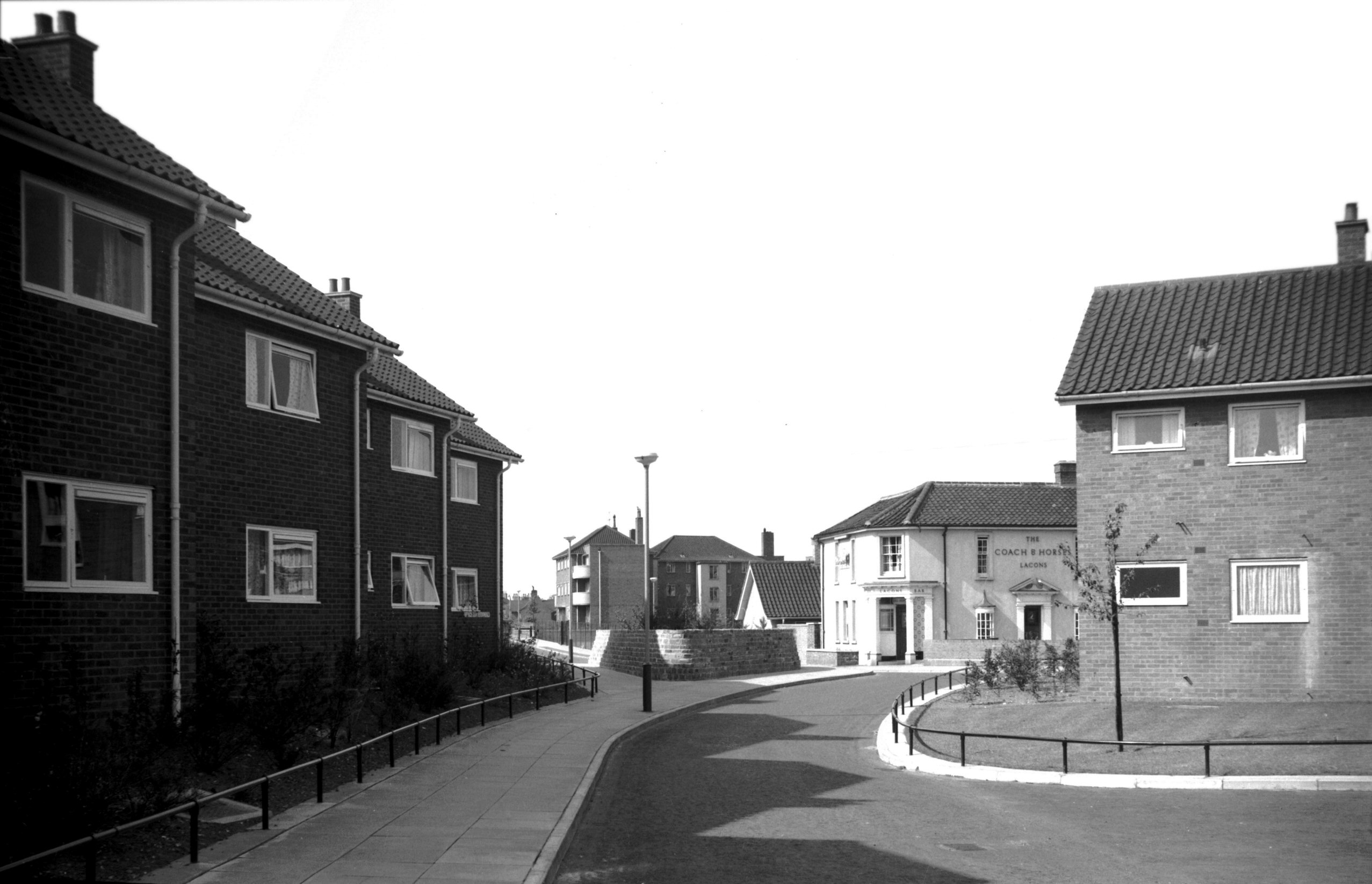
    This section at the end of Fishergate, where it meets Fye Bridge Street, has been turned into a small park. I’m not sure why nothing is now here, although some buildings on this section were badly damaged during the Second World War. This little park is on the right hand side of this 1933 photo from George Plunkett.

  • Food from Every Stall on Norwich Market – Week 25 and Falafel and Friends

    Food from Every Stall on Norwich Market – Week 25 and Falafel and Friends

    20231003_131854

    This week’s visit to a food stall at Norwich market was Falafel and Friends, not one that I would have likely gone to outside of this project. My first impressions were positive, the signage was very clear on where to order and there was more clarity on this here than on any other stall I’ve visited at the market. This is a busy stall (I know this as I’ve sat eating chips opposite it for years) selling vegan food and they have burgers, hot dogs, wraps and the like.

    20231003_131949

    The service was immediate and friendly, with the team member smiling and it all felt inviting. I thought that I’d go for the Kimchi Dog, but unfortunately they’d run out of that one. The team member suggested that I try the Buffalo Vegetarian Chicken Burger or the Sweet Potato Tempura Burger and in absence of knowing what else to order, I went for the latter. It cost £7.50 and the stall accepts cards and cash.

    20231003_132123

    Customers are given a number which is then called out and I didn’t have long to wait (well, I did for James who was on some posh executive job) for the food. Customers were served in order and it all seemed organised and well managed.

    20231003_133224

    My burger looked appetising and colourful with the bun being lightly toasted. The salad element added texture, particularly the cabbage, with the sweet chilli sauce providing plenty of flavour. The tempura batter also added texture and this was essential as the burger itself was soft, it was an interesting contrast. The cajun potatoes were salty and really quite sapid, I was suitably impressed and it did feel like comfort food.

    IMG-20231003-WA0005

    In case anyone thinks that this photography is a step up for me, this is the photo that James took of his wrap. James went to the counter confused, as he often does, and the team member pretty much told him what he was going to order which worked well for all concerned. He was also pleased with the food, although we had to hide from the staff at the neighbouring Lucy’s Chips who must feel that we’ve completely abandoned them over recent months.

    But, back to the beginning and when I mentioned this isn’t likely where I’d think to visit, but it was all better than I had anticipated. There was a depth of flavour to the food, it was well presented and the service was friendly and engaging. Definitely one of the better stalls that we’ve visited and there are some other tempting items that I might come back to try. I’m pleased to have been here and I’m reminded why I’m an advocate of forcing myself to try somewhere new.

  • 200 Years Ago : Norwich Ecclesiastical Court and Moral Outrage

    200 Years Ago : Norwich Ecclesiastical Court and Moral Outrage

    For my latest news from 200 years ago, I was intrigued by this quite long article in the Norwich Mercury in October 1823. It feels interesting because it brings into play the evolution of the ecclesiastical courts and how their power has ebbed away over time and been replaced by the civil courts. Back in 1823, the ecclesiastical courts still had jurisdiction over matrimonial questions and probate, amongst many other things, although they were soon to go. The rules were already archaic at this point and this case showed just how problematic and dated they had become. It’s also an impressive piece of local journalism to bring a case such as this to the attention of their readership, especially on something so controversial.

    “JURISDICTION OF THE ECCLESIASTICAL COURTS

    It is one of the facts attending the progress of society, that power conferred in the earlier and darker ages remains where and as it was bestowed, until some strange example of its pernicious exercise shews the possible effect of such a misappropriation of authority, and thus works its destruction. Such we hope and trust will be event of a case which has recently occurred in Norfolk, and which we are now about to narrate.

    It will certainly, we understand, be brought under the consideration of the legislature in the next session, as is sufficient ground for the revision of that part of our code, which respects such offences. Is this district from the benevolent disposition of the prelate who presides, from the character of the officers, down to the very lowest, we have the best assurance such disposition and such character can give, that every process coming under the cognizance of the Ecclesiastical Court would be prosecuted with the most scrupulous integrity and with the utmost lenity.

    This is so well known that it will acknowledged instantly and spontaneously by all our readers. What then must be the nature and principle of those laws under which an injustice so fragrant, and perpetuated by such agents as we shall describe, can be committed, and when men so amiable and so upright as the good Bishop of our diocese and the officers of this court can be made the unwilling instruments of such a legal injury. What evil, what misery might be brought upon individuals by such powers if exercised by men of an opposite temper and precipitate in their judgements? But to the facts.

    The religious society of methodists to divide into certain classes of different denominations, and to each a class-leader is appointed. He solemnly takes upon himself the care of his class, and engages to admonish any of them concerning their mural aberrations. A person in a village in Norfolk this situated, heard that the daughter of one of his class was cohabiting with a married man, the father of a large family. The class-leader privately urged upon his friend the duty of endeavouring to put an end to such a connection. The man exhorted his daughter to quit a course to grossly immoral, who it is presumed, communicated the fact to her adorer. Inflamed by the representation, he one Sunday awaited the return of the class-leader from meeting, and assailed him in the bitterest language. The daughter of the class-leader, a girl of most excellent character, in service in the neighbourhood, interposed in her father’s behalf; the anger of the aggressor was turned against her, and he abused her in terms alike indecent and undeserved.

    The next morning, this girl whilst at work before the dour of her master’s house, perceived the woman who was the cause of the previous dispute, in the road, accompanied by another; an altercation ensued, and it is probably much ill language passed on both sides. This woman (the accused) shortly after entered the house of a man in the neighbourhood, a relation of the class-leader, whom she supposed to have some share in promoting the admonition she had received, and reviled him in the presence of his wife and family so violently, that he was compelled to turn her out, but he positively denies having used any abusive language towards her.

     Soon after, the daughter of the class-leader and the man last mentioned, were summoned to appear before the Ecclesiastical Court on a charge of defamation. All these circumstances occurred in the middle of the year 1821. She attended the court many times at a distance of twelve miles from her home, for examination. This examination, it seems, was conducted by her Judges. The accusers and the accused were never confronted. Such is the practice of the court. In this way she was convicted of defamation, and order to pay court fees to the amount of fifteen pounds. For these fees she was arrested about the middle of 1843 and carried to Norwich Castle for the debt. The man (her relation) was convicted and ordered to pay a sum of twenty three pounds, for which he also was arrested and thrown into prison.

    The evidence upon which these persons were convicted, is understood to have been the woman accused, a woman who had an illegitimate child by the brother of the accused, and a third female who had been imprisoned for disorderly conduct. The case was made known to persons who undertook to enquire into the circumstances, and, who finding it to be exactly as we have stated, but nevertheless conducted according to the strictest forms of law, paid the debt, liberated the prisoners, and intend to bring the revision of law under the consideration of Parliament. We ought perhaps to add, that the proctor employed by the accusers offered to compromise for a small sum, but this compromise the parties from a sense of the injustice (and perhaps not anticipating the result) refused to accept.

    In such a case it appears for us to be highly desirable, that there should be some public, some general expression of abhorrent feeling: and we venture to suggest that a subscription, not to exceed one shilling (or five at most) from each contributor, which has been already begun for payment of the sum, he opened to the country, in order to mark the detestation in which such powers can but be held by every upright mind. Several gentlemen, who have been made acquainted with the proceedings, coincide in this opinion, and the printers of this paper will willingly register the names and receive the contributions of all persons who may be disposed to aid the repeat of a law so obviously liable to abuse and perversion. Indeed we hope to see the whole law relative to defamation and personal abuse revised and put upon a footing that such assaults (which are often very grievous to the individual) may be punished without the admission of power now existing – a power which, as it appears in this instance, may be exercised to crush its victims, even fair claim to the redress it was originally designed to administer. There is no question of party, not advanced for party purposes, but for general right and for general good. We therefore hope to see the Gentlemen of the County stand forward and join in the reprobation of a transaction upon which there can be but one opinion.”

  • Streets of Norwich – Swan Lane

    Streets of Norwich – Swan Lane

    Part of my Streets of Norwich project…. [updated in October 2023]

    20200420_091528

    Swan Lane is located in central Norwich and was originally called Rakeytheslane, or Rackey Lane, as Robert de Rakheythe had a house along the street. It changed its name in the nineteenth century because this was the location of the Swan Tavern, and I think it’s a rather lovely idea to name streets after pubs.

    20200420_091539

    Fortunately, given its width, this is a pedestrianised street. At one end is London Street, which was the first street to be pedestrianised in the country, but motor vehicles had already long since been banned from going down Swan Lane.

    Screenshot-2020-04-20-at-14.00.14

    The city in 1830, and not much has changed with the street layout of Swan Lane in the last two hundred years. The Swan pub was at number 8 from around 1750 until the early 1860s, although there are no pubs at all along the street by 1870. And that, in Norwich, is a fairly rare state of affairs….

    20200420_091556-1

    This sign about Jem Mace is on the side of Turtle Bay.

    20200420_091618

    Changing street numbers can be a curse to trying to understand building history, but this might fit in, as in around 1870 the property at number 8 had been rebuilt. The new structure was a grand building, with 4 bays facing onto Bedford Street and 5 bays onto Swan Lane. This was used as a shop until only a few years ago, when it was converted from being the Fabric Warehouse into the Turtle Bay restaurant, which is the building on the right in the above photo.

    20200420_091520

    The entrance to Swan Lane from London Street, with something I missed (hence why it’s not very clear in the photo either), which is the entrance to a courtyard at 2 Swan Lane, on the far left of the Dipples building. I only noticed it from the listed building record, as Dipples is a Grade II listed property, originally constructed in the early nineteenth century and the frontage of the shop is original (apparently not the right-hand side window).

    20200420_091531

    The swan in the front of Dipple and Son. The history of this company is interesting in itself, their web-site mentions:

    “Dipples itself is nearly 140 years old. The jewellery business was originally founded in 1878 in Woodford, Essex, by George Henry Dipple. George did not stay in Woodford for very long as by 1890 he is no longer registered as living in Woodford. Between 1888 and 1890 the business was relocated to Ipswich. The jewellery store made a final move to Norwich around 1894 and has been located in Swan Lane every since.”

  • Food from Every Stall on Norwich Market – Week 24 and Italian Street Food

    Food from Every Stall on Norwich Market – Week 24 and Italian Street Food

    20230928_131022

    I’m getting towards the end of my attempt to eat at every food stall at Norwich Market and this week it was the Italian Street Food outlet. They sell quite a range of different food given the size of the stall, including pizzas, burgers and calzones (or calzoni, I’m never sure). I wasn’t sure how hungry I’d be as it was Nathan’s big 30th birthday party the night before, but as soon as I arrived at the stall I was confident that I could manage a pizza.

    20230928_131455

    The stall was busy when we arrived and although the team members were occupied with preparing food, the service was prompt and efficient. James and I both went for the pepperoni pizza which I thought was reasonably priced at £9. We were pro-actively told that there was a delay on food service of around fifteen minutes because it was busy, but that didn’t seem excessive and I was grateful to be told in advance. The stall accepts cards and cash, with the ordering process all feeling well managed. It also was evidently a popular stall judging by the number of customers, they’ve built up something of a reputation over the last couple of years.

    20230928_133653

    They kept us informed about the order’s progress and we then meandered over to Castle Gardens as there’s no seating at the stall. This was a very good pizza, leopard spotting as I like and it looked authentic. The tomato sauce was rich and the pepperoni was suitably tasty. There were no real negatives, although as a matter of personal taste the cheese wasn’t quite as I’d like as it seemed just slightly rubbery, but it was still of a good quality and the pizza was enjoyable. The base of the pizza was thin, as I like it, and it tasted authentically Italian.

    James added to the whole excitement by getting pizza stuck in his throat, just a week after he managed to nearly choke on bubble tea. I appreciate the risks to his personal safety to ensure that this market visit process can be concluded. I’d add that James was also satisfied with the pizza and speaking positively about the whole arrangement. He did mention black pepper would have been a useful addition and I agreed with him, remembering that I had a little sachet in my bag and that met my needs. It didn’t meet his as I only had one sachet, but he should come prepared.

    Overall, I very much enjoyed this visit and I’ll likely be back to try the other options, not least the chicken burger which I saw someone else have and it looked tempting and appetising. The team members were friendly, the service was efficient, the prices were reasonable and the pizza was of a good quality.

  • Streets of Norwich – Jolly Butchers Yard

    Streets of Norwich – Jolly Butchers Yard

    Part of my Streets of Norwich project…. [updated in September 2023]

    Screenshot-2020-06-02-at-21.43.28

    Jolly Butchers Yard is located off of Oak Street and is named after the pub which stands to the left of the yard and which traded until 1989 when it was converted into offices the following year.

    20200601_135322

    The yard is still there and there are residential properties within it, so this is one of the yards which retains some of its former character. It’s a shame that the pub is no longer trading as it had been a licensed premises since the beginning of the nineteenth century and was clearly packed with intrigue and adventure.

    20200601_135331

    There’s a plaque which notes that Black Anna (her real name was Antoinette Hannent), the jazz and blues singer, lived here between 1935 and 1976 and she got the name as she only wore black clothing. She said about this habit (please note the clever wordplay there given what she said….), “I’ve had people ask what order I belong to, a bad one I tell them” and the below video clip features her saying this. The video was filmed in the Jolly Butchers in what was probably the early 1970s and it’s entirely evident what an amazing and inspirational landlady she must have been.

    There was a news story published in the Yarmouth Independent in May 1936 which had the title “GREAT BIG ROW” which sounds very Archant…… It noted that Walter Douglas from 7 Jolly Butchers Yard had an argument with his wife Gertrude Douglas and they used foul language within the yard during this big row. Elizabeth Carrara was watching the dispute from her window on the rear of Ber Street and it was actually her who made a statement about the “great big row” as she called it. I rather fear that this was a matter of domestic abuse, but the court decided to fine them each five shillings for their abusive language.

  • Streets of Norwich – Mountergate

    Streets of Norwich – Mountergate

    Part of my Streets of Norwich project…. [updated in September 2023]

    Screenshot-2020-05-14-at-12.50.16

    Mountergate has also been referred to as the southern end of St. Faith’s Lane and the small section where it meets Prince of Wales Road is now better known as Eastbourne Place. The road name comes from the corruption of the parish name of St. Peter Parmentergate, which over time became Permountergate, and then Mountergate (and Mountergate Street).

    20200512_102418

    Norwich City Council is very proud of its car parks and they put to one side perhaps too readily an English Heritage report asking them to reconsider building this. I’d rather that the council were proud of Norwich’s heritage and stopping knocking things down, but there we go. This is likely another one of those decisions that will be regretted in thirty years, although the building on the front part of this site was in fairness of no great historic loss.

    20200512_102534

    As can be seen here, the car park beautifully blends into its environment.

    20200512_102601

    There’s a road opposite the car park which leads to the Premier Inn and riverside walk.

    20200512_102610

    On the left of this photo is a building which has been left empty since around 2005, whilst the beautiful car park still keeps going on the right.

    20200512_102641

    The same neglected building from the front.

    20200512_102631

    When certain Norwich City councillors were excitedly talking about their new car park, they were asked by some heritage bodies to moderate their plans to try and save the historic fishmarket site. The fishmarket buildings weren’t that appealing visually, but there was historic interest to them, even though they had only been constructed in 1914 when they moved from their previous site on St. Peter’s Street.

    English Heritage said:

    “The complete demolition of the fishmarket would result in the loss of this heritage interest and the buildings’ contribution to the historic environment. We would urge the council to consider alternative uses of part of the site that would allow retention of the fishmarket, but also alternative designs for the car park.”

    So, there was potential for the council to change their plans slightly to build their car park, but to save some of the fishmarket site. What the council actually did was ignore all of that, but they did save the plaque which they’ve attached to their lovely new car park. So, when people come to have a look at the fishmarket site, which was of historic note albeit very run-down, they can now see where it was. Great.

    There was a question asked of the council at the time about surely their own public transportation plans were failing if their only solution was to keep building car parks. I’m not sure they came up with an answer to that.

    Anyway, there’s no point in being negative. One advantage in the council knocking down sites of interest is that there are fewer listed buildings for me to note.

    20200512_102701

    This is one listed building that remains, a seventeenth-century former factory site which still has some character to it, even though there have been a couple of extensions in the eighteenth and nineteenth centuries when it was used in the manufacture of boots and shoes. Behind it is St. Faith’s House, which fronts onto Baltic Wharf.

    20200512_102742

    A more modern office building, and then the entrance to the new St. Anne’s Quarter building development. Somewhere along here was the site of the Orchard Tavern, which was the only pub located on Mountergate.

    Screenshot-2020-05-15-at-14.51.20

    The pub was badly damaged during an air raid in 1940 and the owners, the Lacon Brewery, decided that they wouldn’t rebuild it.

    Taking a look at the 1939 Register, St. Faith’s Tavern was located at 17 Mountergate and the landlord Fred Furze lived on the premises with his wife, Melinda. The pub closed in 1961 and it was once located at the corner of Mountergate and Synagogue Street.

    20200512_102842

    Everything on the left has been lost to the St. Anne’s Quarter site (although much had already been lost to war damage), but the wall on the right-hand side has been retained.

    20200512_102922

    And that wall leads to this gate, which led into where the Rose Lane iron-works are marked on the map. Now replaced by the Parmentergate Court housing project, at least this element has been kept as part of the site redevelopment. George Plunkett, who I’ve never known to be wrong on anything, wrote that the walls were from the Co-op shoe factory and were “retained as a baffle against traffic noise for Parmentergate Court”. Another source says they’re the old iron-work walls, and I have no idea which they are, unless both were at the site at the same, or different, times. On balance, I can’t imagine Plunkett was wrong though.

    20200512_102943

    The road, which is pedestrianised at this point, then meets King Street and straight over is Stepping Lane. A century ago, there would have been a road on the left-hand side, which was where Synagogue Street once stood. Much of this was lost during air raids in the Second World War, with the synagogue the street was named after being badly damaged, and then moved to a new site on Earlham Road in 1948.

  • Streets of Norwich – Ninham’s Court

    Streets of Norwich – Ninham’s Court

    Part of my Streets of Norwich project…. [updated in September 2023]

    20210118_114544

    Ninham’s Court is a thoroughfare which connects Bethel Street to Chapelfield and it hasn’t changed its route over the last few centuries.

    Screenshot-2021-01-22-at-08.35.01

    In this 1880s map, the thoroughfare was known as Masters Court and it takes its current name from the artist Henry Ninham, who lived at one end of the street. Ninham, who lived at the Chapelfield end, was a landscape artist and member of the Norwich School of Painters. He rather helpfully painted and drew many images of Norwich’s yards, courts and old buildings, with these sometimes being the only memory of them since they have long since gone.

    20210118_114546

    20210118_114609

    20210118_114624

    20210118_114643

    20210118_114648

    20210118_114704

    Photos from the route of Ninham’s Court, which is a narrow passage which reminds me somewhat of the rows in Great Yarmouth. The moss growing on the wall adds some atmosphere, but otherwise this isn’t really a street that anyone should necessarily travel to visit…..

    20210118_114627

    This photo is of limited use here (but George Plunkett can help here with this photo and also this one), but along the route are some houses which were likely built in the sixteenth century, although the fifteenth century undercrofts of older structures remain. This is the text about this property from the new city council’s heritage walk, which is what took me down this thoroughfare in the first place:

    “In the alley is the house of Nugent Monck, who founded the Norwich Players here in 1911. His company first performed in the large drawing room, which accommodated a small stage and an audience of about 70 people. Their popularity meant he needed more space and moved to the site of the current Maddermarket Theatre in St. John’s Alley.”

    There was an article in the Norwich Mercury in September 1896 where freehold properties were for sale in the alley, split across nine lots with an annual rent of £204 12s.

    One resident of note was Robert Briggs, whose death the Norwich Mercury announced in 1901. He had become something of a notable character locally as he was the last Norwich survivor of the famous 1854 charge of the Light Brigade at Balaclava.

    There was a tragedy on the alley in January 1911 when three year old Ada Louisa Waterson perished in a fire. Her mother had left her, and her tied up to a chair baby sister, whilst she went off to walk to Cow Hill for fifteen minutes. When she returned she saw smoke and then realised that Ada had died by burning, likely by wearing flannelette. The Coroner was most unimpressed, he condemned the mother saying that it was deplorable that children had been left unprotected.

  • Streets of Norwich – Old Mint Yard

    Streets of Norwich – Old Mint Yard

    Part of my Streets of Norwich project…. [updated September 2023]

    20200502_093641

    This yard is located off of Fishergate, and I hadn’t paid much attention to it until reading that it was likely the home of Norwich’s mint in medieval times, which produced this coin.

    20200502_093645

    There’s not much left in this yard area now, just a car park. There’s very little information about the yard on-line, although in 1900, Mr H.O. Greengrass of Norwich charged £69 10s to make the old yard up as part of improvements schemes across Norwich.