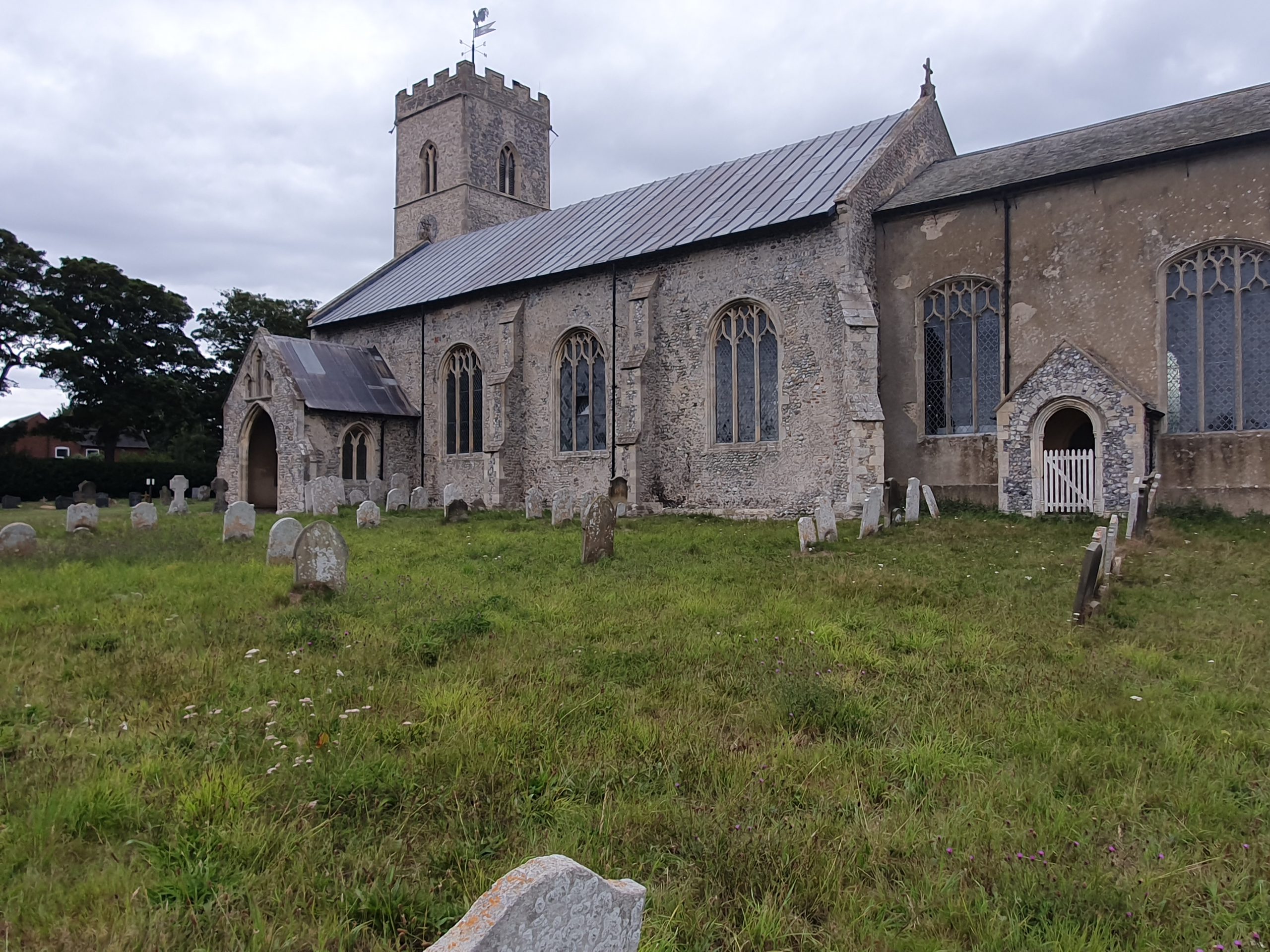
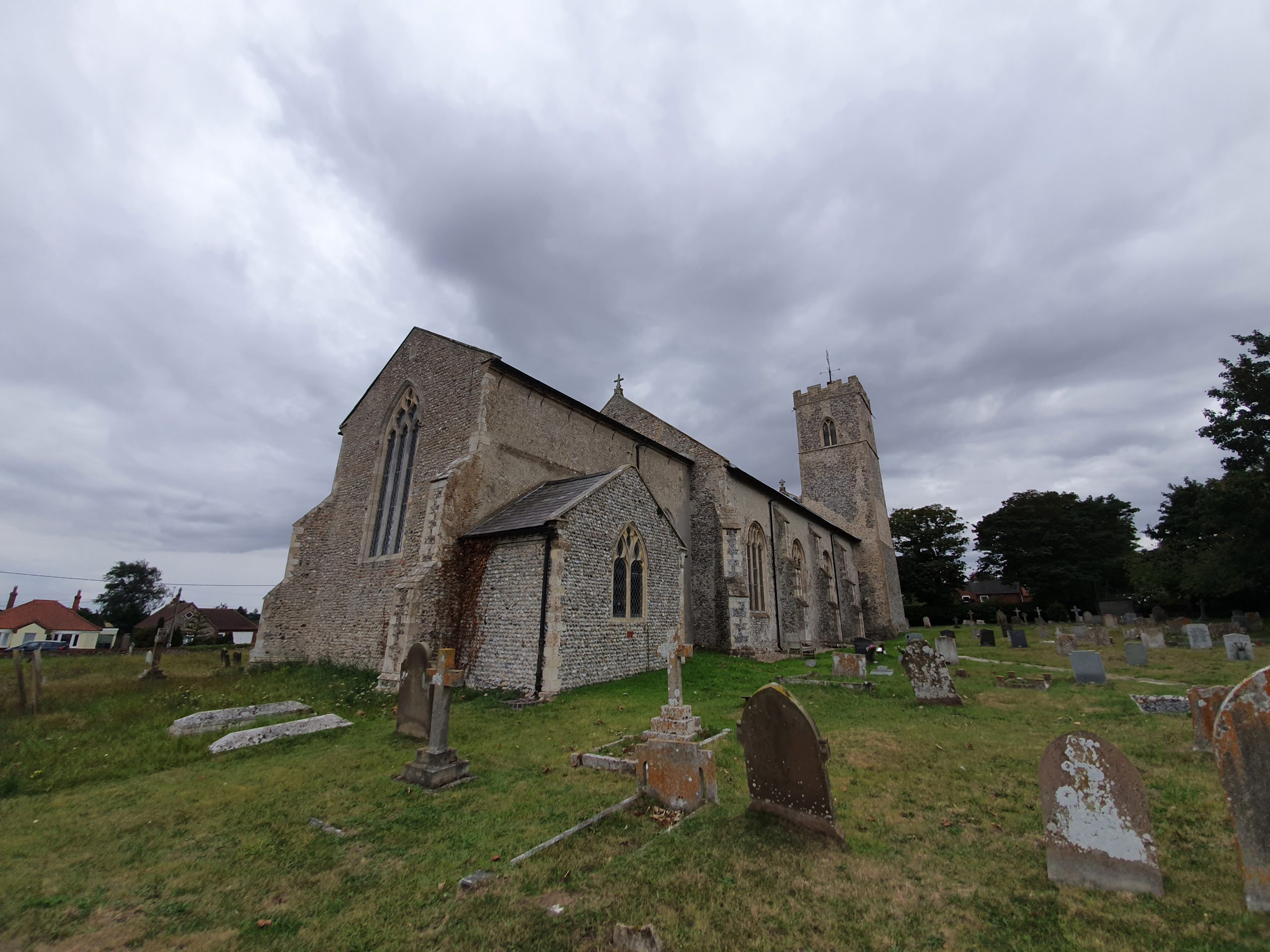
As part of our church spotting evening (yes, I know, churches aren’t that hard to spot in the scheme of things), Richard noted this one which is St. Peter and St. Paul’s Church in Knapton.

The current building (including the tower) primarily dates to the early fourteenth century, although there was likely a church on the same site before this. As an aside, apparently the tower’s weather-vane was designed by John Sell Cotman.

I don’t know why the Priest’s door has its own little porch and I’m not sure that picket gate arrangement does much for it either. I have no idea how old it is, but it looks like something that the Victorians would have done. The church was modernised by the Victorians (overseen by George Gilbert Scott) and there was a re-opening ceremony on 7 September 1883, with an advert in the Eastern Daily Press providing details of what trains or omnibuses people could catch.

Visible here is that the church tower is off-centre, which isn’t a usual arrangement. But, I’ve learned something new by reading the description of this church at Norfolk Heritage, which notes:
“The odd position of the tower was not the result of a change of plan but clearly deliberate from the first as demonstrated by the straight joint on the north wall close to the tower showing that provision for the tower was made. The slightly later building of the tower was separated from the nave at first – a practice commonly observed in other medieval churches where towers took long to build and tended to settle at a different rate from the nave.”
I hadn’t realised that this was a thing, but building the tower and nave separately does make sense, although I’m still unsure quite why it’s off-centre.

The porch, so near to the treasures within and one of the most important roofs in the country apparently, dating to the beginning of the sixteenth century.

Alas, the church seems to be rather nervous about opening up for 72 hours before a service and 72 hours after a service. Seems a bit much to me, but there we go, there’s always another day to see what is apparently a glorious interior. The roof has been a problem in recent decades, with an expensive restoration having just been completed at the church. The church authorities have had problems with death-watch beetles throughout much of the early twentieth century as well, proving to be an expensive pest to remove.
The churchyard is curious, there are a couple of eighteenth-century graves in noticeably good condition, which I assume is simply because a different stone was used, but nonetheless. There are also large gaps in the churchyard where graves must have been, but there is an absence of gravestones in some areas.
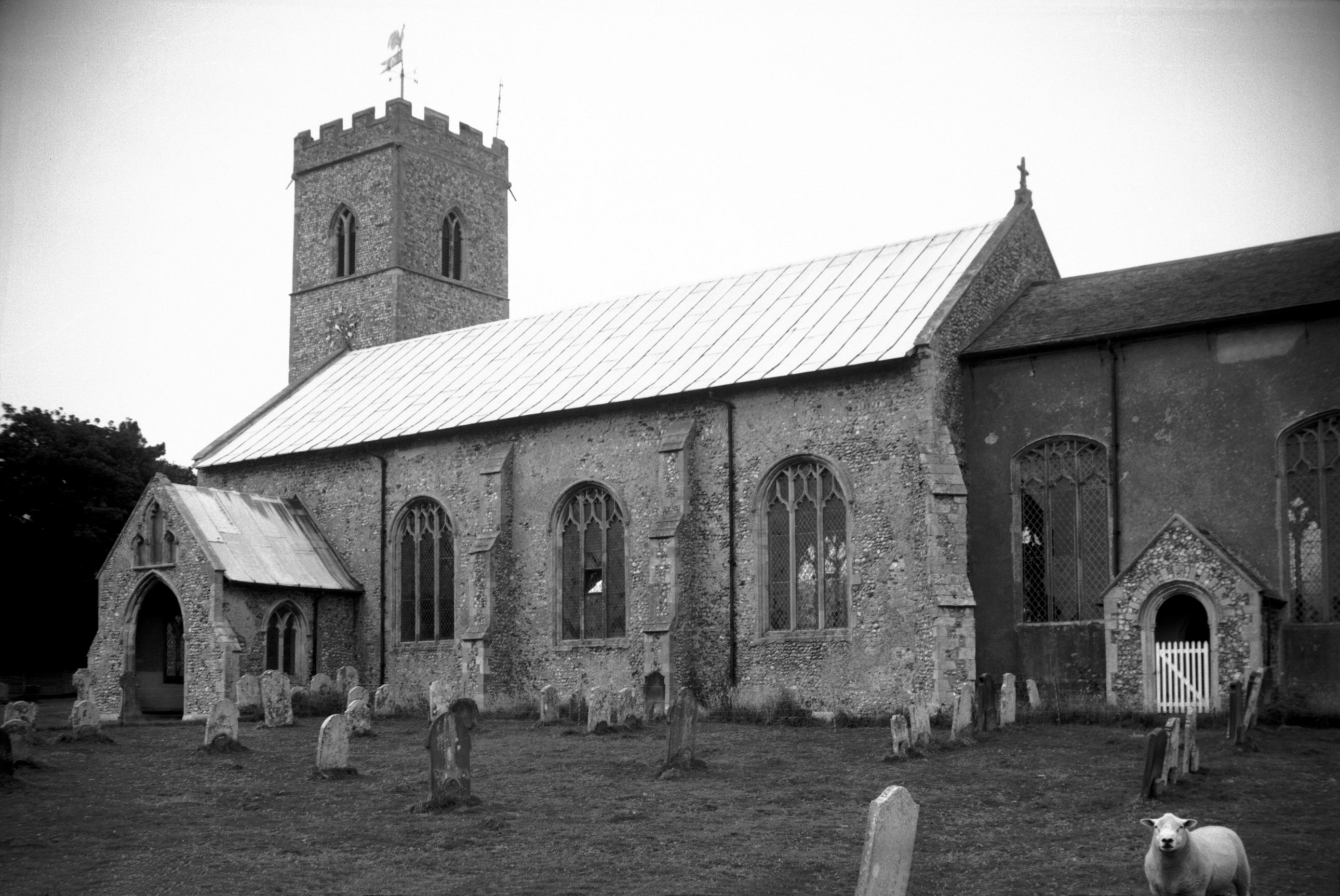
Back to this photo again, we deliberately tried to find the spot where George Plunkett stood to take his photo (in 1993, so this was a later one). His photo is here, so I think that our effort was creditable…..