Category: Central London

  • London – Amen Corner

    London – Amen Corner

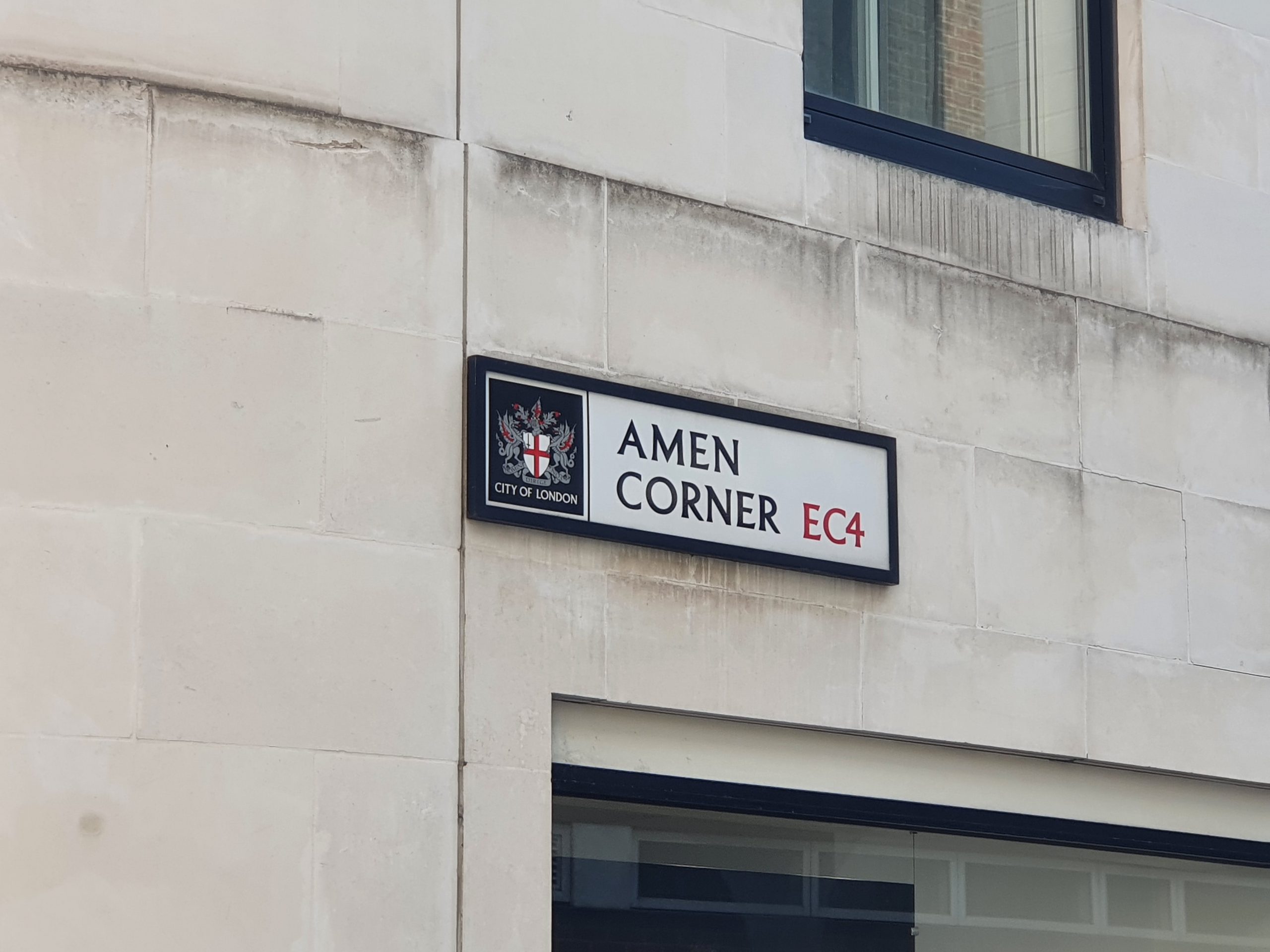
    The beautifully named Amen Corner is located near to St. Paul’s Cathedral, in the bottom-right of the above map from the end of the nineteenth century.

    Although the buildings along Amen Corner are modern (and rather unimpressive), the street-line is original and is unchanged. The street takes its name from when monks used to walk along Paternoster Row chanting the Lord’s Prayer and they would reach the “Amen” section just as they walked down this street, before entering St. Paul’s Cathedral. That’s the story on Wikipedia and the one that’s repeated the most often on-line.

    However, a different reason was given in the nineteenth century, which was that this was where monks would find a corner to repeat their prayers privately, in the hope that they would be fortunate for a whole year. There’s probably more to this story than the perceived origin quoted today, but, I have no idea…..


  • London – Central London (Cordwainer Statue)

    London – Central London (Cordwainer Statue)

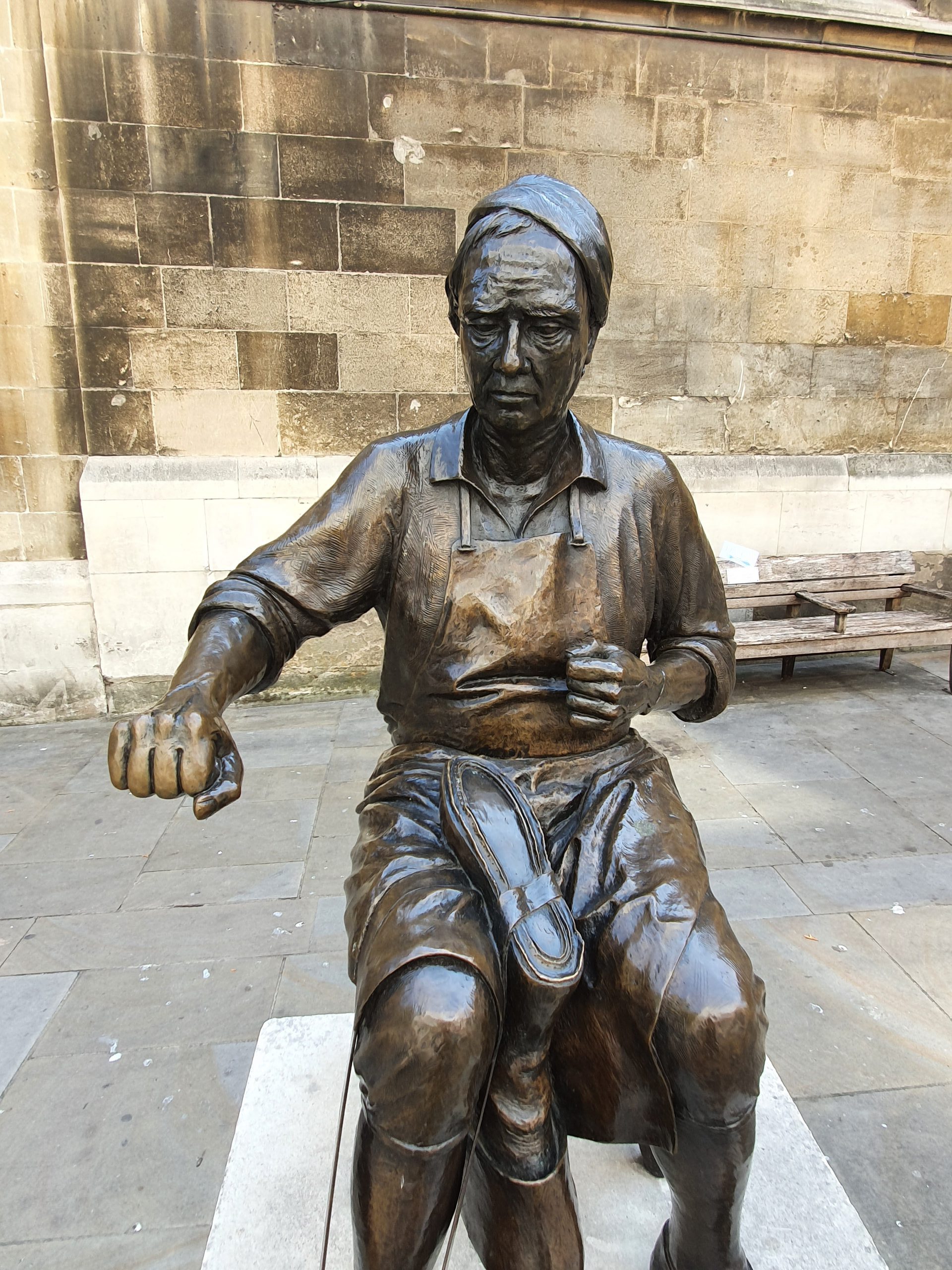
    This statue is located on Watling Street in the ward known as Cordwainer, named after the shoemakers who worked in this area. There’s a difference between a cordwainer and a cobbler, as the former makes shoes and the latter fixes shoes. The word is from the French ‘cordewaner’, meaning shoemaker, which is derived from the Spanish town of Córdoba in Andalusia whether the leather used in shoemaking was often from.

    The statue was commissioned in 2002 by the Ward of Cordwainer Club to mark their centenary. Initially, the statue was placed in the churchyard of St Mary le Bow, but was moved to its current location a couple of years later. The statue is located near to the site of the Livery Hall of the Cordwainers’ Company, where there were six successive halls from 1440 until 1941. When the hall was destroyed in the London Blitz, a decision was made by the company that they wouldn’t construct another. The Worshipful Company of Cordwainers still exists, but they’re primarily a charitable organisation, with some members being descendants of shoe-makers and some working in the industry today. One of their charitable efforts in recent years was a bike ride from Córdoba, where their name began, to London.

  • London – Christ Church Greyfriars

    London – Christ Church Greyfriars

    I haven’t paid much attention to these ruins before, but they have a considerable heritage as they are from a monastic church built in the thirteenth century on what is now Newgate Street. The monastery was dissolved during the Reformation and was turned into a parish church which was given by King Henry VIII to the Mayor of London for the use of the city’s population. This church building was though lost, along with most others in the heart of the city, during the Great Fire of London in 1666. The replacement building was designed by Sir Christopher Wren, but this in turn was unfortunately destroyed in 1940 during the London Blitz.
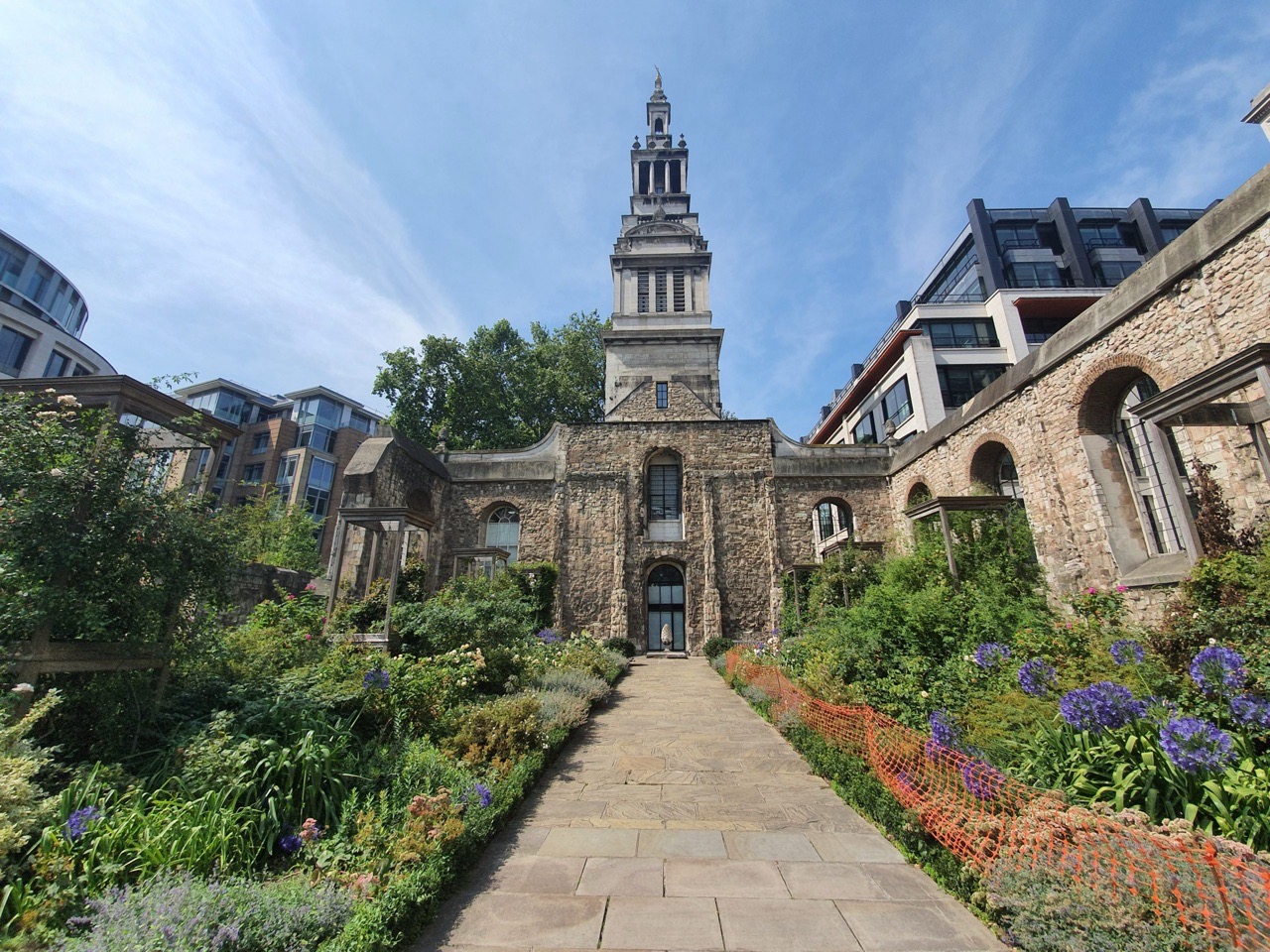
    The few sections of the remaining church still standing were demolished following the end of the Second World War, with the site turned into public gardens. There are some important people who have been buried at this site over the centuries, including Isabella of France (also the Queen of England), Marguerite of France (another Queen of England) and Joan of England (who was the Queen of Scotland). I’m equally confused as to who was Queen of where, but it’s evidence of the importance of the church.

    Some of the surviving arches and it’s positive that it was decided to keep this as a public park, rather than shoving up another office block on the site.

    The former door into the nave.

    The gardens are impressive and before this health scare meant fewer people came into London, I imagine that this was a busy place for those wanting to eat their lunch.

    The tower, which was completed in 1704, survived the London Blitz and was restored in 1960.

    There are many more photos of how the church used to look at https://thecitizensmemorial.wordpress.com/2012/05/19/11/.

  • London – Chinatown

    London – Chinatown

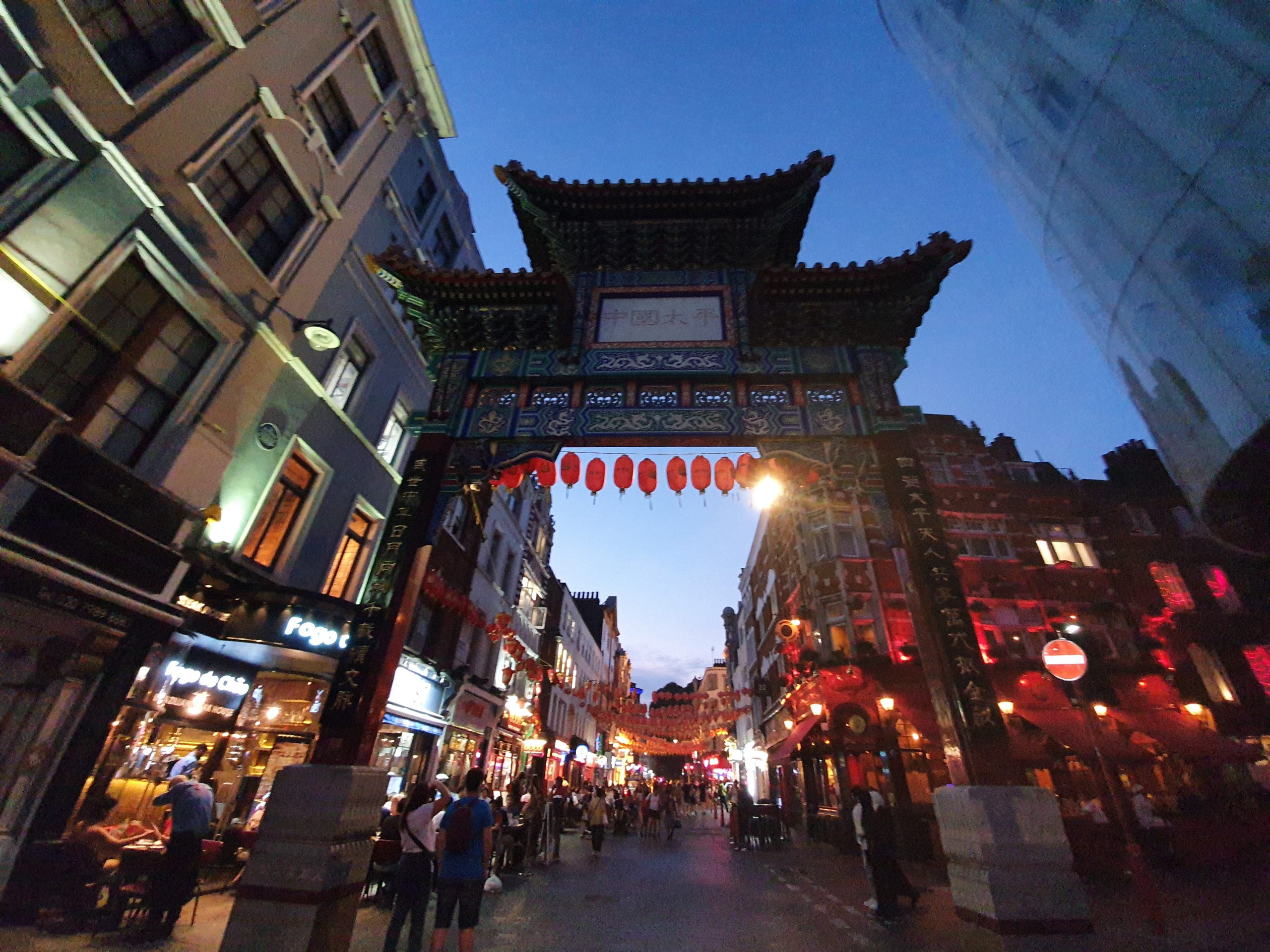
    Some photos from Chinatown in London on Monday evening. Although London had felt quiet all day, there was a bit more vibrancy with people taking part in the Eat Out to Help Out scheme and most restaurants looked pretty full. Within a short distance of Chinatown and Soho though it remained a different matter, numerous restaurants and takeaways not even opening at all this month.

  • London – Quiet on the Underground

    London – Quiet on the Underground

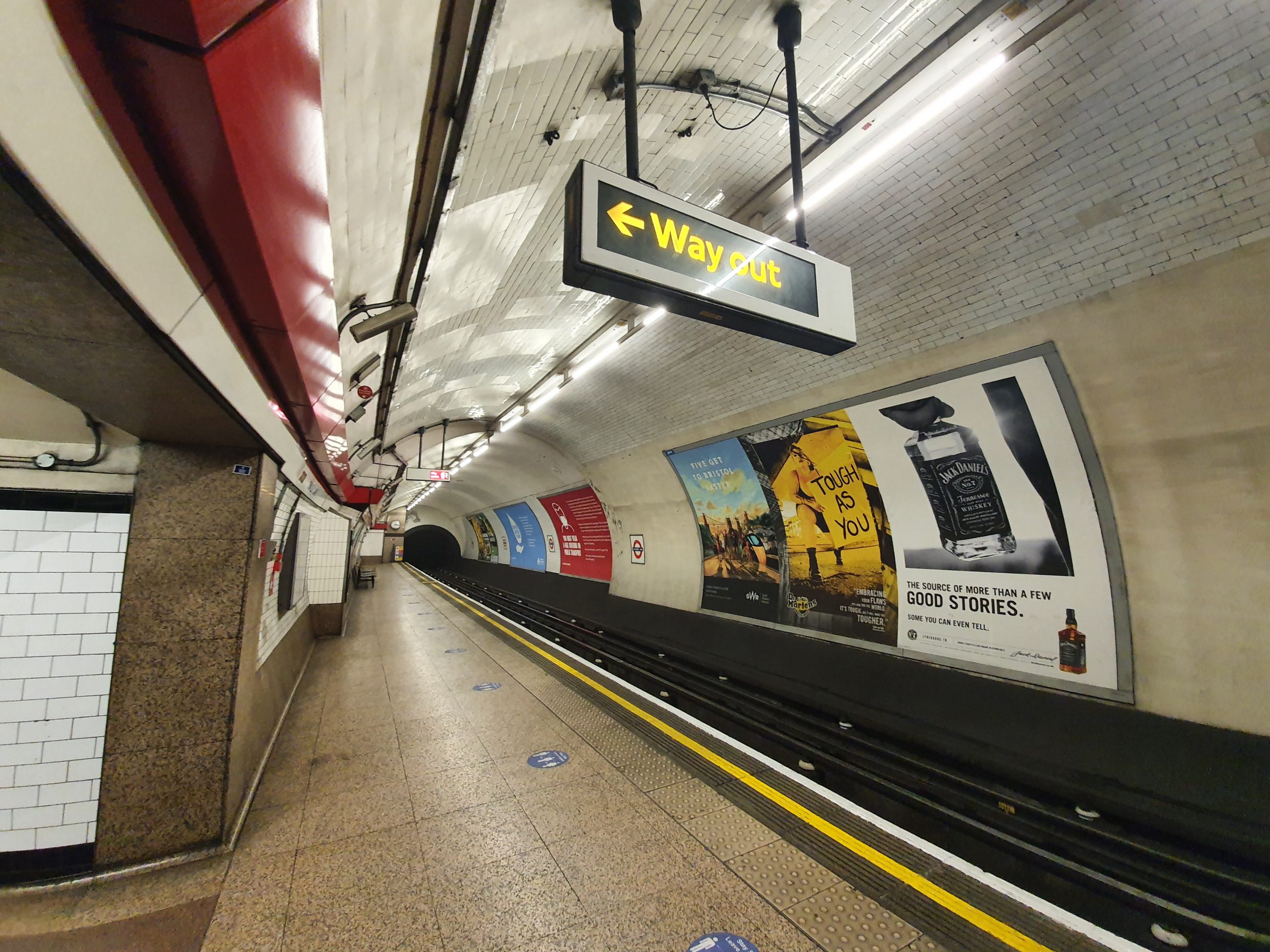
    OK, so Chancery Lane isn’t ever the busiest of London underground stations, but nonetheless, it was eerily quiet this afternoon.

    The packed platform.

    Endless amounts of warnings about social distancing.

    Mind the Gap…. Still quiet at Oxford Street.

    It was a little busier on the Oxford Street platform to get onto the Bakerloo line, but it’s still all rather quiet.

    As for TFL, they’re not doing particularly well at keeping people safe. The first two hand-sanitiser dispensers I tried were empty. So, on a quest to discover how bothered TFL really are, I tried another six more during my journey into Oxford Street. Two worked, another four were empty. I won’t veer into politics, but this really isn’t a particularly good look for TFL and pretty much every other transport operator seems to manage.

    Anyway, I quite enjoyed the quiet network and there was a very high percentage of people wearing masks and lots of social distancing. I did note one man cough and this alarmed a woman who fled the scene but, otherwise, all uneventful.

  • Greater Anglia : Norwich to London Liverpool Street

    Greater Anglia : Norwich to London Liverpool Street

    My last train journey was from Chesterfield to York in March 2020 and I didn’t expect it would take until August 2020 for me to make another. Norwich railway station looks different to when I last used it, with the ticket gates now left open and unmanned. There’s now directional signage around the concourse and a couple of the food outlets, West Cornwall Pasty and Starbucks, haven’t re-opened, nor has Marks & Spencer. It felt moderately busy, but nowhere near what I would have usually expected for a Monday morning.

    Waiting at platform 2, the new style train which serves the Norwich to London line.

    There was plenty of space for customers on board, just a handful of passengers in each carriage. The power points and on-board screens worked on the train, although it wasn’t doing a very good job of air conditioning and not for the first time this week I muttered to myself that it was too hot.

    Safely at London Liverpool Street railway station, the train arrived dead on time.

    The barriers were operating as usual at the station, with revenue protection officers and police questioning a couple of people as I walked by. So, although there’s no ticket barrier at Norwich and tickets aren’t checked on board, there are still mechanisms to ensure people have paid their fares. The concourse was relatively quiet and someone asked me how they could get out of the railway station, something I didn’t think was particularly challenging, but there we go. Once outside, it became evident to me just how quiet London currently is….

  • London – British Museum (Postwick Grove, Norwich)

    London – British Museum (Postwick Grove, Norwich)

    I usually visit the British Museum three or four times a year, something which is a little difficult to do with the current virus situation, primarily because it’s shut. However, they’ve placed hundreds of thousands of images on their web-site, so this will have to do me for the moment. The images can be used non-commercially, as long as the British Museum is credited. So, this is their credit.

    I like this print which is in the collections of the British Museum as it’s painted at Postwick Grove. I’d never heard of this place until we walked through it on Saturday, but it’s a once quiet area of the city where painters would come and be inspired by the peace and countryside. These painters would have also walked the similar route to the one we did on our 22-mile walk (more on that soon), although they didn’t have to cross the Norwich Southern Bypass.

    The print was produced by John Sell Cotman and there’s no precise production date, just sometime between the dates of 1813 and 1838. Handily the museum knows that it’s from before 1838 as Cotman included it in a book which he produced in that year, the ‘Liber Studiorum – A Series of Sketches and Studies’ published by HG Bohn. The print isn’t on display in the museum and was acquired by them in 1902 from James Reeve, a long-time custodian of the Norwich Castle Museum.

    This is what the artists would have seen at Postwick Grove, with the railway line to Reedham and Great Yarmouth to the top of the image, but it’s missing the huge dual carriageway which now ploughs vertically through the area. The addition of the Norwich Park and Ride parking area hasn’t done much for the peace and quiet either, but there is still an element of tranquility left.

  • London – British Museum (Ship Tavern, Great Yarmouth)

    London – British Museum (Ship Tavern, Great Yarmouth)

    I usually visit the British Museum three or four times a year, something which is a little difficult to do with the current virus situation, primarily because it’s shut. However, they’ve placed hundreds of thousands of images on their web-site, so this will have to do me for the moment. The images can be used non-commercially, as long as the British Museum is credited. So, this is their credit.

    I’m not sure that there’s much advertising from pubs at the turn of the nineteenth century surviving, especially not in two languages. But this advertising card in English and German is now in the collection of the British Museum and they acquired it in 1960 from the estate of Sir Ambrose Heal. Heal was a collector of trade cards, and had a large number in his collection, as well being the chairman of Heal’s on Tottenham Court Road, which is still trading.

    The Ship Tavern is though sadly no longer trading, it lasted from the 1760s until 2010, being located next to Row 84 in the town. But there’s something quite captivating about how multi-national the docks and port of Great Yarmouth once were. Indeed, in 1797 this pub had welcomed (I use welcomed slightly loosely here….) Dutch naval prisoners from the Battle of Camperdown. As for William Ungleman who produced these trade cards, he ran the pub between September 1809 and 1819, but I have no idea where he went after that.

  • London – British Museum (Bishopgate Bridge by John Thirtle)

    London – British Museum (Bishopgate Bridge by John Thirtle)

    I usually visit the British Museum three or four times a year, something which is a little difficult to do with the current virus situation, primarily because it’s shut. However, they’ve placed hundreds of thousands of images on their web-site, so this will have to do me for the moment. The images can be used non-commercially, as long as the British Museum is credited. So, this is their credit.

    This drawing was made by John Thirtle, likely at the very end of the eighteenth century or the early part of the nineteenth century. The museum purchased the drawing from Andrew Wyld in 1977, a dealer in fine art. Like nearly everything I seem to look up, this artwork isn’t on public display and they don’t seem to have used it in any exhibitions or the like. It’s a pen and grey ink drawing with a grey wash, showing Bishopgate Bridge. Thirtle is buried in the Rosary Cemetery, a reminder to myself that I should go and have another investigation there as I haven’t visited in a while.

    I think this photo was taken from around the same place as the above drawing was made, I was slightly hampered by three things. One were bushes, one was a big tree and the other was a blasted fence where I wanted to stand to take the photo. I didn’t fancy having any little incidents by climbing over that small fence and falling into the River Wensum, so this is the best that I could safely get.

  • London – British Museum (Great Yarmouth Fisher Girl by John Sell Cotman)

    London – British Museum (Great Yarmouth Fisher Girl by John Sell Cotman)

    I usually visit the British Museum three or four times a year, something which is a little difficult to do with the current virus situation, primarily because it’s shut. However, they’ve placed hundreds of thousands of images on their web-site, so this will have to do me for the moment. The images can be used non-commercially, as long as the British Museum is credited. So, this is their credit.

    A watercolour of a fishwife in Great Yarmouth by John Sell Cotman (1782-1842) which was acquired by the British Museum in 1902 from James Reeve. They don’t know when it was painted, but Cotman lived in Great Yarmouth between 1812 and 1823, so it was probably then. There’s something quite intriguing about this one-eyed lady, standing in front of a lottery sign, with her key at her waist and her fish on her head. I’m not sure that I can think of another painting which is more evocative of Great Yarmouth at that time. I’m equally unsure what that says about Great Yarmouth or me, but there we go….