Category: Camden (Borough of)

  • London – Camden (Borough of) – Ye Olde Mitre

    London – Camden (Borough of) – Ye Olde Mitre

    This is an interesting pub to get to, I walked by these gates into Ely Place and this takes its name from when it was the site of the London residence of the Bishop of Ely. The road has its own Wikipedia page for anyone interested in the history of this area and that saves me writing about it here…..

    This is the little alley that the pub is located down, although I think there’s another entrance from the other side, but either way, this pub is one that has to be actively looked for rather than stumbled upon. That all makes it a little more exciting.

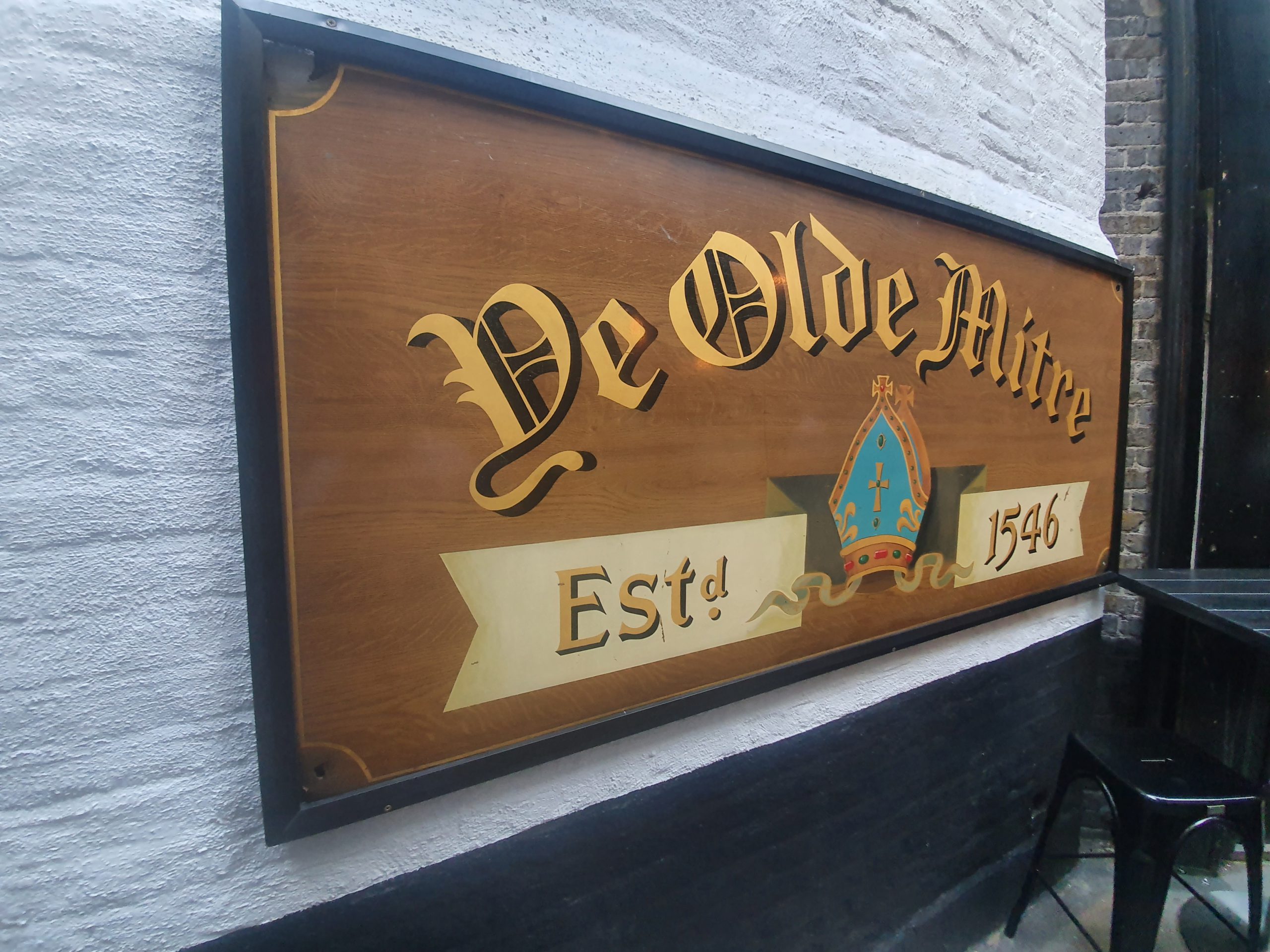
    There has been a pub on this site since around 1546, when it was used by the servants who worked at the Bishop’s house, and I can’t imagine that the bishop himself would have meandered along. Although who knows…. Anyway, the site was cleared when it was taken over by the Crown in 1772, which is when the current building dates from. It was renovated in the early twentieth century and it retains that layout today.

    The pub note on their web-site: (NB, I’ve changed hung to hanged, as I am still slightly [some may say very] annoying in believing meat is hung and dead human bodies are hanged, not that it really matters….).

    “The Ye Olde Mitre is famous for having a cherry tree, (now supporting the front) that Queen Elizabeth once danced around with Sir Christopher Hatton. The pub was actually a part of Cambridge (Ely being in Cambridge) and the licencees used to have to go there for their licence. Set in a part of London steeped in history, it’s near where William Wallace was hanged, drawn and quartered at Smithfield, along with martyrs and traitors who were also killed nearby.”

    This is unfortunately another pub that in non Covid times that I would have walked around a bit more to see the history and heritage. I did go and have a little look at the rear beer garden, and there’s also seating at the front. These areas were a little bit busier, but there were tables free in both sections so the pub was far from busy.

    There was a prompt welcome from a friendly and personable staff member when I arrived and I was offered a table either inside or outside. I prefer inside so that I can at least have a look at the pub’s interior (and outside is often home to wasps and other bitey things) and the staff member said “I think we can just about squeeze you in”. As can be seen from the photo above, he managed to fit me in….

    The beer selection wasn’t too bad, I went for a quick half of the Windsor Knot, an acceptable beer from the Windsor & Eton brewery that I had a few months ago as well. The staff members were all welcoming and there was a relaxed feel to the arrangements here. I suspect that this is one of those pubs that if you moved into a property nearby that you’d be made to feel welcome if you wanted to make this your local. The only downside is that this is a small pub, and it’s only these exceptional times that meant I found it so easy to get a table. Normally there would likely be more tourists, more city workers and just more visitors to the area.

    The pub is in the Good Beer Guide, so that’s another one visited. For its heritage alone, I can see why its listed, and I found it perfectly friendly and welcoming. I would have, as ever, preferred a slightly more decadent beer choice than that provided by Fuller’s, but it could have been much worse. Definitely one worth visiting.
  • London – Camden (Borough of) – The Hardy Tree

    London – Camden (Borough of) – The Hardy Tree

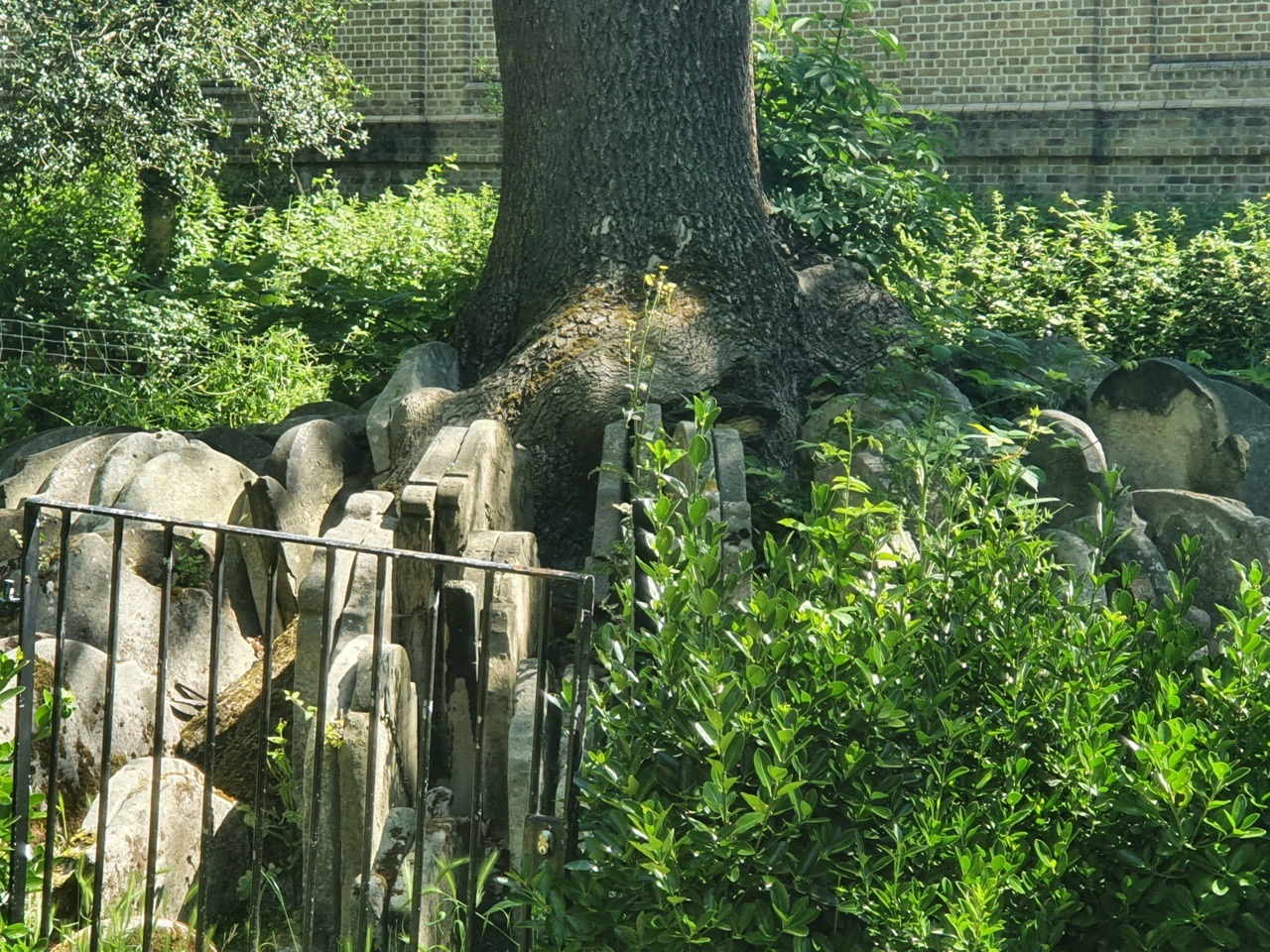
    This ash tree is located in St. Pancras Old Church, located just a short walk away from St. Pancras railway station. And the railway is relevant here as in the 1860s a new line was needed which ploughed straight through the middle of the church’s graveyard. A decision was made to carefully move all of the bodies to another location, but that meant there were a big heap of gravestones that needed to be dealt with.

    The task of dealing with this problem was given to Arthur Blomfield (1829-1899) who was a leading architect who designed and modernised countless churches and other buildings. Blomfield really didn’t want to deal with the moving of the bodies (which all ended up together in a large hole), or indeed the moving of the gravestones either, so he gave that little task to his assistant Thomas Hardy (1840-1928). Fortunately, Hardy is now better known for his literary achievements later on in his life rather than moving bodies and gravestones around.

    Since Hardy’s time, the tree has become bigger and started to almost take on the gravestones as part of its own growth. The stones have been preserved, but they will likely never be moved from their location, which brings an interesting question about whether it was a useful preservation. It has though become a little bit of a tourist attraction and there’s now fencing around the area to stop people even getting up as close as the iron railings around the tree.

    I think it’s quite majestic, putting aside the caveat that I like gravestones to be accessible and readable. I note that there are quite a number of tombs in the current graveyard and although I don’t know, I suspect that these were moved with rather more care than the individual gravestones were. Wealth can be a very useful thing, even in death.

    This whole burial ground has had a slightly traumatic history as not only have many of the bodies been removed for the railway, many were also removed in the early nineteenth century by body-snatchers wanting to sell cadavers to medical schools.

  • London – Camden (Borough of) – Regent’s Canal Walk

    London – Camden (Borough of) – Regent’s Canal Walk

    Just photos on this post from my little meander along the Regent’s Canal. This is quite a beautiful nine-mile walk, connecting into locations such as London Zoo, Camden, Little Venice, Regent’s Park and King’s Cross, amongst many other locations. Work on the canal started in 1812, with the first section being completed in 1816. Projects like this, given the tools of the time, are hard not to be impressed by, they were large scale and complex construction efforts.

    The railway rather changed the commercial viability of the canal and there were several plans to build a railway line alongside it, although these didn’t get permission in Parliament. Today, the area is easy to walk along and although some stretches are inevitably busy, there are quieter parts where I didn’t see anyone for quite a way. I didn’t complete the entire route on this visit, but I might go back at some point and write something more substantial about this walk, one of my favourite in London. There’s something nice about being in central London, but feeling that the location is a little more remote and away from it all.

  • London – Camden (Borough of) – Little Creatures London

    London – Camden (Borough of) – Little Creatures London

    I had only vaguely heard of Little Creatures, but they’re a United States operation which has now expanded to locations mostly in Asia and Australasia, but also now in London. They’ve got themselves quite an on-trend location in the new area to the north of King’s Cross St Pancras, which is all rather in keeping with their modern image.

    All modern and shiny inside, although it wasn’t overly busy when I arrived in the early evening. The staff here are suitably engaging as I would expect for a chain such as this, friendly and welcoming. They serve food as well such as burgers and flatbreads, and they even have cauliflower bites for those who fancy nibbling on, well, a cauliflower.

    Little Creatures are very much about their IPA, so I didn’t go for their beer and instead went for two options from Fourpure brewery, which were the Citrus Session IPA and the Last Train stout. Not necessarily the cheapest, but the on-line ordering system was easy enough to use. There is poor phone signal in the premises, which the staff warn customers about when they arrive, so it’s fairly essential to connect to the free wi-fi. The beer isn’t perhaps the most exotic either, they stock a fair chunk of Magic Rock Brewing products and although I like those, they’re easy to find in supermarkets.

    Anyway, this was all a nice environment, welcoming, clean and organised. For the ideal visit, perhaps some rather more decadent or unique beers might be a useful innovation. All on-trend and comfortable though, not a bad choice for a group visit.

  • London – Camden (Borough of) – Hampstead Heath Sightline

    London – Camden (Borough of) – Hampstead Heath Sightline

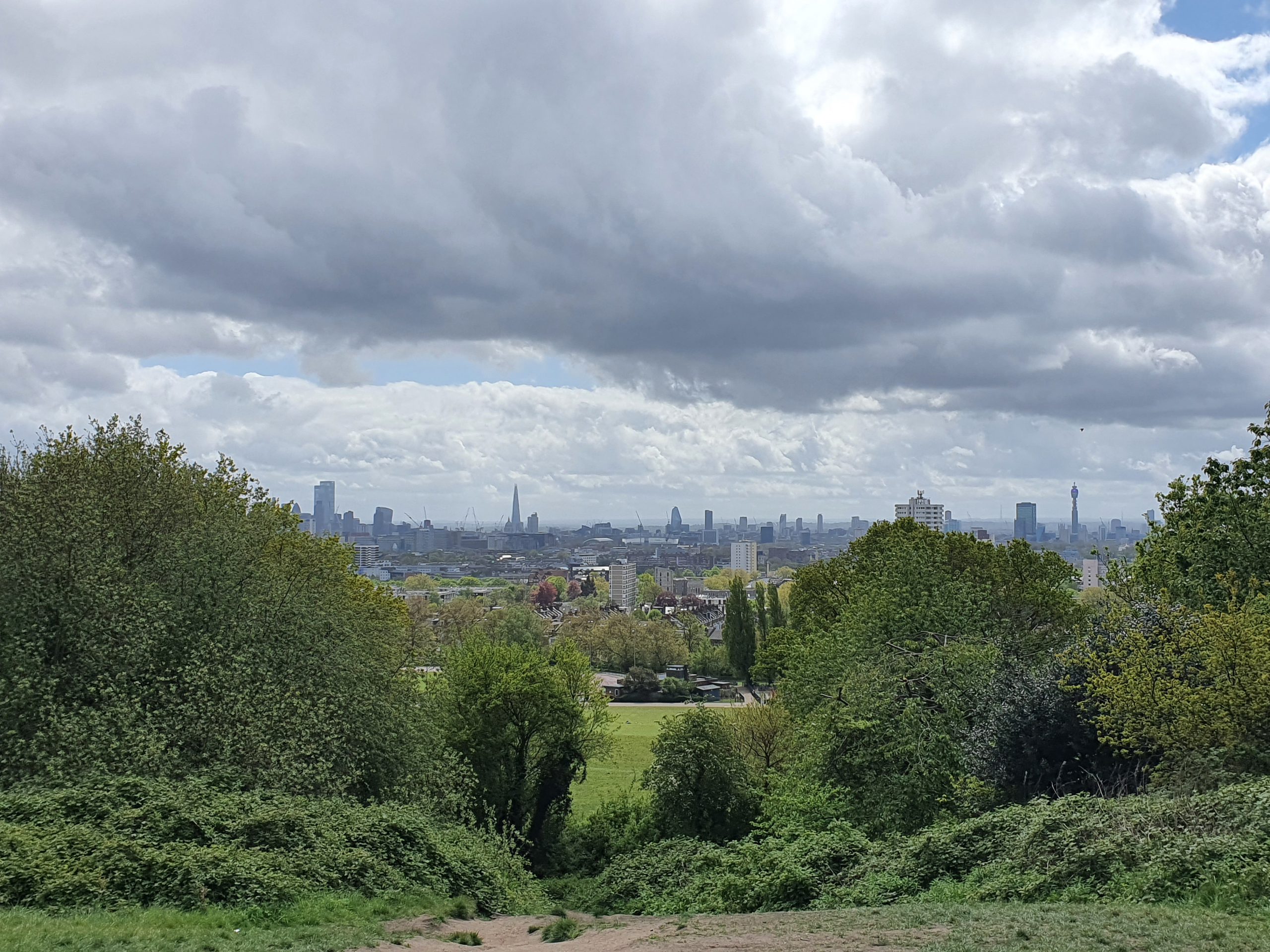
    There are a number of these protected views and sightlines in London and they’re listed on Wikipedia. This is from Parliament Hill in Hampstead Heath and I think it’s quite beautiful. Clicking on the image makes it larger and it’s possible to see not just the big skyscrapers, but also buildings such as St. Paul’s Cathedral which are all about six or so miles away.

    A slightly different view and this is the spot where it’s said that Guy Fawkes and Robert Catesby stood on 5 November 1605 when waiting to see if the Houses of Parliament blew up. There’s no certainty about this at all, but it seems conceivable and it would have been easy to see the destruction of the buildings if the plot had been successful.

    The name of Parliament Hill isn’t from the view, it’s thought to be from when the Parliamentary troops were stationed here during the English Civil War. Incidentally, it’s also the highest point in London, standing at 98 metres in height, so that’s another mountain that I’ve climbed.

    There are numerous benches for people to sit and gaze over London city centre, along with a little map of the various things to look out for.

    The BT Tower is the most obvious in this photo, but just to the left of that is the Houses of Parliament.

  • London – Camden (Borough of) – The Stone of Free Speech

    London – Camden (Borough of) – The Stone of Free Speech

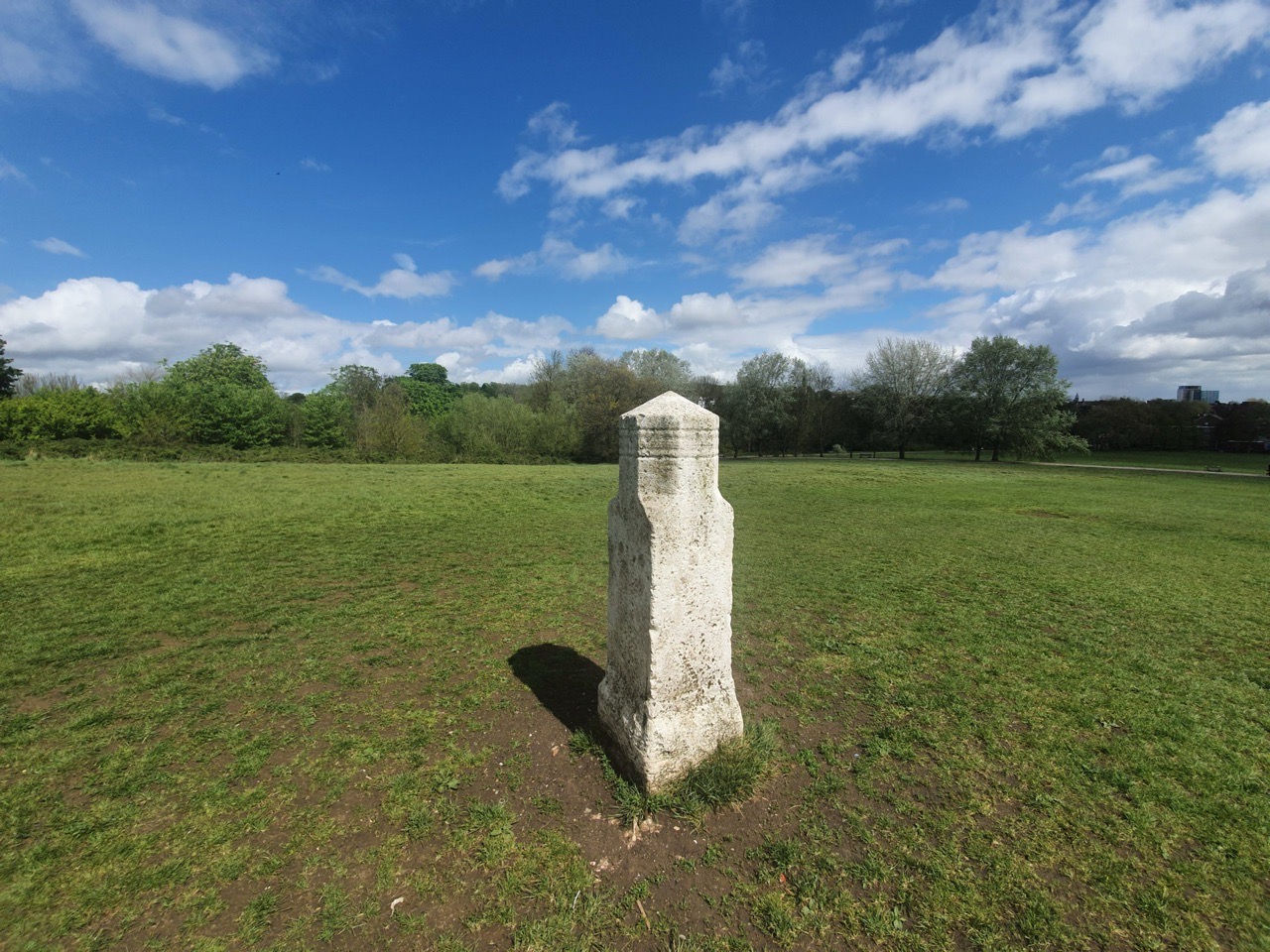
    This ‘stone of free speech’ looked quite exciting on the map, although it was perhaps just a little less riveting when I got to it. However, it’s said that this might have some considerable heritage, although all of the evidence appears to be a little woolly.

    The official Hampstead Heath web-site says that “the origins are sketchy”, which often just means someone made it up about 30 years ago and no-one can really disprove it now. It might though have been the centre for religious and political meetings in the eighteenth and nineteenth centuries, and that is quite exciting if it’s true. I can’t find any mention of it though in newspapers from the nineteenth century, so even if it did exist then, I’m not convinced that had a reputation for being the location in the park for free speech.

    The myth suggests that this stone dates from the late seventeenth century and it could have been some form of marker post for surveying perhaps. I don’t know if it was at this exact spot, but there was a suffragette meeting at the park in April 1913, but the female speakers were shouted down and then what the media called “a youth” chucked a wooden box at the speaker. After twenty minutes of this, the police decided they were stopping the meeting and so everyone went home.

    Even if it’s not true, I like the idea that large meetings took place here in the open air, so I’ve decided I buy into the whole concept.

  • London – Camden – British Museum (Rosetta Stone)

    London – Camden – British Museum (Rosetta Stone)

    This was from my visit to the British Museum a few weeks ago, the most viewed object in the collections apparently. This has meant that I’ve never really seen it that clearly before, it’s like the Mona Lisa at the Louvre, there are nearly always other visitors standing there and taking photos in front of it. Hence why I took so many photos of it this time with the museum being so empty when I visited in late October.

    There’s not much point writing much about the Rosetta Stone, it’s done much better in countless other places. But it dates to 196BC and it was rediscovered by the French in 1799, with the British deciding that they wanted it in 1802. The stone went to the British Museum in the same year and it has been there ever since. As visitors kept fiddling with it, the stone was barriered off in 1847, not that this stopped some people. Since 2004 it has been placed behind a rather more secure screen.


  • London – Camden – British Museum (Misaligned Healed Fracture)

    London – Camden – British Museum (Misaligned Healed Fracture)

    This doesn’t look quite as painful as the damaged spine, but this badly reset right femur must have been awkward as well. The bone was found in Upper Egypt and was acquired by the British Museum in 1902. The bone is from a mummy, so I’m not sure where the rest of the body is.

  • London – Camden – British Museum (Roman or Brazilian?)

    London – Camden – British Museum (Roman or Brazilian?)

    I like random exhibits like this, which is on the theme of mistaken identity at the British Museum. These pots were found off Herne Bay in Kent in 1776 and were presented to the museum. They weren’t thought to be of a good enough quality to be Roman, so it was decided that they were “probably Brazilian”. I’m not quite sure what that says about what the thoughts were of the time about Brazilian pottery, but it transpired later on that these were indeed Roman and a ship had been wrecked whilst bringing this Samian ware over from Gaul.

  • London – Camden (Borough of) – Wellcome Collection

    London – Camden (Borough of) – Wellcome Collection

    I can’t really be negative about places which don’t charge for admission, as that feels unfair. But, I really didn’t connect or engage with the Wellcome Collection at all, although I think to be fair to them, the gallery on medicine that might have interested me hasn’t re-opened yet. The staff were helpful at the entrance to the collection, although they are heavily over-staffed for the number of visitors.

    The most interesting element to me was the interior design of the building. And a note on the directional arrows, they entirely confused me as they went around in circles. I think I left via the entrance door, but I have no idea as the exit just kept pointing visitors back around to where they started. It’s fair to say that I am hopeless at following directions if they’re not clear, but now the British Museum has made everything obvious, I thought I was getting there. Anyway, I digress.
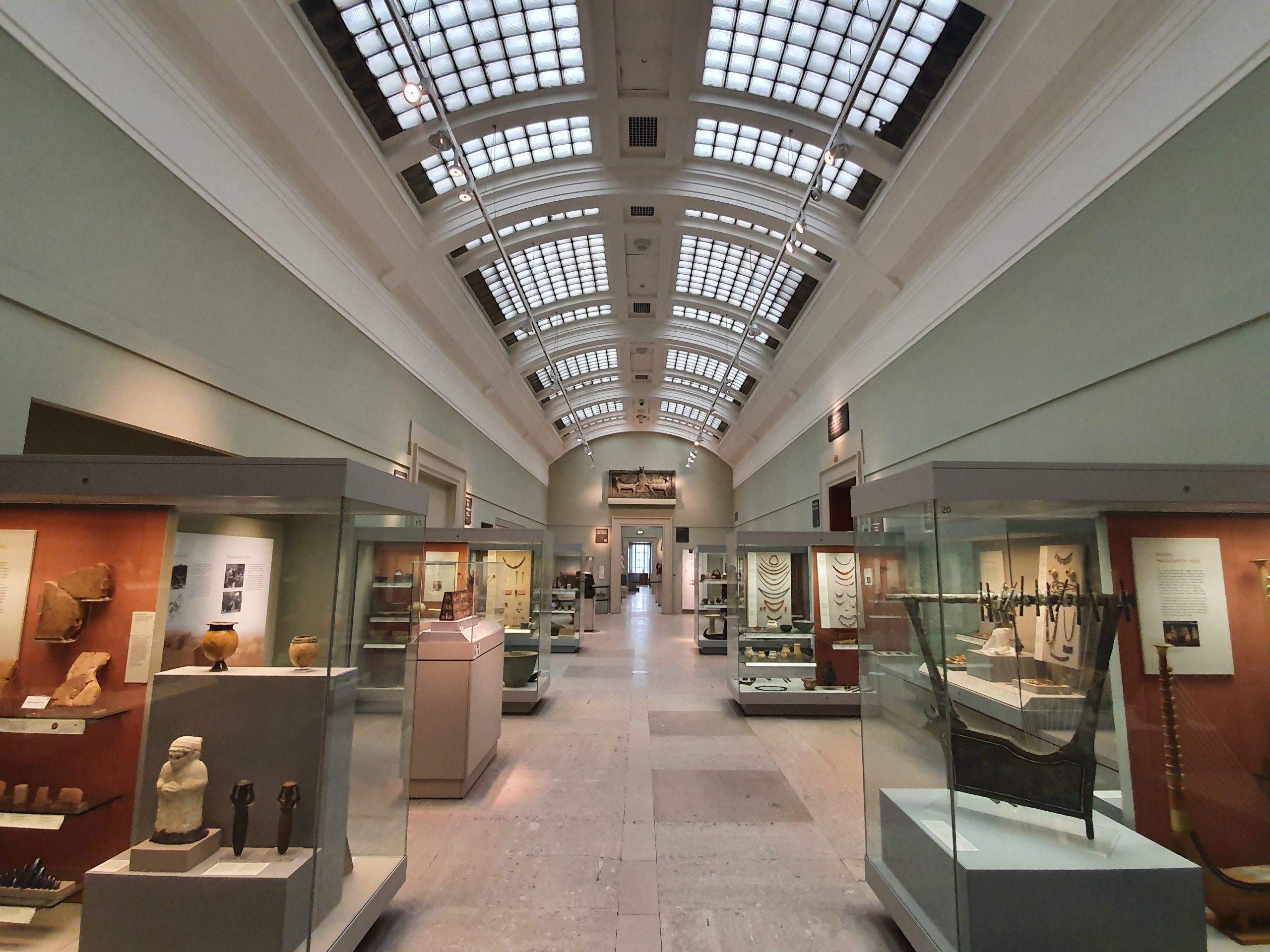
    I don’t have much to really write about the Being Human permanent gallery, I struggled to drag out any stories at all on anything. It was all too obscure and old-fashioned in its style for me to really engage with.

    There’s a video of a McDonald’s flooding which is meant to have lots of meanings. I watched about fifteen seconds, but if anyone is enthralled by this concept, then there’s more at https://www.youtube.com/watch?v=gsJsb2BKBLE. I’m guessing the symbolism is meant to be that McDonald’s aren’t doing enough on climate change.

    These are discs which are made out of HIV positive blood. I have no idea what they’re supposed to represent, but I went to the Wellcome Collection’s web-site catalogue to find out more, but they’re not listed.

    I think part of my lack of engagement is the gallery is focused on audio, and I don’t like exhibits which exclude, ideally just have both audio and text. I’m puzzled how the gallery claims they are inclusive, but there we go. It’s well-reviewed, so others liked it a lot more than I did. It was all a bit over-engineered for my liking, but maybe the Medicine Man is a bit more engaging and that re-opens in November.