Category: Essex

  • Chelmsford – Disgusting Offence

    Chelmsford – Disgusting Offence

    As an aside, and not one of the most decadent things that I’ve written about, this type of story is alarmingly common in nineteenth century newspapers. The crime relates to the village of Margaretting, which is a few miles to the south of Chelmsford, but which was tried in the city’s courts. The exact nature of the crime it’s best to leave to the imagination, although it was one punishable by the death penalty.

    The Chelmsford Chronicle reported this in January 1860:

    “George Brazier, labourer, was charged with committing a disgusting offence at Margaretting on the 23rd December. The evidence not being sufficient to support the capital offence, the case was dismissed. Brazier was then charged upon the same evidence, with cruelly treating a donkey, and was convicted in a penalty of £2 10s and 8s costs, or six weeks’ imprisonment”.

    £2 10s is worth around £150 in today’s money, so George got off quite lightly given what the potential punishment could have been.

  • Chelmsford – Chelmsford Cathedral and 1832 Great Reform Act

    Chelmsford – Chelmsford Cathedral and 1832 Great Reform Act

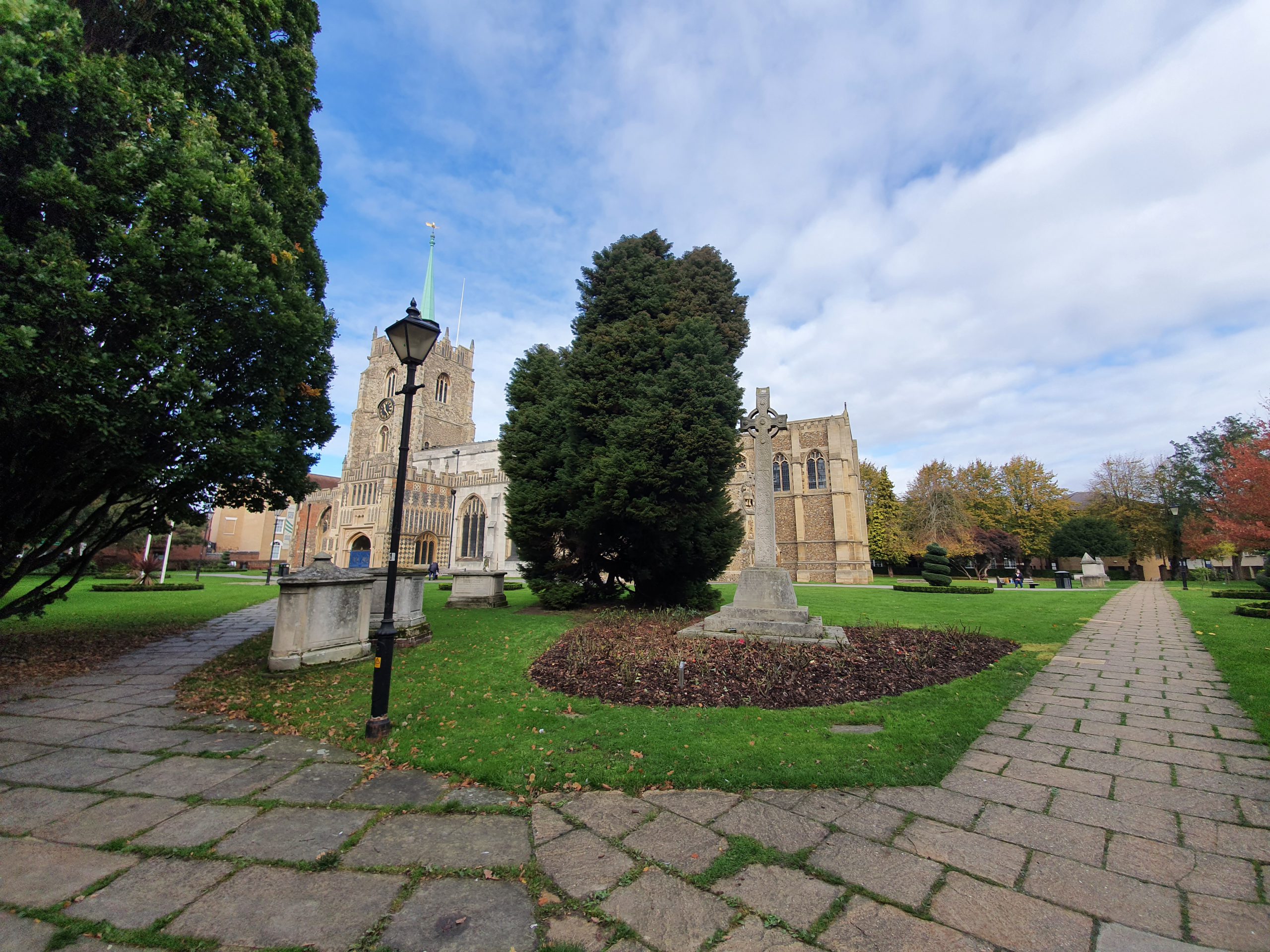
    I quite liked this story from the Chelmsford Chronicle in 1832, which was written after the passing of the Great Reform Act, a bit change for the entire country. I can imagine the clash between the characters at what is now Chelmsford Cathedral, although was a parish church back then, when some thought the bells should be used as part of the exuberant celebrations.

    “On the receipt of the news here on Tuesday morning, of the passing of the Reform Bill by the Lords, the flag was hoisted upon the Church, and the ringers were set to work. The bells were going merrily round, and the firing was performed with more than usual precision, when the ringers were ordered to desist by a churchwarden in person, who, with his usual courtesy, ejected the Bob-Majora and the TrebleBobs from the church, and the flag was taken down.

    A request was, however, made for a renewal of the harmonious peal, not only to the Churchwarden but also to the Rector, and the circumstance of the bells having been permitted to ring in October last, when the Bill was rejected by the Lords, was advanced in justification of such a request, and as a proof of inconsistency if denied.

    The Churchwarden not only refused, but declared that so long as he remained in office, the bells should not again be rung to celebrate any political event! The Rector received the party with much courtesy, and after hearing their argument in favour of the application, acknowledged that the example adduced was a sufficient excuse for what had already occurred, and to the ringing of the bells on the present occasion he should not individually have objected, had the consent of the Churchwardens been obtained, but he felt bound to support the parish officers, although, the Rev. Gentleman intimated, the bells were strictly under his control. The result of the application disappointed many of the inhabitants.

    In the course of the day the ringers ventured to resume their amusement, and the flag was rehoisted, but the Rector came into the town, and finding that the consent of the Churchwardens had not been obtained, he interferred his authority and these rejoicings were frustrated. The Rev. Gentleman at the same times very politely wrote a note to one of the applicants, repeating the original objections. Thus disappointed, the Reformers dispatched a messenger for the Baddow musical Band, who in the evening arrived and played many loyal and constitutional airs, whilst the ringers paraded another part of the town with their musical hand bells, in which they are allowed to excel. The two bands played in different parts of the town, and were each followed by a great number of persons, who appeared to take a lively interest in the event. The whole passed off in the most peaceful and creditable manner.”

  • c2c : Basildon to Upminster

    c2c : Basildon to Upminster

    How beautiful Basildon’s railway station looks from the exterior…. It’s a relatively new railway station, opened in 1974 on an existing railway line to deal with the increasing number of people living in the new town of Basildon.

    I’ve seen more beautiful railway stations. I couldn’t buy this ticket on-line using GWR, who I usually purchase from (I get Nectar points), it said that the journey wasn’t valid. There must have been some timetabling issues, but I was able to buy a ticket from the machines as Basildon. It’s quite an expensive ticket at over £6 for the short journey, but there’s no other public transport that I can see that made this journey.

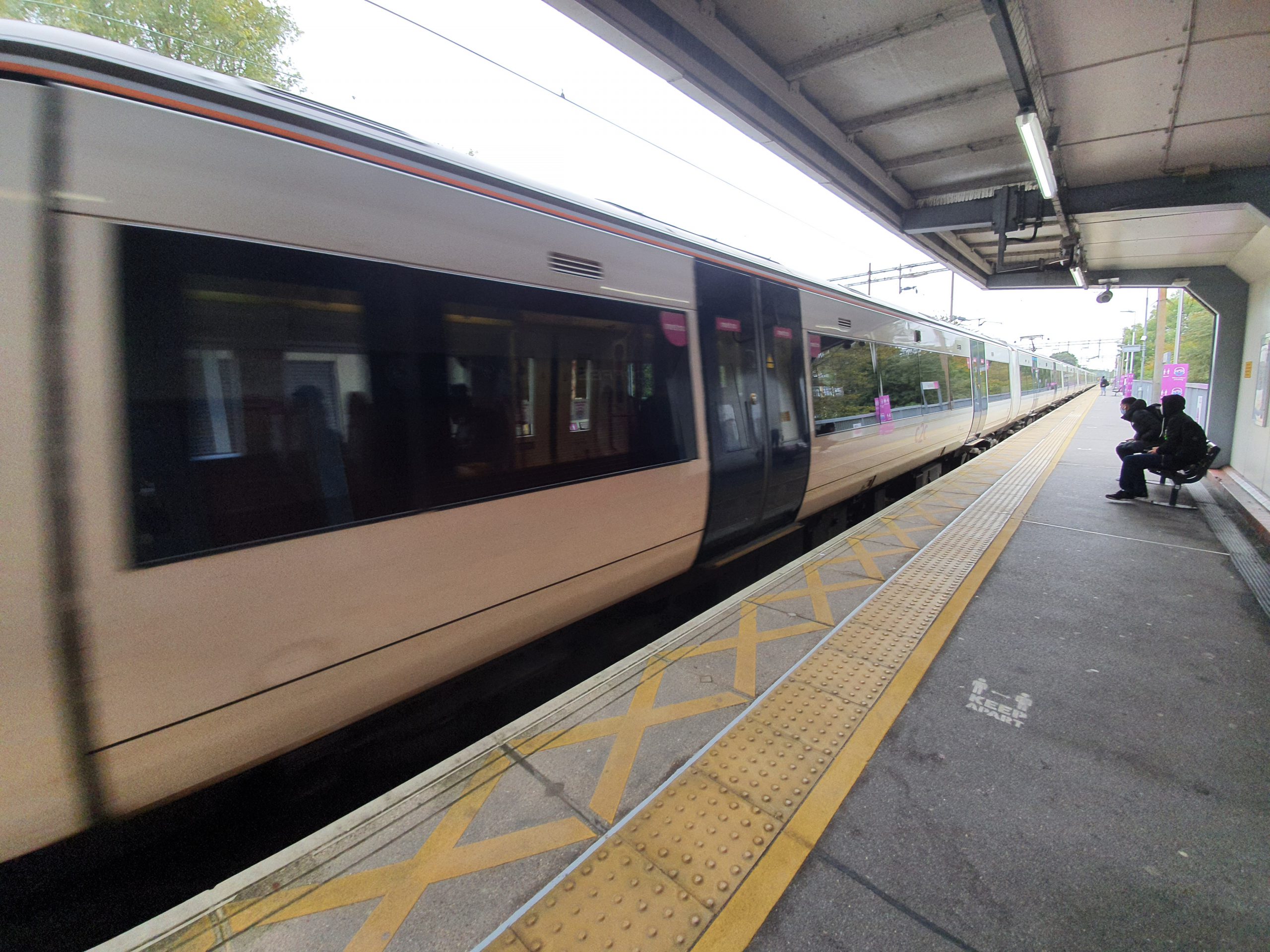
    The train wasn’t particularly busy and nor was it very clean either, with a fair amount of litter around. I’m entirely reliant on Wikipedia to work out what kind of train this is, but it’s apparently a Bombardier Electrostar Class 357.

    And arriving into Upminster on time. The train was getting a little busier by this point, although there were plenty of seats still available. From here, the train goes into London and arrives at Fenchurch Street in the city centre.

    Upminster railway station isn’t really the most beautiful in the world either, with this section of the station being added in 1932. The railway station itself though dates from 1885 when it was built by the London, Tilbury and Southend Railway.

  • Basildon – Premier Inn Basildon Festival Park

    Basildon – Premier Inn Basildon Festival Park

    This Premier Inn at Festival Park was keenly priced and isn’t too far away from the beating heart of Basildon town centre. I say beating heart because it’s nice to be polite.

    The welcome at the hotel was friendly and the room was clean and well-equipped. I liked that they had a large fan, although this is because there’s no air conditioning of note. Everything was well maintained in the room, although the fan in the bathroom sounded like an Airbus A380 taking off.

    The problem Premier Inn have, or as far as I’m concerned, is that they’ve skimped on the construction costs of their hotels. I’ve experienced before the problems they have with internal noise, and this hotel suffered badly from noise from all sides, let alone guests shouting. A lot of this problem is cheapness of the internal fit-out, a shame given that the room itself feels like it’s had some money spent on it.

    Internal noise in hotels annoys me far more than external noise, as I like the sound of roads and city outside the window. But creaking doors from other rooms and it sounding like people are rearranging furniture above can feel a bit intrusive. I’m probably one of the few people who is excited by a room next a busy road or railway station, so I’m not that demanding in this regard. In other regards, I’m a nightmare, but that’s a different matter.

    Anyway, all was OK with the stay overall, but buildings like this could perhaps do with being knocked down and rebuilt. I suspect that Premier Inn and Whitbread might not be sure of that sort of strategy though. But, for the first time I’d say in the best part of a decade, I do get the impression that Travelodge are moving back ahead of Premier Inn. That’s not borne out by customer reviews on-line, but the difference between the two is now very narrow and a few years ago, Travelodge was a country mile behind.

    I struggle not to think of Alan Partridge and his big plate, but that might just be because I live in Norwich….

  • Basildon – Holy Cross Church

    Basildon – Holy Cross Church

    There wasn’t much in Basildon when this map was published, around 100 years ago. Holy Cross Church was fairly alone in the landscape, along with a nearby moated house, both of which survive in the modern urban landscape.

    There has been a religious building at this site since at least the early thirteenth century, although the current church is newer. The chancel dates to the late sixteenth century, built with Tudor brick, whilst the main part of the nave is from the fourteenth century.

    There are apparently graves from the early part of the eighteenth century in the churchyard, although I managed to miss them.

    The exterior is slightly mismatched and some repairs were completed to the nave in 1702. The three-stage west tower was built in around 1500.

    The chancel, which was repaired in the eighteenth and nineteenth centuries.

    The Devil’s Door.

    This was the parish church for Basildon when it was a much smaller affair of just a few households, although a second Church of England church was added during the post-war expansion of the town.

  • Pitsea – St. Michael’s Church

    Pitsea – St. Michael’s Church

    The Basildon and Pitsea area doesn’t have many listed buildings and the situation here is a little unfortunate, as in the 1980s they knocked down most of what was potentially one of the most interesting buildings. St. Michael’s is located on an elevated position overlooking the local countryside, it’s a medieval church and there has been a religious building here since at least the twelfth century. The church was declared redundant in March 1983 and soon became mostly derelict. In the 1990s, Orange Telecommunications eyed up the tower for a phone mast and knocked the rest of the church down, primarily as it was falling down anyway. Apparently the building materials have been moved into storage, although I can’t imagine who is monitoring that and where the bits are.

    As a loss to history, it’s not enormous, as the chancel and nave were rebuilt by Sir Arthur Blomfield in 1871, with only the early sixteenth century tower being left standing. But, it’s a shame that the church couldn’t have survived.

    The outline of the church has been marked out in stone and this is the limestone slab which was thought to be the mediaeval altar. It was split into two pieces back in the Reformation and the stone is also known as a mensa (I had forgotten that, but it’s helpfully mentioned on the little plaque).

    The remaining tower section, with the former roof line still visible. This now looks similar to Panxworth Church, near Ranworth, where they did the same demolition job to the Victorian rebuilt nave and chancel.

    The door has been attacked by arsonists. Which is really likely why they had to knock the nave and chancel down, it was going to be attacked and be a bigger problem, a bit like the situation at St. Wandregesilius Church in Bixley.

    The view over the surrounding countryside and there are also still numerous graves dotted around the site, some in a better state of repair than others.

    A viewing point area with seating has been installed.

    There are some photos of what the church used to look like at http://www.basildon.com/history/churches/sm.html.

  • Basildon – Toby Carvery

    Basildon – Toby Carvery

    I’m not sure that I’ve ever been to a Toby Carvery before, so what better place to visit in Basildon? Actually, this is more related to I’m not sure what else there actually is to see in Basildon now I’ve seen the town’s sign. Perhaps its secrets will unfold to me during the day.

    There was a friendly greeting and I paid at the counter near to the entrance. I had booked a table and the staff member suggested that this was important, although I’m not entirely sure why as I wouldn’t say that it was packed. But, it seemed a welcoming location.

    The breakfast options, including tomatoes, mushrooms, beans, hash browns and fried eggs.

    As well as sausages, bacon, Yorkshire puddings and toast. I’m not sure who orders Yorkshire puddings and gravy in the morning, but there we go. Due to the current health situation, staff serve customers rather than it being self-service.

    And round one. I didn’t want much toast, that’s not the staff being stingy. The food was actually all OK, the bacon was a bit fatty but otherwise had a decent taste and was quite salty (this is a good thing in my view). The sausages were meaty, the tomatoes were tomatoey, the hash browns were a bit limp and the eggs were fine. Not exceptional, but still perfectly good.

    I wasn’t actually entirely sure if you were meant to go back up for more food, but I did anyway and no-one said anything. I think that’s the point of the carvery, although I didn’t notice anyone else going up for multiple plates. Anyway, they should have made it clear if you weren’t allowed to.

    I decided that it seemed wrong not to get Yorkshire puddings, gravy and sausages.

    The coffee was unlimited, although I had to go back to the bar area to get top-ups, but the environment was spacious and that wasn’t an inconvenience. The prices were all relatively low, the surroundings were clean and the staff were friendly, if not particularly pro-active at times. Anyway, I might come back to Toby Carvery in the future for a meal during the day to experience their full carvery options. All very lovely.

  • Basildon – Basildon Sign

    Basildon – Basildon Sign

    My friend Liam told me that one of the highlights of Basildon was the sign at the entrance to it and I think it’s fair to say it’s the most exciting thing that I’ve seen in the town so far. A little fiddly to walk to, it was placed on the Noak Bridge turn-off in 2010, a reminder of just how exotic the town is. Or something like that.

    Denise van Outen, who is from Basildon, said at the time, “sure, the weather in Los Angeles is better, but you can’t beat the people in Basildon.” I’m not sure that the sign quite took me back to Los Angeles and looking at the Hollywood sign, but I tried to picture being back in California nonetheless. It wasn’t the cheapest to install and it has received some mockery locally (and from everywhere to be fair), but I quite like it.

  • Billericay – Billericay War Memorial

    Billericay – Billericay War Memorial

    Billericay’s war memorial was unveiled on 16 October 1921 (so, by chance, 99 years to the day when I visited), listing the names of the 62 men from the town who lost their lives during the First World War. Sadly this of course wasn’t the end of war, a panel was added behind the memorial following the Second World War, with the names of 54 men who had died in that conflict.

    A photo from the original dedication of the memorial is available at https://www.billericayhistory.org.uk/content/topics/place-2/war-memorials/billericay_war_memorial/first_world_war_memorial, and I’ve thought before what a challenging occasion these sort of unveilings must have been. The fathers and mothers of many of the war dead would turn up in their finery, proud of what their son had sacrificed, but still facing the searing pain of the loss of life.

  • Billericay – Blue Boar

    Billericay – Blue Boar

    It was a bit too early to visit the Billericay Brewing Company, so I popped into JD Wetherspoon’s pub in Billericay, the Blue Boar. There was a queue to get in when I arrived, but the staff member waved me past the queue when he saw me scanning the NHS app. I’m glad I’ve got that now.

    It’s a bit of a non-descript pub in terms of the architecture, as it’s not a particularly historic building, but it was clean and organised.

    I’m on a run of having English breakfasts at the moment, primarily as I’m not in Poland to eat lots of hot dogs in the morning. The bacon was under-cooked and the staff member forget to get the sauces that he asked if I wanted, but otherwise the breakfast was fine. For the price point, it’s hard to complain, so I won’t.

    The reviews of the pub are a bit mixed, but I’m wondering about this one:

    “I had the naked burrito with five bean chilli, without any chilli (it was only when i went to another Weatherspoons in Kent I realized this”

    I’m puzzled how you could order chilli, not get chilli and also not realise you should get chilli.

    “It is not breaking news to ANYONE that girls share a cubical. Upon leaving the cubical, two male bouncers were in the toilets telling us that this was “suspicious behaviour”. This is my girlfriend of three years, accusing us of something ‘dodgy’. We have been banned for the pub without so much as a negotiation or searching us for the ‘suspicious behaviour’ they claimed. I feel as that this was not only a personal attack but also extremely homophobic towards my girlfriend and I. I wouldn’t recommend this establishment to anyone else. I am extremely hurt by this.”

    This drama sounds exciting, although two men in the same cubicle in the male toilets, two people of each sex in any toilet or two women in the same cubicle in the female toilets would likely all be treated the same.

    “We do not give out complimentary alcohol for a complaint with food but we were more than happy to refund your meal.”

    This is the manager’s response to a customer who wanted a free drink because there was a backlog of food orders, and this is a sensible course to follow….. Anyway, this isn’t overly exciting, just another little drama that was probably intriguing to watch.

    “Four of us went in to The Blue Boar (Wetherspoons) in Billericay and wanted to sit in the area by the window but we were told we couldn’t as this made the place look full??? We were told we had to sit at the rear of the pub as this was where cyclist’s had to sit??”

    By coincidence, there was cyclists in today and they were sent to the back of the pub, but they were allowed to take their bikes with them through the pub which I thought was quite helpful of the staff. I’d be humoured if staff had told them not to sit at the front as it makes the place looks full though, that’s not good….

    The pub name is one taken from a pub that was previously thought to have stood on this site, although it has transpired that it was a few doors down. It’s nice that the name has continued, a little bit of heritage that has survived, even if the original pub is no longer there. Anyway, this seemed a safe enough pub, although some loud customers were causing other customers some grief and the staff didn’t seem to know what to do with their boisterous clientele…..