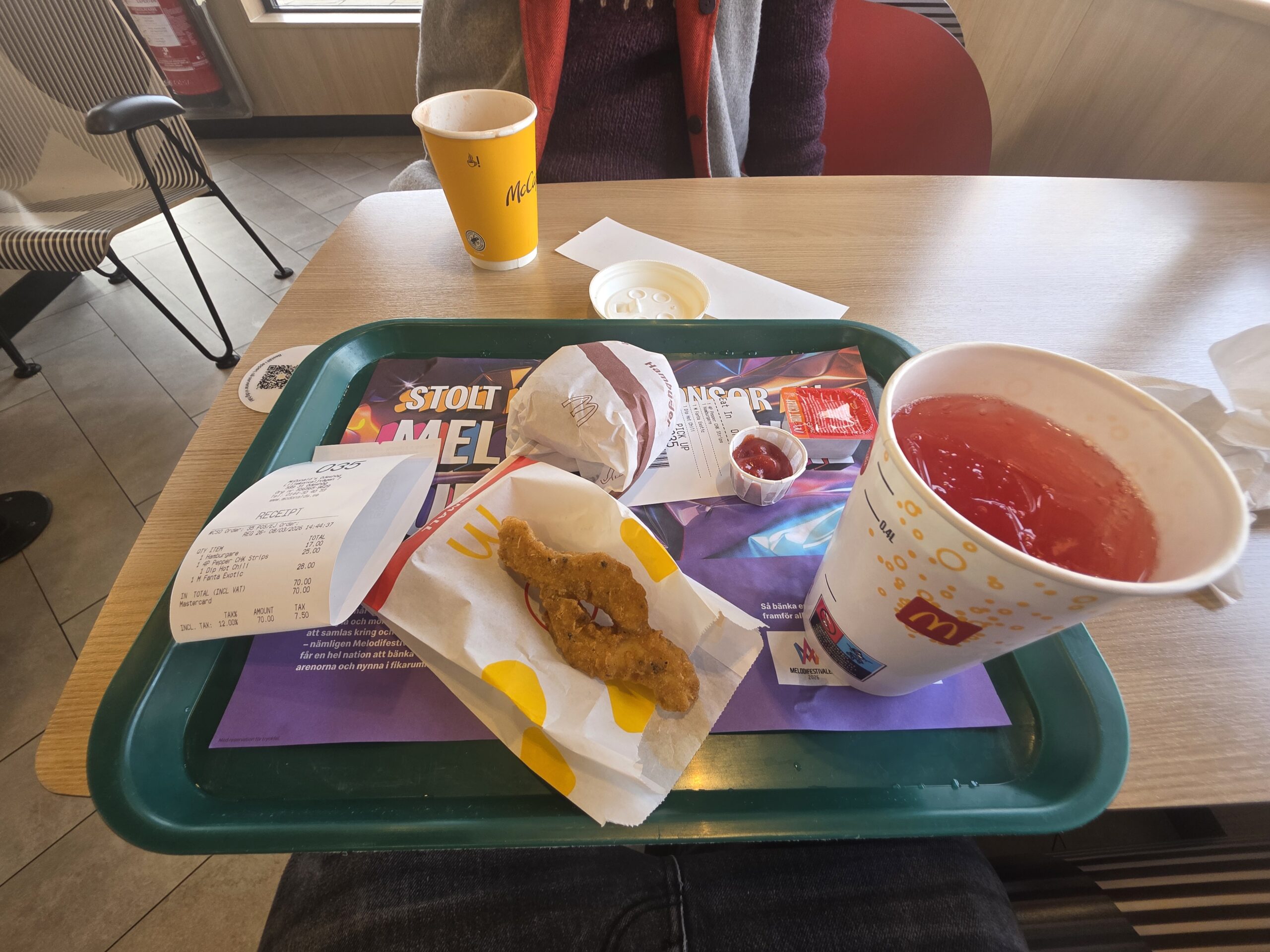
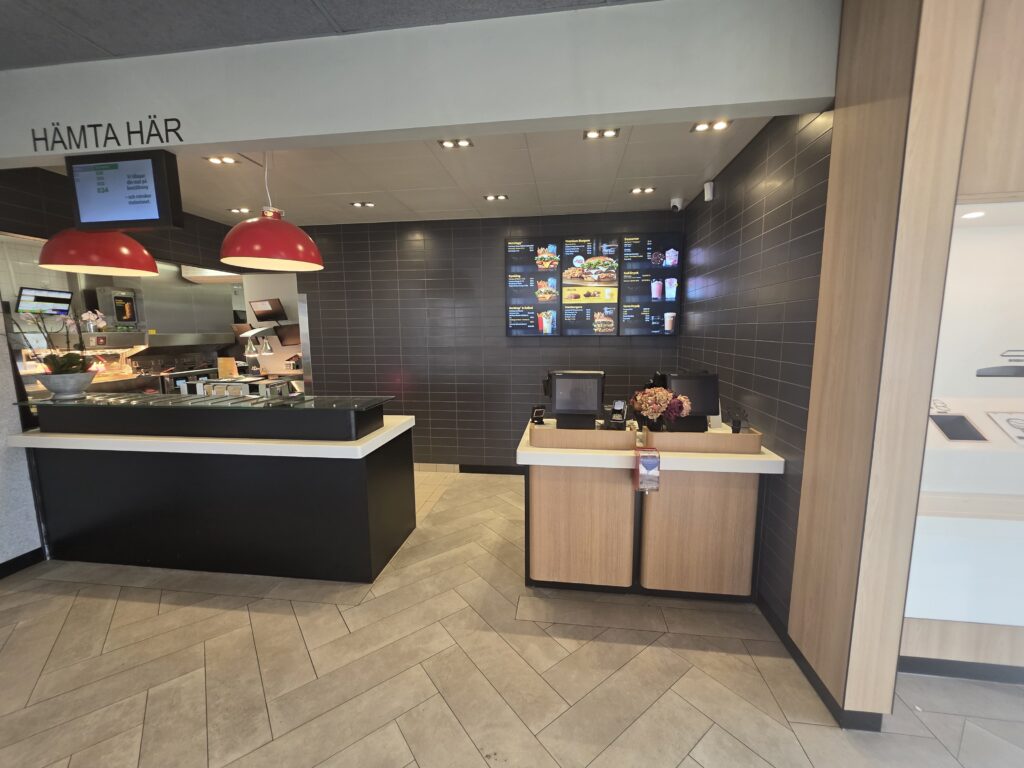
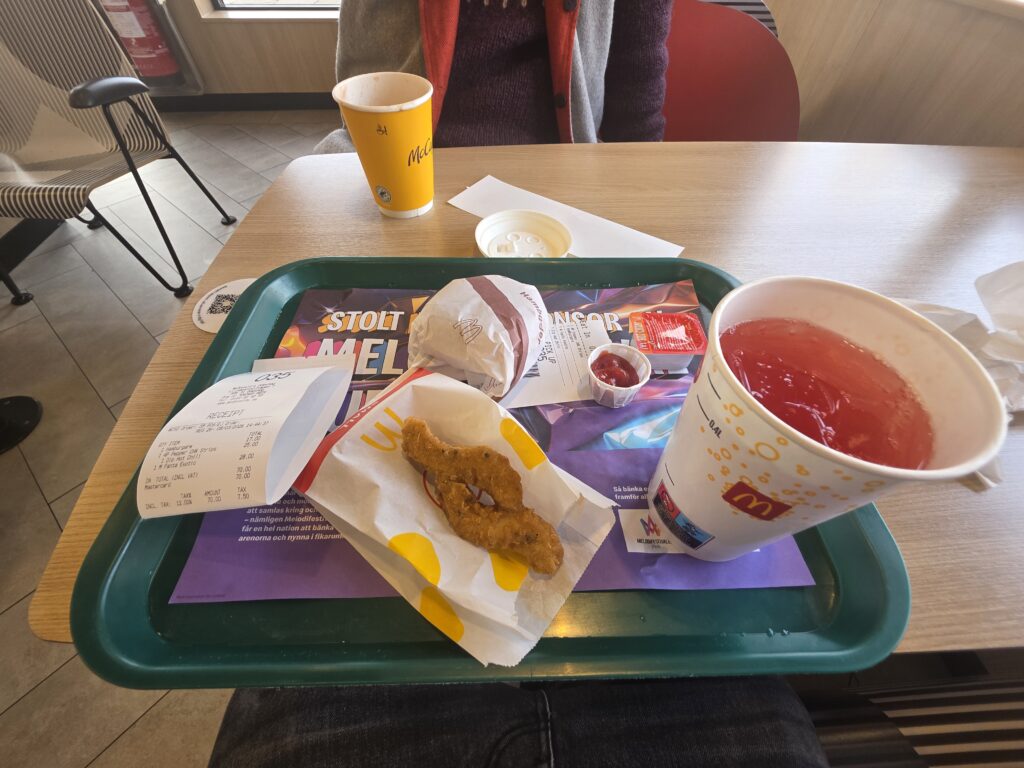
I was hoping to eat local food, but Richard demanded that we go to McDonald’s as that’s his favourite. So, as I’m thoughtful and kind, I thought we could go there quickly. We opted for the outlet in Ödeshög, a short distance from the lake.
Pepper chicken, a hamburger and a tropical Fanta…. It was all really rather lovely and Richard left happy.
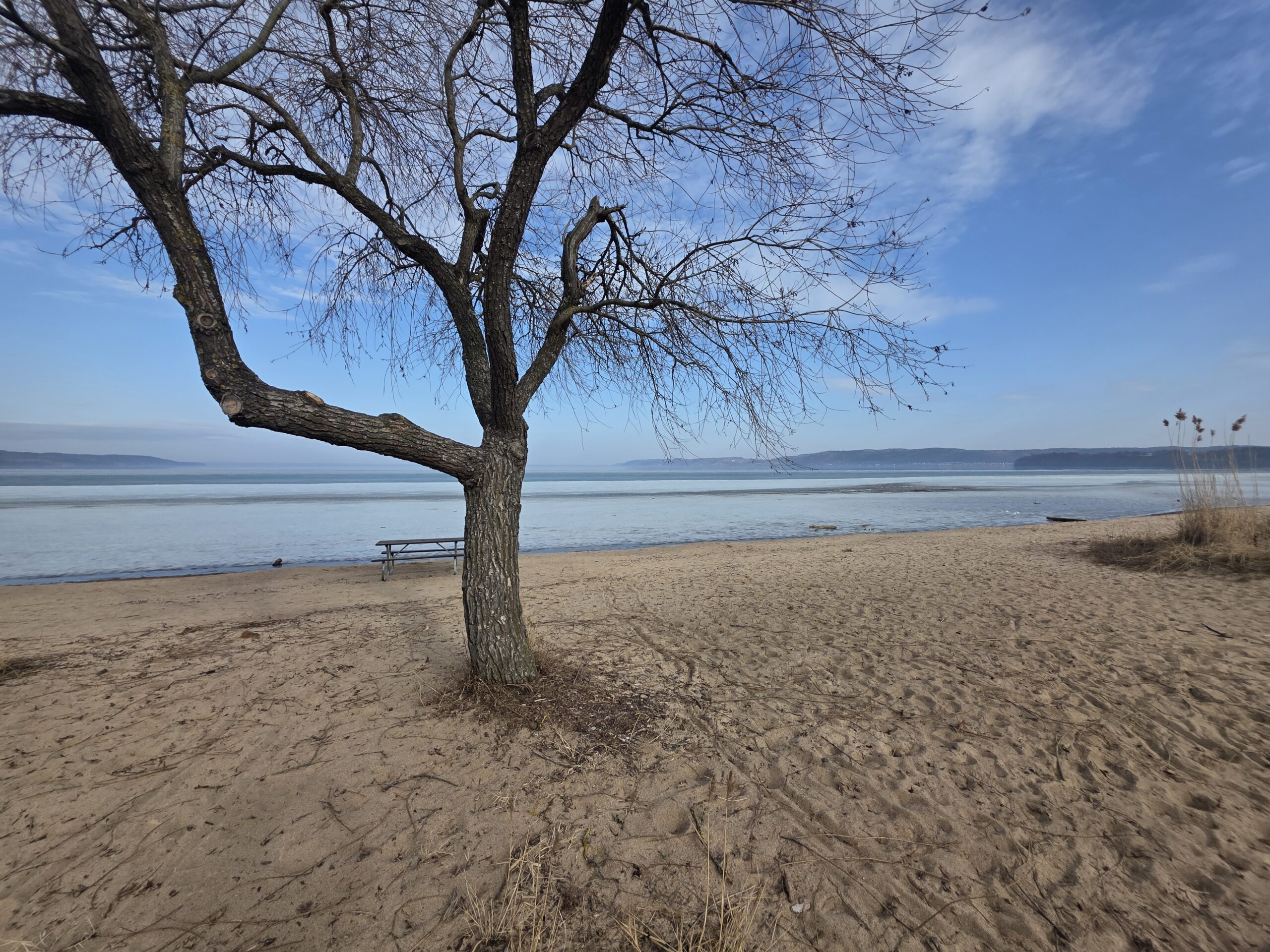
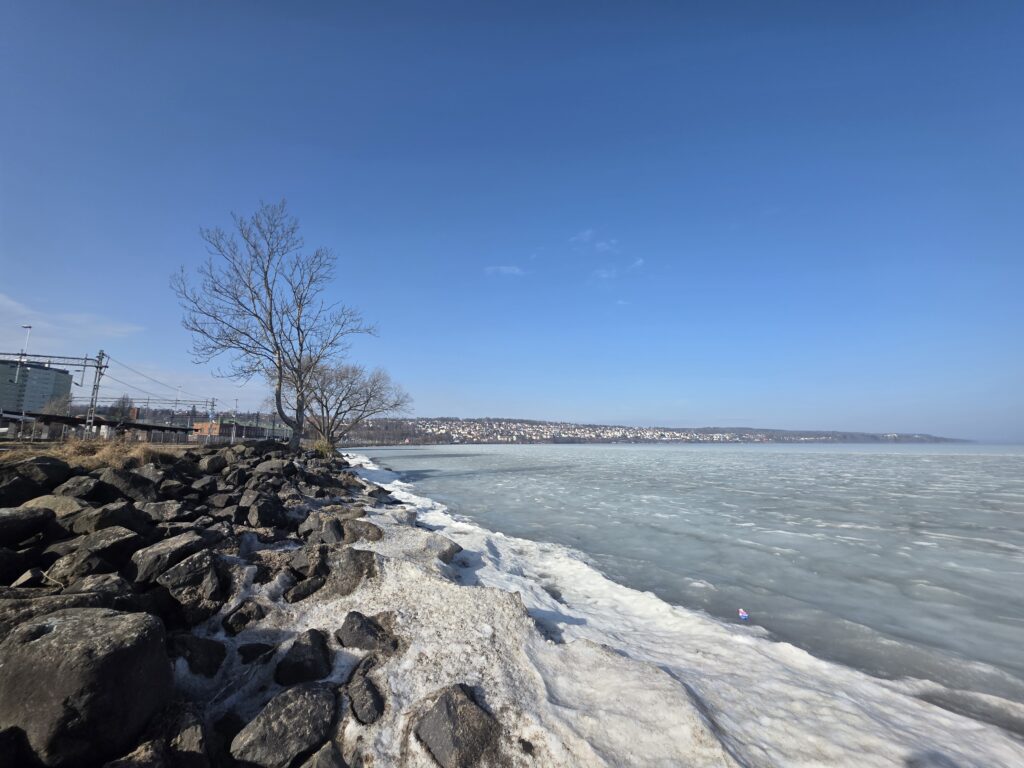
Our plan for the day was to drive around Lake Vättern, although we never quite achieved that as I kept finding things that I wanted to look at en route. Anyway, we started off at the town of Jönköping and I’m not sure that it occurred to me that the lake might be frozen.
I clambered down to the ice, but I was conscious of falling over and Richard was more sensible standing on the safety of the pavement. I was very brave to be honest.
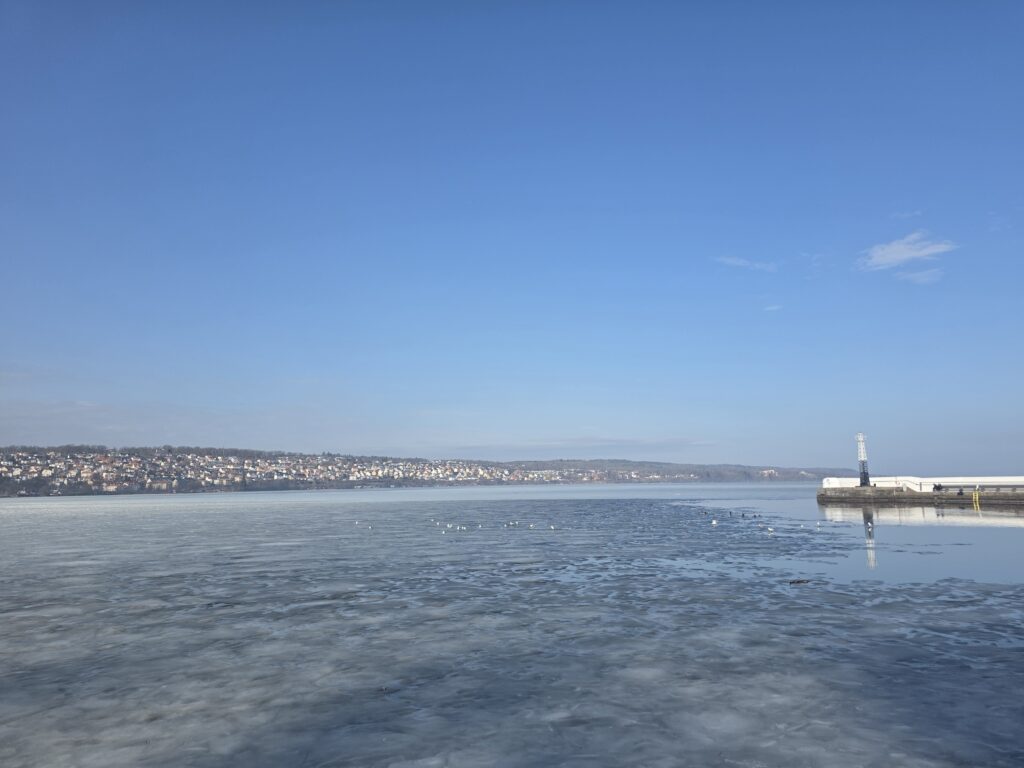
The view across to the older part of the town.
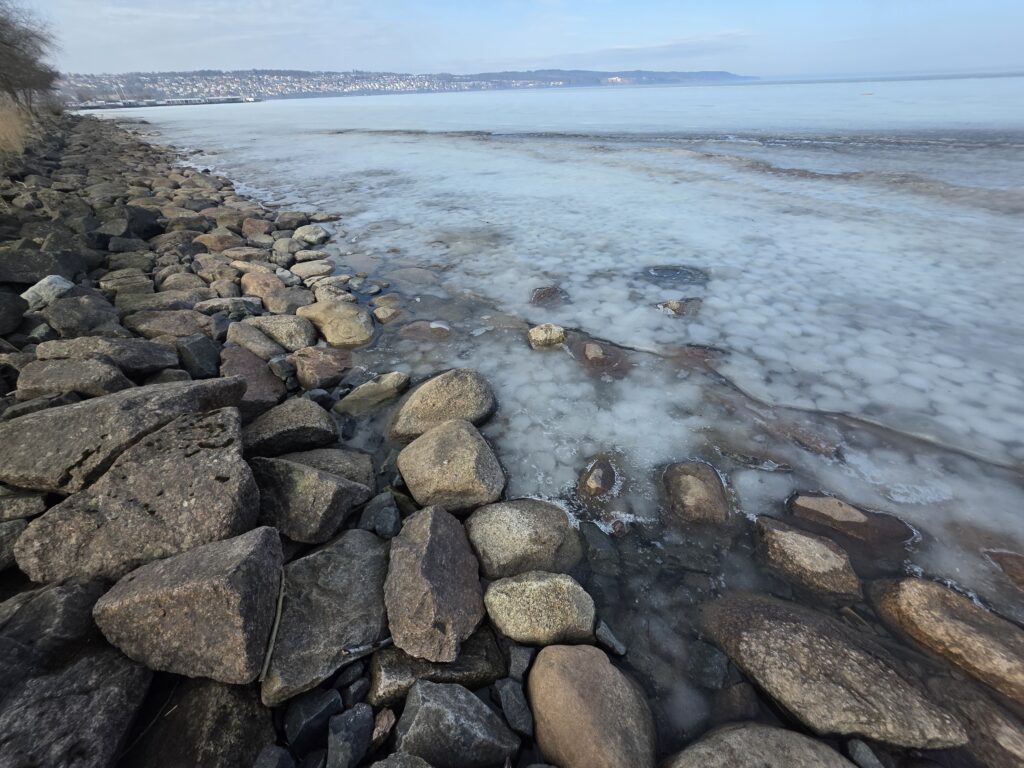
The ice was melting, but I suspect it would have been possible to walk on it. But, I didn’t as I’m sensible like that.
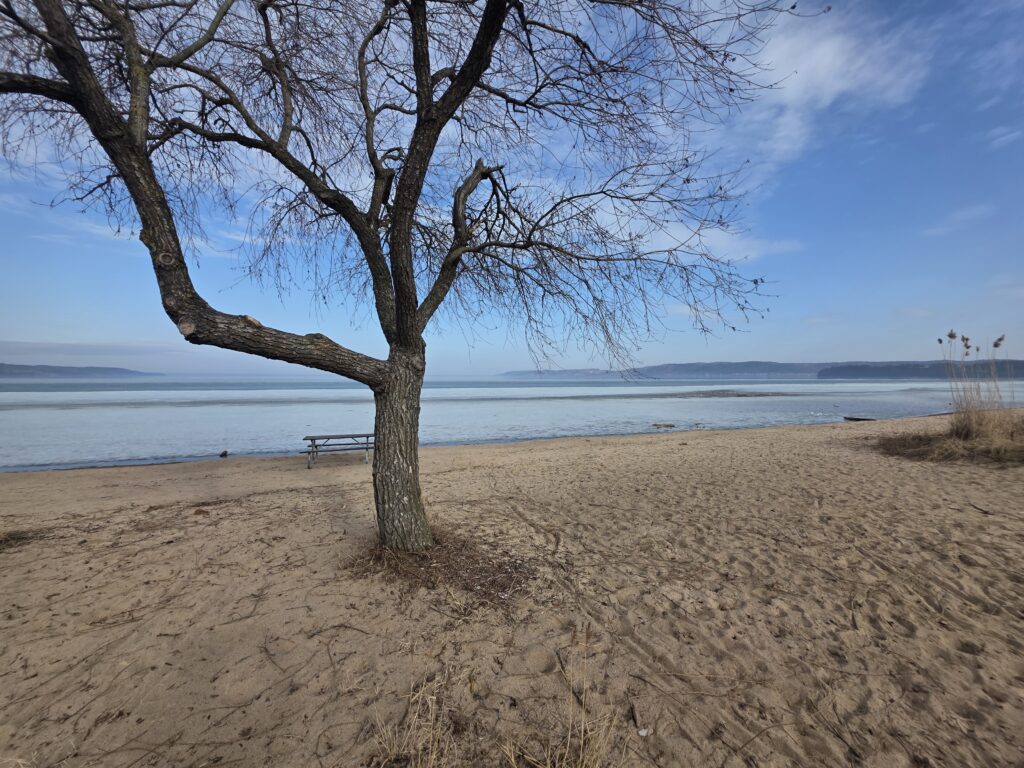
It felt like being in the Caribbean. As a side issue, Vättern means lake or water, so it’s not really known as Lake Lake locally…..
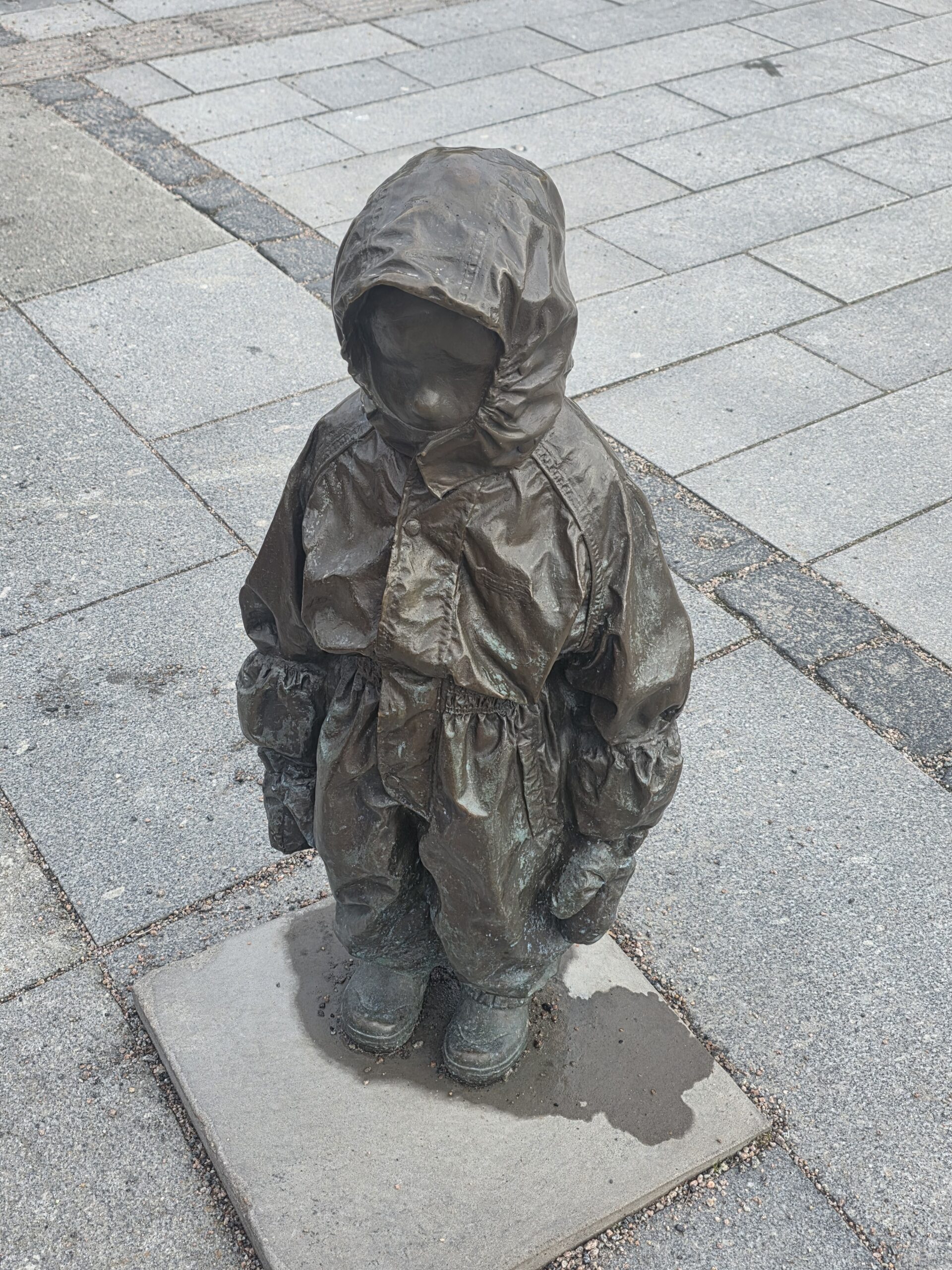
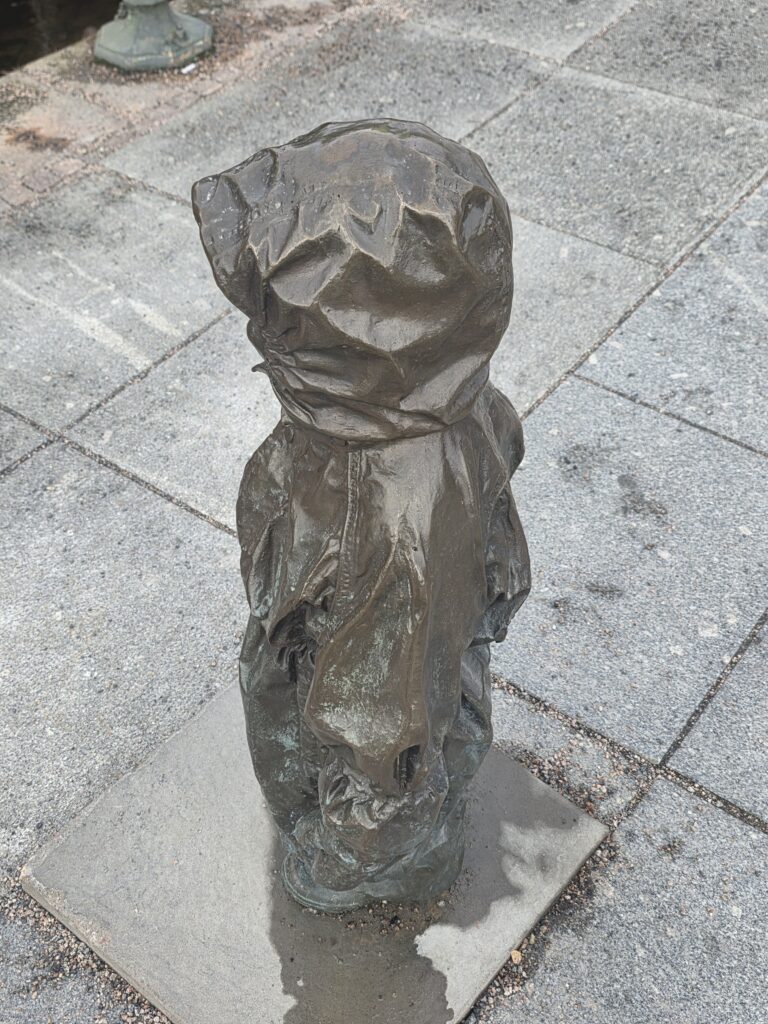
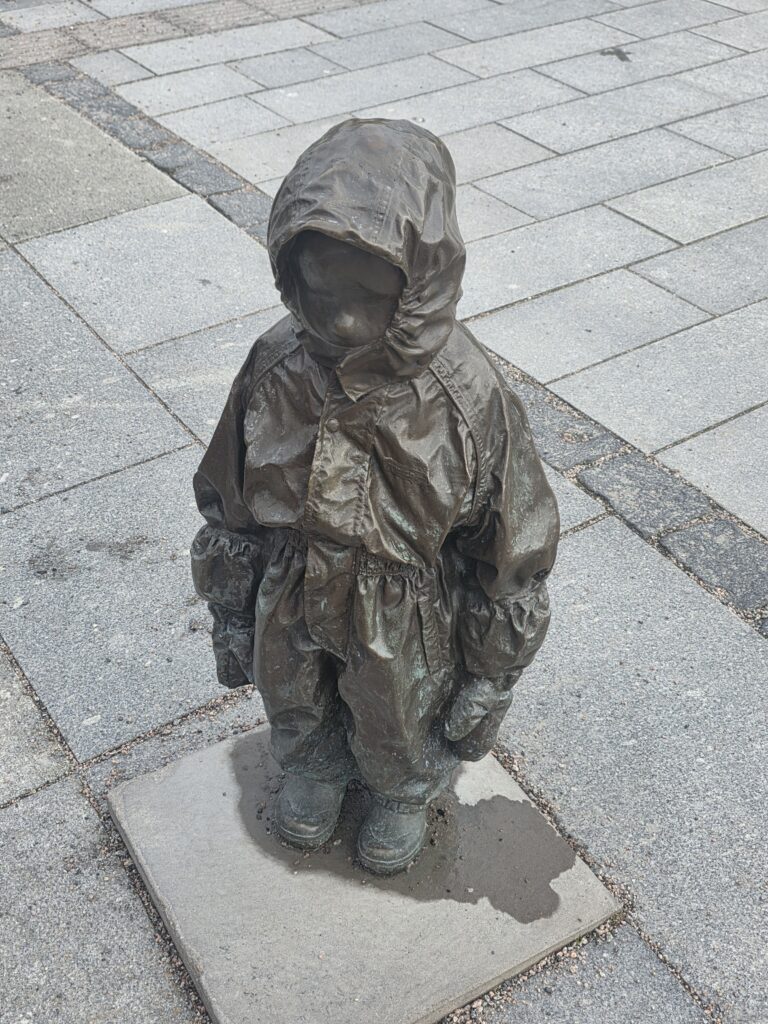
This little bronze statue caught my eye because of the level of detail. It’s titled “Ute”, which translates to “Outside”, and was created by the Swedish artist Knutte Wester. It depicts a small child bundled up in a traditional Scandinavian overall or snowsuit, complete with a hood pulled tight to protect against the elements.
The detail in the bronze is remarkable, capturing the heavy, crinkled texture of the waterproof fabric and the slightly oversized fit of the mittens and boots. It’s a really sweet little arrangement located near to the water, although he does look a bit lonely standing there.
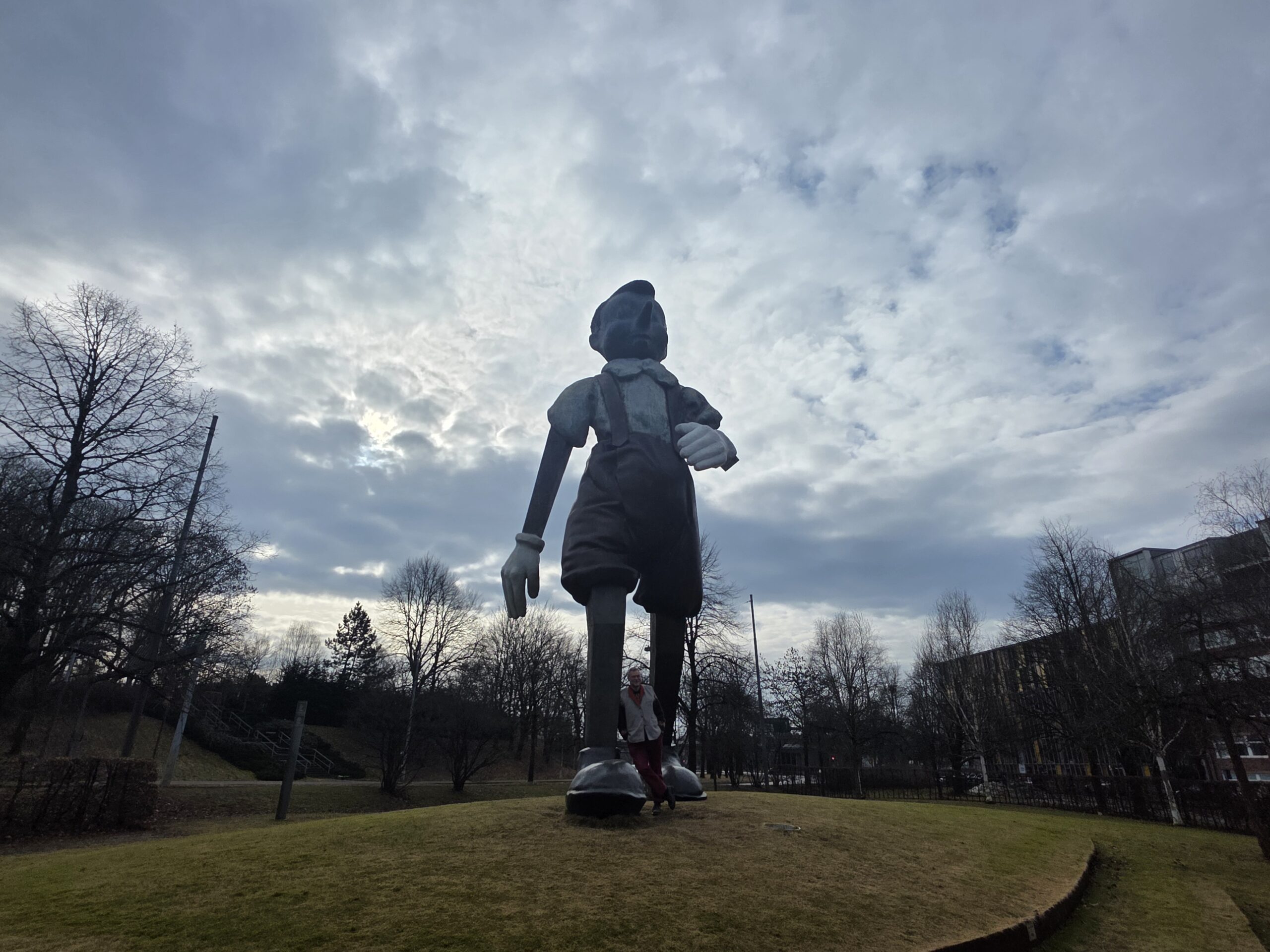
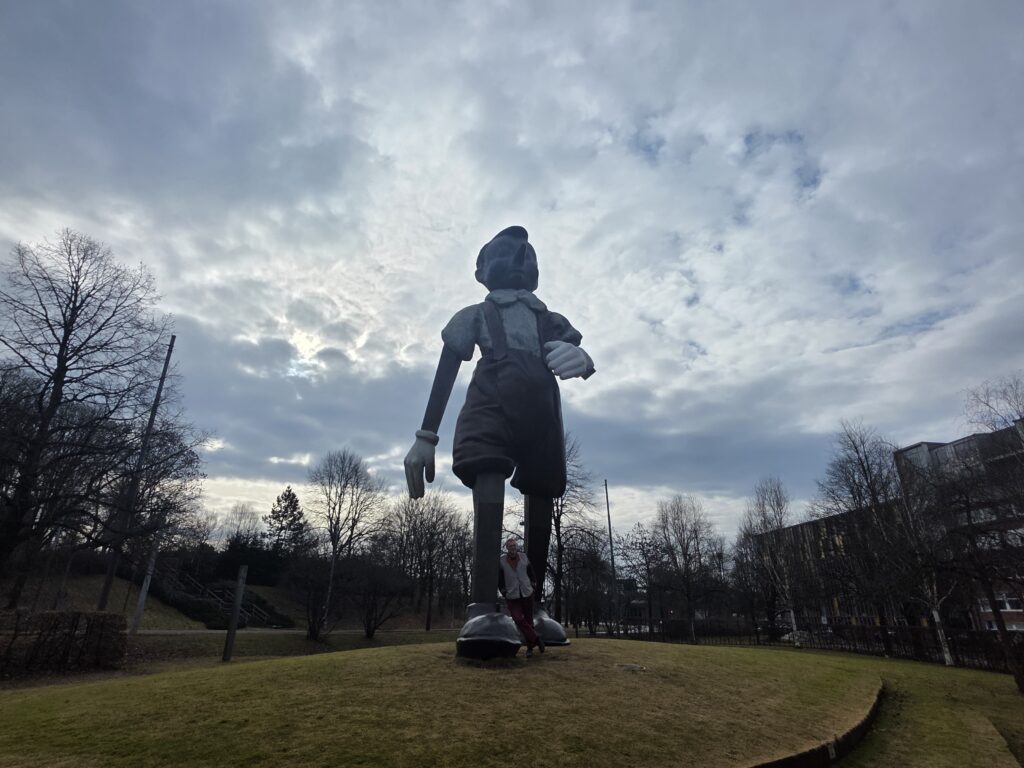
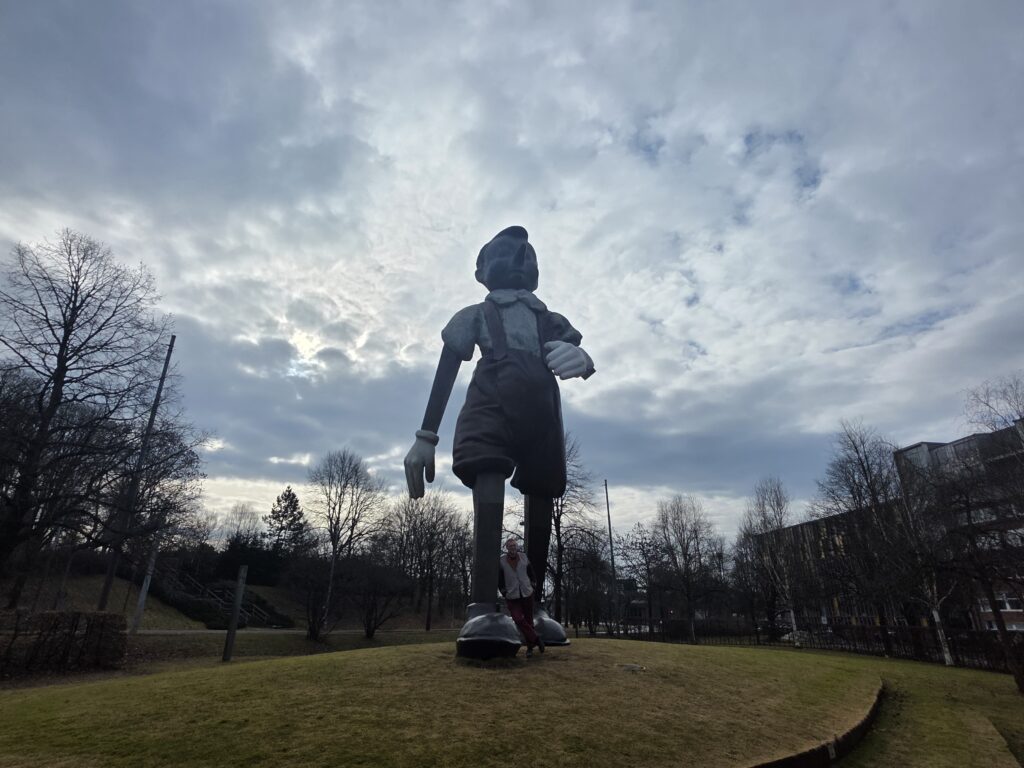
This is the Pinocchio statue in Borås, titled “Walking to Borås” which is a bronze monument that stands an impressive nine metres tall and serves as a major landmark for the city. It was created by the renowned American pop artist Jim Dine and was inaugurated in 2008 during the Borås International Sculpture Festival. It depicts the classic wooden puppet mid-stride, apparently symbolising the universal human journey toward wisdom and truth which seems a noble thing.
There’s Richard at the bottom for scale. Apparently the choice of an Italian folk character for a Swedish textile city initially sparked a great deal of debate among locals, but it’s now become a local icon and a little bit of a tourist destination. And weighing in at eight tonnes, it’s not exactly a subtle little arrangement.
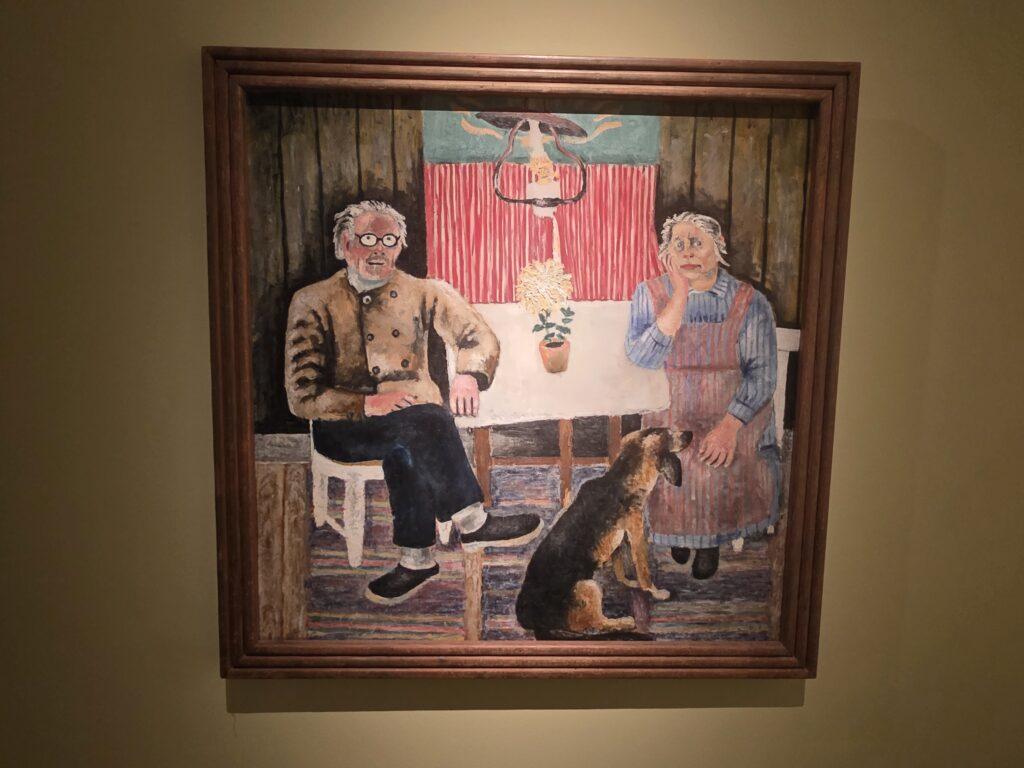
Painted in 1923, this work by Bror Hjorth (1894-1968) captures a scene that is less about a whirlwind romance and more about the quiet, heavy reality of surviving a Swedish winter together. While they might be a happy couple, their expressions suggest a happiness that has been forged through decades of agreeing on exactly how high the woodpile should be and whose turn it is to ignore the dog.
It’s a lovely piece of folk art and I rather like the air of desperation, there’s too much frivolity in the world. This is the sort of thing that I’d hang on the wall if I collected art and had an ability to put things on the wall without them falling down. The artwork was acquired in 1937, a gift from Ernst Colliander and Conny Colliander, who were local art collectors.
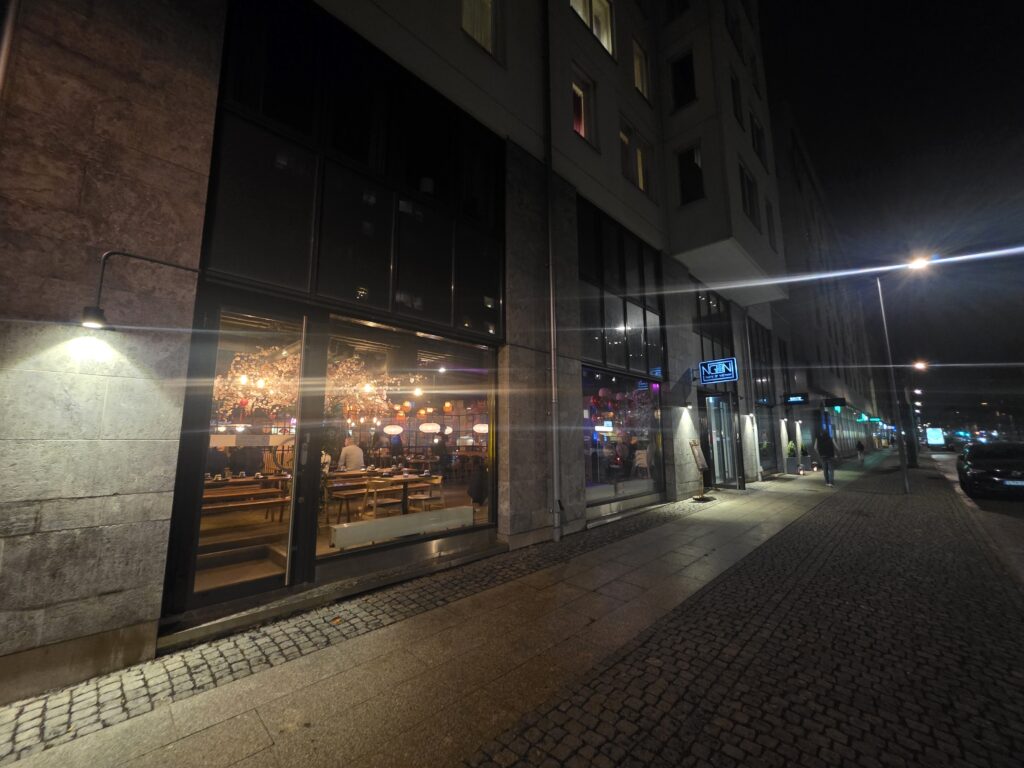
The evening’s dining option in Gothenburg was a well reviewed Vietnamese restaurant. I made an online reservation about thirty minutes before we got there, although there were plenty of spare tables available when we arrived.
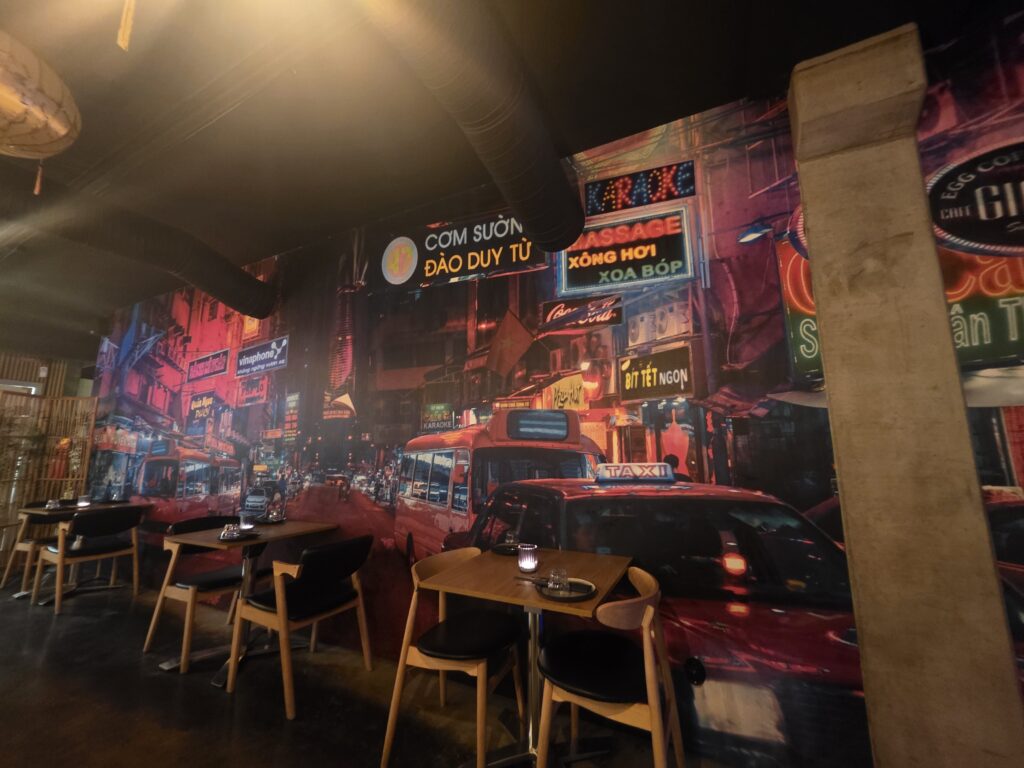
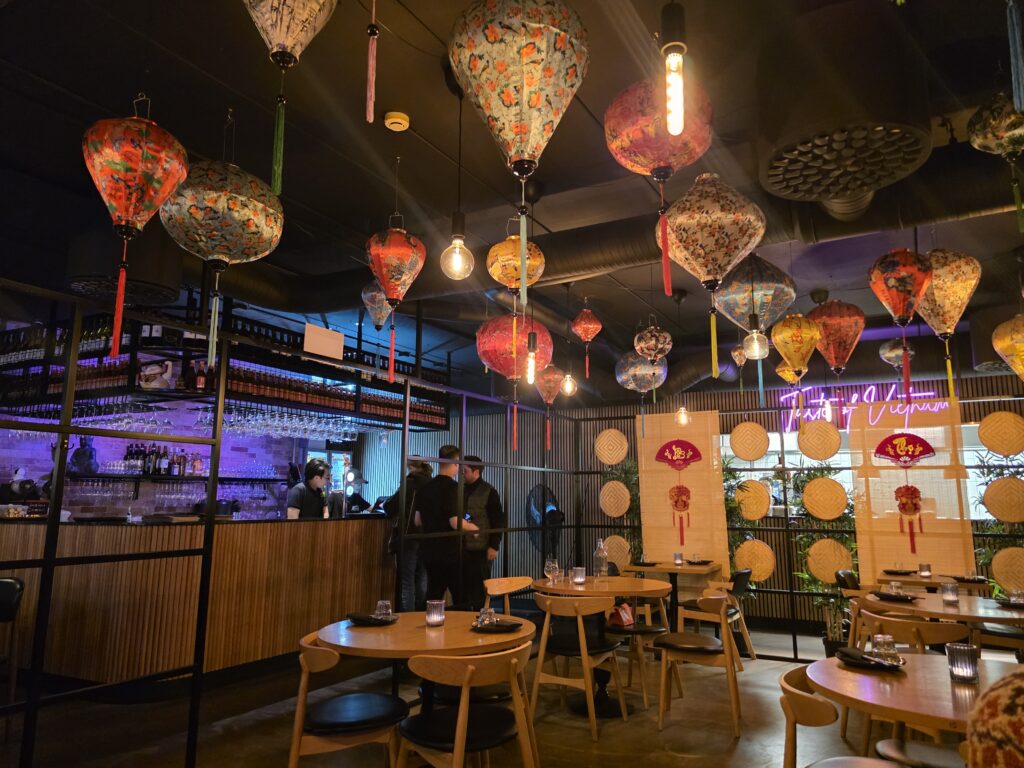
There was a bright and modern interior. There was some background music, but it didn’t intrude into the atmosphere and was at a sensible level.
There was a friendly welcome from the team member who spoke fluent English, which made things much easier. There were also English menus and also chopsticks, which neither Richard or I have yet to work out how to use. There is a choice of small and large plates, I opted for one of each and using the small plate as a side. Both of my dishes arrived promptly, but Richard’s didn’t arrive for seven minutes afterwards and I thought he was quite grumpy about the arrangement, although I coped well with it.
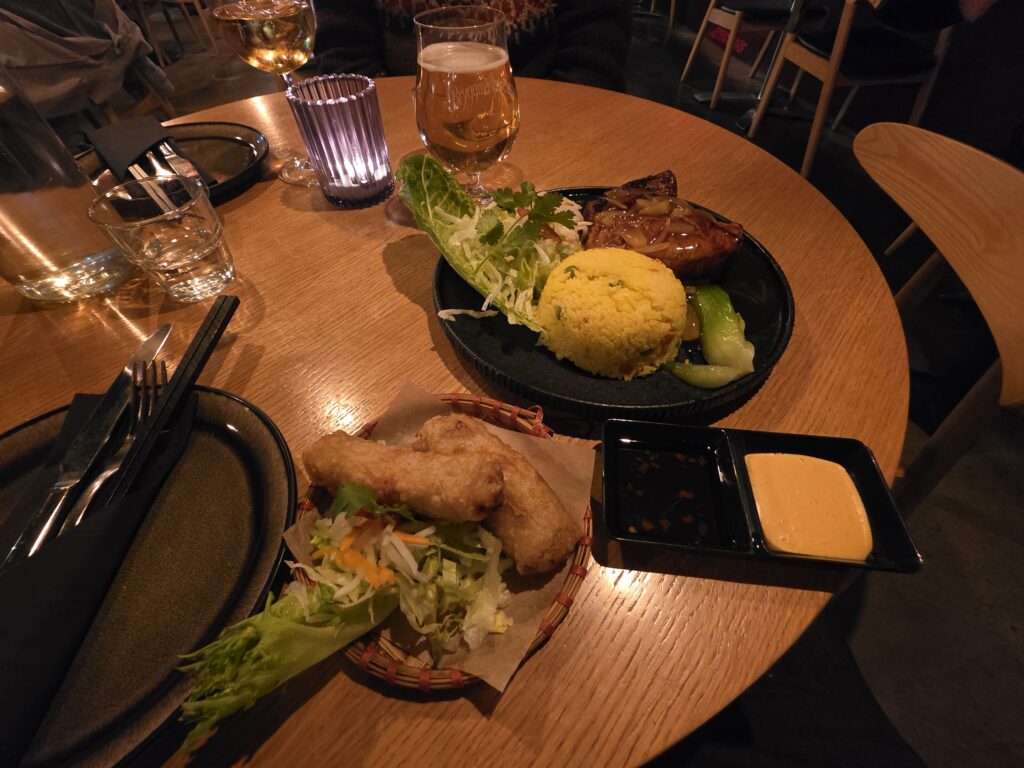
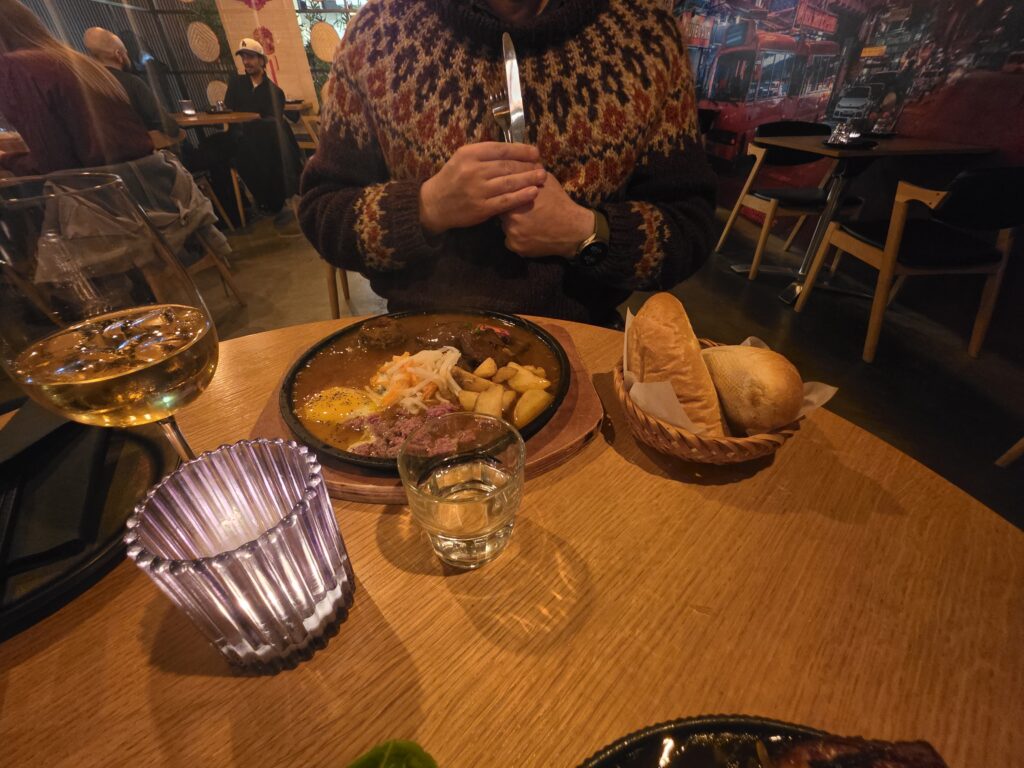
My food and drink options with the beer, in the glass at the back of the photo, being the Bryggmästarens Premium Gold from the Swedish Åbro Bryggeri brewery. The beer was clean and light, nothing exceptional, but it was good to have something Swedish and the other option on draft was Brewdog Punk IPA which I like, but I wanted something local.
The side dish I ordered was two spring rolls which were large in size, plenty of vegetable filling and a depth of flavour. The salad element was a little excessive, but it was all fresh. The main course was Ga Nuong Mat Ong which are grilled boneless chicken thighs in honey, with Bok Choi, served with jasmine rice flavoured with turmeric and coconut milk. The chicken was tender and the sauce was sweet, rich and mildly decadent. The rice had plenty of flavour and it all went well together, a really rather lovely meal.
Richard’s meal came with bread.
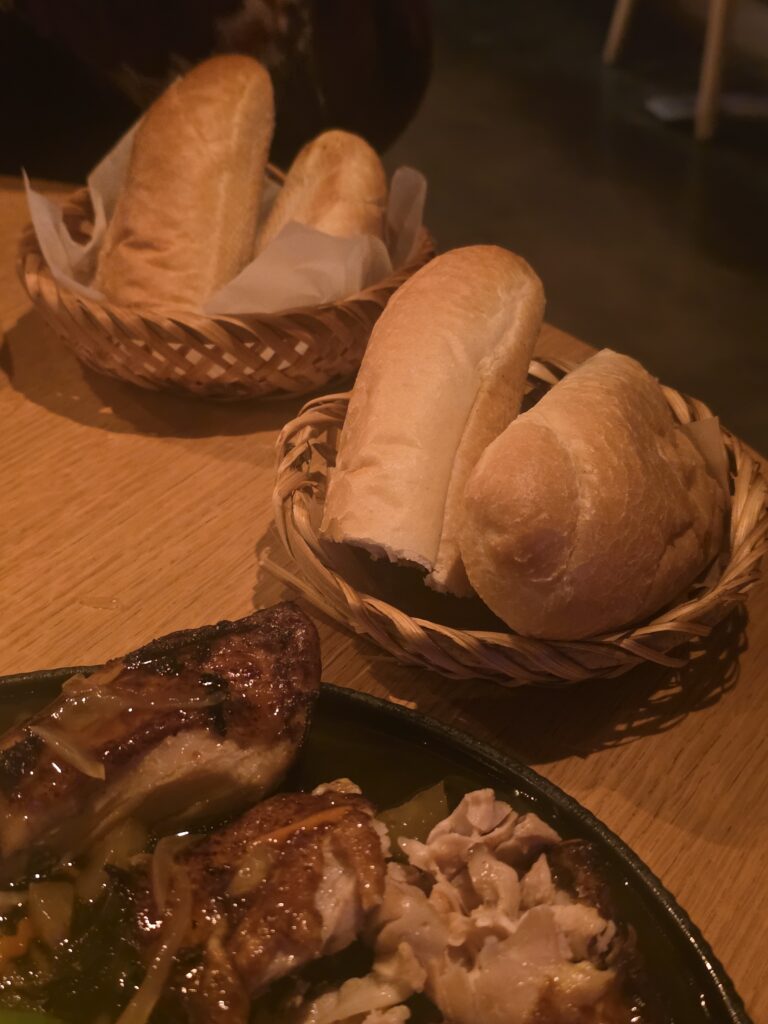
And Richard then ordered more bread as a side. He had a lot of bread. However, he had a meaty dish with plenty of sauce, so no bread was wasted.
I liked this restaurant, it was laid-back, comfortable and welcoming. The prices were reasonable, there were some authentic and interesting sounding dishes and it all felt on-trend. We were pleased with our choice of restaurant and I’d merrily come here again.
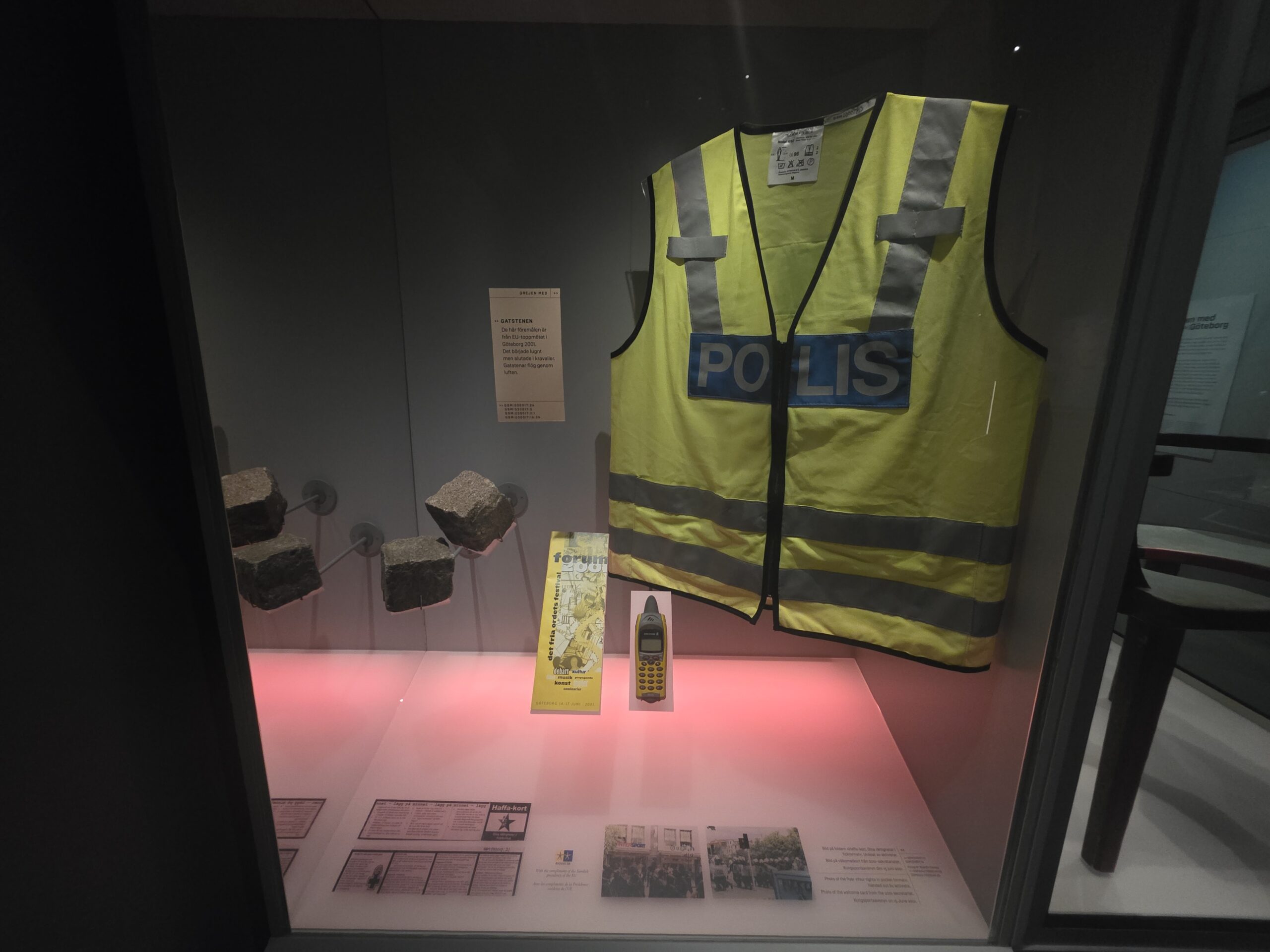
This display represents a rather sub-optimal event in Gothenburg’s history and humiliated Sweden on the global stage. In June 2001, Gothenburg transitioned from a hopeful host city for an EU summit into a scene of unprecedented chaos that left the nation in shock. The event began with months of careful preparation, with city authorities and police meeting with sixty different activist groups to ensure a peaceful environment. In an effort to foster cooperation, the city even allowed demonstrators to stay in local schools for free, hoping to avoid the violent sparked riots that had plagued summits in other international cities. However, despite these proactive measures, the atmosphere shifted violently as paving stones began to fly through the air and fires were lit in the middle of Avenyn, the city’s main boulevard.
The city authorities struggled to understand how such a breakdown in order occurred and business owners and residents described an unreal scene where thick smoke filled the air and the streets were littered with destruction. Confusing technical failures added to the turmoil as while activists stayed a step ahead using quick text messages, police radios screeched and new mobile phones were plagued by busy signals. To this day, the city can’t really explain what went wrong.
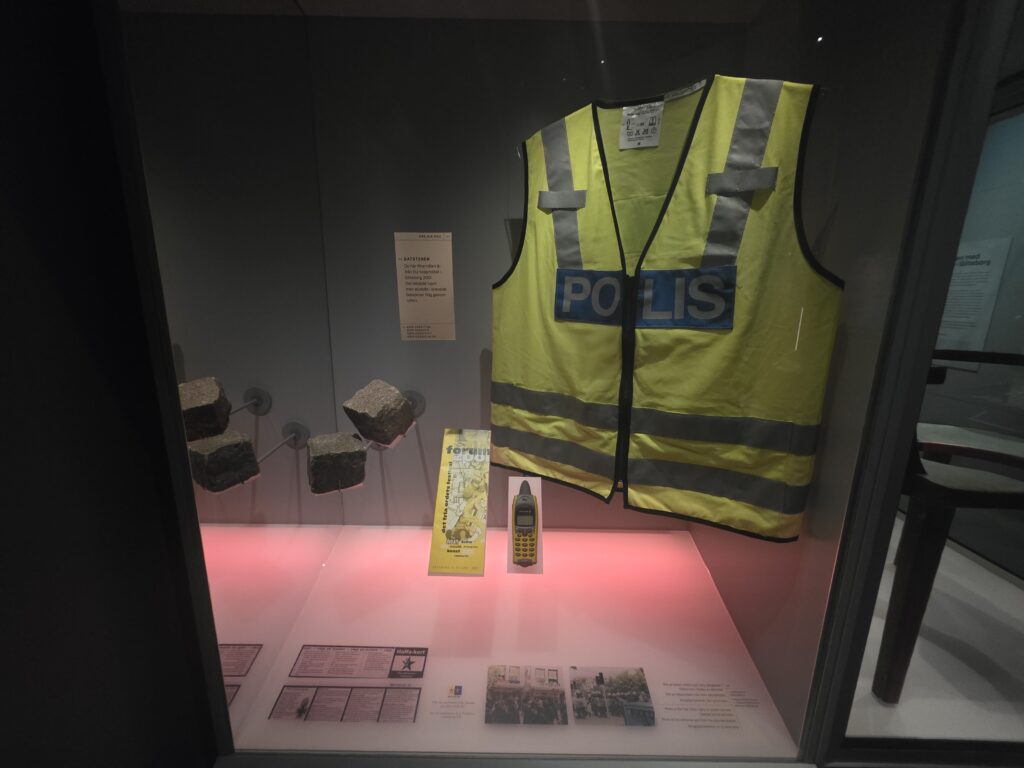
The exhibit here is an honest look at the event, they’ve got paving stones to represent what were chucked about, alongside a police radio and police hi-vis jacket which were used at the summit.
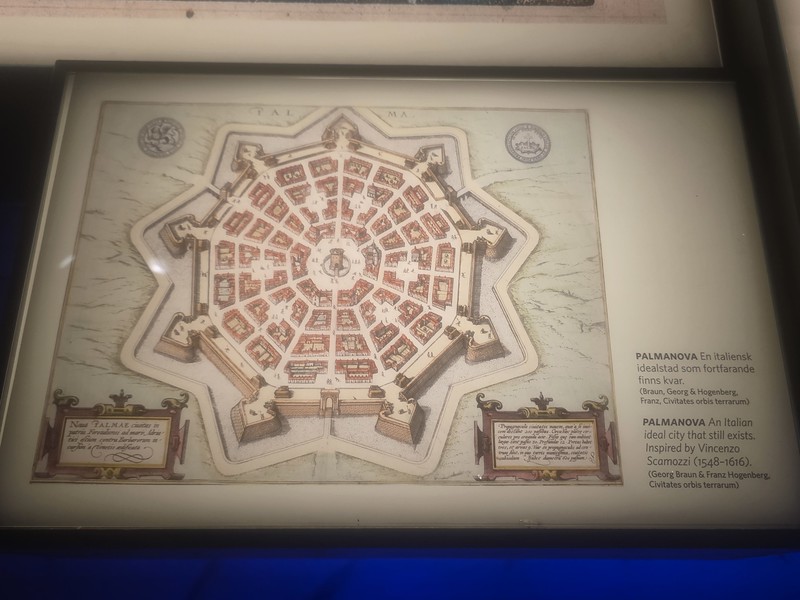
I discovered two things from this map in the museum. It’s the layout of Palmanova, which stands testament to the Renaissance ideal of the “perfect city”, although I’d never heard of it before. Designed in 1593 by architects like Vincenzo Scamozzi, the Italian city was built as a nine-pointed star with mathematical precision, intended to serve as both a military fortress against the Ottoman Empire and a harmonious utopian society where every road and square had a specific geometric purpose. It’s all still there, I’ve decided that I need to visit it.
And the other thing I discovered is that this piece of meticulous urban planning directly mirrors the foundation of Gothenburg itself. Founded in 1621, Gothenburg was not a town that grew organically over time, it was also a “planned city”, which was constructed from scratch on marshland by Dutch engineers. Much like Palmanova, the early layout of Gothenburg was defined by its rigid, zigzagging fortifications and a strategic network of canals that provided both defence and drainage.
Gothenburg over time has developed in a rather less planned way and so the original design clarity has somewhat been lost. However, the organised grid layout is visible today along with the defensive fortifications, it just took the museum to point them out to me.
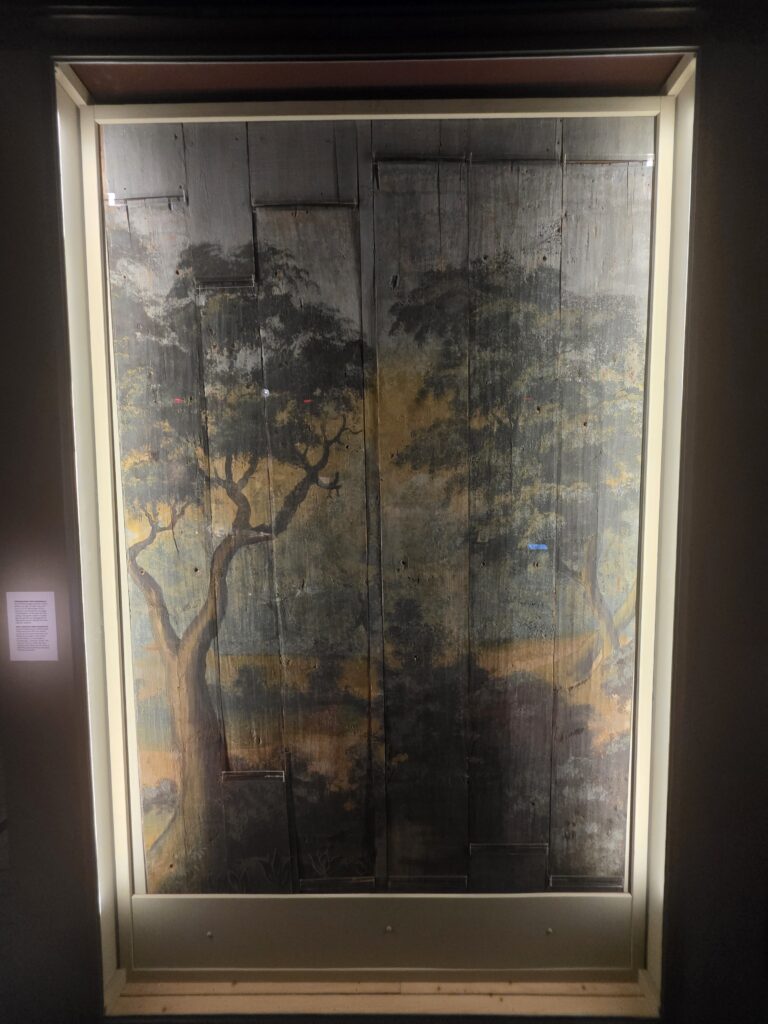
This is a Marieholm wall painting and it’s something of a fascinating glimpse into the evolution of Gothenburg. For centuries, the city was surrounded by landed estates, farms owned by the municipality but leased to the wealthy elite who shaped the region’s early economy and no doubt enjoyed their privileged lifestyles.
Marieholm was one such prominent estate, situated in the Gamlestaden district, an area that holds the historical footprint of the old town, Nya Lödöse. It served as a rural retreat for the urban wealthy, bridging the gap between city commerce and country living. This wasn’t for the workers, it was the growing middle class of the time.
The panel was nearly lost, the discovery of this artwork was entirely accidental as in 1938, as the main building of the Marieholm estate was being demolished, workers uncovered a hidden treasure which was this painted wooden panel dating back to the 1600s. It had been preserved behind newer walls for generations, surviving the passage of time only to be revealed as its original home was destroyed.
This does all make me wonder just how much stuff is hidden within buildings today. It’s probably fortunate that I live in a new-build flat as otherwise I might be tempted to see if there were any treasures hiding behind the walls…