Category: Random Posts

  • Dictionary of the Vulgar Tongue – Day 217

    Dictionary of the Vulgar Tongue – Day 217

    The Dictionary of the Vulgar Tongue was first published at the end of the eighteenth century, and given that the current health crisis is giving too much time to read books, I thought I’d pick a daily word from it until I got bored….

    Myrmidons

    This is, at first sight, a rather exotic definition for Grose, which he notes means “the constable’s assistants, watchmen, etc”. I’m not an expert in Greek mythology, nor indeed do I have any real knowledge about it at all, so I’m reliant on Wikipedia to tell me:

    “Myrmidons were an ancient nation of Greek mythology. In Homer’s Iliad, the Myrmidons are the soldiers commanded by Achilles. Their eponymous ancestor was Myrmidon, a king of Phthiotis who was a son of Zeus and “wide-ruling” Eurymedousa, a princess of Phthiotis. She was seduced by him in the form of an ant. An etiological myth of their origins, simply expanding upon their supposed etymology—the name in Classical Greek was interpreted as “ant-people”, from murmekes, “ants”—was first mentioned by Ovid, in Metamorphoses: in Ovid’s telling, the Myrmidons were simple worker ants on the island of Aegina.”

    So, the meaning used by Grose is entirely correct and appropriate, with it being easy to see how it evolved to be used for the police. Given this word isn’t easy to spell, nor actually that easy to pronounce, I’m moderately surprised to see that it lingered on in terms of its usage for quite so long.

    The word does though have a long history in English, meaning a sub-ordinate or loyal follower and it was in usage in the medieval period, so it’s not a new word coming into the language.

  • Dictionary of the Vulgar Tongue – Day 216

    Dictionary of the Vulgar Tongue – Day 216

    The Dictionary of the Vulgar Tongue was first published at the end of the eighteenth century, and given that the current health crisis is giving too much time to read books, I thought I’d pick a daily word from it until I got bored….

    Mumble a Sparrow

    This is another one of Grose’s particularly unpleasant definitions and although I hope it’s derived from a niche practice, I fear that it wasn’t. Anyway, it’s “a cruel sport practised at wakes and fairs, in the following manner: A cock sparrow whose wings are clipped, is put into the crown of a hat; a man having his arms tied behind him, attempts to bite off the sparrow’s head, but is generally obliged to desist, by the many pecks and pinches he receives from the enraged bird”.

    I was puzzled why this would be performed at wakes, but I’ve now realised that ‘wake’ was a word used in some parts of the country at the time for a festival or fair. I’m glad that Grose considered this as cruel in the late eighteenth century, I’m moderately surprised that this was ever seen as a exciting game to play.

  • British Slave Ownership Database

    British Slave Ownership Database

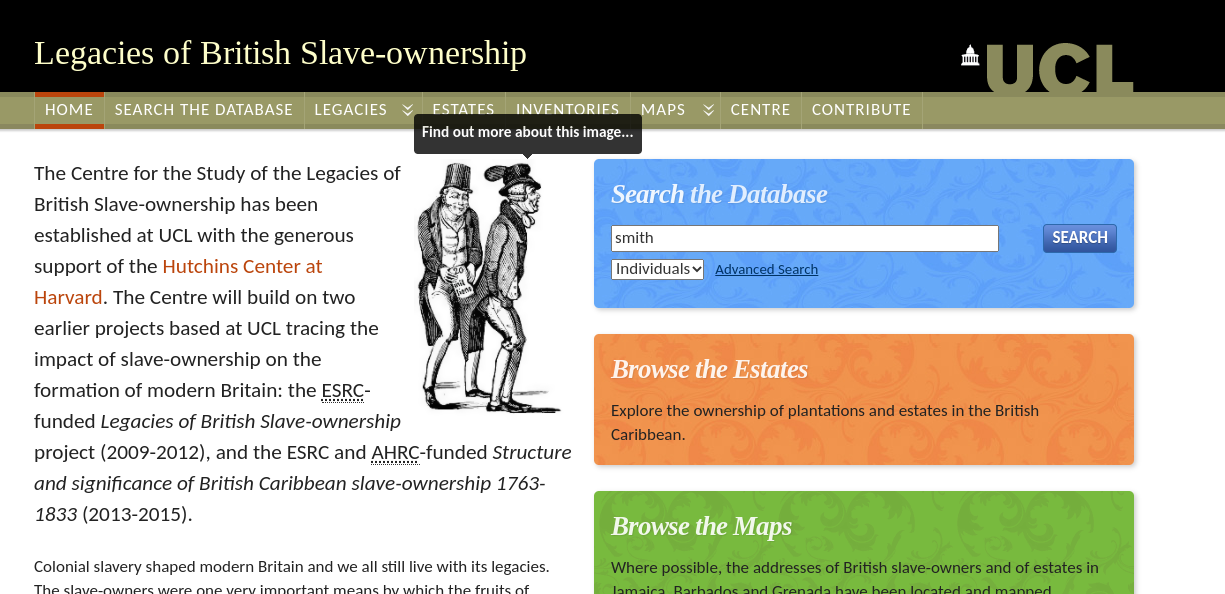
    This is a handy free web-site, run by UCL and located at https://www.ucl.ac.uk/lbs/, which has records of how much slave owners were recompensed for their slaves, as well as names of businesses which gained from the process. Some of the sums of money were enormous that were paid out, Benjamin Caractacus Patey, who once lived in Norwich, got the equivalent of around £250,000 for the loss of his slaves. Companies such as Greene King are listed and there are maps of some of the slave estates.

    It’s an interesting genealogical tool, although at the moment, it’s primarily of interest for finding out more about the slave owners than the slaves themselves. The project co-ordinators are though working on this for the next iteration of the project. It’s all been nicely put together as well.

  • Dictionary of the Vulgar Tongue – Day 215

    Dictionary of the Vulgar Tongue – Day 215

    The Dictionary of the Vulgar Tongue was first published at the end of the eighteenth century, and given that the current health crisis is giving too much time to read books, I thought I’d pick a daily word from it until I got bored….

    Muckworm

    This is another intriguing word, defined by Grose as “a miser”. It retains that meaning today, although it can also mean someone who makes money by the overworking of others. It did also once mean a worm that lived in manure, but that usage seems to have fallen out of favour for not being very scientific.

    Unfortunately, as can be seen from Google Ngram, the word has pretty much fallen out of usage over the centuries, which is a little bit of a shame.

  • Dictionary of the Vulgar Tongue – Day 214

    Dictionary of the Vulgar Tongue – Day 214

    The Dictionary of the Vulgar Tongue was first published at the end of the eighteenth century, and given that the current health crisis is giving too much time to read books, I thought I’d pick a daily word from it until I got bored….

    Mousetrap

    This phrase was used primarily in the eighteenth century, although was first recorded at the end of the seventeenth century. It is defined by Grose as “the parson’s mousetrap, the state of matrimony”. It seems that the trap snaps shut at the moment that the parson confirms that a couple are married. What a lovely way to think of the marriage ceremony….

  • Bargains in Business Traveller Magazine

    Bargains in Business Traveller Magazine

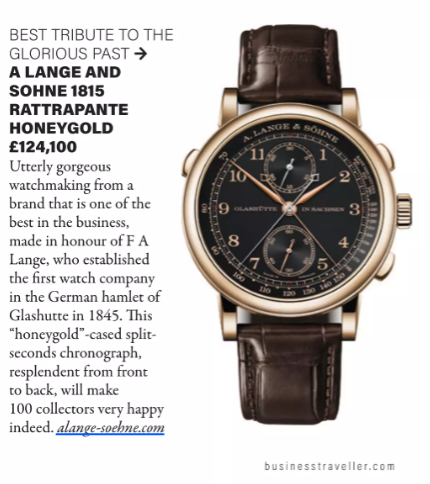
    Business Traveller is one of the magazines I always try and read, even though it’s all a bit expensive for me (the things they mention, not the magazine, I can read that for free).

    Anyway, it strikes me that this level of decadence must be outside a fair number of the magazine readers’ wallets. I’m not sure that even my friend Richard is this decadent. And, how would anyone dare wear one of these? I’d be permanently worried that it’d be stolen or ripped off my wrist. I worry enough about my McCain’s backpack, let alone something of this value. And do people just keep them as investments? Who knows…. And there’s another watch in the magazine which is so expensive they won’t say how much it costs.

    On a different matter, in the same magazine, BA have won the best short-haul airline and the best loyalty scheme, so that’s very well deserved from my favourite airline…. Although all this reading about international travel has reminded me that I’m not expecting to go overseas for another 54 days. Not that I’m counting.

  • Dictionary of the Vulgar Tongue – Day 213

    Dictionary of the Vulgar Tongue – Day 213

    The Dictionary of the Vulgar Tongue was first published at the end of the eighteenth century, and given that the current health crisis is giving too much time to read books, I thought I’d pick a daily word from it until I got bored….

    Moss

    I’m pleased that Grose explained this definition, otherwise it might have bemused me. It’s “a cant term for lead, because both are found on the tops of buildings”, with cant meaning a word used by the criminal fraternity. Although lead theft might be thought of as a modern crime, it has been a problem for centuries, with it being a specific criminal offence (with the threat of the death penalty as this was a capital crime) in the eighteenth century to be found with stolen metal.

  • Dictionary of the Vulgar Tongue – Day 212

    Dictionary of the Vulgar Tongue – Day 212

    The Dictionary of the Vulgar Tongue was first published at the end of the eighteenth century, and given that the current health crisis is giving too much time to read books, I thought I’d pick a daily word from it until I got bored….

    Moon Rakers

    This phrase, more commonly just moonrakers now, was arguably brought to light by Grose’s dictionary, where he defined it as “Wiltshire men: because it is said that some men of that county, seeing the reflection of the moon in a pond, endeavoured to pull it out with a rake”.

    Firstly here, Wiltshire is one of God’s own counties, there’s no way Wiltshire folk would be this gullible. And, the actual story is more complex. Wiltshire folk are honest and good people, but there is a rumour that some locals were trying to recover a smuggled barrel of whisky which had been hidden in a lake. I’m sure they had been led astray…. Anyway, the revenue men found them, with the locals telling them that they were trying to rake in the moon’s reflection on the water. The revenue men thought that they were, frankly, bloody idiots and told the story to their colleagues, but it was actually them who had been taken in.

    Who knows if this is true, but it was an enduring tale, which is said to have happened at The Crammer in Devizes. This sounds like the sort of thing that might happen in Devizes and as the lake is still there, I will hopefully get there at some point to go and have a look at it. And, God Bless Wiltshire.

  • Dictionary of the Vulgar Tongue – Day 211

    Dictionary of the Vulgar Tongue – Day 211

    The Dictionary of the Vulgar Tongue was first published at the end of the eighteenth century, and given that the current health crisis is giving too much time to read books, I thought I’d pick a daily word from it until I got bored….

    Monks and Friars

    I’ve never heard of this before, defined by Grose as “terms used by printers: monks are sheets where the letters are blotted, or printed too black; friars, those letters where the ink has failed touching the type, which are therefore white or faint”. The origins of this phrase date back to Joseph Moxon in his 1683 book titled ‘Mechanick Exercises’. Although he’s referring to the white and black of the dress worn by monks and friars, it’s also rather appropriate, as this period of printing was not that long after private printers, following in the footsteps of Gutenberg and his presses, had taken over from monks in the preparation of religious books.

  • Dictionary of the Vulgar Tongue – Day 210

    Dictionary of the Vulgar Tongue – Day 210

    The Dictionary of the Vulgar Tongue was first published at the end of the eighteenth century, and given that the current health crisis is giving too much time to read books, I thought I’d pick a daily word from it until I got bored….

    Money Droppers

    This is defined by Grose as “cheats who drop money, which they pretend to find just before some country lad; and by way of giving him a share of their good luck, entice him into a public house, where they and their confederates cheat or rob him of what money he has about him”. This form of confidence trick continues to this day, although I’m not sure that the cheats limit themselves to country lads. The phrase was in use between the mid seventeenth and early twentieth centuries, also sometimes referred to as “gold droppers”.