Category: Poland

  • Wrocław – Doctors’ Bar

    Wrocław – Doctors’ Bar

    20250319_133134

    Doctors’ Bar is a centrally located craft beer bar and restaurant in Wrocław, with their current beer listings at https://doctors-bar.ontap.pl/. I understand that the bar was formerly the taproom of the Doctor Brew brewery and hence the name, although I don’t think that’s the case any more. Either way, this venue is open for long hours and it has quite an extensive list of cocktails in addition to the craft beer range.

    20250319_123109

    I like this, they have a copy of the beer board outside and it’s very uncommon to see this. It is a marvellous idea though, look at those tempting options and if I was someone meandering by on a regular basis I’d be tempted in simply by seeing the words “pastry sour”. I don’t get out much, it’s simple things that excite me in life….

    20250319_123138

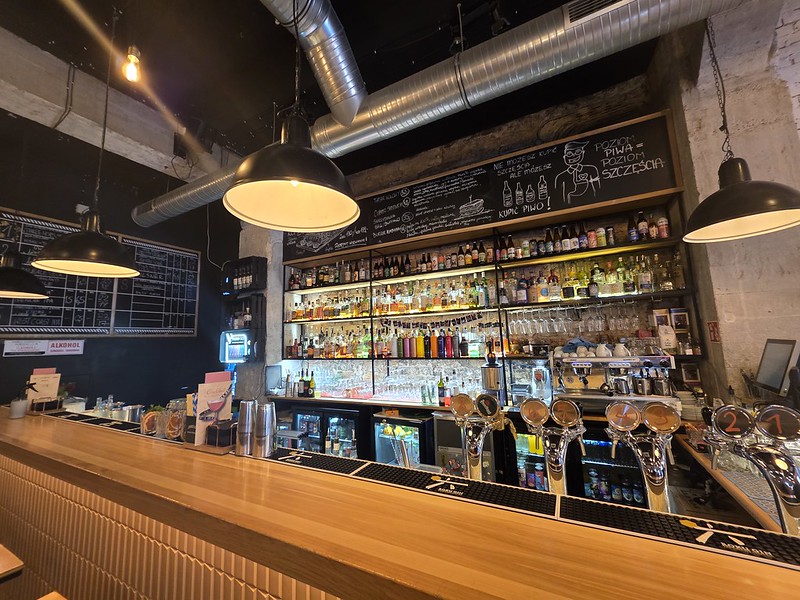
    The bar area felt modern and on-trend with the general ambience feeling inviting. Most people here seemed to be coming for food, perhaps because they have a low priced lunch menu, so there was table service available, but I headed to the bar to order. The service was friendly and helpful, it all felt a welcoming place to be. The prices were moderate for the beers and although I was tempted by the 11% Imperial Baltic Porter, I thought that it might be just a little too much at lunchtime.

    20250319_123413

    I went for the Pretty Tatanka from Magic Road, a brewery from Warsaw who regularly come up with some really rather lovely sours. This one was no exception, it had a suitable level of sourness and it had lingering flavours of apple and mango.

    I rather liked it here, it’s quite a large venue with a choice of different seating types and everything seemed clean and tidy. Customers seemed to be enjoying their food from what I could see, whilst I was sufficiently surprised and delighted by the eight beer taps.

  • Wrocław – National Museum in Wrocław (Siena by Ludwig Peter Kowalski)

    Wrocław – National Museum in Wrocław (Siena by Ludwig Peter Kowalski)

    20250318_120053

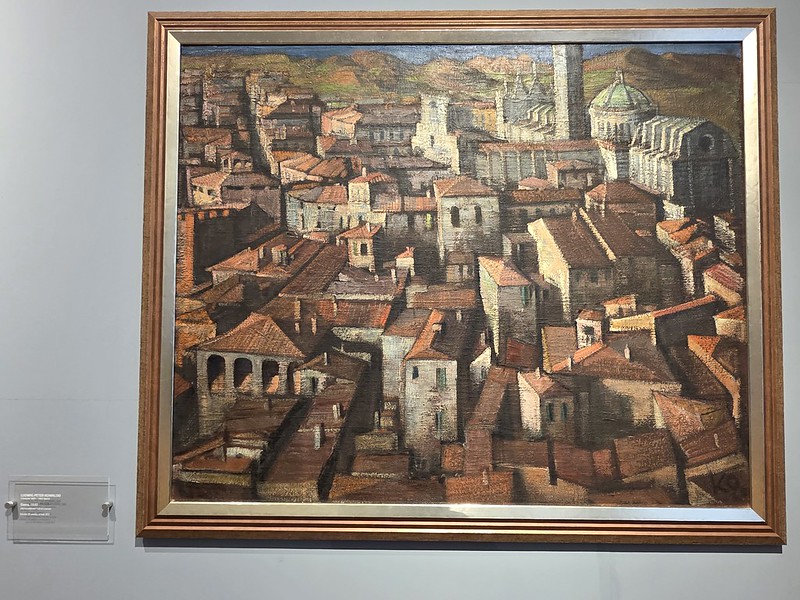
    This artwork at the National Museum in Wrocław was painted by Ludwig Peter Kowalski (1891-1967) and I’m intrigued by this more in terms of the artist than this particular work. It is a stylistic view of the Italian city of Siena which is quite alluring, but it was painted in 1930 and this was at a time when nationalism was starting to increase across Germany. Kowalski had served in the German military during the First World War, but he studied in Italy and in 1927 he went to work at the Academy for Art and Crafts in Breslau (now known as the Polish city of Wrocław). His works were not liked by the new Nazi regime as they weren’t keen on the expressionist movement, he was tolerated for a short period before being dismissed in 1934. He was effectively forcibly moved in 1945 when the borders were changed and a couple of years later he went to live in Berlin for the rest of his life.

    I might be alone in this, as I often have random flights of fancy about these matters, but there’s something in looking at an artwork painted nearly 100 years ago knowing that the artist couldn’t have possibly have predicted what would have happened to him. The city in which he worked would cease to be German, he would be fired from his job and forced to move elsewhere in the country, eventually securing some financial reward but likely struggling throughout the 1930s. That somehow all felt rather more imposing than the artwork in front of me. And it also reminded me that I haven’t been to Siena.

  • Wrocław – National Museum in Wrocław (After Herring Catch by Franz Skarbina)

    Wrocław – National Museum in Wrocław (After Herring Catch by Franz Skarbina)

    20250318_120003

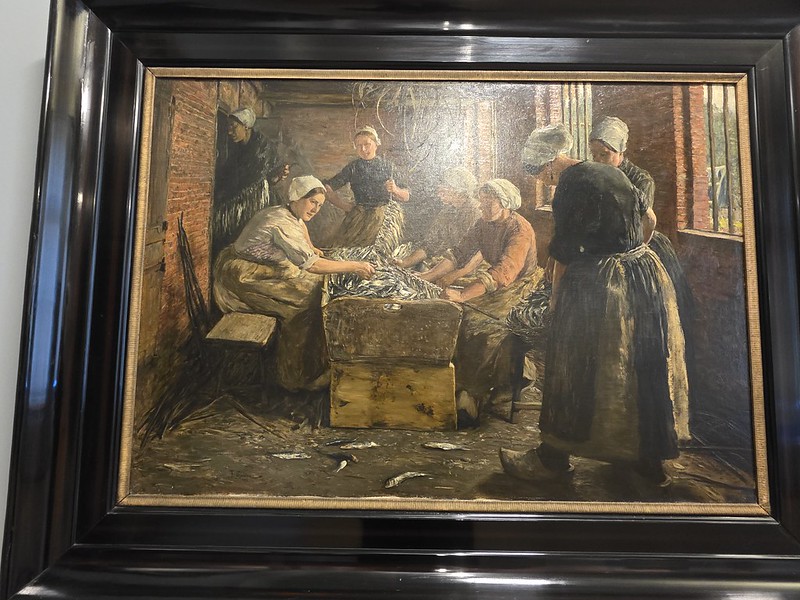
    This painting is located in the National Museum in Wrocław and it rather intrigued me because it reminded me of the Herring Lassies (or Herring Girls) who used to work in Lowestoft from the mid nineteenth to mid twentieth centuries. In Lowestoft, they tended to work in threes with two of them gutting the herring, whilst the other packed it. Although it was a useful form of money, and some adventure, for the women, the working and living conditions were sub-optimal and I doubt that the conditions in the painting are much different.

    It was painted by Franz Skarbina (1849-1910) who was a German artist who primarily painted images from his home city of Berlin and he tried to capture urban life. The artwork was painted in 1888 and although he was in Berlin that year, he had been travelling to Northern France, Belgium and the Netherlands in the years before that, which is from where I imagine the painting was inspired. There’s an interesting article at https://www.bbc.co.uk/news/articles/cy63lpy251zo about those who did the job in Scotland and it sounds tough to me.

  • Wrocław – National Museum in Wrocław (St Paul the Apostle by Ambrosius Holbein)

    Wrocław – National Museum in Wrocław (St Paul the Apostle by Ambrosius Holbein)

    20250318_112849

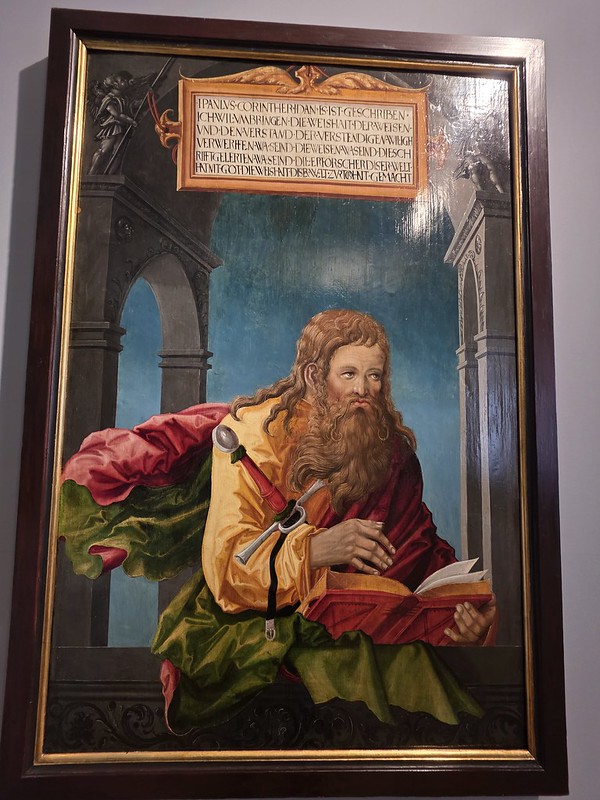
    Located in the National Museum in Wrocław, this painting is by Ambrosius Holbein (1494-1519), the brother of Hans Holbein the Younger of Tudor painting fame. The text at the top relates to Paul’s letters to the Corinthians in the New Testament and talks about God not needing the understanding of humans, as frankly, they don’t know as much as he does. I can think of a President who has a similar mindset, but I’d better divert into politics for too long. Anyway, given that this Holbein died young at the age of around 25, there aren’t a large number of artworks still surviving although the Kunstmuseum in Basel has several. This is also where he likely died (the city, not the specific art museum) and Basel is also where his brother worked for several years. The museum has this dated as 1522, but they note that Holbein died in 1521 (no-one is entirely sure when he died), so something might be slightly off here or it was just finished off by someone in his workshop.

    The background blue colour is in other paintings by members of the Holbein family and it’s apparently called Azurite, a form of copper which was mined in the Saxony area at the time. I don’t have any art knowledge to add much here, but it’s a vibrant and bold painting but there’s no information provided at the gallery or on their web-site as to the provenance and where it has been located for hundreds of years. And it’s a reminder that I should look at going to Basel as I’ve just noticed that Wizz Air fly there.

  • Wrocław – National Museum in Wrocław (Fresco from Pompeii)

    Wrocław – National Museum in Wrocław (Fresco from Pompeii)

    20250318_111832

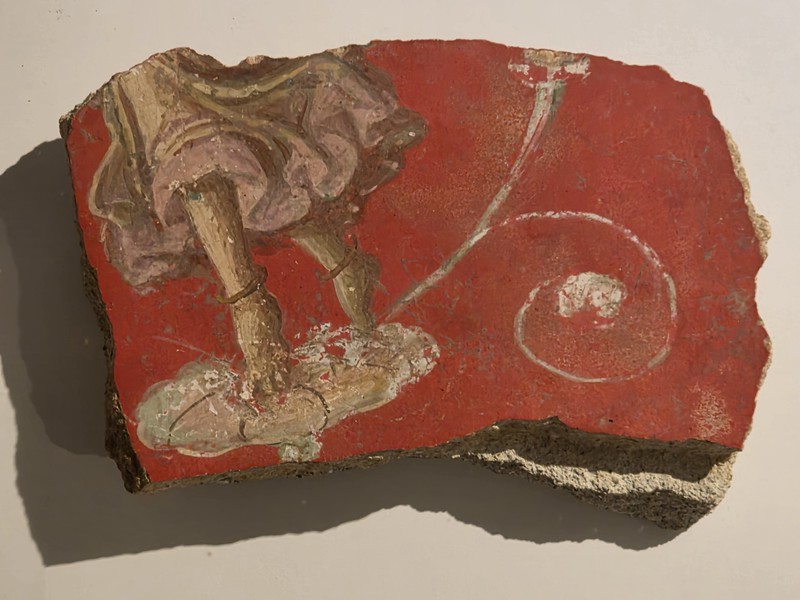
    I like a bit of colour with historic exhibits and this fresco dates to 79AD, or at least just a little before, when there was a little incident at Pompeii. Located at the National Museum in Wrocław, rather than being there in its own right it was more embedded in an exhibition entitled ‘Miracle Workers’ which was “intended as an exhibition which describes and presents the world made by human hands, which first was created in the human mind and imagination, and then in a perfect way materialised in the utilitarian objects.”

    Having been to Pompeii, I’m aware that there is no shortage of frescoes from the site, but I’m still intrigued by the vibrancy of the colours and how they managed to be preserved under a heap of volcanic ash for so long. It has rather lost its context although Google Gemini has a go at working it out, telling me:

    “The figure’s legs and the spiral object are difficult to interpret definitively without more context. However, the spiral object could be a stylised representation of a thyrsus, a staff associated with the Greek god Dionysus (Bacchus in Roman mythology). If so, this would suggest the figure is a follower of Dionysus, such as a maenad or satyr.”

    I’ll go with that….

  • Wrocław – National Museum in Wrocław (Funerary Shield)

    Wrocław – National Museum in Wrocław (Funerary Shield)

    20250318_111335

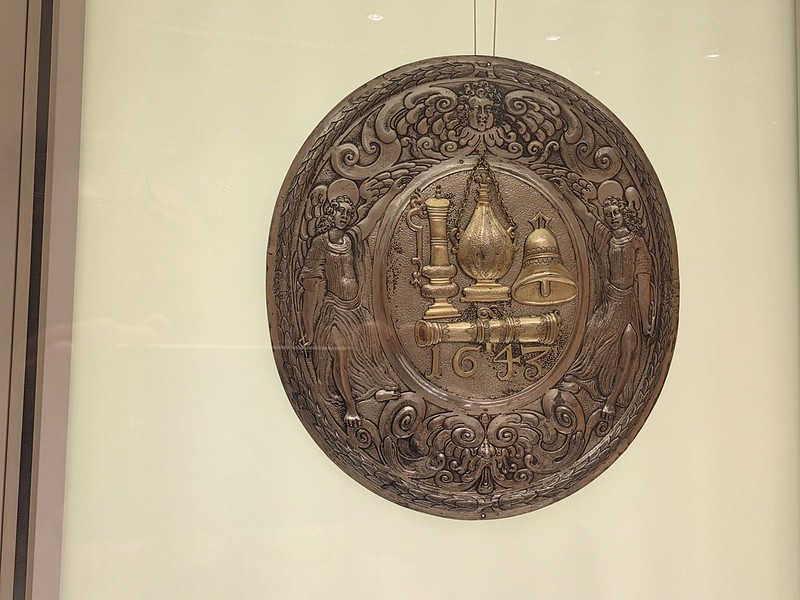
    The English translation at the National Museum in Wrocław of this item reads “funerary guildshield”, but that’s not a phrase that is used anywhere on-line, but it seems that “funerary shields” are a thing. However, an Internet search mainly brings up this museum and some on-line games, which suggests that this museum has a strong collection of them. The museum explains on their web-site:

    “The custom of decorating coffins during funeral ceremonies with valuable, often silver, coffin shields (escutcheons) displaying the coat of arms of the corporation the deceased was a member of, was adopted in the 16th cent. by corporations of professions – guilds. The shields were not nailed to coffins but only attached to them (fixed with string), and after the funeral they were put away (protected by special cases) to await the next such ceremony.”

    This all means that the museum’s English translations are spot-on, it’s just that I’ve never heard of this concept before. After meandering around on-line, something I’m prone to do, it seems that this was something done by the middle classes in mostly Germanic lands. This one is dated 1643 and relates to the brassfounders, bellfounders and pewterers guild. Back in 1643, the city was part of the Hapsburg Empire and the city name would have been Breslau. The shield was made by George Nitsch, who was a craftsman living in Wrocław who specialised in metalwork and it’s crafted using repoussé and chasing techniques, which involve hammering and shaping the metal from the reverse side (repoussé) and then refining the details from the front (chasing). I’d add that I didn’t know about these metalwork terms, but that’s what happens when you faff about on-line when intrigued by things. On the shield there is imagery of a bell, a candle and some, er, metal piping along with the rather cherub like religious symbolism around the outside.

    The period between 1618 and 1648 really wasn’t a good one for Wrocław as Holy Roman Empire and Swedish troops keep battling their way around the city breaking things and arguing with their swords, with nearly half the city’s 40,000 residents dying of plague. Indeed, there’s a real chance that this shield was taken to a member of the guild who had died of the plague, something which adds a rather solemn note to proceedings.

    Anyway, I’ve rather digressed, but I liked this exhibit as it’s a new genre of things I’ve discovered that I know nothing about.

  • Wrocław – National Museum in Wroclaw

    Wrocław – National Museum in Wroclaw

    20250318_110319

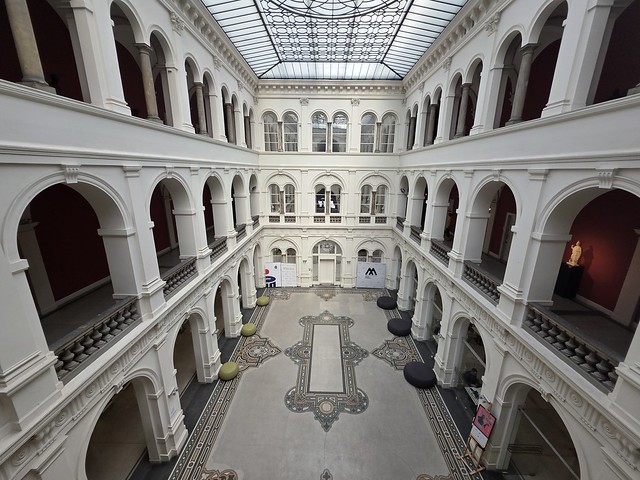
    I’ve been to this museum before, back in 2017, but I can’t remember much about it and I seem to have taken relatively few photos to try and remind myself. Unfortunately for my two loyal blog readers, I decided to take rather more photos today and, given that, I feel a need to write about some of artworks. That means there might be a heap of rather less then riveting posts as I’m hardly an art historian, but it’ll keep me amused for a while.

    20250318_110656

    The welcome was friendly and a security guard gave me an introduction of where to go. It’s a well-laid out museum and surprisingly well signed as I often find myself getting a bit muddled up.

    20250318_110726

    The museum was opened in 1948 in a building that was built between 1883 and 1886 and was previously used as the Silesian Regency Office. The city was known as Breslau until the Germans lost it following the Second World War and many of this museum’s collections are from the part of Poland that became Ukraine when European borders were redrawn. Located in a different building which has now been destroyed, the German equivalent at the time was the Silesian Museum of Fine Arts, but most of those holdings were lost in the conflict, although some have made their way here to this museum.

    20250318_133208

    The museum is substantial in size and I meandered around for three hours before I felt that I had seen enough. It would be possible, and my friend Susanna would do this, to stay there all day to properly see all of the collections.

    20250318_124702

    There are a lot of staff here monitoring the collections and they were all professional with the exception of one younger female staff member who decided she would follow me about the rooms that she was responsible for. It neared the point that I was going to question what she was doing, but I decided against it to avoid any diplomatic incidents and just left those rooms rather quicker than I would have liked. It was very odd, I can’t recall it happening anywhere before and I thought at first she was just looking to find an opportunity to engage about some of the artworks.

    20250318_123206

    The view from the museum. Anyway, there may now follow a few posts about certain artworks in the museum until I get bored.

  • Poland – Otwock

    Poland – Otwock

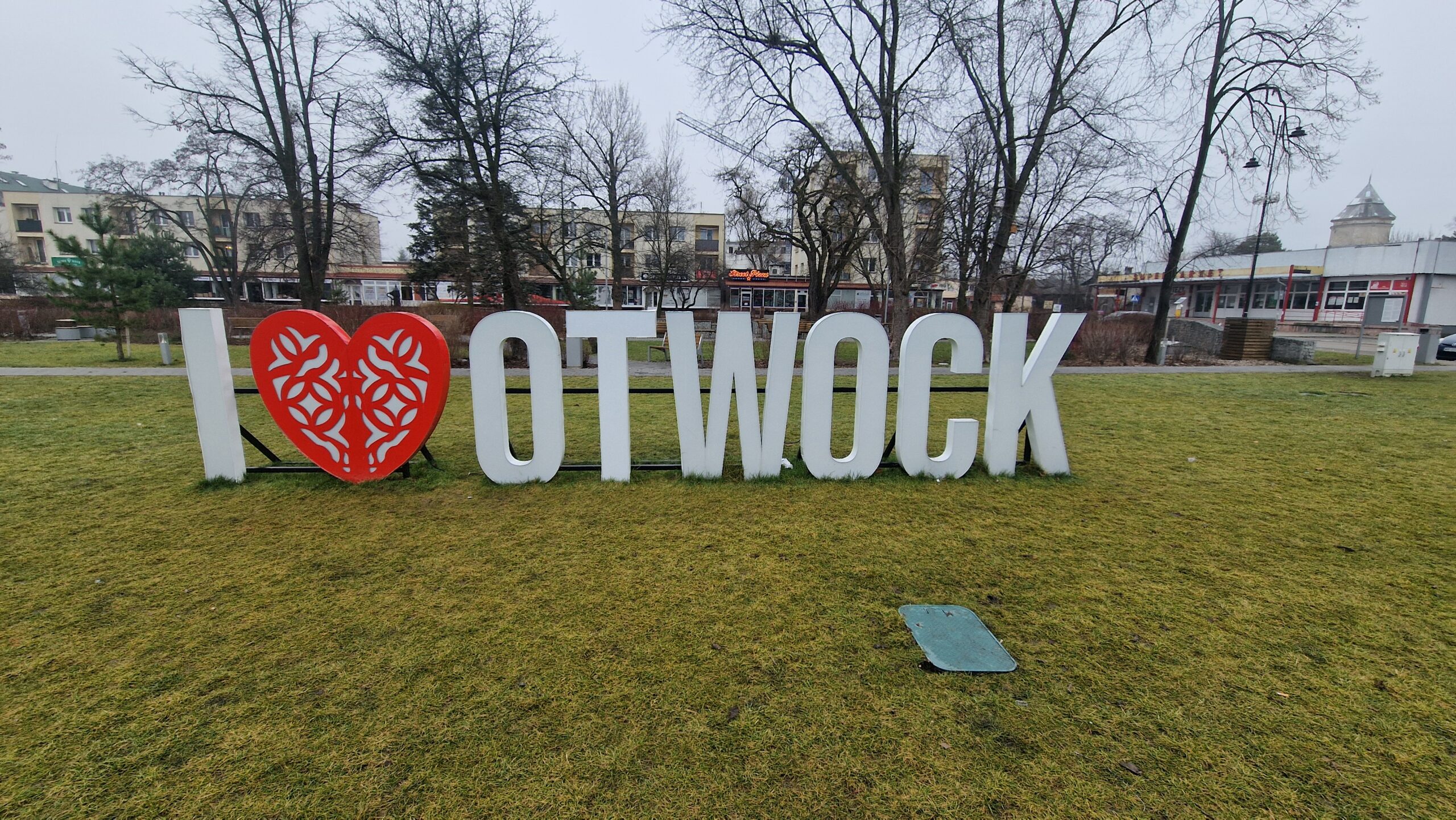
    I’m aware I’m jumping around topics a bit at the moment, this is from when I was in Poland a week ago.

    20250119_114653

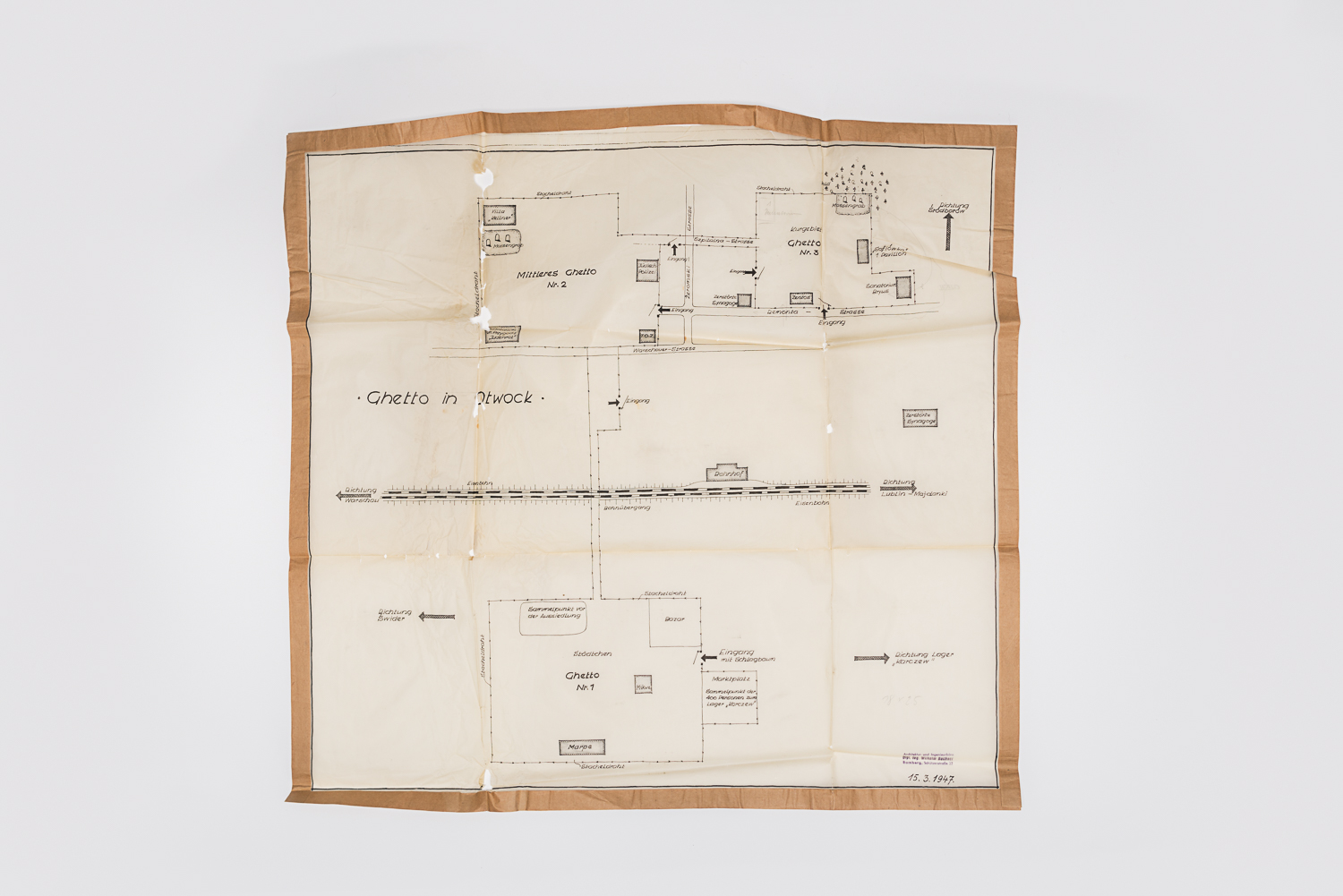
    Otwock is at one end of the S1 line in Warsaw and I thought I’d go there to distract myself for the day. The town dates back to the fifteenth century, but it expanded quickly in the late nineteenth century when the railways arrived here. Located in a forested area it became a popular place for people to take the air and the wealthy Poles came here for rest and relaxation. There was a large Jewish community here (around 5,400 out of a population of 8,500) before the Second World War, but their population was decimated, with most ending up at Treblinka extermination camp. There were five synagogues in the town at the outbreak of the war, but they were all destroyed in October 1939. A ghetto was set up here by the Germans and there’s a plan of it at https://museeholocauste.ca/app/uploads/2017/03/plan-ghetto-otwock-1947.jpg.

    20250119_110659

    It does have one of the most beautiful railway stations that I’ve seen in Poland.

    20250119_110800

    I think this is really rather lovely and it first opened in 1877 as part of the Vistula River Railroad project, although this building is later and dates to 1910. The line was electrified in 1936 as part of the plan to improve the rail services to suburban Warsaw.

    There’s a news report in August 1906, when Otwock was part of the Russian Empire, that reads:

    “Last night, at Otwock near Warsaw, a band of revolutionaries, all of them Russian Jews, attacked the railway station, firing revolvers. They stole 800 roubles and shot a railway employee dead. During the night troops searched the neighbourhood and arrested eleven suspects. This morning, as the train carrying the prisoners approached Warsaw, it was stopped by fifty men, who fired revolvers at it”.

    I’m not sure I entirely understand, as in 1906 there were pogroms across Russia against Jews, although they did defend themselves. There’s another reality that newspapers at the time may or may not have reported accurately anyway.

    20250119_111222

    The town’s Christmas tree was still up in late January.

    20250119_111230

    As noted on the sign, Warsaw is around 25 kilometres away.

    20250119_111320

    I’m not sure that I’d go quite that far. However, Michael Jackson applied to lease a property here in 1997 (in Otwock, not this playing field) so it has attracted many over the years.

    20250119_113043

    I was less interested in this sign than wondering where those Five Guys stickers came from, as I don’t think that they’ve reached Poland yet. Monterock have got the rights to open the brand across the country, but I’m not sure any have opened yet.

    20250119_113057

    Otwock is known for its architecture and this shows some of that off. The style is quite located and took off in the late nineteenth century, primarily formed of quite complex wooden construction, rich ornamentation, verandas, balconies and an attempt to blend in with nature.

    20250119_113327

    As another aside, and as more riveting content, why are the seats like that?

    20250119_113354

    That swing looks like something I’ve arranged. Although something I’ve obviously got some help with as otherwise it wouldn’t be level, nor would it be attached to the trees still.

    20250119_113634

    A water tower.

    Just as a note about the railway line that I travelled on from Warsaw, this goes through a town called Wawer. In February 1940, the Germans killed 138 people in reprisal for someone shooting at their police officers and that included a train they stopped which was going to Otwock and they just shot dead one in five of the passengers as a reprisal punishment. This reached the news internationally, it was clear to the world just what was happening in Poland very early on.

    In March 1941, the Germans killed seventeen Poles in Otwock because they were dis-satisfied with the number of volunteers who had put their names forward to work in Germany. In late July 1944, the Russian troops liberated Otwock, but it took until January 1945 for them to liberate Warsaw. This was deliberate, they wanted the Polish resistance crushed in Warsaw and were happy for the Germans to do it and this strategic inaction is part of the dislike of Russia that pervades the wider region.

    I must admit, I meandered around for a while and this was all that I could find that looked interesting and exciting. The restaurants were mostly not open yet and as I had to get back to Warsaw so I didn’t miss my flight, I limited myself to a three mile walk up and down the streets of Otwock and then went back again.

  • Warsaw – Popeyes

    Warsaw – Popeyes

    20250119_142306

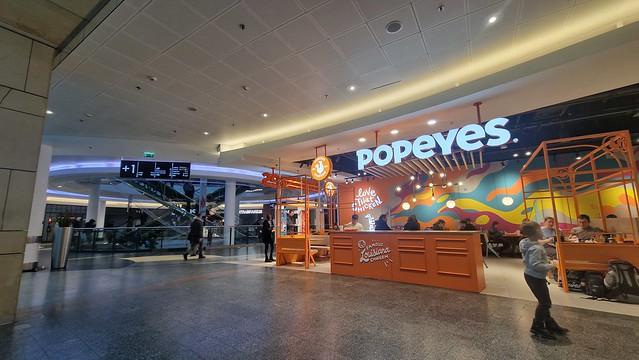
    I’d better add the caveat here that I’m aware that there are better restaurants available in Warsaw, and I’ve gone through probably hundreds of them over the last decade, but I was moderately surprised to see an outlet of Popeye’s opening in the Polish capital. They opened their first venue in Wrocław in July 2023, which is a reminder to myself that it’s years since I’ve been to that rather lovely city and I must go back. They now have around ten venues and are rolling out more across Poland at the moment, as part of an international expansion. I first tried Popeyes in New Orleans around a decade ago and have kept fond memories of it.

    20250119_130341

    One of the reasons I found it handy to pop here was that I needed to charge my devices up and they have power points. Everything seemed clean and ordered, with team members visibly cleaning the venue on a regular basis.

    20250119_130133

    I ordered via a kiosk, but you can order at the counter if preferred.

    20250119_130337

    Served promptly and looking delicious, the chicken tenders in the bag were moist and tender. The chicken wings were cold so I took those back, but they politely immediately made me more without querying the matter, and they were much better, although not anything to write home about. I’m not sure that things are quite as smooth as in their UK and US outlets, but I suspect that they’ll give KFC something of a run for their money. The reviews are a little mixed here and there are a few people disappointed that they’ve made the menu a little Polish orientated rather than offering some of the US options such as shrimp.

    Anyway, there’s some more food content as I’ve been writing too much about bridges.

  • Evening Meal in Warsaw, Breakfast in Rome and Lunch in Guildford (Wizz Air Multipass)

    Evening Meal in Warsaw, Breakfast in Rome and Lunch in Guildford (Wizz Air Multipass)

    Firstly, I didn’t quite intend this odd way of getting back to the UK, but I had gone to Warsaw for a few days and needed to get back for something. I’ve been using my relatively new Wizz Air Multipass, which I’ll post an update about soon as I’m rather pleased with it, and the only way of getting back was via Rome.

    20250119_145206

    So, I started yesterday evening from Warsaw’s central railway station.

    20250119_173123

    There’s the flight at 20:40.

    20250119_174415

    Always a delight to be in the Preludium lounge, which is the Schengen lounge so it’s one I’ve only been in a couple of times over the years (and I think one of those was because of Covid and they only opened a couple of the lounges). Thanks to Priority Pass for this.

    20250119_202733

    Boarding.

    20250119_230118

    I had been randomly given an aisle seat, but a cabin crew member came over to me and said they were looking for an English speaker to sit by the emergency exit door. It’s always odd this, a Hungarian airline flying from Poland to Italy, but I was an ideal choice I decided. I certainly had enough space and the flight was less than half full.

    20250119_233759

    Safely into Rome and there was a little collection of artefacts to look at.

    20250120_025740

    I was genuinely impressed at Rome Fiumicino airport, it’s been well designed, it’s spacious, modern and functional. I have been to Rome before, but this reminded me that I haven’t been in several years and I must go back.

    20250120_025037

    I found a seating area and I thought it was interesting that the police checked the passports of most people in the seating area. The airport says that only those with tickets can stay overnight, so perhaps this is their way of checking someone isn’t there rather too frequently. The police were very polite and the time passed quickly.

    20250120_032401

    I went through security at 03:00 and it remained quiet in the non-Schengen zone for some time after that.

    20250120_032530

    A rhino.

    20250120_053409

    There are a range of times for the Plaza Premium Lounge and most suggested that it opened at 05:00. I meandered nearby so I knew where to go, but it seemed open at 04:40 and I asked about the opening time and the friendly staff member said I could come in immediately. Thanks once again Priority Pass.

    20250120_044347

    I didn’t have any of them, but the hot food options.

    20250120_044433

    Just delightful. I’ll write a fuller report of this lounge, but this is very much the sort of breakfast I was hoping for.

    20250120_045331

    And then pastries came out, and they were delicious.

    20250120_050943

    And a double espresso to keep me awake. Rich and decadent. With several meringues (I kept getting more) to provide the sugar boost.

    20250120_080902

    Second flight and I was fortunate to have an aisle seat again, with no-one in the middle seat.

    20250120_090158

    Into Gatwick Airport.

    20250120_092507

    A quick coffee stop in Redhill.

    20250120_112928

    And then Wetherspoons in Guildford.

    All really rather lovely, but longer reports to follow for my two loyal blog readers.