Category: Poland

  • Ciechanów – Choo Choo Train

    Ciechanów – Choo Choo Train

    20250409_090804

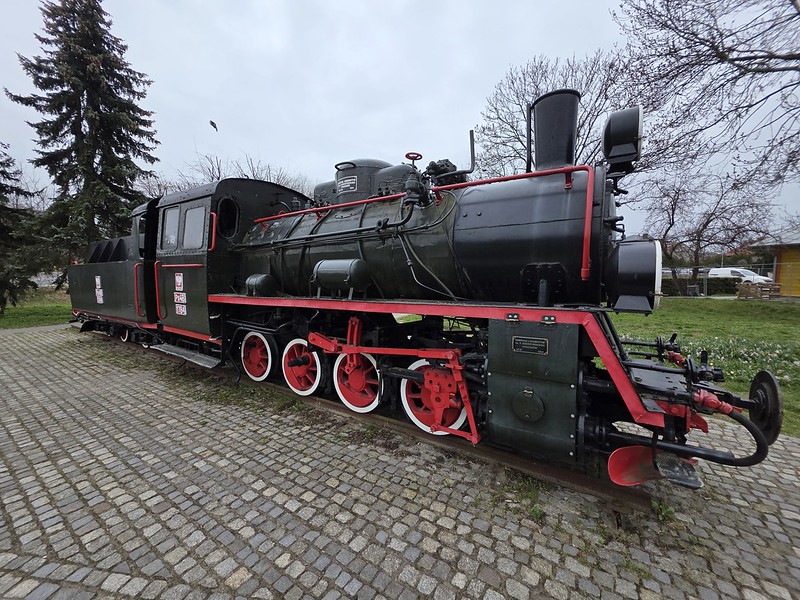
    This is a narrow-gauge locomotive from 1957, a legacy of the need to Poland’s heavily damaged transport infrastructure rolling stock quickly and efficiently following the damage done during the Second World War. Minimising development time and utilising existing, reliable engineering principles allowed Fablok (then operating under the name Fabryka Lokomotyw im. F. Dzierżyńskiego ) to initiate mass production relatively swiftly. This locomotive was linked to the Ciechanów Sugar Factory (Cukrownia Ciechanów) which was a significant industrial enterprise in the city for over a century. Its establishment in 1882 coincided with a period of notable industrial growth in Ciechanów, which also saw the founding of a brewery in 1864 and the arrival of the standard-gauge Vistula River Railroad in 1877.

    20250409_090811

    The front of the locomotive. Following the cessation of regular narrow-gauge operations and the closure of lines like those around Ciechanów, the Narrow-Gauge Railway Museum in Sochaczew became the principal repository for withdrawn locomotives and rolling stock. Established formally in 1986 on the site of the former Sochaczew County Narrow Gauge Railway, the museum amassed one of Europe’s largest collections of narrow-gauge vehicles. This train was sent there, but was purchased by the authorities in Ciechanów in 2011 and it was installed at this site in 2018 after some repairs to the locomotive.

    20250409_090757

    The translated text reads:

    “1896 – Construction of the railway line from Jawor to Chełmsko Śląskie begins (extended to Lubawka in 1899)
    1899 – Opening of the Lubawka – Krzeszów section
    1900 – Opening of the Krzeszów – Kamienna Góra section
    1945 – Railway taken over by PKP (Polish State Railways)
    1954 – Change of track gauge from 750 mm to 785 mm
    1960 – Closure of the Jawor – Chełmsko Śląskie section
    1979 – Suspension of passenger transport on the Kamienna Góra – Krzeszów – Lubawka route
    1986 – Closure of the Lubawka – Krzeszów section
    1988 – Closure of the Krzeszów – Kamienna Góra section
    1991 – Railway liquidation

    The Chełmsko narrow-gauge railway, initially steam-powered, reached from Jawor to the town of Ciechanów.”

    20250409_090815

    Translated, this sign reads:

    “The narrow-gauge steam locomotive, series Px48, number 1784, from the Feliks Dzierżyński factory in Chrzanów, was produced in 1954. In Ciechanów, it worked on the sugar factory railway until 1993. After the liquidation of the sugar factory railway, it was transferred to the Museum of Narrow-Gauge Railways in Sochaczew. In 2011, it was repurchased by the city of Ciechanów and restored. It is currently exhibited on Sienkiewicza Street. In 2012, it was entered into the register of movable monuments.”

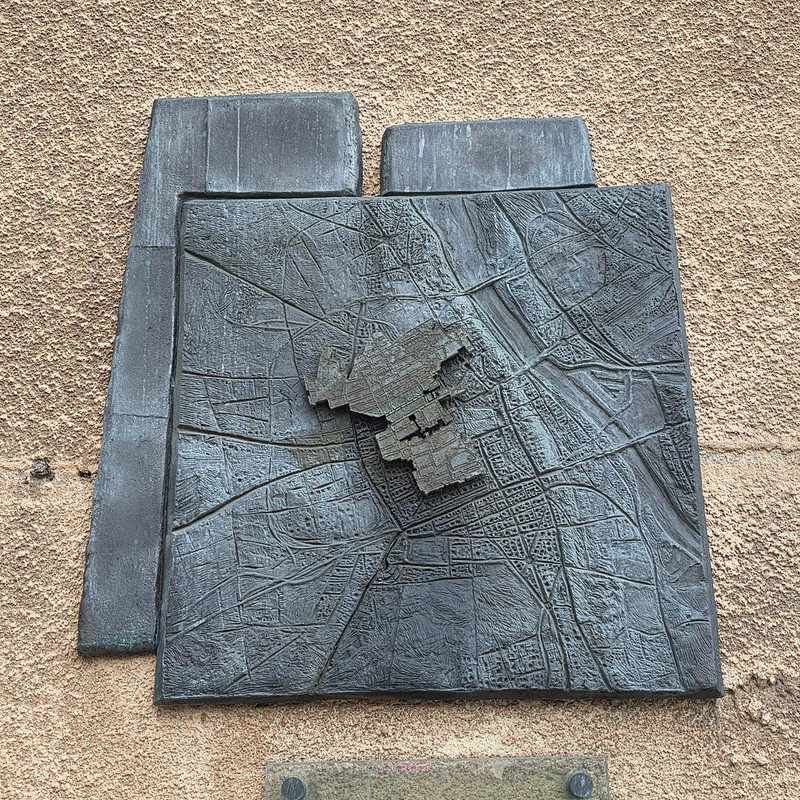
    It won’t surprise either of my two loyal blog readers to discover that I’m not an expert in redundant railway lines in Ciechanów, but the former line is evident from this overhead map.

  • Ciechanów – Ciechanów Castle (Memorial to Hanged Members of the Polish Home Army)

    Ciechanów – Ciechanów Castle (Memorial to Hanged Members of the Polish Home Army)

    20250408_131400

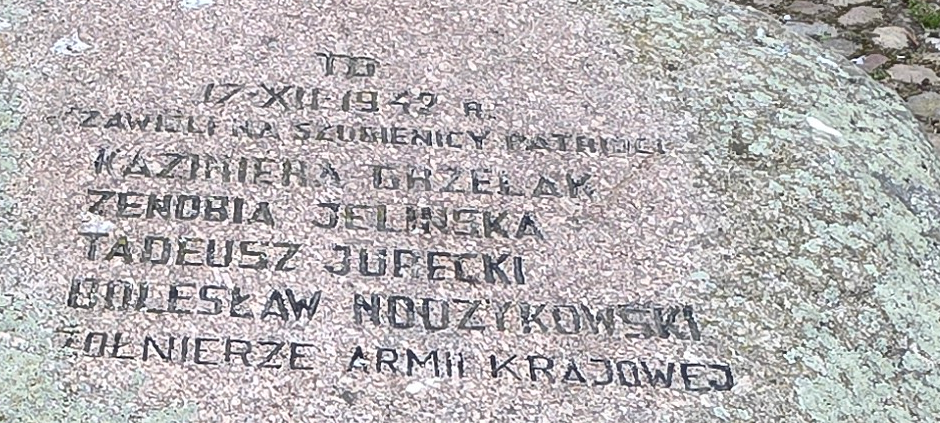
    Located in the grounds of Ciechanów Castle, this is a memorial to four members of the Polish Home Army who were hanged here on 17 December 1942. The translation above refers to the “patriots hanged on the gallows” and the four killed were:

    Kazimierz Grzelak
    Zenobia Jelińska
    Tadeusz Jupecki
    Bolesław Noużykowski

    This was all a planned process and, on 17 December, German occupation authorities carried out simultaneous public executions by hanging in four key towns of the Regierungsbezirk Zichenau: Ciechanów, Mława, Przasnysz, and Pułtusk. These acts were not isolated incidents but part of a wider, centrally planned operation designed to decapitate the leadership structures of the Polish underground, specifically the Polish Home Army (Armia Krajowa – AK), and to terrorise the local Polish population into submission. The executions took place during a particularly harsh winter, marked by temperatures plummeting below -10°C, coinciding with German military setbacks on the Eastern Front and intensified, often brutal, requisitioning campaigns, such as the notorious collection of winter clothing (“zbiórka kożuchów”), from the Polish populace.

    The four individuals publicly executed by hanging in the courtyard of Ciechanów Castle on December 17, 1942, were confirmed members of the Polish Home Army , the dominant resistance organisation in occupied Poland that caused such havoc to Nazi occupation. Their names were Kazimiera Grzelak, Zenobia Jelińska (using the pseudonym “Teresa”), Tadeusz Jurecki (using the pseudonym “Wrona”), and Bolesław Nodzykowski (using the pseudonym “Mały”).

    Kazimiera Grzelak (1912-1942)

    Born in 1912 , Kazimiera Grzelak had roots in the Tarnów region, her mother hailing from Siemiechów. After completing commercial school in Krakow, she settled in Ciechanów in 1937. Before the war, she found employment working for Franciszek Trzeciak, the deputy Starost (county administrator) of Ciechanów. In 1939, she married Władysław Grzelak, a local Ciechanów butcher. Their daughter, Maria, was born in 1941. Almost from the beginning of the German occupation, Kazimiera and her husband joined the underground, initially the Związek Walki Zbrojnej (Union of Armed Struggle – ZWZ), which later formed the core of the Home Army (AK). Within the resistance structure, she served as a liaison officer (łączniczka) for the AK’s Ciechanów district. Some sources also identify her role as distributing underground press (kolporterka prasy). In late August 1942 , Gestapo officers raided the Grzelaks’ home on Płońska Street. Their arrest stemmed from betrayal as a Polish woman reportedly accompanied the Gestapo and pointed out their exact address. Kazimiera was separated from her husband and subjected to harsh interrogation and torture at the Gestapo facilities in Ciechanów and Płock. Accounts emphasise her remarkable resilience and she refused to divulge the names of fellow underground members, reportedly earning the grudging label “Twarda Polka” (Tough Polish Woman) from her German captors and she consciously took the blame herself in an attempt to shield her husband. I suspect that a lot of German Nazi officers were surprised and entirely not delighted by just how brave so many Poles were. Subsequently, she was imprisoned in the notorious Działdowo transit and concentration camp (KL Soldau). Her husband, Władysław, met a tragic fate, being sent first to KL Soldau, then to Auschwitz, and ultimately dying in the Dachau concentration camp in 1944.

    Zenobia Jelińska (1903-1942), ps. “Teresa”

    Born in 1903 , Zenobia Jelińska hailed from the nearby town of Przasnysz. Within the underground, she operated under the pseudonym “Teresa”. Her involvement in resistance activities predated the full formation of the AK. She was a member of the K-7 diversionary organisation, having received training in Modlin as early as May 1939, even before the outbreak of war. During the occupation, she served as a vital courier (kurierka) for the ZWZ-AK Przasnysz district, maintaining communication lines along the critical Przasnysz-Ciechanów route. Furthermore, she demonstrated leadership by heading her own women’s section within the local AK structure. Her active role placed her at significant risk, leading to her arrest on September 8, 1942. Like Grzelak, she was subsequently imprisoned in both Płock and the Działdowo camp (KL Soldau).

    Tadeusz Jurecki (1920-1942), ps. “Wrona”

    Tadeusz Jurecki was born in 1920 and came from Grudusk or the adjacent village of Pszczółki Szerszenie. He was a young man, identified as a student at the Gymnasium (secondary school) in Ciechanów. His chosen pseudonym in the underground was “Wrona” (Crow). Despite his youth, Jurecki held a position of significant responsibility within the local resistance network. Most sources identify him as the Head of Intelligence (Szef Wywiadu) for the Home Army’s Ciechanów district , although a few mention Head of Communications. His family was also involved in the resistance; his sister, Joanna Jurecka (who used the alias “Teresa,” potentially causing confusion with Zenobia Jelińska’s pseudonym), was also active. Tadeusz Jurecki was arrested by the Germans in August 1942.

    Bolesław Nodzykowski (1905-1942), ps. “Mały”

    Born on January 16, 1905 , Bolesław Nodzykowski was from Pułtusk. He used the alias “Mały” (Little One). Nodzykowski brought valuable military experience to the resistance. Before the war, he served as a non-commissioned officer (plutonowy, equivalent to sergeant) in the 13th Infantry Regiment (13 pp), which was garrisoned in Pułtusk. Leveraging his military background and connections within the former regiment and the local rural community, Nodzykowski became a key organiser of the underground in his area. He served as the Commandant (Komendant) of the ZWZ-AK Pułtusk District (Obwód Pułtusk, code-named “Pstrąg”) until his arrest in mid-1942. The Pułtusk AK district was noted for having a particularly high concentration of NCOs from the pre-war 13th Infantry Regiment among its members. Nodzykowski was arrested by the Gestapo on September 10, 1942. He was subsequently held in prisons in Pułtusk and Płock before being transferred to KL Soldau (Działdowo). For his service and sacrifice, Bolesław Nodzykowski was posthumously awarded the Cross of the Home Army (Krzyż Armii Krajowej).

    20250408_125920

    This was explicitly intended as a “pokazowa egzekucja”, a show execution, designed to instill fear and deter any further resistance among the Polish population. To ensure maximum impact, German forces forcibly rounded up residents from Ciechanów and the surrounding villages, compelling them to witness the hangings. Accounts suggest a crowd of at least 2,000 people was assembled in the castle courtyard. Some reports mention the presence of the victims’ families , and one particularly harrowing, though perhaps difficult to verify precisely, account claims that Kazimiera Grzelak’s one-year-old daughter Maria was among the unwilling spectators. The atmosphere was described as one of profound cold, fear and tension, with witnesses reportedly murmuring curses against the perpetrators and prayers for the condemned

    Before the execution commenced, the formal verdict was read out, translated for the crowd, accusing the four AK members of engaging in conspiratorial work against the German state and collaborating with partisans. As they faced their final moments, the condemned displayed remarkable courage and patriotism in a way that so many Poles did during the Second World War. Eyewitness accounts consistently report that they issued a collective, defiant cry: “Niech żyje Polska!” (Long live Poland!). One account adds a grim detail: a German official allegedly kicked the plank or support from beneath their feet just as they began the second shout, cutting off the word “Polska” mid-utterance.

    A significant and well-documented incident occurred during the execution, involving a local Polish farmer named Roman Konwerski from the nearby village of Kąty. The Gestapo officer supervising the execution, identified by witnesses as Ernest Wolf (nicknamed “Kopikostka”), apparently decided to amplify the horror and humiliation by forcing a Pole to act as the executioner. He singled out Konwerski from the crowd and ordered him to place the nooses around the necks of the condemned. Konwerski, despite the immense pressure and danger, refused. His defiant words, “Braci swych wieszać nie będę!” (I will not hang my brothers!), echoed through the courtyard. This act of profound moral courage had immediate and severe consequences for Konwerski. He was instantly beaten by the Germans, arrested on the spot , and incarcerated in the police prison in Ciechanów. After enduring several weeks of brutal interrogation, he was deported, likely first to KL Auschwitz and then transferred to the Mauthausen-Gusen concentration camp complex. According to official records from the Arolsen Archives, Roman Konwerski was shot and killed in the camp on July 29, 1943, allegedly during an escape attempt – a common Nazi euphemism for murder.

    In the immediate aftermath of the execution, the bodies of Kazimiera Grzelak, Zenobia Jelińska, Tadeusz Jurecki and Bolesław Nodzykowski were treated with contempt. They were taken down and buried unceremoniously in a common grave at the local Jewish cemetery (kirkut). It was only after the war, in 1945, that their remains were exhumed and given a more dignified burial.

    There is an annual ceremony held on 17 December in the castle’s courtyard to remember the bravery and courage of these five Polish patriots, but it’s hard today to imagine the terrors that took place here.

  • Poland – PKP Railway Map from 1939

    Poland – PKP Railway Map from 1939

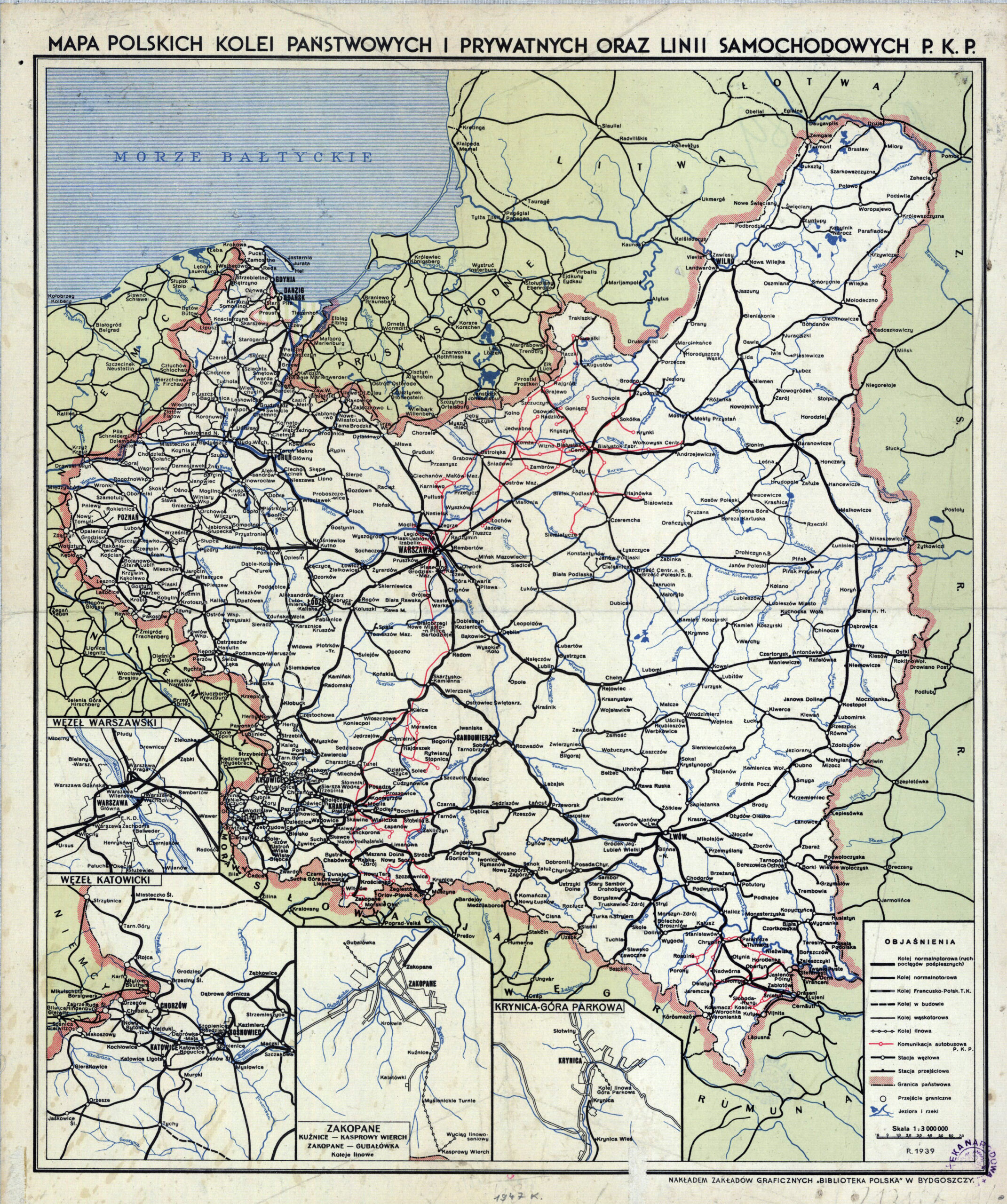
    As a random aside, I haven’t seen this map of the Polish PKP railway system from 1939 before. It’s always odd looking at maps like this as the country’s borders have shifted, but it’s an interesting piece of history….

  • Warsaw to Ciechanów Train – PKP

    Warsaw to Ciechanów Train – PKP

    20250408_103444

    For reasons unknown to me, the hotel prices in Warsaw were excessively high which is unusual, so I thought I’d spent a night in Ciechanów as it’s only one hour away by train. I started from Warszawa Centralna, which I’ve written about numerous times before.

    20250408_095200

    Mine was the 11:00 to Kołobrzeg, which cost the equivalent of £6 despite booking in on the morning of the journey. I’ve also noted many times before that I love these yellow sheets of paper, they’re clear and informative.

    20250408_103448

    There we go, platform 2.

    20250408_104404

    Down the escalator.

    20250408_104454

    The UK have these screens, but they rarely work correctly in terms of getting you to stand in the right place for the carriage you’re booked into. This one worked perfectly for me.

    20250408_104956

    There we go and the train started in Łódź, it reminds me that I want to go there again soon.

    20250408_110024

    They still have corridor trains, although much of the seating is more as it is in the UK. The seats are comfortable, they come with double arm-rests so each person has one each (not that there was anyone else in my cabin thing) and power points.

    20250408_120020

    And arriving on time….

    20250408_120026

    The train departing off to northern Poland.

    20250409_092426

    And the new and shiny railway station.

  • Ciechanów – Ciechanów Castle

    Ciechanów – Ciechanów Castle

    20250408_123332

    I love a castle and this one is a suitably imposing one. Located in the Mazovian Voivodeship of Poland, Ciechanów Castle remains as something of a testament to the region’s rich and tumultuous past, despite most of the interior of the structure having been entirely lost.

    20250408_123219

    There was a friendly welcome when I entered the ticket office and the staff member explained that the card machines were down and so they couldn’t charge me, but it’s usually around the equivalent of £3 to enter. Everything is done by an audio app which can be downloaded and this was one of the better ones that I’ve used. For anyone who wants to, the audio guide that I listened to is available for free on the Movi Guide app. I can’t imagine that anyone will want to listen to an audio guide of a castle they haven’t been to, but you never know…

    20250408_123729

    I think that I had expected a little more of the interior to have survived given the exterior. The first mention of a castle in Ciechanów dates back to the thirteenth century and it was likely a wooden structure built to defend the growing town against threats from the Teutonic Order. In the fourteenth century, during the reign of King Casimir the Great, the wooden fortifications were replaced with a more substantial stone castle and this helped to transform the town into something of a regional stronghold. The fourteenth century castle likely followed the architectural trends of the time, with thick stone walls, a central keep and defensive towers.

    20250408_124012

    The interior was extensively renovated around ten years ago and there’s a museum in each of the two towers, so there’s plenty to see during a visit and that’s helped by the audio guide. I usually hate audio guides as I can’t work out where I am or it automatically starts playing something else which is about 45 minutes long. But, this was a rather decent guide and added positively to my visit.

    20250408_125408

    I’m impressed that the exterior walls have held up as by the nineteenth century the building had fallen out of use and had fallen into disrepair.

    20250408_125612

    The walkway between the two towers.

    20250408_125727

    There’s plenty of evidence of where the internal walls used to be and what looks to be the only door to the exterior is actually the former toilet.

    20250408_125847

    The second tower.

    20250408_130110

    The surrounding area.

    20250408_131229

    I was pleased to come down this way rather than go up, but I was brave coming down despite my fear of heights.

    20250408_131454

    The rear section of the castle, with some of the few remaining walls.

    20250408_131456

    The toilet door I mentioned earlier is on the top left.

    20250408_131511

    The visitor centre has an exhibition as well on the archaeological finds in the local area, all nicely laid out.

    20250408_125920

    The memorial to the hanged members of the Polish Home Army, which I’ve written about separately.

    There are a couple of separate posts about the castle I’ll need to make (as I’m like that) but I thought that this was all really well done. I can’t imagine they ever get huge numbers of visitors and it was very quiet when I was there, although a school party were just leaving. The welcome was friendly, the prices are affordable (when their machines are working) and it’s worth a 90 minute or so visit. Really all rather lovely.

  • Ciechanów – Monument of Struggle, Martyrdom and Victory

    Ciechanów – Monument of Struggle, Martyrdom and Victory

    20250408_122010

    I noticed this monument in Ciechanów, although it would be hard to miss as it’s so large and imposing by the side of the road. It was installed here in 1988 on the initiative of the Ciechanów Land Lovers’ Society and it was designed by Henryk Wróblewski.

    20250408_122019

    The memorial reads “In memory of the inhabitants of the Ciechanów region who died and were murdered during World War II.” There’s now a problem though, the ‘victory’ element has been interpreted by some as being from a time when Russians imposed their imperialism on the people of Poland and so some want this entire monument removed. This feels a sub-optimal situation, they can always just rename the monument or add a new interpretation.

  • Warsaw – Hopito Chmielna

    Warsaw – Hopito Chmielna

    20250406_151417

    I might have made a mistake here…. Not a substantial one, not indeed one of any consequence, but I’ve just realised that I’m not entirely sure that I’ve visited one of the city’s main craft beer bars before. This isn’t so much of an oversight but just something in my mind that I thought it was a different place and this only became apparent to me when I visited the sister bar again last week.

    20250406_151222

    So, aware of the confusion that I’ve created for myself, I needed to resolve it by going to the bar to see what I’ve evidently missed out on.

    20250406_134011

    The beer board and the latest version is available at https://hopito-chmielna.ontap.pl/. The service was exceptional, the team member was engaging, personable and knowledgeable. He pro-actively made recommendations and suggested trying a different beer which he thought he’d like more than the one I’d ordered. He transpired to be correct. Back to the beer list, it felt well curated with a range of beer styles and ABVs to choose from, as well as a cider or two.

    20250406_134552

    The first beer was Puder from Browar Cztery, a rich fruit flavoured sour which a lingering taste of banana with some mango. Smooth….

    20250406_140150

    The second beer was the Royal Cookie – Mexican Hot Chocolate from the ever wonderful Funky Fluid. And this 12% ABV beer was excellent, smooth, rich and decadent. There was some sweetness, some residual heat, creaminess and punchy flavours. A proper liquid dessert.

    The burger was better than I anticipated and I just went for the basic one. The burger was cooked medium and it had a depth of taste and flavour, with the texture being juicy. The bun was lightly toasted and there was gherkin to add texture, with the chips being firm on the exterior and fluffy inside. The coleslaw was creamy and I thought that it all went marvellously with the beer.

    What with two outlets, one doing marvellous pizzas and the other doing marvellous burgers, there’s definitely something in the one thing done well approach. The venue is well reviewed on-line and it’s clear that they have been surprising and delighting their customers. I really liked this bar, the welcome felt authentic, the surroundings were comfortable and the food and drink were verging towards an exceptional quality. I’ll definitely be back and it’s evident to me that I’ve missed out on a bar that I should have noticed before that I hadn’t been to.

  • Warsaw – Metro System : C20 Kondratowicza (Visiting Every Station)

    Warsaw – Metro System : C20 Kondratowicza (Visiting Every Station)

    20250401_114052

    Next up on my plan to visit every metro station in Warsaw, this is Kondratowicza on the M2 line. It’s a recent addition to the network having opened to the public on 28 September 2022.

    20250401_113858

    These information panels are commonplace across the network and they are rather useful in terms of navigation.

    The photo on the right is from Google Streetview in 2018, the one on the left is from 2022. It is really a microcosm of just how fast this city is developing, expanding and improving.

    20250401_114158

    The metro station is opposite Szpital Bródnowski, one of the most important hospitals on the right side of the Vistula River and a major teaching hospital. There’s an exit that goes practically right into the building, so it’s a convenient situation for patients.

    20250401_114556

    As an aside, there seem to be ever more clearly laid out cycling and pedestrian sections, all rather marvellous in promoting people to get cycling.

    20250401_114810

    Nearby is Park Bródnowski which is also a free sculpture park, so a rather marvellous cultural project and it has been increasing in size for many years.

    20250401_120420

    I decided to take a photo of a bird using the feeder but the bloody thing flew off, so here’s a photo of a bird feeder without a bird.

    20250401_120616

    This is usually full of water with a statue of a woman lying on her back in the middle of the pond. The sculpture was created during art workshops conducted by Pawel Althamer for members of a group who all have multiple sclerosis. They worked on the project together, but each person executed a different part of the figure which has deliberately led to different proportions.

    20250401_120724

    This was certainly visually interesting and the sculpture is called Zinaxin and Dolacin, created by Magdalena Abakanowicz in 2005. Their names are taken from arthritis medicines and it’s apparently “a quest for a new take on the human figure in the context of the traumatic history of the twentieth century.”

    20250401_120812

    The Guardian Angel sculpture, designed by Roman Stanczak in 2013 and it’s designed to have multiple values which aren’t necessarily religious.

    20250401_120823

    This was quite a common thing around the park, I haven’t quite understood what the significance is.

    20250401_121018

    The main water feature is a little empty….

    20250401_121412

    Here’s what it usually looks like.

    20250401_121233

    This quirky little shed is known as the Teahouse with Coffee Maker, it’s a steel cube that was designed to resemble a spaceship. It was returned to the original artist, Rirkrit Tiravanija, many years ago but they decided to construct a replacement one and this was overseen by Pawel Althamer and Michal Mioduszewski. It’s thought to be the smallest cultural centre in Warsaw and it can be hired out.

    20250401_121557

    The Daughters of Brodno sculpture which was designed to be a self-portrait of local people, inspired to be similar in concept to Rodin’s The Burghers of Calais. Over 100 people are attended concept workshops and they decided on numerous different figures, including a goddess, a poet, a public official, a saint, a senior citizen and an athlete.

    20250401_121605

    It’s quite a complex and engaging sculpture.

    20250401_122720

    Back to Kondratowicza metro station. It’s a poetic arrangement in terms of its heritage as the station (and the street it’s under) is named after Ludwik Kondratowicz (1823-1862), a 19th-century Polish poet and translator of Belarusian origin who wrote under the popular pen name Władysław Syrokomla.

    20250401_122730

    And another colourful affair.

  • Warsaw – Avocado Muffin at McDonald’s

    Warsaw – Avocado Muffin at McDonald’s

    20250406_110141

    Just as another random post of no relevance to anyone other than me, the avocado muffin is perhaps the best thing on the McDonald’s menu. It’s £3 for the muffin and a coffee….. The presentation isn’t important, this isn’t a fine dining experience, but egg and avocado are a beautiful match. Maybe in a few years the UK might catch up. And yes I know there are a lot of independent restaurants in Warsaw that do better presentation, but I want to read my book for an hour and not take up a table that might otherwise be needed……

  • Warsaw – Warsaw Beer Festival (Raduga Brewery)

    Warsaw – Warsaw Beer Festival (Raduga Brewery)

    20250405_124513

    Next up at Warsaw Beer Festival was Raduga Brewery, another one that I haven’t come across during my Polish visits. I liked the Fruit Mate name, very Inbetweeners.

    20250405_125118

    There was certainly a range of colours and textures visible here. From back left to back right and then front left and front right:

    (i) Fruit Mate #4 – heaps of kiwi in this and an ingredient that I couldn’t initially work out, but it’s tea…. It was all a bit clumpy and slightly odd, but I was drawn to it despite it being rather medicinal.

    (ii) Peach Melba – like a rhubarb and custard sweet, a sourness from the peach and a lingering flavour that I couldn’t identify, but it’s likely fruit of some kind and that’s not a specialism of mine.

    (iii) Sour Forest – this is quite tart even for me and I like a heap of sourness, but it’s juicy, thick and tastes of currants. Like a decadent and punchy fruit juice.

    (iv) Soft Garden – possibly the least appetising looking beer that I’ve seen, it was positively clumpy and not a pretty colour. There was a taste of banana, maybe apple alongside tastes of lawnmowers and garden sheds.

    (v) Fruit Mate #3 – there’s a bit of pineapple and it wasn’t entirely well rounded beer.

    (vi) Trapeze – light, fruity but nothing much deeper than that.

    I did enjoy these, even though I was sitting in a deckchair trying not to look like an idiot…. The brewery’s output is what I would call rustic, but who wants perfectly rounded beers all the time? There has to be room for experimentation, adventure and ugliness along the way.

    20250405_140856

    Incidentally, look at the state of the Warsaw weather in this short video…. It was too hot yesterday and then we had a little snow blizzard.