Category: London

  • London – Camden – British Museum (South Metopes)

    London – Camden – British Museum (South Metopes)

    I have no in-depth knowledge of these, but there’s plenty of information at https://en.wikipedia.org/wiki/Metopes_of_the_Parthenon about these metopes. They were carved in around 446BC and have had quite the adventure over the centuries.

    But, the bizarre situation now, and without getting political, is that the main sections of some of them are in the British Museum and the heads of these figures are still in Athens (and some are dotted around other parts of Europe).

    This is South Metope VI (SM7) and the catalogue description for this reads as follows, split into three different sections.

    Parthenon SM.7 (Acropolis)
    Title: Parthenon, South Metope 7
    Collection: Athens, Acropolis Museum
    Subject: Centaur head

    Parthenon SM.7 (Paris)
    Title: Parthenon, South Metope 7
    Collection: Paris, Musee du Louvre
    Subject: Head of Lapith
    Subject Description:
    The head of a young Lapith belongs to metope S7, now in the British Museum. He has short hair, large eyes rimmed with thick lids, a mouth with a full lower lip and no beard. The head is represented in an almost frontal view, though the left side is not completely finished.
    Condition Description:
    Head in relief, broken across back. Nose in broken and worn. Heavily weathered

    Parthenon SM.7 (London)
    Title: Parthenon, South Metope 7
    Collection: London, British Museum
    Subject: Lapith and Centaur
    Subject Description:
    Centauromachy: Lapith (left) charges against Centaur with left arm forward, mantle clasped at right shoulder. Centaur (right) rears up, his left foreleg against stomach and groin of Lapith, his cloak flying out to right.
    Form and Style:
    Note veins in left arm of Lapith — a Severe Style trait.
    Condition Description:
    Missing: upper right corner of slab, most of right leg, left foot, right hand, and lower mantle of Lapith, left rear foreleg and left arm of Centaur. Heads in Athens and Paris (Louvre Ma 737). Surface abraded.

    So, anyone who wants to see study this metope will have to pop along to the Louvre, the British Museum and the Acropolis Museum. It’s not ideal….

  • London – Camden – British Museum (Re-opened)

    London – Camden – British Museum (Re-opened)

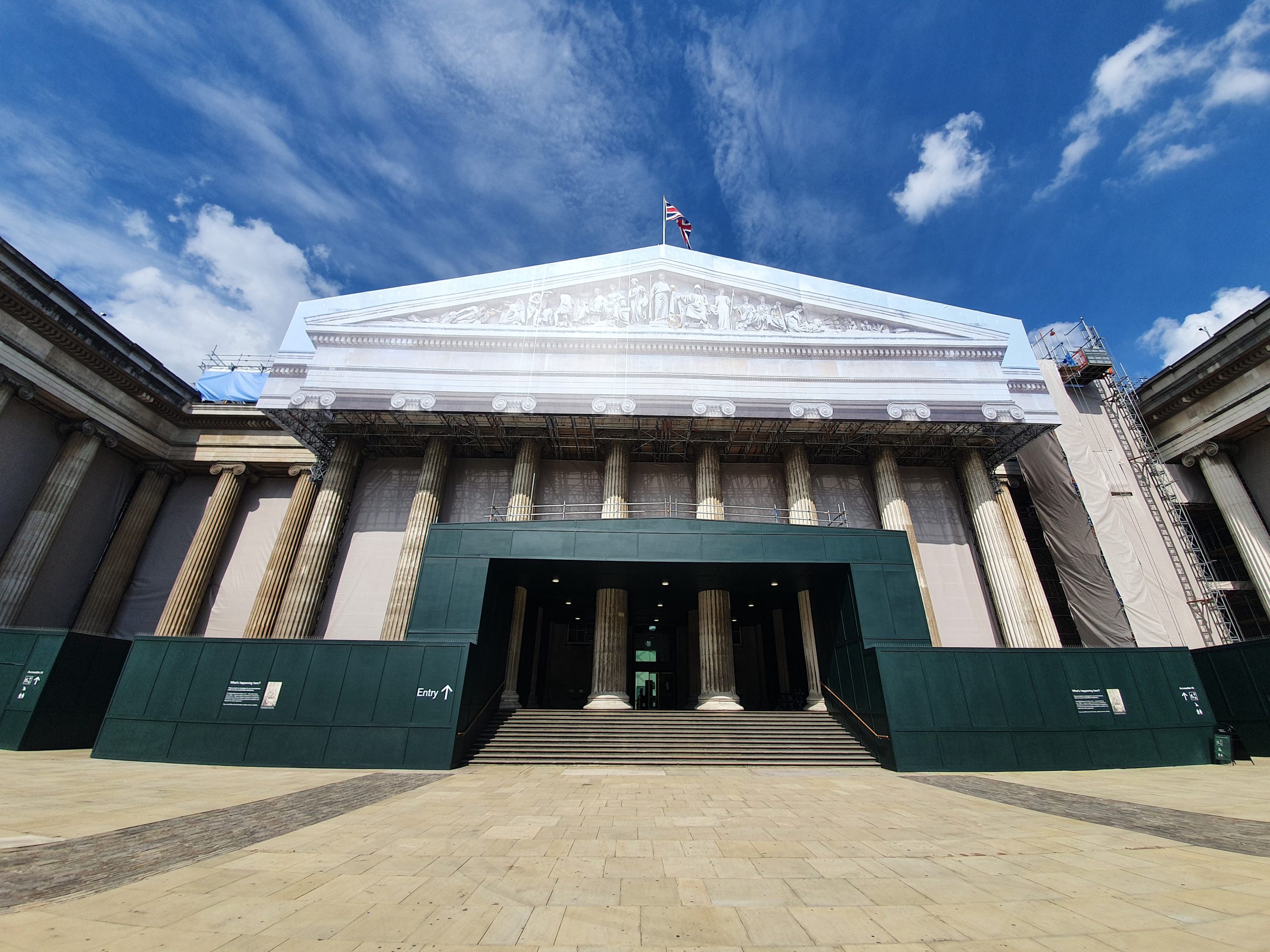
    The British Museum has taken a little longer to open that some other historic attractions in London, but I was able to pre-book a ticket to visit today. The facade of the building is under repair and is expected to open next year, the first restoration of this since it was damaged during the Second World War.

    There’s some muddled logic about the entire opening and I’m surprised that the British Museum were struggling with this, although perhaps the professionalism of some other museums has made it look too easy in what are different circumstances. The British Museum limit entrance to the complex ten minutes before the time on the ticket, which isn’t clearly signed anywhere. It’s not illogical, it just means that people then hang around outside the entrance to the museum in a beautiful small crowd. Which isn’t ideal.

    As for bags, they’re letting in some enormous backpacks, something which I was slightly surprised about. I suspect they’d be better limiting this to some degree, although the security process was quick to go through.

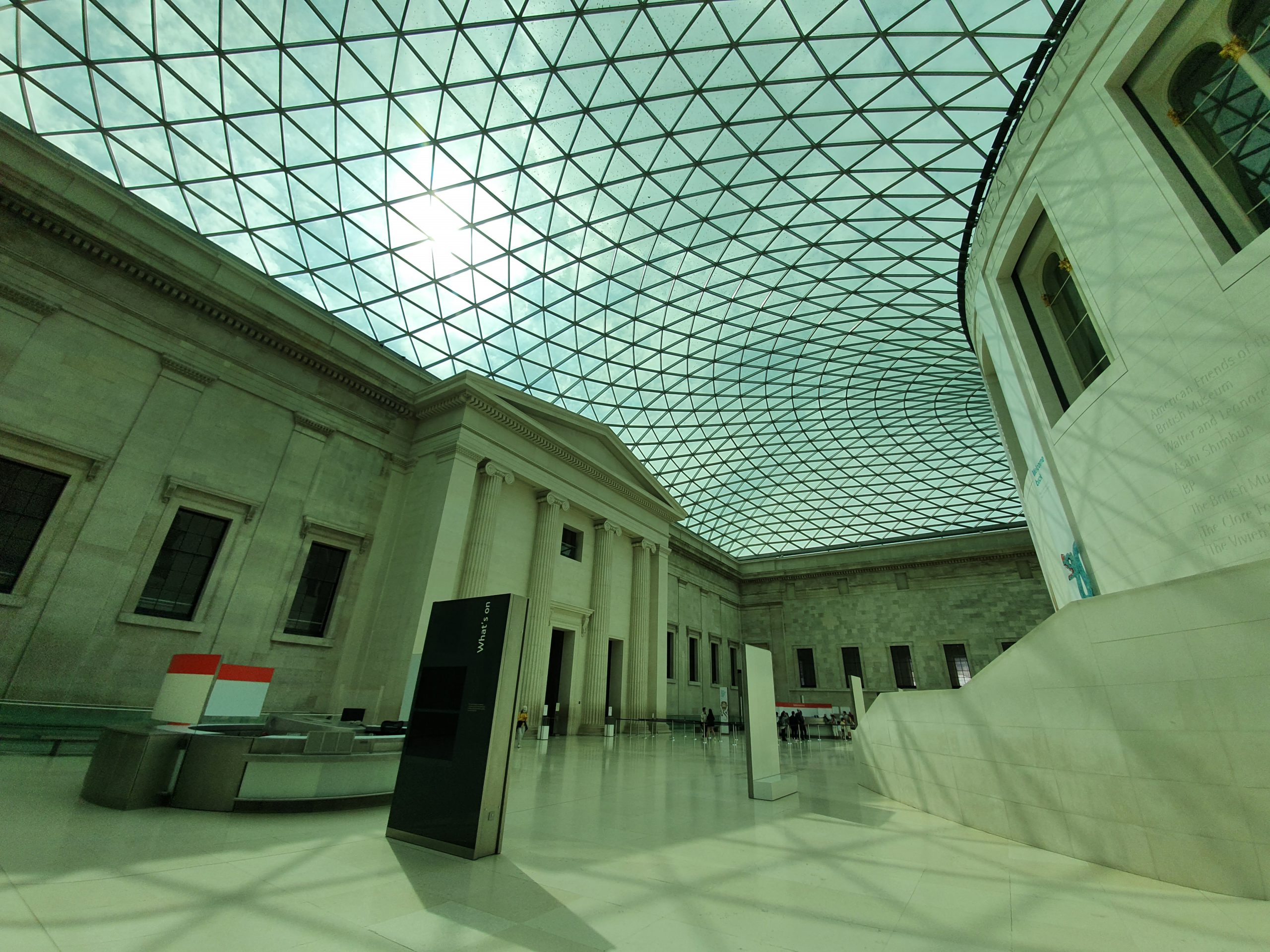
    The inside of the British Museum’s Great Court, where there was plenty of space for visitors to walk around. The cafes and shops are also open, although the seating capacity of the former is quite limited.

    And the beautiful old reading room, now unused for its original purpose as the British Library has its own premises at St. Pancras.

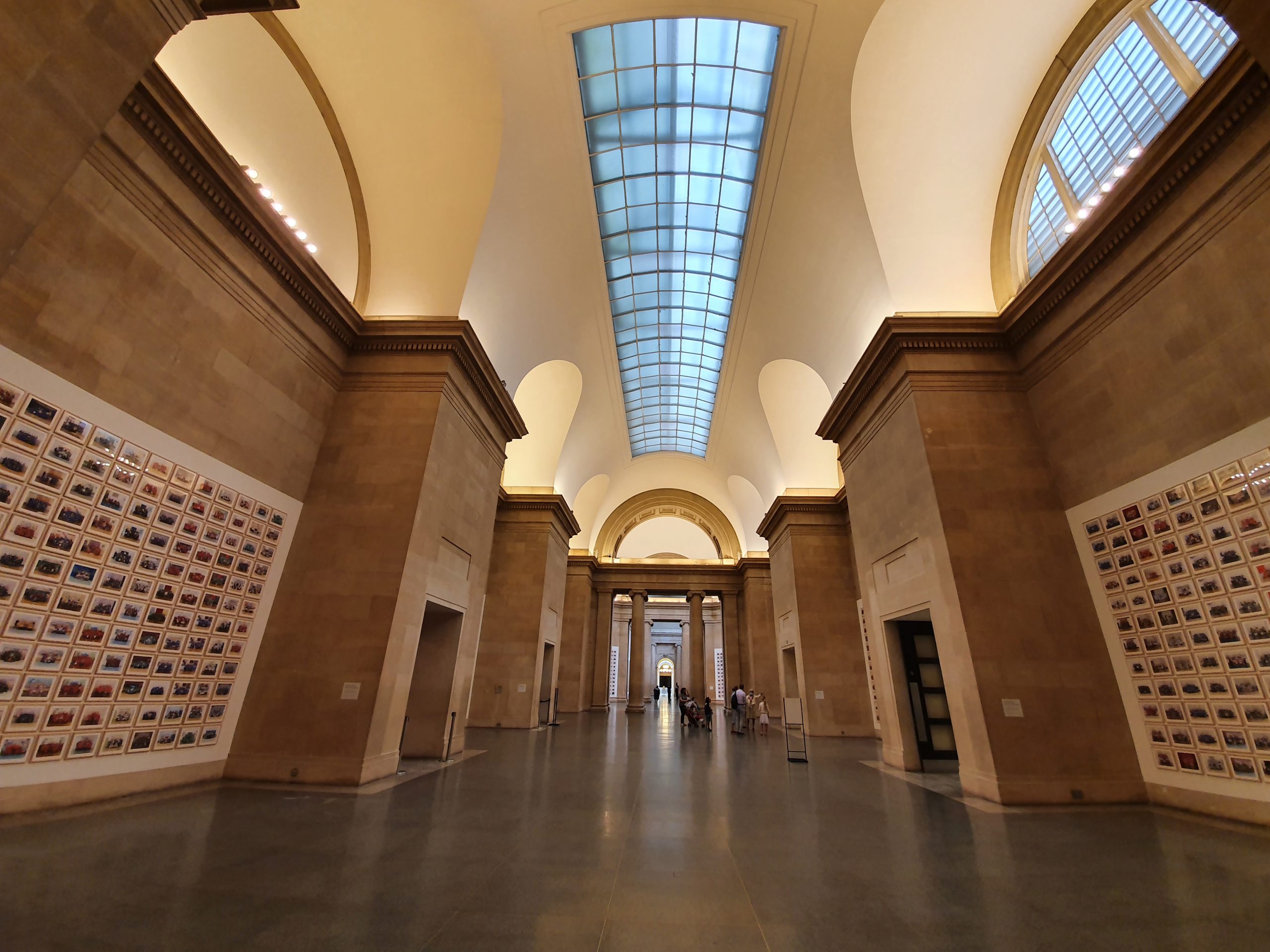
    As for the interior, the museum had made what I considered to be a bizarre decision to funnel everyone together when they entered. So, they ended up with relatively crowded areas, which isn’t really an ideal situation given what is going on at the moment. I suspect that the staff are meant to restrict entrance, but there’s a limited amount they can do. The photo above isn’t of the busiest areas, but I didn’t entirely like their one-way system. None of the other museums I’ve visited over the last few weeks has tried to operate with a one-way system, sometimes it’s best to get people away from each other. If visitors see a nice quiet area, then they can go and visit that, rather than have to stand around together in an area where they might not feel entirely safe.

    These photos were taken in order and what ended up happening was that there was a clump of people at the start of the one-way process and then nearly no-one hanging around as they reached the end to their visit and perhaps rushed through. The one-way system is in places difficult to follow, a chunk of people walk against it and that’s not through any fault of theirs, as in some places I found it illogical.

    Anyway, it was nice to see the British Museum open again, I usually visit every few months and look around a certain section each time. There’s lots closed off at the moment, but there’s still a reasonable amount to see. Definitely some thought needs to be put into the flow of visitors though and letting them self-regulate to a degree so they can feel safer and less crowded.

  • London – Rush Hour at Canary Wharf

    London – Rush Hour at Canary Wharf

    There was a grand plan to get office workers back into London today, with the Evening Standard having a full-page editorial saying that some sort of normality is now required.

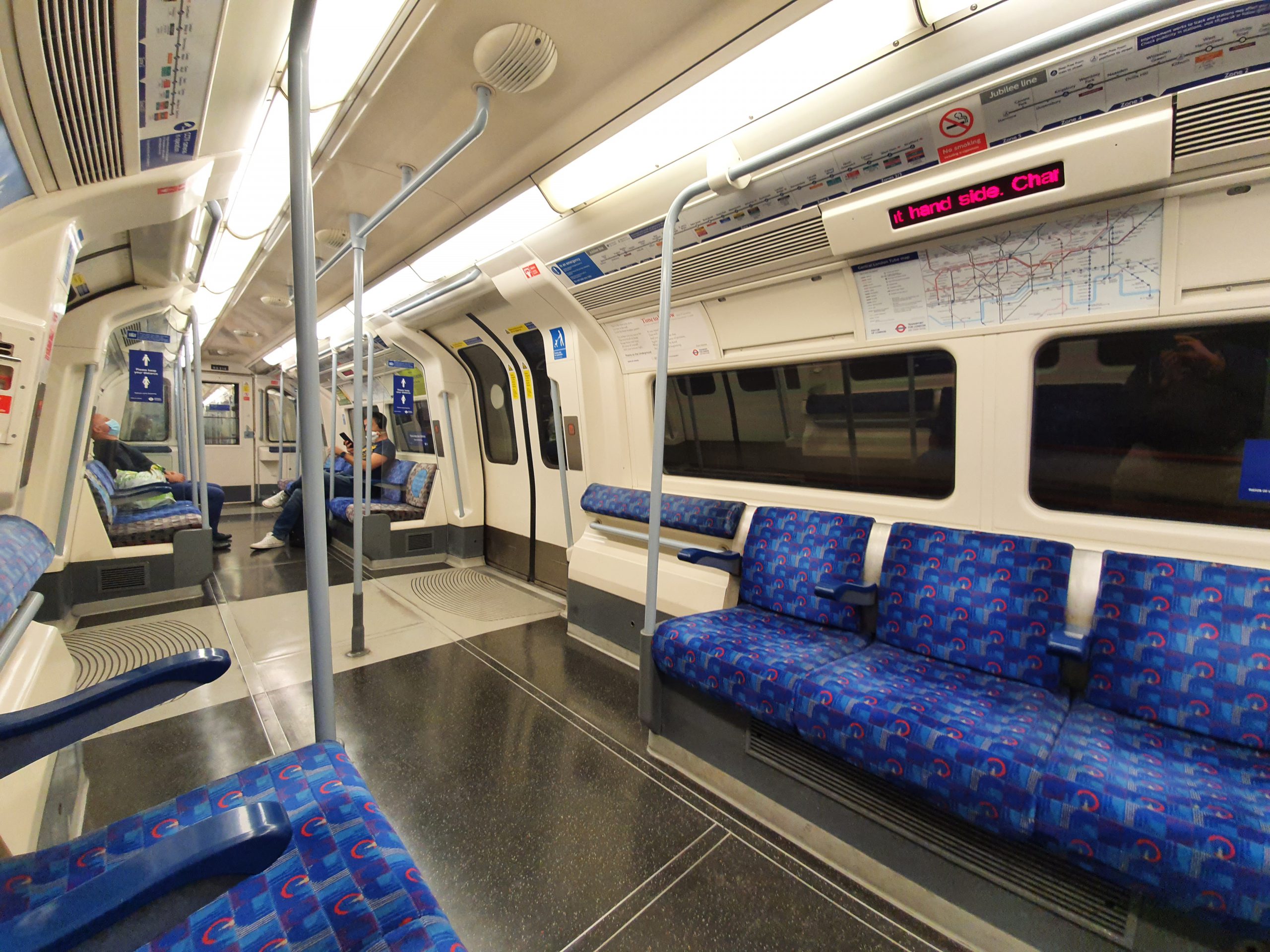
    This was the 17:00 underground service from Canary Wharf…..

  • London – Westminster – Tate Britain (Portrait of the Artist’s Wife by William Dobson)

    London – Westminster – Tate Britain (Portrait of the Artist’s Wife by William Dobson)

    The gallery note that William Dobson (1611-1646) was “considered to be one of the best English artists of his time” and I have no reason (or knowledge) to argue with that. There’s a watercolour from the 1830s which shows the painting on display at Howsham Hall, a grand house to the north-east of York and not that far from Castle Howard. Dobson was a court painter for King Charles I and was a respected artist of this time. Unfortunately, his allegiance to the Monarchy didn’t end well for him when Parliamentarians started to take power, he fell out of favour and died in poverty at the age of just 35.

    The artwork is of Judith Sanders, Dobson’s second wife, and it was painted in the late 1630s. It’s not known where the painting went until it was noted as being at Howsham Hall, where it remained until the sale in November 1948 when it was purchased by the Rev. Denzil Wright. The Tate acquired the artwork in 1992, although it had gone on display at the National Portrait Gallery in late 1983.

  • London – Westminster – Tate Britain (Distant View of York by Alexander Keirincx)

    London – Westminster – Tate Britain (Distant View of York by Alexander Keirincx)

    This isn’t a great photo of this artwork, which is a distant view of the city of York.

    Fortunately, the gallery has released copies of its artworks on-line, so here’s a better one. This painting was one of ten that were commissioned by King Charles I to show some northern and Scottish scenes. It was then housed at Whitehall Palace, before being sold at a sale of Commonwealth assets on 3 May 1650, the second of such disposals (and more were to come) of the Monarch’s property. This painting was purchased at the sale by Remigius van Leemput for his collections and it came to Tate Britain in 1986, so it has been on a long and circuitous journey to end up nearby to Whitehall once again.

    The artwork was painted by Alexander Keirincx (1600-1652), a Flemish landscape painter who specialised in wooded scenes and imagery of English castles and landscapes. He painted this series of artworks in 1639, before moving to Amsterdam in 1641 where he lived until his death.

    Work by the Tate suggests that the painting isn’t entirely historically accurate, so it’s unclear whether or not the artist did visit York or he just shoved something together from existing drawings. Interestingly, six of the paintings from the same series came up in the late twentieth century, two of which ended up at the Scottish National Portrait Gallery in Edinburgh and the other at the Yale Center for British Art in New Haven, Connecticut (which has the largest collection of British paintings in the world outside of the UK). Some of the other paintings that came up for sale didn’t sell, so they could be anywhere at the moment.

  • London – Westminster – Tate Britain (An Unknown Lady by Marcus Gheeraerts II)

    London – Westminster – Tate Britain (An Unknown Lady by Marcus Gheeraerts II)

    Nothing is known of this lady, other than she’s pregnant and wealthy, that’s about the limit to what can be worked out. This is a shame, here she is presented in one of the world’s finest art galleries and no-one knows who she is. They’re not even entirely sure who painted the artwork, but it’s probably Marcus Gheeraerts II (1561-1636), who worked at the court of Queen Elizabeth I.

    The artwork was painted in around 1595 and the gallery has done a huge amount of work on it, including analysing most of the paintwork and putting it through an x-ray machine. For a while, the artist was thought to be William Segar and it was only after cleaning of the painting that it was re-attributed. Most of this work was done just after 2001, which is when the painting came to the Tate in lieu of tax. There’s a bit of a gap in the provenance of the painting, although the gallery knows that it was owned by Walter Waring in the eighteenth-century, namely because he wrote this on the back of the artwork. Handy.

    But, to whoever the lady in the painting is, her image is now seen by hundreds of people every day, so I’m guessing that she’d probably be quite pleased.

  • London – Westminster – Tate Britain (Lady Elizabeth Grey by Paul Van Somer)

    London – Westminster – Tate Britain (Lady Elizabeth Grey by Paul Van Somer)

    Lady Elizabeth Grey, the Countess of Kent (1582–1651), looks a formidable character in this painting by Paul Van Somer (1578-1621). She was married to Henry Grey, the 8th Earl of Kent, a land-owner and MP, but they didn’t have children to pass their wealth onto. Grey’s interesting, er, display in her painting wasn’t unusual for a mature woman of the time, but only one from the middle or upper classes would get away with that.

    The artwork was painted in around 1619, but what is perhaps the most notable about this is that it became part of the art collection of King Charles I. It was later acquired by Friends of the Tate Gallery in 1961, although there’s no other provenance listed on the gallery’s web-site, so goodness knows where it has been for the last few centuries…..

  • London – Westminster – Tate Britain (Wire and Demolition by Prunella Clough)

    London – Westminster – Tate Britain (Wire and Demolition by Prunella Clough)

    I’m still working with my theme that it’s lazy to generalise all modern art as difficult and pointless, when much of it has meaning and depth. But, along with that, I’m suspecting that when a gallery has nothing to say on it either, then it probably doesn’t have a great deal of meaning. It might still have value, but if no-one can offer any perceptive comment on it other than just a guess, then you could just have a drawing by a child on the wall.

    This painting, or whatever it is, is by the esteemed artist Prunella Clough (1919-1999) and the gallery has decided not to put anything in its summary of the artwork. So, the entirety of what the gallery has to offer here is:

    “Clough’s paintings of urban and industrial scenes were often inspired by objects the artist noticed during walks around sites of interest. Here Clough references a piece of old wire discovered on a building site.”

    But, yet, there are many artists who have reflected on the urban theme and have given something a little more defined whether it be in photographs, drawings, paintings or sculpture. Each to their own though, the gallery acquired this in 1982 and so its been shoved on the wall now for the best part of 40 years.


  • London – Still Quiet on the Underground

    London – Still Quiet on the Underground

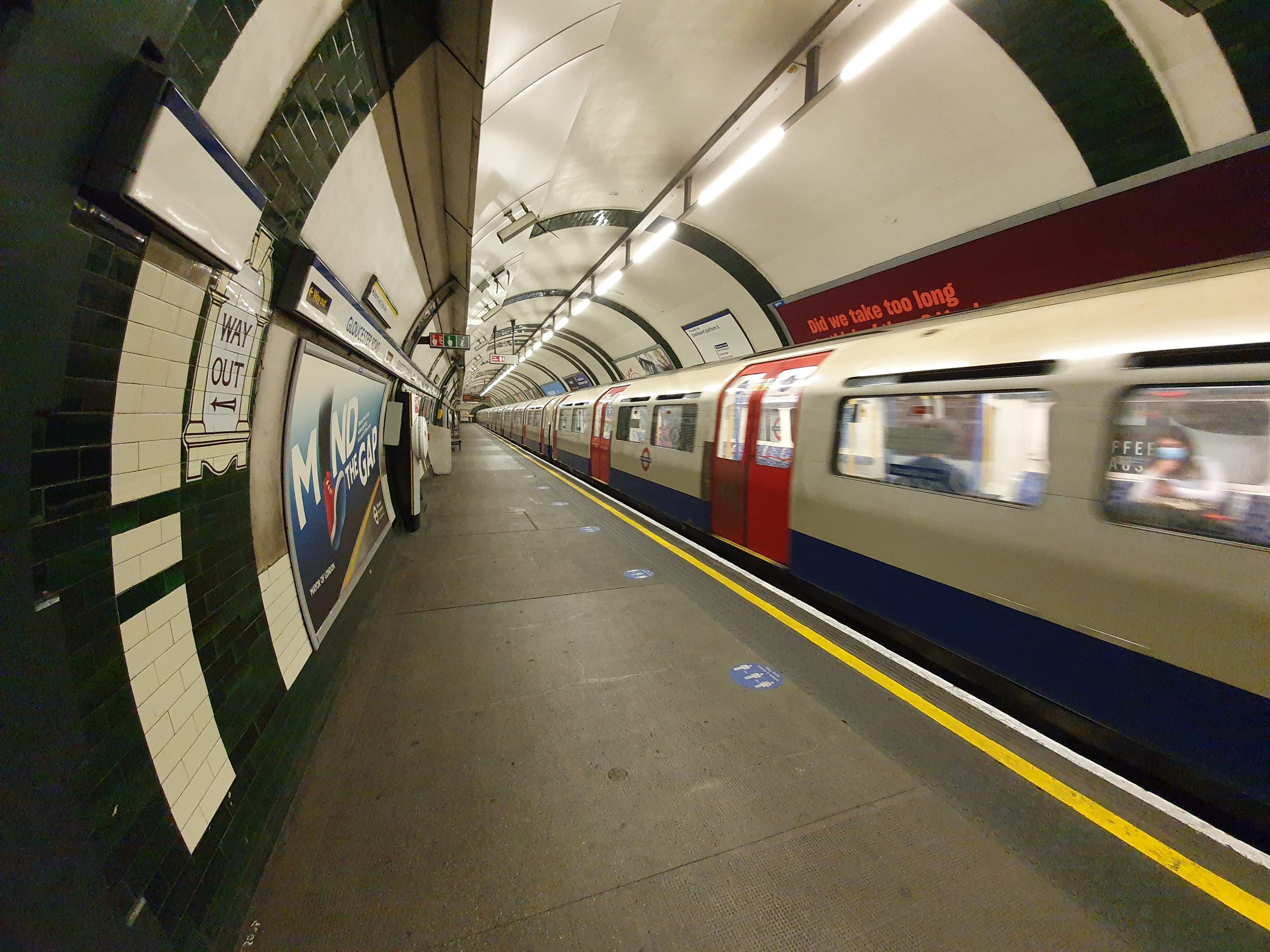
    I won’t keep posting “it’s quiet on the Underground” as that’s annoying, even for me. But, I was surprised just how quiet it was just after 09:00 on Thursday, not so much at Gloucester Road which isn’t ever the busiest station, but certainly at Victoria. Making for some peaceful journeys though.

  • London – Westminster – Tate Britain (Karl Lagerfeld Bean Counter by Anthea Hamilton)

    London – Westminster – Tate Britain (Karl Lagerfeld Bean Counter by Anthea Hamilton)

    Tate Britain acquired this artwork in 2019 and the artist is Anthea Hamilton (1978-). I’m not entirely sure I understand it, but I think it’s trying to raise a debate about the essence of how an individual is viewed by society and the processes involved with that. Karl Lagerfeld has quite a defined image today, but this is him when younger as part of some fashion shoot. I don’t understand the potatoes and buckwheat, but perhaps that it’s just to create an informal and humorous foreground to the imagery.

    The Guardian said “there are plenty of cues but you have to keep improvising the lines” with regards to works by Hamilton, which seems a suitable comment. Some modern art annoys me when it seems pointless, but when it provides cues, it gives it some relevance. Anyway, it’s clear that I don’t know what I’m writing about, but I like that the artwork isn’t pretentious.