Category: Leipzig

  • Leipzig – Stadtgeschichtliches Museum (Altarpiece from 1500 – Leipzig Lausen Church)

    Leipzig – Stadtgeschichtliches Museum (Altarpiece from 1500 – Leipzig Lausen Church)

    20250725_103957

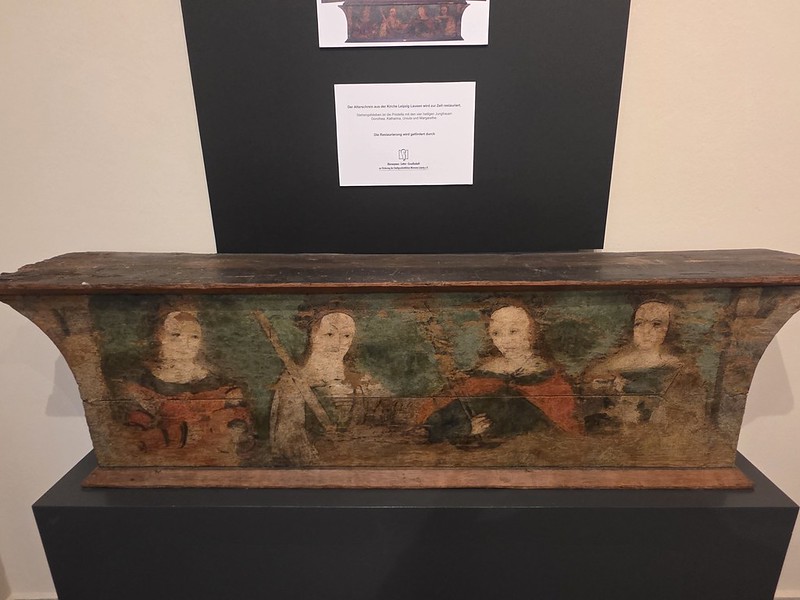
    This is primarily a large winged altarpiece which is on display in the museum, although the actual large winged altarpiece bit is being restored and so only the base is on show. Formerly housed in Leipzig Lausen church, it dates to around 1500 and the full arrangement looks really quite impressive in photos.

    But, I like what’s left, clearly unrestored (unless it has been restored very badly) so it feels like it retains its authenticity. There’s a photo of the whole altarpiece at https://www.stadtmuseum.leipzig.de/DE-MUS-853418/objekt=PS000136 and I’ve learned that the base (so, the bit that’s actually still on display in the museum) is called a predella.

    The museum also notes that the predella has half-length portraits of the holy virgins Dorothea, Catherine, Ursula and Margaret. These seem to be along the lines of the Capital Virgin Martyrs who are usually Dorothea, Catherine, Barbara and Margaret, but this line-up seems to change a bit depending on the whims of the medieval painter. Might as well mix it up with popping Ursula in though.

    I digress though. Because the main altarpiece isn’t there, it does draw more attention to this section which is rather beautiful in its own right.
  • Leipzig – Stadtgeschichtliches Museum (St. Nicholas Church Time Capsule)

    Leipzig – Stadtgeschichtliches Museum (St. Nicholas Church Time Capsule)

    20250725_103937

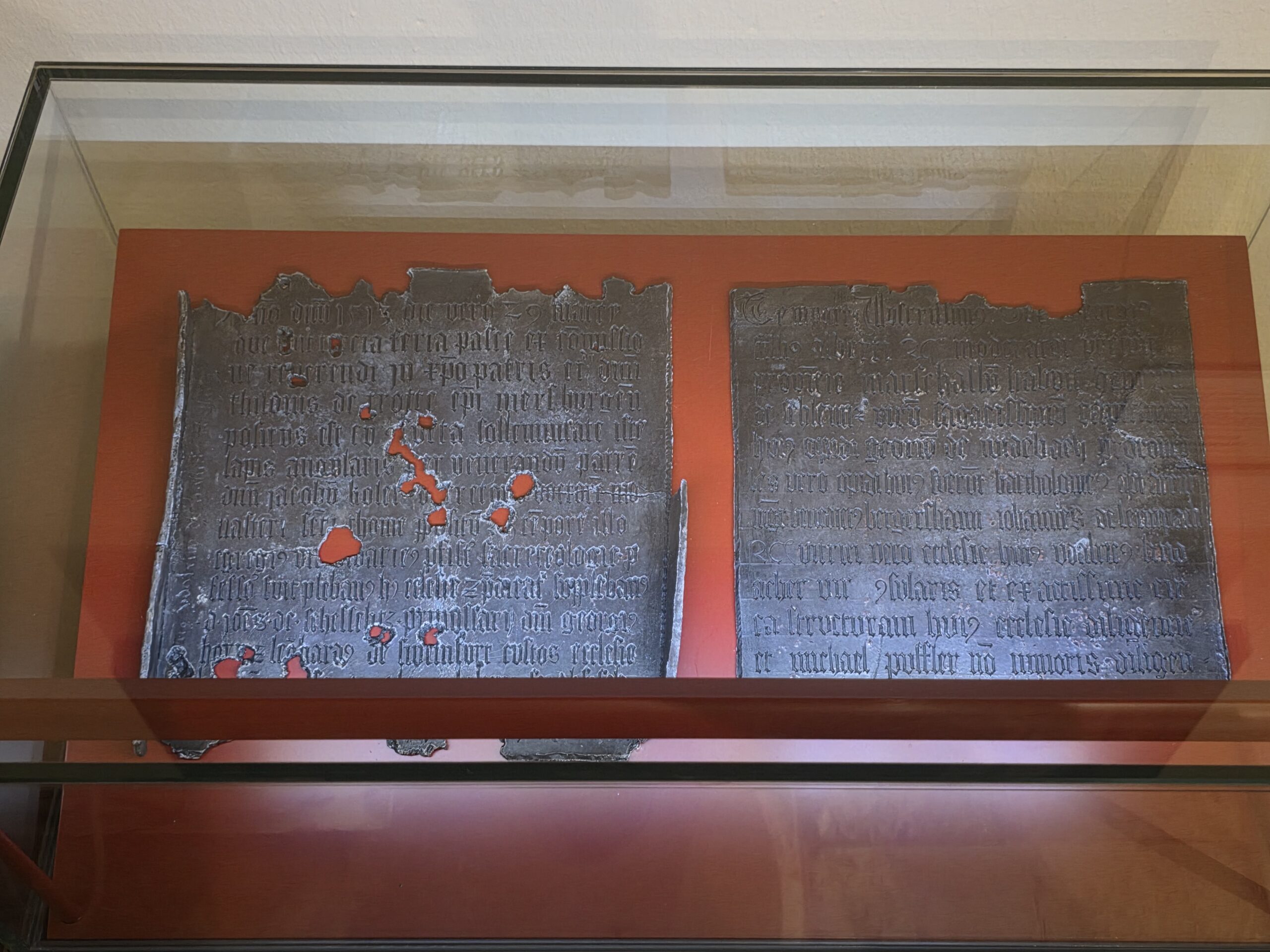
    Time capsule probably isn’t the best terminology here as I’m not sure that this is what was originally intended, but it has transpired to be something like that.

    These lead plates are written in Latin and they were walled into the foundation stone of St. Nicholas Church (Nikolai) during the Gothic reconstruction which started in 1513 and finished in 1535. At the time, this was a Catholic church, but in 1539 it became a Protestant church as part of the Reformation sweeping Europe and it remains that today.

    I’ve had to go to AI to try and give me any indication of what it says on the lead plates and it came up with:

    “…in nomine … patris et filii…”
    (“In the name of the Father and the Son…”)
    and a section below that seems to mention something like:
    “…dominus … in … ecclesia…”
    (“…lord … in the church…”)

    And:

    “…memoriam … perpetuam…”
    (“…perpetual memory…”)
    and
    “…requiescat in pace…”
    (“…may he rest in peace…”)

    Whatever it said was likely really planned to be known only to God…..

  • Leipzig – Stadtgeschichtliches Museum (St James and St Peter from 1410)

    Leipzig – Stadtgeschichtliches Museum (St James and St Peter from 1410)

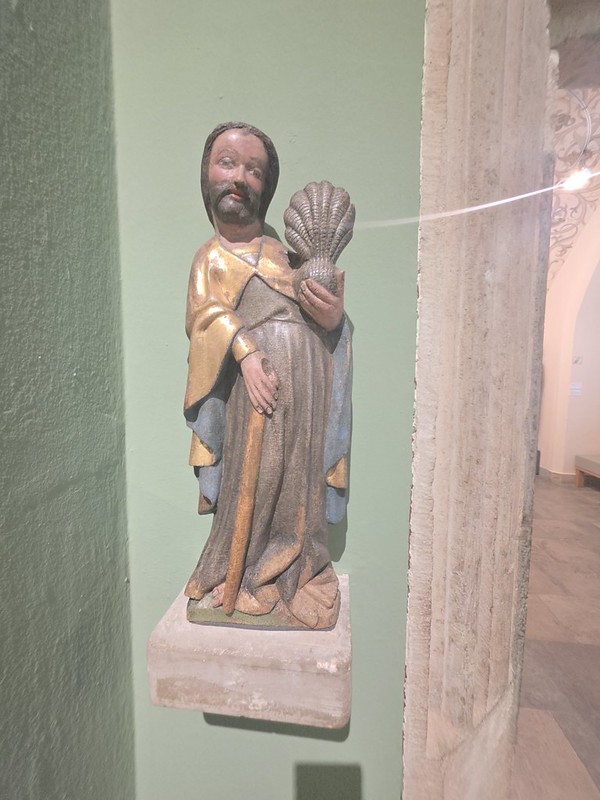
    Being slightly odd, I find medieval religious artworks to be intriguing and interesting because of how important they would have likely been to their owners or the congregations of the time. These two polychrome statues, made of linden wood, are in the museum and they think that they date to around 1410.

    20250725_103854

    This is St. Peter with his keys and book with some effort made here to show his dignified drapery and a kindly, albeit now slightly weathered, face.

    20250725_103848

    And here’s St. James the Greater with his scallop shell and walking staff, inspiring countless generations to go on pilgrimages and come back home with a shell. I’m not sure quite what look the sculptor was going for here, James looks like he’s just walked 90 miles of an LDWA 100, but there we go.

    Bearing in mind that they’re over 600 years old, they’re still in rather good condition and retain a fair chunk of their original colour. There’s a warmth to these characters, I wouldn’t go quite as far to say that they’re almost cartoony, but they do have a warm and fluffy feel to them. They would have once been part of an altarpiece, but that element has been lost to history.

  • Leipzig – Stadtgeschichtliches Museum (Door from 1200)

    Leipzig – Stadtgeschichtliches Museum (Door from 1200)

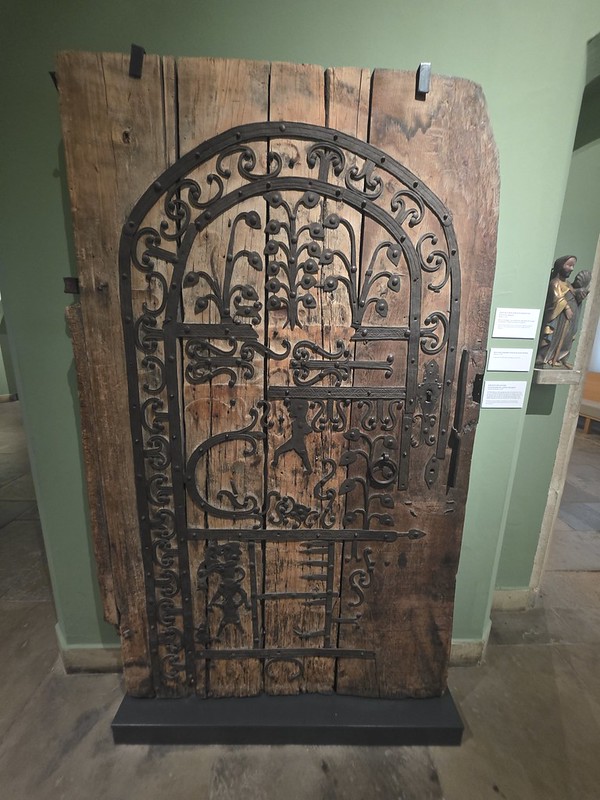
    It’s a door. I sometimes wonder whether these things justify an entire riveting blog post of their own, but I remind myself that the museum has felt worthy enough to put it on display, so it’s the least I can do…..

    This is an church door from Gnadenkirche Leipzig-Wahren, a church which is still standing today. The church was rebuilt in stone around 1200, which is from when the door is also dated, with the original having been made from wood.

    The door itself is made of oak, but with wrought iron decoration which shows a sinful person being dragged by the devil into the flames of hell. What a lovely positive piece of imagery every time someone came in…. But, at the top, there is a twelve-leaf tree of life which is meant to represent salvation and hope. It’s very much damnation below and redemption above.

    I’m not quite sure when it was decided that it would be better for this door to be in the museum rather than in the church, but I like the heritage that it has and that is has survived for so long in its faithful service.

  • Leipzig – Stadtgeschichtliches Museum (Johann Friedrich of Saxony Playing Chess)

    Leipzig – Stadtgeschichtliches Museum (Johann Friedrich of Saxony Playing Chess)

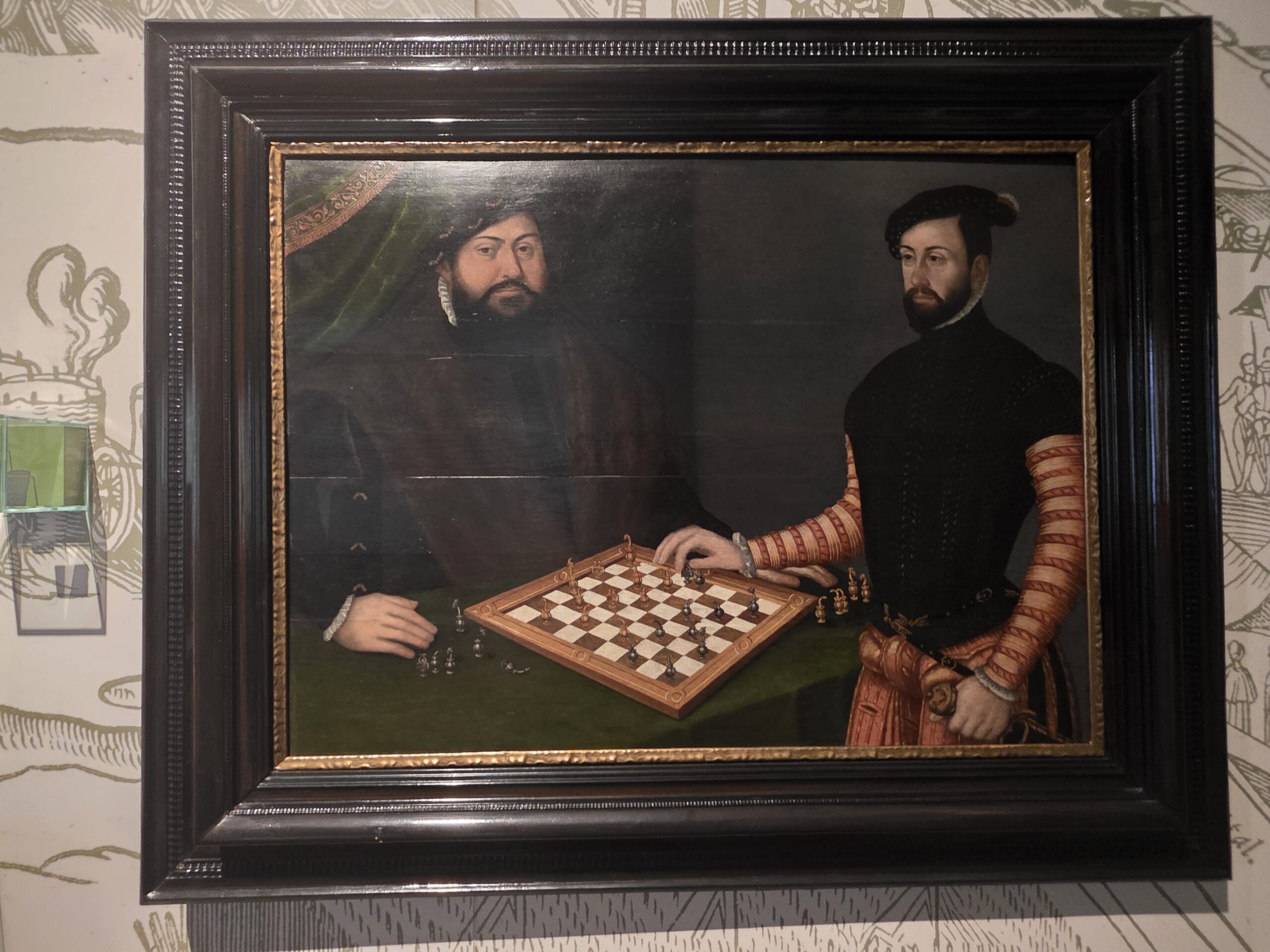
    I love a bit of political symbolism in artworks (I don’t get out much) and this is a suitably interesting example of it. The painting shows Elector Johann Friedrich I of Saxony (1503-1554) on the left, also known as Johann Friedrich the Magnanimous, who was captured in 1547 after the Battle of Mühlberg during the Schmalkaldic War. He was taken prisoner by Emperor Charles V, and his defeat marked a major blow to the Protestant cause within the Holy Roman Empire.

    This portrait, which was painted after his capture, symbolises both his imprisonment and his resilience. The chessboard here is important, it is meant to represent the great game of power between the emperor and the elector. The artist, who I don’t think is known, is showing Johann as a man of calm demeanour and a man who is still playing the game, even in defeat.

    Johann was actually already in checkmate in political terms, although he did get freedom in September 1552. As an aside, he married Sibylle of Cleves, who was sister of Anne of Cleeves, perhaps best known (rightly or wrongly) for actually managing not to get killed by her husband King Henry VIII.

  • Leipzig – Stadtgeschichtliches Museum (Stopped Watch Belonging to Friedrich Louis Pabsch)

    Leipzig – Stadtgeschichtliches Museum (Stopped Watch Belonging to Friedrich Louis Pabsch)

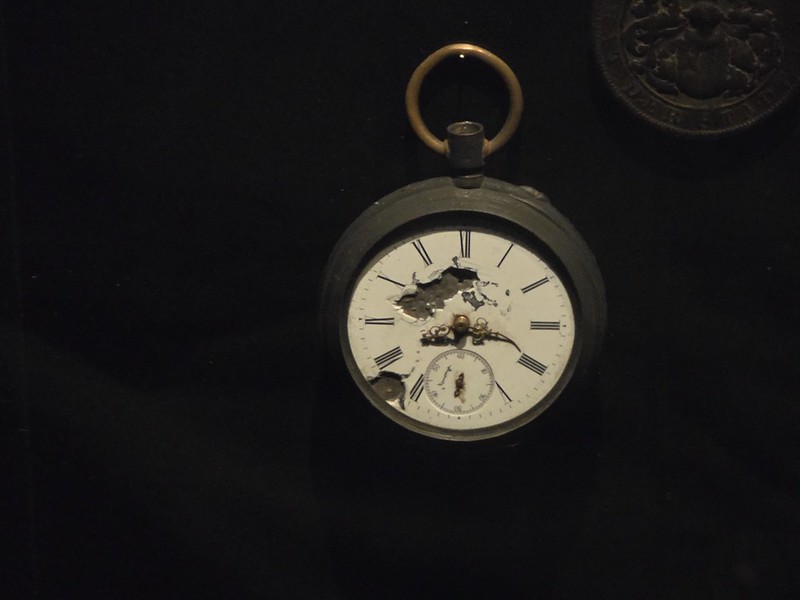
    This exhibit in the museum belonged to Friedrich Louis Pabsch and he, along with 73 others, died in an air raid on 4 December 1943 whilst sheltering at Nostitzstraße (Reichpietschstraße) 19 and 21. His pocket watch stopped at the time of the air raid, at 03:44.

    The air raid on the city that night was one of their worst of the war, when over 500 RAF bombers dropped around 1,800 tons of explosives in a massive attack aimed at crippling industry and transport but which instead ravaged residential areas. Fires tore through the city, merging into a firestorm that destroyed large parts of the centre, killing around 1,800 people and leaving tens of thousands homeless. Historic buildings, factories, and railway yards were obliterated, with survivors later recalled fleeing through smoke-filled streets as shelters collapsed.

    The museum notes that there are traces in basements to this day throughout the city when residents wrote “Luftangriff 04/12/1943”, meaning air raid, given the ferocity of the night’s bombings.

  • Leipzig – Stadtgeschichtliches Museum (Share Certificate of Forcibly Sold Company)

    Leipzig – Stadtgeschichtliches Museum (Share Certificate of Forcibly Sold Company)

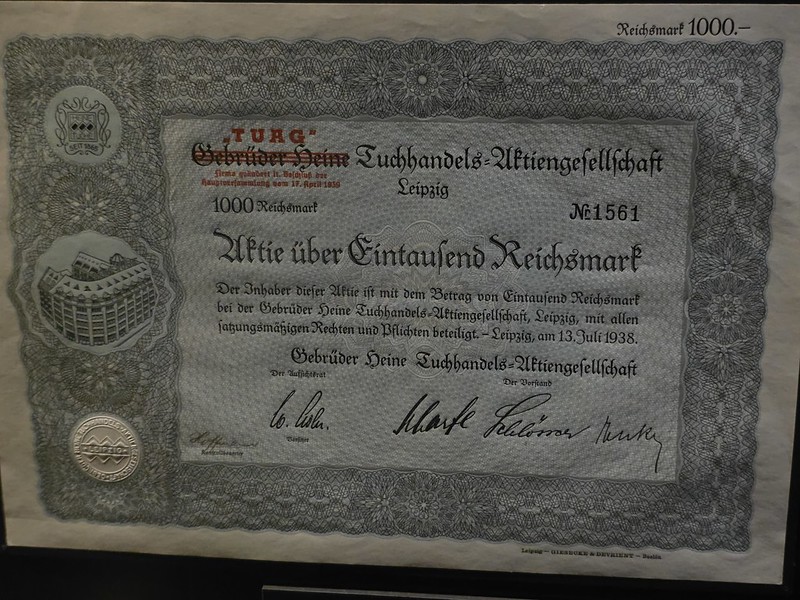
    This share certificate in the museum is from Leipzig, dated 13 July 1938, and looks like a neatly printed piece of paper declaring ownership of 1,000 Reichsmark in the Gebrüder Heine Tuchhandels-Aktiengesellschaft, a textile trading company. But as with so many relics from the late 1930s, this is much more sinister. It’s the story of a business which was forcibly taken from its Jewish owners, absorbed into the machinery of the Nazi economy, and stripped of its name, its history and its identity.

    Gebrüder Heine had been a respected textile firm in Leipzig, a city that before 1933 was one of Europe’s great trading hubs. Jewish businesses like Heine’s were central to Leipzig’s commercial life, especially in textiles and fur. But by the late 1930s, the Nazis had made it increasingly impossible for Jewish entrepreneurs to survive. Laws, boycotts and systematic harassment had already driven many to ruin. For those still operating, the so-called “Aryanisation” policies brought the final blow which were forced sales at a fraction of true value, under threat and coercion.

    In July 1938, Gebrüder Heine’s owners were compelled to sell and it was likely at a hugely underflated price. The buyer was TUAG (Tuchhandels-Union AG), a non-Jewish firm which took over the assets, premises and business operations. The company was rebranded under new management, its Jewish founders expelled from both their livelihood and their rights as shareholders.

    This share certificate, issued in the final days of the firm’s existence, reflects that transition. It proclaims ownership in Gebrüder Heine Tuchhandels-AG, but the red overprint at the top marks the shift of power. The paper itself is meticulously designed, printed by Giesecke & Devrient, and stamped with seals and signatures that convey legitimacy and stability.

    This must have been a bitter moment for the former owners, forced effectively to sell their business by the state. There was still a bureaucratic process, but it offered Jewish businesses nearly no protection or rights.

    However, this story does have a rather more positive ending as Walter Heine was able to escape to Australia where he joined the military and promptly started what became a global commodity company called Heine Brothers after the end of the war. Here’s an interesting article about the family’s fortunes after they were forced out of Germany.

  • Leipzig – Stadtgeschichtliches Museum (Robert Capa Photo – The Picture of the Last Soldier to Die)

    Leipzig – Stadtgeschichtliches Museum (Robert Capa Photo – The Picture of the Last Soldier to Die)

    20250725_114020

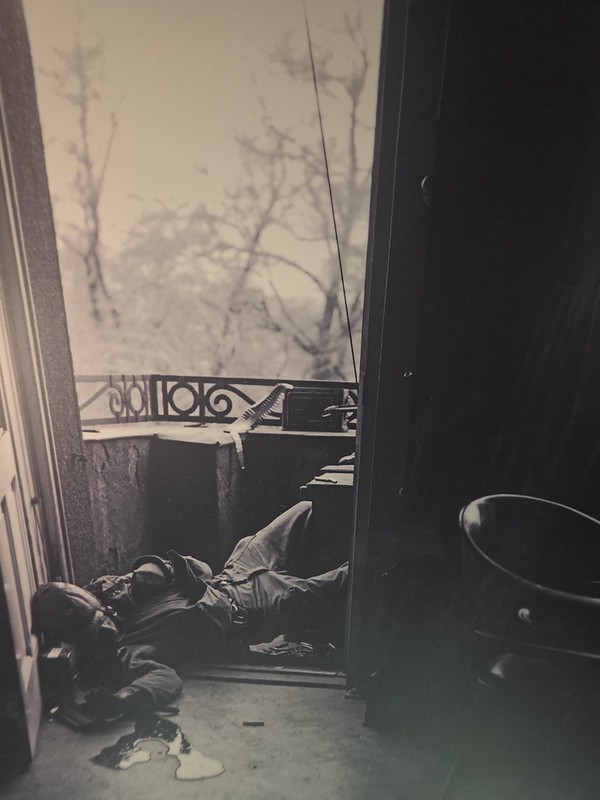
    I posted about a photo displayed at the museum which was taken by Robert Capa, but this is perhaps his most well known image. A number of his photos appeared in Life Magazine in 1945 and they have become widely shared around the world.

    The photograph shows Private Raymond J. Bowman, a 21-year-old American soldier, lying dead on a balcony after being struck by a sniper’s bullet while reloading his weapon. He had taken up position to support advancing infantry near Leipzig’s Zeppelin Bridge when he fell. Capa climbed through the balcony window and documented the scene with this photo.

    The name of this photo, which I’ve used in the title of this blog post, isn’t accurate as there were a couple more weeks until the end of the Second World War in Europe, let alone in other theatres around the world. I didn’t realise when I visited the city, otherwise I would have visited, that the house that this photo was taken in has been saved from demolition and is now known as Capa House.

    One element that is really poignant is that Lehman Riggs visited Capa House in 2019 as part of a ceremony to commemorate those who died in the conflict. Riggs was an American veteran who saw the killing of Bowman on that balcony and he said:

    “I was 3ft from him when it happened. I could have reached out and touched him, but I knew he was dead. I had to carry on in his place, as I’d been trained to do.”

    Riggs died in 2021 at the age of 101, surviving over 75 years longer than Bowman. The owners of the flat struggled to get Bowman’s blood out of their carpet, it was “a permanent reminder of the horrors that happened” a family member said. There’s a Guardian article about the flat, the killing and the photo which I found interesting.

    Unfortunately, I hadn’t realised about the flat when I visited Leipzig, although looking at photos I was very close to it when walking into the city centre from the hotel. I’ll put it on my seemingly never ending places to visit list….

  • Leipzig – Stadtgeschichtliches Museum (Robert Capa Photo – US Soldier Guarding Germans)

    Leipzig – Stadtgeschichtliches Museum (Robert Capa Photo – US Soldier Guarding Germans)

    20250725_113930

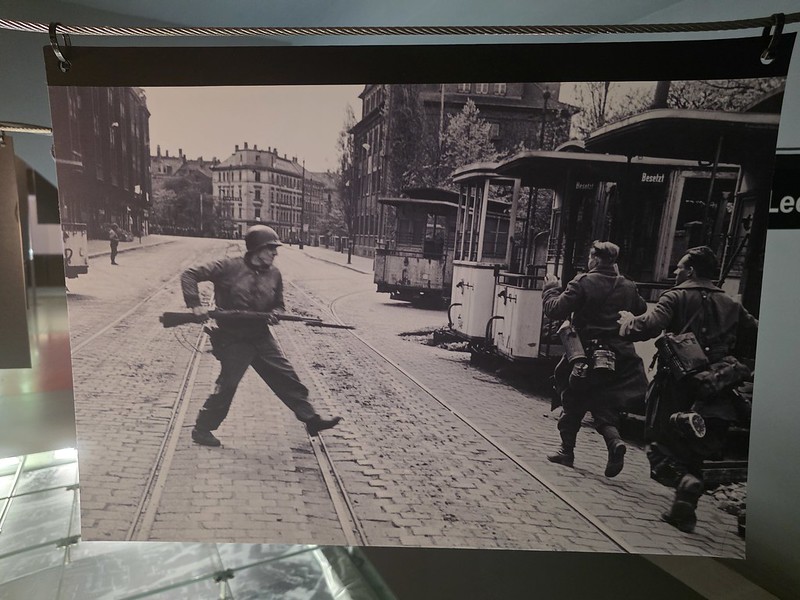
    This is one of a few photos in the museum by Robert Capa (1913-1954) who recorded the liberation of numerous cities. This is a US soldier who is herding German soldiers following the Battle of Leipzig in April 1945. As a series of photos, they’re thought provoking and interesting.

    The city was in ruins with over half the buildings destroyed and the infrastructure shattered from air raids. The German soldiers still alive might have been afraid of the US soldiers depending on what stories they had been told, but there must have been so much relief that this war seemed to be coming to an end.

    There’s another photo in this series, which was likely taken by Capa shortly afterwards.

  • Leipzig – Stadtgeschichtliches Museum (Air Raid Date Door)

    Leipzig – Stadtgeschichtliches Museum (Air Raid Date Door)

    20250725_113849

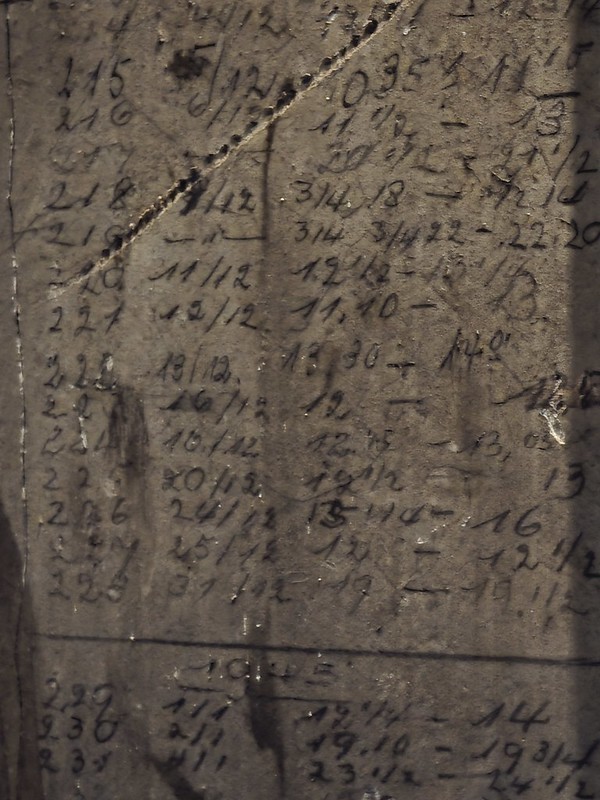
    This is a basement door from the building located at Schlegelstraße 5 which lists all of the air raids which took place in Leipzig during the Second World War. It’s scuffed, damaged and at the time it proved something of a barrier between safety and danger.

    20250725_113854

    There’s nothing particularly decorative or ornate about the door, but the human touch of carefully writing these times down during moments of boredom likely interspersed with terror is rather intriguing. I rather like that the artist (or whatever the best word is here) would likely not have known when their final line noting the time and date was and I suspect it wouldn’t have occurred to them that the door would end up in the city’s museum. As for why I thought the need to write about it, I think it’s because of the logic that it holds more humanity than perhaps monuments could achieve.