[This is from August 2018, but I’ve reposted it to fix the broken image link for the photo that amused me at the time….]
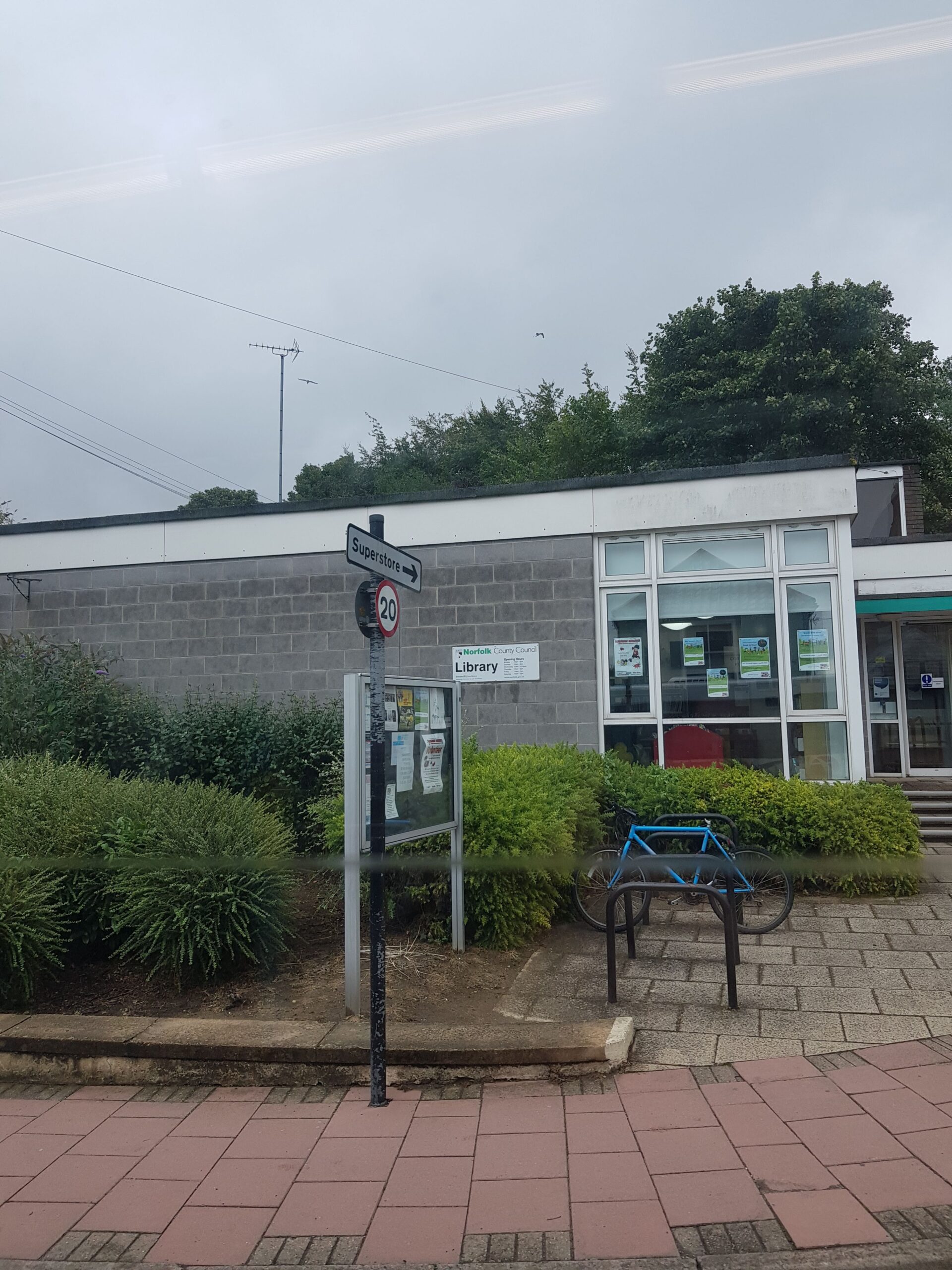
This isn’t particularly amusing, but this is certainly my sort of superstore 🙂

HOME · LATEST 100 POSTS · BAR BILLIARDS · GOOD BEER GUIDE · NORWICH MARKET · FLIGHTS · RAILWAYS · INDIAN MEALS · CONTACT
[This is from August 2018, but I’ve reposted it to fix the broken image link for the photo that amused me at the time….]
This isn’t particularly amusing, but this is certainly my sort of superstore 🙂
[I originally posted this in August 2018, but have reposted it to fix the broken image links]

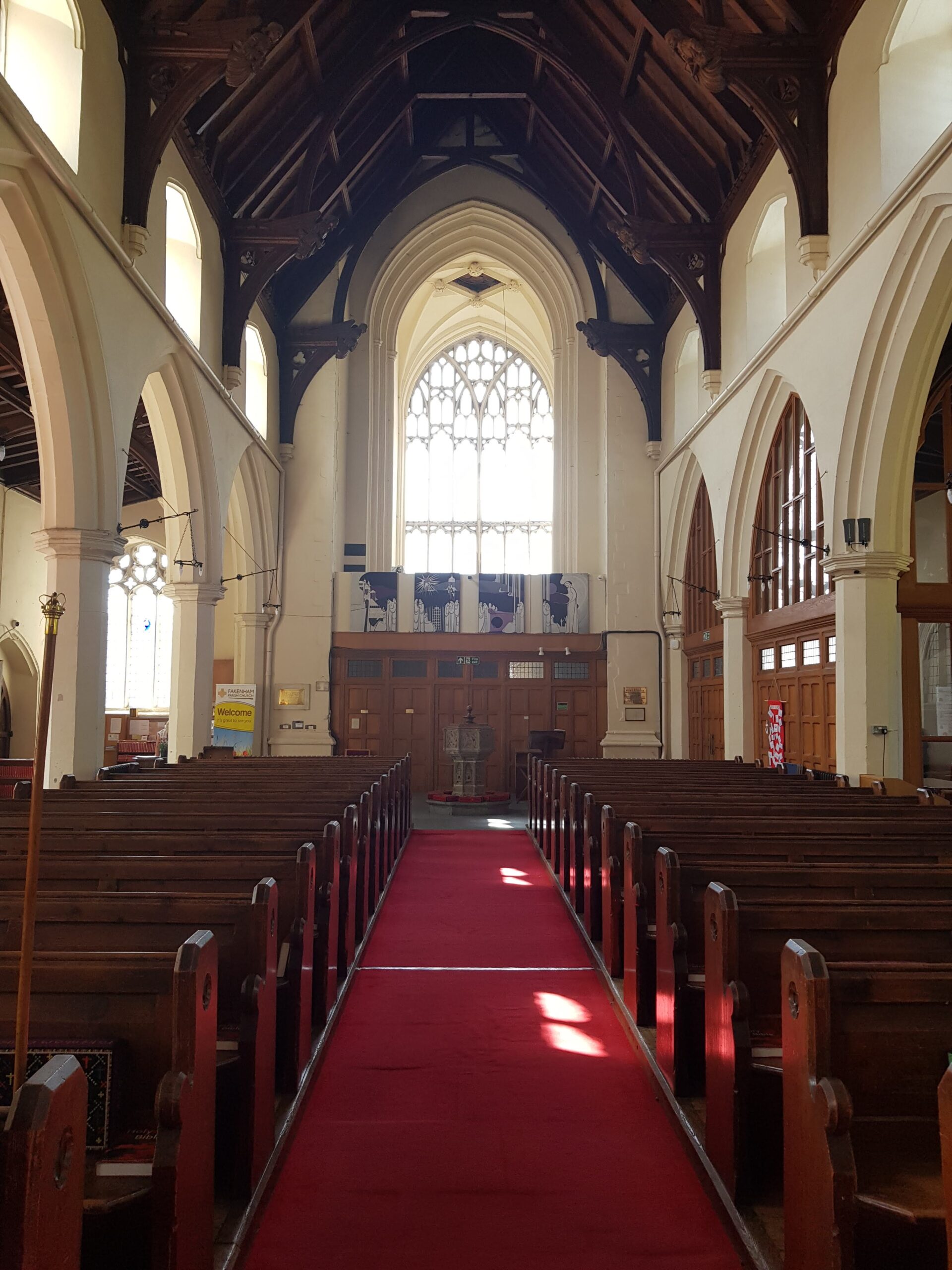
Fakenham’s parish church is centrally located in the town and there has been a religious building here since Saxon times. The main structure of the church dates to the fourteenth century, with the tower having been added in the fifteenth century.

The doorway.

The bright and open nave. The local newspaper in November 1863 wrote about the church’s extensive restoration and commented that the two aisles were formerly two chapels, the one on the south was dedicated to St. Mary and the one on the north was dedicated to St. Thomas.
The paper added that “the church has a noble appearance externally and it is to be deeply regretted that such a fine edifice well situated on high ground should be hidden by high buildings which stand between it and the public market place, from which it would be so noble a spectacle.

The grand wooden roof which dates from the Victorian restoration.
One of the sculptures within the wooden roof.

The fourteenth century chancel.

The font dates to the fifteenth century, although one of its panels has been removed and it’s thought that this happened at the time of the Reformation.

Some rather colourful kneelers on the Victorian pews.

A memorial to Private William Daniel Blomfield, a local resident who died on active service. He died of illness at Bloemfontein in South Africa during the Boer Wars.
[I originally posted this in August 2018, but have reposted it to fix the broken image links]

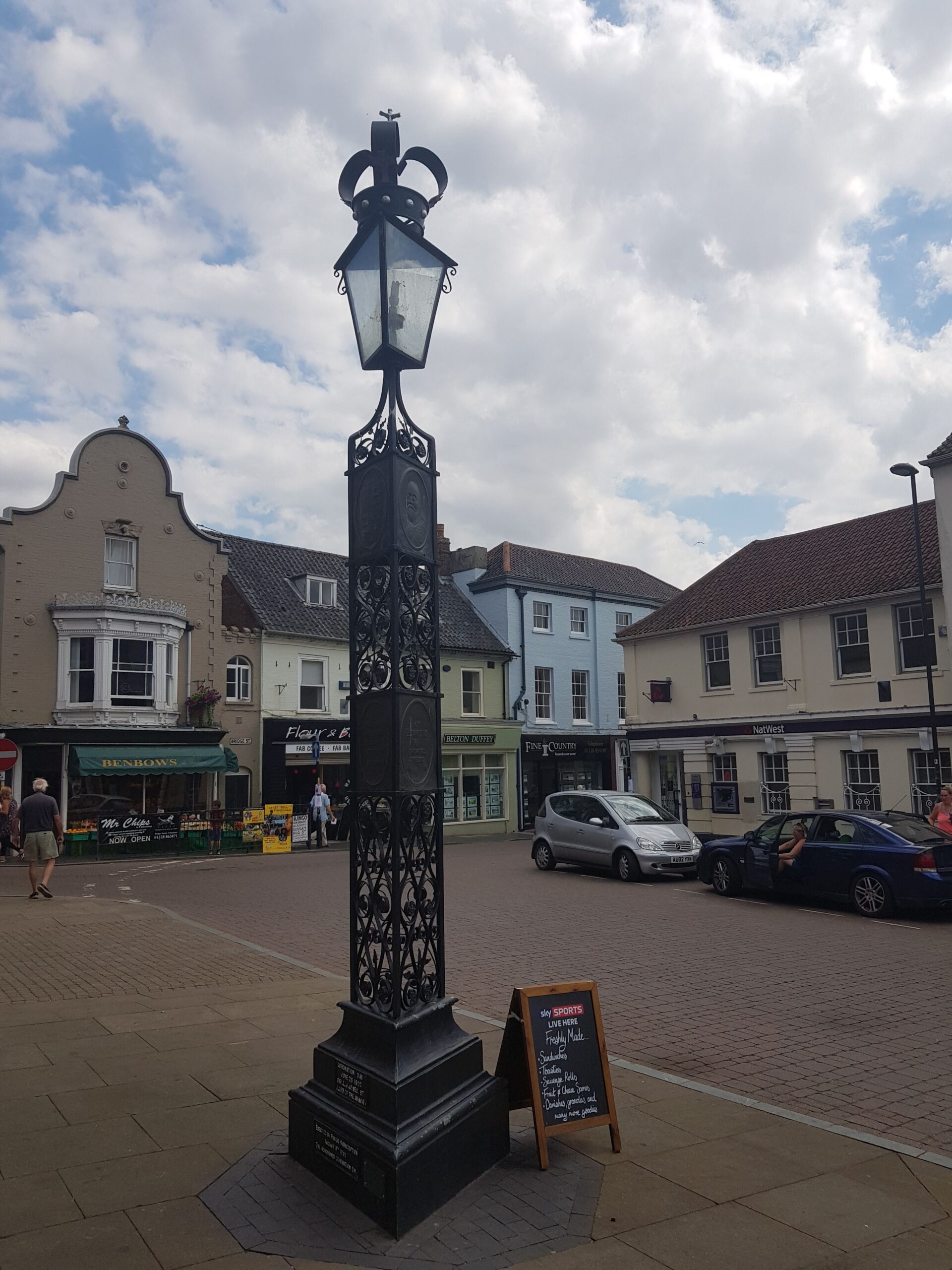
This lamp-post, which was funded by public subscription, was erected in 1902 to mark the coronation of King Edward VII as the country’s new Monarch.

The coronation date for the King was originally set to be held on 26 June 1902, but King Edward got an abscess and it had to be delayed. I can imagine the irritation that this caused to the people of Fakenham, who then had to go and buy a second plaque. All was well though for the second date, and the Coronation went ahead on 9 August 1902.

This panel notes the creation of the Royal Manor of Fakenham, linking the town to the Royal Family.
[I originally posted this in August 2018, but have reposted it to fix the broken image links]
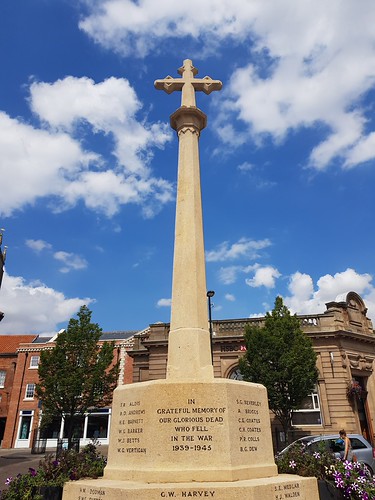
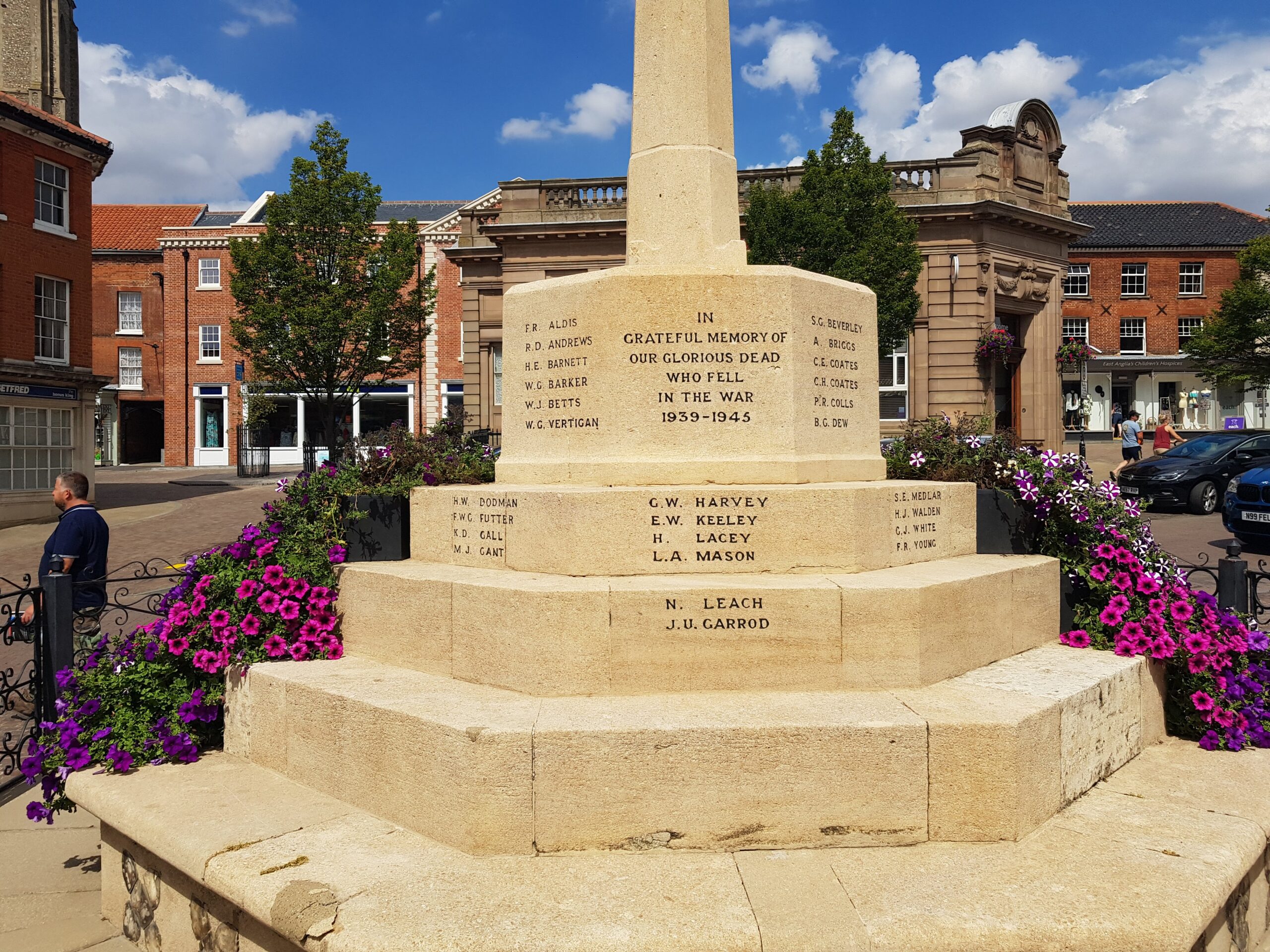
The town’s war memorial was unveiled in August 1921 to mark those who had died during the First World War.

There are 96 names of those who died during the First World War, 27 names for the Second World War, 2 names of those who died during the Korean War and 1 name from the Iraq War in 1954. There’s a full list of those who died at http://www.roll-of-honour.com/Norfolk/Fakenham.html with five names having been added later (two from World War Two and those who died during the Korean and Iraq conflicts). Details of these five men are listed at http://www.edp24.co.uk/news/the-heroic-tales-behind-the-new-names-on-fakenham-war-memorial-1-2963865.

It’s a nicely presented war memorial and it’s centrally located in Fakenham.
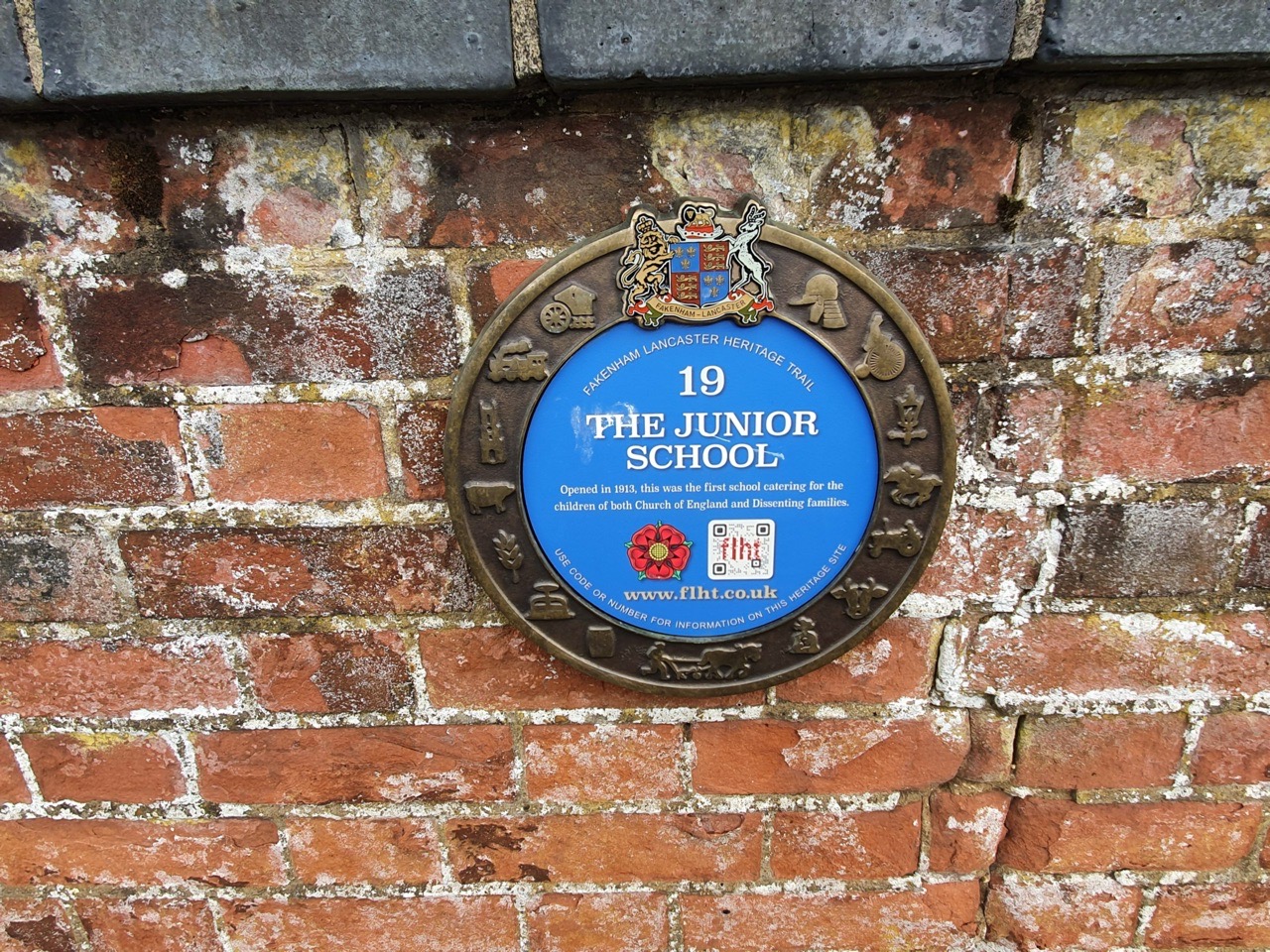
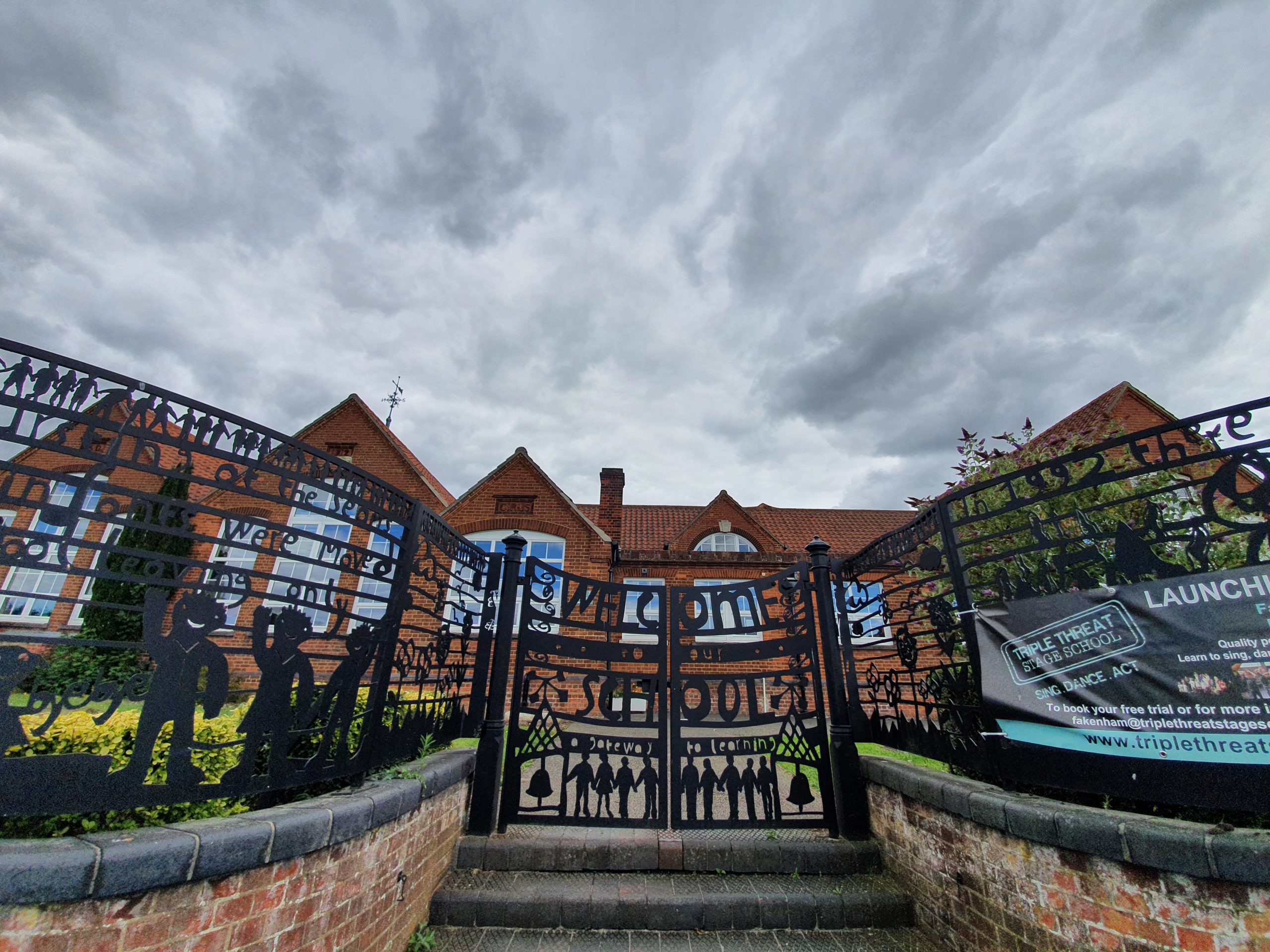
Part of the Fakenham Heritage Trail that I’m working my way slowly around, this is number 19. The school was built in 1913 as a school for boys, girls and infants, with a big dividing wall between the boys and girls. This was removed in 1935 and now serves as Fakenham’s junior school.
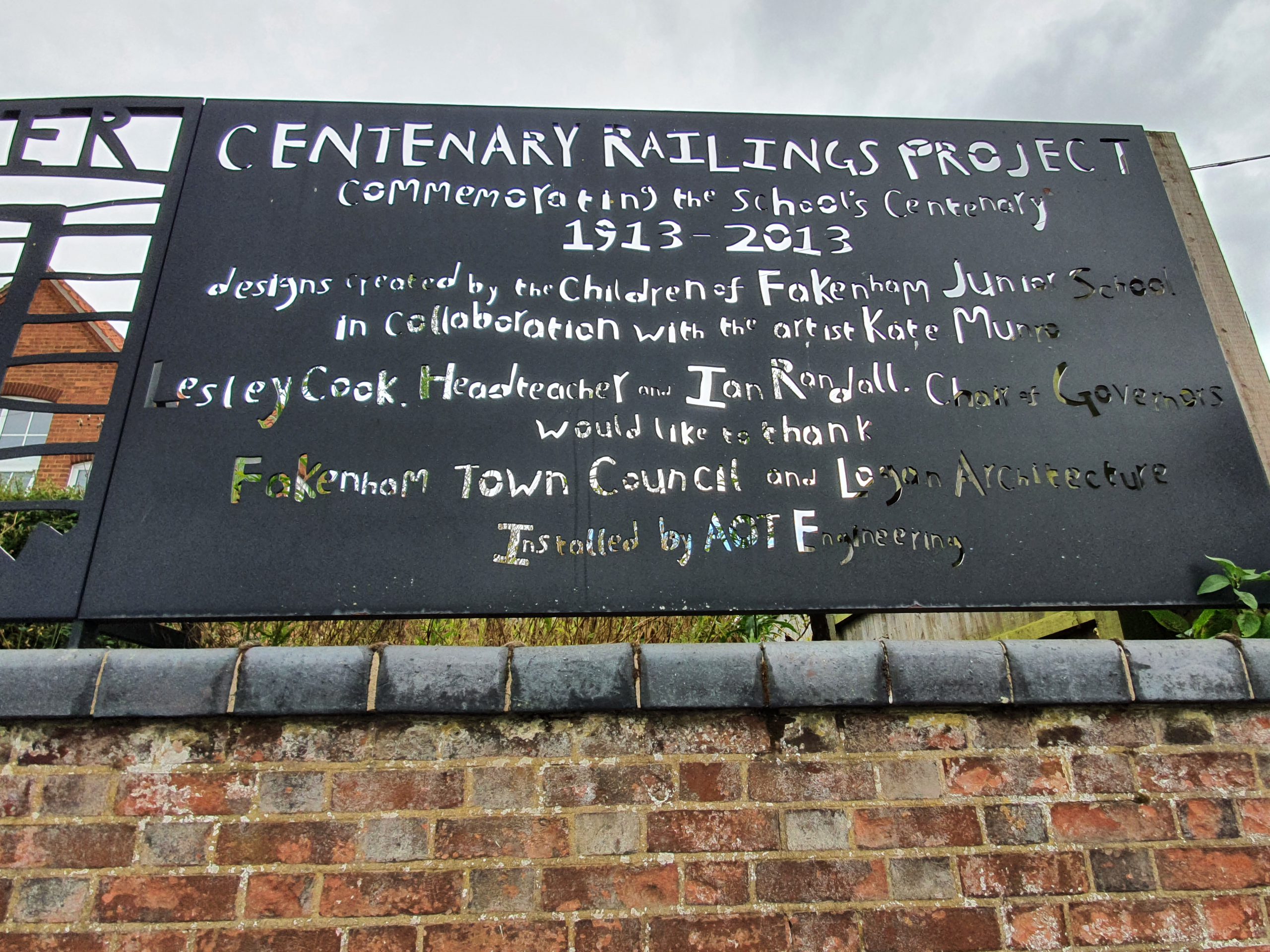
This is part of the marvellous railings project that was designed by the children to mark their centenary and there’s a full text of the wording at the heritage trail’s page at https://www.flht.co.uk/19-junior-school.html. As a little side, I’m a little disappointed that the school’s web-site manages to make no reference to their history and a search term of the word ‘history’ produces no results on their pages at all.
Another event to mark the centenary was the appearance of Michael Palin, whose grandfather Dr Edward Palin was present at the opening of the school on 21 May 1913. Palin’s father was also born in Fakenham, so there something fitting about his presence at the event.
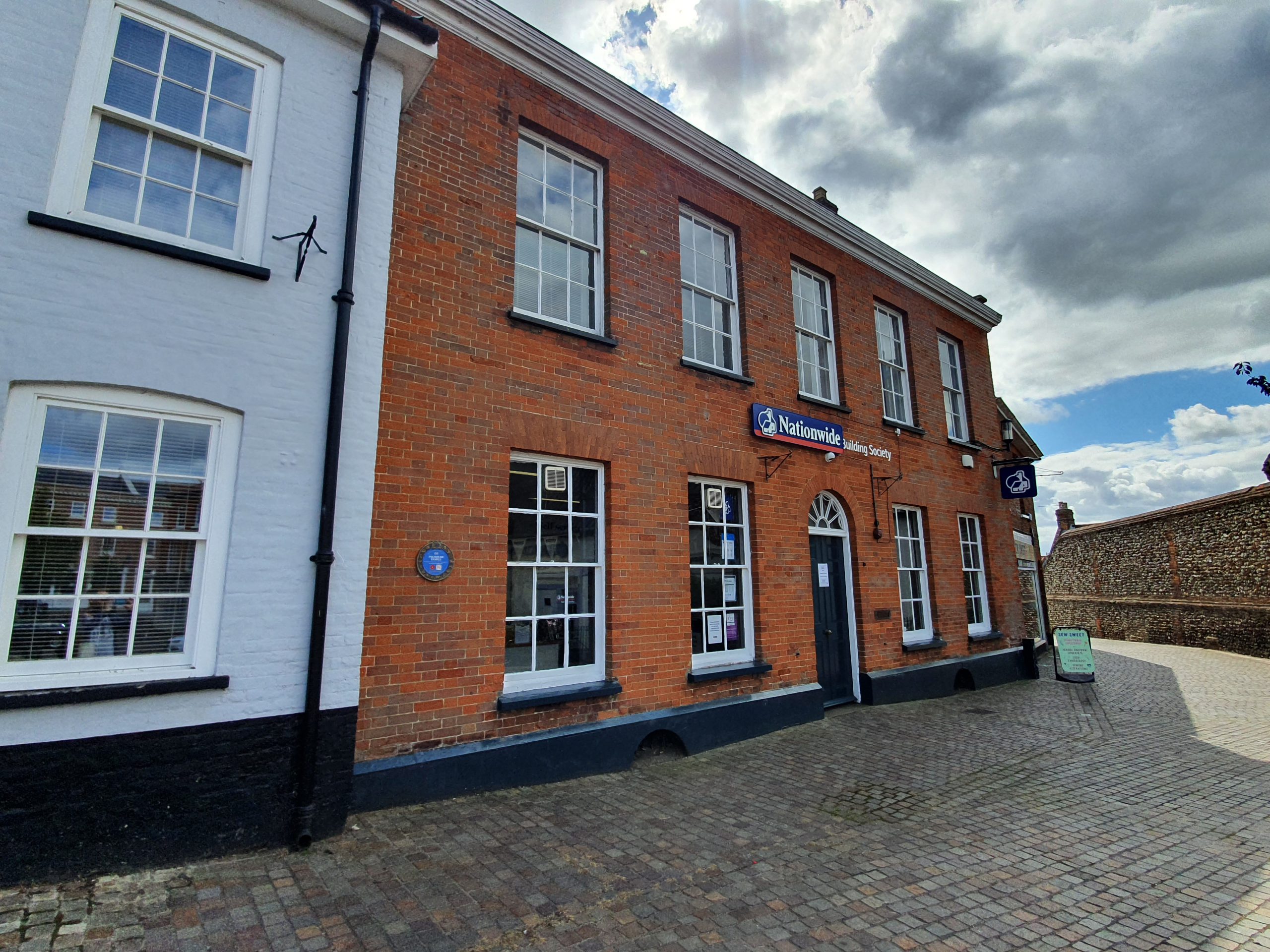
Working around Fakenham’s heritage trail, this is number 9 and it represents the Peckover family. The property that the plaque is located on is 14, Market Place and was originally known as 14, The Square. Used today by the Nationwide bank, it’s an eighteenth-century building which was owned by the Peckover family.
The Peckover family were Quakers who became important business people in Fakenham and Wisbech and owned much property in both locations. Peckover’s Bank was created in what is today’s the town’s Boots, which later became merged with Gurney’s Bank and then in turn this became part of Barclays Bank. Some of the family moved to Wisbech to set up banking operations there, with Peckover House being a large country estate which is now managed by the National Trust.
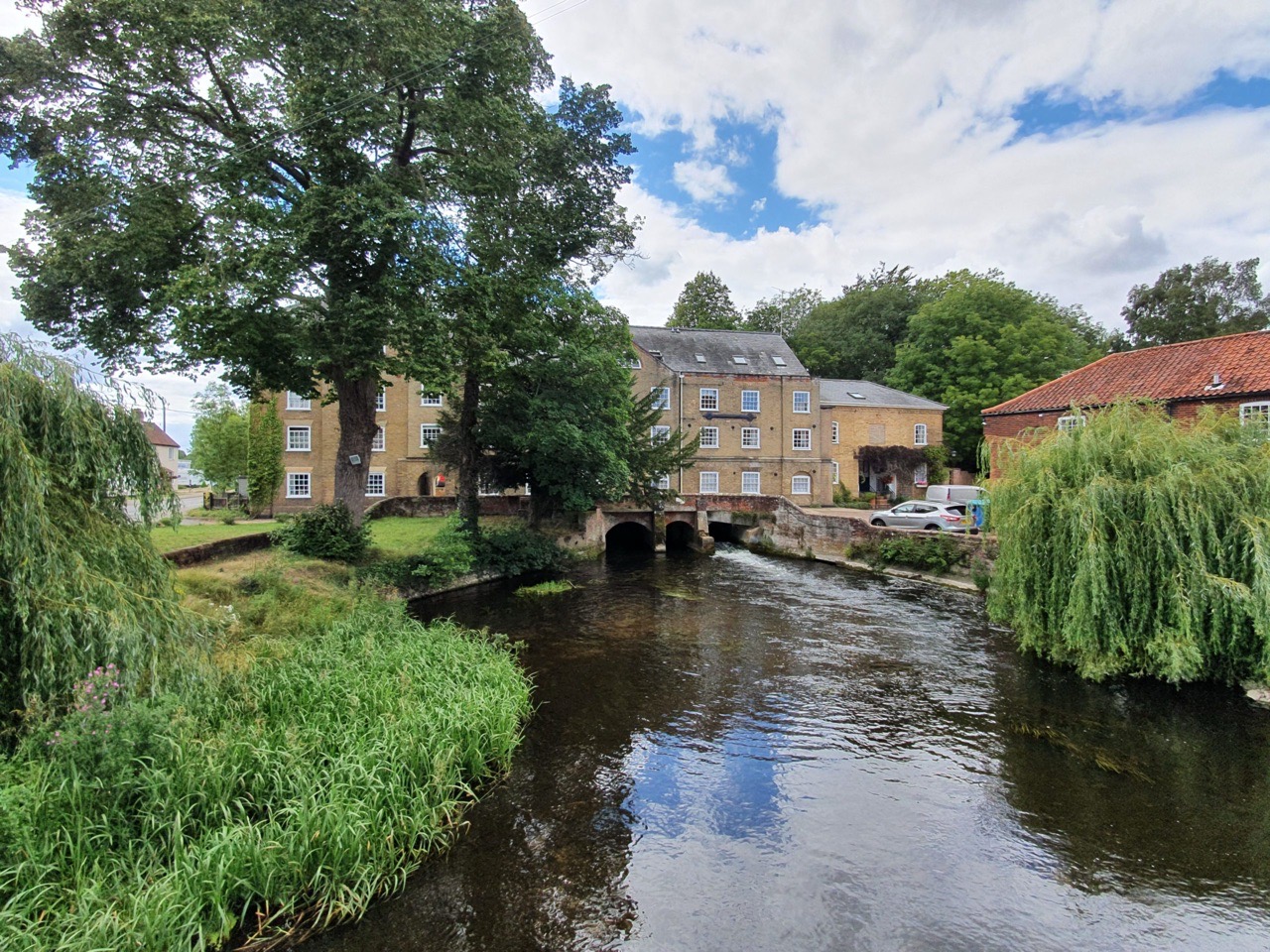
Slowly, but surely, I’m getting around the Fakenham heritage trail by visiting a few locations on it every time I come to the town. This is Fakenham Mill and there has been a mill here since at least 1240. A new building was constructed in 1620 and the route of the River Wensum was altered to suit the new structure.
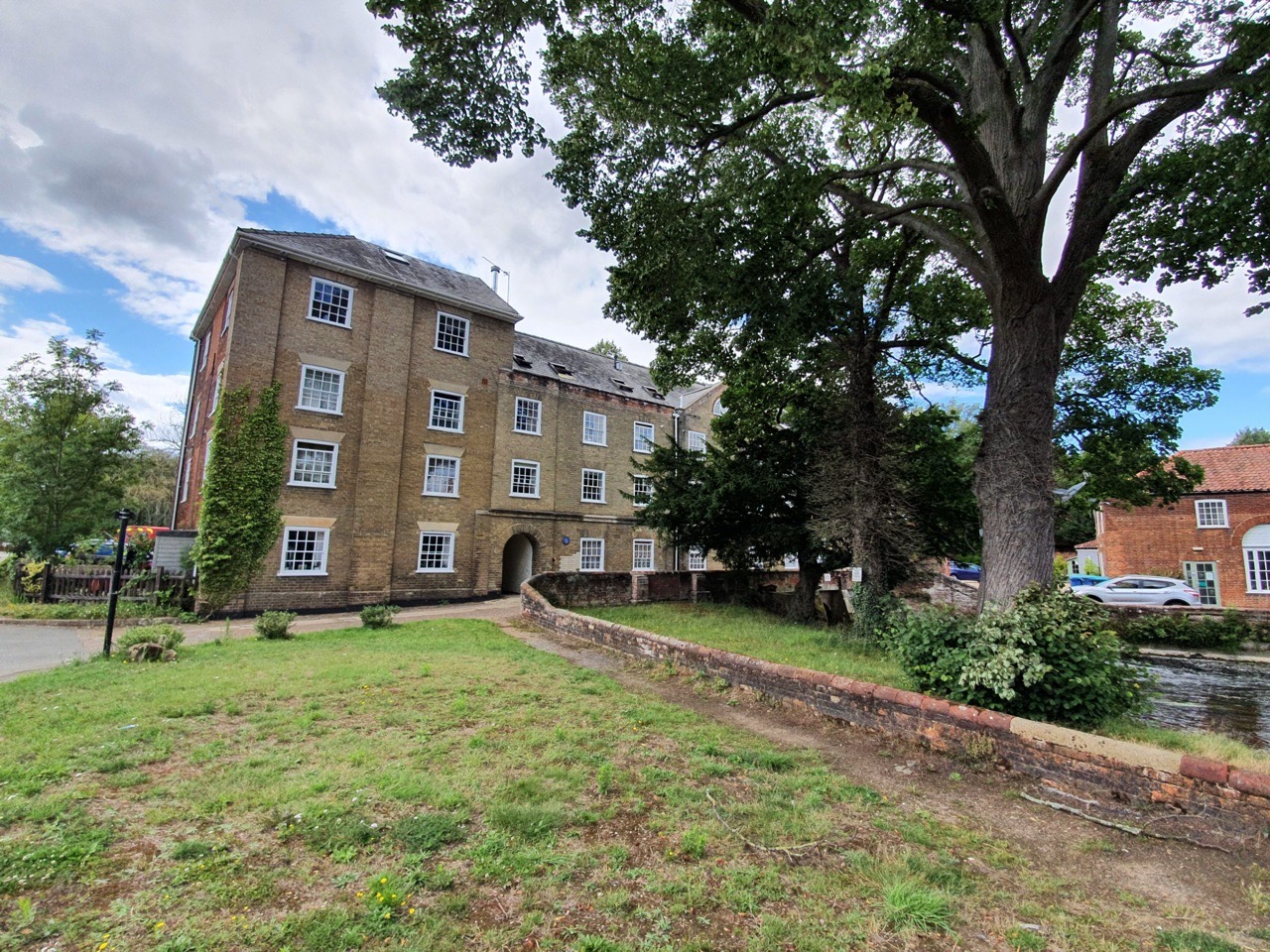
The current building dates to 1720 and is now converted into residential properties. There’s plenty more about this mill at http://www.norfolkmills.co.uk/Watermills/fakenham.html.
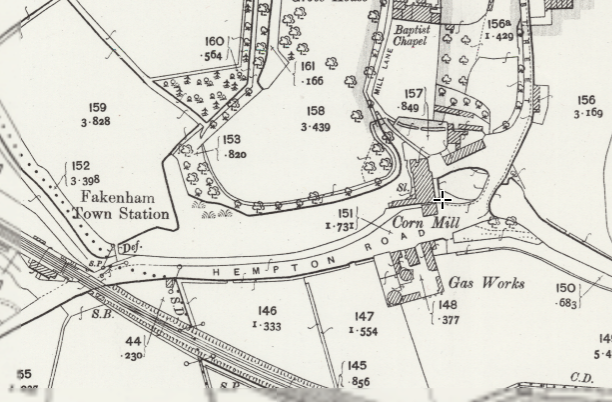
Marked as the corn mill in this 1900 map, it was nearby to the town’s now closed railway station.
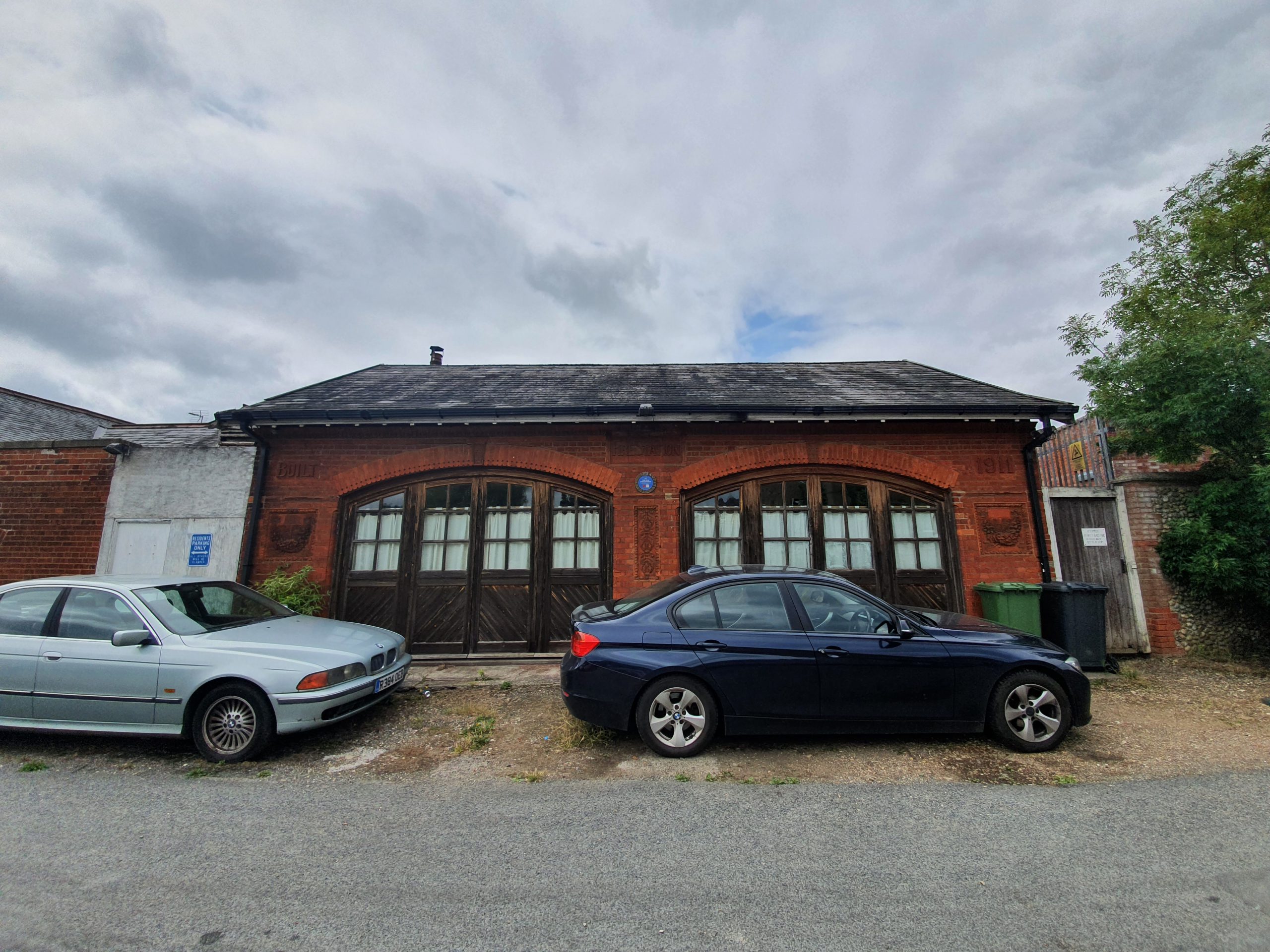
Since I was back in Fakenham today, I thought I’d tick off a few more heritage trail sights. Not that I took much care in this, I meandered about until I had found a few, it’s more exciting that way to stumble across stuff.
Some care has gone into this fire station building at Hall Staithe, which was constructed out of brick in 1911 (the fire station, not the staithe). The cars parked in front make it a little harder to see the building clearly, but it was clearly a functional structure. Well, functional for the height of fire engines at the time, probably not quite so useful for the current ones.
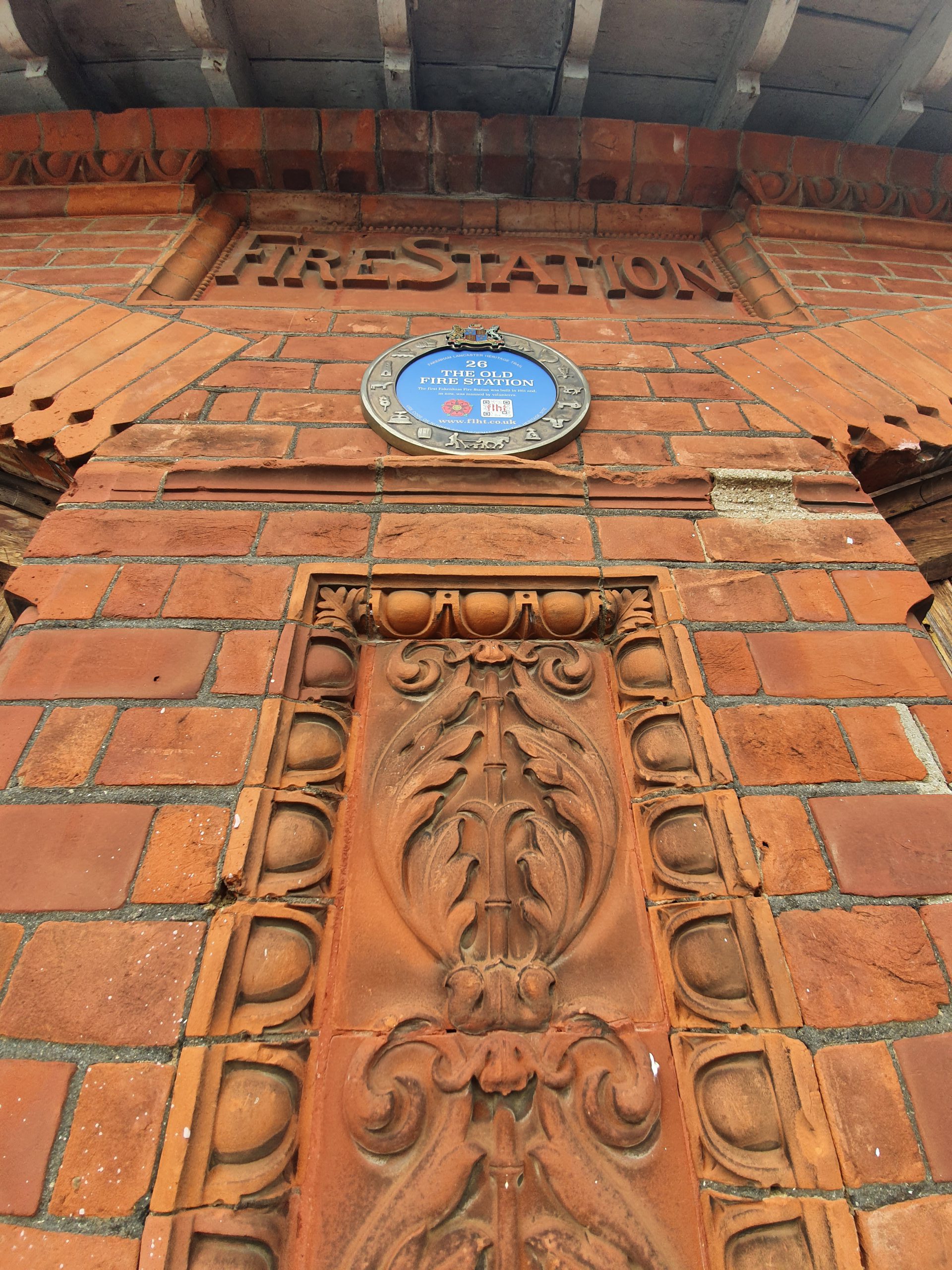
The decorative effort that has gone into the building and the heritage trail sign is also visible, noting that both then and now, the fire station is manned by volunteers. The new replacement fire station is much larger and it’s now located on Norwich Road in the town.
The heritage trail’s web-site has some glorious photos of how it used to look when it was in use.
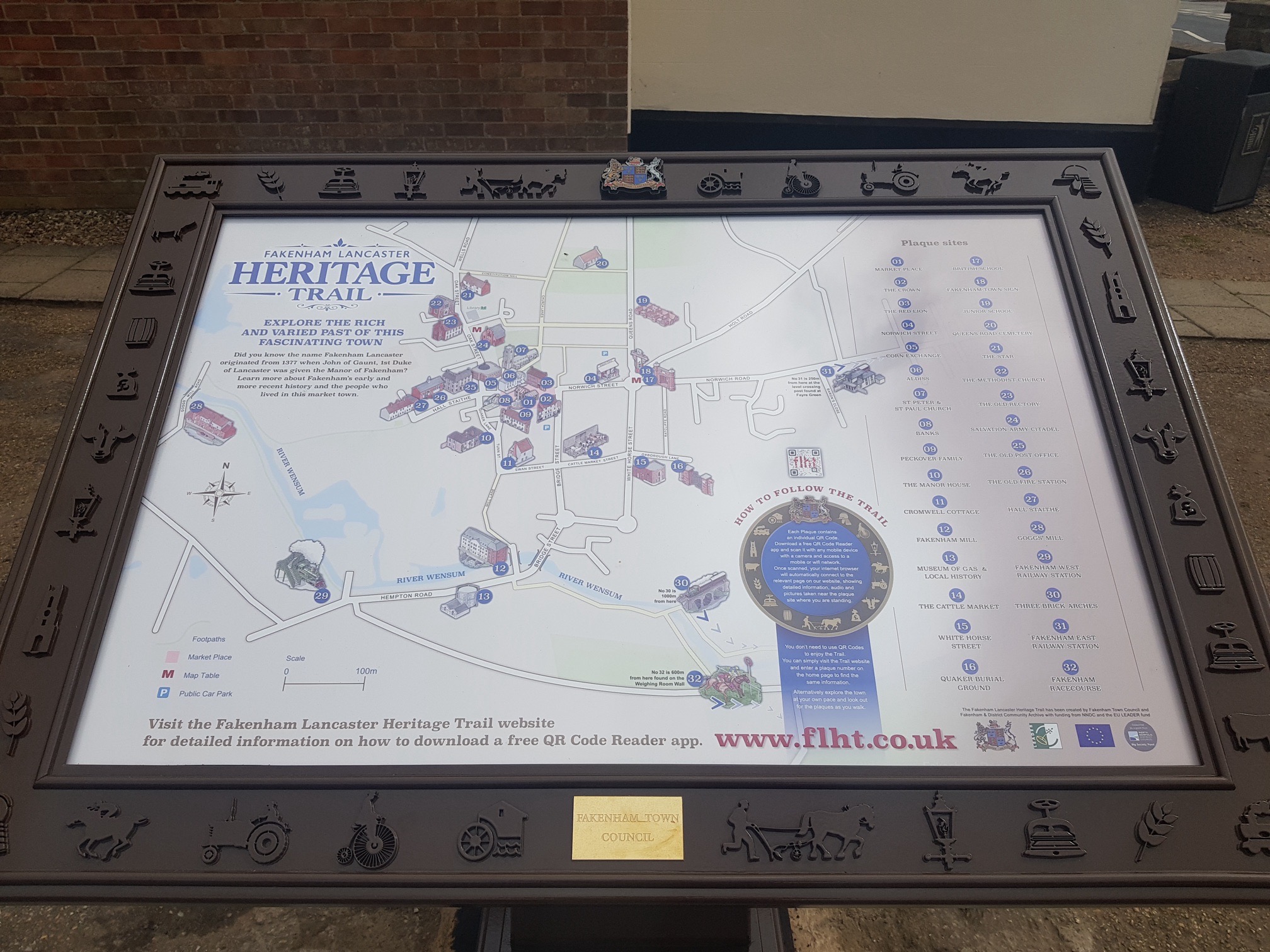
I posted about the Fakenham Heritage Trail a few weeks ago, which is something new to the town to encourage locals and visitors to find out more about the town’s history. It is in my opinion an undeniably good idea, but unfortunately the trail has already been damaged.
One trail number plaque was stolen last week Gogg’s Mill, with a local councillor offering a reward for its return.
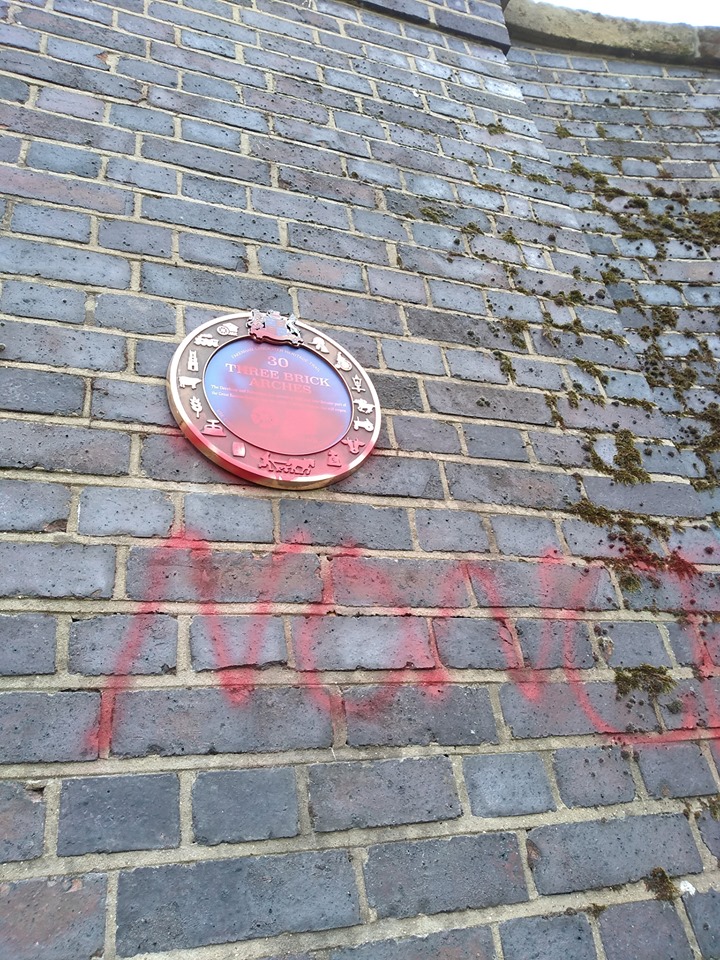
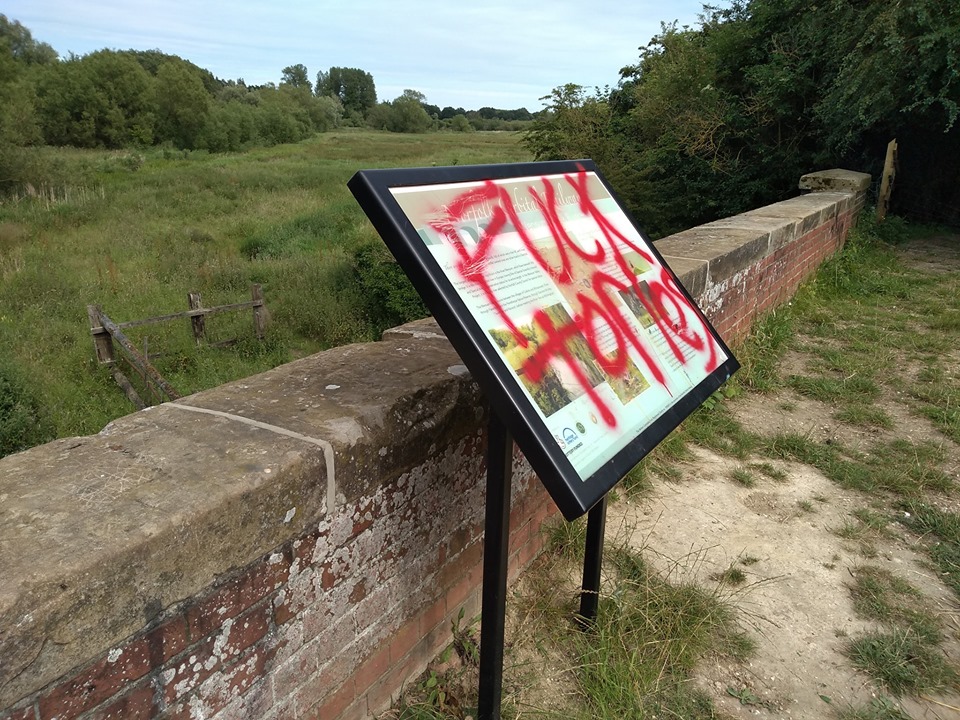
The above photos were posted on Facebook by Norfolk Orbital Railway, showing vandalism to their signage and also to the new plaque which was part of the trail.
What’s particularly sad is that the trail hasn’t even been formally launched yet. I hope that the council commit to replacing them and the police are able to do something about it.
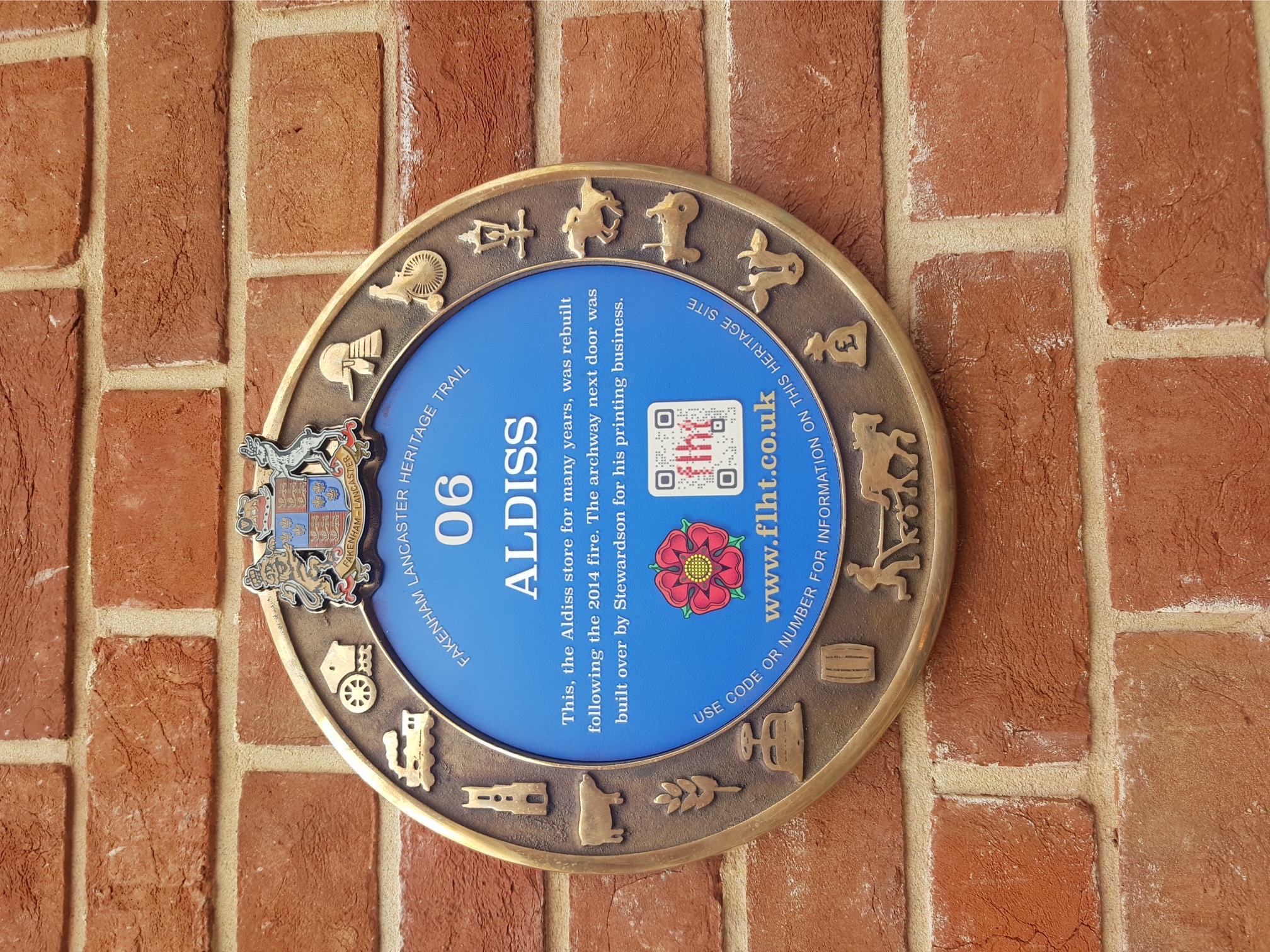
Part of the Fakenham Heritage Trail, this is number 6, the former Aldiss store which unfortunately burnt down in 2014. The fire was caused by an electrical issue and it destroyed the department store which had been built in the early twentieth century. Aldiss had already moved out of the store to another location in Fakenham and the building was being used by The Original Factory Store, who have since moved back into the newly built replacement premises.
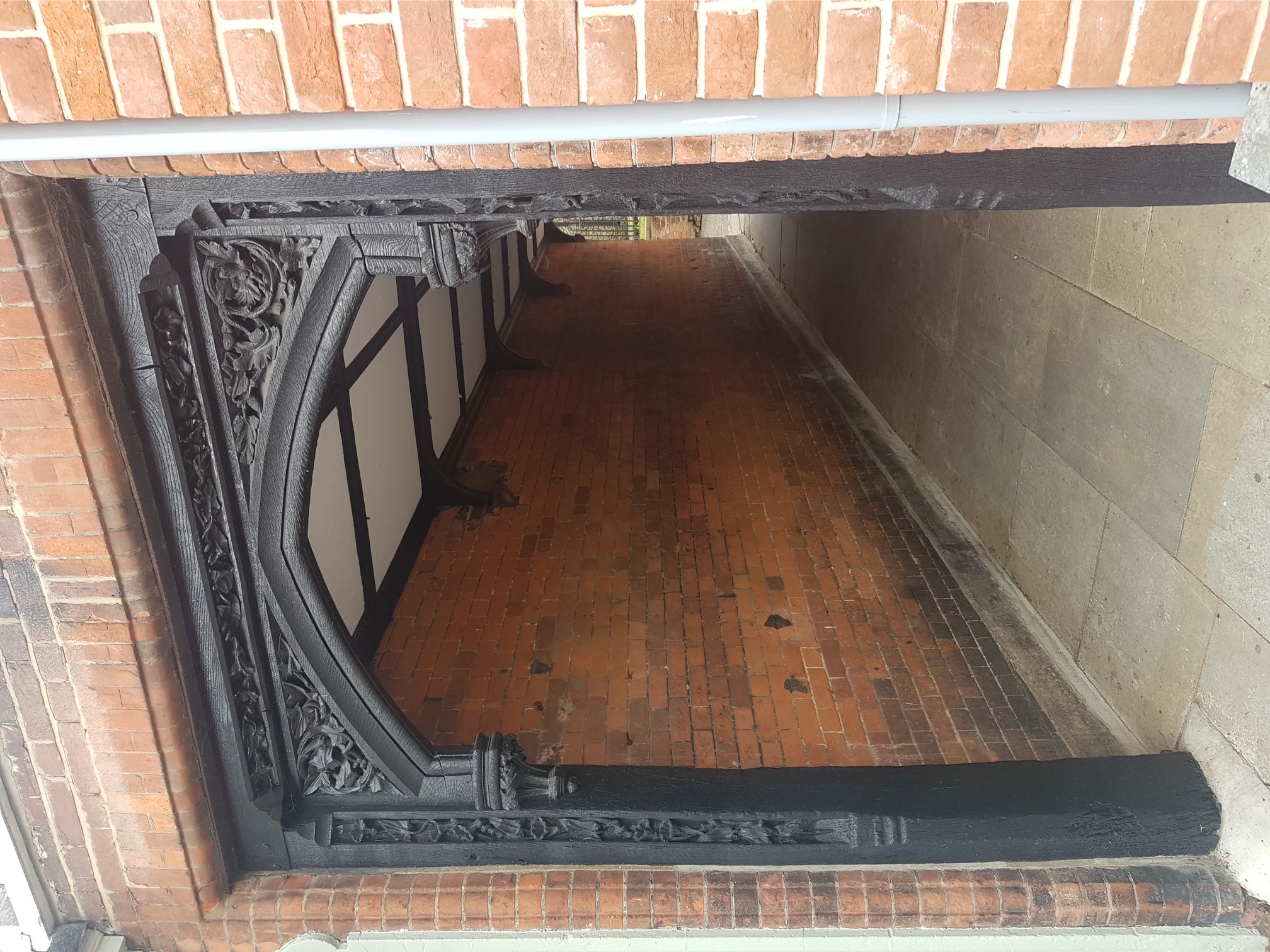
I hadn’t previously paid much attention to this arch, which goes through from the market place to Fakenham Church. But, as the signage notes, it was built over at some stage by Stewardson for his printing business.
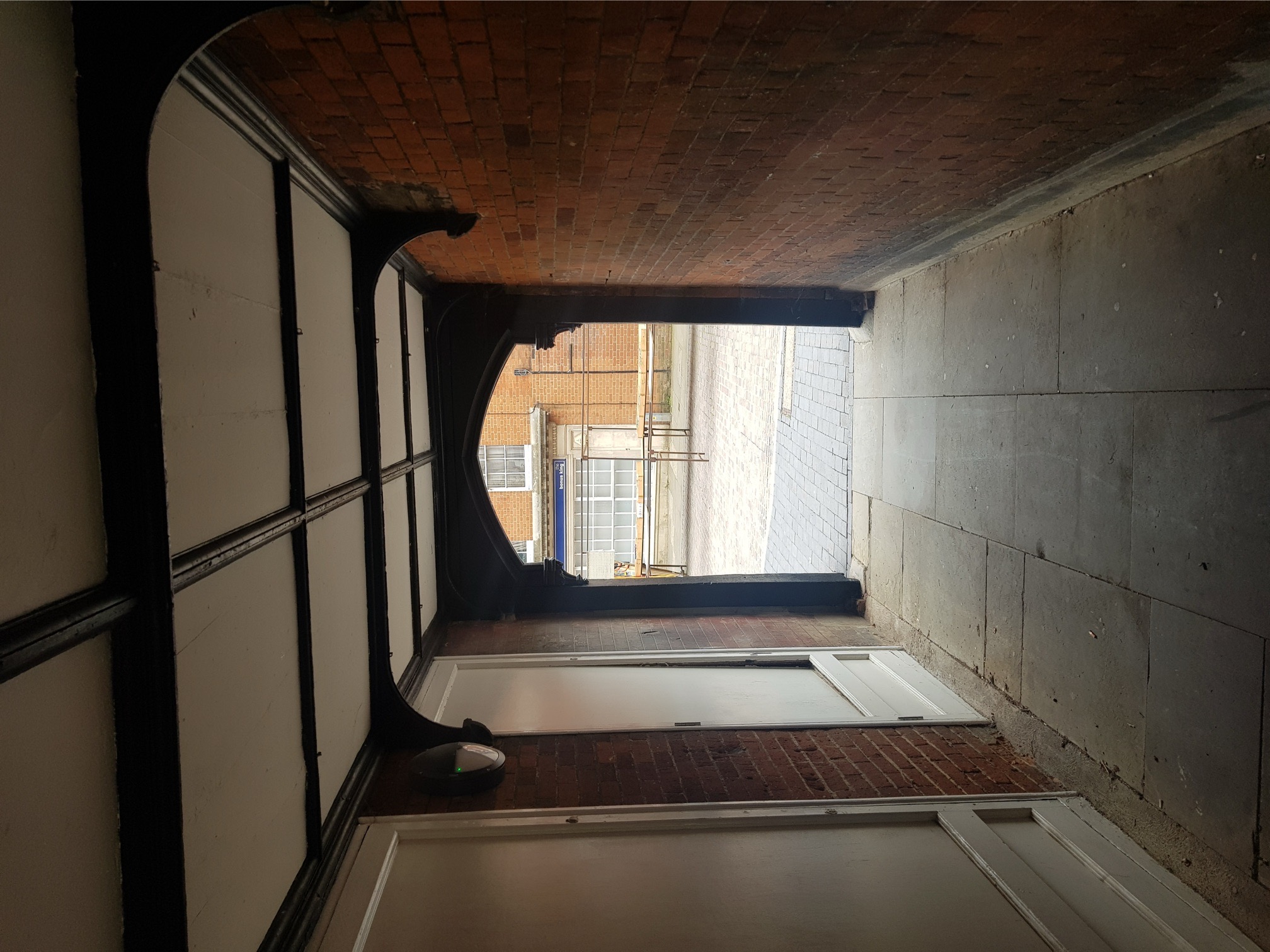
And the same passageway coming from the direction of the church. Fortunately, the church wasn’t damaged during the fire, although there were some initial fears that the fire might spread.