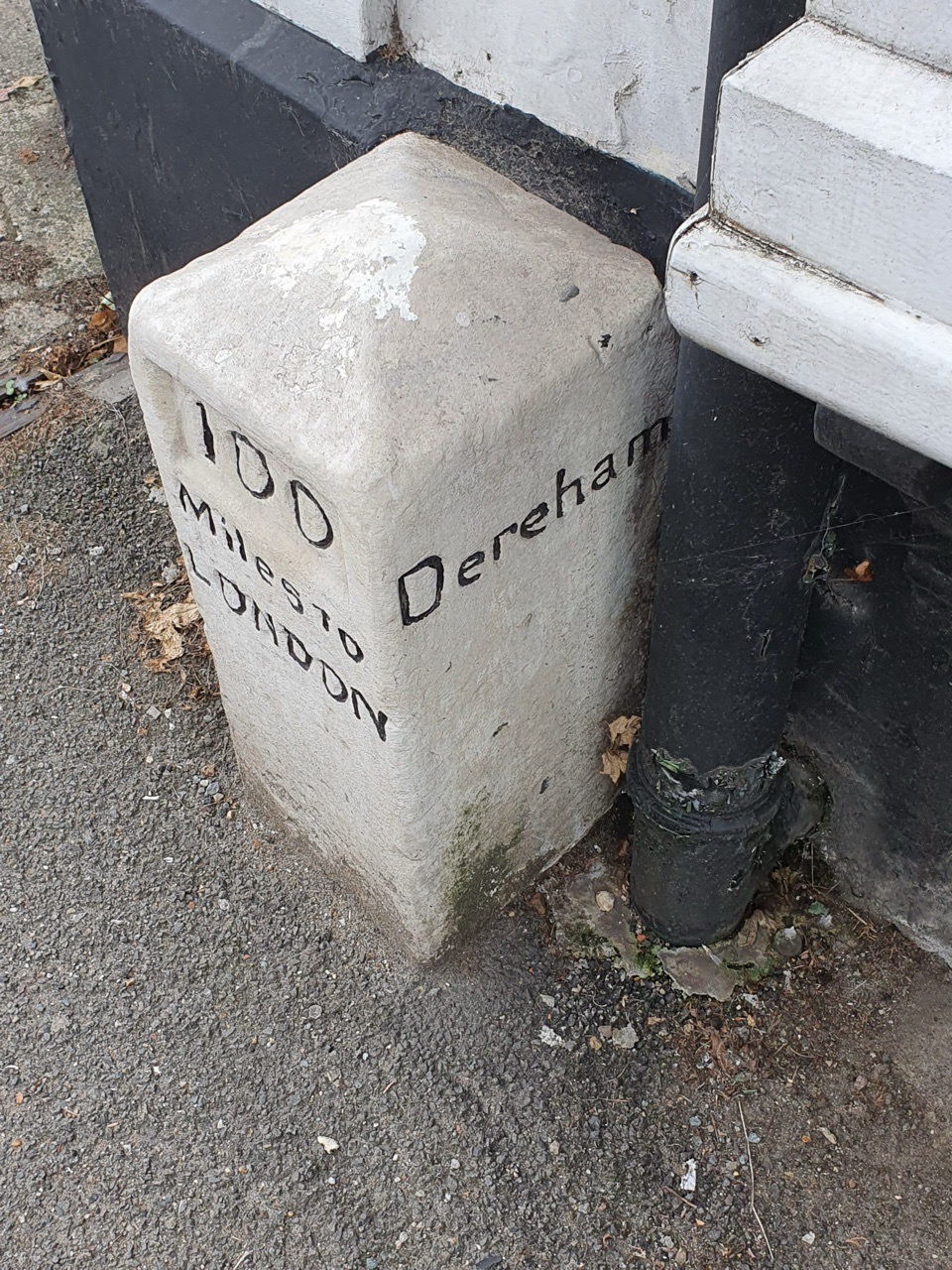
I’ve never noticed this milestone near to Dereham marketplace, located outside of the George Hotel, which was once a coaching inn. It’s a simple enough bit of stone, marking that it’s 100 miles to London (that reminds just how far the LDWA 100 challenge is) and 10 miles to Watton. It also reminds people that they’re currently in Dereham, which is probably quite handy for the weary traveller. But, there’s a long heritage to this stone, it has been here since around 1770, which makes it one of the earliest of the 360 or so milestones in Norfolk.
Category: Dereham
-

Dereham – Church of St. Nicholas (Overgrown Grave)
In a similar vein to the grave at Attleborough church that was overgrown, there’s something quite corporeal and spiritual (if something can be both these things) when graves get covered like this.
-

Dereham – Town Sign
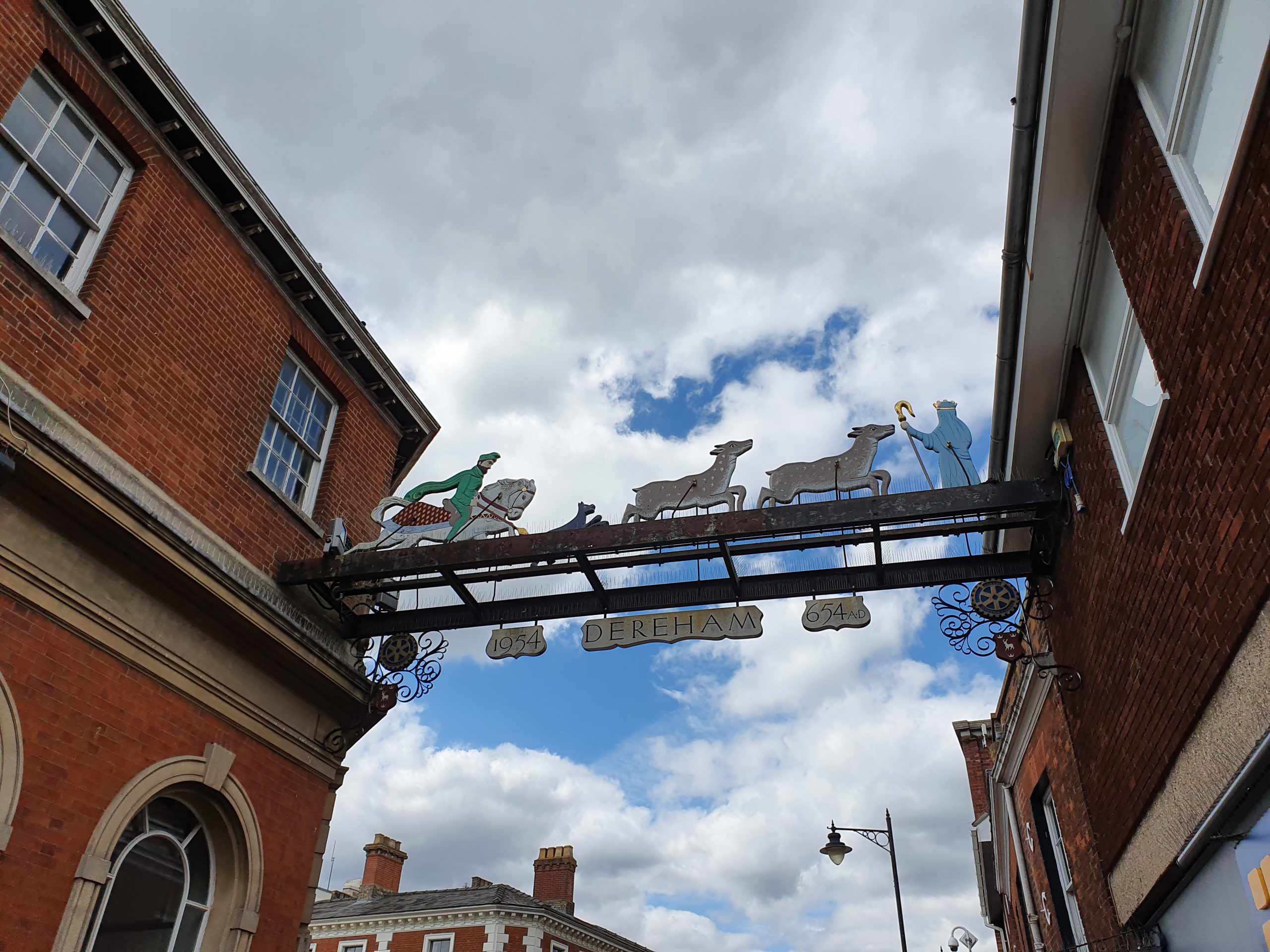
Dereham has a town sign which hangs over the High Street which was placed here in 1954, to mark the 1,300th birthday of when the town was founded. Realistically, this is probably a bit of a made-up date as there’s no historic evidence for this, but it’ll do as a best guess until someone can prove otherwise.
The story goes that the settlement of Dereham was founded by St. Withburga and there’s a tale that goes alongside this that the Virgin Mary guided her towards a stream where there were deer who provided milk to sustain her. Sounds about as likely as the more recent Castle Barnard story, but I won’t go there……
The next bit of the story, which explains the town sign, is that an evil local man didn’t like the deer being so generous to St. Withburga, so he tried to kill the lovely deer. Unfortunately, he was a bit inept and he fell off his horse and broke his neck. It’s not exactly a fairy tale story you’d tell to children, but that’s the imagery that Dereham wanted on its sign.
And here’s how it looked in 1960.
-

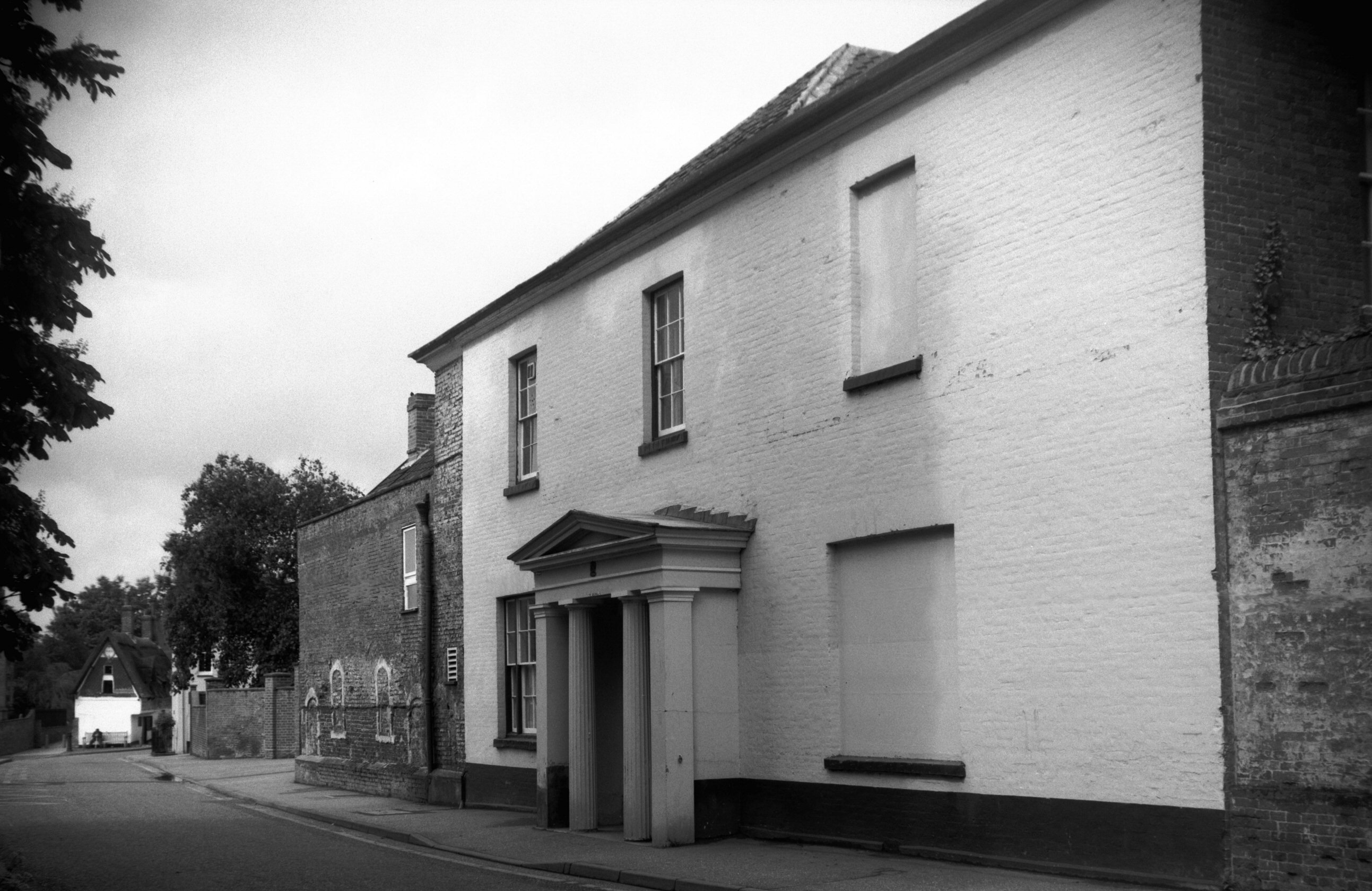
Dereham – Former Guildhall
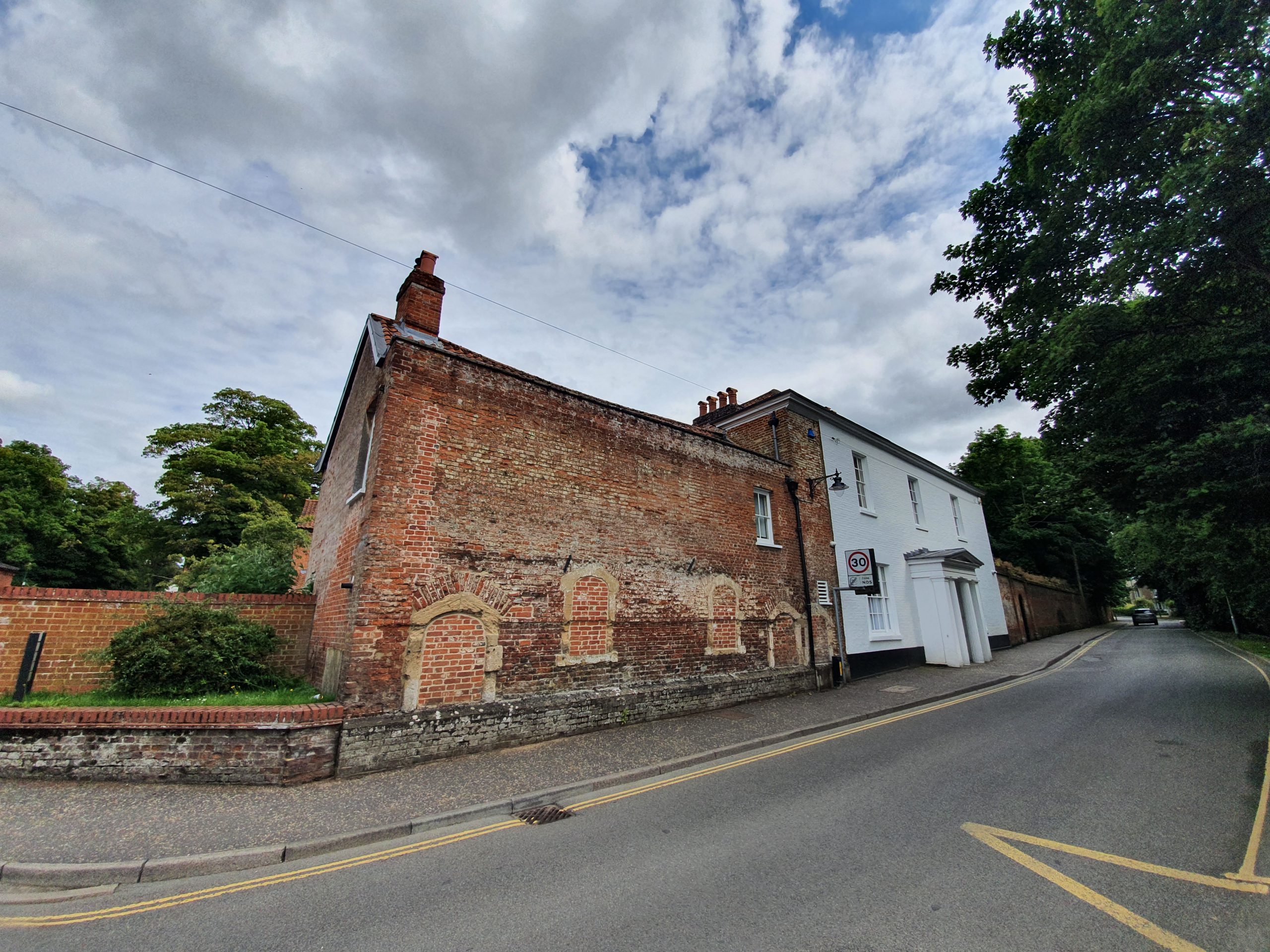
This is the former Dereham Guildhall and although heavily modernised, some sections from the sixteenth century remain in the wall and basement. It’s also been tidied up from when George Plunkett came to Dereham and took a photograph of it.
What is interesting from a heritage point of view is this, evidence of a separate property that is now joined with the main building. Those blocked up windows tell a story of their own, some are clearly evident, but there are a couple of harder to see blocked up windows on the first floor.
-

Dereham – Name Origin
Since I had an afternoon in sunny Dereham, here’s what The Concise Oxford Dictionary Of English Placenames has to say about the history of the town name.
Dereham, Norfolk. Derham in Domesday Book, Estderham in 1428. Likely the Old English, Deorhamm, for an enclosure for deer.
There are two Derehams in Norfolk, the larger of the two is also known as East Dereham and West Dereham is around 25 miles away, nearer to Downham Market. A nice and simple town meaning, which has remained gloriously unchanged (well, nearly) for a millennium.
-

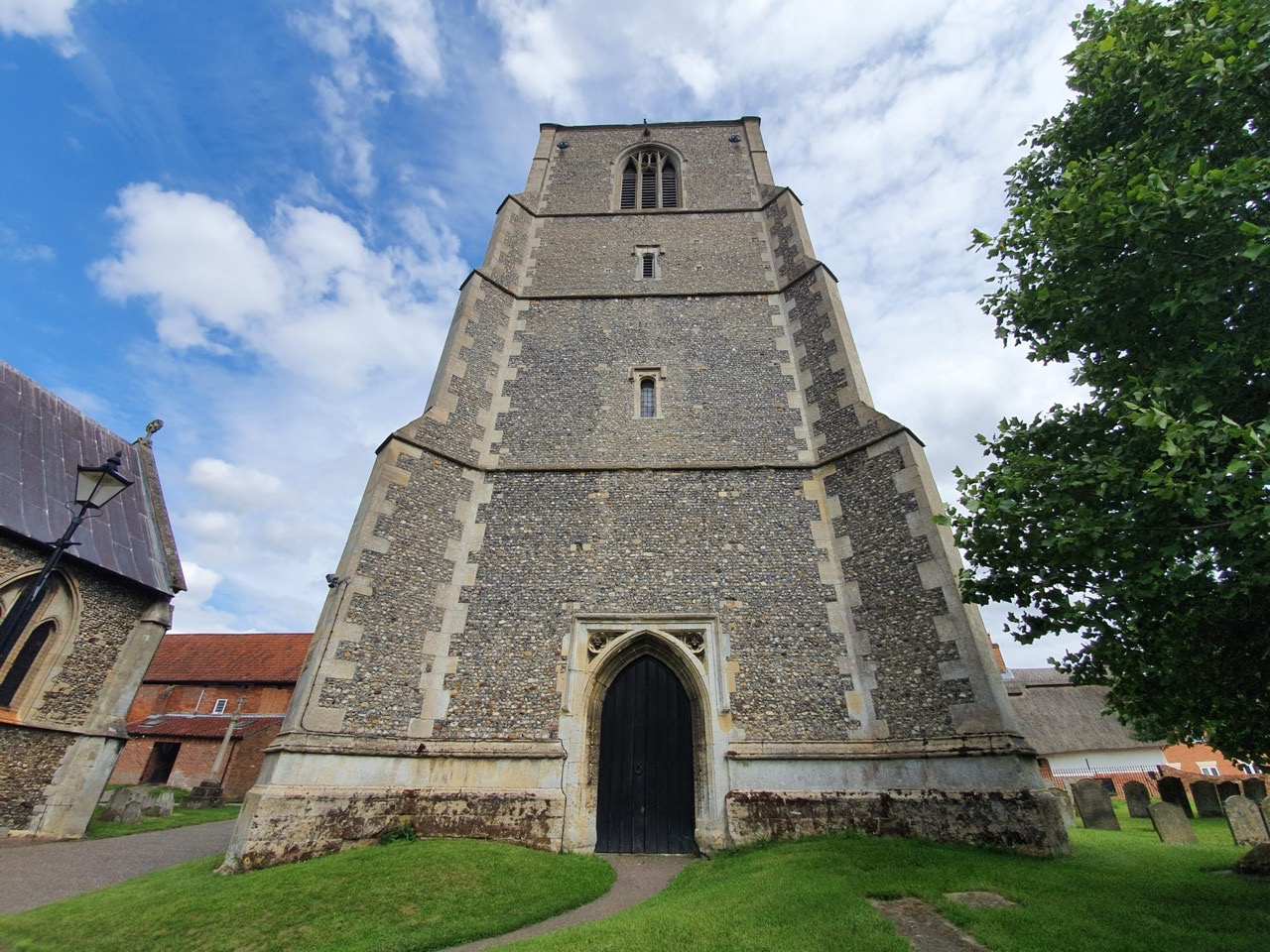
Dereham – Church of St. Nicholas (Bell Tower)
When they wanted some new bells for Dereham Church they realised that their existing church tower wouldn’t be strong enough. So, they came up with a new plan in 1520, which involved building a separate tower within the churchyard. From the side, the tower looks as though it’s a church of its own, it’s a substantial affair.
The tower was built in the early sixteenth century, comprising of four layers and its height has made it useful as the location for the town’s public clock. The clock was added in 1902 and was designed by JB Joyce Clockmakers of Whitchurch, with their successor company restoring it in 2008 when they also added gold to the clockface. This separate bell tower set-up isn’t unique, but is rare in the UK, the most notable form is probably that at Chichester Cathedral, although Norwich Cathedral once had one.
During the Napoleonic Wars, the tower was used to house French prisoners of war. One such prisoner, Jean de Narde, tried to escape on 6 October 1799, managing to climb a tree and he refused to come down when requested. So they shot him out of the tree, which wasn’t ideal and it received some criticism from locals. He’s buried in the church’s graveyard, although he didn’t get a gravestone until 1858 when Anglo-French diplomatic relations had improved a bit.
-

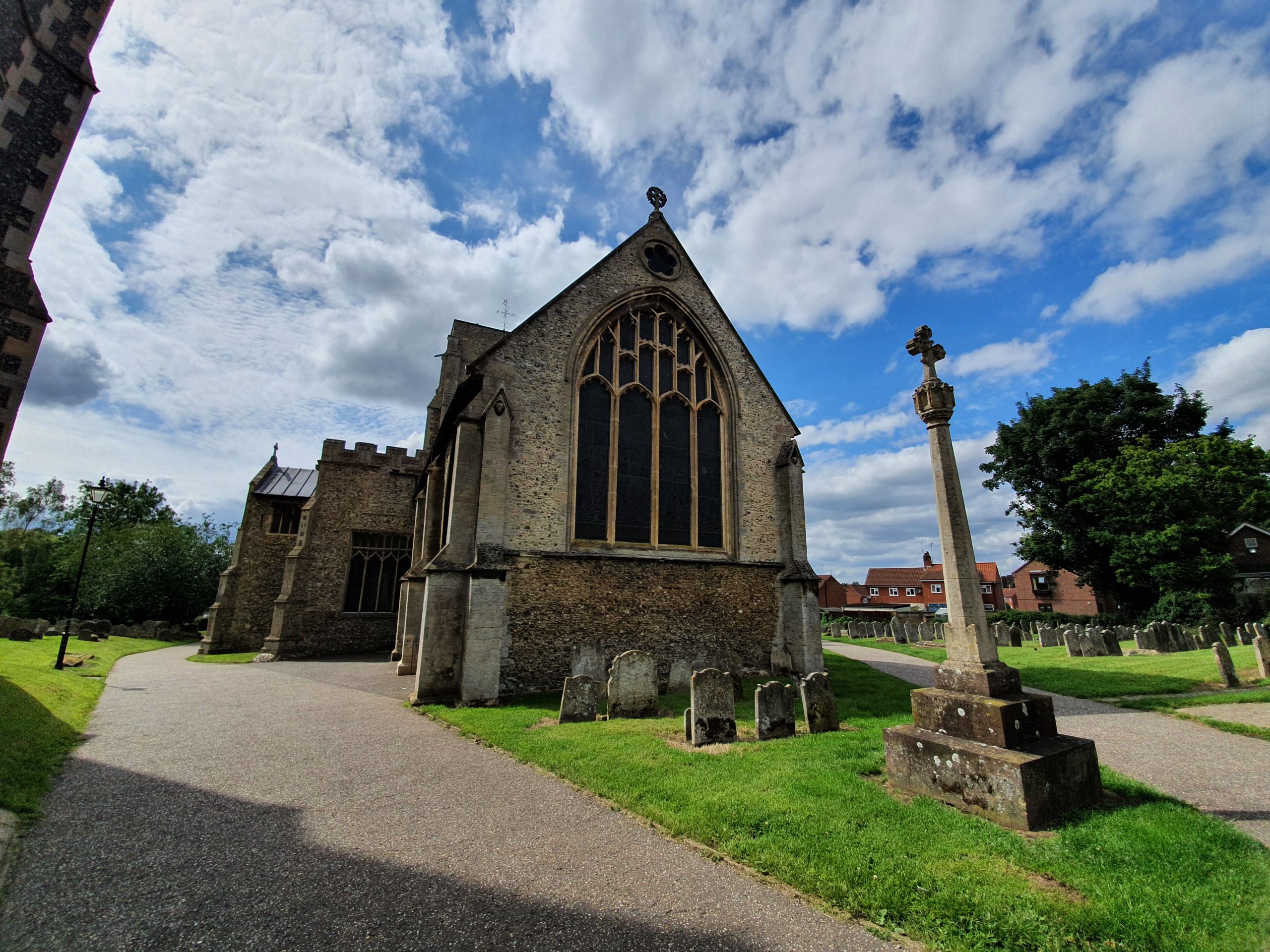
Dereham – Church of St. Nicholas
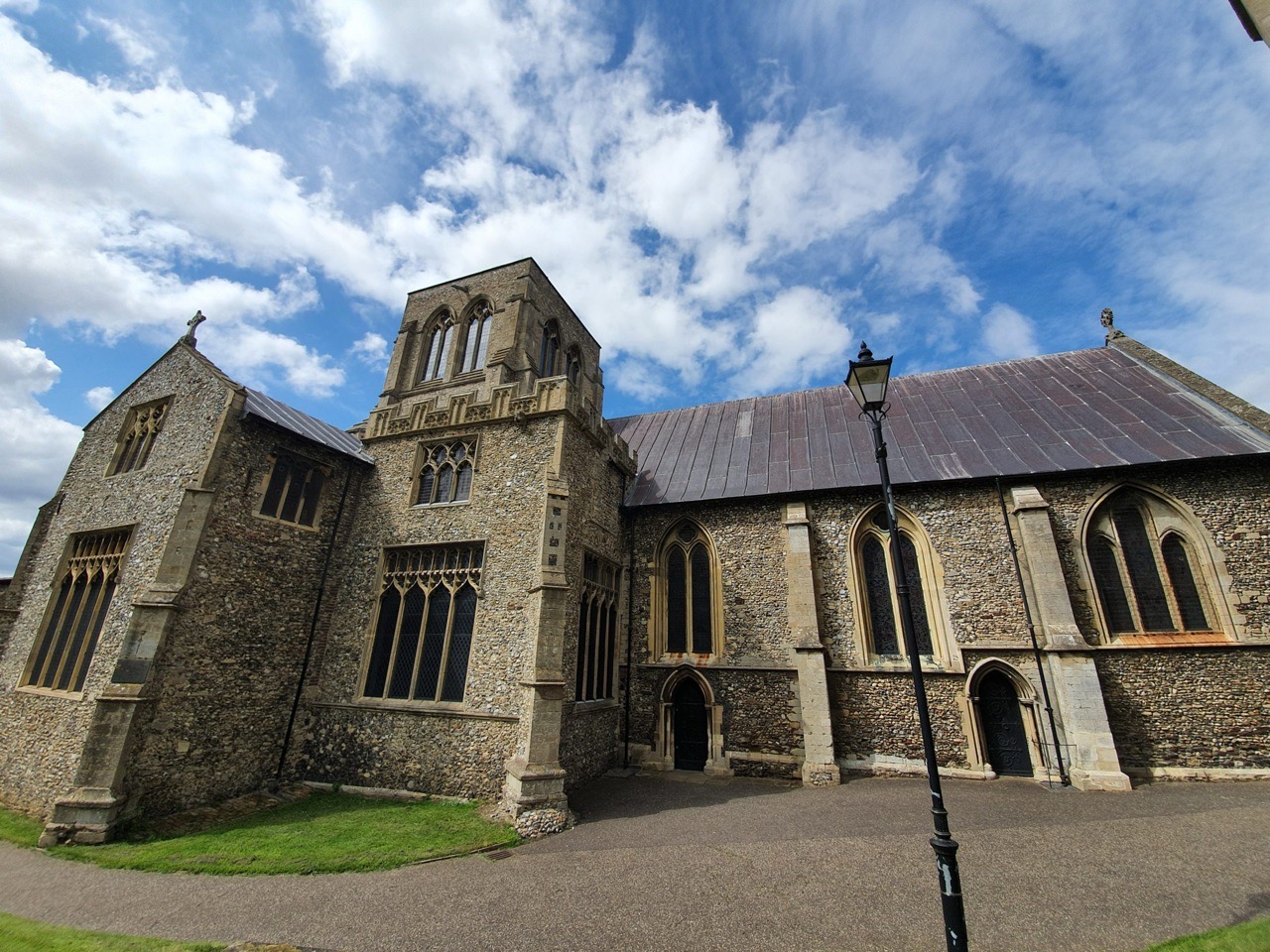
The Church of St. Nicholas in Dereham is quite a lumpy affair (this isn’t a proper architectural term and I imagine that Pevsner would be appalled at my language here) and there’s a separate bell tower arrangement (more on which in another post) because the previous one wasn’t strong enough to support the lovely new bells the church had acquired. There was a church here as early as the mid-seventh century (although the Danes destroyed that when they came to visit), although the current structure primarily dates from between the twelfth and fifteenth centuries.
What is left of the lantern tower is visible in the above photo, it was reduced in height in 1539 following the completion of the bell tower. It has been done neatly, but it means that to me the church doesn’t feel like it has enough height.
The southern side of the church.
The south-west porch, the inner door here to the church is the earliest part of the building, dating to the twelfth century.
The west end of the church.
The east end of the church, which is also the chancel end.
The north side of the church.
I decided against going into much detail here, as the church is so complex I’ll need to break it up (the blog post I mean, not the church itself). Partly to ensure that I can understand what’s going on, but fortunately, there are some pretty complete histories available for this church.
I have visited the interior before, I’ll locate the photos, although hopefully I’ll get to see the interior again soon enough when things return to some sort of normality. I have though written about St. Withburga’s Well before, which is located in the churchyard.

-

Dereham – Dereham Library
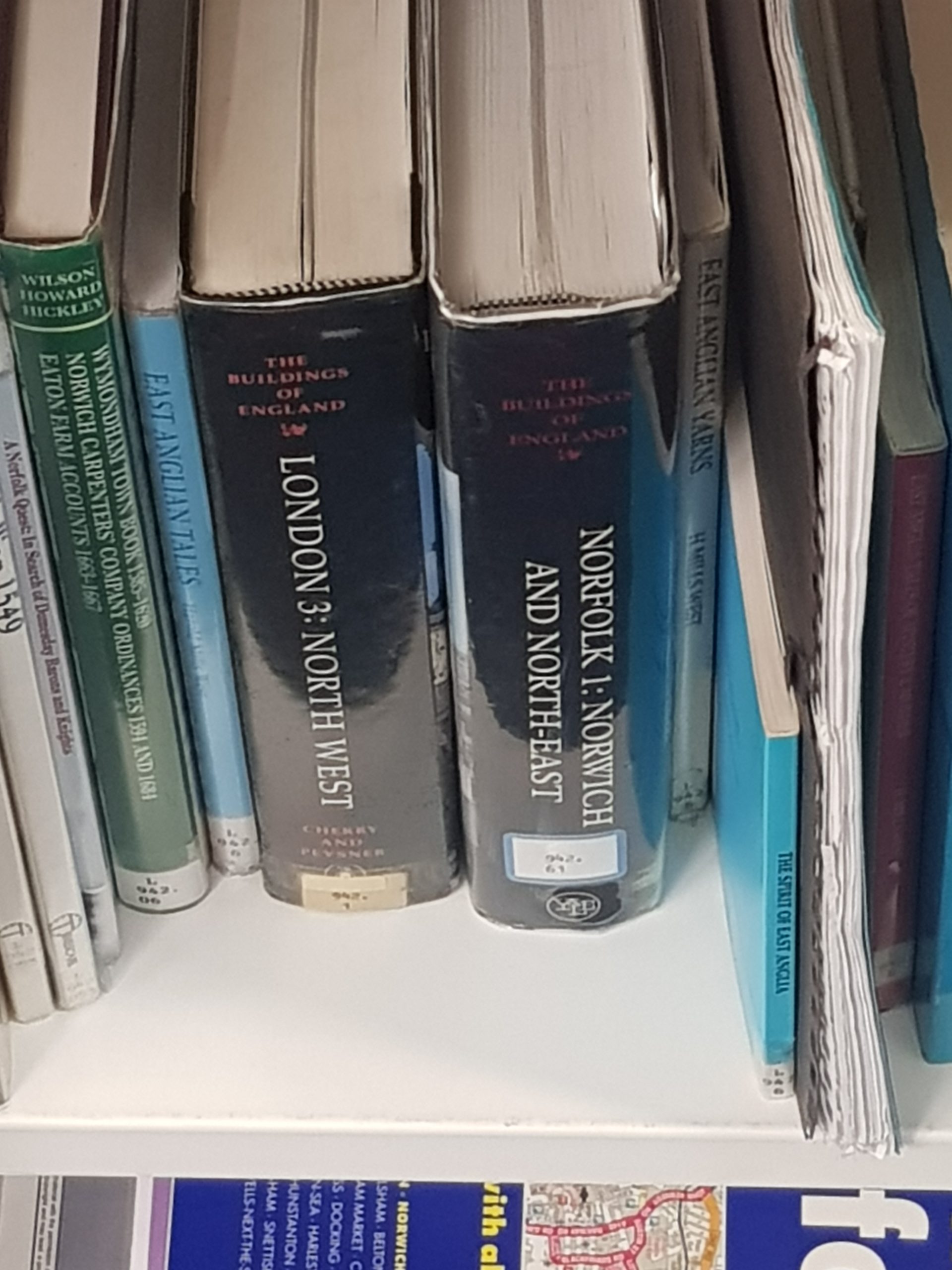
After my failed visit to Swaffham Library, I was pleased to see the council have bothered to open Dereham Library. So, I thought I’d look at the Pevsner here to see what I’d missed in Swaffham. I was moderately confused as to why they have the London North West guide in Dereham, but the Norwich & North-East makes more sense. Although, it doesn’t cover Swaffham or Dereham, that’s the North-West and South Norfolk book, which Dereham library should have. So, I check the on-line catalogue and there is a copy in Dereham, which pleases me.
Anyway, to cut a long story short, a very friendly and helpful member of library staff ponders where this book is. We’ve concluded someone has pinched it as they can’t find it either. Anyone reading something as wonderful as Pevsner should not be stealing it!
But, just bloody marvellous…. (although to be fair to the very helpful staff member, they did offer to get a replacement copy sent to Dereham library for future visitors).
-
Dereham – St Withburga’s Well
This well was originally the burial place of St. Withburga, but it is said that in 974 monks from Ely took her body to be buried at Ely Cathedral. When the locals discovered that someone had pinched the saint they had happily buried in their graveyard they were rather displeased and decided to go and have a fight with the Ely monks. The fight didn’t go very well as the Dereham men got into boggy ground in Ely, so they came home. When they arrived home they found that the burial site was now full of water, and they liked this water and so it became a pilgrimage site, although it’s behind iron railings to stop people from falling into it. The water still flows today, and it remains a site that pilgrims come to visit.
St. Withburga, or Wihtburh, died in 743 and she founded a religious house in Dereham. She was also part of the family who ran the local area and her body still remains in Ely Cathedral, although relics relating to her were mostly destroyed during the Reformation.
The inscription on the stone reads “the ruins of a tomb which contained the remains of Wethburga, youngest daughter of Annas, King of the East Angles who died AD 654”.
The EDP from 1896 mentions that the site of the well was once a baptistery where locals were baptised, but this was changed in 1752 when it was converted into a bath. Then in 1793, a brick bath house was built over the top and apparently one local decided to have a bath in the water every single week. He apparently lived “to a good old age”, so it didn’t do him any harm.
The well is located just in front of St. Nicholas Church in Dereham.