Blog

  • Vienna – Kunsthistorisches Museum (Head of a Sleeping Child from 1589)

    Vienna – Kunsthistorisches Museum (Head of a Sleeping Child from 1589)

    20250630_141835

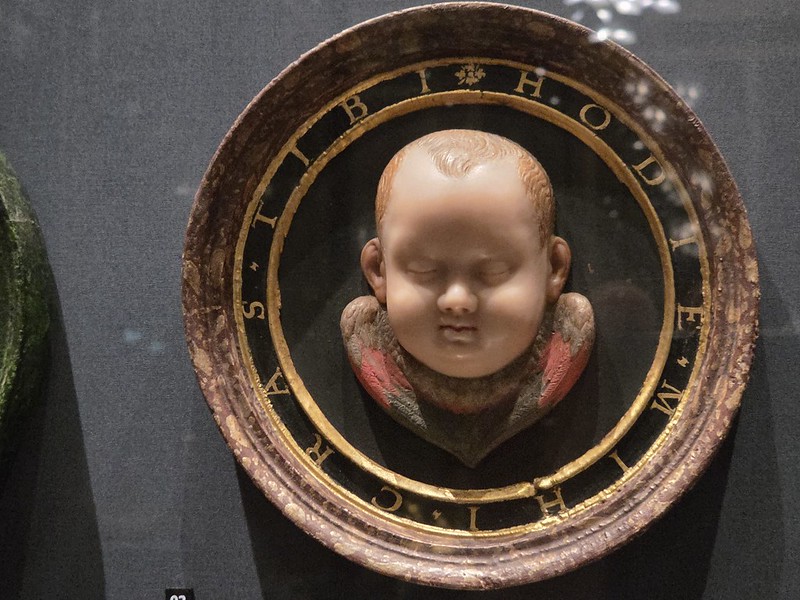
    This is a sixteenth century wax head of a sleeping child, mounted like a holy relic in a carved wooden tondo. I’m really more showing off there that I have learned a tondo is a circular work of art…. This is another piece of Habsburg-era oddness, a 1589 Austrian creation and I more wonder whether this child is at rest or quietly plotting something. Made of wax and wood, this disembodied cherub seems to me to be more of a masterpiece of serene discomfort. The inscription around the frame, “Hodie mihi, cras tibi”, translates loosely as “Today me, tomorrow you” which is not exactly comforting, especially when delivered via a child’s severed (albeit sleeping) head. It was likely designed as a memento mori, a not-so-subtle reminder of the fleeting nature of life, which I’m not sure people living at this time needed additional reminders of. The museum notes that these are fragile and rarely survive, although I suspect someone shoved it in a cupboard as I think it’s more unsettling than beautiful. But each to their own…..

  • Vienna – Kunsthistorisches Museum (Stirrup Cup from c.1580)

    Vienna – Kunsthistorisches Museum (Stirrup Cup from c.1580)

    20250630_141800

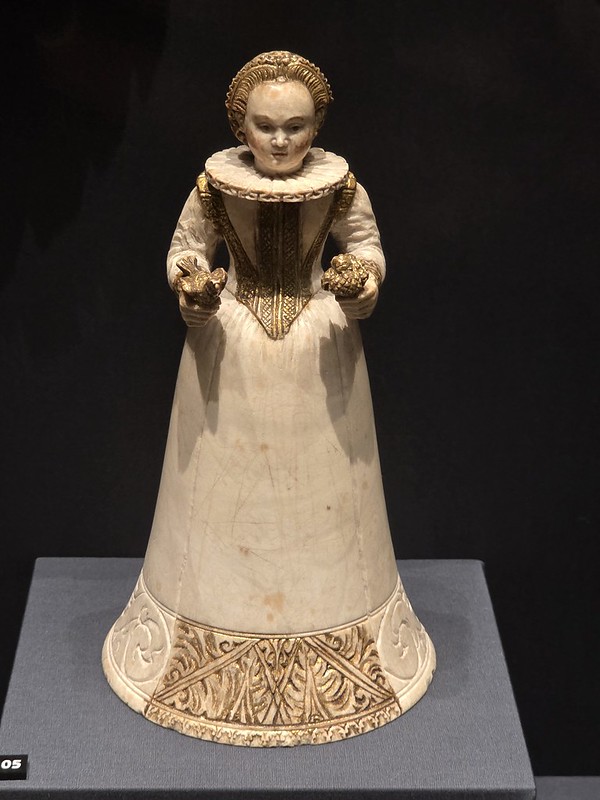
    A stirrup cup, for those unfamiliar with such decadent pre-departure rituals (to be fair, I had to Google it), was a parting drink offered to guests as they mounted their horses, one foot in the stirrup and the other edging towards a long and bumpy journey. It was meant to be fortifying, a little swig of something boozy (I doubt craft beer, but you never know) before you trotted off into the mud and misery of early modern travel. Most surviving stirrup cups take the form of animal heads such as foxes, hounds and stags, all very hunting-lodge chic. But every so often, someone went for something a touch more eccentric, and that brings me to this rather stern-looking Tyrolean lady. The museum say it’s a girl, which is possible, but I prefer the idea that it’s a grumpy middle aged woman. I’m really not sure that I would want to be given this, but perhaps that’s ungrateful.

    Dating from around 1580 and carved with exquisite skill, she was almost certainly never meant to be exactly cuddly. Made of alabaster and gilded for effect, she looks like she’s about to lecture the owner on their choice of footwear or inform them that they’ve scandalously forgotten their gloves. I imagine that it was somewhat unnerving to drink from her, which might explain why guests were encouraged to down the contents quickly before she could judge them further. If I ever get a horse, which is unlikely if I’m being honest, I might get myself a stirrup cup, but not one looking like this….

  • Vienna – Kunsthistorisches Museum (Holy Roman Emperor Sigismund of Luxembourg)

    Vienna – Kunsthistorisches Museum (Holy Roman Emperor Sigismund of Luxembourg)

    20250630_142542

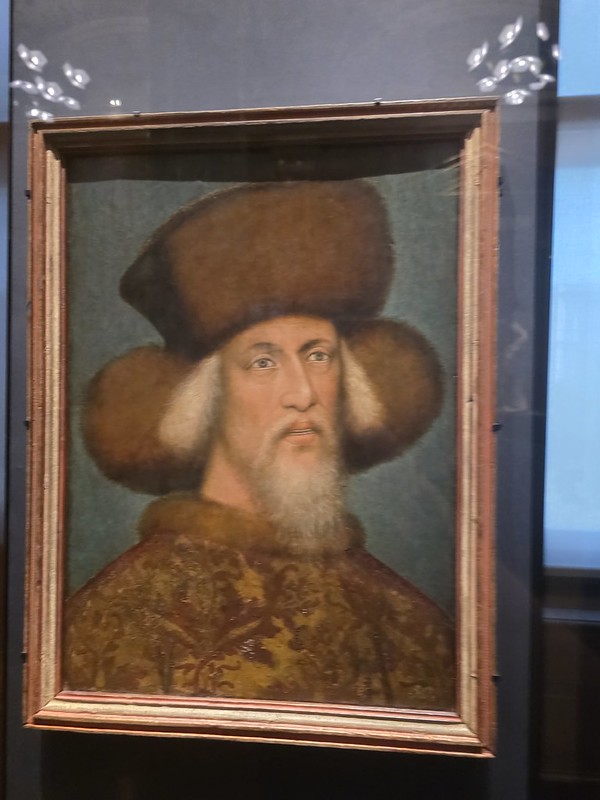
    This is a portrait of Holy Roman Emperor Sigismund of Luxembourg and although the artist is unknown, I suspect that whoever it was had quite a lot of fun with the fur millinery. Let’s face it, there are hats, and then there is this hat which is a magnificent, if slightly ridiculous, statement piece. I like that the museum makes an effort to show the provenance of their artworks, which is also useful given they’ve inevitably got issues trying to resolve Nazi thefts, but this has been located in the gallery since at least 1772.

    Sigismund (1368–1437) had one of those lengthy, overly complicated careers as he was King of Hungary, King of the Romans, King of Bohemia and finally Holy Roman Emperor. He’s perhaps best remembered for his role in organising the Council of Constance (1414–1418), which resolved the Western Schism by convincing three rival Popes to step down so a new one could be elected, which seems like the ecclesiastical equivalent of herding cats through treacle.

  • Vienna – Kunsthistorisches Museum (Painting of Maximilian I, Holy Roman Emperor)

    Vienna – Kunsthistorisches Museum (Painting of Maximilian I, Holy Roman Emperor)

    20250630_142250

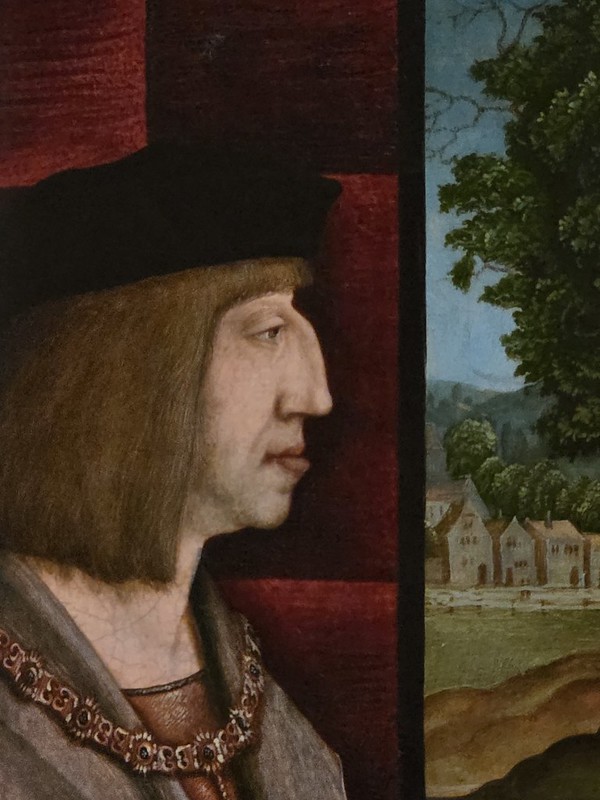
    This formidable profile belongs to Maximilian I, Holy Roman Emperor, as depicted in a late sixteenth-century copy after Bernhard Strigel. It now lives in the ever-rewarding Kunsthistorisches Museum in Vienna, where the galleries are so stuffed with imperial grandeur that this little gem is easy to overlook. Although my two loyal blog readers will be surprised and delighted to discover that I took several hundred photos in this museum, so there will be plenty more of this riveting series about the artworks that they hold.

    20250630_142254

    Strigel’s original work dates to the early 1500s, but this later copy, which was made by an unknown artist with a steady hand and a healthy respect for the Habsburg nose, carries on the visual tradition of showing Maximilian in all his stately glory. It’s got everything, the velvet backdrop, the finely detailed clothing, the meditative stare into the middle distance, and of course, that profile.

    Now, it would be terribly unfair to criticise a man’s face 500 years after the fact, but even his contemporaries might have quietly agreed that Maximilian’s features were distinctive. But this portrait doesn’t try to soften anything and nor should it. It’s an honest portrayal of dynastic power and in an age before soft-focus filters and PR advisers, that sort of thing was all the rage. He’s not smiling, of course, Habsburgs rarely did, but he had a lot to think about, perhaps he’s just remembered the size of his empire and the fact that half of it was currently at war. There’s a charming little manor in the background, complete with gables and a decent bit of shrubbery. Whether this was symbolic of imperial reach or just the painter filling in the space with some pleasant countryside I have no idea, but I like the idea of him (and it was probably a male) doing the latter.

    Maximilian I, Holy Roman Emperor from 1508 until his death in 1519, was born in 1459 the son of Frederick III and Eleanor of Portugal, and to be frank, he didn’t waste much time on hobbies when there were marriages to arrange and bits of Europe to hoover up. His marriage to Mary of Burgundy in 1477 gave him a claim to the vast Burgundian lands, and he spent a good part of his life either defending them, diplomatically squinting at maps, or enthusiastically marrying off his descendants to unsuspecting European royalty. The man essentially arguably invented Habsburg real estate strategy which was don’t fight too many wars, just marry aggressively and wait. While he never made it to Rome to be crowned by the Pope, largely because the Papal calendar was apparently a bit sub-optimal when it came to welcoming awkwardly ambitious emperors, he went ahead and started calling himself Elected Roman Emperor anyway. Fair play. Maximilian was a reformer in a rather haphazard way, dabbling in early postal systems, legal centralisation and he was a cultured guy.

    Anyway, I have digressed a little, but this is certainly a memorable painting…..

  • Vienna – Beaver Brewing

    Vienna – Beaver Brewing

    20250629_151932

    I wouldn’t say that it’s easy to get craft beer in Vienna, but it is out there and hopefully it will grow in availability in future years. This is Beaver Brewing’s taproom, which was highly reviewed on-line, and it’s not too far from the city centre.

    20250629_135128

    It was hot outside and that’s where most people were sitting whilst embracing the sun, but I wanted to sit inside in the cold and near a fan with all of its rotating excitement. There was a friendly welcome from the team member behind the bar and this felt like my sort of venue. I had just eaten at another bar, but the American food options looked tempting and interesting.

    20250629_135123

    They had nine beers available and I asked if they did flights. I was surprised and delighted that they not only did flights, but I could have one with all nine beers. This saves me choosing (I don’t need all that sort of stress in my life), I thought that this was a good idea and it cost around £10 for the flight which I thought was very reasonable.

    20250629_135244

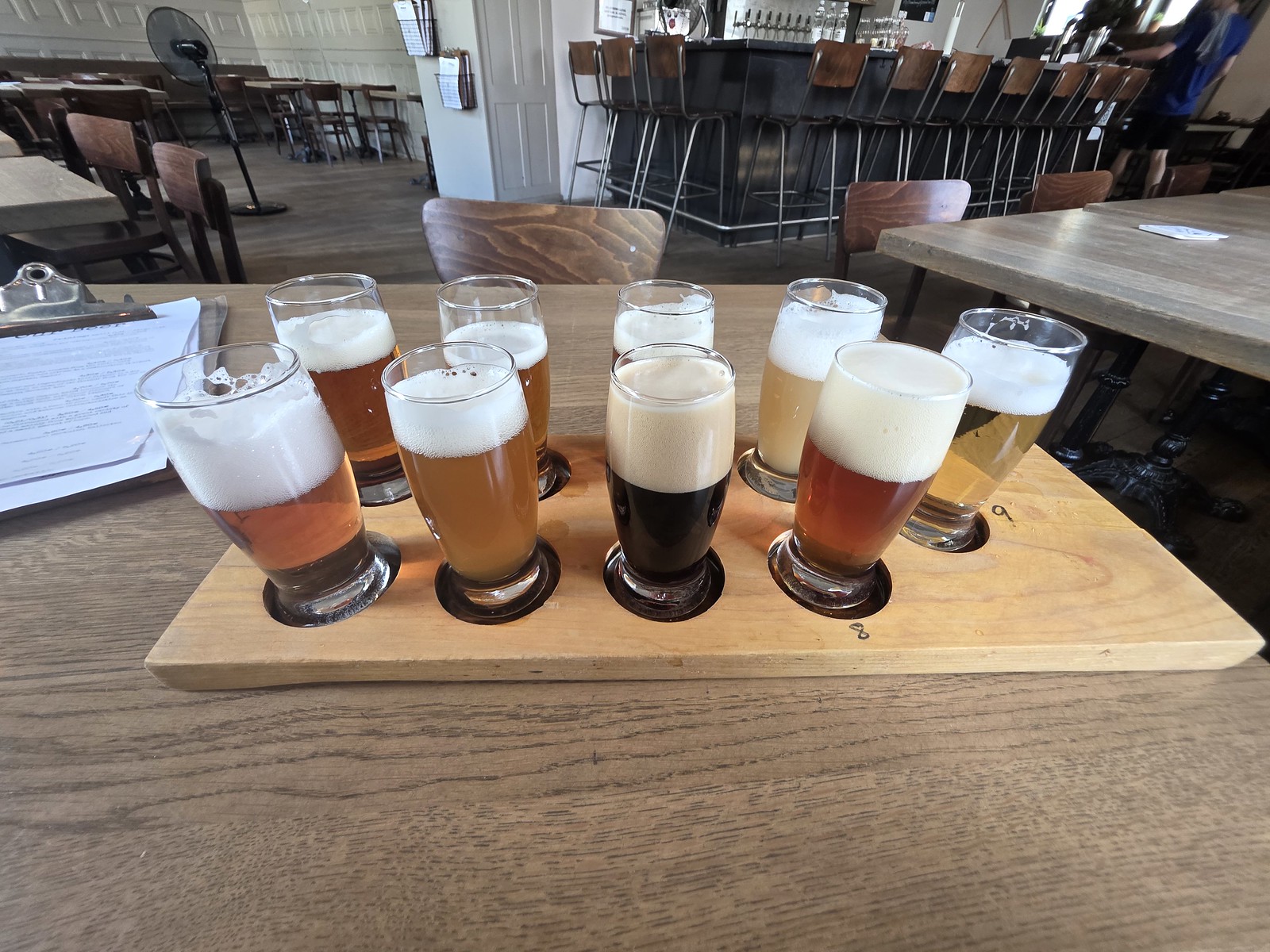
    And here we are, all of these are from Beaver Brewing Company. The numbering is 1 to 9 with 1 to 4 on the back row, 5 to 8 on the front row and then number 9 on the far right.

    (i) Happy Trails – this didn’t taste its ABV, it was light, hoppy with a touch of citrus and maybe some tree sap.

    (ii) Sunny Day – a rounded hop flavour, light, clean and smooth.

    (iii) Globetrottin’ – I’m not sure that I’ve actually had a proper Vienna lager before, I try and avoid anything lager related, but this is an innovative spin on this beer style using some global hops. Slight toffee, malt and sweetness to it, but my lager friends such as Ross would probably hate it.

    (iv) Bharbara – for just 3.2% this is very good, with a suitable level of sourness and tartness, lots of rhubarb and refreshing.

    (v) Forbidden Pils – the forbidden here refers to the use of rice, it’s sweet and I’d rather more pils used this as an ingredient.

    (vi) Pomona NEIPA – there’s strawberry punching through here with the beer being creamy, fluffy, fruity and very smooth. A rather lovely NEIPA.

    (vii) Fireside – malty, roasty, liquorice. Delightful even though it was a very hot day (I might have mentioned that it was too hot in Vienna).

    (viii) Witches Brew – I was surprised that this had a low Untappd score, it’s herbal, floral and admittedly tastes of pot pourri, but innovation is of the key… This harks back to the historic of brewing before hops and I rather liked the innovation going on here.

    (ix) Big Lake Lager – clean, crisp and inoffensive.

    I very much liked this bar, I had a rather lovely 90 minutes or so here. The welcome was friendly, the surroundings were clean and informal, with an excellent beer selection. The standard of their craft beers was towards the higher end of the scale, with some real innovation and experimentation going on here.

  • Bratislava – Bratislava Transport Museum (Mercedes-Benz 170 – W15)

    Bratislava – Bratislava Transport Museum (Mercedes-Benz 170 – W15)

    20250626_100918

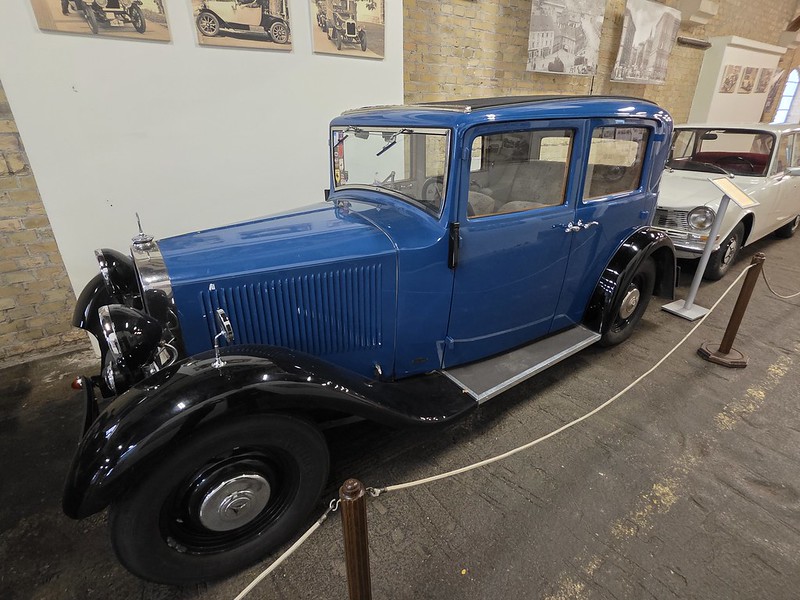
    Tucked away in a corner of the quite marvellous Transport Museum in Bratislava is this rather proud-looking Mercedes-Benz 170 (W15), a model first introduced to the world in 1931, although this one is from 1933. Unveiled at the Paris Motor Show in October 1931, it’s the sort of car that looks like it should be waiting outside a respectable interwar law firm, engine ticking gently, while its owner discusses tax efficiency and the virtues of punctuality or something similar (not that I want to fall into lazy stereotypes). Wikipedia mentions that nearly all of the production run was sold within Germany and they made a total of 13,775 of them.

    This was Mercedes-Benz’s first real stab at mass production with a modern design, aimed more at the professional driver than the boy racer of the time. There isn’t much subtlety to the colour as it’s bright blue, but it does look suitably dignified and it was deliberately smaller and slightly less decadent than previous models as the 1920s depression had cut disposable incomes somewhat.

  • Limoges – La Mie Câline

    Limoges – La Mie Câline

    [I originally posted this in July 2018, but have reposted it to fix the broken image links]

    20180701_131622

    There’s one problem with mainland Europe. There’s no Greggs. However, France does have the La Mie Câline chain, which is broadly similar in principle. It also today had the substantial advantage of being nearly the only place open in the centre of Limoges on a Sunday.

    20180701_124012

    The cakes were beautifully presented and looked appetising. It was also possible to buy the entire cake, which I must admit I was quite tempted to do. But, that seemed just a little greedy. The shop also sold ice creams, filled baguettes and fresh bread. The team member in the shop was also particularly friendly, so the purchasing process was made much easier.

    20180701_124253

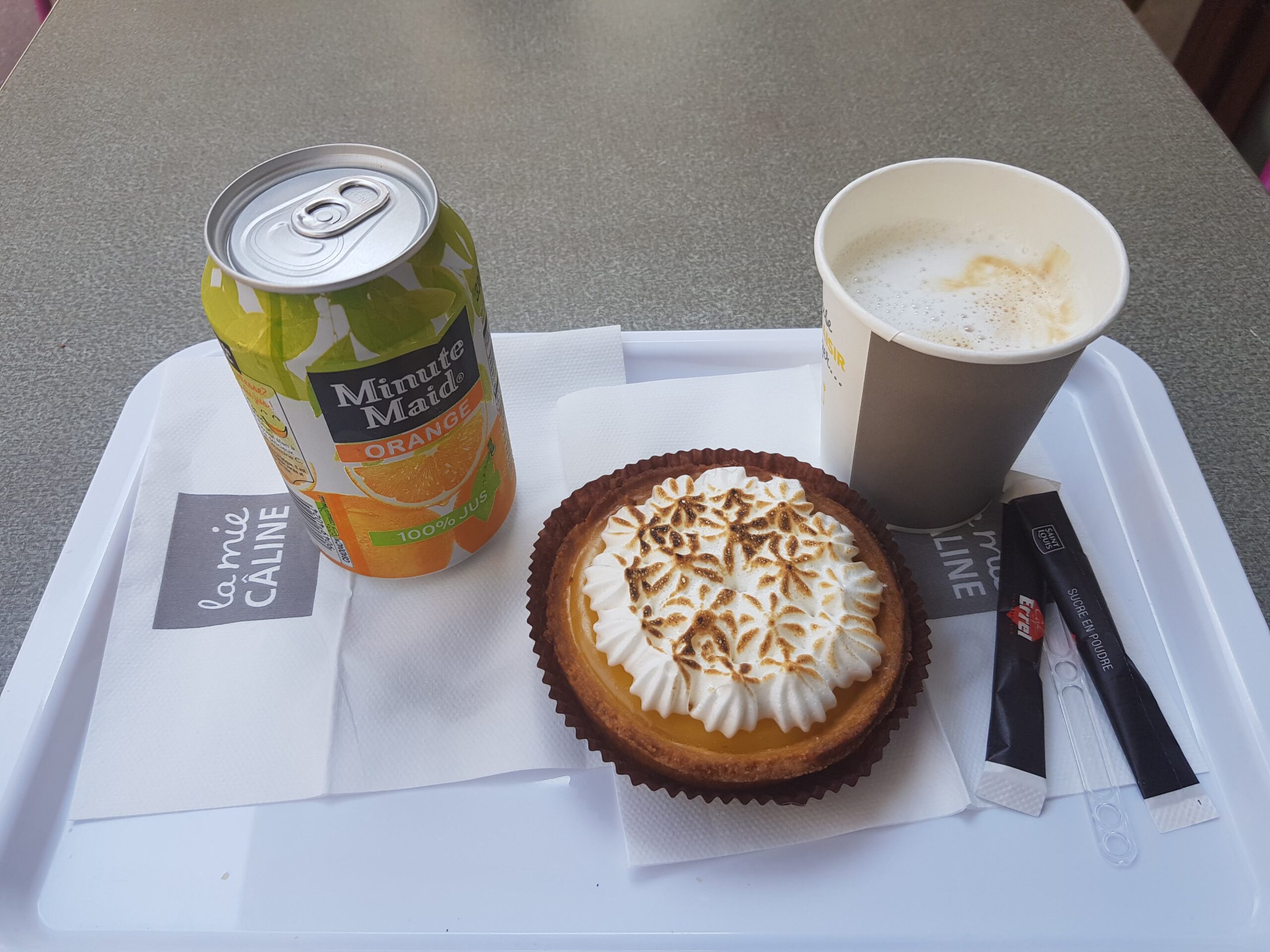
    A latte, an orange juice and a meringue lemon tart came to the grand total of around £3.50, which seemed very reasonable to me. There was also a small outside seating area which was rather pleasant, especially as it was in the shade and away from the city’s blazing heat.

    Was it all as good as Greggs? Well, that would be unfair on the French to expect any location to reach the excellence that is Greggs. However, it was perfectly sufficient, and I’d go again.

  • Limoges – Limoges City Pass

    Limoges – Limoges City Pass

    [I originally posted this in July 2018, but have reposted it to fix the broken image link]

    I thought that this would be an excellent opportunity to comment on Limoges’s city pass, which gives entrance to 20 different locations, as well free access to public transport and discounts on other services.

    It’s offered in three forms, (i) a 24-hour card, (ii) a 48-hour card and (iii) a 72-hour card which cost €15, €20 and €30 respectively. The 48-hour card seems to offer the best value for those wanting to visit the sites in Limoges itself, as it will take a couple of days to get around all of them.

    Some of the locations which are offered, such as the city zoo, are beyond the easy reach of public transport. Those with access to a car will get much better benefit from the pass, as there are numerous different attractions which can then be accessed.

    Some of the attractions, such as the Reynou Zoo, are relatively expensive and a standard admission costs €16. This is more expensive than the 24-hour card, so it does offer value for money for those wanting to visit these attractions. Also included are the majority of the city museums, which are relatively affordable to enter anyway, but this adds to the value.

    In addition, it’s possible to use the local buses for free, as well as a ride on the city’s mini-train. Bikes and scooters can also be hired for free on one occasion when using the city pass, and there are discounts for numerous hotels and restaurants in Limoges.

    Anyway, this is all of a bit irrelevant in my case. I went to the tourist information to purchase the card and they got the 48-hour card ready for me. The procedure to buy the card was easy and the staff member at the tourist information was helpful and engaging. It was at this moment the staff member mentioned something rather important, it was the first Sunday of the month…..

    I had forgotten that it was the first Sunday of the month, as July has come round rather quicker than I anticipated. And that meant one thing, all of the museums in the city were free today anyway. Which then negated the entire value for the card, so I didn’t buy it. I did though appreciate the honesty of the staff member, as I’d have felt hard done by if I’d bought it and then the museums told me it was free entrance anyway.

    But, for anyone visiting Limoges, the pass is very worthwhile. There’s more information at http://www.limoges-tourisme.com/.

  • Limoges – Quiet Streets

    Limoges – Quiet Streets

    [I originally posted this in July 2018, but have reposted it to fix some broken image links]

    It’s Sunday morning and it’s too hot. Again. The excitement for the locals of seeing their national football team win yesterday evening in the World Cup thing must have also caused a few headaches this morning.

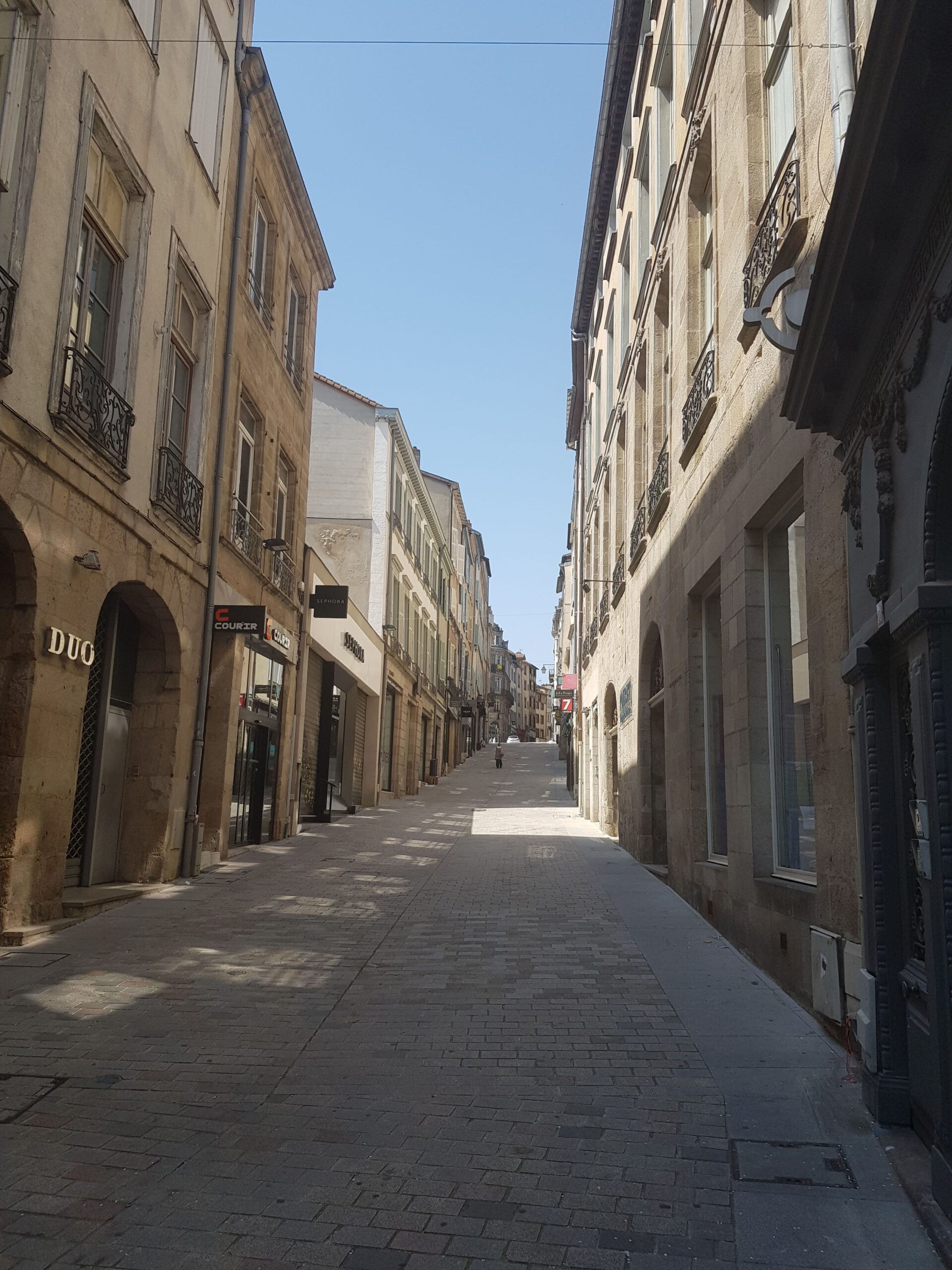
    Like most parts of France, it’s very quiet on Sunday mornings, primarily because nearly everything is shut. It does though have the advantage of meaning the streets aren’t busy and there are few cars on the road.

    20180701_121635

    20180630_102936_001

    20180701_121343

    20180701_121823

    20180630_113343

    20180630_113423

    20180701_120347

  • Limoges – Limoges Cathedral

    Limoges – Limoges Cathedral

    [I originally posted this in June 2018, but have reposted it to fix some broken image links]

    The city’s Cathedral is Saint-Etienne (or St. Stephens in English) which was constructed between the thirteenth and nineteenth centuries. The building is Gothic in design and the only other section of the Cathedral built outside this period is the Romanesque crypt, although this isn’t accessible to visitors.

    20180630_112014

    The bell tower of the cathedral was separated from the main part of the building until the late nineteenth century.

    20180630_112332

    There was an event taking place, so the external view was partly blocked by seating. The part of the building is from the late thirteenth century, the section in the middle is from the sixteenth century and the section on the right (excluding the bell tower which is late fourteenth century) is from the nineteenth century. It’s a complex building, but at least, and unlike Narbonne Cathedral, they completed it.

    20180630_103833

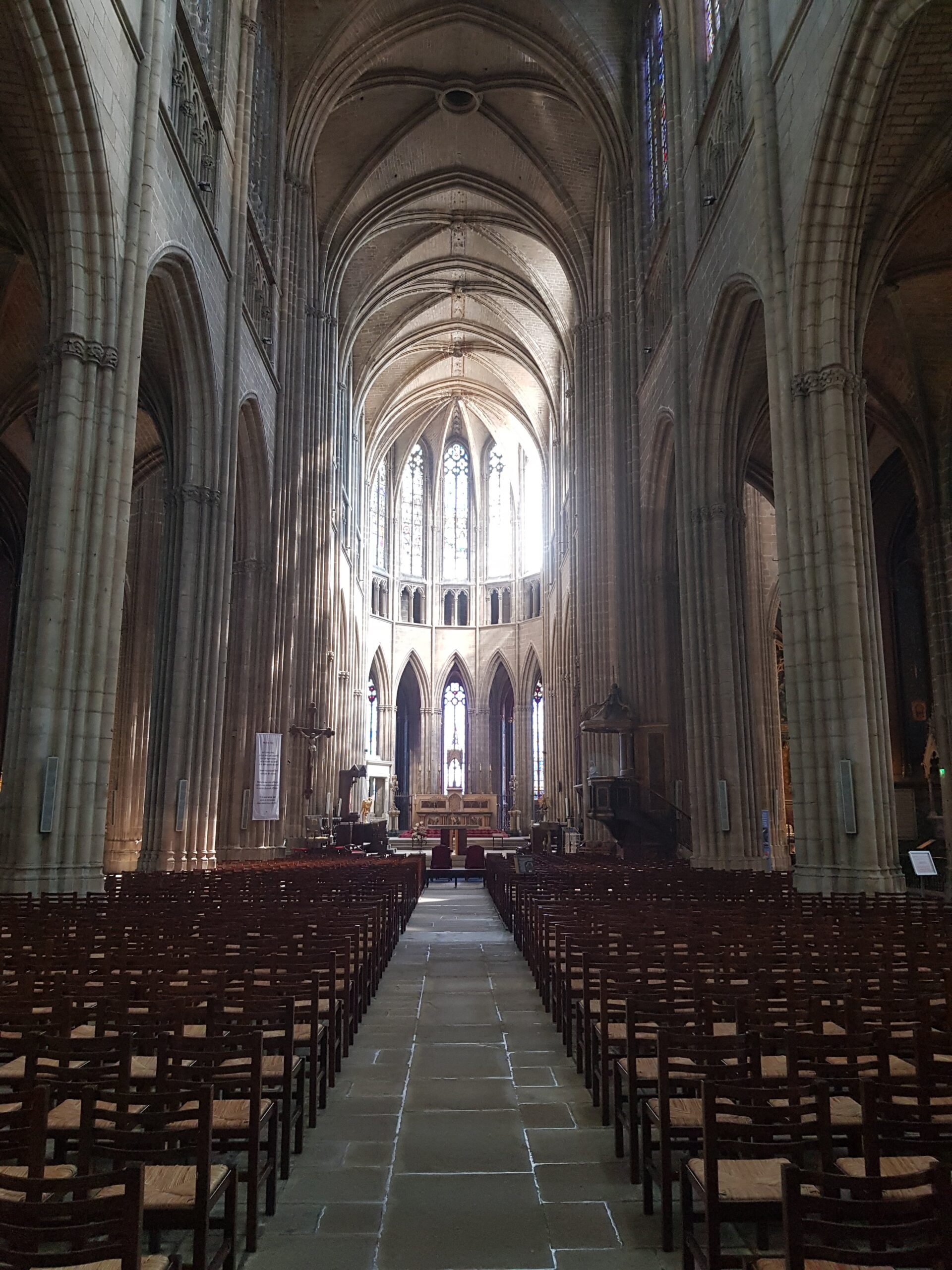
    The glorious nave of the cathedral.

    20180630_103930

    The choir section of the cathedral dates from the late thirteenth and early fourteenth century, although this is where the earlier eleventh century construction started.

    20180630_104953

    The Chapel of Sainte-Germaine, which also has some original wall paintings from the thirteenth century.

    20180630_103913

    The cathedral’s main organ and the impressive sculpted rood screen, which has been moved from its usual place in the building.

    20180630_111252

    Statues missing from the rood screen.

    20180630_111331

    Both the detailed stonework and the missing sculptures and general damage can be seen on the rood screen.

    20180630_104817

    20180630_104745

    20180630_104104

    So colourful….

    20180630_104026

    The east transept, which is a little narrower than the west.

    20180630_104846

    The Chapel of Sainte Philomene.

    20180630_104828

    The Chapel of Saint Martial.

    20180630_104552

    20180630_104018

    20180630_104143

    20180630_104752

    20180630_111222

    20180630_104210

    More stained glass.

    20180630_110927

    There’s evidence above this arch, visible by the change in the stonework, of how initially it was going to have a squarer design.

    20180630_104913

    The tomb of Jean de Langeac, an important sixteenth century diplomat and church official. He was the individual who commissioned the rood screen and he also spent a little time in England in the court of King Henry VIII.

    20180630_104941

    The tomb of Bernard Brun, a former bishop of Limoges.

    20180630_111525

    After an interesting hour in the cathedral, which was nearly empty, I ventured back out into the hot, bright sun. It was a particularly non-touristy cathedral with no shop, no parts were chargeable and that made it feel just that bit more authentic. There was plenty of signage around the building, although it was all in French, with the exception of a useful and information leaflet in English.