Blog

  • BBC News Story on Oldest Living Person

    BBC News Story on Oldest Living Person

    I really like this story, which is that the oldest person in the world is a lady from Surrey who is 115 years old and 253 days. The element that intrigues me the most is:

    “Ms Caterham was born on 21 August 1909 and is the last surviving subject of Edward VII.”

    There is just one person in the world who was alive when King Edward VII (1841-1910) was Monarch, I think that’s really quite something. Mind you, given my healthy diet and how I treat my body as a temple, I wouldn’t be surprised if I live just as long.

  • Charlecote House – St. Leonard’s Church

    Charlecote House – St. Leonard’s Church

    20250426_144143

    St Leonard’s Church occupies a significant position within the historic landscape of Charlecote and it is situated immediately adjacent to the main entrance gates, forming an integral part of the approach to the great house. It’s thought that there has been a church in this location since at least the twelfth century, although little remains of the medieval church as it was pulled down in 1849. The old building just wasn’t good enough for the country house, the Lucy family wanted something rather more decadent.

    The new church was constructed between 1850 and 1853, with the impetus for this ambitious project coming from Mary Elizabeth Lucy (née Williams, 1803-1890) who was the wife of George Hammond Lucy (1789-1845). Following her husband’s death, Mary Elizabeth conceived the rebuilding as some sort of grand memorial to him, personally funding the work and laying the foundation stone in 1850.

    20250426_144240

    The lighting was a little odd in the church and my photos have come out looking like postcards from the 1980s. The interior of the church is in the Gothic Revival style and it was designed by John Gibson.

    20250426_144250

    The font was also designed by John Gibson and it’s an impressively decorated piece.

    20250426_144255

    Some of the detail on the font.

    20250426_144329

    The chancel of the church and we didn’t investigate too much further down here as the organist was playing away and occasionally stopping and angrily commenting on his own performance, so Richard and I didn’t want to disturb the arrangement. I must admit, I like a bit of musical frustration when visiting an historic monument, it adds some atmosphere to the proceedings.

    20250426_144337

    Looking back along the nave with a rather svelte Richard strolling down purposefully.

    20250426_144512

    A rose window in the Gothic style and some intricate stained glass work.

    20250426_144547

    It’s rather a shame that the church has faced attack.

    20250426_145408

    From the outside, the size of the private chapel leading off from the chancel is particularly noticeable. Apparently, some of the wood used in this chapel dates from the earlier church which the Victorians demolished.

    Personally and this might be evident by the slightly short post, I’m not that engaged with the church as although it’s beautiful, there’s little of heritage and it’s the medieval aspect that particularly intrigues me. Everything obviously cost a lot of money, it was done well and it was in keeping with the rather decadent nature of the main house. But, I like a slightly rough and ready church, one where there are traces of medieval changes all over the place, something that has been erased here.

  • Charlecote House – Worn Out Sundial

    Charlecote House – Worn Out Sundial

    20250426_130930

    Adding to my long series of irrelevant posts, I was intrigued about this sundial. I think it’s because Charlecote House is relatively pristine maintenance wise and looked after, but this has fallen into disrepair at some stage. And, no-one seems to know much about it, but the best guess is that it was installed in the 1820s when the property was being modernised. But, it might be older, so that’s another riveting factual post from me. I did ask AI to date it, but it knew that it was at Charlecote and then based its guesswork on that. It seemed to like the idea that it’s an older sundial that was restored in the 1820s, so that seems a decent compromise. Anyway, I just like some things to fade away without being restored and that’s reason enough for a whole blog post about a bit of old stone.

  • Acocks Green (Birmingham) – The Spread Eagle

    Acocks Green (Birmingham) – The Spread Eagle

    20250426_105519

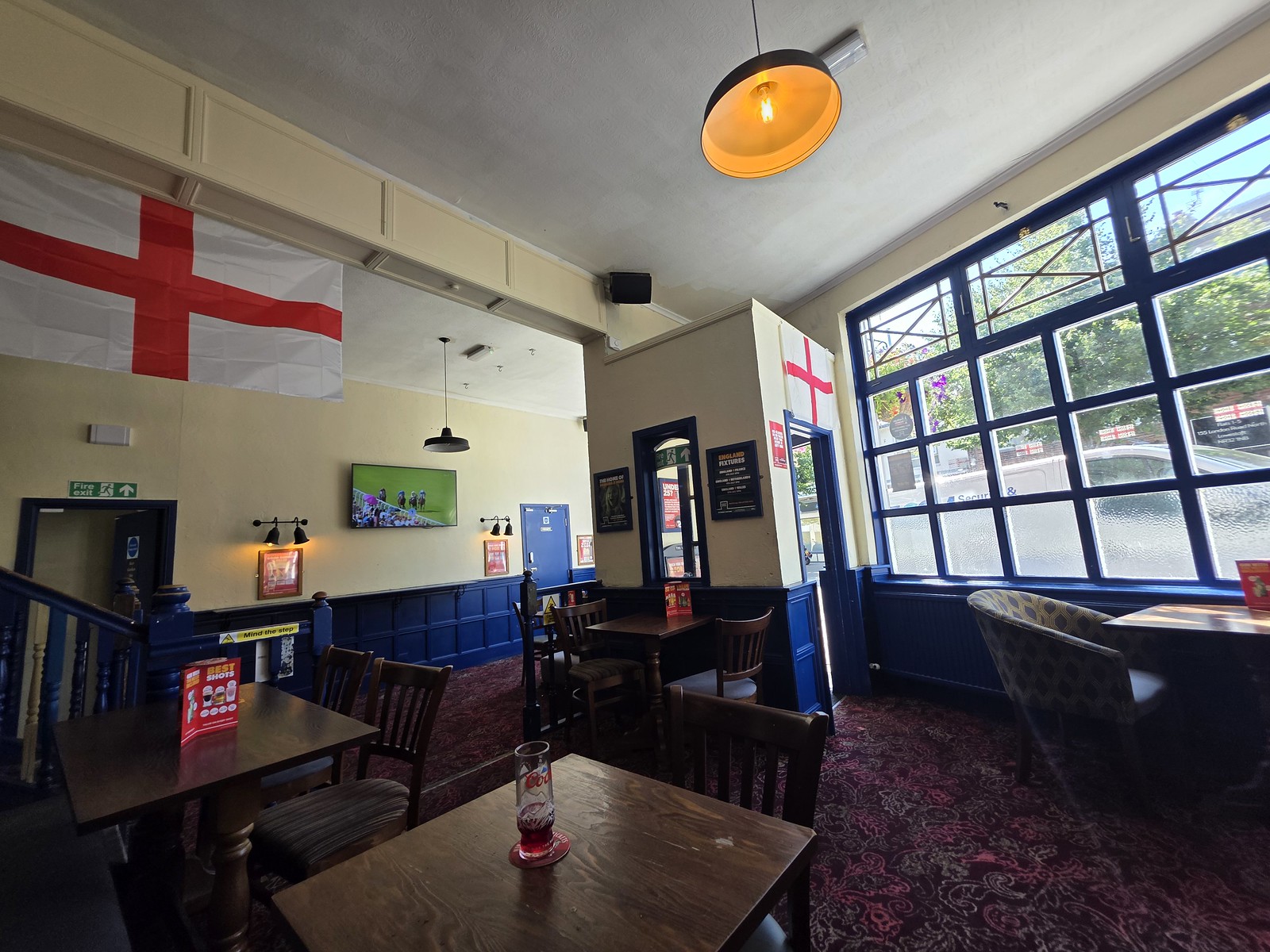
    At the weekend, slimline Richard and I thought that we’d pop to the Spread Eagle in Acocks Green near Birmingham. As usual, I’ll take the history of the pub name from the JD Wetherspoon web-site:

    “Named after one of the oldest pubs in Warwickshire, which stood close by, until it was demolished in 1929, through road-widening, The Spread Eagle (the first pub) was pulled down in 1929. The green, far from being an age-old local landmark, was created in the early 1930s.”

    The pub is located at the ‘413’ in the above map from the 1870s. It’s certainly all got a lot more developed in the area in the last 150 years.

    20250426_102301

    One of the display boards in the pub mentioned Hancock’s Half Hour and this intrigued me. There’s no direct link between Tony Hancock (1924-1968) and the pub, but he did live in nearby Hall Green.

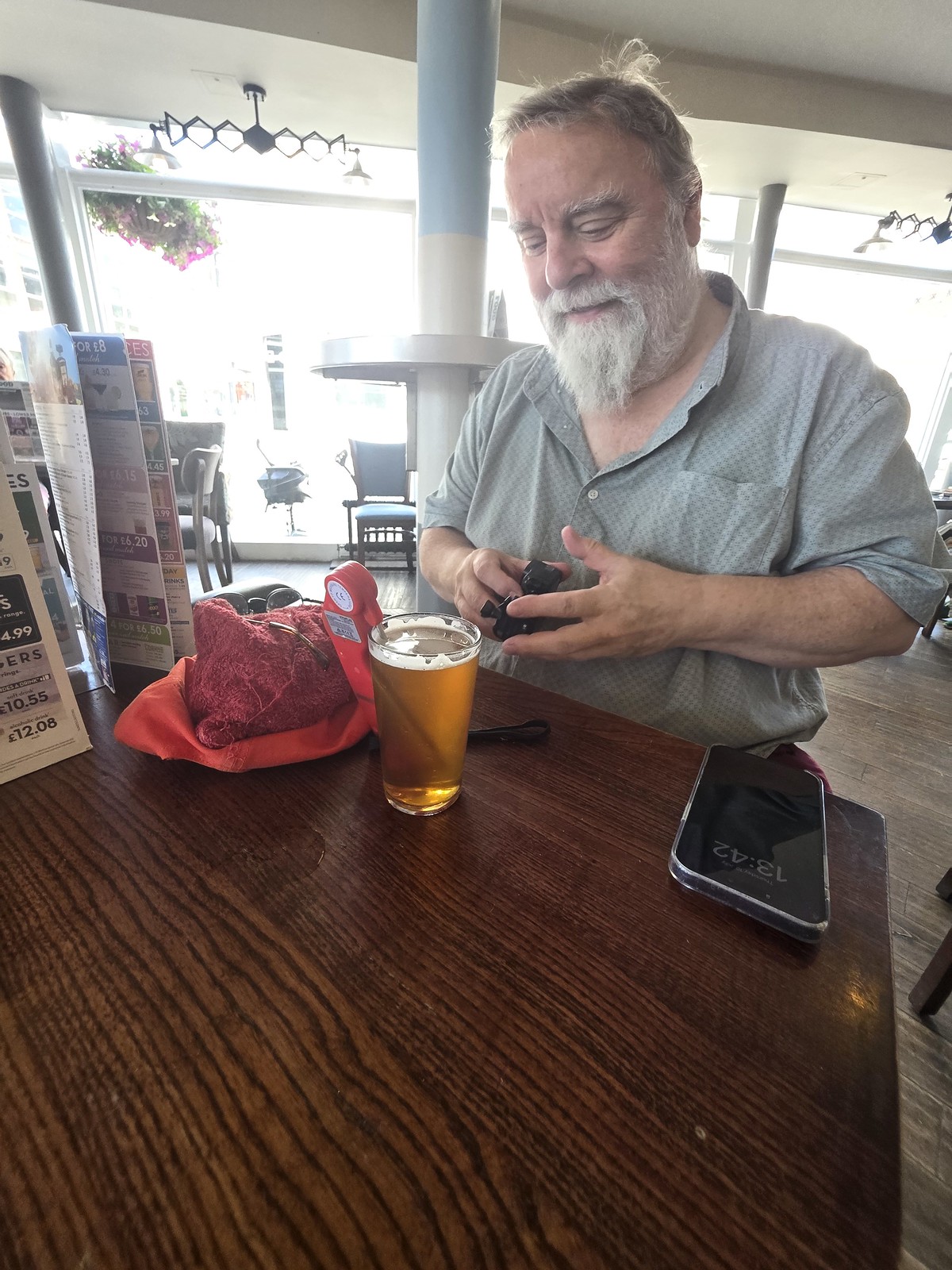
    But, back to the food planning. Richard decided that he would treat himself to some toast which was the most that his diet would allow, and even that was pushing it. He ordered his toast and waited excitedly. I was pleased to discover that the pub was in the lowest JD Wetherspoon price band and so I went for a traditional breakfast and unlimited coffee.

    20250426_101447

    My traditional breakfast was served promptly and just as a team member came over and said to Richard that they didn’t have any toast and they wondered if he would like anything else, as they assumed he wouldn’t want raw bread. The team member obviously didn’t really expect to have a customer come in that wasn’t really meant to be eating anything as decadent as toast, so there was little else that could be offered. Meanwhile, I had lost interest in his problems at this point as I had food to eat and although I would have rather had toast than raw bread myself, this food and unlimited coffee came in at under £5 so I didn’t feel the need to be overly disappointed. Full marks for the eggs still be runny and the bacon not being fatty. Richard was contemplating his entire day as his hopes to just have a little toast were shattered and I did wonder whether it might have been easier for them to buy a small-scale toaster until their commercial arrangement was fixed.

    As it’s a JD Wetherspoon venue, I felt the need to have a little look through the on-line reviews and see if anything there surprised or delighted me.

    “We were having fun as a family for a Birthday and the old blonde dragon came over and told us to be quiet in a very rude way”

    I bet “having fun” meant being loud and disturbing other customers as why otherwise would a team member even be engaged in worrying about matters?

    “The manager a move her station threatened to bar customers spending money for singing and having the craic for no reason obviously feels insecure in her job and cannot control the clientel on her establishment.”

    It sounds very much like she was in full control of the customers.

    “To noisy stink of smoking as you enter”

    There are a few of these and they’re right, the smokers are dominating the entry doors….

    “Staff very rude and got barred for no reason”

    I’m not convinced.

    “I am getting sick of people deciding what we can and cannot do in pubs. Now this pub, on an empty Thursday evening, is telling me I cannot stand at the end of the bar and have a beer.”

    Probably as the team members know that customers blocking the bar is sub-optimal.

    “Dreadful typical weatherspoons pub to be avoided if possible if you have any taste in pubs you visit.”

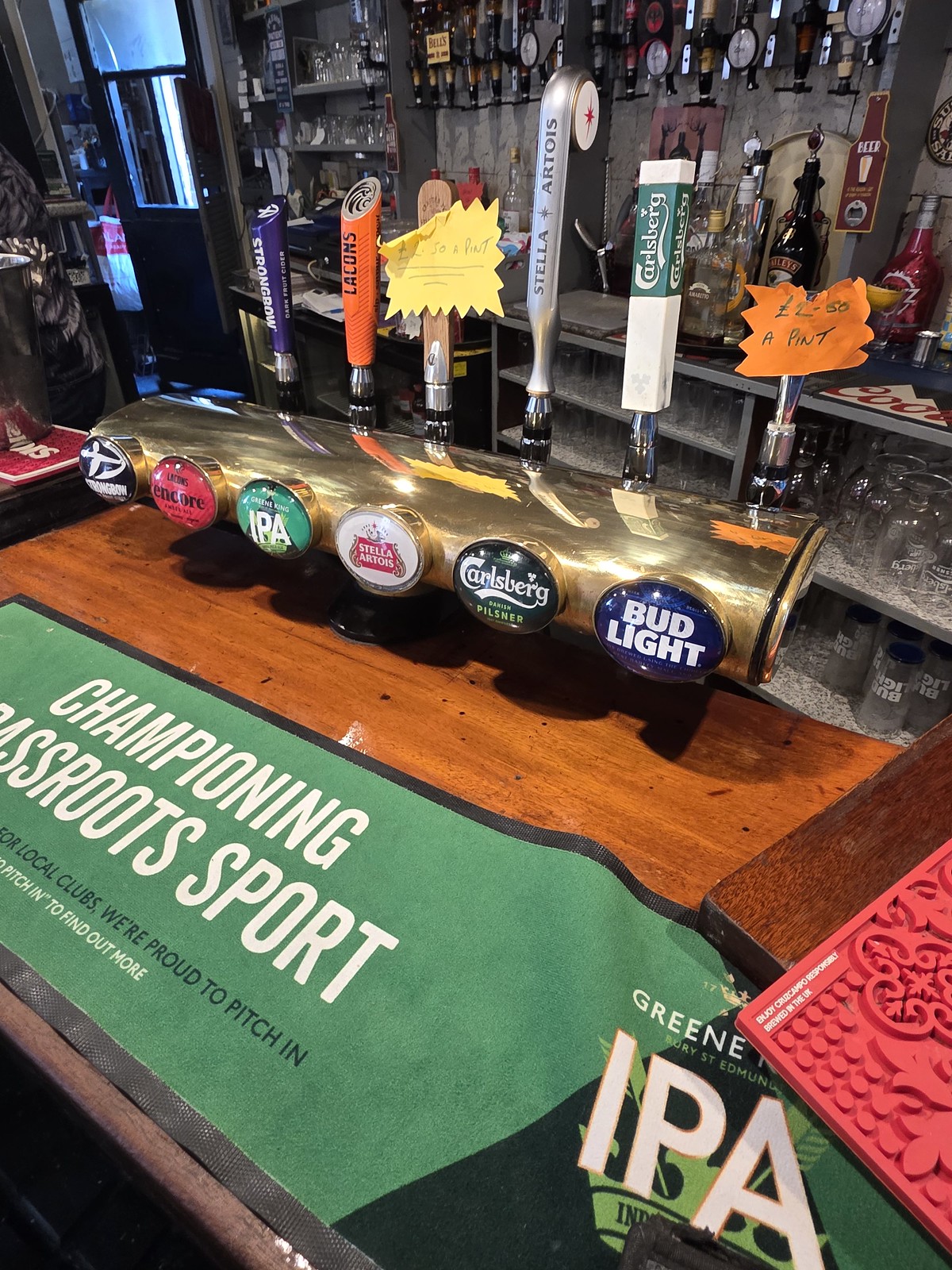
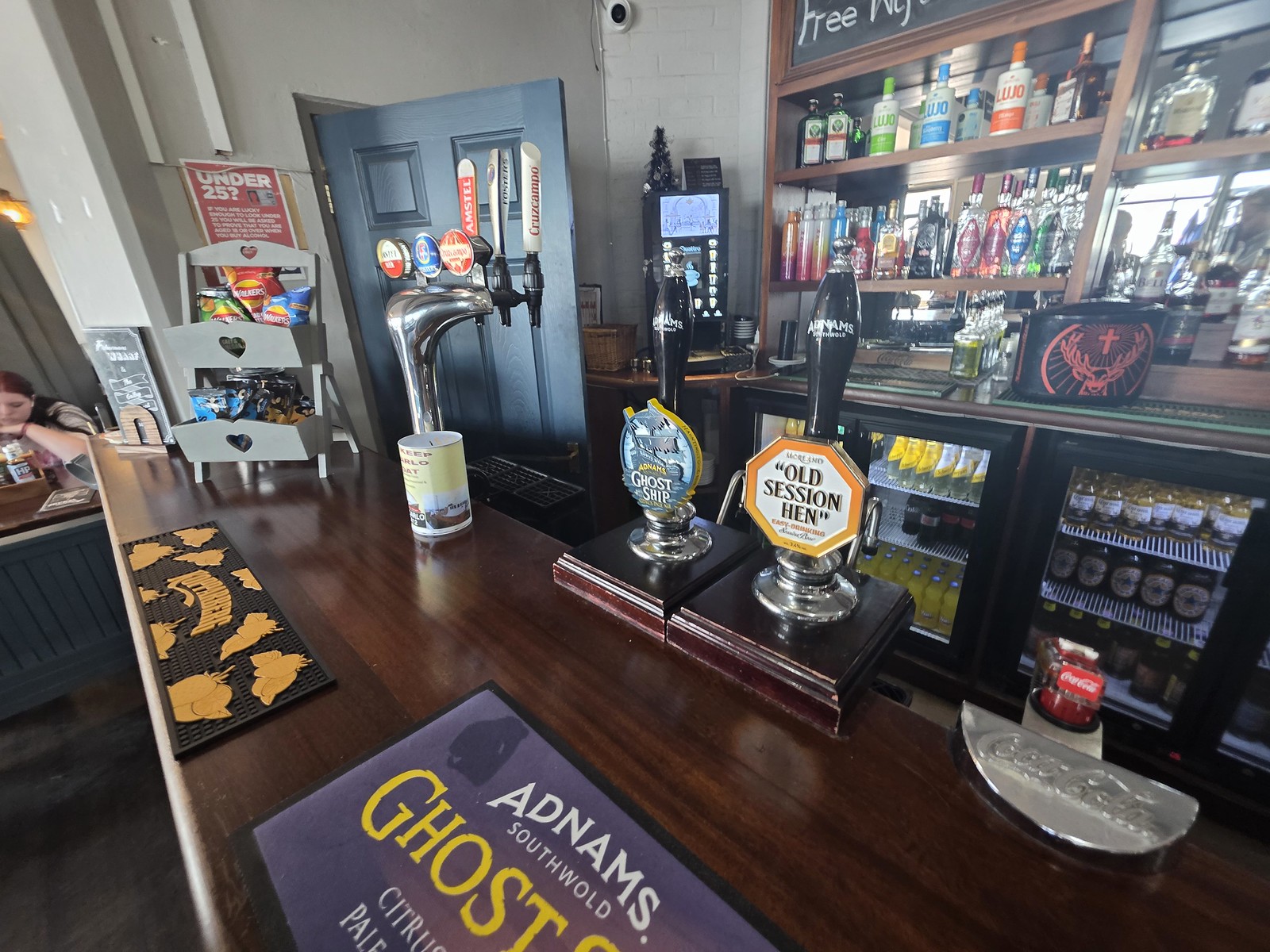
    I like it  🙂  Anyway, lack of toast aside, this seemed a well run venue although the coffee machine was struggling to cope with the number of customers seeking to use it. I liked it here, although I tend to like nearly anywhere, and although it was too early for beer there were a number of keenly priced real ales. All really rather lovely.

  • Charlecote House – Painting of Davenport Lucy

    Charlecote House – Painting of Davenport Lucy

    20250426_123234

    This painting is displayed in the Great Hall of Charlecote House and was given to the National Trust by Sir Montgomerie Fairfax-Lucy (1896 – 1965) in 1946 when the property and most of its contents were transferred to them. This is probably Davenport Lucy (1659/1660-1690) although it was previously thought to have been Elizabeth Lucy. This habit from the time of dressing children up as girls has certainly caused some issues in identifying centuries later on who is who. It’s not known who painted it and the National Trust’s estimated painting date of 1660 is a little aspirational given when Davenport was born and so it likely dates to around 1665.

    Anyway, it’s time for a table.

    Date Event
    c. 1659/60 Birth
    1677 Death of father, Sir Fulke Lucy
    24 May 1680 Commissioned Cornet, Royal Horse Guards
    1681 Jointly sells land at Bank Top (Henbury estate) with mother Isabella
    1 May 1681 Promoted Lieutenant, Royal Horse Guards
    1684 Inherits Charlecote Park upon death of cousin, Capt. Thomas Lucy
    By Oct 1684 Promoted Captain, Royal Horse Guards
    Post 1684 Sells the Henbury estate
    1689 Death of mother, Isabella Lucy
    20 Aug 1690 Killed by cannonball at the first Siege of Limerick, Ireland

    Davenport Lucy was the eldest son of Sir Fulke Lucy (c. 1623–1677) and Isabella Davenport (d. 1689) and Sir Fulke was the sixth son of Sir Thomas Lucy and Alice Spencer (with Richard Lucy being the third of six sons). As a younger son in a large gentry family, he did not inherit the primary family estate of Charlecote. Instead, he was the designated heir to his parents’ property, primarily the Henbury estate which he inherited from his mother.His path to establishing his own standing instead involved political service and a strategic marriage, although he did inherit Charlecote in 1684. He served as Member of Parliament for Warwick in 1659 and later for Cheshire from 1664 until his death in 1677. He was knighted sometime after the Restoration of the monarchy in 1660, evidently sharing the political skill of Richard Lucy.

    But, moving straight on to Davenport’s death. The Siege of Limerick (1690) was a key event in the Williamite War in Ireland (1689–1691), a conflict between the Catholic supporters of the deposed King James II (known as Jacobites) and the Protestant forces of King William III (Williamites). It took place in August and September 1690, following William’s victory at the Battle of the Boyne in July of that year. Serving as a Captain in the Royal Horse Guards within William III’s besieging army, Davenport Lucy was directly involved in the military operations. On 20 August 1690, during the intense fighting and bombardment characteristic of seventeenth-century siege warfare, he was struck and killed by a cannonball which I imagine he considered to be somewhat sub-optimal. It’s not known if he was buried in Ireland or whether his body was returned to Charlecote. Adding to the complexity, his lack of successors meant that they were left faffing around with the family tree to see who would take it on next.

  • Charlecote House – Painting of Richard Lucy

    Charlecote House – Painting of Richard Lucy

    20250426_123241

    This painting displayed in the Great Hall of Charlecote House is of Richard Lucy (1619-1677) who was the third son of Sir Thomas Lucy III and Alice Spencer. It’s not known who painted it, but it dates from between 1650 and 1658, showing Richard thinking he’s something of an intellectual with his book and globe. The artwork (and indeed the entire house) was presented to the National Trust in 1946 by Sir Montgomerie Fairfax-Lucy (1896 – 1965), two years after the death of his father, Sir Henry Ramsay-Fairfax, 3rd Bt (1870 – 1944).

    Richard Lucy interests me because of the period in which he lived, which was right in the middle of the English Civil War. Richard was the third of six sons of Sir Thomas Lucy (c. 1585–1640) who was himself a Member of Parliament, and his wife Alice Spencer (c. 1590–1648) of Claverden, Warwickshire. The Lucys of Charlecote were significant landowners, known not only for their administrative roles but also as patrons of the arts and scholars, fostering a notable library at Charlecote Richard’s grandfather, another Sir Thomas Lucy (d. 1600), was also an MP and magistrate, famously (though perhaps apocryphally) linked with prosecuting a young William Shakespeare for pinching some deer.

    Richard was well educated and he matriculated at Queen’s College at Oxford University on 17 September 1634, recorded as being aged 14. A young learner and all that, he must have been impressively studious for a teenager. Well, and wealthy, that helps. Following university, he undertook a period of foreign travel between 1637 and 1640, a common practice for broadening horizons and completing a gentleman’s education. Later, in 1652, he was admitted as a student to Gray’s Inn, one of the prestigious Inns of Court in London, suggesting an interest in law, even if he didn’t fancy the full wig and gown commitment. Richard wasn’t the most important though as he was third in line, behind his elder brothers Spencer and Robert. Consequently, he did not initially stand to inherit the principal family estate and it was only upon the deaths of both Spencer and Robert that Richard succeeded to Charlecote in 1658.

    Richard had done politics, he had been the Sheriff of Warwickshire from 1646 to 1647 and he was appointed to the Barebones Parliament of 1653. This was a small Parliament, tasted primarily with trying to sort out the complete mess that they’d killed the King and they now had a country that was falling apart. His appointment is intriguing as there were no elections in that year to this institution, the members were appointed by Oliver Cromwell’s Army Council. They wouldn’t have selected someone opposed to their aims, so Richard must have been tolerating their work or seen as someone competent enough to have on board to help resolve the mess that had been created.

    However, matters soon changed and Richard hit a little snag. He was mentioned as being one of approximately 40 members who were refused admittance to the House of Commons (likely during the Second Protectorate Parliament, around 1656) because they declined to take an oath recognising Cromwell’s government or pledging loyalty to the Protector. This act of refusal places Lucy within a significant group of MPs who resisted the increasing consolidation of power under Cromwell or objected to the specific terms of engagement demanded by the regime.

    Despite this little debacle, Lucy’s political standing remained sufficient for him to be elected again and in 1659, for the Third Protectorate Parliament (convened by Richard Cromwell), he achieved the notable distinction of being elected for two constituencies simultaneously: his established seat of Warwickshire and the borough of Yarmouth on the Isle of Wight. The rules then are the same as today, he had to pick one and he went with Warwickshire which made sense as he lived there and faffing about getting to the Isle of Wight would have been inconvenient. Although, perhaps he hankered over the island life, as he was elected to Yarmouth the following year and he remained the representative until his death in 1677. Although he remained relatively quiet in this Parliament, he did well to navigate the period when the Monarchy was restored, although as a major landowner it wouldn’t likely have been difficult.

    So, all told, he was something of a political survivor and he must have shown some skill in being able to navigate the Commonwealth and the Monarchy, a period of general chaos in England. So, perhaps it was only right that he did appear like an intellectual in this painting…..

  • Food from Every Stall on Norwich Market (2025 Edition) – Week 8 and Henry’s Hog Roast

    Food from Every Stall on Norwich Market (2025 Edition) – Week 8 and Henry’s Hog Roast

    20250430_131438

    Next on our project of visiting every food stall at Norwich Market for the second time was Henry’s Hog Roast. Last time I did this, it was Nathan and I who visited this stall back in 2023 and it did surprise and delight me at the time. I’m not the normal consumer here, I don’t like crackling, I don’t often eat pork and I had the expectations before of a fatty roll that wasn’t inspiring. On our 2023 visit, my fears weren’t realised and I rather enjoyed the food.

    On this occasion, I wasn’t overly excited when we randomly drew out this stall, but James was much keener on the whole arrangement as he sometimes tries to overturn the random stall that we’ve selected (but I’m tough, I never cave in). This time, there was a short queue to be served but the team member was efficient and we didn’t have much of a wait. As an aside, I understand that when we visited before we were served by the then owner, Neil Bowman, and he was enthusiastic and keen. Since that visit, he has left the stall and it has been taken over by new operators.

    20250430_131434

    The menu has expanded a little since we last visited in 2023, although when James tried to order the hog roasted tatties they didn’t have them. The price of the roll has gone up only 50p in over two years, with the addition of a new larger option.

    20250430_131632

    The pork ready to be sliced. I went for a white roll which included apple sauce and stuffing with the pork. I refused the crackling and asked if James could have it, but they rejected that which feels a little sub-optimal, but there we go. Next time, I’ll do what I did before with Nathan and just accept it and take it off myself. The service was otherwise friendly and they accept cards and cash, although they state that they prefer the latter. The team member was efficient and they’ve got the service down to a fine art here.

    20250430_131800

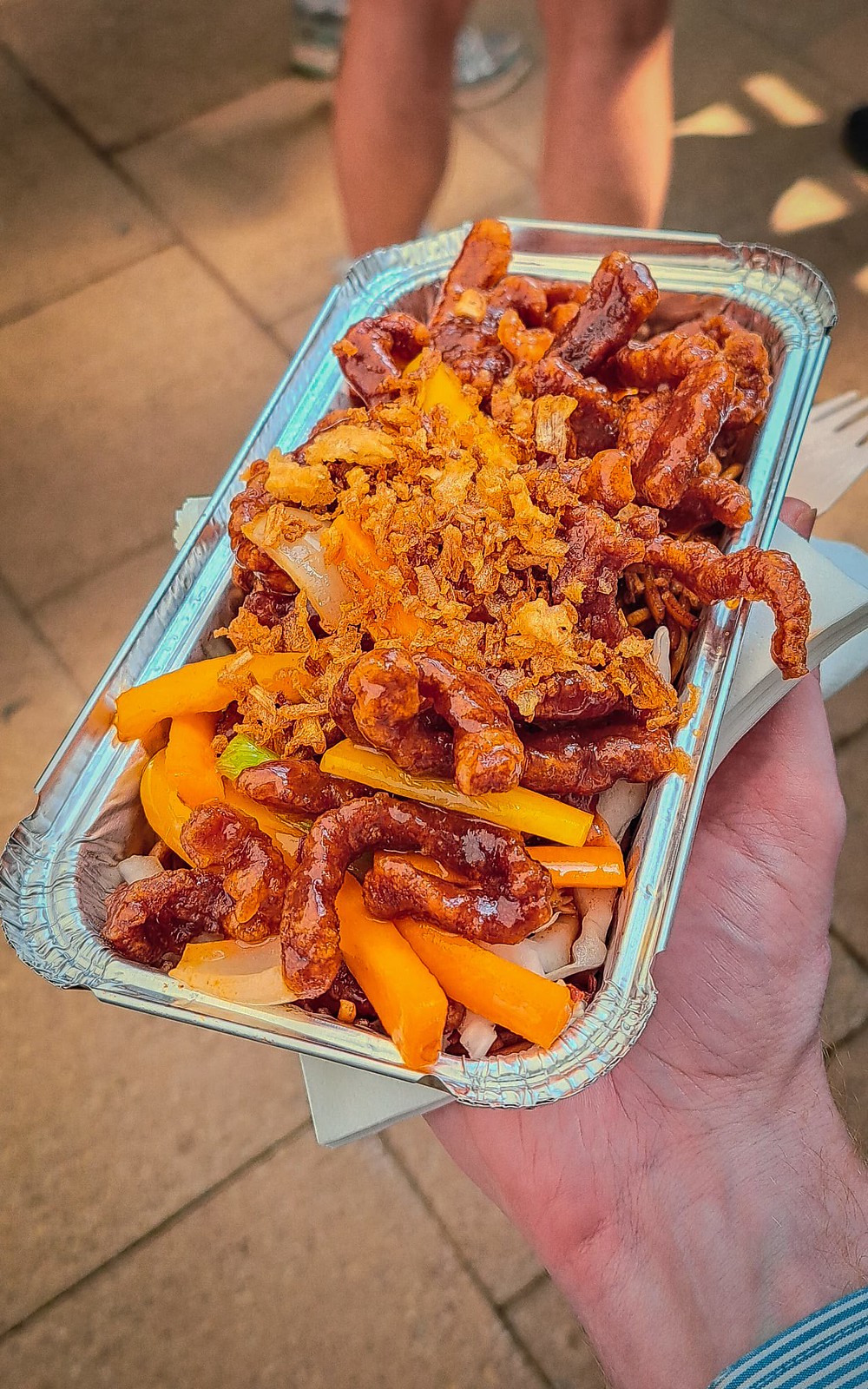
    OK, I’m not going to hide around this opinion, this didn’t really meet my expectations although I suppose every winning streak has to come to an end. The pork was fattier than I’d like it, but I set the bar hopelessly low there and so it would be unfair to be critical that there was some fattiness to the arrangement. But, more hard to hide was that the taste was bland and the stuffing was served as such a small portion that it wasn’t discernible. The apple sauce could have been more generous, but the pork desperately needed something more and stuffing would have likely done that. The team member did put pepper and salt on the food (although very little, I would have rather done this myself), but I was struggling to taste this as the pork over-powered it. That meant that the roll was a little dry and lacking in flavour for my liking, although credit is due and I’ll note that they didn’t skimp on the portion size of the pork.

    IMG-20250430-WA0006

    James went for a tiger roll which he said wasn’t just as firm as you might expect, but that it was also a little stale. That made his roll more challenging as it had the same problems of being dry. I won’t give his comments in full (some lunch-related sorrows are private) as I might usually, but he was disappointed as he remembered the stall from years ago when the portions of stuffing and apple sauce were as he recalls rather more generous.

    I don’t intend to be negative, but this blog is full of tens and tens of positive visits and so it’d be wrong to mention when I wasn’t surprised and delighted as the roll verged on being, well, a bit arid. On an unrelated note, the local pigeons seemed particularly enthusiastic about sharing our meal, but we were very brave in fending the bloody things off. Ending on a positive, there seemed to be a regular trade here, so they’ve obviously getting a lot right, I think I was just a little disappointed that this wasn’t as good as when I visited before.

  • Charlecote House – Painting of Margaret Spencer

    Charlecote House – Painting of Margaret Spencer

    20250426_123040

    The artist isn’t known, but this painting is located in the Great Hall of Charlecote House and depicts Margaret Spencer (1627-1704). She has a direct connection to the property as she first married Robert Lucy of Charlecote (1622–1658 and son of Sir Thomas Lucy III and Alice Spencer) in 1654. After Robert’s death, she married Thomas, 4th Lord Arundell of Wardour, hence her later title. I did read Charlecote and the Lucys by Alice Fairfax-Lucy to see why Robert died, but it doesn’t give a reason and I imagine that no-one knows. Margaret and Robert had one child, Bridget Lucy who married William Molyneux, but the Lucy line seems to have died there and the title went back up the line (for anyone interested, the full tree is here).

    The artwork was presented by to the National Trust in the 1940s by Sir Montgomerie Fairfax-Lucy two years after the death of his father, Sir Henry Ramsay-Fairfax, 3rd Baronet.

  • Charlecote House – A Bird’s-eye View of Charlecote Park (1696)

    Charlecote House – A Bird’s-eye View of Charlecote Park (1696)

    20250426_122923

    This is a rather interesting bird’s-eye view of Charlecote Park from a perspective which is commonplace now, but which was a little less usual at the time, although some landowners liked being able to see the extent of their land and the grandeur of their properties. The painting is located in the Grand Hall of the building and it’s thought to have been painted in around 1696. The gardens have changed somewhat as this formal style, which I rather like, was removed by Capability Brown in the 1760s and then changed again in the 1820s. The artwork has been credited to the Dutch artist Jan Stevens (?-1722) as he painted numerous other artworks in this style, but there’s no evidence that he actually painted this one. But, in the absence of any other information, it might as well be attributed to him. I’m not sure that’s how an art historian would think, but I’m not an art historian so that solves that one.

    Here’s a better image of the house as it once looked. It shows the core Elizabethan house built by Sir Thomas Lucy I in the 1550s, before the significant Victorian alterations undertaken by George Hammond Lucy and his wife Mary Elizabeth from the 1820s onwards.

  • Charlecote House – Dining Room

    Charlecote House – Dining Room

    20250426_123409

    I think it’s quite intriguing to see a room in a National Trust property looking like this. This is the dining room at Charlecote House and it’s a key room in the property, reached from the Great Hall. This section of the property isn’t part of the Elizabethan core, it’s part of the west wing extension that was added in the 1830s by George Hammond and Mary Elizabeth Lucy.

    20250426_123349

    And here’s the problem, they’ve had a leak. As the signage notes, there was a small leak from a gutter which led to a leak that went unnoticed until the wallpaper started to peel off the wall and mushrooms started to appear. I was visiting the property with Richard, who is on his big diet, and reading that managed to make him hungry. He’s distracted by anything even vaguely food related at the moment….

    20250426_123532

    That’s their issue. Although it’s worth noting the rather impressive ornate plaster ceiling in the room.

    20250426_123404

    They’re on the second stage of fixing the rather sub-optimal arrangement.

    20250426_123357

    I rather like that they’ve decided to keep the room open so that visitors can see the work that is ongoing. The wallpaper is by Thomas Willement, it’s all a bit opulent for me, but I think that was likely the intention at the time.

    It’s a huge undertaking to fix a relatively small problem, although such is the challenge in historic buildings. If this building was in private hands, the cost of the repairs would perhaps be too onerous, but it certainly looks like the National Trust are doing a thorough repair job.