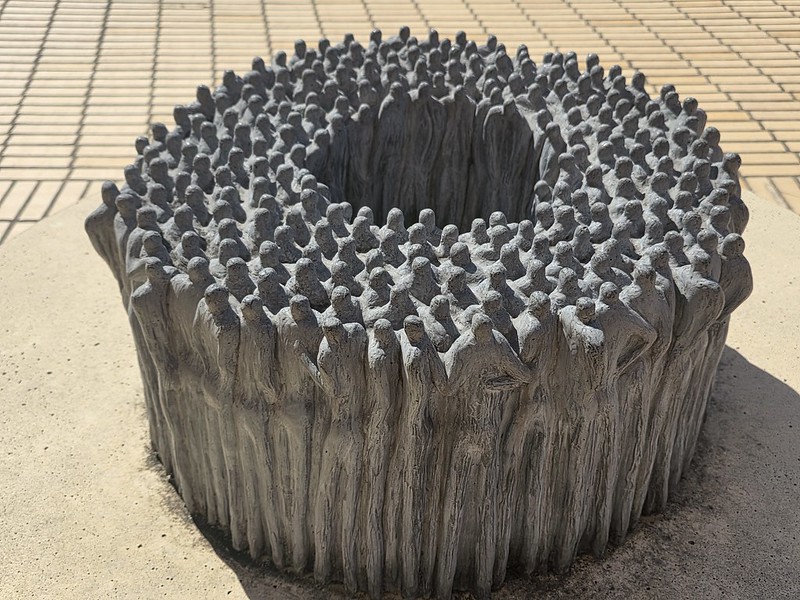
I thought that this sculpture in Vaduz looked interesting, it’s something rather different to looking at generals on horsebacks celebrating their military conquests. It sits rather quietly between the Parliament and Government buildings and it was designed to mark the 100th anniversary of Liechtenstein’s constitution in 2021.
I think that the aim is to show people listening to each other as part of the democratic process. It was designed by Heinz P. Nitzsche (1954-) and he has numerous works located around Liechtenstein. Speaking generally, he said:
“It is important to me to stimulate a critical examination of current social processes with my work, which ultimately leads to a positive impulse. I am deeply convinced that we as human beings can only overcome the challenges of today’s world together, and not in selfish isolation. Nevertheless, each individual plays a fundamental role within the group.”
When Richard demands a brewery visit, he gets a brewery visit and that’s where we went on our expedition to Liechtenstein. This was my first drink in what was a new country to me, so I was rather excited to see what the set-up would be like.
The interior was bright, modern and on-trend and it was clear that a large investment has been made here. It felt like a welcoming environment and my first impressions were very positive.
The service was though bloody dreadful (not the lady in the photo). The server was male and angry, harrumphing about the tables spreading misery and unhappiness. He was so appalling that I thought it was moderately amusing and I made a determined effort to build up a rapport with him and I think he definitely softened by the end. I think that the server had wanted us to order food, but the venue was relatively quiet and not all tables were ordering food, so just having beers didn’t seem unreasonable.
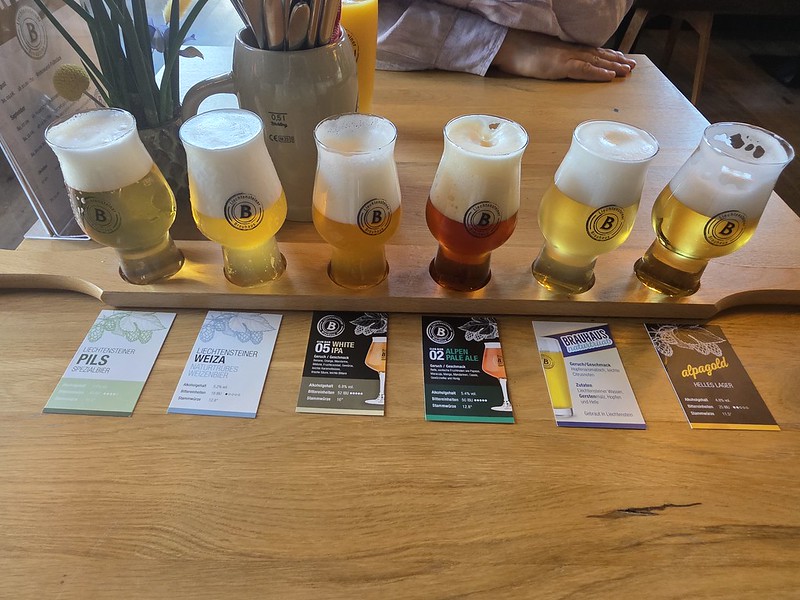
Richard had been craving a delicious fresh orange juice and he wasn’t entirely surprised and delighted to see it being poured out of a carton. I didn’t have any issues with that as I was distracted with this marvellous looking tasting board. This is one of the best presentations that I’ve seen with the little cards detailing what each of the beers were.
I thought that the selection had some slightly average beers, some decent ones and some very good ones. Particular mention to the Club Bier 05 White IPA, which was slightly decadent, smooth with a taste of fruit and honey. A white IPA isn’t a beer style that I see a lot and it had a real depth of flavour. The Pils Spezialbier was also rather agreeable, it was a Pilsner and so not my usual beer style, but it was clean, well balanced and hoppy. I very much enjoyed trying all of the beers and ensuring that they were promptly listed on Untappd.
There’s an area of the brewery which has a little shop and Richard was disappointed to see that the beer he wanted was unavailable. It was all nicely set-up and arranged, it all felt quite American in terms of the layout and design, which in craft beer bar terms is praise as far as I’m concerned.
Overall, I really liked it here and would merrily return. I’m really not sure about the service, but I wasn’t going to let anyone spoil this visit which was far better than I had anticipated. I think it’s also fair to say that it must be one of the country’s best bars…..
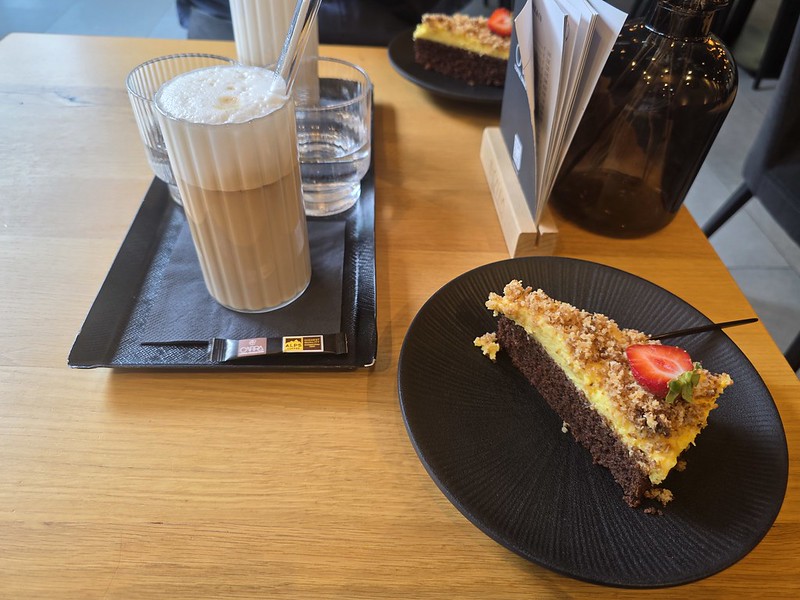
I don’t appear to have taken many photos of this lovely cafe, but there was a friendly welcome and the venue seemed spotlessly clean. Richard and I weren’t sure where to order, but they worked around our probably wrong decision to order at the counter. There was then table service and I was looking forwards to the cake that I hadn’t realised I needed until they upsold it.
The coffee was rich and pleasant in flavour and I’ve rather forgotten exactly what was in the cake as it’s taken me so long to write up. I do know that it was moist and seemed freshly made, with the strawberry on top showing just how healthy it was.
We didn’t really have time to visit Imst which is an Austrian town in the state of Tyrol. Imst is perhaps best known for being home to the Schemenlauf, one of Europe’s oldest and most elaborate carnival parades, dating back over 400 years. It only takes place every four years (the next one is in 2028), and features hundreds of masked participants performing traditional dances and rituals symbolising the struggle between winter and spring. It’s now listed by UNESCO on their Intangible Cultural Heritage List.
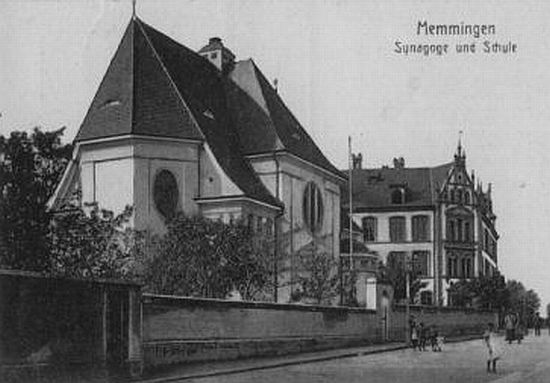
This is the site of the former synagogue in Memmingen, with the footprint partly marked out on the ground.
This is what it looked like, the area marked out on the floor is the little section at the rear of the synagogue building (not the large building at the rear), jutting out to the right.
There’s a memorial here now with some information about the former synagogue. There was a Jewish population in the medieval period, but they were forced out and persecuted, with many being burned to death. The first Jew to receive citizenship in Memmingen was in 1862 and a small community developed which was around 100 people by the mid 1870s and then it reached 230 by the end of the nineteenth century. A synagogue was opened in 1909, although the Jewish population had already started to fall by them, it was 161 in 1933.
The Jewish community was badly hit by the anti-Semitic laws introduced by the Nazis and that caused real economic pain for what was a population largely involved in textile production in the city. The Nazis destroyed the synagogue in 1938 and looted the properties of numerous Jewish residents, but more on that later in this post.
The number of Jews had fallen to 100 by 1939, with the community being liquidated in 1942 and the residents sent to concentration camps in Germany and Poland. The post-war population of Jews was around 125 of nearly entirely those who returned from the concentrations camps, but this community nearly entirely all left with the Jewish population being a grand total of two in the late 1960s.
A plan of the synagogue. I mentioned that the synagogue was destroyed and that took place on Kristallnacht (the 8 to 9 October 1938) which was part of a wave of national hatred and violence towards Jews. The whole thing was made even worse by the involvement of local schoolchildren and their teachers in the destruction of the building and numerous residents had joyous photos taken in the ruins of the synagogue after its destruction. The demolition crew took a week to remove the demolition rubble after TNT was used to destroy what remained, with numerous of these workers wearing hats they had found inside the synagogue. 23 Jewish homes were also damaged in the night’s violence, there was almost no limit to the hate that was shown to the community.
Most of the site of the former synagogue is now built on, but at least a corner section is kept as a memorial to not just the building, but to the destruction of a community. At the time of the 1933 census the city’s Jewish population was just 1% of the 15,000 people who lived in Memmingen. The political leaders were able to ensure that so many people focused so much hate on this 1% that they were not just forced out, but were mostly murdered and treated in such a way that nearly none of them felt that their post-war home was in Germany.
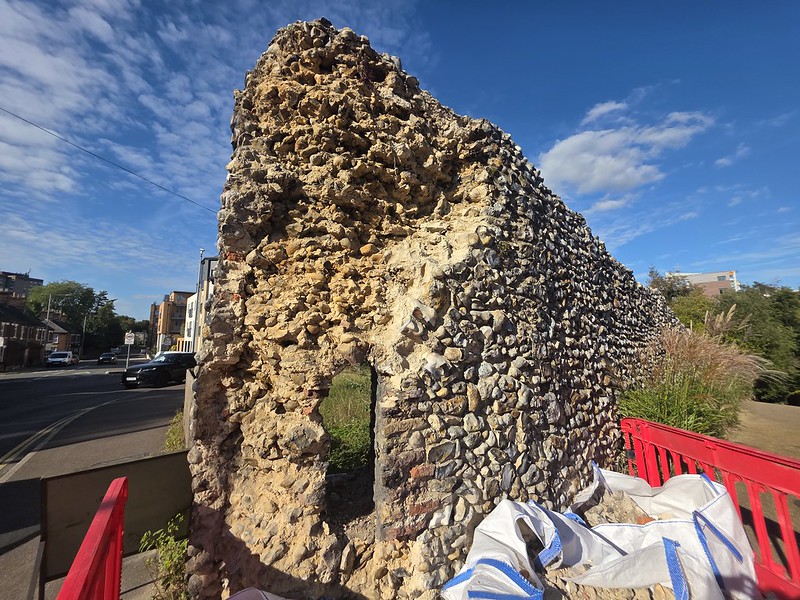
This is a little sub-optimal, someone has driven into Norwich City Wall near to where Carrow Bridge joins King Street. It’s not entirely clear to me how a car has managed to miss the road which is quite clearly marked out, but there we go.
I’ve seen a few online comments suggesting that the wall is somehow wrecked forever in this spot after centuries of standing there. Not that knocking it down is ideal, but I think the reality is that at this spot near the road they’ve taken these stones out and put them back so many times over the centuries that it’s unlikely to make much difference. It’s an interesting chance to see the way that the wall is constructed, which mostly seems to consist of flint, rubble and hope.
I’ve noticed many Norwich various historic walls being taken down for professional repair which seems to involve taking most of the stones out and putting them back again in a different order. A little of the Ship of Theseus going on, or Trigger’s Broom which is perhaps a better example.
The city council is apparently arranging repairs, so it’ll likely look as good as new again soon enough. Then hopefully it won’t be knocked down again.
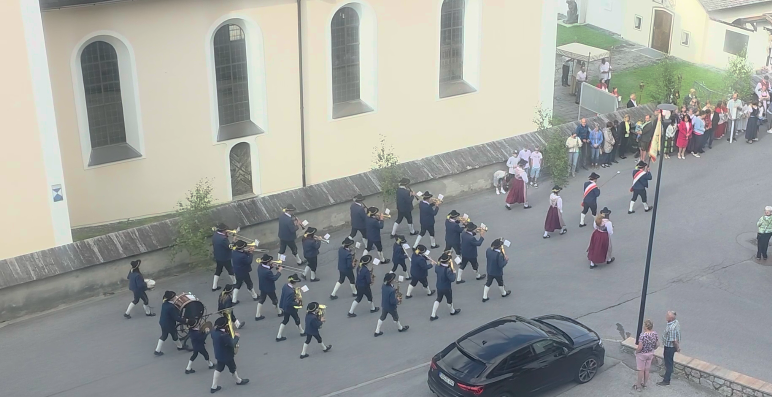
And the second video filmed from my hotel balcony of the parish fair which was held in Richard’s honour. I was surprised that I didn’t see him being carried on the shoulders of the local residents, but he doesn’t like to be showy.
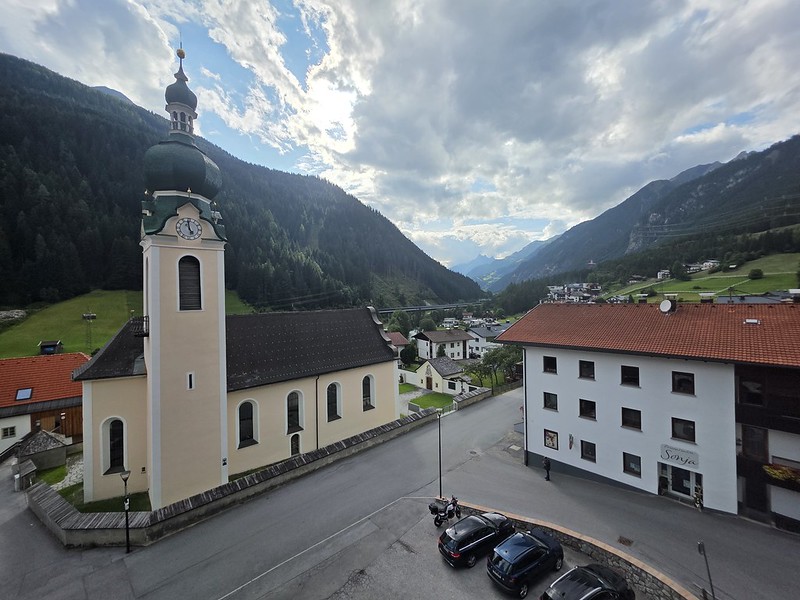
As this was my view from the hotel balcony, I thought it would be sensible to actually visit this beautiful church.
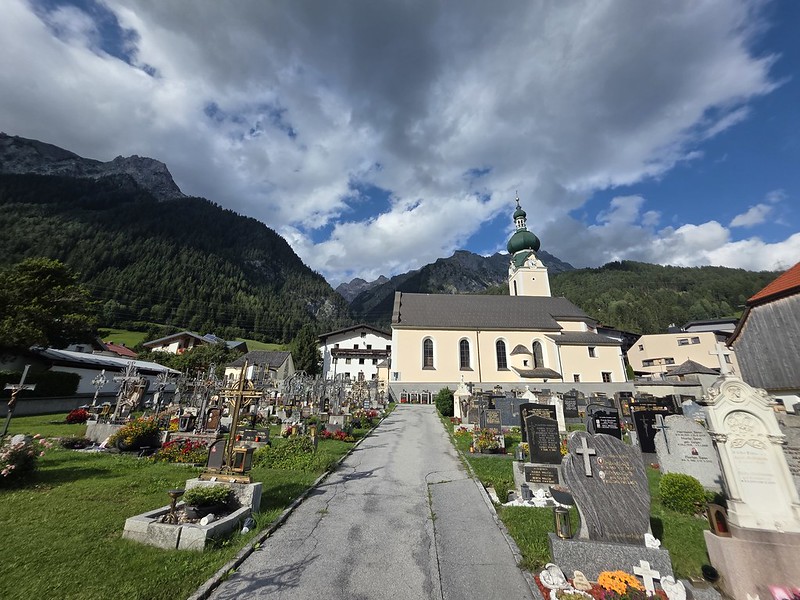
This is certainly a rather photogenic church. The present building dates to 1820, but the parish is older and there was an earlier church on this site. Documentary evidence shows that there was a priest in Flirsch as early as 1385, so there’s a long religious tradition here.
The interior of church looking towards the altar.
And looking back along the nave.
The pulpit and it was slightly puzzling to see how exactly this worked in terms of the priest having to somehow climb up from one side. Until 1975 there was more stained glass here, but they’ve removed a fair amount of it to ensure that the interior looked brighter.
Things became a little clearer when we went to see what was on the other side of the wall. It’s a beautiful church and I’m puzzled that I didn’t take a few more photos, but I think I was distracted at how the pulpit worked….
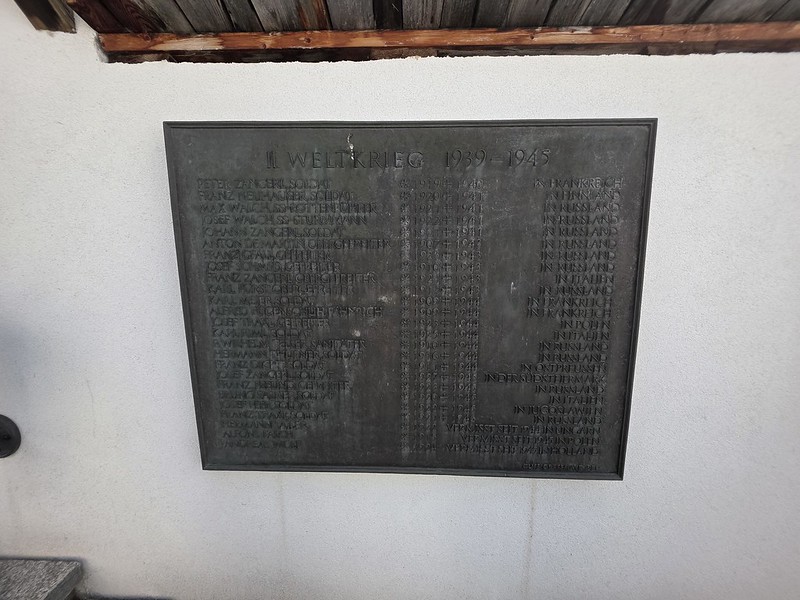
And here’s a list of all those from the local area who died during the Second World War.
Peter Zangerl, Soldier Born 8 September 1916 – Died 13 May 1940 in France
Franz Helmuth, Corporal Born 9 July 1920 – Died 10 April 1941 in Italy
Max Walch, Senior Corporal Born 29 May 1918 – Died 13 September 1941 in Russia
Josef Walch, Corporal Born 1 February 1914 – Died 16 November 1941 in Russia
Johann Zangerl, Soldier Born 18 March 1921 – Died 10 December 1941 in Russia
Anton Kathrein, Senior Corporal Born 16 June 1919 – Died 13 December 1941 in Russia
Georg Zangerl, Corporal Born 2 September 1918 – Died 15 December 1941 in Russia
Franz Zangerl, Corporal Born 20 June 1914 – Died 28 December 1941 in Russia
Paul Mang, Soldier Born 10 September 1917 – Died 25 January 1942 in Russia
Alfons Zangerl, Corporal Born 11 January 1913 – Died 10 February 1942 in Russia
Karl Heim, Senior Corporal Born 8 March 1912 – Died 18 March 1942 in Russia
Albert Walser, Corporal Born 30 March 1912 – Died 10 July 1942 in Russia
Franz Ladner, Corporal Born 6 October 1908 – Died 17 December 1942 in Russia
Josef Mang, Corporal Born 8 March 1915 – Died 2 January 1943 in Russia
Lamprecht Hellrigl, Corporal Born 24 February 1914 – Died 21 February 1943 in Russia
Karl Zangerl, Soldier Born 7 May 1924 – Died 28 August 1943 in Russia
Adolf Ladner, Corporal Born 2 December 1914 – Died 21 February 1944 in Russia
Wilhelm Ladner, Soldier Born 4 February 1919 – Died 26 July 1944 in France
Kurt Kathrein, Senior Corporal Born 1 April 1922 – Died 8 August 1944 in Normandy
Johann Ladner, Corporal Born 26 September 1911 – Died 20 September 1944 in the Netherlands
Vincenz Kathrein, Corporal Born 5 January 1909 – Died 18 October 1944 in Russia
Josef Walch, Corporal Born 22 September 1919 – Died 19 January 1945 in Hungary
Wilhelm Kathrein, Corporal Born 24 January 1916 – Died 24 February 1945 in Hungary
Hermann Ladner, Soldier Born 28 June 1925 – Died 4 March 1945 in Russia
Missing since 1944 in Russia: Johann Zangerl, Soldier Vincenz Zangerl, Soldier Franz Ladner, Soldier
It had inevitably been challenging for families of the dead during the First World War to come to terms with their loss, but this time, not only was there defeat but very many Austrians had welcomed the Anschluss with Germany in 1938.
It’s an intriguing concept to wonder what would have happened if Winston Churchill had got his way to create a new republic including Austria, Bavaria and perhaps Hungary, a nation designed to be strong enough to stand up to Germany and Russia. Stalin didn’t like this idea, precisely for the reasons that Churchill wanted it, but I can see the appeal of uniting Bavaria and Austria. But probably not now, the moment has rather passed….
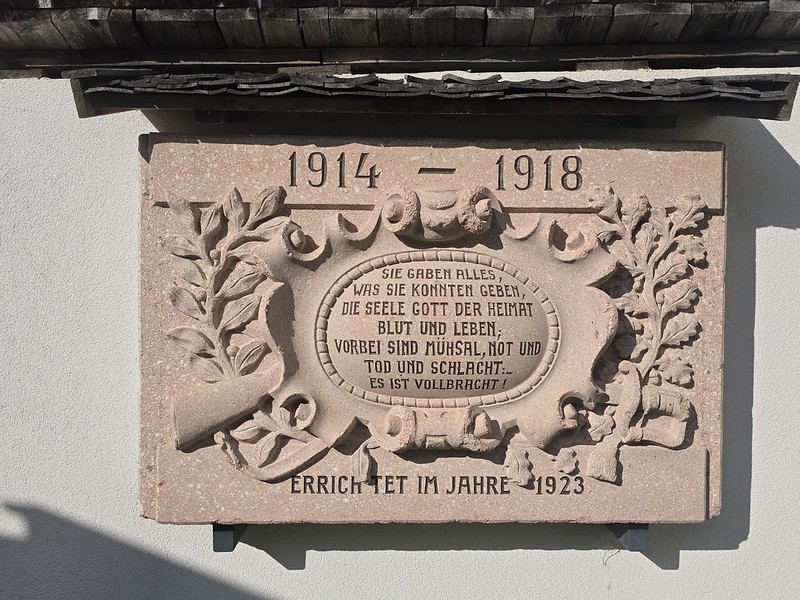
I’m used to seeing war memorials in the UK commemorating the lives of those who died during the First World War, but it feels different looking at the Austrian equivalent. The difference is ultimately because Austria lost the war, so families of the dead had no consolation that at least their loved ones hadn’t died in vain.
The translation of the text reads:
“They gave everything they could give, their soul to God, their homeland their blood and life. Past are toil, hardship, death and battle… It is accomplished!”
I’m not actually sure how cheery that messaging is, it would have been hard to explain to families in Austria what exactly had been accomplished given that the Austro-Hungarian Empire had collapsed in 1918.
WORLD WAR 1914–1918
Anton Ehart, Territorial Rifleman Born 8 December 1891 – Died 4 September 1914 in Galicia
Rudolf Geiger, Imperial Rifleman Born 8 December 1894 – Died 7 September 1914 in Galicia
Franz Grobner, Imperial Rifleman Born 8 January 1895 – Died 6 September 1914 in Galicia
Rudolf Schwenk, Senior Rifleman Born 8 January 1895 – Died 6 September 1914 in Galicia
Alfons Lins, Imperial Rifleman Born 18 February 1897 – Died 7 June 1915 in Budapest
Engelbert Schaltner, Imperial Engineer Born 3 December 1887 – Died 14 July 1915 in Galicia
Adolf Wald, Imperial Rifleman Born 2 April 1891 – Died 16 July 1915 in Russia
Josef Trawa, Imperial Rifleman Born 13 December 1890 – Died 28 July 1915 in Italy
Josef Alois Tragl, Imperial Rifleman Born 13 June 1892 – Died 14 May 1916 in Italy
Albert Martl, Imperial Rifleman Born 26 March 1895 – Died 10 June 1916 in Russia
Siegfried Tschofen, Territorial Rifleman Born 6 February 1896 – Died 21 May 1917 in Italy
Franz Ladner, Imperial Rifleman Born 23 December 1894 – Died 7 October 1917 in Italy
Martin Thalhammer, Territorial Rifleman Born 4 September 1883 – Died 15 October 1918 in Montkuk (likely Montcuq or another wartime location)
Josef Schmid, Territorial Rifleman Born 7 March 1890 – Died 26 October 1918 in South Tyrol
Josef Zangerl, Imperial Rifleman Born 15 February 1892 – Died 13 October 1918 in Innsbruck
Hermann Walch, Imperial Rifleman Missing since 1918 in Galicia
Johann Zangerl, Territorial Rifleman Missing since 1918 in Galicia
I’m sure that it exists, but I can’t find any Austrian list of war dead to find out more about any of these individuals. Around 1.2 to 1.5 million members of the Austrian military lost their lives in the conflict, compared to around 880,000 members of the armed forces from the UK and colonies.
The country of Austria found itself no longer part of an empire, with Vienna now being an oversized capital with considerably less power than it had. The population had to decide whether to throw their hats in with Germany or try and go for it independently, all whilst dealing with a badly damaged economy and infrastructure.