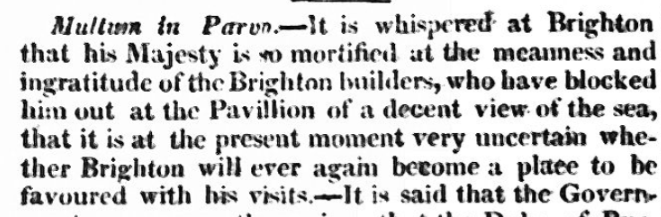
Another article in the Norwich Mercury of 200 years ago this week. Now, I accept this has little to do with Norwich, but it’s some early form of royal gossip of which there has been plenty more over the last 200 years. The story is likely true, as King George IV made only one more visit to Brighton following this story and he had made huge efforts to make the Brighton Pavilion a decadent and suitable home.
Its future as a residence for the Monarch was already reaching its end. King William IV did use it, but Queen Victoria wasn’t that surprised and delighted with it, so she sold it to the City of Brighton in 1850.
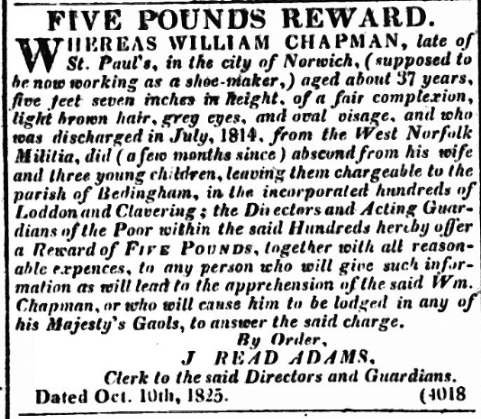
And another in my series of articles in the Norwich Mercury of 200 years ago this week. Back in 1825, if a man abandoned his wife and children without paying any support then he would face consequences from the local parish. Under the Poor Laws and Vagrancy Acts, if his deserted family became chargeable to the parish, local overseers could apply for his arrest and he could be punished as a rogue and vagabond, facing imprisonment or hard labour. The law’s primary concern was protecting the parish purse, not enforcing domestic responsibility, so prosecution generally occurred only when abandonment led to public expense as was the case here.
The £5 reward was a generous one, that’s worth over £250 in today’s money. The village of Beddingham is around ten miles south of Norwich and it’s clear that they were displeased that they were left funding William’s wife and children. It’s an interesting snapshot of the benefits system of the time, which did ensure at least that women and children were looked after.
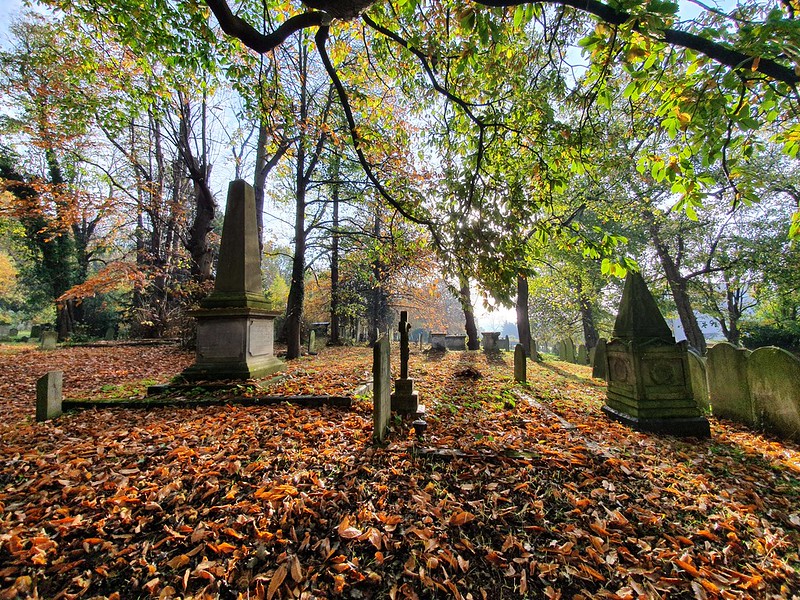
And in my continuing series of posts from the Norwich Mercury of 200 years ago this week, there was an announcement about the extension of Rosary Cemetery. The cemetery was the first non-denominational one to have opened in the UK, with the first burial taking place in 1821.
The shareholders had met at the Old Library Room at St. Andrew’s (now demolished) and they were pleased at the progress made in the first few years of the cemetery’s operation. The first few years hadn’t really stressed the gravediggers (although it made it easier to guard against body-snatchers), as there was one burial in 1821, two burials in 1822 and three burials in 1824 (goodness knows what happened in 1823).
The decision made 200 years ago was very sensible as although their priority was actually keeping the church out of their affairs, there was to be a cholera epidemic in 1831 and the land at Rosary Cemetery was a useful overflow to church graveyards. And, in 1855, after a major national cholera epidemic, all new burials in churchyards were banned. The original five acres were filled by the end of the nineteenth century, so the additional land they had already acquired proved to be very useful.
“ROSARY BURIAL GROUND, NEAR THE FOUNDRY BRIDGE ROAD.
At a MEETING of the Shareholders, held at the Old Library Room, St. Andrew’s, Norwich, on the 22nd of September, 1825:
MR. THOMAS MARTINEAU in the Chair, Statements of the number of Interments since the appropriation of the Ground as a Public Burial Ground, and of the number of Shares engaged by individuals, having been read by the Registrar,
IT WAS RESOLVED, That the Rosary, from its situation and the extent of ground belonging to it, is admitted to be well calculated for a permanent Cemetery, for persons of all denominations, and will be found of great benefit and utility.
That from the number of Interments which have already taken place, and the number of Shares engaged, it is expedient the proper measures should be adopted for permanently establishing and securing the whole of the ground originally proposed for a Cemetery, without further delay.
That the Solicitors be instructed to prepare forthwith the requisite deed or deeds, to be enrolled in Chancery, for vesting the Rosary Burial Ground in Trustees, to be held as a Public Place of Interment for ever, subject to the management of Directors, to be chosen from among the Shareholders.
That notice be given, that applications for Shares remaining undisposed of must be made on or before the 27th day of October instant, on which day the list shall be closed.
That applications for Shares be made to the undermentioned Shareholders: to Mr. Drummond, at the Rosary; or to the Solicitors, Messrs. Parkinson and Staff, St. Andrew’s, Norwich, of whom prospectuses of the plan may be obtained gratis.
Mr. Thomas Martineau John Taylor Joseph Geldart Wm. Davey Thomas Hitchen John Athow Robert Blake, jun. Wm. Wilde J. Darken R. Miller Samuel Wiseman J. Mottram, sen. E. Cotman J. H. Balls G. Sothern Wm. Newson Thomas Hawkins Henry Bolingbroke George Kitton
Mr. Isaac Wiseman J. Mottram, jun. Wm. Busley Manning E. Martin Hewett Rev. F. Tagart Mr. Wm Chapman W. Stark G. Grout C. Geldart Wigham E. Brown Carter Bluth R. Morgan Joseph Geldart, jun. N. Rue”
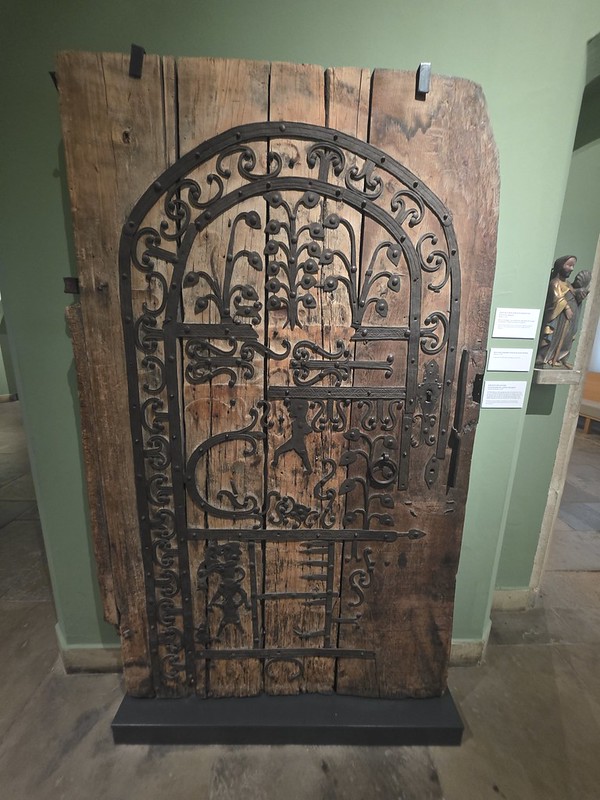
It’s a door. I sometimes wonder whether these things justify an entire riveting blog post of their own, but I remind myself that the museum has felt worthy enough to put it on display, so it’s the least I can do…..
This is an church door from Gnadenkirche Leipzig-Wahren, a church which is still standing today. The church was rebuilt in stone around 1200, which is from when the door is also dated, with the original having been made from wood.
The door itself is made of oak, but with wrought iron decoration which shows a sinful person being dragged by the devil into the flames of hell. What a lovely positive piece of imagery every time someone came in…. But, at the top, there is a twelve-leaf tree of life which is meant to represent salvation and hope. It’s very much damnation below and redemption above.
I’m not quite sure when it was decided that it would be better for this door to be in the museum rather than in the church, but I like the heritage that it has and that is has survived for so long in its faithful service.
Unlike the nearby Earl of Mercia, this JD Wetherspoon pub isn’t listed in the Good Beer Guide. It’s in what appears to be a grand old building (although that exterior is all mock Tudor and it’s a twentieth century construction) which is visually appealing and there’s a small external seating area as well. As usual, I’ll quote from JD Wetherspoon, who have operated the venue since 2000, about the origins of the pub name:
“This is named after the fondly remembered motor car, part of a range of models made in Coventry from 1903 until the 1960s. Standard’s first car, the Motor Victoria, was built in 1903 by Reginald Maudslay, in Much Park Street. The Standard Nine was launched in 1927. Inexpensive, at £198, its success saw Standard through the ‘slump’ and it was still going strong when, in 1936, the Flying Standard models made their début.”
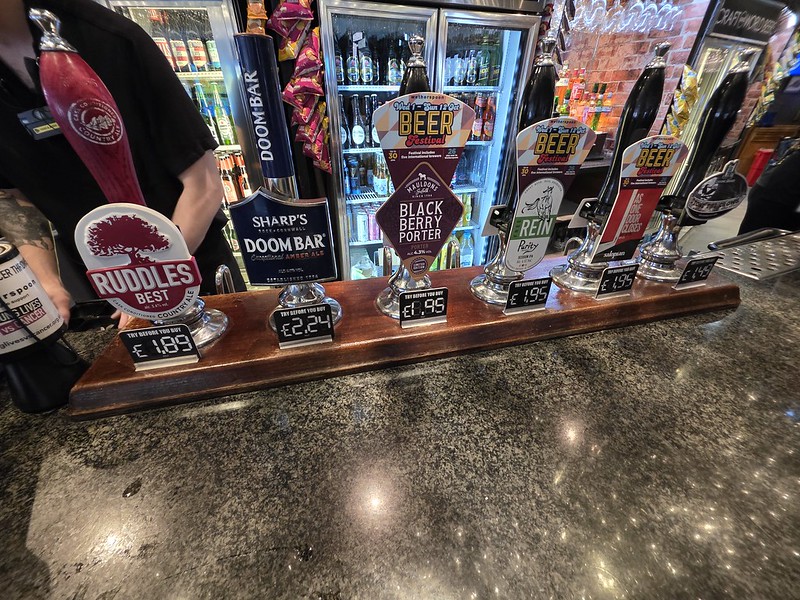
I visited when the beer festival was taking place and there was quite a choice, with all of the beers in the festival being £1.95 a pint. There are a couple, namely from Titanic and Adnams, that I’m hoping to try although I haven’t seen them anywhere yet.
The first half I ordered was the Free Rein from Purity Brewing and this was really rather good with a tropical edge and it was smooth and fluffy. Quite punchy for 4.5% and a bargain for under £1 for a half.
The second half was the Blackberry Porter from Mauldons and it tasted as if there was as much hedgerow as blackberry in it, the beer was quite rustic. But, I like robust flavours and I like Mauldons, with the lingering taste being pleasant and it was under £1 for a half…..
The new light bites menu has been launched nationally this week, alongside another round of price increases on food and drink.
As this is a JD Wetherspoon venue, I always like to have a little look at the reviews so see how they’ve annoyed customers over the years. It is though really quite positively reviewed, so they’ve delighted a lot more customers than they’ve seemingly annoyed.
“So earlier this afternoon I visited this spoons with a friend as we fancied some drinks. We got our drinks and were sipping on them when I realized there was a fly that had entered my drink. I was absolutely shocked and took this to the bartender, they were shocked too and called for the manager. I had about half of my drink left when I brought this issue up and there was no I was going to drink it. I spoke to the manager and expressed my concern and she didn’t seem to care one bit. I asked if I could get another one and she said that no I couldn’t as I only had a sip left. I was sickened by this service and treatment as I’ve never had such a horrible experience before. Usually if there’s something wrong or an issue with a drink or a dish (say hair was found in it), it always get taken off the bill oror you’re given another one. But in this case I was given such sickening treatment and the manager didn’t bother to even solve the issue. I’ve worked previously in restaurants and hospitality and we’re trained and taught the opposite of this behavior. We’re instructed to treat the customer with respect and prioritize their thoughts, something that was far from what I had experienced today.”
I think I’d notice a fly in my drink before I had nearly finished it…. Or I’d just take the bloody thing out and carry on.
“Went there really wanting to have a good English breakfast. Didnt work out very well. The food is good.. many options on the menu to choose from, but i have visited weatherspoons before and this was not an experience i liked. I went to get a cup of coffee left half my breakfast on my plate to come back to it. Wen i came back, the table was cleared. As i checked with the servers i received an answer as they thought i was done, but i had half my breakfast still left. Didnt feel like sitting there any more after this. Wont visit the place again.”
Sit near the coffee machine and watch the table like a hawk when not at it. It’s the only way…
“One of the management team (Andrew), was quite rude when we had our food stolen, lack of management skills and communication”
There are a fair number of these reviews, either they have efficient waiting staff or there’s a hungry customer permanently waiting to pounce.
“On visiting Coventry my husband and I went into Witherspoons for our lunch I wish we hadn’t bothered it was really awful, we went in by one door but was blocked by tables and chairs so close together you would not get a person through so we tried another door and found ourselves on the upper floor but to get a table to sit and have a meal to go up into the lift, we got out of lift but once again found we could not get to a table I forget to mention I have to use a walker to get around I could not get through any ethereal at all so husband started moving tables and chairs to get me through. We got a table but the meal was really awful we ordered gammon,chips they do not serve pineapple only fried eggs with the gammon my egg was buried underneath the chips and peas we eat very little I just wanted to be out of there. Before we left needed to go to the ladies it was disgusting no flush the handled broke but no maintenance so we just moved a lot tables and chairs for me to get through to get out we will never visit a witherspoons ever again”
What a lovely lunch they had, I always love stories about how people battle through even through adversity.
“As with all Witherspoon’s it lacks any sort of atmosphere, people sat in small groups quietly eating and sipping there order,tv,s dotted around showing only sport channels with the volume turned down. the smokers area is a total joke a few large brollys on a very busy pavement, with only a extendable webbing barrier between not smoking area and people who may or mat not smoke if they wish just millimetre away,not the cheapest beer in town ,disinterested staff,turning into a rest home”
If we’re defining atmosphere as lots of music, then I like pubs with no atmosphere.
“Tried to order six pints of Greene king and was turned away. Outrageous”
They should be listed in the Good Beer Guide for doing this.
“Food was stone cold but staff was fantastic in there”
I like the bluntness of this one. Anyway, I digress once again.
I rather like this pub and I’ve visited a few times over the years. The service was friendly on this visit and I liked the manager was pro-actively engaging about the beer festival, they seemed quite excited by the whole arrangement.
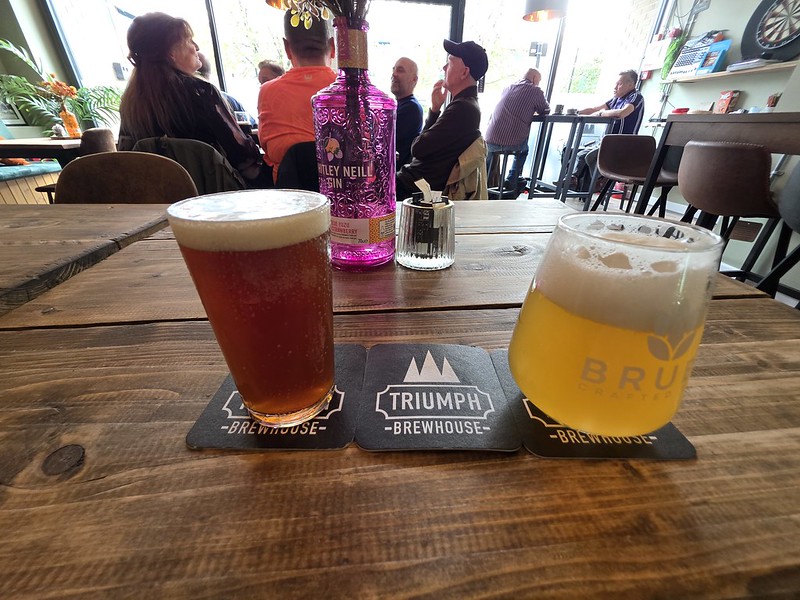
As I’m in Coventry for the weekend, I thought it useful to try and visit a few more pubs. Richard isn’t here this LDWA weekend, he’s doing specialist things in Miami, but I am happy to battle on visiting Coventry pubs bravely on my own. This is the Triumph Brewhouse which sells keg beers, including those it brews themselves.
The venue was busy, perhaps boosted by Coventry City playing football at the time of my visit. They beat Sheffield Wednesday 5-0, so there was rather an upbeat feel to the pub.
The beer selection and the beers that they brew themselves, alongside some others including from the nearby Twisted Barrel.
It’s more than just a bar though, they serve light meals, coffees, milk shakes and there seems to have been an effort to source locally. It feels a little bit more like a cafe, but it’s clear that beer is an important element of their offering.
I thought that I should try two of the beers that are brewed on-site. The service here was friendly and engaging, the whole arrangement had an inviting vibe to it.
My first beer was the 1919 from Triumph Brewery, a clean tasting bitter with a malty edge and a flavour of Twix.
The second half was the 1987, also brewed in house, which was a wheat beer which had a bitter finish. There was plenty of wheat in this (handy for a wheat beer), banana notes and a pleasant taste, although it didn’t feel entirely rounded.
The whole arrangement felt like something of a family affair and it seemed like a venue which was welcoming to the whole community. I rather liked it here, it had an on-trend feel to it and the venue was clean and comfortable. All rather lovely.
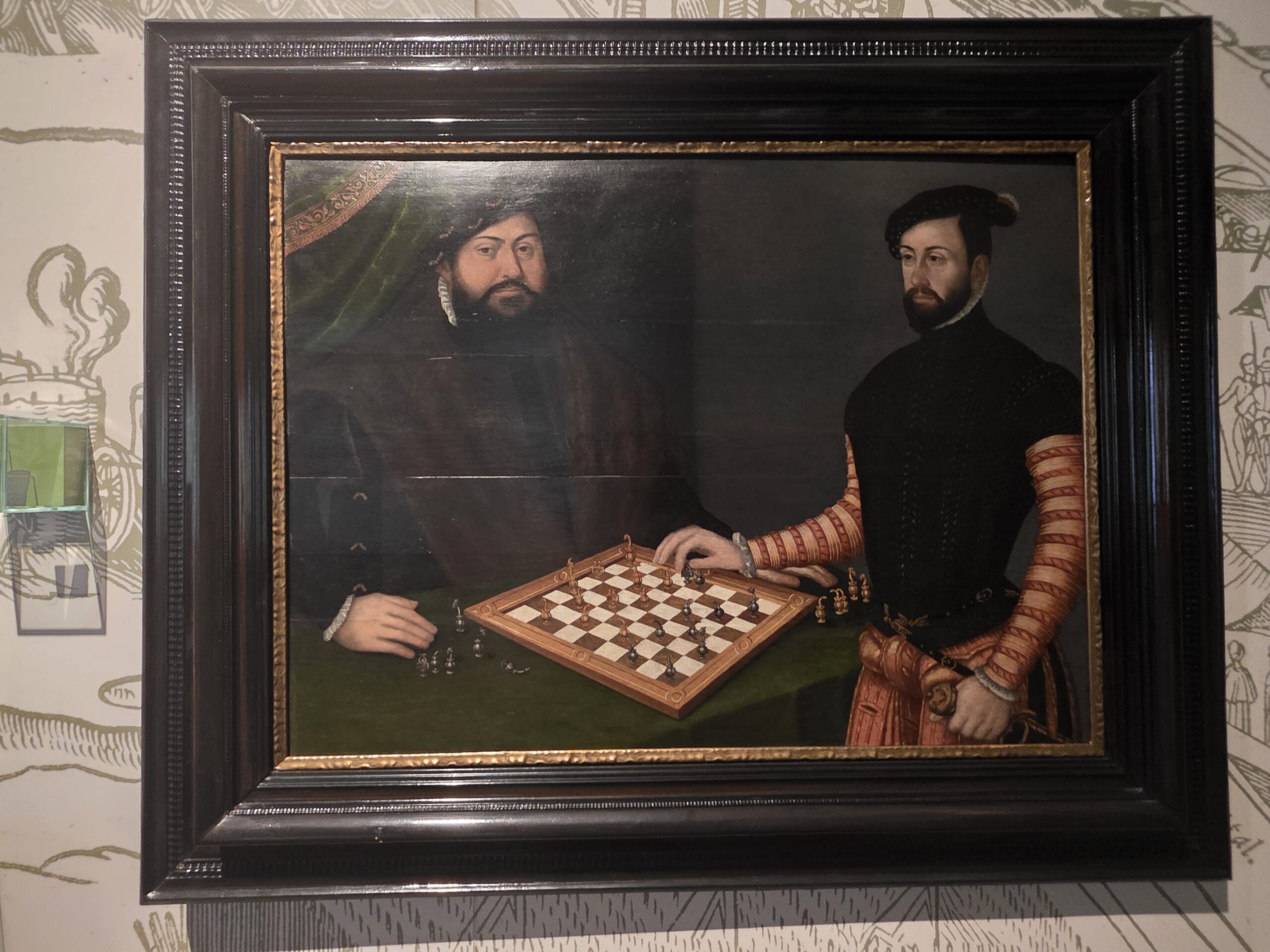
I love a bit of political symbolism in artworks (I don’t get out much) and this is a suitably interesting example of it. The painting shows Elector Johann Friedrich I of Saxony (1503-1554) on the left, also known as Johann Friedrich the Magnanimous, who was captured in 1547 after the Battle of Mühlberg during the Schmalkaldic War. He was taken prisoner by Emperor Charles V, and his defeat marked a major blow to the Protestant cause within the Holy Roman Empire.
This portrait, which was painted after his capture, symbolises both his imprisonment and his resilience. The chessboard here is important, it is meant to represent the great game of power between the emperor and the elector. The artist, who I don’t think is known, is showing Johann as a man of calm demeanour and a man who is still playing the game, even in defeat.
Johann was actually already in checkmate in political terms, although he did get freedom in September 1552. As an aside, he married Sibylle of Cleves, who was sister of Anne of Cleeves, perhaps best known (rightly or wrongly) for actually managing not to get killed by her husband King Henry VIII.
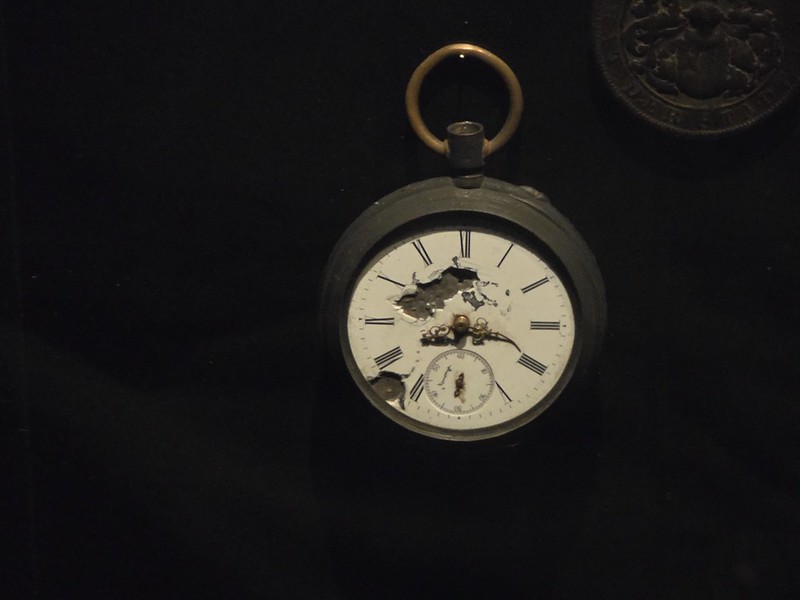
This exhibit in the museum belonged to Friedrich Louis Pabsch and he, along with 73 others, died in an air raid on 4 December 1943 whilst sheltering at Nostitzstraße (Reichpietschstraße) 19 and 21. His pocket watch stopped at the time of the air raid, at 03:44.
The air raid on the city that night was one of their worst of the war, when over 500 RAF bombers dropped around 1,800 tons of explosives in a massive attack aimed at crippling industry and transport but which instead ravaged residential areas. Fires tore through the city, merging into a firestorm that destroyed large parts of the centre, killing around 1,800 people and leaving tens of thousands homeless. Historic buildings, factories, and railway yards were obliterated, with survivors later recalled fleeing through smoke-filled streets as shelters collapsed.
The museum notes that there are traces in basements to this day throughout the city when residents wrote “Luftangriff 04/12/1943”, meaning air raid, given the ferocity of the night’s bombings.
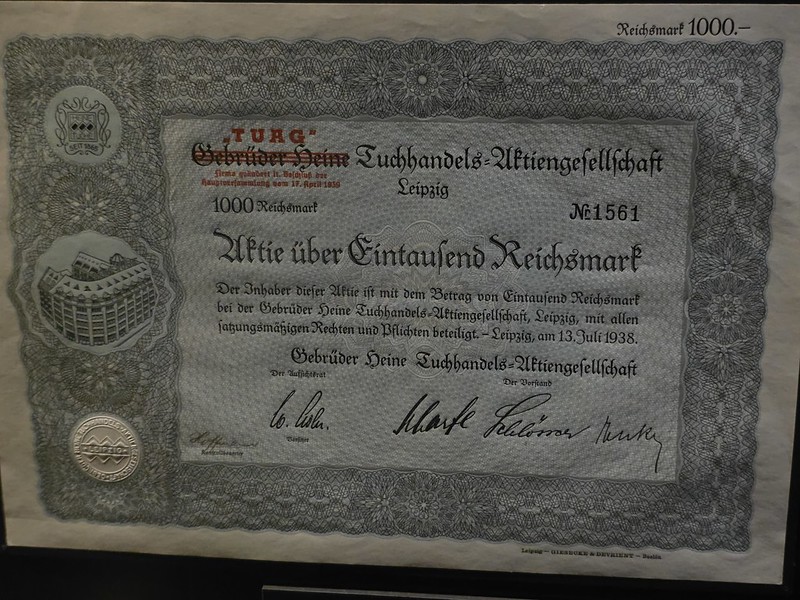
This share certificate in the museum is from Leipzig, dated 13 July 1938, and looks like a neatly printed piece of paper declaring ownership of 1,000 Reichsmark in the Gebrüder Heine Tuchhandels-Aktiengesellschaft, a textile trading company. But as with so many relics from the late 1930s, this is much more sinister. It’s the story of a business which was forcibly taken from its Jewish owners, absorbed into the machinery of the Nazi economy, and stripped of its name, its history and its identity.
Gebrüder Heine had been a respected textile firm in Leipzig, a city that before 1933 was one of Europe’s great trading hubs. Jewish businesses like Heine’s were central to Leipzig’s commercial life, especially in textiles and fur. But by the late 1930s, the Nazis had made it increasingly impossible for Jewish entrepreneurs to survive. Laws, boycotts and systematic harassment had already driven many to ruin. For those still operating, the so-called “Aryanisation” policies brought the final blow which were forced sales at a fraction of true value, under threat and coercion.
In July 1938, Gebrüder Heine’s owners were compelled to sell and it was likely at a hugely underflated price. The buyer was TUAG (Tuchhandels-Union AG), a non-Jewish firm which took over the assets, premises and business operations. The company was rebranded under new management, its Jewish founders expelled from both their livelihood and their rights as shareholders.
This share certificate, issued in the final days of the firm’s existence, reflects that transition. It proclaims ownership in Gebrüder Heine Tuchhandels-AG, but the red overprint at the top marks the shift of power. The paper itself is meticulously designed, printed by Giesecke & Devrient, and stamped with seals and signatures that convey legitimacy and stability.
This must have been a bitter moment for the former owners, forced effectively to sell their business by the state. There was still a bureaucratic process, but it offered Jewish businesses nearly no protection or rights.
However, this story does have a rather more positive ending as Walter Heine was able to escape to Australia where he joined the military and promptly started what became a global commodity company called Heine Brothers after the end of the war. Here’s an interesting article about the family’s fortunes after they were forced out of Germany.
I’d never noticed that there was a memorial here near the Lady Julian Bridge, although, to be fair, it perhaps isn’t immediately obvious. It’s in the centre off the photo, just to the right of the bench.
This is the area that he was born, with the photo taken on what is marked as Staithe Lane on the map.
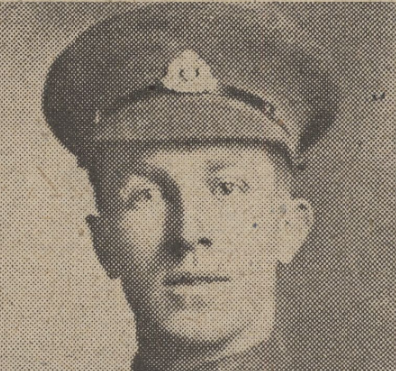
Sidney James Day was born in the city on 3 July 1891 and he served with the 11th Battalion, Suffolk Regiment during the First World War. one of the countless young men sent to the Western Front. By the summer of 1917, the war had become a grinding, muddy nightmare and the Battle of Passchendaele raging in all its futility. It was here, on 26 August 1917, near Malakoff Farm in Belgium, that Day’s actions would be considered as really quite brave.
After already being involved with capturing a German trench, during a German counterattack, a shell with grenades exploded in the trench, killing and wounding several men. In that chaos, Day stayed calm and he picked up one of the grenades and threw it clear just before it detonated, saving the lives of those around him. Then, with the trench partly destroyed and the enemy advancing, he rallied his men, reorganised the position, and led a counterattack that drove the Germans back and captured prisoners.
Sidney was severely wounded in the process, but his rather brave leadership ensured the trench held. His actions on that day meant that he was awarded the Victoria Cross and he was awarded his medal by King George V himself in January 1918.
I rather liked this image from the burnt records (British war records from the First World War which were heavily damaged by bombing in the Second World War) which is an inventory check of what items were in Sidney’s possession. I note that he proudly writes VC after his name, although I absolutely would in the rather unlikely event that I were to be awarded it. After the war he worked as a porter, moving to Fraser Road in Portsmouth and he died in 1959, with this memorial being a rather lovely tribute to him.