Blog

  • Memphis – Harahan Bridge

    Memphis – Harahan Bridge

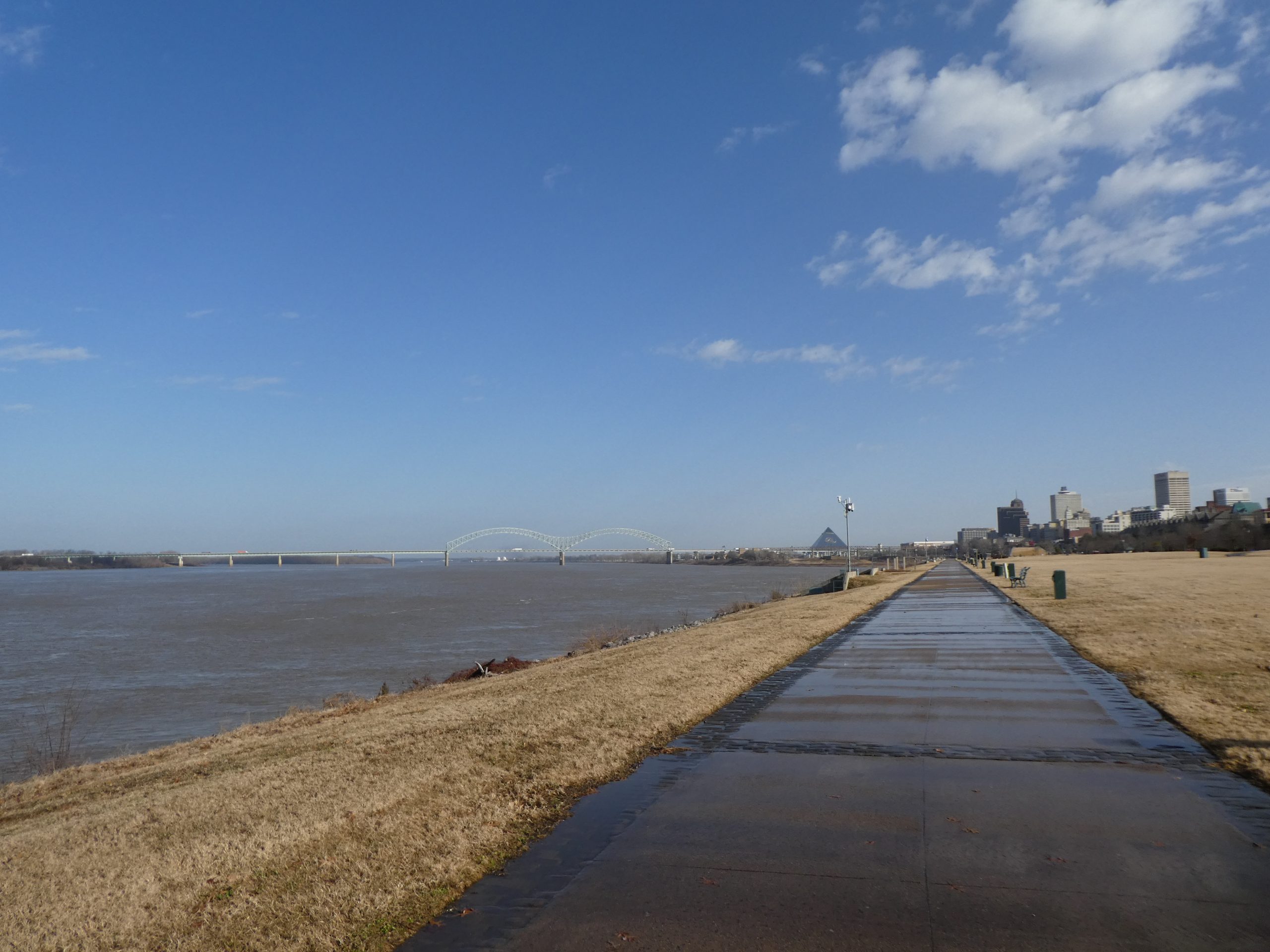
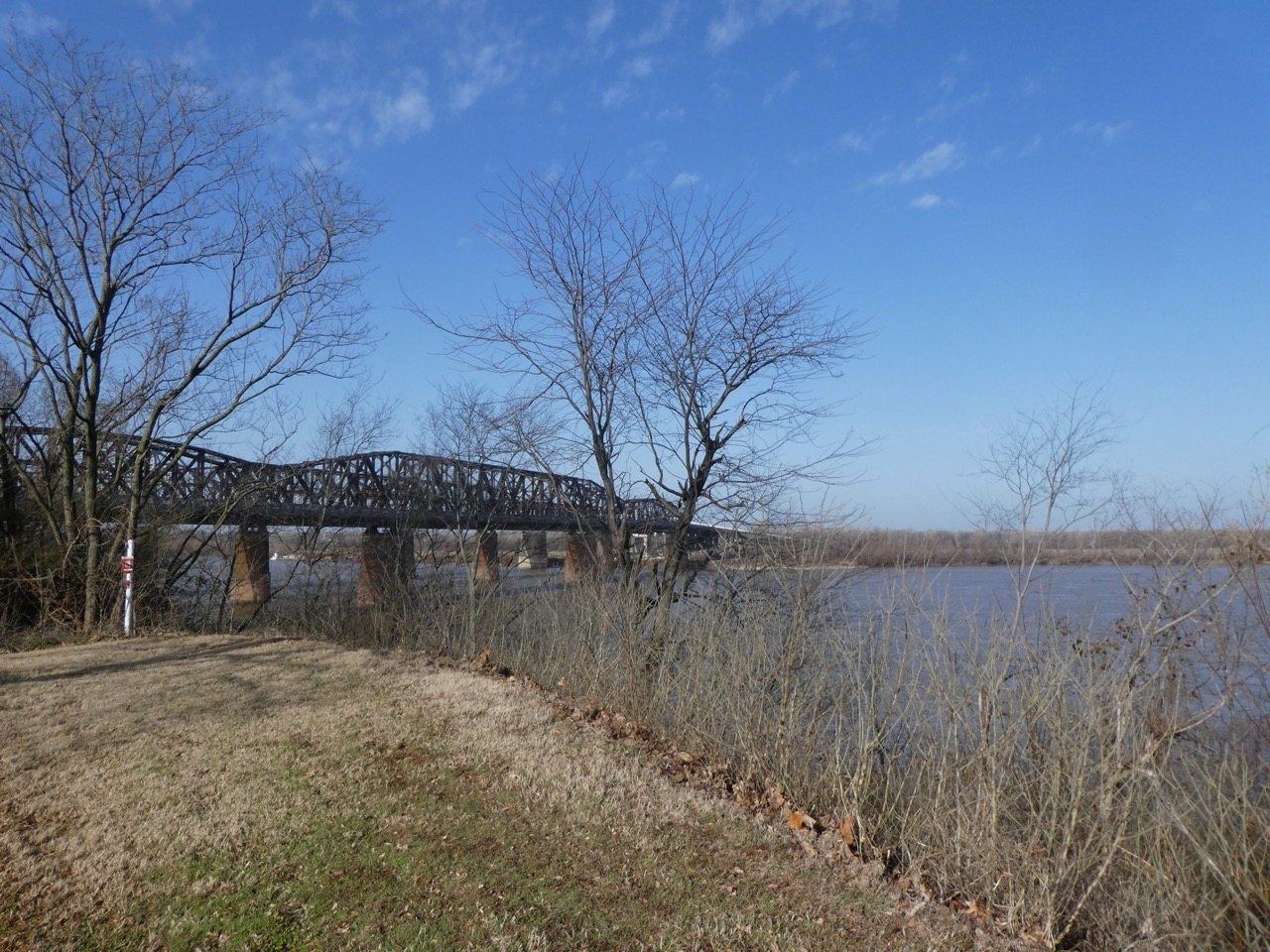
    This was one of my pointless expeditions, crossing the Harahan Bridge over to the other side of the Mississippi River. It made for a nice walk though, but the main purpose of this little adventure was so that I could cross into Arkansas. I’ll hopefully visit the state a little more comprehensively in the future, but I can at least claim that I have visited Arkansas. Well, the bit of their territory over the river and a car park and I’m sure there are better bits.

    The bridge was constructed for rail transport, although after some controversy there were also some roadways constructed on the side. The rail bridge opened in 1916, with the road sections opening in the following year. A new road bridge was built in 1949 making the roadways redundant, so a few years ago there was a decision to make this a pedestrian and cycling crossing which is known as the Big River Crossing.

    The entrance to the bridge, which is quite tightly secured which I assume is to keep people off the rail section. At night the bridge is illuminated and there are also extensive walking and cycling trails for those who want to explore the area more thoroughly.

    Walking along the route and its subtle fencing.

    I like that this gives the impression that I’d climbed over to take this photo, but since I’m scared of heights and tend to follow rules, I’m not sure that anyone would believe that. In reality, it’s a section that juts out a bit.

    And there we go, crossing the state line and I can say that I’ve been to Arkansas.

    The view back down the river of downtown Memphis.

    It was hard not to feel a bit hemmed in…. But, it’s a magnificent project to let people walk across the bridge and the Big River Crossing only opened in 2016, with my visit being in January 2018.

    A freight train going by.

    Part of the bridge which is no longer used. The pedestrian and cycling part of the bridge is free of charge to cross and it’s open from dawn until 22.00 every day of the week.

    And for anyone interested, a Youtube video of the crossing’s history.
  • Memphis – Barking Lot Dog Park

    Memphis – Barking Lot Dog Park

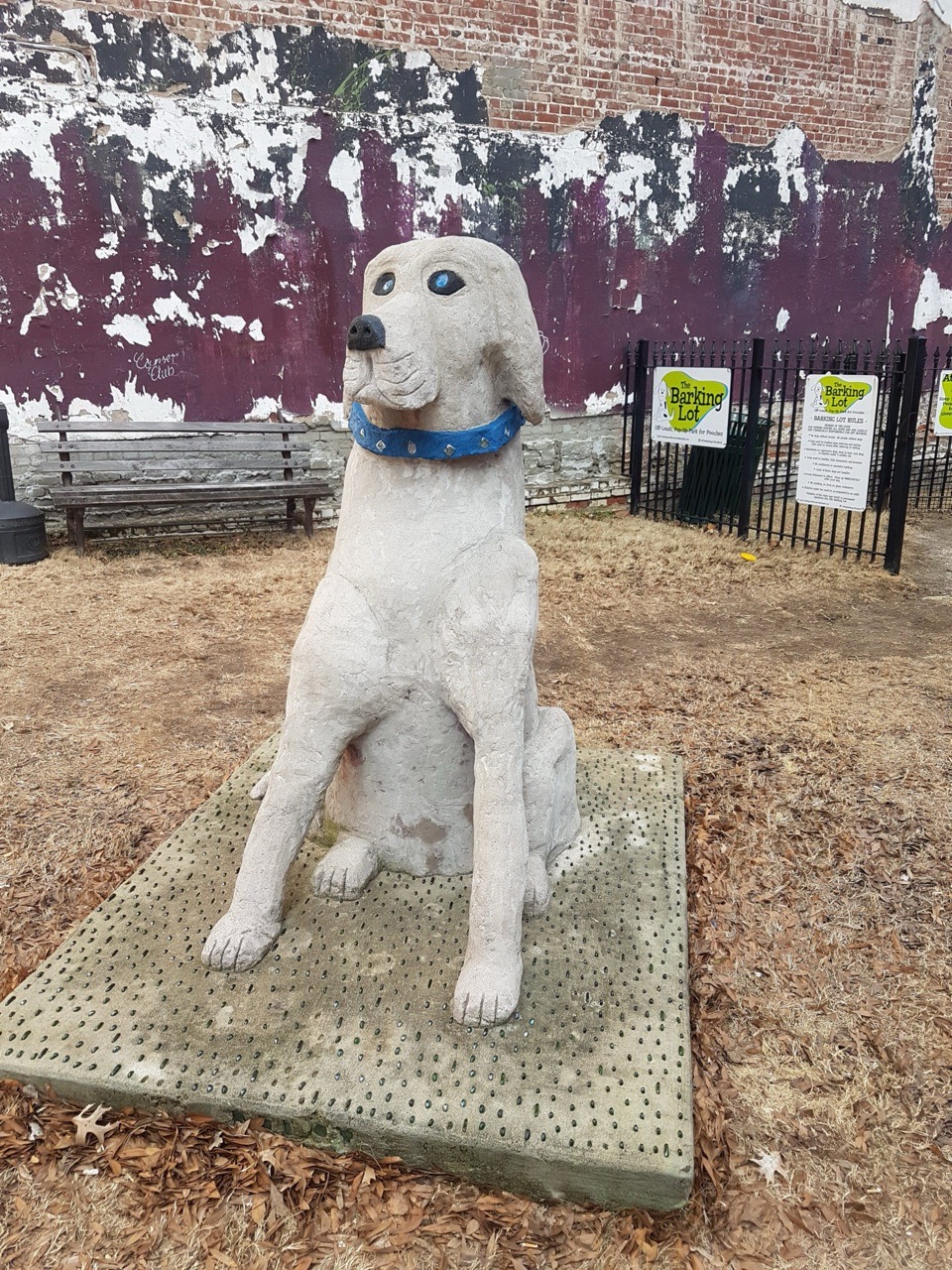
    Not having a dog I didn’t need to visit this park in Memphis, but I liked its name and the sculpture at its entrance.

  • Salzburg – Ibis Salzburg Nord

    Salzburg – Ibis Salzburg Nord

    And another in my series of posts, primarily to remind myself, of hotels that I never got to stay at because of the Coronavirus. This hotel seemed effortlessly professional though, responding almost immediately to my e-mail and confirming that they’d refund the two non-refundable stays that I had booked here. This would have been my first trip to Austria, but I’ll get there soon enough no doubt and get to stay at this hotel sometime in what is hopefully the near future. I remain impressed with Accor Hotels, they’ve been marvellous in terms of offering these refunds.

  • Memphis – Memphis Zoo

    Memphis – Memphis Zoo

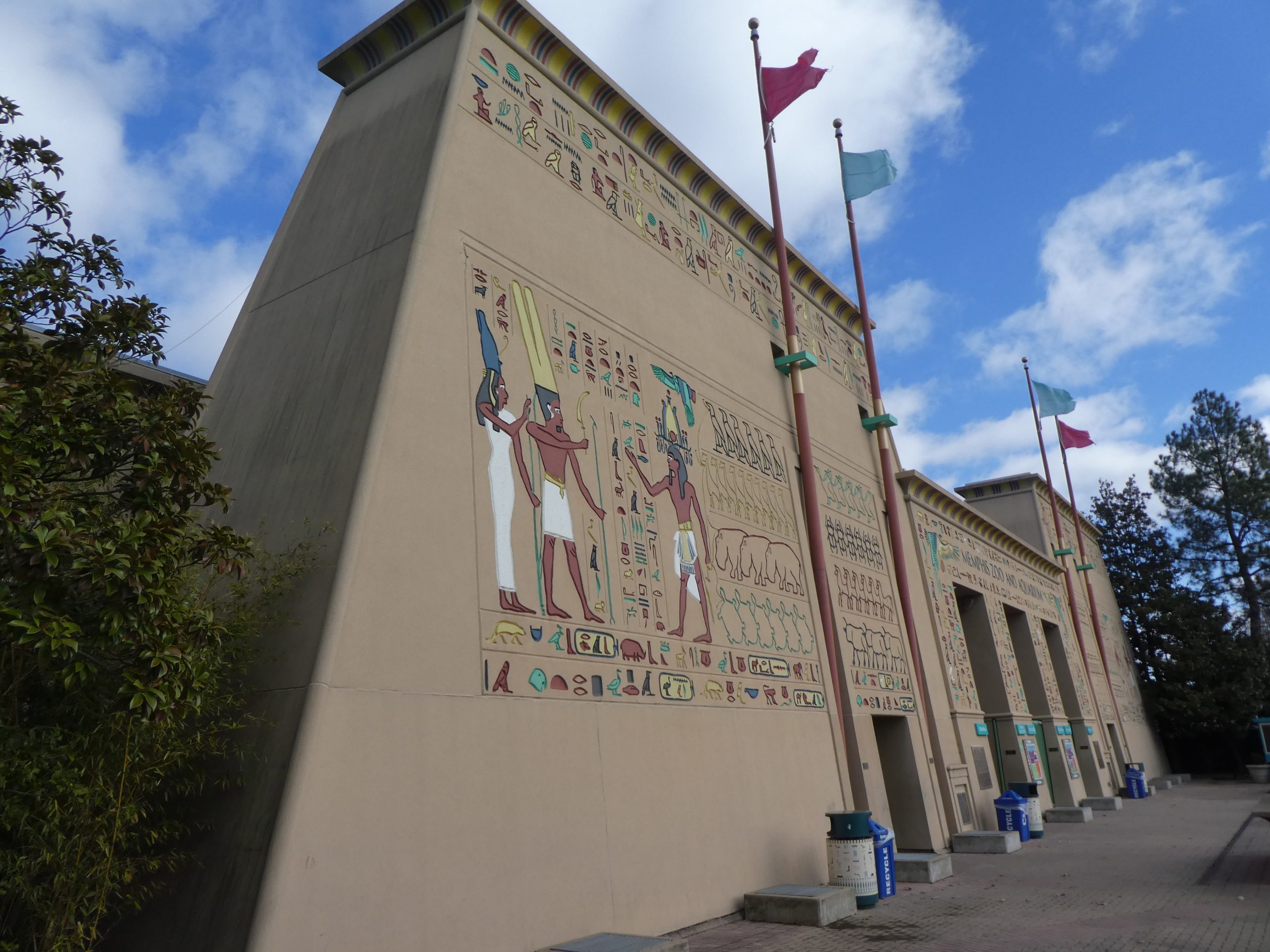
    This post is just photos, from my visit to Memphis Zoo in January 2018. It’s a large zoo and there weren’t many people there on a weekday morning in January, so I had a quite lovely time meandering around the various areas of the zoo.

  • Memphis – National Civil Rights Museum

    Memphis – National Civil Rights Museum

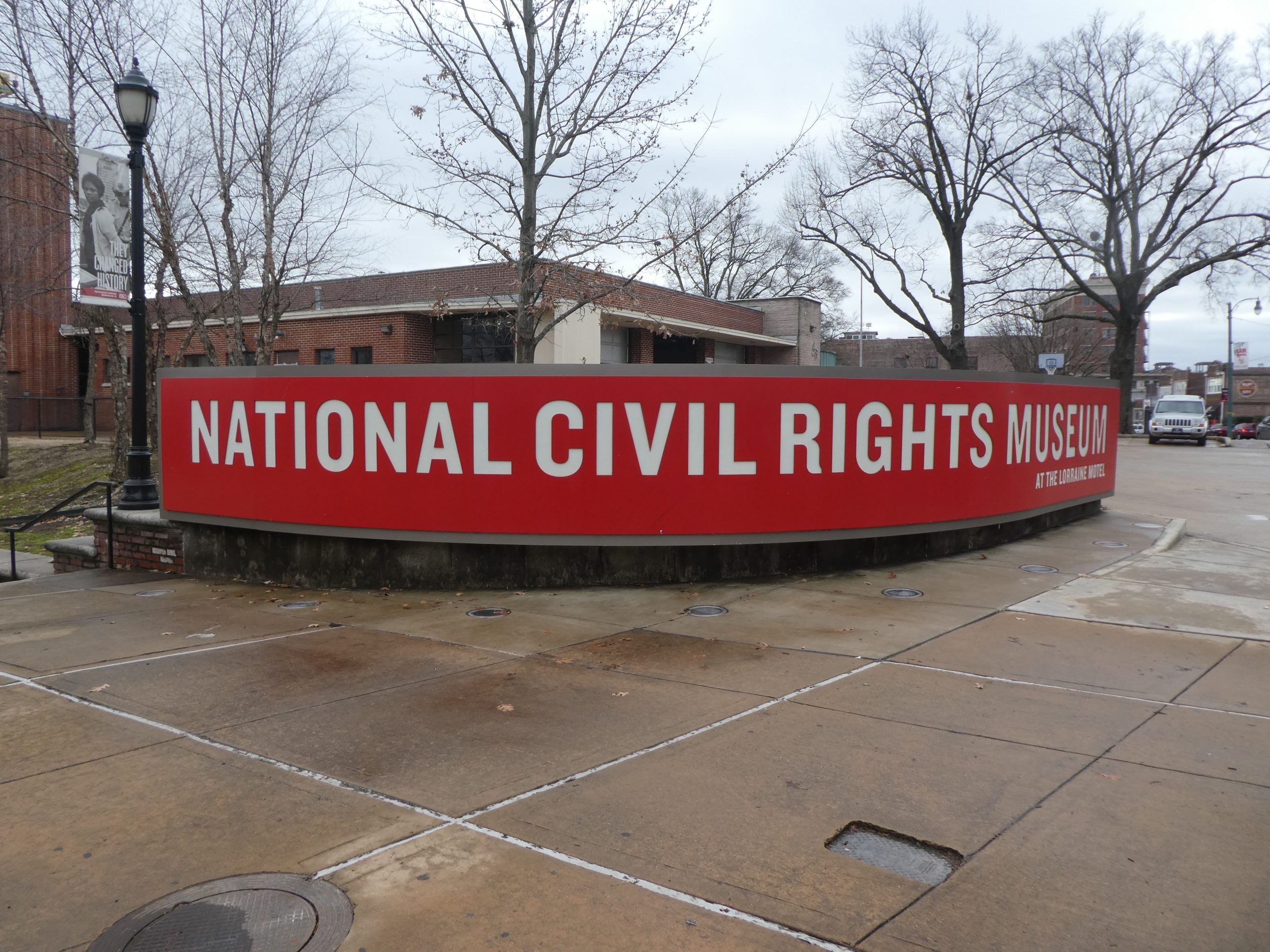
    I visited this museum in January 2018 and I had slightly feared that it might be a little bit preachy, telling people what to believe rather than engaging in the history of the civil rights movement. I had no reason to be concerned though, the museum was well curated, never tried to preach and was full of interesting and relevant exhibits in different forms whether that be video, text, artefacts or reconstructions.

    I’ve posted separately about:

    Martin Luther King’s Eulogy

    Martin Luther King’s Cell

    Jim Crow Today

    Freedom Riders

    I Am a Man

    Room 306

    Room 306 is where Martin Luther King was assassinated, and it’s possible to visit a second part of the museum which is the building located opposite, from where the bullet that killed him was fired. The hotel room in what was the Lorraine Motel has been preserved and this forms one of the final parts of the museum tour, it’s quite a sudden and dramatic ending to a visit in many ways.

    The room next to the bathroom where the shot was fired, showing visitors the view from where James Earl Roy fired the fatal shot. The motel can be seen clearly through the windows, which is now the main part of the museum. There is some debate about whether James Earl Roy was actually the murderer, but the museum addresses that and presents the various theories that have been raised over the years.

    The bathroom, now sealed off, from where the shot was fired. There was plenty to see in the museum and I was here for just under three hours, across the two different buildings. Visiting in a January weekday also meant that there weren’t too many other people around in the museum, so it was a quiet visit.

    It is fortunate that the two buildings have survived, and at times that wasn’t certain, and there was a modernisation of the museum which was completed in 2014. Memphis isn’t the wealthiest of cities and so the museum being sited here, especially given the importance of it being Martin Luther King, has at least brought some visitors to the city centre.

    The museum is very well reviewed, amazingly there are just 21 one-star reviews on TripAdvisor out of the nearly 9,000 reviews that have been left. Given the sensitive topic that the museum covers, this seems to me to be a considerable achievement for the curators and some of those 21 reviews have been left in error or are just ridiculous.

    And, finally, some more photos from the museum which include the replica bus that Rosa Parks sat on and the replica sanitation truck from the strike that led Martin Luther King to be in Memphis.

  • Dictionary of the Vulgar Tongue – Day Eleven

    Dictionary of the Vulgar Tongue – Day Eleven

    The Dictionary of the Vulgar Tongue was first published at the end of the eighteenth century, and given that the Coronavirus crisis is giving too much time to read books, I thought I’d pick a daily word from it until I got bored…..

    Baker-Kneed

    This is a phrase that seems relatively common during the seventeenth and early eighteenth century and it appears frequently in newspapers and books. The dictionary gives the definition as “one whose knees knock together in walking, as if kneading dough”, in what today would I guess more commonly be referred to at knock-kneed. The knock-kneed term seems to date only from the late eighteenth century so this is perhaps when the two phrases switched in common usage.

  • Memphis – Memphis Martyrs

    Memphis – Memphis Martyrs

    Yellow fever decimated the city in 1878, with this sign noting those martyrs who bravely remained to try and save as many as they could. Perhaps there are similar parallels to the coronavirus today. The disease was spread by the number of river passengers who stopped off in Memphis during their journey along the Mississippi. The epidemic cost the city $200 million and killed 20,000 of its residents, but it also changed its demographics permanently. Many richer white residents moved to cities such as New Orleans and Atlanta, leaving Memphis with a predominantly black and poor white population.

  • Memphis – National Civil Rights Museum (Martin Luther King’s Eulogy)

    Memphis – National Civil Rights Museum (Martin Luther King’s Eulogy)

    Part of the eulogy that Martin Luther King wrote on 4 February 1968, when he knew that his life was in danger. He was killed two months later, on 4 April 1968 and part of this eulogy was read out at his funeral.

  • Memphis – National Civil Rights Museum (Martin Luther King’s Cell)

    Memphis – National Civil Rights Museum (Martin Luther King’s Cell)

    This is a recreation of the prison cell that Martin Luther King was placed in following his arrest for taking in part in peaceful civil rights demonstrations in Birmingham in April 1963. Whilst in his cell, he wrote what became known as the ‘Letter from Birmingham Jail’ which called for peaceful protest against the injustices of discrimination.

    Much of the problem in Birmingham was Bull Connor, the city representative whose clumsy decisions accidentally brought the protests to international attention. Members of the civil rights movement knew that Connor and some other city representatives were unlikely to make coherent decisions, hence why they were keen to protest in the city, which was also heavily segregated.

    Martin Luther King controversially encouraged youngsters to get involved with the campaign, similar to that with the current situation with Greta Thunberg and the environmental campaign. Connor however decided to arrest the thousand children on the march and ordered water hoses and dogs to be set on them. Martin Luther King said that evening, “Don’t worry about your children who are in jail. The eyes of the world are on Birmingham. We’re going on in spite of dogs and fire hoses. We’ve gone too far to turn back.”

    President John F. Kennedy at this stage intervened as the crisis worsened and in May 1963 segregation started to end in Birmingham, or at least start to end officially. On 11 June 1963, the President made an announcement from the White House that there would be progress made on civil rights, which led to the 1964 Civil Rights Act.

  • Memphis – National Civil Rights Museum (Jim Crow Today)

    Memphis – National Civil Rights Museum (Jim Crow Today)

    The museum used many different types of exhibits to explain the history of civil rights and this graphic was presented early on in the exhibition route. It is a map of where in four major cities the African American, White, Asian and Latino populations currently live. So, although the Jim Crow laws of segregation no longer exist, it’s clear that the reality on the ground is that they still have a legacy effect today.

    It’s easier to see the New York map in the photo that I took, although the results are similar for the other cities which is clear segregation of blacks and whites. Latino and Asian communities tend to merge between the two, but are still often in their own defined areas of cities. In the home city of the museum, Memphis, the top right image of the four shows that there are very few areas where both communities are living in equal numbers. Much of this relates to white flight when white residents left the inner cities and moved to the suburbs, although that situation is reversing a little more now as city centres become more attractive again.

    The museum didn’t overplay this graphic, but it was a reminder for visitors arriving at the museum as to how division in the United States continues today.