Just photos in this post. I walked from King’s Lynn to West Lynn, with these photos showing what King’s Lynn looks like from the other side of the River Great Ouse.


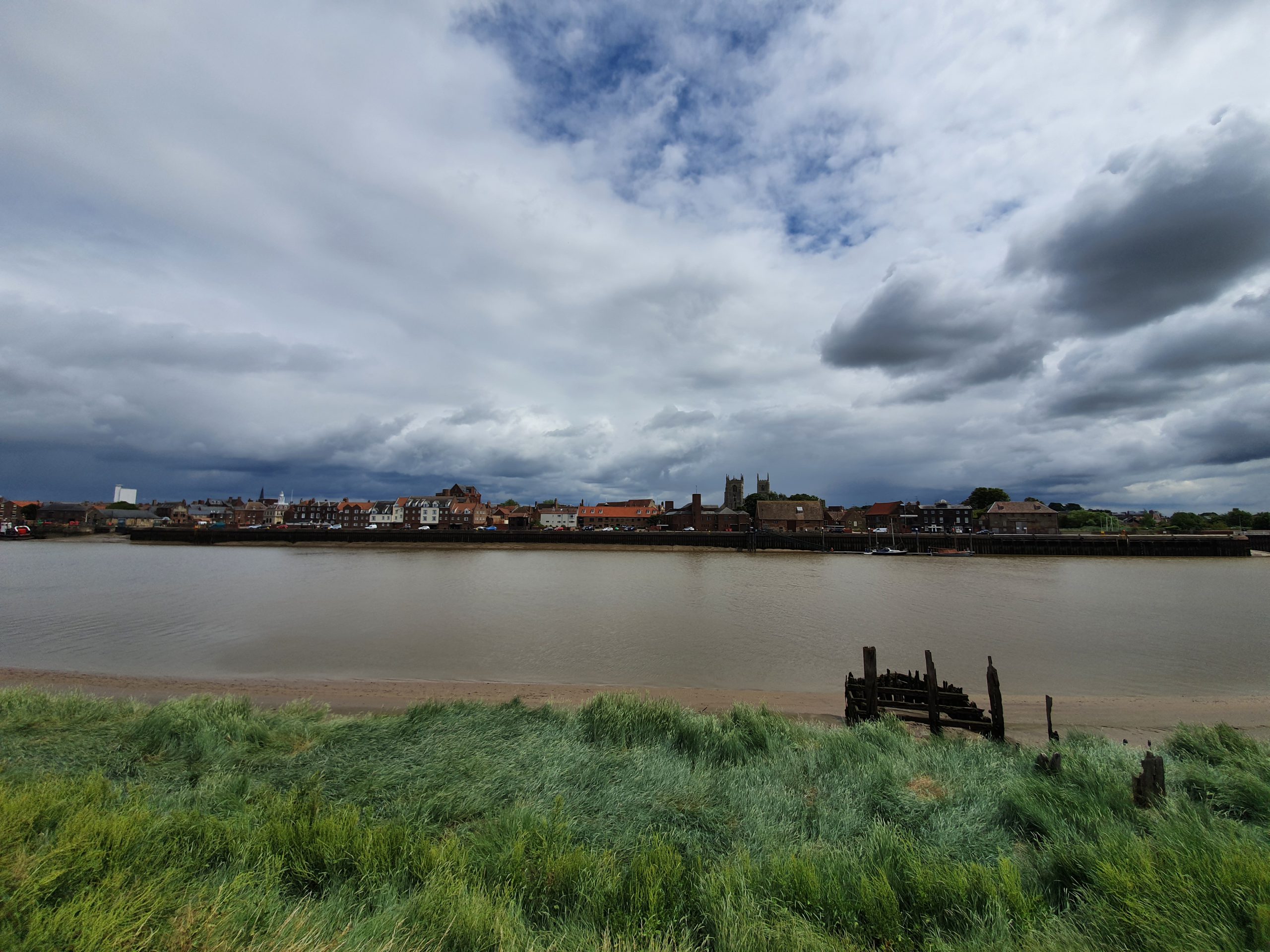
Just photos in this post. I walked from King’s Lynn to West Lynn, with these photos showing what King’s Lynn looks like from the other side of the River Great Ouse.
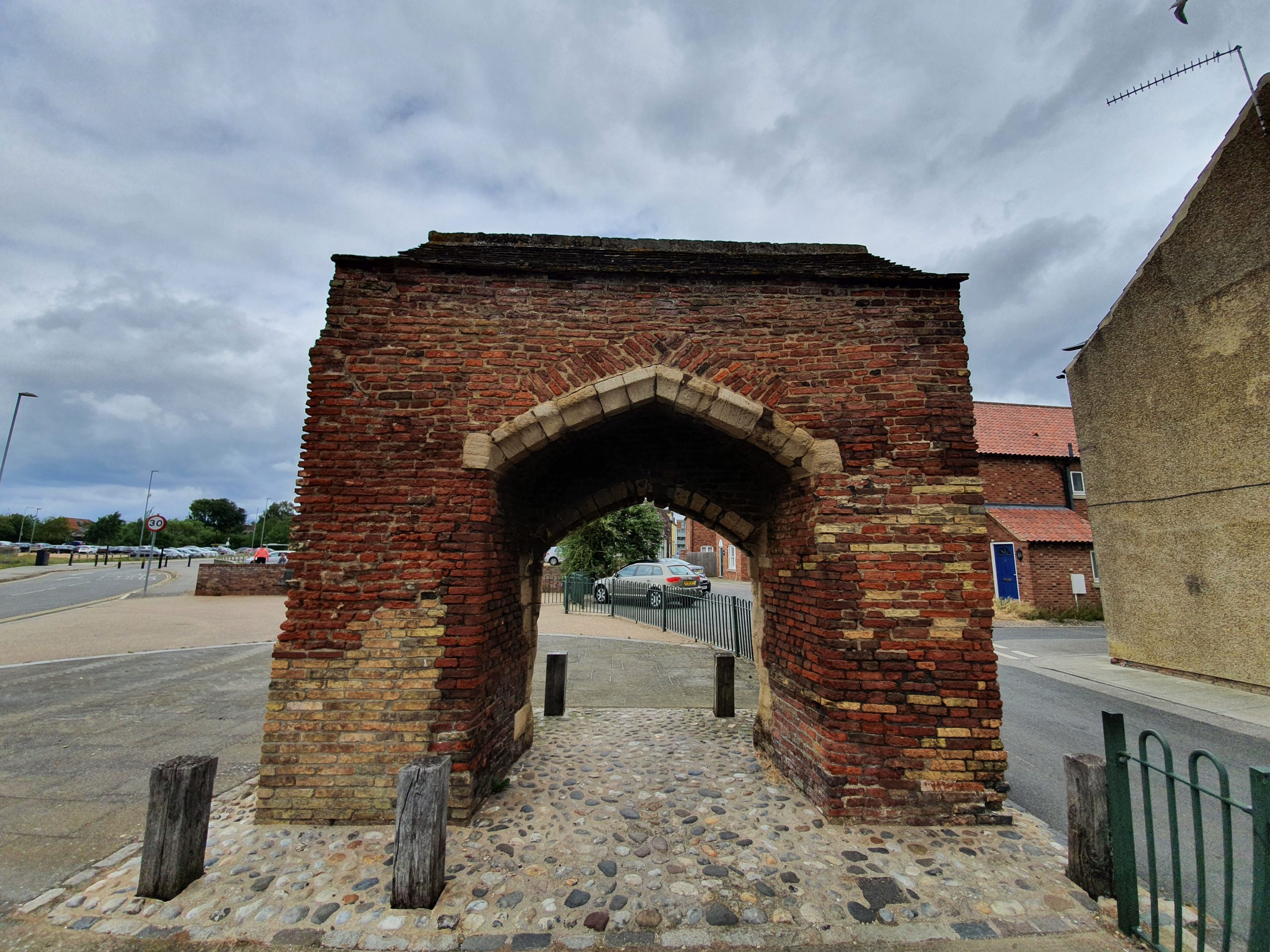

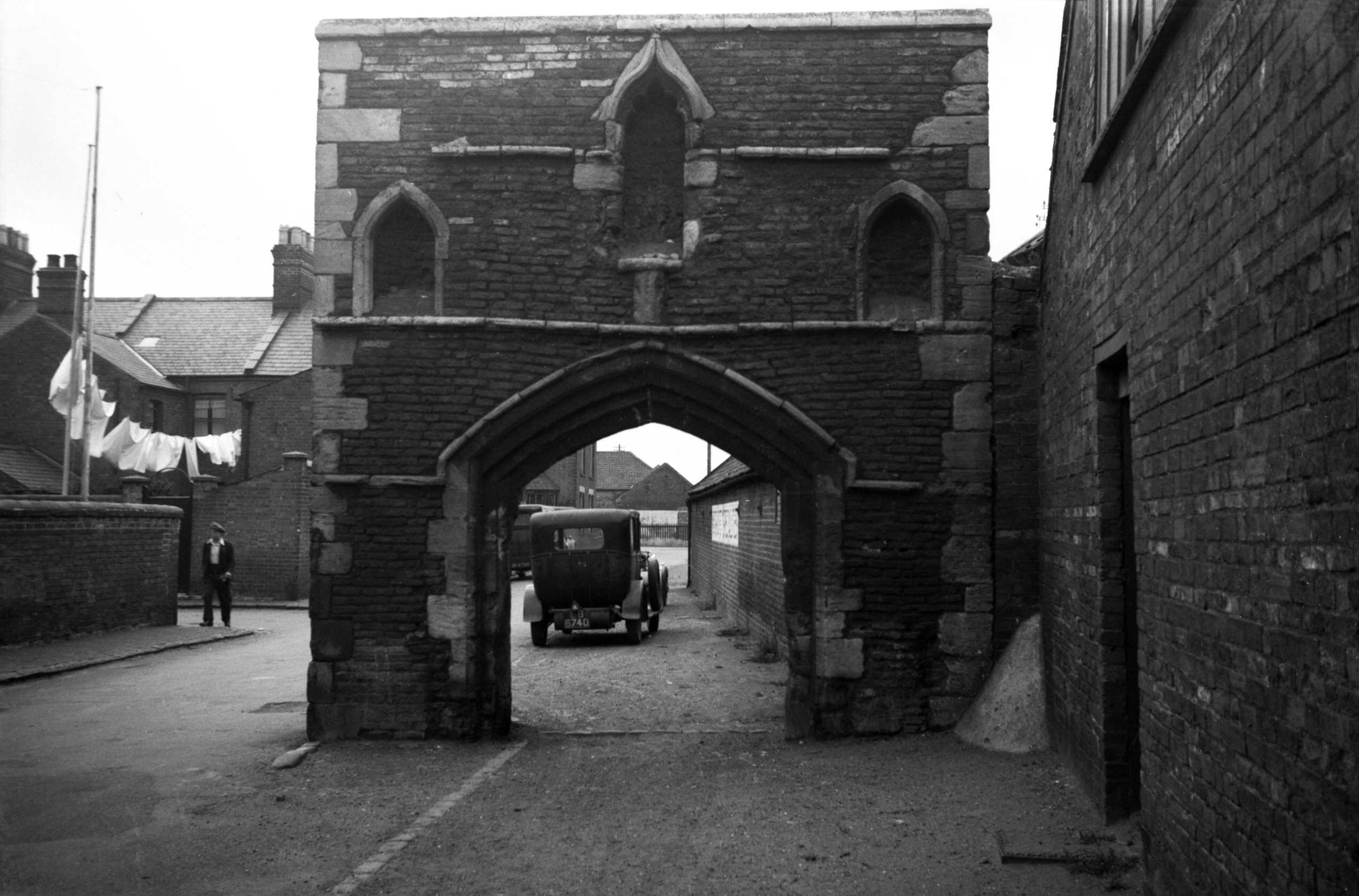
I’m not sure how I haven’t noticed this before on Hardings Way, but it’s the gateway to Whitefriars, a Carmelite Friary which stood here between around 1260 and the Dissolution of the Monasteries in the late 1530s. Although the rest of the monastery has now gone, the street names here reflect the past, there’s The Friars, Carmelite Terrace, Whitefriar’s Terrace, Whitefriar’s Road, All Saints’ Street and Friars Street.

Over the last couple of centuries, buildings have surrounded the gate, but these have mostly been cleared and the structure now looks quite exposed. This area around this gate, inside the former monastery, was also used as a graveyard and some local residents (as well as Anglian Water staff digging in the area) have uncovered bodies.
George Plunkett has a photo of how the gateway looked back in 1935 and there’s an etching of the gate by William Taylor and William Pickford.

First brought their new Excel buses into service in February 2020, although circumstances have meant that they’ve obviously been heavily under-used since. They run between Norwich and Peterborough, stopping at Dereham, Swaffham, King’s Lynn and Wisbech.

This was my first foray onto public transport since March and so this Norwich bus station queueing system was new to me.

There were only two of us attempting to board the bus in Norwich, so the queueing system wasn’t exactly overloaded.

The front of the bus, with a clear new display screen.

And looking back to the rear.

The interior upstairs is light and airy, there are no shortage of windows.

There are now tables at some of the seats and the seats themselves have USB power, wi-fi and there’s a stop button on every pair of seats. The seats are leather, which I personally find can get quite sticky in the heat, but there’s a modern feel to the whole arrangement.

The seat and it’s clear they’ve spent a chunk of money on these buses. The ride doesn’t feel that comfortable, but it might well be that this is more to do with Norfolk’s roads than anything else.

Health arrangements on-board.

And, safely in King’s Lynn.

Another one of the same fleet of buses in King’s Lynn.
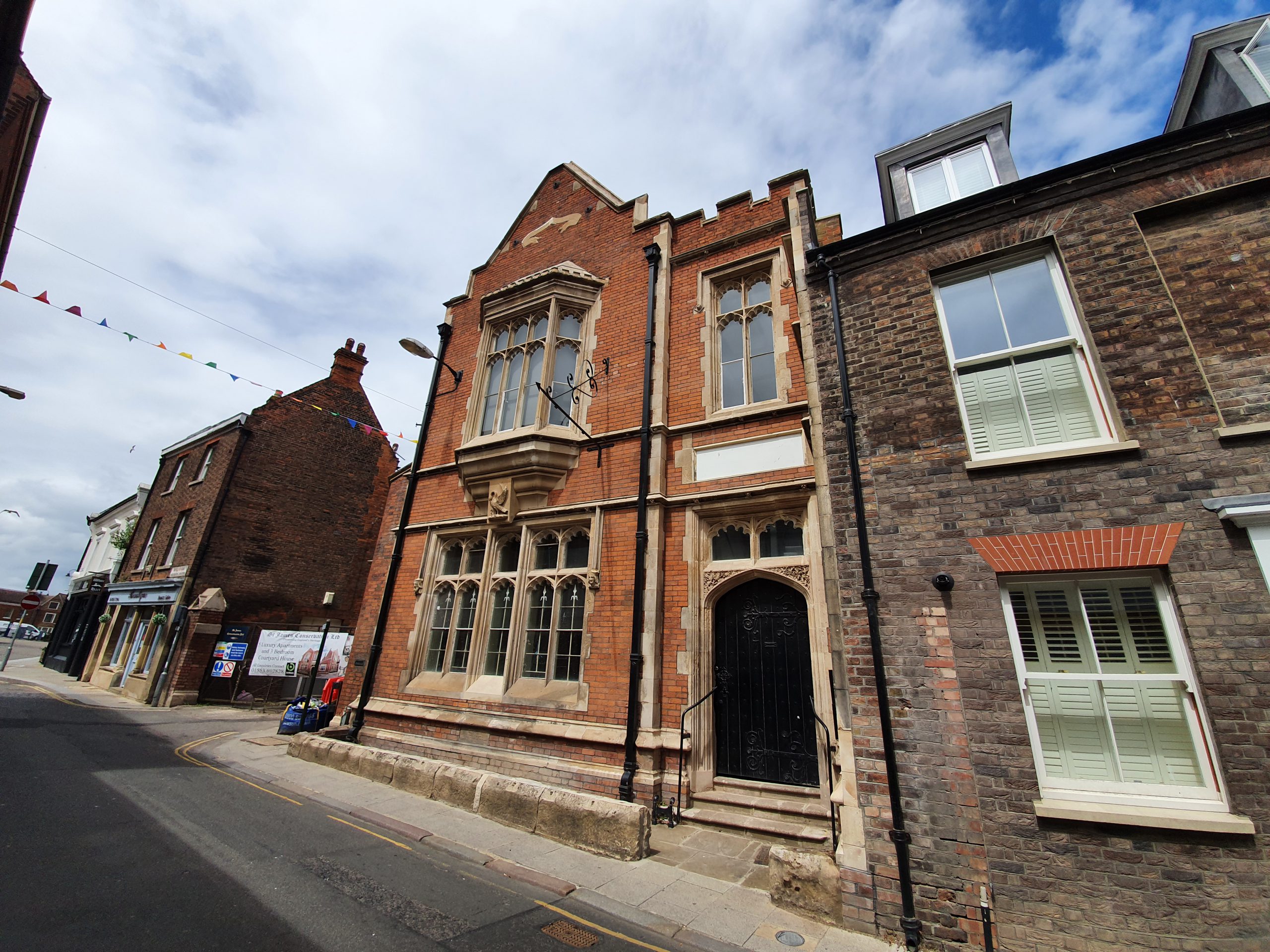
This is the former Lynn Savings Bank building which was completed in 1858 and the gothic design was meant to give a feeling of reassurance, after some traumatic decades for banks. The bank had been trading since October 1817 from their previous premises at 118 High Street in the town, which were open to the public from 12.00 until 13.00 on Mondays. There are banks 200 years on with similar opening times…. The bank, I think, was later subsumed into the Trustee Savings Bank, now better known as TSB.

The town’s pelican symbol, which is on the King’s Lynn Coat of Arms, is on the central corbel of the building, all designed to give it that official feel. The building was later used by the Royal Antediluvian Order of Buffaloes as their community building, who have recently moved their meetings to the Workers Club on Church Street.
The building has now been converted into “four imposing apartments” according to the developers, plus another apartment in the former cellar which I’m imagining isn’t quite as imposing.
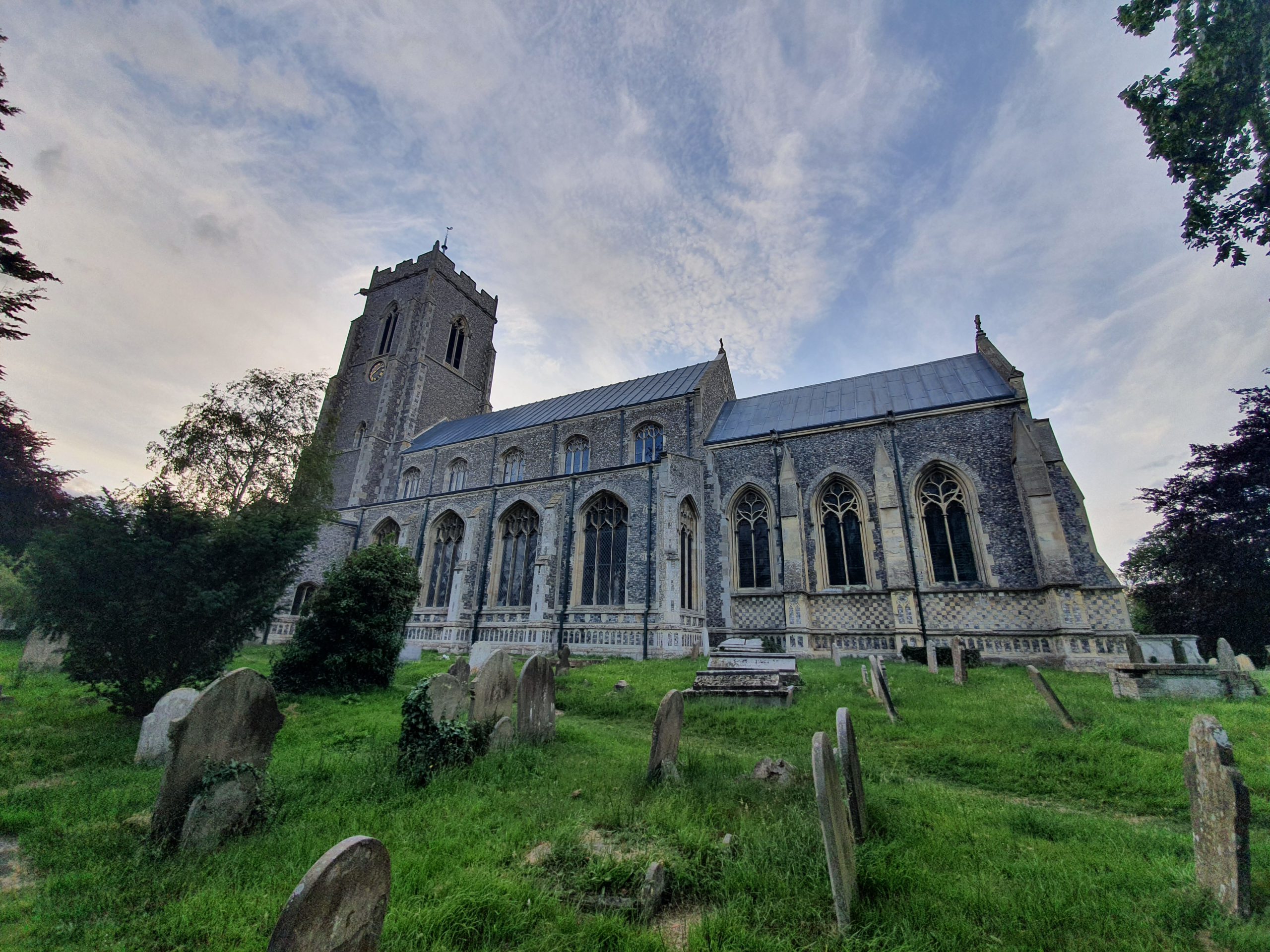

Herbert Ernest Sims is listed on the war memorial in Martham and he was the son of James (born in 1851) and Alice Sims (born in 1852) who lived at Gibbet Vale in Martham. Herbert was born in 1889 and at the 1911 census he was 22 and was living with his parents and his brother Edgar who was 20, having been born in 1891. Both the brothers worked as market gardeners and had been born in Ormesby, with two older siblings, James and Julia who had moved out of the family home.
He joined the 6th battalion of the Royal Dublin Fusiliers and went with a multi-national military force to fight the Bulgarians as part of the Salonika Campaign. Noel Drury, a member of the same battalion as Herbert wrote about the conditions:
“Our overcoats are frozen hard, and when some of the men tried to beat theirs to make them pliable to lie down in they split like matchwood. The men can hardly hold their rifles as their hands freeze to the cold metal.”
Corporal Herbert Sims died on 17 November 1916, at the age of 29. He is buried at Struma military cemetery in Greece, another British soldier left a long way from home.
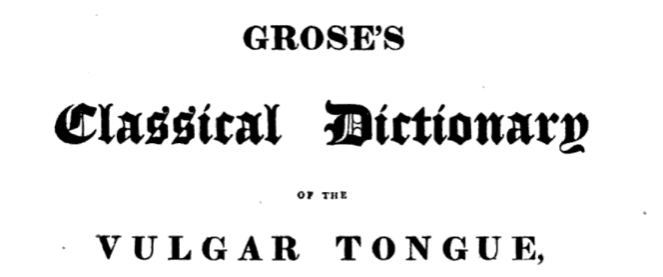
The Dictionary of the Vulgar Tongue was first published at the end of the eighteenth century, and given that the current health crisis is giving too much time to read books, I thought I’d pick a daily word from it until I got bored….
Dining Room Post
The definition of this phrase is “a mode of stealing in houses that let lodgings, by rogues pretending to be postmen, who send up sham letters to the lodgers, and, whilst waiting in the entry for the postage, go into the first room they see open, and rob it”.
It’s perhaps no surprise to see that distraction crime has been going on in this manner for hundreds of years, but this must have been a particularly annoying crime. The dictionary was written before the introduction of the Penny Black, so the recipient of letters not only had to pay to receive the letter (hence the ‘waiting in the entry for the postage’), but they then discovered that they were robbed whilst paying for them. It’s not ideal…..
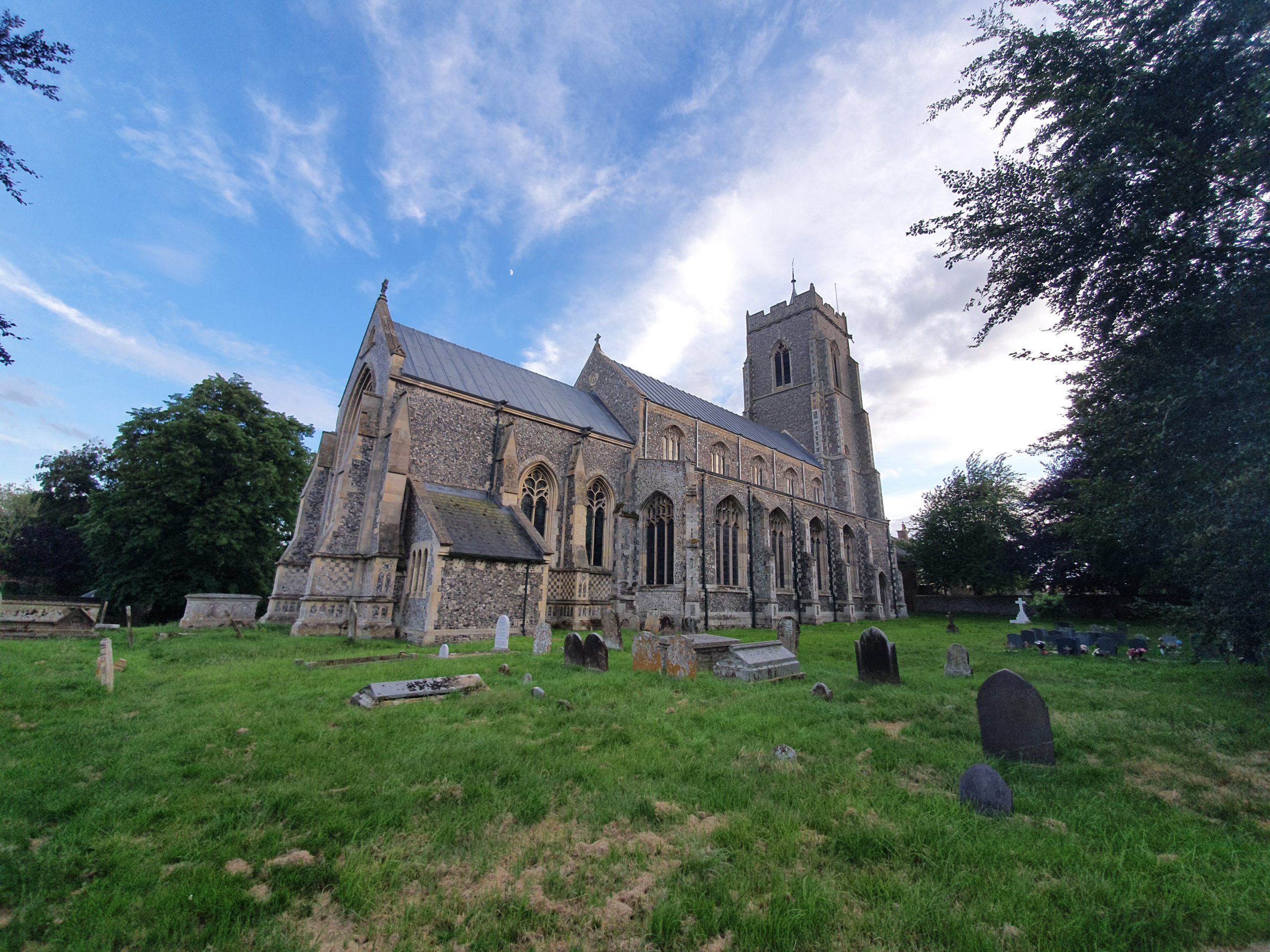
Robert Alfred Rivett is listed on the war memorial in Martham and, in my previous post about Elijah Long, I mentioned the burnt war records. And Robert’s war records survive, although they are partly burnt, which makes looking at them moderately challenging as some information has been lost. Robert, who worked as a fisherman, was the son of David Moore, who lived at Somerton Road in Martham. He was enlisted in Great Yarmouth on 10 August 1914 into the 3rd Battalion of the Norfolk Regiment, which he joined as a private on 26 September 1914, service number 3/7837. Robert was 5’9″ in height, was aged 37 and weighed 12 stone.
Robert’s war records show that he was wounded in action on 18 March 1915 and a few weeks later there is a request from his family to see him, where he was described as “seriously ill”. A doctor noted that he had “developed paralysis of the diaphragm”, which would have likely meant he had been caught by the poison gas which the Germans were using at the time. Robert died at the Royal Victoria Hospital in Netley, Hampshire, on 4 January 1916 and the cause of death was “gunshot wound to the spine”. He was duly buried in the church at Martham, in the churchyard extension.
In the records, there’s a copy of the letter written by David Moore, Robert’s father, which mentioned that his wife Emma Moore had died and that he was Robert’s next of kin. Unfortunately, as it’s partly burnt, it’s hard to get a wider context of the letter, but the long chain of letters to and from David Moore to the army are highly unfortunate and there seems to have been a misunderstanding. The army wanted to know the address details of Ernest Rivett, who was Robert’s brother, to send him the 1914 star medal and David wrote to the army on 1 August 1919 saying “why are you not more careful and indifferent of our feelings? Anyway you have got what you want”. The confusion appears to have been the different surnames and there are some inconsistencies with the information provided by Robert, so the cause of the difficulty is perhaps understandable.

Elijah Long is listed on the war memorial in Martham and it’s initially puzzling as to why he’s here as he served in the Hampshire Regiment, he is buried in Sculthorpe, in another part of the county, and his parents didn’t live in the village during the First World War. He did though have a connection, and a strong one, insomuch as he lived on White Street when he worked in the village as a grocer’s assistant after his parents, George and Ruth Long, had left Martham and moved to Sculthorpe. He had been born in Attleborough on 24 October 1889 where he lived for a couple of years until his parents moved to Martham.
Around 60% of British army records were destroyed during air raids in the Second World War, a sad loss to the war records of four million men. Around two million records do remain, although many are damaged, but separately to this, the records of those invalided out of the army in the First World War are still intact. And this is the case with Elijah Long, so there is a multitude of information about him and his war efforts.
The first page of the file shows that Private Elijah Long was invalided out of the British Army on 19 July 1917, when his discharge papers were processed. Elijah’s discharge was handled in Exeter and the files note that he was 27 years and 9 months old, he was 5’7″ with a fresh complexion, blue eyes and dark brown hair. It was noted that he had a scar on his right shoulder and he was planning to live with his parents whilst he recovered, at Grove Cottage in Sculthorpe. The notes mentioned that he had good character and was trustworthy, but was wounded whilst fighting in the Somme. The discharge papers noted that he had been in the army for one year and 214 days, being located in East France between 16 August 1916 and 30 April 1917.
The file then shows Elijah’s sign-up papers, he was examined in Great Yarmouth on 8 December 1915. His height was listed then as 5’5″ and he weighed nine stone, with his two vaccinations at birth having been noted. He was sent to fight for the 3rd battalion of the Essex Regiment, initially with the service number 28095. He later transferred to the Hampshire Regiment and his service number changed to 26532.
The medical records show that he was wounded on 5 November 1916 in France when he was hit by shrapnel, although the hospital report wasn’t until 1 May 1917 as he had spent time at a casualty clearing station. There the doctors noted that his reflexes were shot and he was incontinent, and although the shrapnel had been removed he remained weak and had very extensive bed sores. There was no way that Elijah could continue fighting, so the doctor’s recommendation was to discharge him from the military. The medical board issued its decision on 28 June 1917, which was that he should be invalided out of the army over the next few weeks as although Elijah’s health had improved, he had lost feeling in his legs and was permanently unfit to serve. The stamp of “total disablement” on the documents told the story.
Elijah got home and his parents started to take care of him, but his injuries meant that he died at their house on 16 March 1918 at the age of 28. He was duly buried at the Church of Saint Mary and All Saints in Sculthorpe, a tragic waste of a life for a soldier who spent just ten weeks on the front line before being so badly injured.
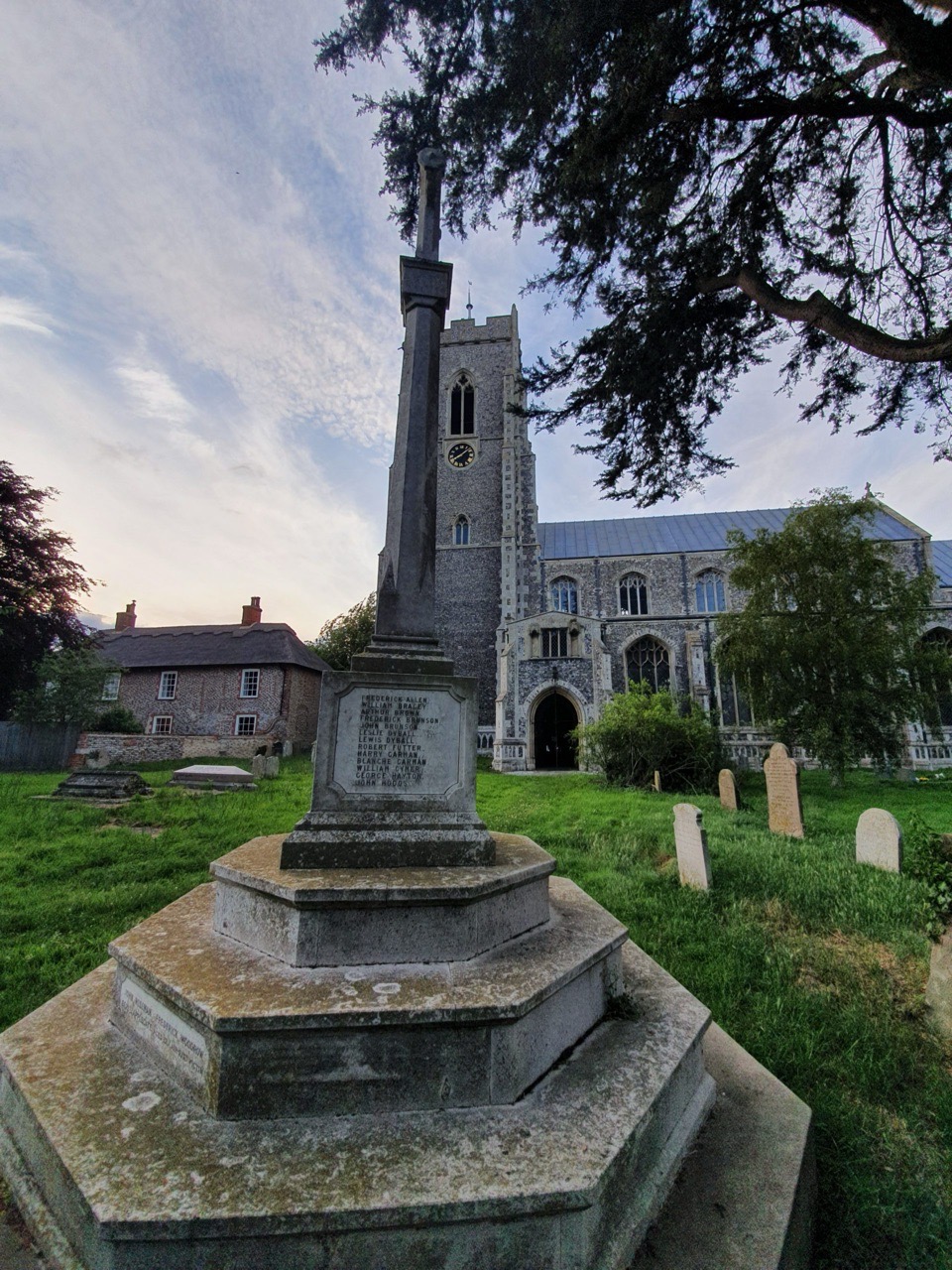

Beryl Applegate was one of ten names added to the village’s war memorial following the end of the Second World War, a twelve-year old girl who was killed during an air-raid. Beryl was injured during an air-raid which took place on 4 September 1940 and she died two days later at the Norfolk & Norwich Hospital. The local press reported the funeral, although noted that Beryl was aged 10, writing that during the service the hymn ‘There’s a friend for little children’ was sung. The funeral was well-attended, including by Beryl’s friends from school and her teacher was also present. Beryl lived at 14 Council Houses (a development of properties on Somerton Road in the village which were built in 1925), and the paper noted that at least one resident from every house on this street was present at the funeral.
Beryl was the daughter of Charles Applegate (born on 25 September 1898) and Phoebe Applegate (born on 24 October 1900). Charles worked as a farm labourer and Phoebe was a housewife, with the 1939 register noting that they lived with their three children, Frederick (born on 14 June 1924) who was already working as a farm labourer, Beryl (born on 13 March 1928) and Roy (born on 22 February 1930). There are also two other people listed as living with the family, likely two younger children, but these names are redacted from the register as they’re either still alive or were living relatively recently (one of them hasn’t been very well redacted, so I can see it was a male born on 22 June 1932).
The Dictionary of the Vulgar Tongue was first published at the end of the eighteenth century, and given that the current health crisis is giving too much time to read books, I thought I’d pick a daily word from it until I got bored….
Dewitted
The dictionary defines this as “torn to pieces by a mob, as that great statesman John de Wit was in Holland, anno 1672”.

This story has recirculated in recent months and years and the above meme was shared widely on-line. Johan de Witt was the Grand Pensionary of the Dutch Republic between 30 July 1653 and 4 August 1672 and, in effect, he was indeed their Prime Minister. The Dutch had experienced a bad year in terms of international diplomacy and worsening relations with the UK and France meant that the Prime Minister found himself in a weak position. A slightly rigged court case was set up by William of Orange and his supporters, which meant that de Witt was imprisoned and sentenced to exile.
With the local population upset and ready to attack, De Witt and his brother were assassinated by the mob and their bodies were mutilated and hung up. Their livers were cut out and were then roasted and eaten by some members of the mob, with some suggestion that other parts of their bodies were eaten. So, unbelievably, the story which has circulated on the Internet is effectively true. The word ‘dewitted’ is still used to describe a lynching but, fortunately, most countries have a more democratic system of governance today.