Blog

  • Dictionary of the Vulgar Tongue – Day 109

    Dictionary of the Vulgar Tongue – Day 109

    The Dictionary of the Vulgar Tongue was first published at the end of the eighteenth century, and given that the current health crisis is giving too much time to read books, I thought I’d pick a daily word from it until I got bored….

    Duke of Limbs

    This is really a term of abuse, defined by the dictionary as “a tall, awkward, ill-made fellow”. It’s easy to see how the phrase came into being and it was used relatively frequently during the eighteenth and nineteenth centuries. It was also particularly commonly used in the Nottinghamshire area and although meant as an insult, there are somewhat ruder one in Grose’s book…..

  • Wroxham – Marle Pit Token

    Wroxham – Marle Pit Token

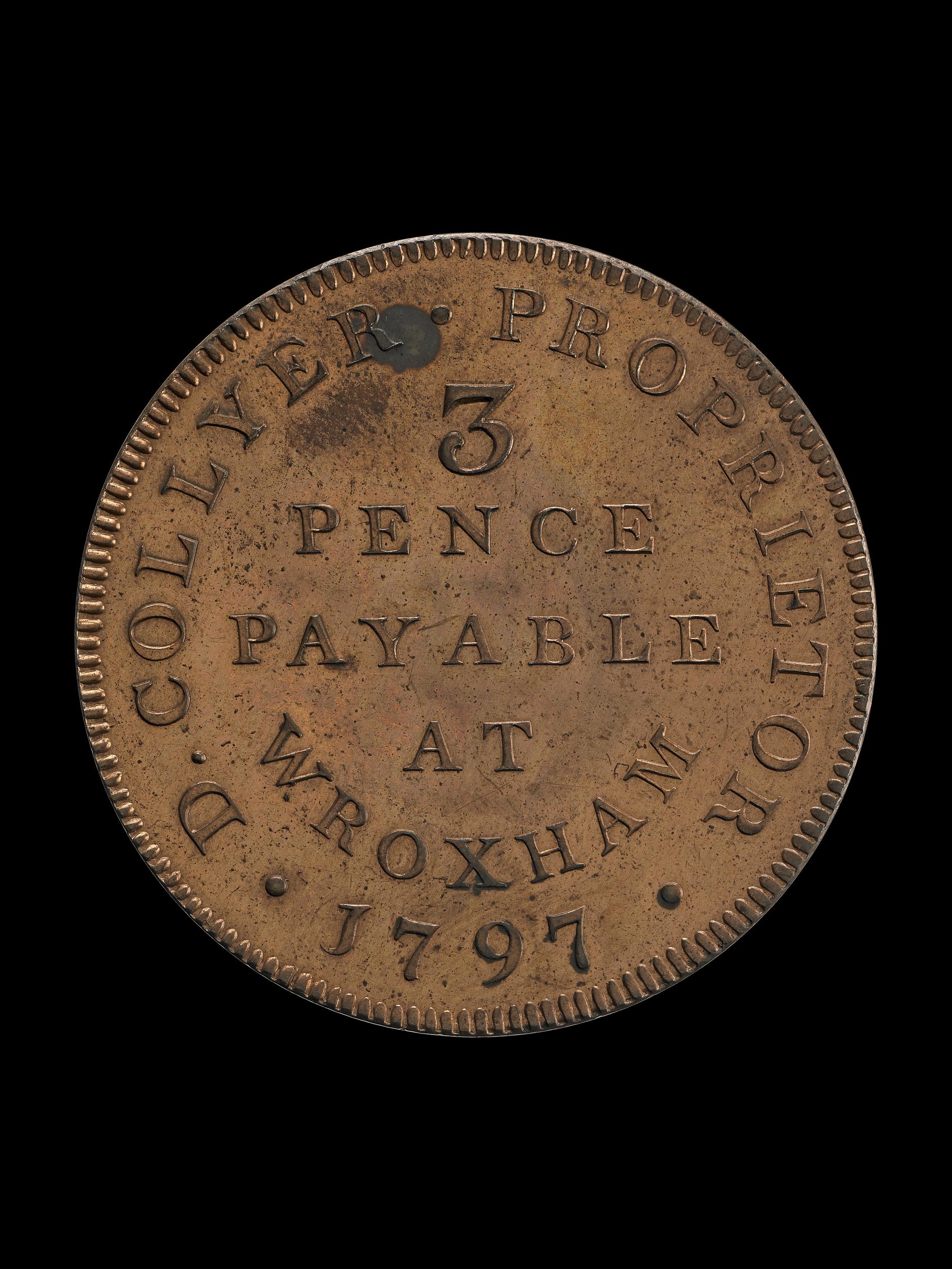
    This threepence alloy token (© The Trustees of the British Museum) is in the collections of the British Museum and it dates from 1797, when it was used to pay agricultural workers in Wroxham. There were three main periods when these trade tokens were used, the first crisis was in the mid-seventeenth century, the second crisis was in the 1790s and the third crisis was in 1810 and the years that followed. The crisis came about because there was a shortage of small coins in circulation and thousands of these different tokens came to be issued. There’s a big collectors industry now built up around the collection of these tokens and there was a novelty about them at the time as well.

    The British Museum acquired this token in 1818, given by Lady Dorothea Banks, and they came from a collection established by her sister-in-law, Sarah Sophia Banks, who had died in the same year as the donation was made.

  • Hoveton – Etching by John Crome

    Hoveton – Etching by John Crome

    I’m not sure exactly where this etching was made, but it’s somewhere in the area near to St. Peter’s Church in Hoveton. It was drawn in either 1811 or 1812 by John Crome (1768-1821), a local artist who was one of the founders of the Norwich School of painters. There’s something timeless about the etching, and although I can’t place where it was drawn, it probably looks the same today. Well, unless it’s now under a housing estate, but given how peaceful and remote St. Peter’s Church is, I rather hope not. One thing that I hadn’t realised until today is that Crome was also a teacher at Norwich School, as in the educational establishment and not the painting circle.

    The plate was sold by Mrs. Judkin to the British Museum in 1872 following the death of her collector husband, Thomas James Judkin, who had died the year before. This etching, which is © The Trustees of the British Museum, isn’t on display in the museum and there’s also a similar one in their collections.

  • Dictionary of the Vulgar Tongue – Day 108

    Dictionary of the Vulgar Tongue – Day 108

    The Dictionary of the Vulgar Tongue was first published at the end of the eighteenth century, and given that the current health crisis is giving too much time to read books, I thought I’d pick a daily word from it until I got bored….

    I also managed to get one day behind with these because of doing rather too much walking, so here’s the extra one to make the number of days right  🙂

    Ducks and Drakes

    This is defined as “to make ducks and drakes: a school-boy’s amusement, practised with pieces of tile, oyster-shells, or flattish stones, which being skimmed along the surface of a pond, or still river, rebound many times. To make ducks and drake of one’s money, to throw it idly away”.

    I hadn’t realised that this phrase for skimming stones is still in use in some areas, it’s thought that it dates from the sixteenth century and took its name as the stone hitting the water looks like a duck going above and under the water. The second meaning of the word, to throw away money, comes from the idea of throwing an item away. The phrase was used commonly in the eighteenth and nineteenth centuries, with people advising “not to make ducks and drakes” out of an issue, ie, don’t waste money on it.

    This is another one of those phrases that has fallen out of usage to a large degree over recent decades, although it appears to have increased in usage over the last few years. As an aside, I’m not very good at skimming stones, I can usually get about two and then the damn thing sinks….

  • Hoveton – Granary Staithe

    Hoveton – Granary Staithe

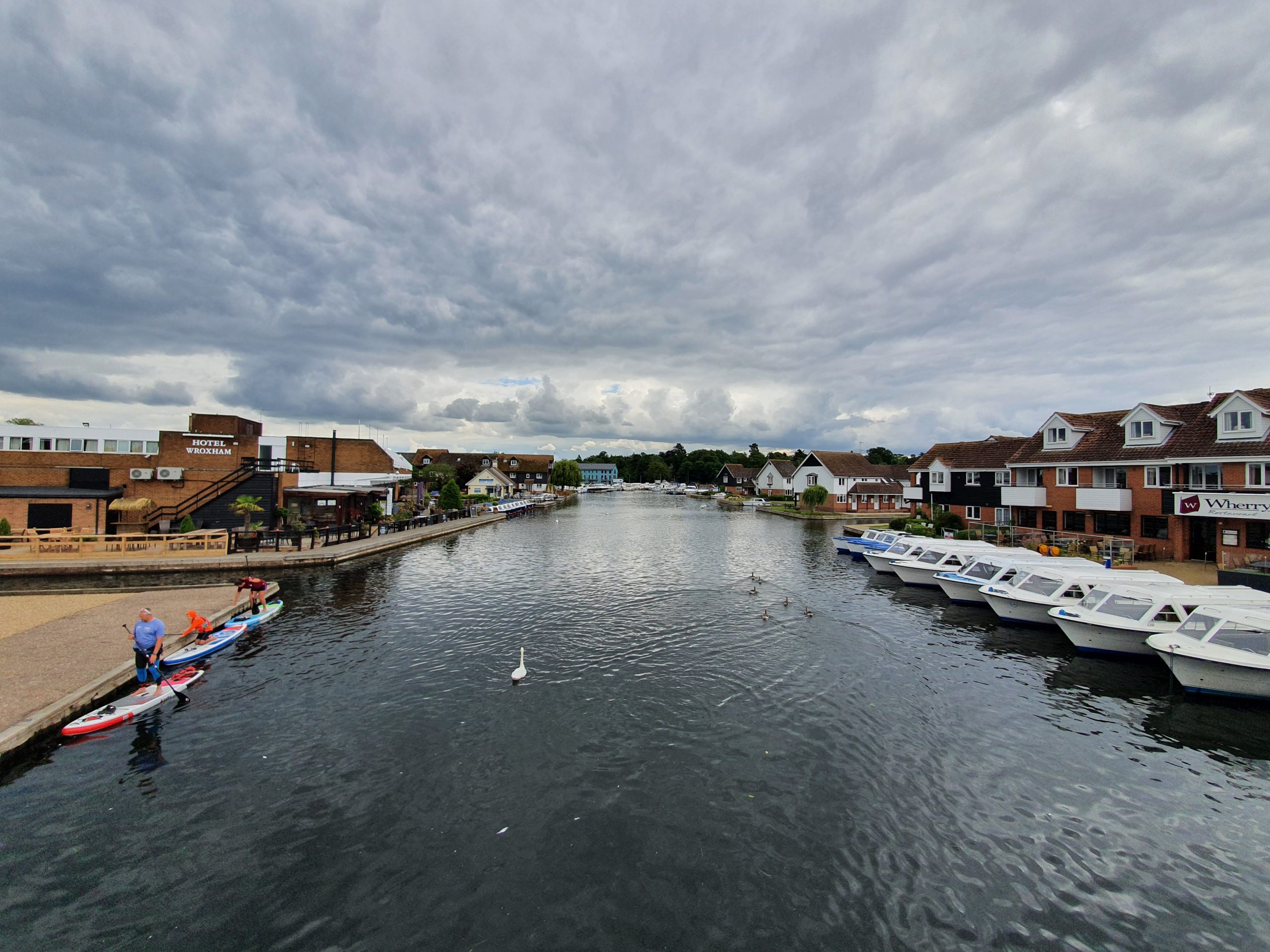
    Granary Staithe is located by the bridge which separates Wroxham and Hoveton (clicking on the above map makes it easier to see) on a spot in Hoveton by the river. It’s the bit under the right-hand Norwich Road on the second map.

    The River Bure, with Granary Staithe on the right. There were concerns in 2012 when the owners of the land, Norfolk County Council, wanted to sell it for £250,000 or lease it for £25,000 per year. The only problem was that the Broads Authority said they’d oppose any building on the site, so plans to make it an attraction or similar wouldn’t have been viable. After some fund-raising, Hoveton Parish Council were able to buy the land and it opened as a public area in March 2013.

    No shortage of swans, mostly looking for food from visitors. One disadvantage of this part of the village is that it’s a bit swamped with seagulls hoping to grab some chips from locals who have visited the neighbouring fish & chip shop.

    A useful history board about Granary Staithe, which is visible behind it with seating and excellent views over the river. Before the council acquired the land, it had been a flat area which visitors could use, but it’s now been tidied up.

  • Hoveton – Hoveton Village Sign

    Hoveton – Hoveton Village Sign

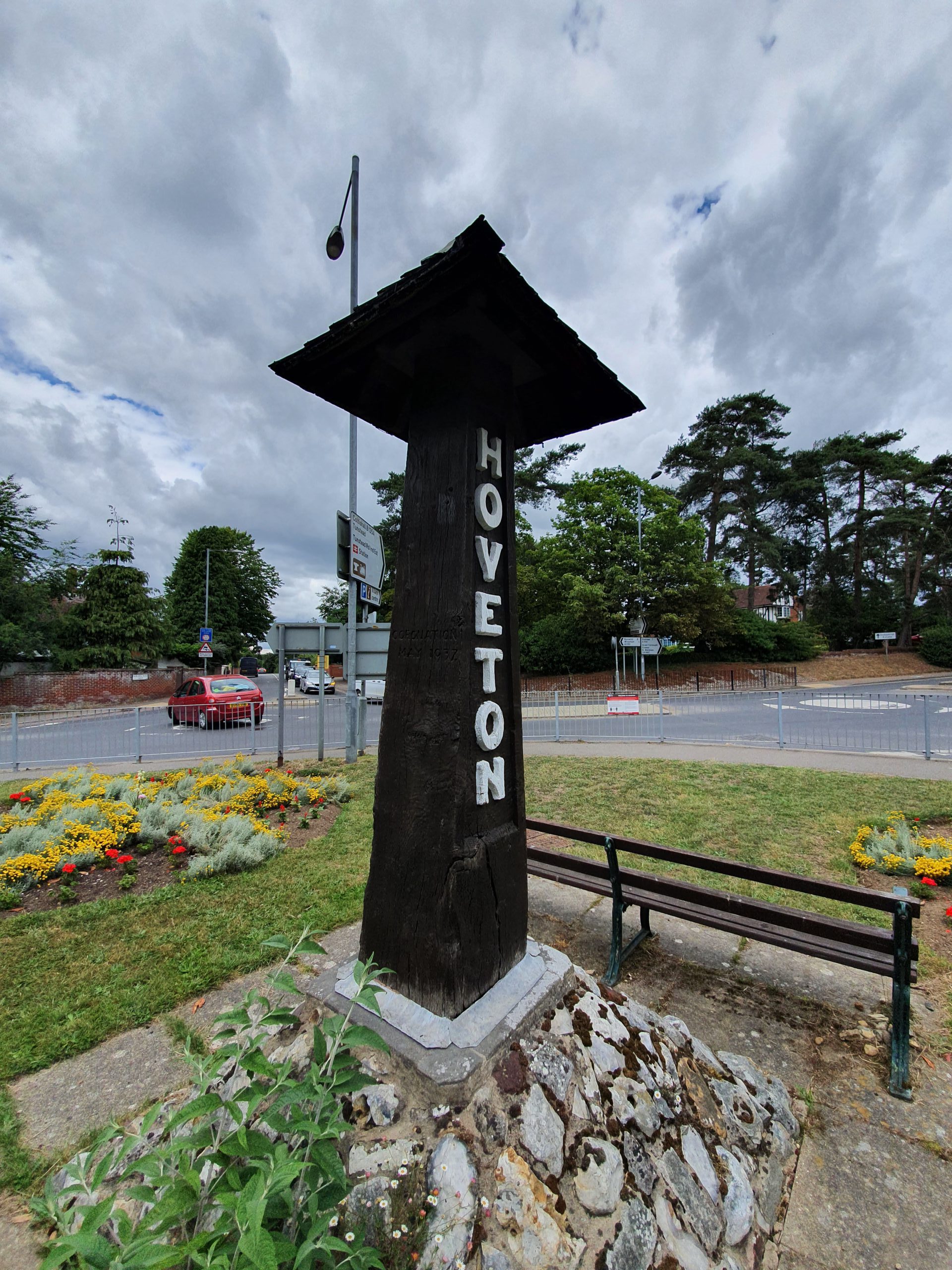
    There’s not a huge amount of innovation in Hoveton’s village sign in terms of the design, but it’s a pleasant area with benches and a lovely view of the busy road.

    The village sign was installed here to mark the Coronation of King George VI in 1937 and there were also plans to build a playing field to celebrate the Royal event.

    The sign was refurbished and restored in 2012.

    Another view of the sign. And busy road. This reminds me that I must also go back to Hoveton and cross over the river so that I can get a photo of Wroxham’s village sign.

  • Blackberries are Back

    Blackberries are Back

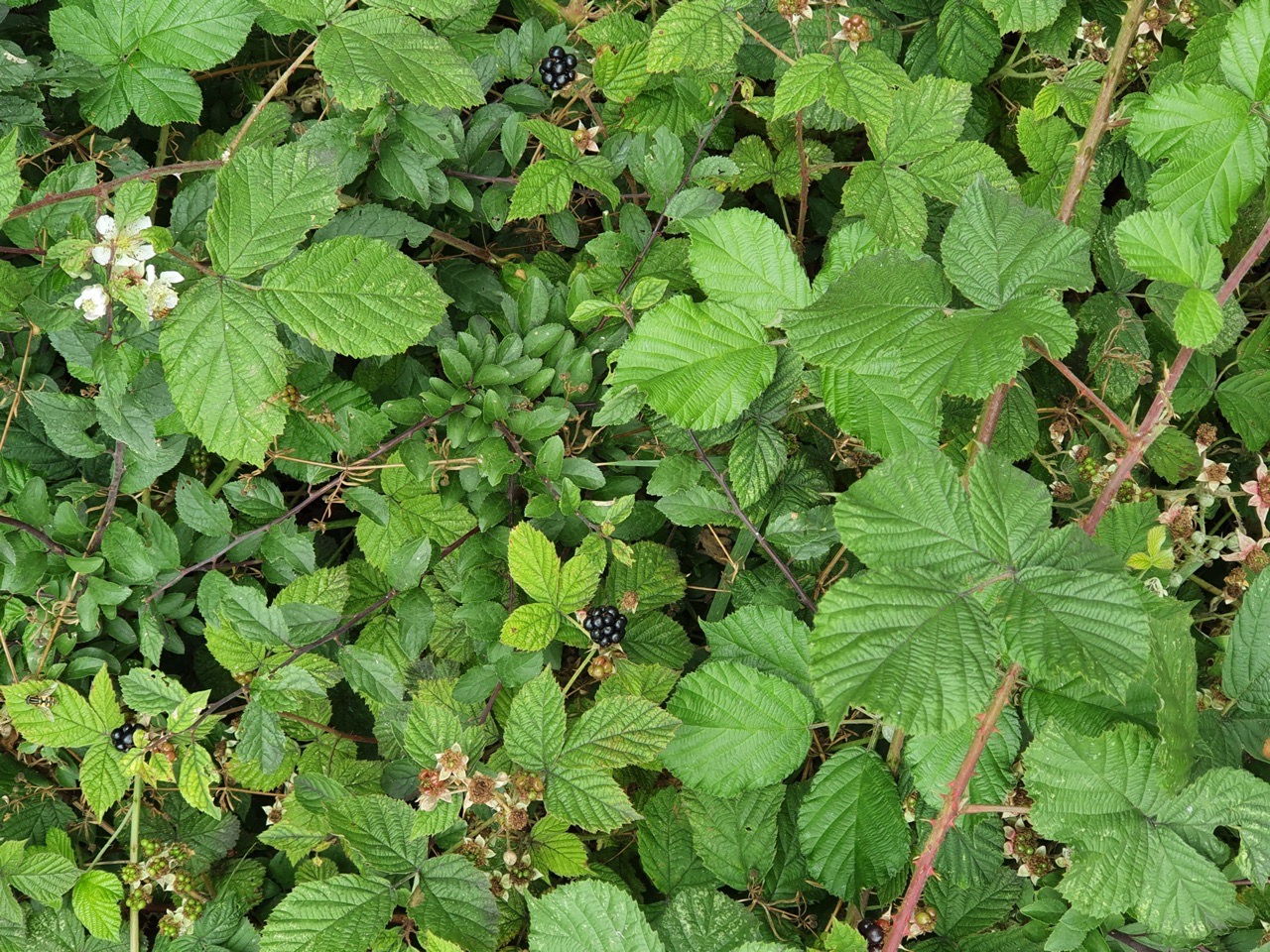
    More positive news for walkers, the first blackberries are now out. How lovely.

  • Dictionary of the Vulgar Tongue – Day 107

    Dictionary of the Vulgar Tongue – Day 107

    The Dictionary of the Vulgar Tongue was first published at the end of the eighteenth century, and given that the current health crisis is giving too much time to read books, I thought I’d pick a daily word from it until I got bored….

    Drub

    This word has changed its meaning a little since the dictionary defined it as “to beat anyone with a stick, or rope’s end: perhaps a contraction of dry rub. It is also used to signify a good beating with any instrument”. Today, it’s more usually used as a way of suggesting that someone has beaten someone in a form of competition or sport, probably by quite some margin. It’s now thought that the word comes from the Arabian word ‘ḍaraba’, meaning a punishment by beating. It could though have come from the old English word ‘drepan’, meaning to hit or strike. I’m not convinced about the dictionary’s ‘dry rub’ argument….

  • Hoveton – St. Peter’s Church (George Neave)

    Hoveton – St. Peter’s Church (George Neave)

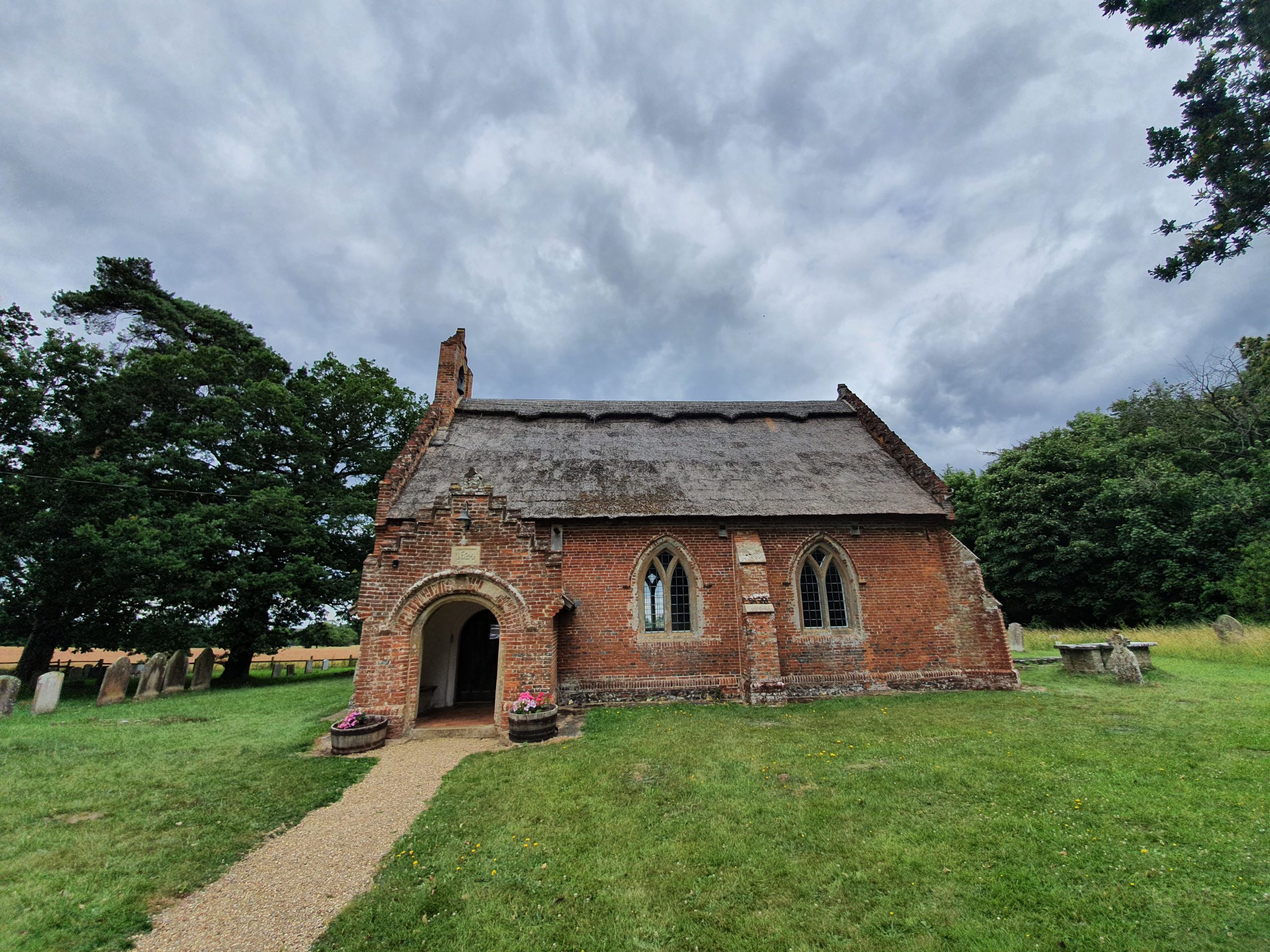
    The grave of George Neave (1803-1871) is in the churchyard of St. Peter’s Church in Hoveton. He was born in Smallburgh and he spent his life working as an agricultural labourer, initially living in Neatishead. George was listed on the 1841 census, living with his wife Elizabeth in Cangate Common in Neatishead, along with his 12-year old daughter Mary, his 10-year old daughter Clarisy, his 7-year old son William, his 5-year old son James and his 1-year old daughter Emily.

    In 1851, George was living with Elizabeth, as well as with his 16-year old son William, who worked as an agricultural labourer, his 12-year old daughter Emily, his 9-year old daughter Emma, his 6-year old daughter Sarah Ann, his 5-year old daughter Susan, his 1-year old daughter Jane, and his grandson William, aged 5. All of George’s children, and his grandson, had been born in Neatishead. Looking through the burial records at Neatishead, there is a 3-year old, Ann Neave, recorded as having been buried in the church in 1858 and this could have been one of George’s children.

    In 1861, George was living with Elizabeth, along with his 16-year old daughter Sarah, his 14-year old daughter Susan and the new-born George, who was George senior’s grandson. Unlike the others who had been in Neatishead, George, the grandson, had been born in Salhouse. That must have seemed just a little bit exotic….

    By the 1871 census, he was listed as living near the Common in the village, along with his wife Elizabeth and Hannah Hales, a servant out of situation. A few months after the census was taken, George died at the age of 68.

    George’s entry in the burials register for the church, the vicar was from the local Blofeld family of Hoveton Hall and the burial took place on Tuesday 30 May 1871. Elizabeth, his wife, was buried with George following her death in 1889, at the age of 85.

  • Hoveton – St. John’s Church (Elizabeth Agnes Thrower)

    Hoveton – St. John’s Church (Elizabeth Agnes Thrower)

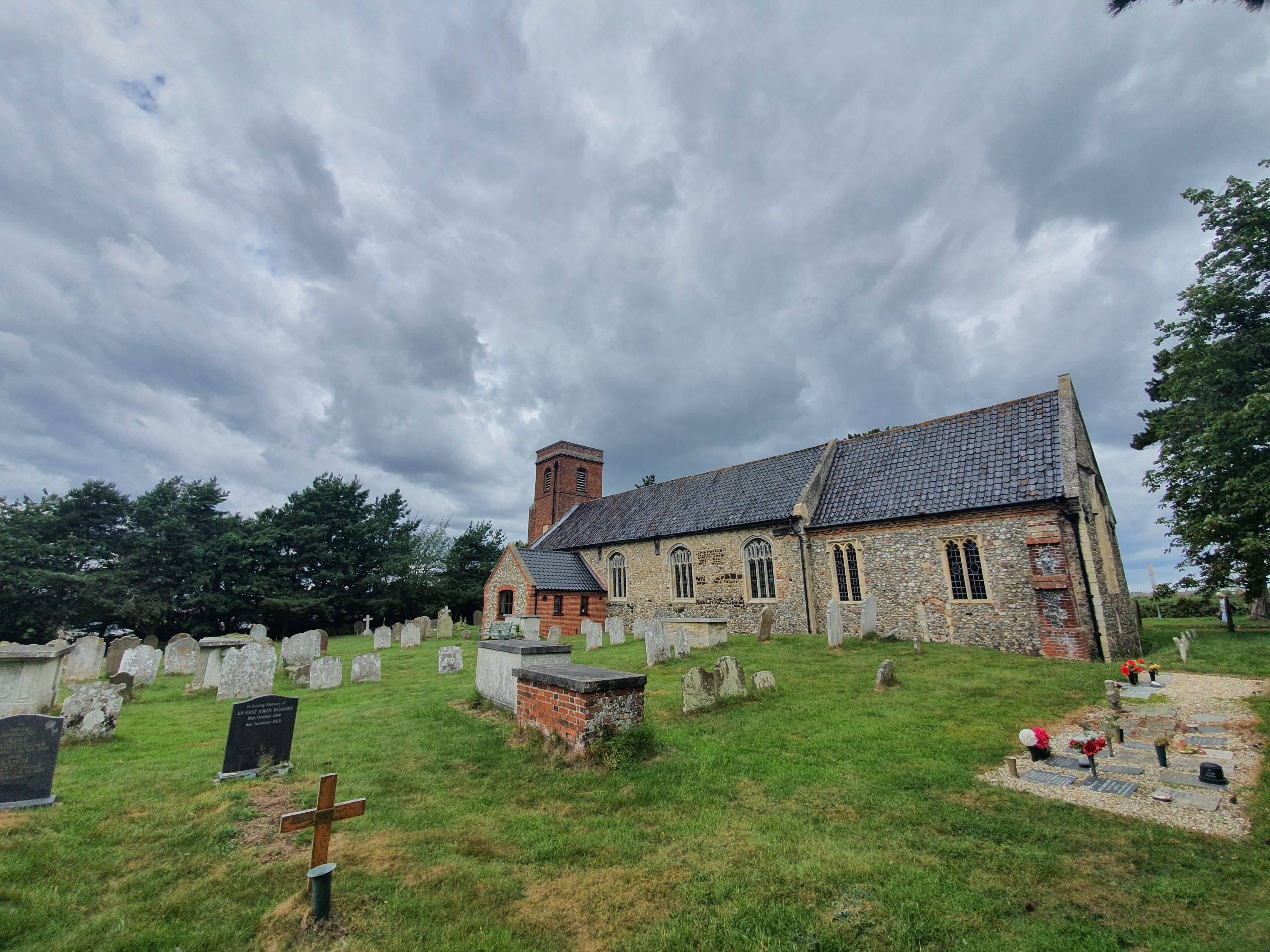
    Located in the churchyard of St. John’s Church in Hoveton, this unusual grave marker is that of Elizabeth Agnes Thrower. Aged just 27 at her death, the grave marker was paid for by her husband, Alfred Thrower. Elizabeth died on 25 July 1892 and was buried on 31 July 1892, in a service overseen by the vicar Jonathan William Woolley. Sadly, that’s as far as I’ve got with the story of Elizabeth’s life, but her grave marker is near to the entrance to the church and is quite evocative of the period.