Blog

  • Acle – Jubilee Memorial

    Acle – Jubilee Memorial

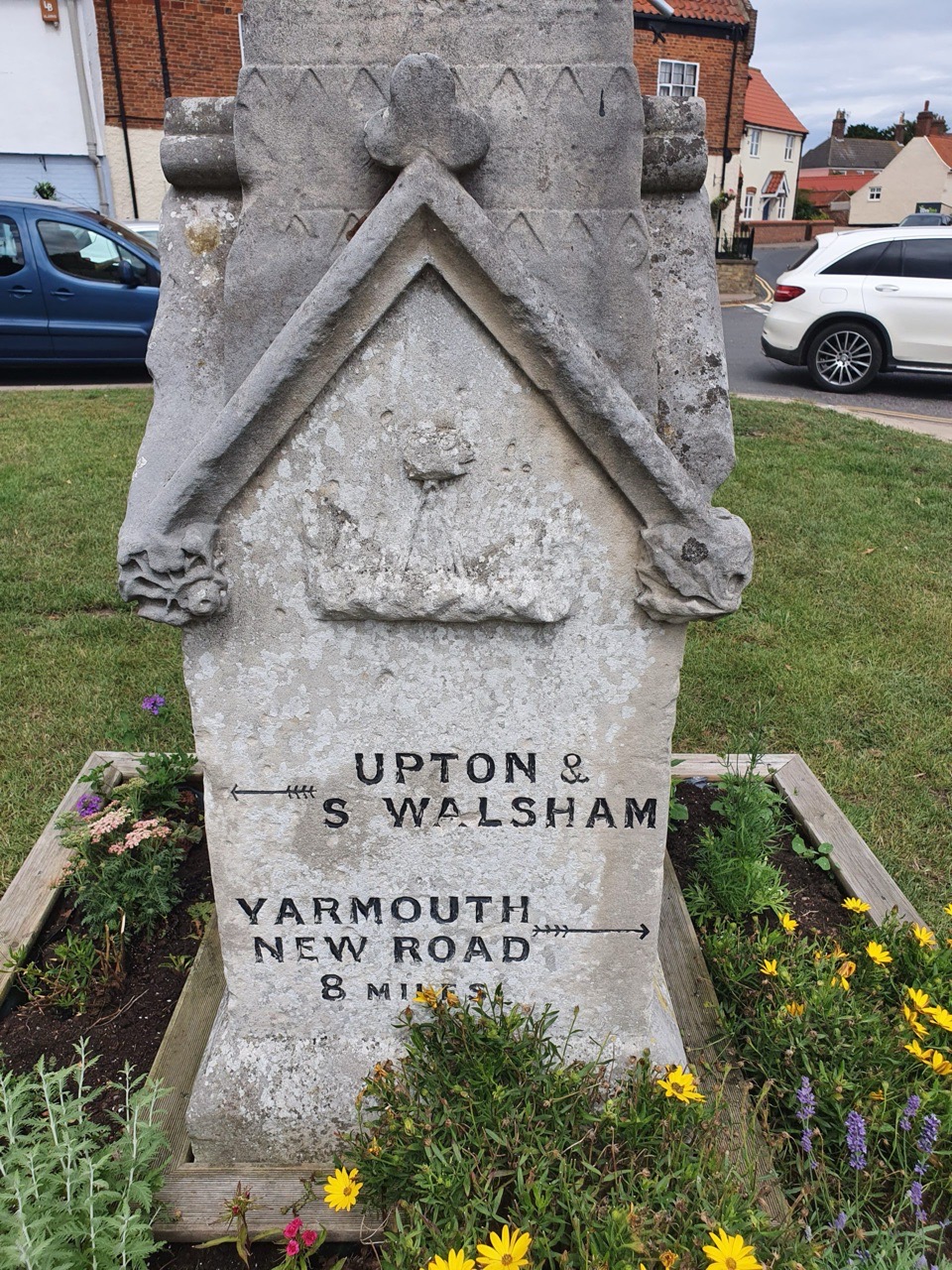
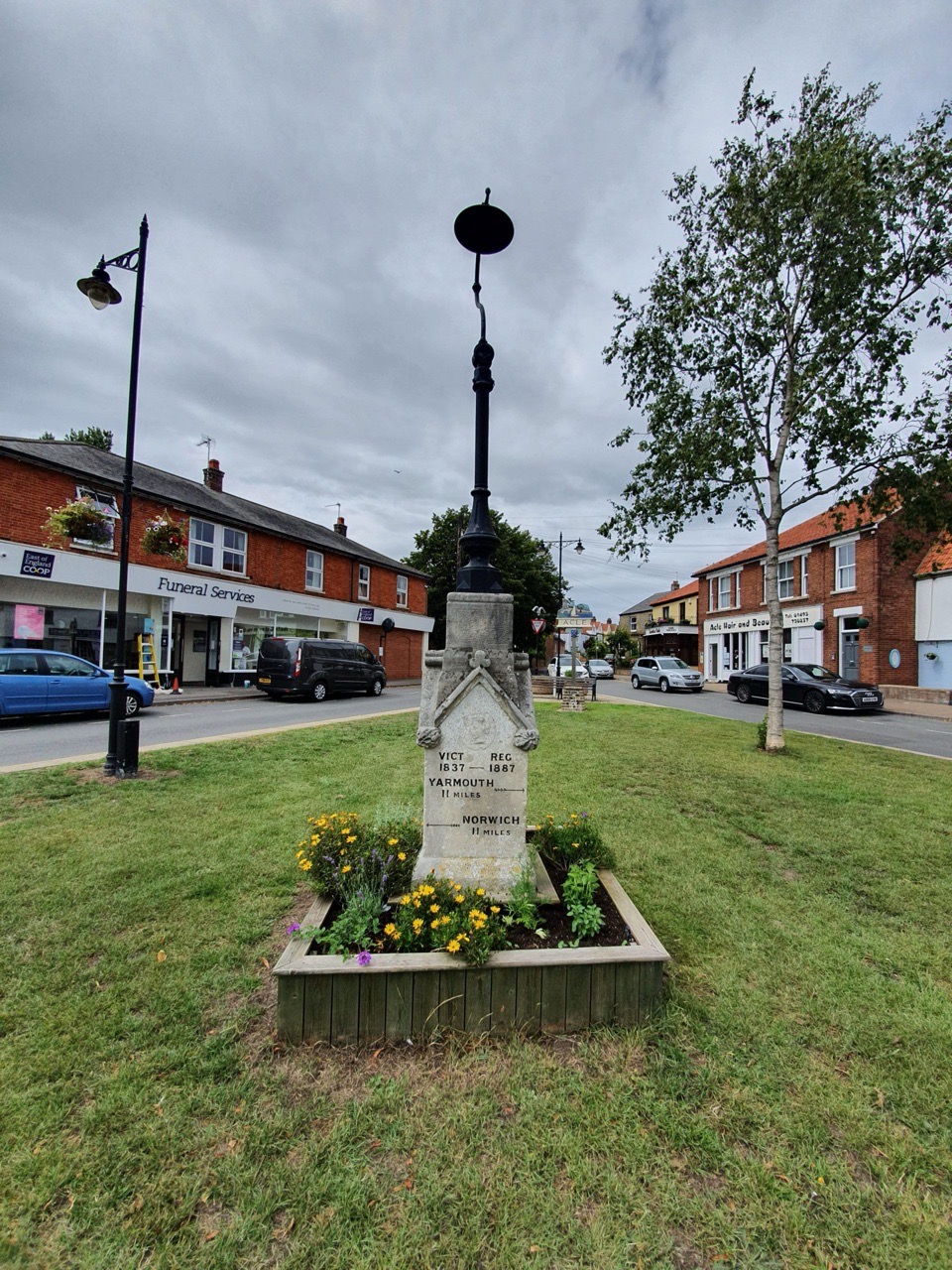
    Located on Monument Green, which is named after this stone (the monument bit, not the green bit), is the Jubilee Memorial. This was placed here in 1887 to mark the Queen’s Golden Jubilee and it supports a cast iron lamp-post, an element which does today perhaps look just a little out of place.

    The face of Queen Victoria is visible in the stonework, along with noting that Acle was equidistant between Great Yarmouth and Norwich, something I’m sure Alan Partridge would have been pleased to note.

    The depiction in the stonework is of a camera, which would have been something of an innovation when it was being sculpted.

    In addition to the sign about the Acle Bypass, there’s also a depiction of a train on the stonework.

    Unfortunately, the stonework has been eroded, likely because of the pollution from what was a busy road next to it for over a century. There’s also a sign noting the victory in the Best Kept Village from over 20 years ago, making me suspect something has gone awry in the town for the last two decades if they haven’t won anything.


    The memorial is visible in this photo from 1955, where the green wasn’t in such a good state and it was a considerably less peaceful area with the main Norwich to Great Yarmouth road storming through the middle of the town.
  • Dictionary of the Vulgar Tongue – Day 118

    Dictionary of the Vulgar Tongue – Day 118

    The Dictionary of the Vulgar Tongue was first published at the end of the eighteenth century, and given that the current health crisis is giving too much time to read books, I thought I’d pick a daily word from it until I got bored….

    Feague

    Not the most elegant of things to think about, the dictionary defines this as “to feague a horse; to put ginger up a horse’s fundament, and formerly, as it is said, a live eel, to make him lively and carry his tail well; it is said, a forfeit is incurred by any horse-dealer’s servant, who shall shew a horse without first feaguing him. Feague is used, figuratively, for encouraging or spirting one up”.

    I’m not entirely sure of the practicalities about achieving this aim with a live eel, but the ginger solution remains a problem today for those buying horses. Today, the phrase is better known as gingering, as this is now the most common usage, and is of course seen as an animal rights abuse.

  • Acle – Acle Bypass

    Acle – Acle Bypass

    This plaque, marking the opening of the 3-mile long £7.1 million Acle Bypass, is on the town’s Jubilee Memorial. I’m not sure many towns put a sign up about the road which bypassed them, but I can imagine what a problem it was having large numbers of vehicles ploughing through the middle of Acle en route between Norwich and Great Yarmouth. As the sign suggests, the bypass was opened on 14 March 1989 and there was a well-attended street party, carnival and fete in June 1989.

  • Acle – Name Origin

    Acle – Name Origin

    After my expedition to Acle today (OK, it’s not exactly the remote hinterlands of Europe, but everything is relative at the moment), this is what The Concise Oxford Dictionary Of English Placenames have to say about the name origin of the town.

    Acle, Norfolk. Acle in Domesday Book, Achelai in 1159, Acleda in 1186, Aclee in 1197. From Old English Acleah meaning oak wood.

    This sounds an easy one for the dictionary, which is clear that Acle, and other settlements which are spelled Oakley, come from the old English word for an ‘oak wood’. Others define it as oak-lea, ie, a cleared settlement or meadow by the oak trees. Either way, Acle’s history is based around oak….

    Incidentally, the Woodland Trust have a tree register at http://woodlandtrust.org.uk/, with two ancient oaks listed nearby to Acle. There are some oak trees in the UK which are older than 1,000 years old, it would have been quite appealing to have had one of that age near Acle still standing. But there isn’t, but there we go, can’t have everything…..

  • Acle – War Memorial

    Acle – War Memorial

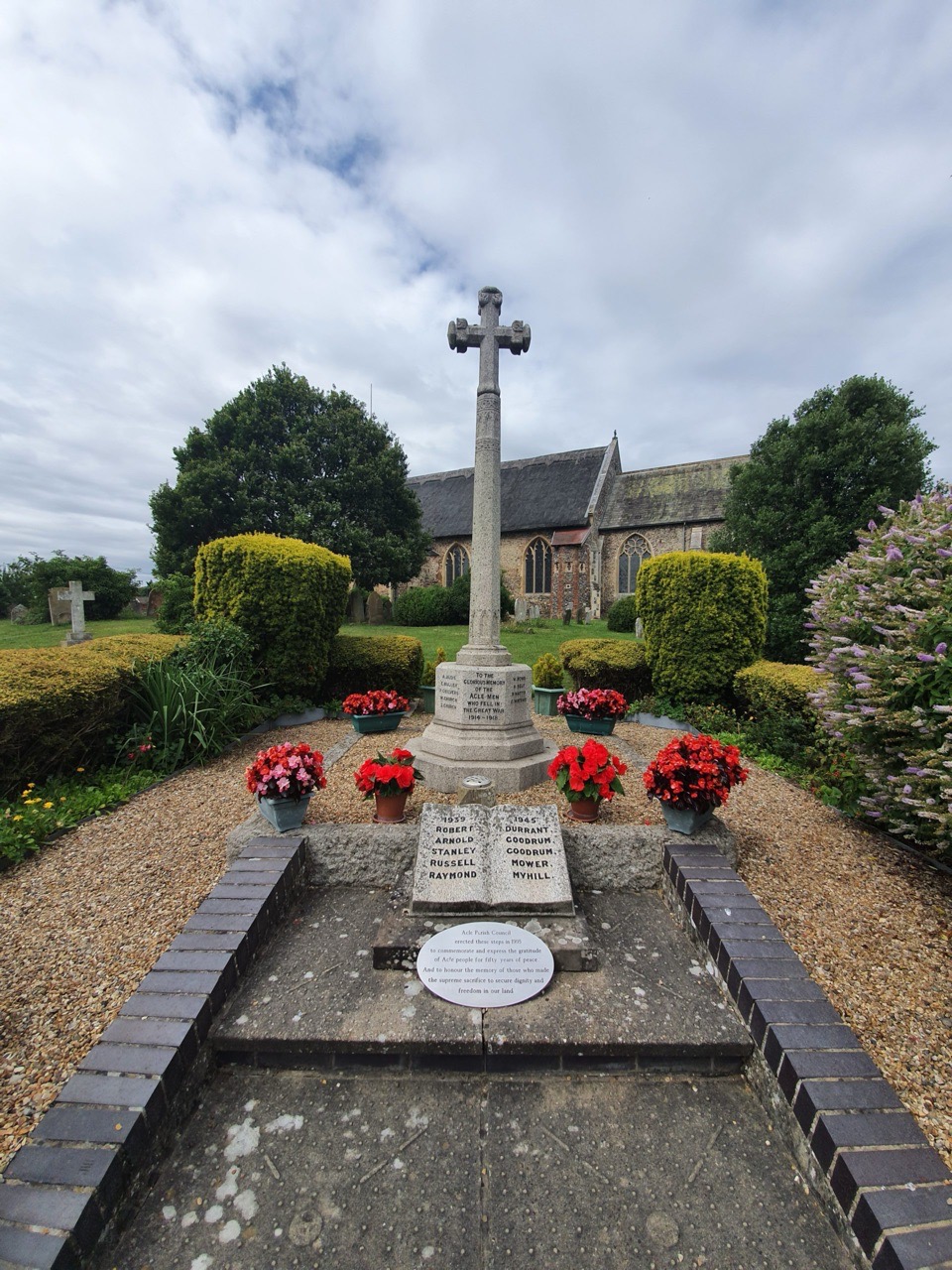
    The town’s war memorial is located in the churchyard of St. Edmund’s Church in Acle.

    The war memorial was unveiled on 18 December 1921 by the sons of Edward Cushion and Owen Waters, two of the men who died during the First World War.

    There are 28 names from the First World War on the memorial, which is made from granite and overlooks the Norwich Road.

    An additional five names were added following the end of the Second World War. In 1995, there was a renewal of the area to mark 50 years since the end of the conflict, with steps being added to the war memorial.


    As it looked in the 1950s before the building of the steps.

  • Attleborough – Community Centre

    Attleborough – Community Centre

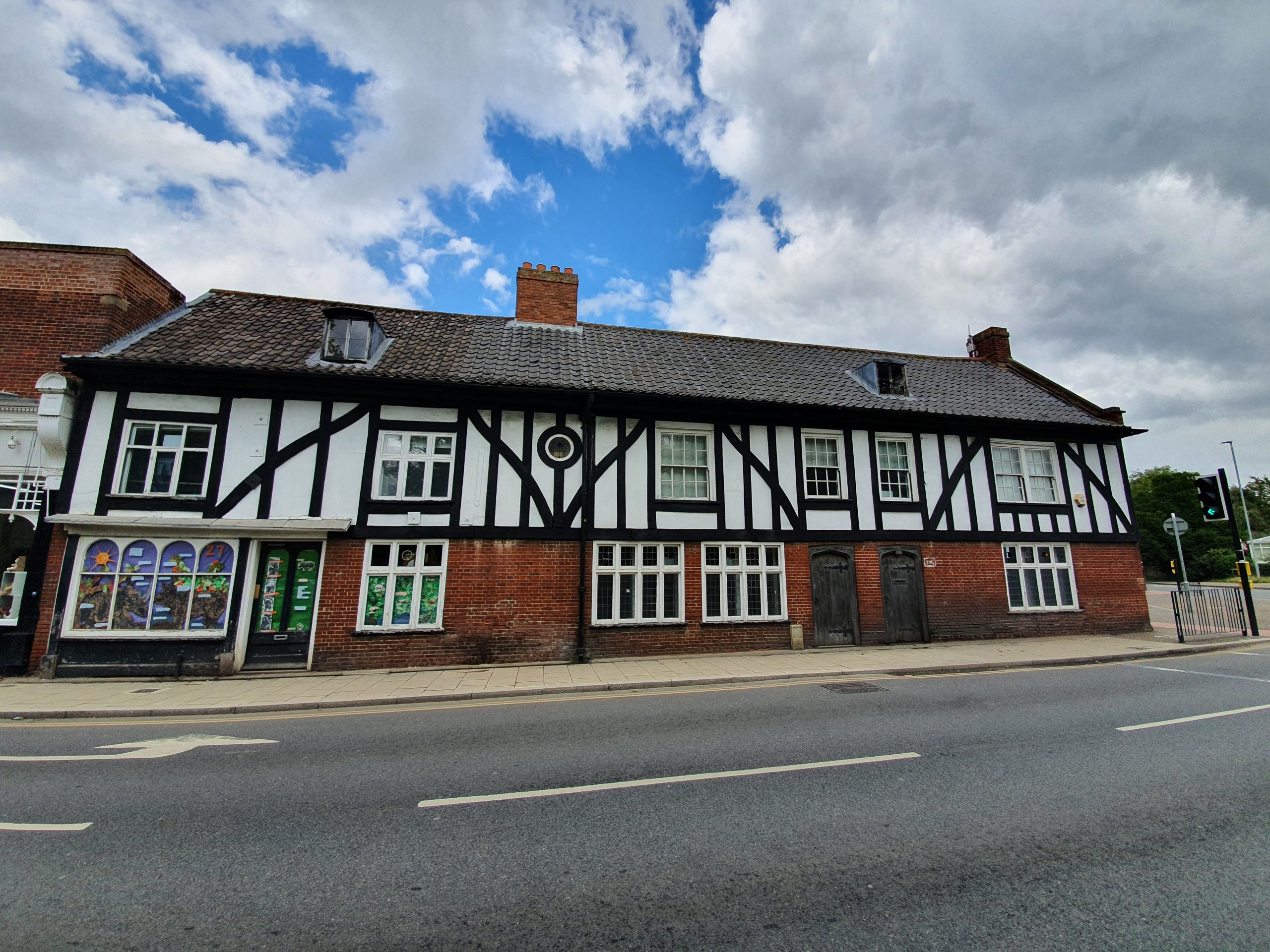
    This puzzled me for a while (as many things do), as I took a photo of what looked like a restored building with some interesting period doors. However, it wasn’t on the listed building register, and this is likely because it’s a fake twentieth century Tudor facade. Although, interestingly, the building behind this frontage is from the late sixteenth or early seventeenth century. The structure has been heavily changed and modified, but it’s a shame that more of the original structure can’t be seen. Given this internal heritage, it’s also slightly surprising that the building isn’t listed, as the bar for this is relatively low. Its lack of excitement must have been evident to George Plunkett, the photographic recorder of so much of Norfolk, as he didn’t take a photograph of it, instead focusing on other nearby buildings on this road.

  • Attleborough – Name Origin

    Attleborough – Name Origin

    After my expedition to Attleborough last week, this is what The Concise Oxford Dictionary Of English Placenames have to say about the name origin of the town.

    Attleborough, Norfolk. Atleburc in Domesday Book and Atleburc in 1194. Aetla’s burg.

    The ‘burg’ here means a fortified settlement and it was under the control of Aetla. It was quite a substantial town when the Domesday Book was compiled, with 71 settlements being recorded. There’s something that can be gleaned here from how Atleburc would have been pronounced, as if every syllable in this is spoken, then it does sound similar to today’s spelling (or it does to me anyway, others may differ….).

  • Eat Out to Help Out Scheme in August

    Eat Out to Help Out Scheme in August

    I’m avoiding politics on this blog, but I’m amused by the Government’s introduction of this scheme. The reporting process is really secure, restaurants just have to tell the Government how many people they’ve given discounts to and they get a large payout. Certainly a brave use of Government funds.

    But, my favourite bit is that the Government explains that discounts can only be provided for eat-in meals. This means that takeaways cannot sign up for the scheme. However, this text is in the rules:

    “If a customer purchases a meal with the intention of eating it but then takes it away and leaves the premises, you can still apply the discount.”

    So, you can take the food away. Bizarre….

  • Dictionary of the Vulgar Tongue – Day 117

    Dictionary of the Vulgar Tongue – Day 117

    The Dictionary of the Vulgar Tongue was first published at the end of the eighteenth century, and given that the current health crisis is giving too much time to read books, I thought I’d pick a daily word from it until I got bored….

    Fam Lay

    Apparently (it says on Google), in 2020, Fam Lay is a famous rapper, but over 200 years ago, the dictionary defined this as “going into a goldsmith’s shop, under pretence of buying a wedding ring, and palming one or two, by daubing the hand with some viscous matter”. The term was used by the criminal fraternity and it seems quite a precise definition, probably never in common usage. The word ‘fam’ could mean the hand, and ‘lay’ in this instance is just a shortened version of layer, so it’s effectively a sleight of hand.

  • Attleborough – St. Mary’s Church (Theodosia Colman)

    Attleborough – St. Mary’s Church (Theodosia Colman)

    The grave of Theodosia Colman is located on a path, which isn’t really ideal, at St. Mary’s Church in Attleborough.

    Theodosia was born in 1752 as Theodosia Howes and she married William Colman on 6 February in 1778 in Besthorpe, a village near to Attleborough. Theodosia died at the age of 76 on 12 October 1828 and was buried on 18 October 1828 at a service overseen by the curate, John Fairfax Francklin.