Blog

  • Matlock – St. Giles’s Church (Wooden Grave Markers)

    Matlock – St. Giles’s Church (Wooden Grave Markers)

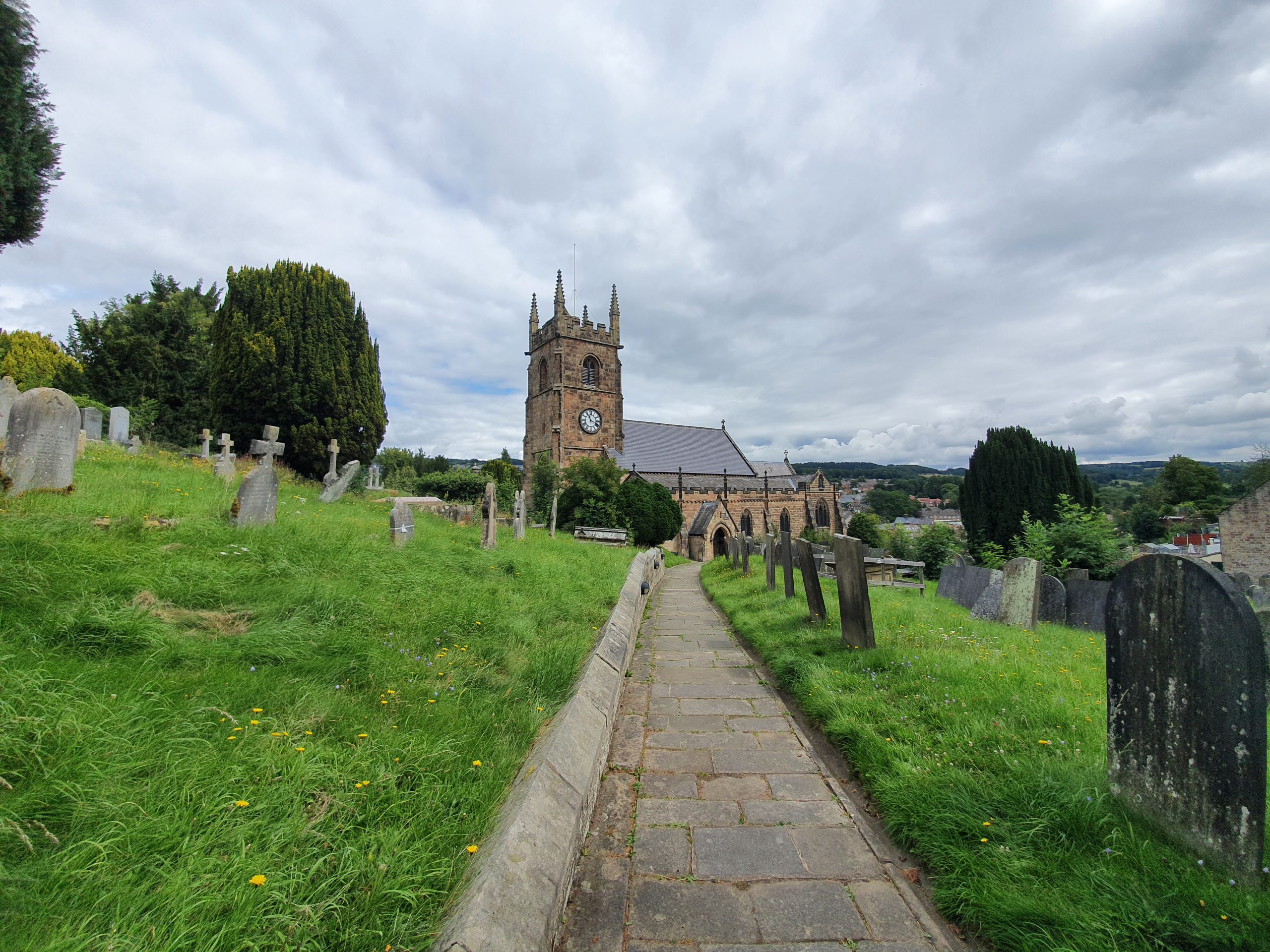
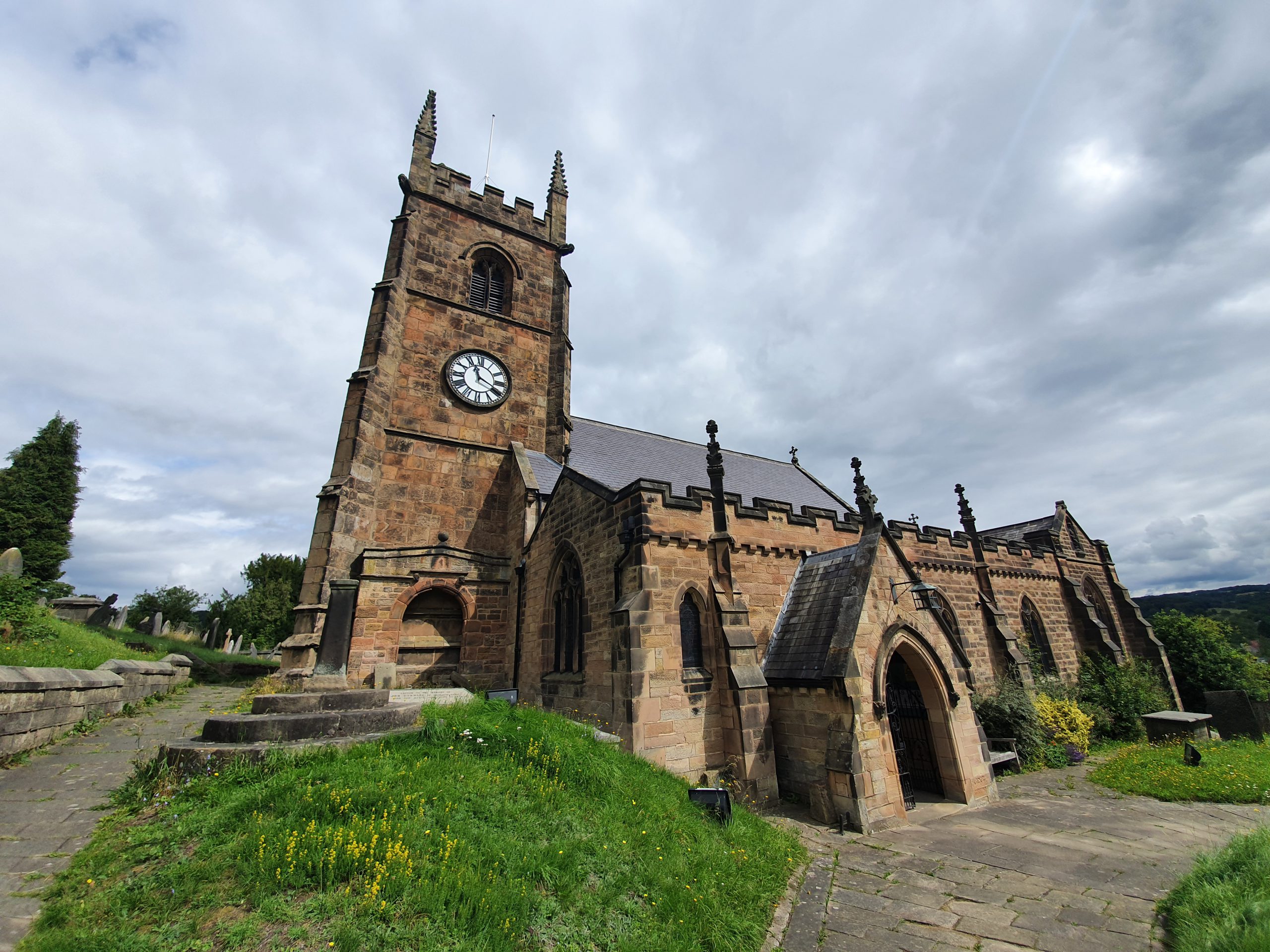
    I don’t have any background information to these graves, but I thought that they were interesting as wooden markers would have once been commonplace in churches. They seem to be bearing up well at the moment, but I still suspect many churchyards would have once been full of these, part of the reason there are in some places an absence of gravestones from before 1800.

  • LDWA 100 – Q & As with Tara Williams

    LDWA 100 – Q & As with Tara Williams

    This page is all part of my effort to walk the 2021 LDWA 100.

    This is part of my little series in asking those who have completed the 100 just how they did it, and whether it’s an entirely good idea. This set of answers is from Tara Williams, who perhaps sensibly thought that just one of these 100s was enough, but then decided that perhaps she’d do more. I’m still sure I won’t be doing that, I just have to remember to stand firm on this… (which incidentally is what I’ll probably do on the 100 rather than walking because I’m quite good at standing). Anyway, I digress.

    Incidentally, I’m now moderately worried about toenails, Chelle Armour mentions those as well when talking about the 100…. I like the whiskey bit though, although mine will be beer, but the logic holds. And I’ll be amazed if Nathan doesn’t have a tantrum when we walk it, and I doubt I’ll be a bundle of joy either.

    Q. When was your first 100?

    Having discovered the LDWA in 2007, my first 100 was the Wessex in 2009.

    Q. When you finished your first 100, did you think you’d do another?

    I had stated categorically that I was doing ONE (and ONLY one) 100…I completed the Wessex…job done…or so I thought…

    Q. When you e-mailed me about answering some questions you mentioned you’d had some tears and tantrums on the 100. This sounds just like what I’m hoping to have, tell me more.

    The 100 reaches parts of you that other events just do not reach. It can take you to some amazing highs but also some very deep, dark recesses of the mind. The tears can be due to pain, suffering, self pity, fear or just the sheer joy of knowing that you are within stumbling distance from the end.

    The 100-related tantrums can rival a 2-year old in their ferocity. The best one was having completed the Housman 100 (2011) and then finding my travel tickets in my bag, having been ‘abandoned’ by my partner…whhhomppp…I went off like a rocket, no holding back. FULL on tantrum…for which I was congratulated (by a lovely lady in the first aid room, whose name I cannot recall…but I am guessing that she remembers me!) as it was pretty spectacular from someone who has just finished the 100!

    Q. What would you pick at a checkpoint, two sausage rolls, one chicken bake or one steak bake?

    In the early stages, I keep it savory to prevent the sugar rush and save that for the later stages…when I need it. Sandwiches (especially the ones at the Devon and Cornwall group CP, although their CP is later in the event), quiche etc to start then after about 50 miles, anything and everything…and all at once! The only non-negotiable is my large slug of Whiskey at the breakfast stop. That tradition started on the Heart of Scotland 100 and was actually what got me out of the breakfast CP and on the road again.

    Q. How important are the marshals to you at checkpoints on longer challenge events?

    Very, very, VERY important!

    Q. Are there moments that you’ve nearly retired from a walk only to then finish? How do you get that mental strength?

    That will be most events! There are a lot of mind over matter situations on events. Usually a ‘pep talk to self’ will do it but when a ‘diva meltdown’ threatens there is always the thought of the people who have had to walk hundreds of miles when fleeing war, famine etc. They did not have all my nice kit and a welcoming checkpoint every few miles. That usually kicks me into gear again…feeling rather ashamed of my (self-inflicted) predicament.

    Q. Have you hallucinated towards the end of a walk?

    Yes, during a walk, I saw a deer fence which went up, up, uphill and through a never-ending bog…and it was raining…and the deer fence continued, and so did the hill… If you were on that 100 (HoS), you will know exactly what I mean but it was (unfortunately) REAL!

    Q. Are you more reliant on the route description or the GPX file?

    Route description – it has been written to get us round so I will use it. I am not a fan of GPX…but could change my mind rapidly if I was asked that question when I am lost!

    Q. What are your top tips for footcare on the 100?

    Accept the fact that your feet will never be the same again! A few days before, cut your toenails short, remove any rough edges and paint them a BRIGHT colour. That way, if you arrive at a CP (Aberfeldy on the 2010 HoS) and remove your sock to get the ‘stone’ out, you will easily see that one bright pink splodge is missing…and will be able to spot it and retrieve it quickly…before anyone notices that your toenail has just gone flying across the floor!

    Q. Have you been scared of a sheep / cow / snake / pig / seagull or similar on a challenge walk?

    Llamas and anything that looks like a sheep/camel cross can usually be very territorial or just plain angry!

    Q. To those people who are thinking about taking part in their first challenge event, maybe just 18 miles, what advice would you give them?

    Everything you do in life starts out with taking the first step. You do not know what you are capable of until you try…and then are usually very surprised at what you CAN do.

  • London – Christ Church Greyfriars

    London – Christ Church Greyfriars

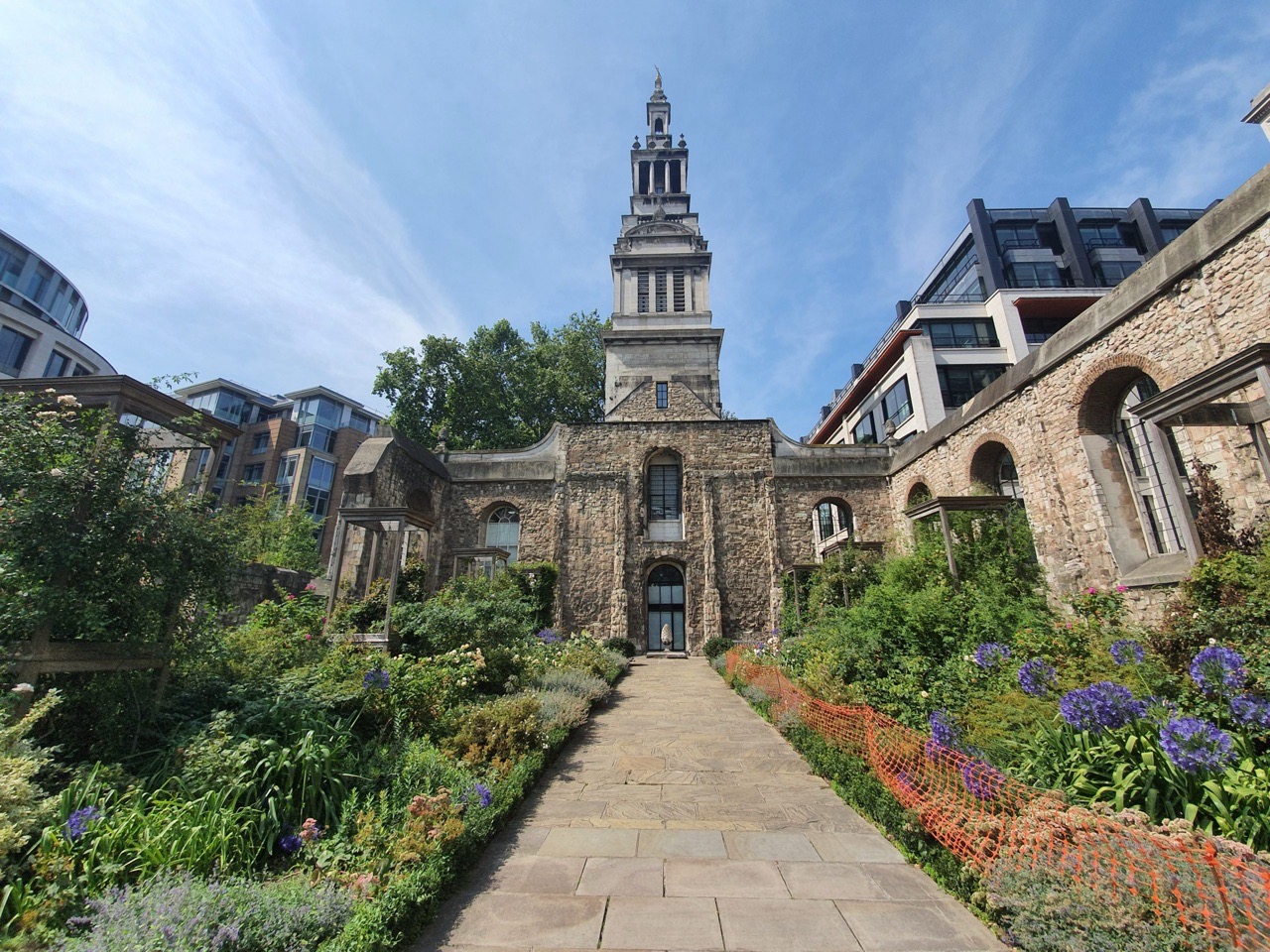
    I haven’t paid much attention to these ruins before, but they have a considerable heritage as they are from a monastic church built in the thirteenth century on what is now Newgate Street. The monastery was dissolved during the Reformation and was turned into a parish church which was given by King Henry VIII to the Mayor of London for the use of the city’s population. This church building was though lost, along with most others in the heart of the city, during the Great Fire of London in 1666. The replacement building was designed by Sir Christopher Wren, but this in turn was unfortunately destroyed in 1940 during the London Blitz.

    The few sections of the remaining church still standing were demolished following the end of the Second World War, with the site turned into public gardens. There are some important people who have been buried at this site over the centuries, including Isabella of France (also the Queen of England), Marguerite of France (another Queen of England) and Joan of England (who was the Queen of Scotland). I’m equally confused as to who was Queen of where, but it’s evidence of the importance of the church.

    Some of the surviving arches and it’s positive that it was decided to keep this as a public park, rather than shoving up another office block on the site.

    The former door into the nave.

    The gardens are impressive and before this health scare meant fewer people came into London, I imagine that this was a busy place for those wanting to eat their lunch.

    The tower, which was completed in 1704, survived the London Blitz and was restored in 1960.

    There are many more photos of how the church used to look at https://thecitizensmemorial.wordpress.com/2012/05/19/11/.

  • London – Chinatown

    London – Chinatown

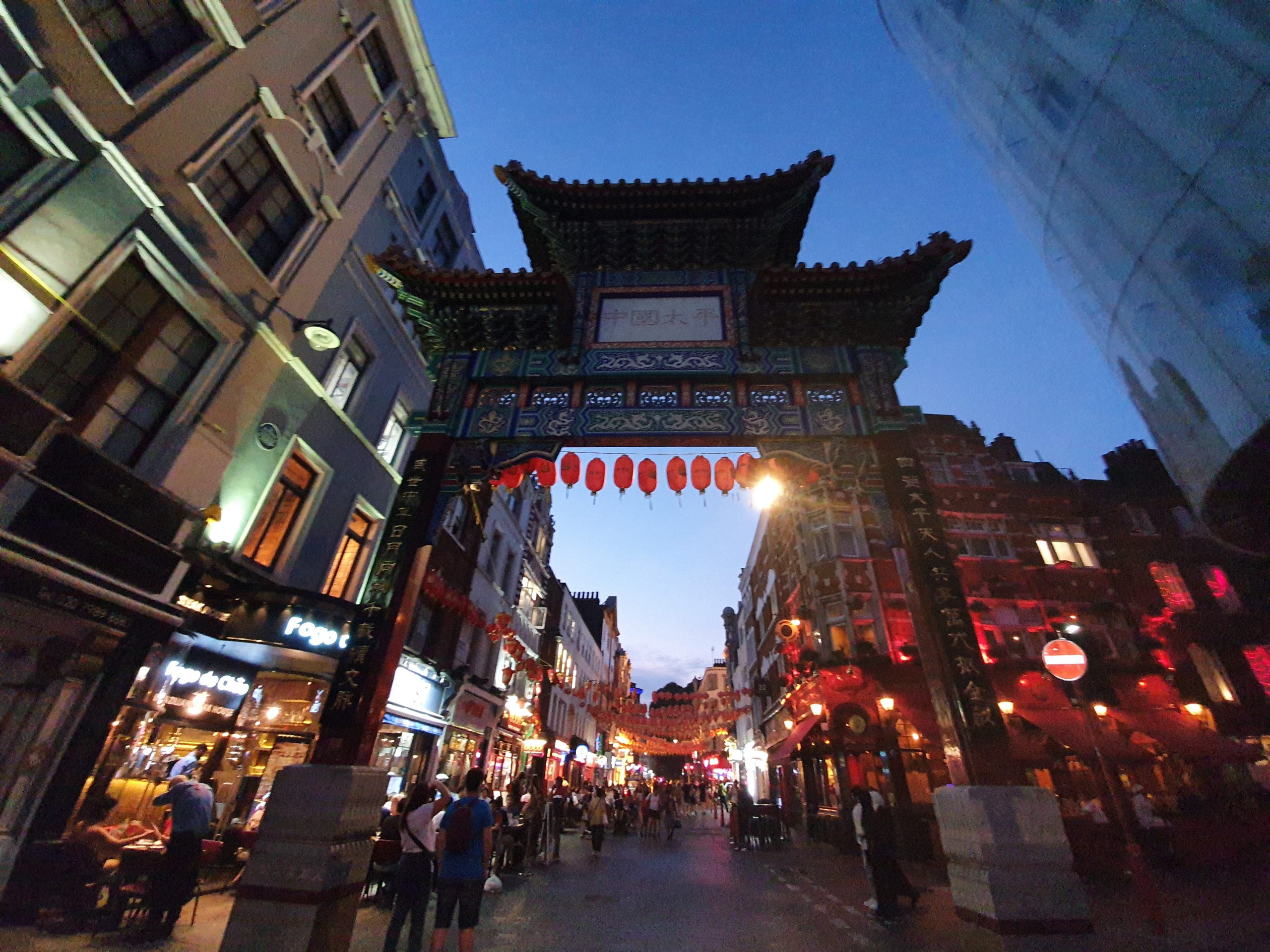
    Some photos from Chinatown in London on Monday evening. Although London had felt quiet all day, there was a bit more vibrancy with people taking part in the Eat Out to Help Out scheme and most restaurants looked pretty full. Within a short distance of Chinatown and Soho though it remained a different matter, numerous restaurants and takeaways not even opening at all this month.

  • Dictionary of the Vulgar Tongue – Day 144

    Dictionary of the Vulgar Tongue – Day 144

    The Dictionary of the Vulgar Tongue was first published at the end of the eighteenth century, and given that the current health crisis is giving too much time to read books, I thought I’d pick a daily word from it until I got bored….

    Goose Riding

    As a prior warning, this is completely horrific and thank goodness that this is in the distant past. The dictionary defines it as “a goose, who neck is greased, being suspended by the legs to a cord tied to two trees or high posts, a number of men on horseback, riding full speed, attempt to pull off the head: which if they effect, the goose is their prize. This has been practised in Derbyshire within the memory of persons now living”.

    Although the dictionary mentions Derbyshire, this was a tradition in numerous parts of Europe and more humane versions are still practised today. Better known as goose pulling, it’s thought that it originated in twelfth-century Spain before being spread further afield. The practice had pretty much died out in England by the later part of the eighteenth century, but it was spread to the United States where it persisted until the later part of the nineteenth century.

    The practice did though carry on into the twentieth century in the Netherlands, although live birds were substituted for dead birds by the 1920s. It is in only in the last couple of years that the use of dead birds is now also thought to be inappropriate, so non-animal replacements are used.

  • London – Quiet on the Underground

    London – Quiet on the Underground

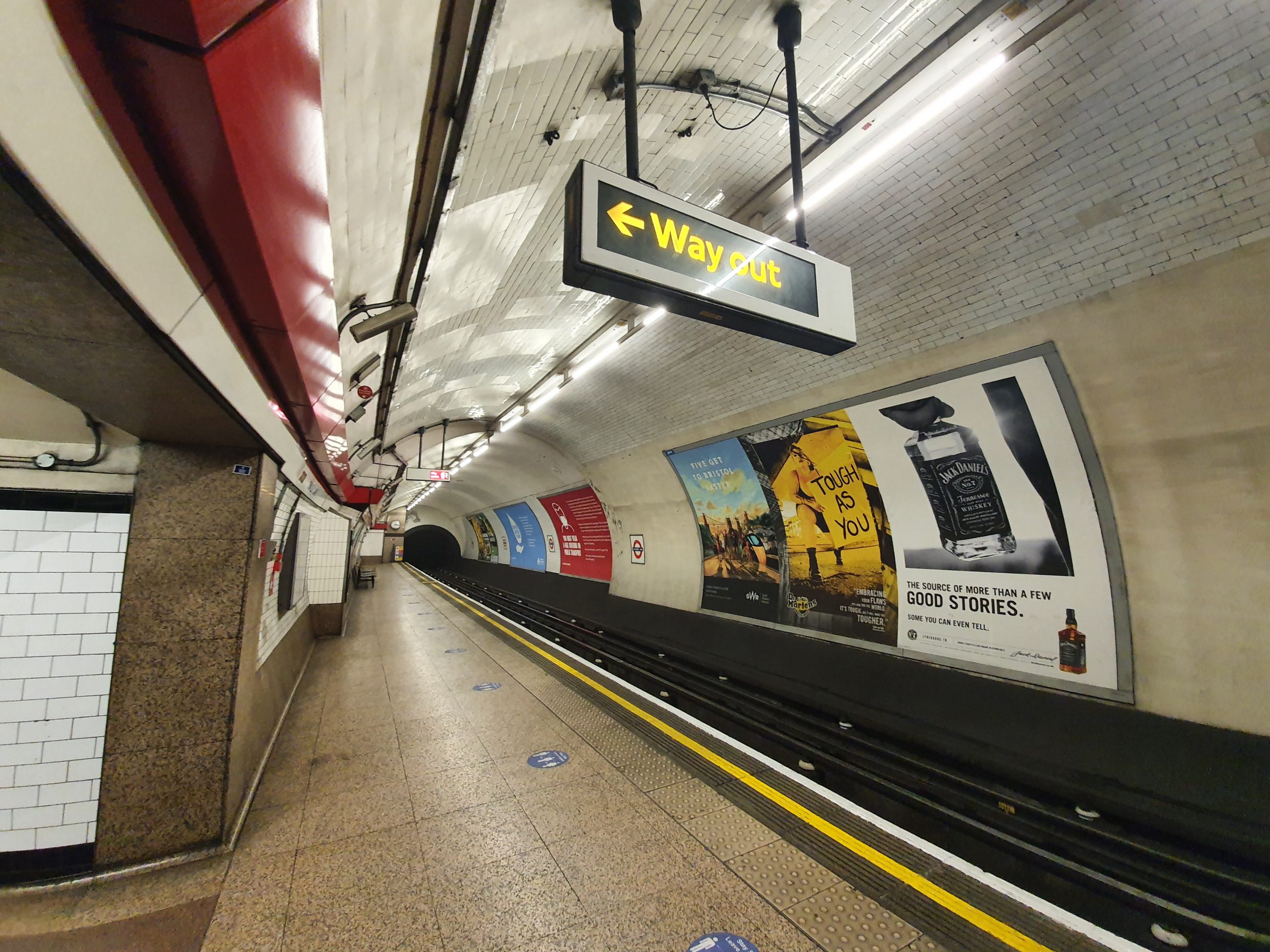
    OK, so Chancery Lane isn’t ever the busiest of London underground stations, but nonetheless, it was eerily quiet this afternoon.

    The packed platform.

    Endless amounts of warnings about social distancing.

    Mind the Gap…. Still quiet at Oxford Street.

    It was a little busier on the Oxford Street platform to get onto the Bakerloo line, but it’s still all rather quiet.

    As for TFL, they’re not doing particularly well at keeping people safe. The first two hand-sanitiser dispensers I tried were empty. So, on a quest to discover how bothered TFL really are, I tried another six more during my journey into Oxford Street. Two worked, another four were empty. I won’t veer into politics, but this really isn’t a particularly good look for TFL and pretty much every other transport operator seems to manage.

    Anyway, I quite enjoyed the quiet network and there was a very high percentage of people wearing masks and lots of social distancing. I did note one man cough and this alarmed a woman who fled the scene but, otherwise, all uneventful.

  • Matlock – Pic Tor War Memorial

    Matlock – Pic Tor War Memorial

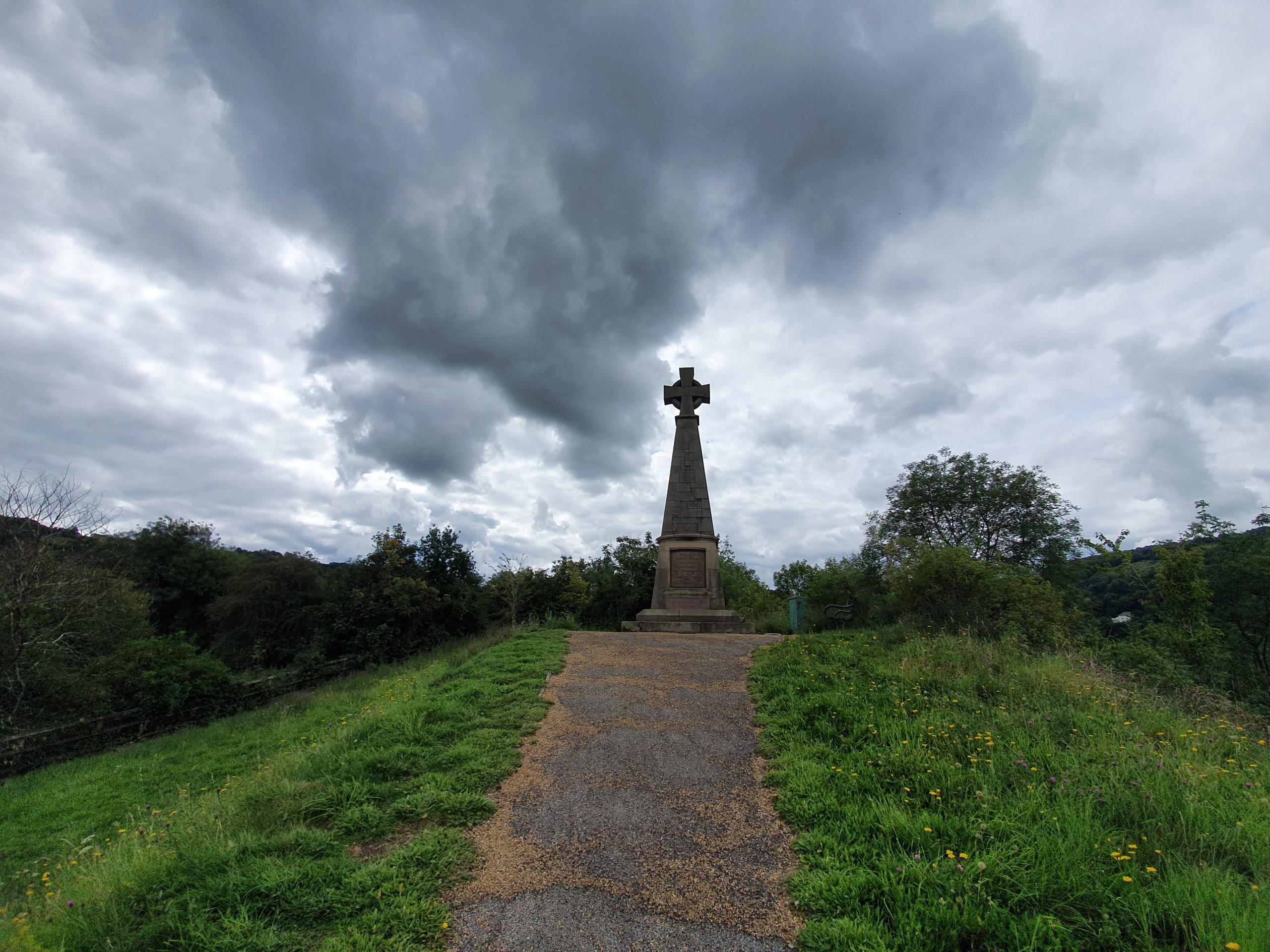
    The war memorial in Matlock stands over the town, located at the top of Pic Tor and having one of the best views of any similar memorial I can think of. It’s in the design of a Celtic cross and there are numerous pathways and steps up to reach the memorial, a walk which is worthwhile given the reward of the fine views.

    The memorial was unveiled on 7 August 1921 by FC Arkwright, who had lost a son and a son-in-law during the First World War. The memorial cost £500 and it was designed by William Nathan Statham and constructed by John William Wildgoose. Unfortunately, the process took longer than it probably should have done, with a series of disputes and letters to the local newspapers about just what design should be used for the memorial. The moderate danger of the location was realised a week after the war memorial was unveiled, when a young boy named Kelsey managed to fall down the slopes and render himself unconscious.

    The war memorial commemorates the names of 178 men from Matlock who died during the First World War, with another 47 names being added after the end of the Second World War and another name added later on marking the death of a soldier in Northern Ireland.

  • Greater Anglia : Norwich to London Liverpool Street

    Greater Anglia : Norwich to London Liverpool Street

    My last train journey was from Chesterfield to York in March 2020 and I didn’t expect it would take until August 2020 for me to make another. Norwich railway station looks different to when I last used it, with the ticket gates now left open and unmanned. There’s now directional signage around the concourse and a couple of the food outlets, West Cornwall Pasty and Starbucks, haven’t re-opened, nor has Marks & Spencer. It felt moderately busy, but nowhere near what I would have usually expected for a Monday morning.

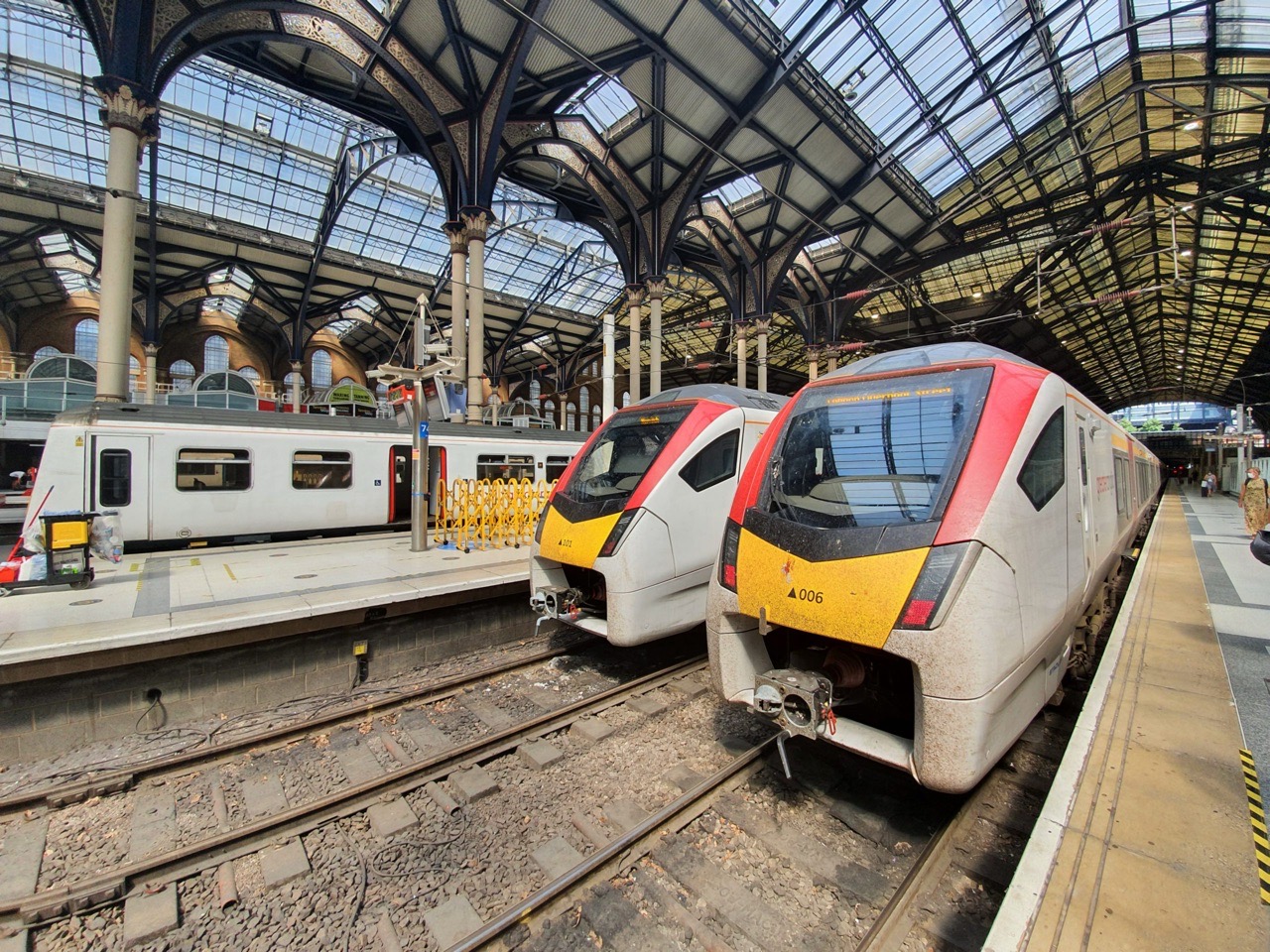
    Waiting at platform 2, the new style train which serves the Norwich to London line.

    There was plenty of space for customers on board, just a handful of passengers in each carriage. The power points and on-board screens worked on the train, although it wasn’t doing a very good job of air conditioning and not for the first time this week I muttered to myself that it was too hot.

    Safely at London Liverpool Street railway station, the train arrived dead on time.

    The barriers were operating as usual at the station, with revenue protection officers and police questioning a couple of people as I walked by. So, although there’s no ticket barrier at Norwich and tickets aren’t checked on board, there are still mechanisms to ensure people have paid their fares. The concourse was relatively quiet and someone asked me how they could get out of the railway station, something I didn’t think was particularly challenging, but there we go. Once outside, it became evident to me just how quiet London currently is….

  • Matlock – St. Giles’s Church (Thomas Kirwan)

    Matlock – St. Giles’s Church (Thomas Kirwan)

    Thomas Kirwan was the son of Patrick Kirwan and Bridget Kirwan. He married Mary Patricia Kennedy in 1936, at the Roman Catholic Church in Matlock and they moved to 30, Lynholmes Road in the town. He served as a Serjeant in the King’s Regiment (Liverpool) in the 70th Battalion, which was a young soldiers group disbanded in September 1943. Thomas doesn’t appear on the 1939 register, so he was likely already in the military at that point. Thomas and Mary did though have a child, Ann Teresa Kirwan, who was born on 7 April 1939. Unfortunately, Ann Teresa died in the Isle of Wight in 1959, at the age of 21.

    Thomas died on 9 April 1945, aged 44 years. I don’t have a sufficient knowledge of military history to understand what happened here, although the King’s Regiment were involved with the attacks on Kiel in Germany. And on the day of Thomas’s death, there was a heavy bombing on Kiel which destroyed the last two major German warships, the Admiral Hipper and the Admiral Scheer.


  • Matlock – St. Giles’s Church (Edward John Loverock)

    Matlock – St. Giles’s Church (Edward John Loverock)

    Edward John Loverock was born in Uttoxeter, Staffordshire, in 1922, the son of Frederick Loverock and Mabel Victoria Jubilee Loverock (nee Bagshaw), who later moved to Matlock.

    He joined the 61st Squadron of the Royal Air Force Volunteer Reserve as an air gunner, service number 950159. This was a bomber squadron which launched several attacks on targets in Germany. Edward was trained in an Avro Lancaster Mk I aircraft and he would have been based at RAF Syerston, near to Newark in Nottinghamshire.

    Edward died on 18 February 1943, at the age of just 21. A night-time training flight in the Lancaster went wrong and the engines caught fire, causing the aircraft to crash with all seven men killed. The crash site was near to Staunton-in-the-Vale in Lincolnshire and there is a memorial at St. Mary’s Church in the village to commemorate the seven men who died.

    The inscription on Edward’s grave reads:

    “You did your duty, your life you gave. You rest with many who died to save”.