Blog

  • Random – Scarborough’s Railway Bench

    Random – Scarborough’s Railway Bench

    Just as a random post, but I quite liked this story in the Scarborough News about the longest railway bench in the world. Despite having been to Scarborough on numerous occasions, I hadn’t managed to notice this 139 metre long bench which dates to around 1883.

    It’s rather lovely that it has been preserved, although I note that Network Rail have replaced all the nuts and bolts, as well as an undetermined amount of wood. There’s something about Trigger’s broom here that there’s going to be nothing old left other than the original iron supports, but it’s still a very worthwhile project given how so many railway stations and structures have been allowed to crumble.

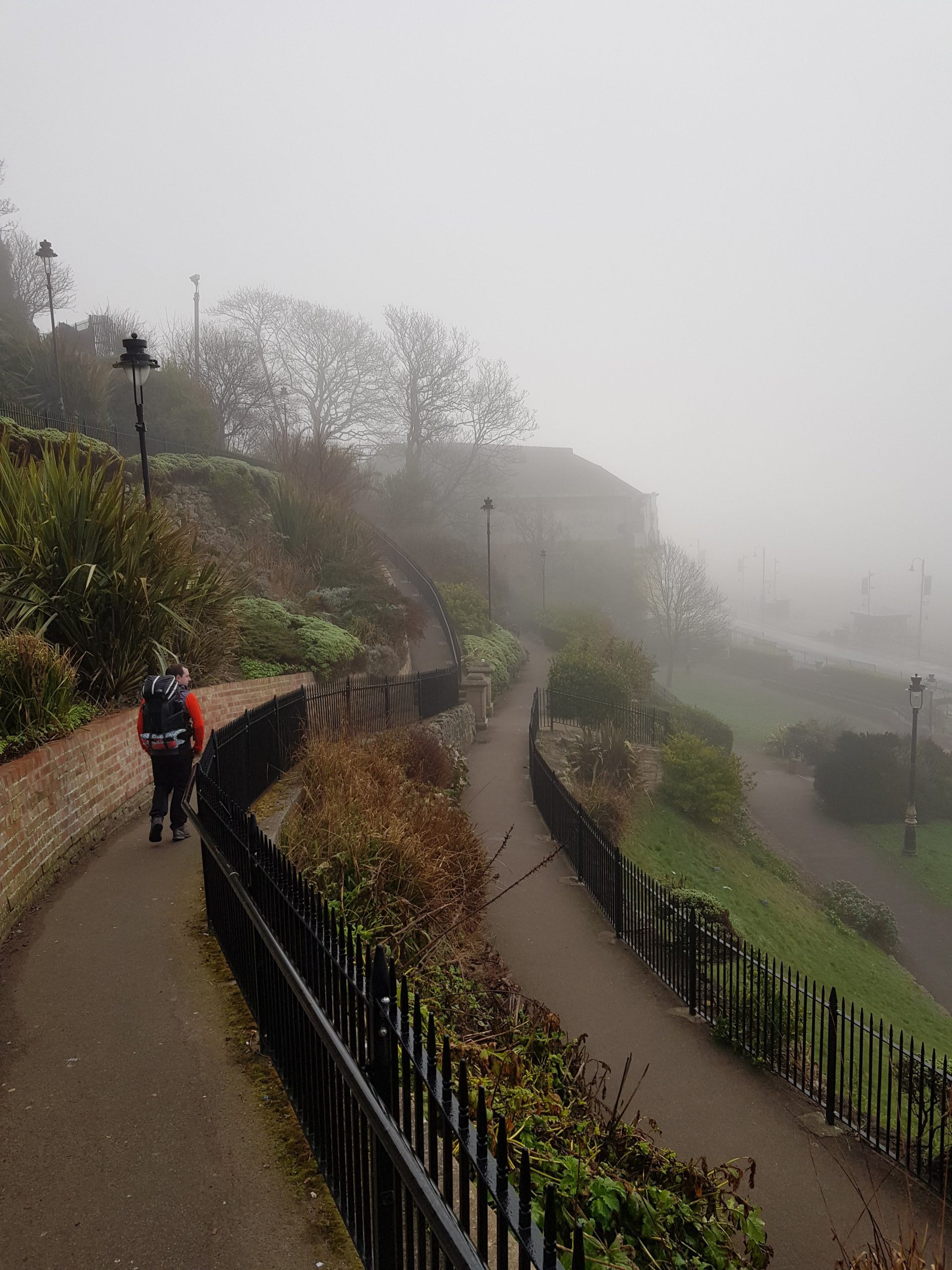
    NB, as I’ve haven’t been to see this bench, the main photo above is at the start of my very brave second coast to coast walk a few years ago I did with Liam (I was the bravest). Might as well advertise that again here, here are the links  🙂  Coast to Coast Two  [ Day 0 | Day 1 | Day 2 | Day 3 | Day 4 | Day 5 | Day 6 | Day 6+1 ]

  • Dictionary of the Vulgar Tongue – Day 240

    Dictionary of the Vulgar Tongue – Day 240

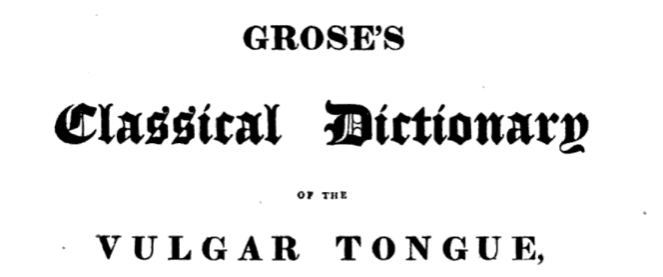
    The Dictionary of the Vulgar Tongue was first published at the end of the eighteenth century, and given that the current health crisis is giving too much time to read books, I thought I’d pick a daily word from it until I got bored….

    Parson

    And this is a walking related definition from Grose, which is “a guide post, hand or finger post by the road side for directing travellers: compared to a parson, because, like him, it sets people in the right way”. Not that Grose treated religious office holders with respect with all of his definitions, some were perhaps far more telling about the realities of late eighteenth century religious figures.

  • London – Camden – British Museum (Rosetta Stone)

    London – Camden – British Museum (Rosetta Stone)

    This was from my visit to the British Museum a few weeks ago, the most viewed object in the collections apparently. This has meant that I’ve never really seen it that clearly before, it’s like the Mona Lisa at the Louvre, there are nearly always other visitors standing there and taking photos in front of it. Hence why I took so many photos of it this time with the museum being so empty when I visited in late October.

    There’s not much point writing much about the Rosetta Stone, it’s done much better in countless other places. But it dates to 196BC and it was rediscovered by the French in 1799, with the British deciding that they wanted it in 1802. The stone went to the British Museum in the same year and it has been there ever since. As visitors kept fiddling with it, the stone was barriered off in 1847, not that this stopped some people. Since 2004 it has been placed behind a rather more secure screen.


  • Norwich – Earlham Cemetery (Valorous John Wright)

    Norwich – Earlham Cemetery (Valorous John Wright)

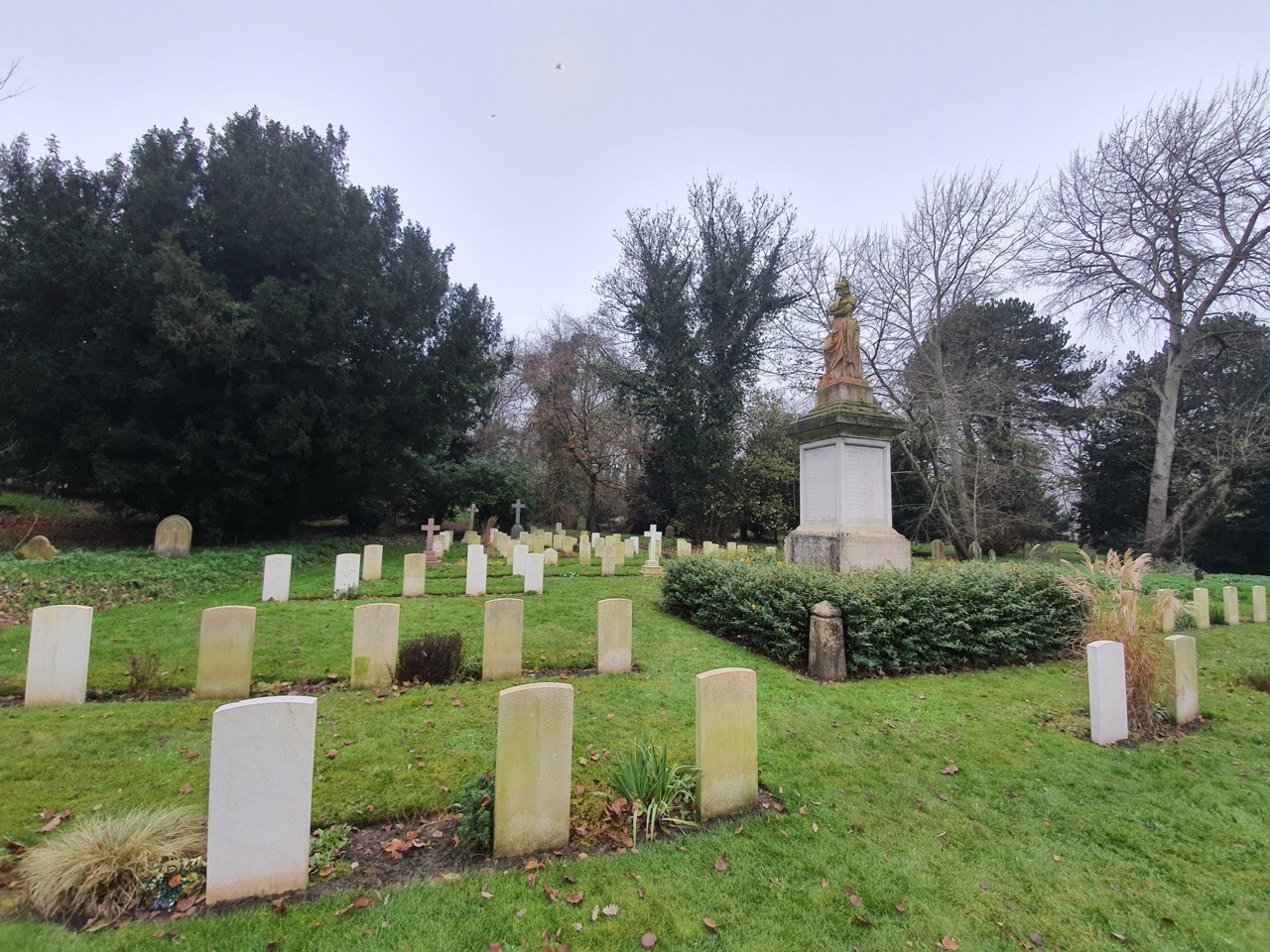
    This is the war grave of Valorous John Wright, buried in the older military graves area of Earlham Cemetery. Incidentally, my photo of this grave is at an angle as there’s a big bush in front of it.

    Valorous is a wonderful name and it’s because he was born on HMS Valorous, a Royal Navy paddle frigate built in 1851, on 24 December 1866. He went to North Road Boys /Steynton School at Milford Haven and his school records remain from 1878 and 1879.

    As is this document which I very much like about the school’s progress and the students clearing off home, with Valorous mentioned at the bottom.

    At the 1881 census, Valorous was living with his mother, Mary Jane Wright, at Robert Street in Steynton, his father having already died. There were two lodgers in the property as well with Valorous and his mother, Richard Wakeham and William Tinkham.

    He joined the army at Pembroke Dock on 14 June 1883 at the age of 16, although he declared on his form that he was 18 years and 5 months old. He asked to join the Royal Welsh Fusiliers and his medical was the next day and magically he declared his age to be 19. The records show that he was 5’6″ in height and weighed 8.7 stone.

    During his time in the army, Valorous married Martha Huggins on 10 September 1896 at the Church of St. Ethelreda in Norwich. At the 1891 and 1901 censuses, Valorous was away in the army, whilst his wife Martha was living with her father John Huggins, on King Street in 1891 and at 54 Argyle Street in 1901.

    Whilst in the army, Valorous fought in South Africa, but was mostly stationed in the UK and he was uninjured in battle during his service. He was promoted to Colour Sergeant on 25 February 1900, moving to the Norfolk Regiment on 27 February 1906 and then leaving the military entirely on 31 July 1909.

    Valorous died on 11 December 1910 at the age of 43, leaving his wife who was ten years younger than him, with his burial being on 17 December 1910. During their final year the couple lived at 115 Sprowston Road, a house perhaps more notable today for being opposite the rather lovely Brewery Tap pub. But, my favourite part of this story is really the name, and I think it’s not unusual for people born at sea to be named after the boat that they are on.

  • Poznan – Restauracja Ratuszova

    Poznan – Restauracja Ratuszova

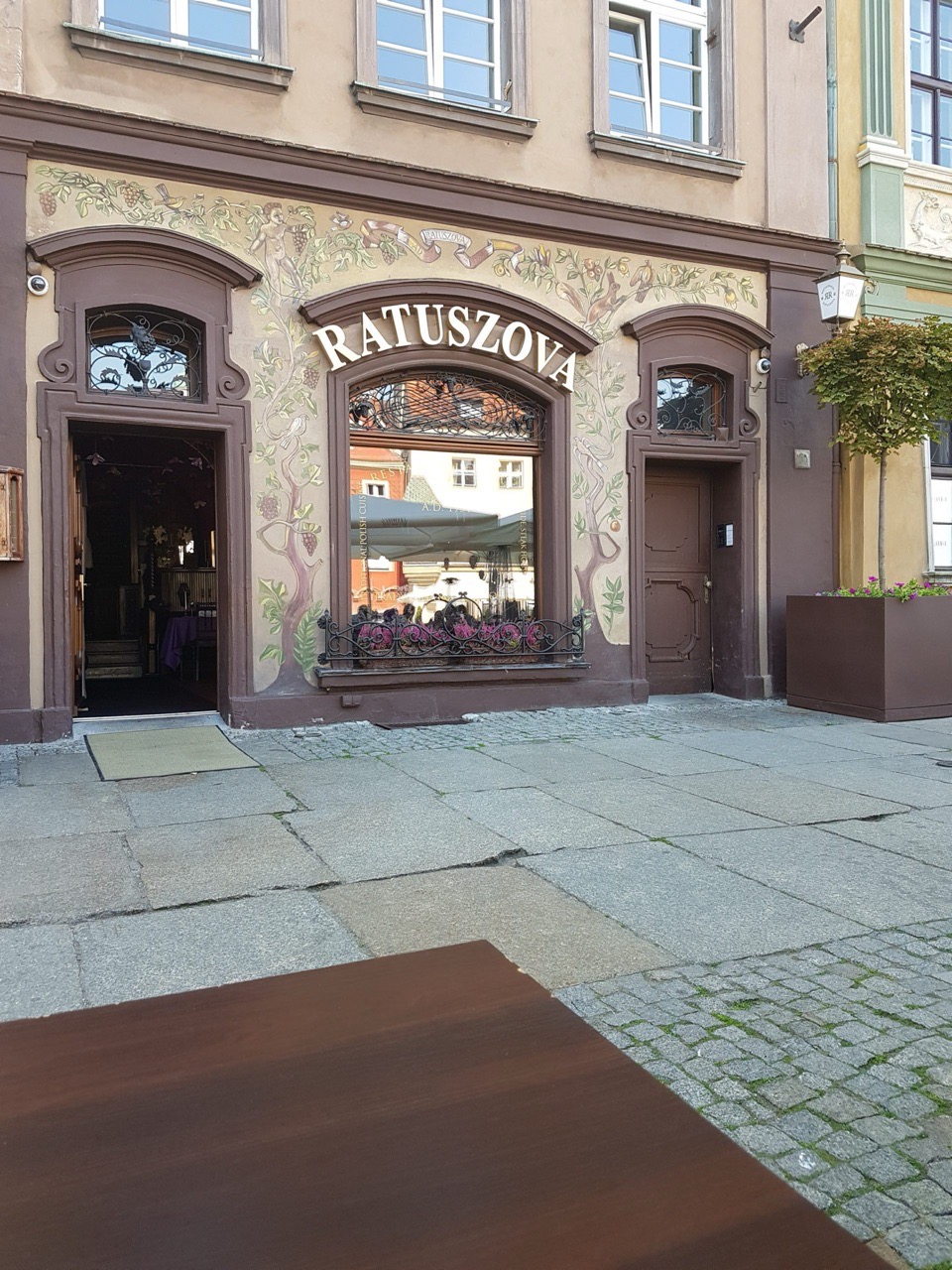
    This not being able to travel thing means I’ve decided to resort to looking at old photos, these ones are of my visit to Restauracja Ratuszova in September 2016. Located in the heart of Poznan, this was, and still is, a well reviewed traditional Polish restaurant. Obviously I was in an exotic mood at the time, as I opted for an outdoors table.

    Zywiec is OK, I prefer Zywiec Porter, but needs must…. All was as expected on this front.

    I think I was still going through my cider phase at this point, this is a strawberry cider from Kamron (a cider producer from Kielce) as clearly my half litre of Zywiec wasn’t enough.

    I have been asked why I keep ordering non-Polish food when in Poland. That’s because for my first ten or so trips to Poland, I did keep eating local food, and in this case, the national dish that is pierogi (or dumplings). They are very lovely, but, with the best will in the world, quite a lot of Polish food can be stodgy, and hence why I often veer off towards other cuisines. But, I do revert to these traditional Polish dishes from time to time and am rarely disappointed.

    In the case of this restaurant, the dumplings were filled with wild boar and they were rich in flavour, served with spinach, Chanterelle sauce and cranberries. There were helpful English speaking staff, it was a comfortable location and so all rather lovely. The meal came to £10 which included the two drinks, so given the central location, this seemed entirely reasonable.

  • LDWA – Group Walking Stopped Again

    LDWA – Group Walking Stopped Again

    This is sad to see (the 3rd December update at https://www.ldwa.org.uk/library/coronavirus2020.php), hopefully it can be resolved to allow larger groups to start walking again soon in a safe manner. I have a 100 to walk in May 2021……

  • Poznan – New Zoo

    Poznan – New Zoo

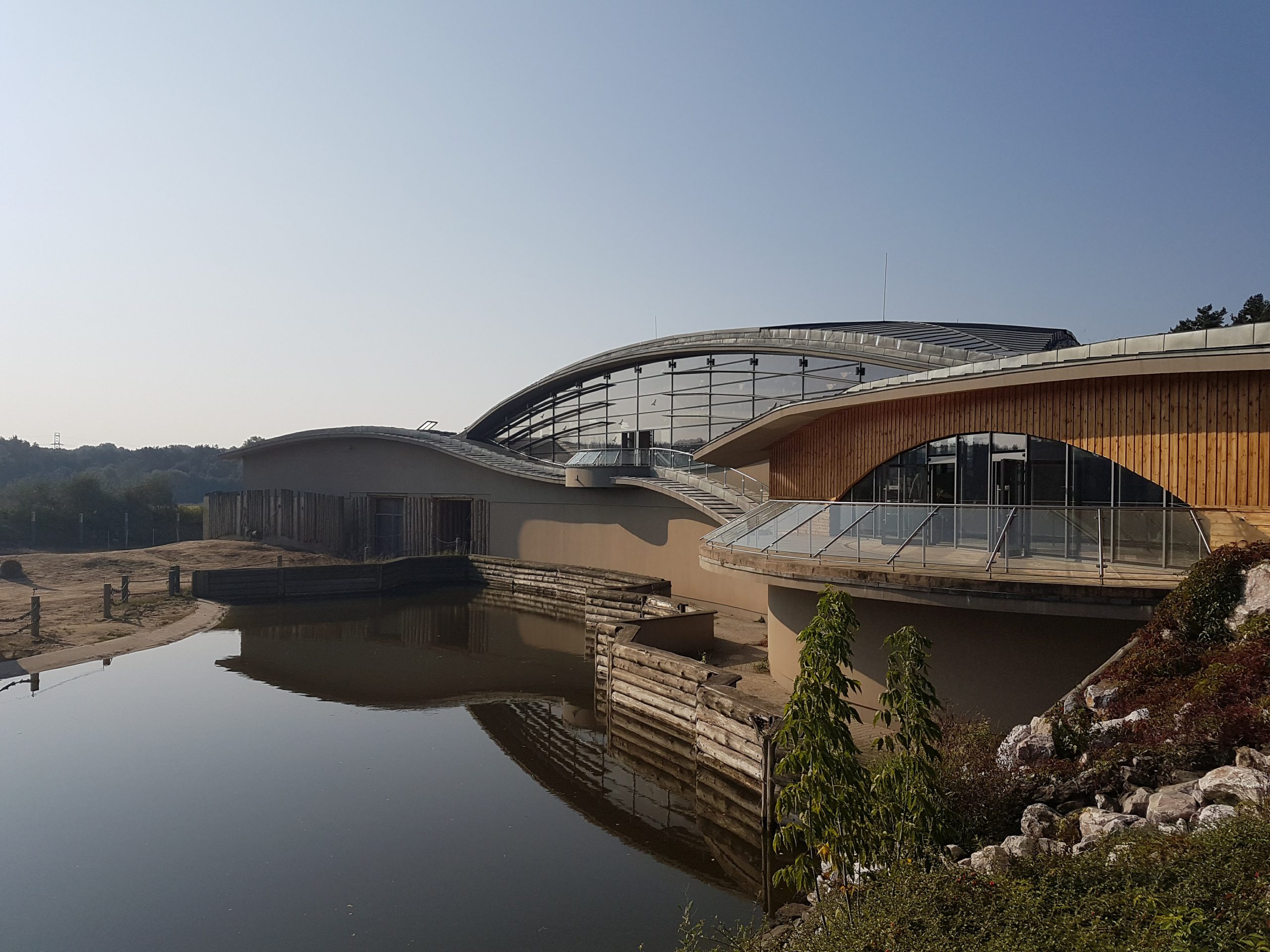
    This was my visit to Poznan’s New Zoo (the Old Zoo is still open and in the city centre) in 2016 and I remember it primarily as I only saw two other visitors there). I went on a weekday morning in September and the zoo is huge in terms of the amount of walking required, although there’s a little train service for busier times of the year. There were quite big gaps between the enclosures, but this is deliberate to give the animals as much space as possible.

    The one benefit about there being so few other visitors (other than no kids shouting about) is that the animals seem more interested in coming to have a look. Perhaps they’re hoping that they might be fed, but it was a handy advantage to get so much solitude. The admission fee is low, just a couple of pounds. Everything at the zoo seemed well cared for, not just the animals, but also the enclosures and public areas.

    Anyway, here are some of the photos….


  • Dictionary of the Vulgar Tongue – Day 239

    Dictionary of the Vulgar Tongue – Day 239

    The Dictionary of the Vulgar Tongue was first published at the end of the eighteenth century, and given that the current health crisis is giving too much time to read books, I thought I’d pick a daily word from it until I got bored….

    Pantler

    This word is defined by Grose as “a butler” and is from the same derivative as the word ‘pantry’, so it means someone who is in charge of the bread and the entire pantry.

    And the word has slowly, but surely, fallen out of usage over the last century. There are though a few cafes around the world with this name, normally those specialising in breads and cakes.

  • Norwich – Earlham Cemetery (Robert Love Gracie)

    Norwich – Earlham Cemetery (Robert Love Gracie)

    This is the war grave of Robert Love Gracie, buried in the older military graves area of Earlham Cemetery. Robert was a Canadian who born on 9 March 1893, the son of Elizabeth Gracie. The real story behind this post is though the excellent state of the Canadian archives, all freely accessible and with substantial documentation retained for members of their armed forces. Robert’s war records are 78 pages long and contain more information about his medical condition than anyone could perhaps ever need to know.

    Robert was single and he worked as a clerk at Eaton’s department stores, living at 124 Hogarth Avenue in Toronto, a property which is still there, and he had a brother and two sisters. We know from his sign-up medical that he was 5’8″, had a dark complexion, had brown eyes, black hair and declared his religious belief to be Presbyterian. Robert was given the service number 404091 and he joined the 14th Battalion of the Canadian Infantry.

    On 4 June 1915, Robert sailed from Montreal to the UK on the SS Metagama, a new cruise ship which the Canadian military had requisitioned as a troop carrier. He remained in the UK until 20 January 1916, when he sailed to Le Havre and from there he was sent to the front line with his unit on 2 February 1916.

    I wonder when writing these wills what the soldiers thought, as Canada at this stage didn’t have conscription, so Robert signed up voluntarily. Robert was placed on the front line for the first time on 2 February 1916, but on 9 March 1916, he was seriously injured with shrapnel wounds to his right hand and his right leg.

    He was taken to a field hospital on 9 March and an operation was undertaken and x-rays were also taken, which has survived in the archive. I don’t know what I’m looking at here to be honest, but on 13 March it was decided that Robert needed to be returned to a hospital in England.

    The above is his temperature chart for the time that he was at the field hospital.

    The hospital that Robert was sent to was the Norfolk War Hospital in Thorpe (St. Andrew’s Hospital) and on 15 March he was seen by the doctors there. It was noted that a shell had blown off some of his fingers and the stump of his hand had gone septic. His knee and leg were very swollen and there was a penetrating wound to the upper part of his calf.

    On 16 March, the doctors noted that Robert’s leg remained very swollen, but by 19 March, although the swelling was going down, he remained in a poor condition. However, on 20 March, Robert suffered from a secondary haemorrhage and his leg was amputated at the thigh, where it was discovered that his thigh muscles were riddled with pus. Unfortunately, at 10:45 on the 20 March 1916, Robert died at the age of 23.

    The authorities seemed to take care of providing a suitable burial, checking if his next of kin wanted his body returning to Canada. He was buried at Earlham Cemetery, a long way from home, at 14:30 on Friday 24 March 1916, with a contingent from the military and a bugler present.

    And it’s not often that there are photos available of those who died in the First World War, but this is Robert. I don’t know why he wanted to serve in the army, whether it was because he felt it was his patriotic duty or whether he wanted adventure. But, he joined at a time when it was clear that the war wasn’t going to be over quickly and he would have been aware of the loss of lives that was taking place. Either way, he seems like a hero to me.

  • Dictionary of the Vulgar Tongue – Day 238

    Dictionary of the Vulgar Tongue – Day 238

    The Dictionary of the Vulgar Tongue was first published at the end of the eighteenth century, and given that the current health crisis is giving too much time to read books, I thought I’d pick a daily word from it until I got bored…. NB, this is actually day 255 of the lockdown, so I’ve managed to get a few days behind, but am slowing catching back up (I can’t believe someone has noticed I was posting twice a day to catch up, one of my loyal three readers….).

    Owl

    And with this definition, Grose verges into practical jokes and japes…. He defines the word as “to catch the owl; a trick practised upon ignorant country boobies, who are decoyed into a barn under pretence of catching an owl, where, after divers[e] preliminaries, the joke ends in their having a pail of water poured upon their heads”. I have nothing to add to this definition, primarily as I’m not sure it was that widespread, but it’s nice to know that practical jokes aren’t anything new.