Third on our list of pubs to visit in the day was the Cliff Hotel in Gorleston as Jen wanted to overheat us in the extreme afternoon heat.
The hotel was first constructed here in 1897 at a cost of £50,000, but it burnt down in 1915 which was a little sub-optimal, but it was soon rebuilt. The fire was reported in the national press and it was noted that “for fully two hours the hotel was blazing like a gigantic torch and the reflection could be seen 25 miles away.”
Back to 1899, they were advertising 25 shilling weekend stays where you received Saturday dinner to Monday breakfast, with a pick-up from Great Yarmouth railway station if requested in advance. The hotel noted that they were “luxuriously furnished with every modern improvement, with magnificent sea and harbour views” which all sounds rather nice.
The signage to the bar area was clear and it all looked well decorated and welcoming. Note that the photo is quite washed out because of how sunny it was, but this is the restaurant area.
There were a couple of real ales and I went for half a pint of the Woodforde’s Wherry which was reasonably priced.
The keg options and that Salt beer is at least acceptable.
The Wherry was well kept, light and tasted as expected.
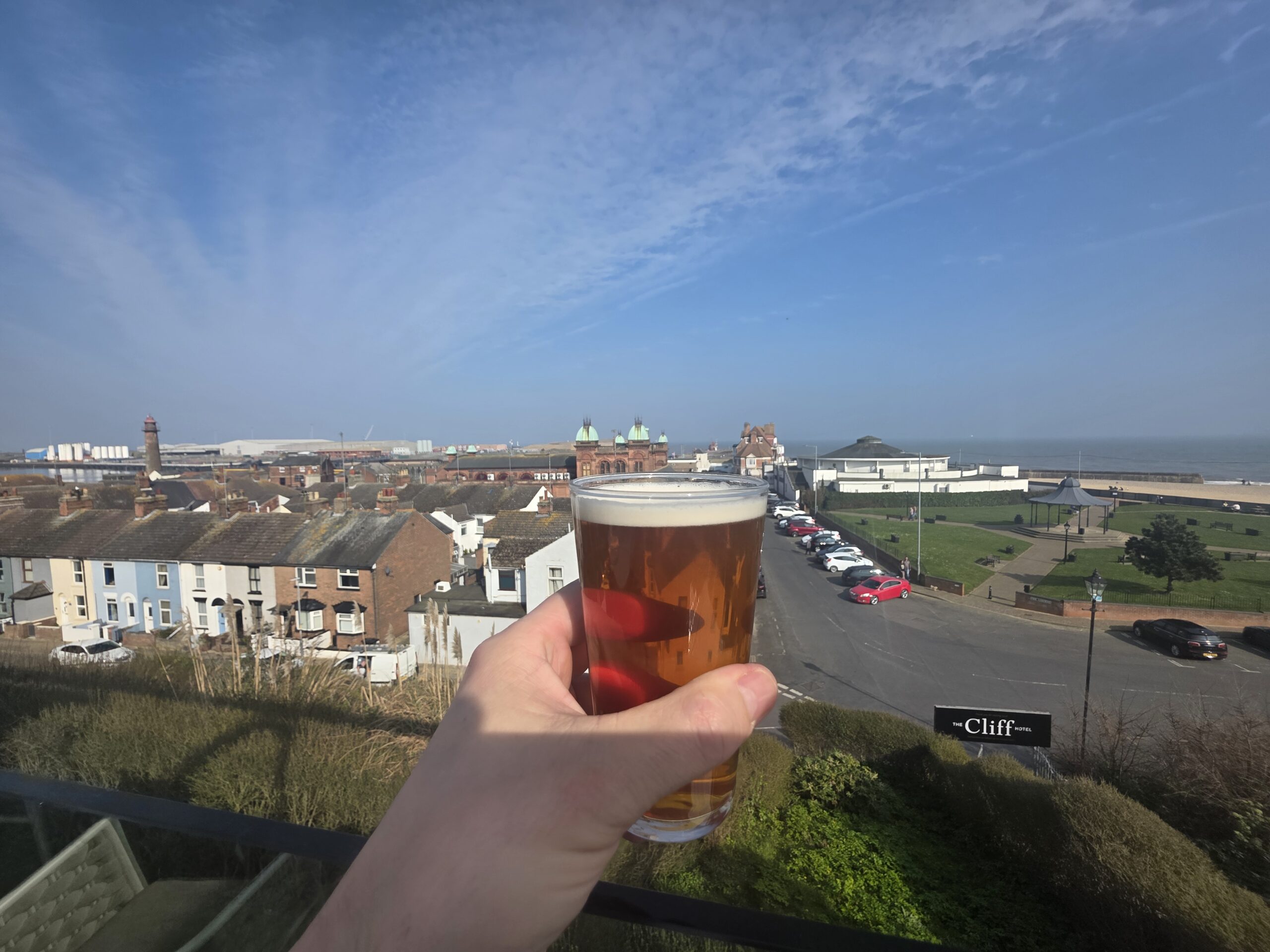
And the view over Gorleston. The table we sat at was a little dirty, but the team members were getting around cleaning them and they were all friendly and personable. There was a bit of a sea breeze and the views were quite impressive over the beach and sea.
The external terrace has been done out really rather nicely and there’s plenty of space. Most people were sitting inside as it was hotter than the centre of the sun outside, but I didn’t say anything.
It was still too early to eat (well, without needing to eat again) but the prices looked very reasonable and the food being served looked entirely agreeable.
I had thought that this venue might be a little too decadent for me, but it was accessible, informal and everything was clearly signed. There must have been a significant investment that has been made here into the hotel building generally, it all seemed in good order. I’d come here again for a drink, it was really all quite pleasant.
Second of the pubs we visited on a sunny Sunday was the Rampant Horse in Freethorpe. This has been a licensed premises since the 1830s and was once part of the Steward & Patteson empire before being taken over by Watney Mann. It then had some perhaps bad fortune by being taken over by Brent Walker, then Pubmaster and then by Punch Taverns, but I suspect that it’s now a free house once again.
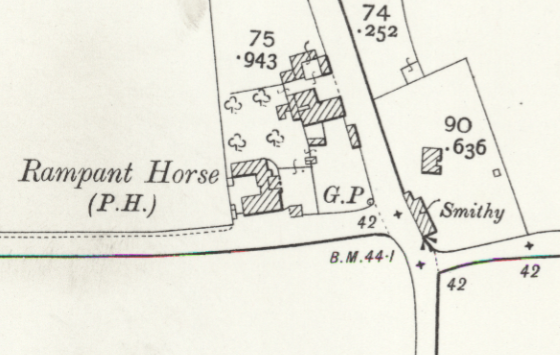
The pub was advertised for sale in 1885 and the auction particulars mentioned that it had stables, yards, a covered skittle ground and a large club room. GP in the above Ordnance Survey map from the 1880s means guide post and it’s evident that there was more space available to the pub then. Today, they have only a small car park and those yards have long since been sold off.
There was one real ale available which was London Pride and that pump clip arrangement does look a little as though I’ve done it. The beer was £2.15 for a half, which was one of the cheapest of the day, although Roy paid £4.60 for a pint of the same beer so something was going wrong with the pricing.
I really loved this venue, it was a traditional country pub which didn’t feel formulaic or fake. The welcome was friendly, the surroundings were a little dark but it was all clean and comfortable. These are the kind of pubs that get refurbished and lose quite a lot of their charm, I liked this place just as it was.
I don’t have much else to add about the history, but I liked this newspaper article from July 1887 to mark Queen Victoria’s Golden Jubilee. It is something of a different world today….
“The picturesque village of Freethorpe was full of life and rejoicing on Tuesday, the 21st inst., when in commemoration of the Queen’s Jubilee the working men, their wives, and children, were provided with feast and amusement by the farmers and other friends. At three o’clock all the men and boys employed on the farms of Mr. George England were provided with an excellent dinner at the Rampant Horse, together with a shilling, and an ounce of tobacco each, and their half-day’s pay. The labourers’ wives received a present of grocery, and in common with all the women of this parish and Wickhampton, were treated to a substantial tea at 4.30 p.m., in one of Mr. Gilbert’s barns. Mr. Wales had taken all his men and their wives for a day’s excursion to Yarmouth, where he kindly found them a good dinner and tea. Mr. H. C. B. Gilbert’s men had their treat with his other men at Bradestone on Thursday. The farmers of Wickhampton—Messrs. Kerry and J. Riches—provided a good dinner for their men at the Brickmakers’ Arms, when all the other men of the parish—excepting those who had “gone south” for haymaking, and who each had half-a-crown sent them—joined them through the kindness of Mr. J. W. Rose and the Rector. The children and young people generally met at two o’clock in the cricket field, kindly lent for the day, together with the barn adjoining, by Mr. Gilbert, a good tea at 5.30 p.m. affording an agreeable interval between the afternoon and evening sports. During the afternoon the Wickhampton boys beat the Freethorpe boys at cricket, and “Punch and Judy” and various games took up the time; whilst after tea a regular course of sports for prizes came on. Races, tugs of war, in which the boys and girls, men, and women, took part, afforded considerable fun. Hearty cheers were given for the Queen, Mr. England, the Rector, and other friends, and a pleasant day was brought to a close about 9.30 o’clock.”
The beer was well kept and in good order, so there might have only been a choice of one, but that was sufficient for me and it wasn’t from Greene King.
There was food being served and the smell from the kitchen was very appealing from whatever they were cooking. The prices were again reasonable and it was tempting to get something, but it was rather early and Jen had already acquired me a chicken bake from Greggs. There were a couple of tables in for Sunday lunch and although it wasn’t busy, it felt as if the pub had a decent atmosphere.
This is certainly a pub that must be a challenge to make work in the current economic climate, so I’m very impressed that they’ve got the venue open, it’s serving real ale and welcoming customers in. All really rather lovely and this was one of my favourite pubs of the day.
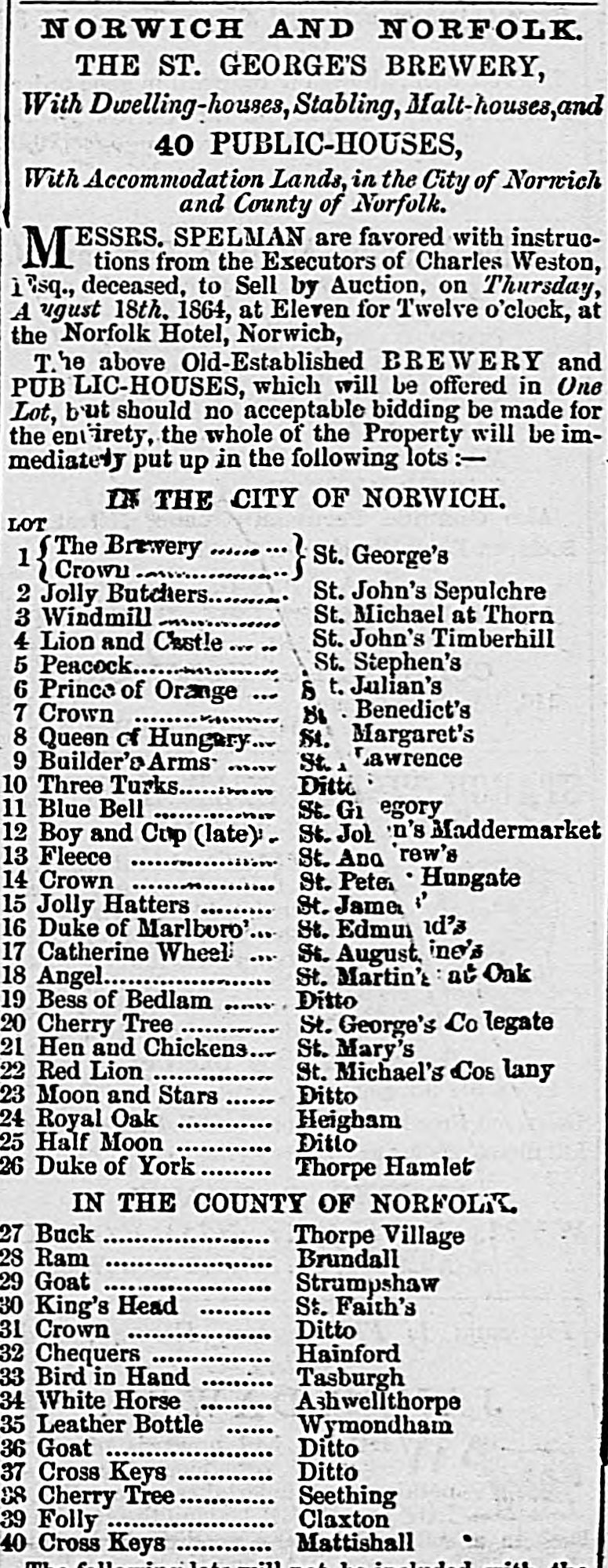
Whilst looking into the history of the Goat at Strumpshaw, I found this list of pubs that were being sold when St. George’s Brewery closed in 1864 and its assets were auctioned off. It’s an interesting little snapshot of what the brewery owned at the time.
And here’s a text transcription of the above:
“NORWICH AND NORFOLK. THE ST. GEORGE’S BREWERY,
With Dwelling-houses, Stabling, Malt-houses, and 40 PUBLIC-HOUSES, With Accommodation Lands, in the City of Norwich and County of Norfolk.
MESSRS. Spelman are favored with instructions from the Executors of Charles Weston, Esq., deceased, to Sell by Auction, on Thursday, August 18th, 1864, at Eleven for Twelve o’clock, at the Norfolk Hotel, Norwich.
The above Old-Established BREWERY and PUBLIC-HOUSES, which will be offered in One Lot, but should no acceptable bidding be made for the entirety, the whole of the Property will be immediately put up in the following lots:—
IN THE CITY OF NORWICH.
LOT 1 { The Brewery ………. } St. George’s { Crown …………… }
2 Jolly Butchers ………. St. John’s Sepulchre 3 Windmill …………… St. Michael at Thorn 4 Lion and Castle …….. St. John’s Timberhill 5 Peacock …………… St. Stephen’s 6 Prince of Orange …… St. Julian’s 7 Crown …………….. St. Benedict’s
8 Queen of Hungary …… St. Margaret’s 9 Builder’s Arms …….. St. Lawrence 10 Three Turks ………. Ditto 11 Blue Bell ………… St. Gregory 12 Boy and Cup (late) … St. John’s Maddermarket 13 Fleece …………… St. Andrew’s 14 Crown ……………. St. Peter Hungate 15 Jolly Hatters …….. St. James’ 16 Duke of Marlboro’ …. St. Edmund’s 17 Catherine Wheel …… St. Augustine’s 18 Angel ……………. St. Martin’s at Oak 19 Bess of Bedlam ……. Ditto 20 Cherry Tree ………. St. George’s Colegate 21 Hen and Chickens ….. St. Mary’s 22 Red Lion …………. St. Michael’s Coslany 23 Moon and Stars ……. Ditto 24 Royal Oak ………… Heigham 25 Half Moon ………… Ditto 26 Duke of York ……… Thorpe Hamlet
IN THE COUNTY OF NORFOLK.
27 Buck …………….. Thorpe Village 28 Ram ……………… Brundall 29 Goat …………….. Strumpshaw 30 King’s Head ………. St. Faith’s 31 Crown ……………. Ditto 32 Chequers …………. Hainford 33 Bird in Hand ……… Tasburgh 34 White Horse ………. Ashwellthorpe 35 Leather Bottle ……. Wymondham 36 Goat …………….. Ditto 37 Cross Keys ……….. Ditto 38 Cherry Tree ………. Seething 39 Folly ……………. Claxton 40 Cross Keys ……….. Mattishall”
This was the first of ten pubs that Roy, Jen and I visited yesterday as part of our little expedition of Norfolk hospitality venues. There’s a reason for the pub selection which relates to them being in a past Woodforde’s Ale Trail book, but it’s all a bit too complex to explain here.
The venue first opened in around the 1770s, so this is another of those Norfolk country pubs which has some considerable heritage. It was known as the Goat for over 200 years, but then the name was changed to the Huntsman in 1984. As with many pubs, it went through a number of brewery ownerships, going from Youngs & Co to Youngs, Crawshay & Youngs, then Bullards and then Watney Mann. It was then taken over by Eastern Hotels and then Enterprise Inns bought it and ruined it, leaving it closed for several years. It’s now one of the growing number of pubs in Norfolk which is owned by Marcus Pearcy. The former skittle alley that was here, noted many times in newspapers, has though long gone.
There was some excitement, although not for the then landlord John Newton, when in August 1905 a local lad called Frank Reeley wanted a beer. As he was already very drunk, the request for a beer was refused. Reeley was thrown out and then he sat outside for a while contemplating life. After some contemplation, he smashed the windows of the pub and caused 5 shillings of damage. His sister went to court to defend Frank, noting that he had now joined the army and so couldn’t attend. The court was obviously not entirely pleased with him as he was fined £1 and had to pay a similar amount in damages.
Back in March 1918, when people were perhaps a little more focused on other things, a case was brought against the pub by the police for serving at 11:52 in the morning on one day and 11:55 on another day. I’m assuming that their licenseable hours were from 12:00, as the bench just rejected the complaints of the police and there was a conversation about the timing of clocks. I’d suggest that this showed some considerable pettiness from the local police, although the landlord Walter Samuel Read had only taken over in the previous year and maybe there were other issues.
I’m genuinely not sure how Marcus Pearcy makes venues such as this work financially given that there was a substantial sum spent on the refurbishment and it felt very well staffed for relatively few customers when we were there. But, whatever he’s doing is obviously working and it’s a huge contribution that he’s made to the community by ensuring that the pub has been able to reopen. This one must have been very close to permanent closure, especially as there’s an excellent nearby Good Beer Guide listed pub, the Shoulder of Mutton.
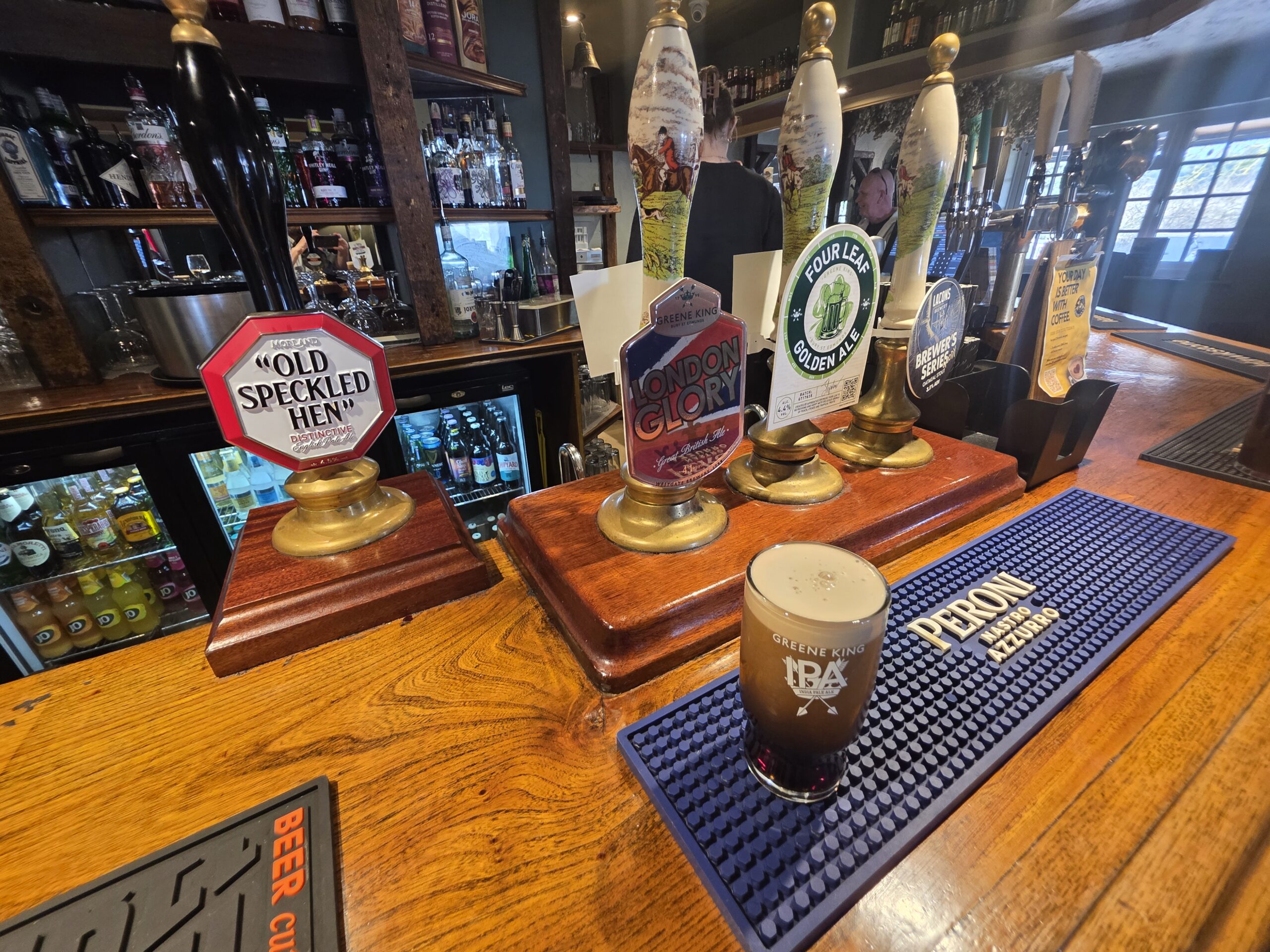
There were four real ales, all of them visible are Greene King and so I have no interest in those. There was a fourth from Lacons which Roy ordered, but they went to check if there was a problem with the cask. When they returned to pour my half it was murky with a fair amount of sediment going on, with my best guess being that they knocked the cask whilst checking it. Either way, it was both under-poured and not really going to be pleasant to drink, but they didn’t query the return of it.
I switched instead to a Guinness and this was the most expensive of the ten pubs that we visited in the day, so the pricing is generally towards the higher end of the scale. I’m not sure that there was a two part pour and the choice of glassware is sub-optimal, but it tasted fine.
On the beer availability, I’m not sure why a free house is so closely linked with Greene King and they’re replicating the offer that a tied house would have. The keg range was a bit generic as well with the Hawkstone beer arrangement, but if that’s what the customers want, who am I to argue?
We weren’t ordering food, but here’s the menu and the dishes going out looked good and well presented. The pricing here isn’t pushing a bit towards the higher end, but not by much given the current cost base that they must have.
The staff in the pub were all keen and enthusiastic, so there was a friendly welcome and they were always helpful even when I was quibbling about the beer. I’m pleased to note that there were no further quibbles during the next nine pubs that we visited. The venue was also clean, tidy and well presented, there’s clearly been a lot of money invested here.
This is a photo I took in May 2020 when Nathan and I were meandering around the area. It all looks a little forlorn back then, so credit is definitely deserved for the reopening of this pub in what are trying times for country pubs. There must have been some challenges to that, but the pub felt like a real community venue and it’s employing several people locally which must be a real bonus to the area.
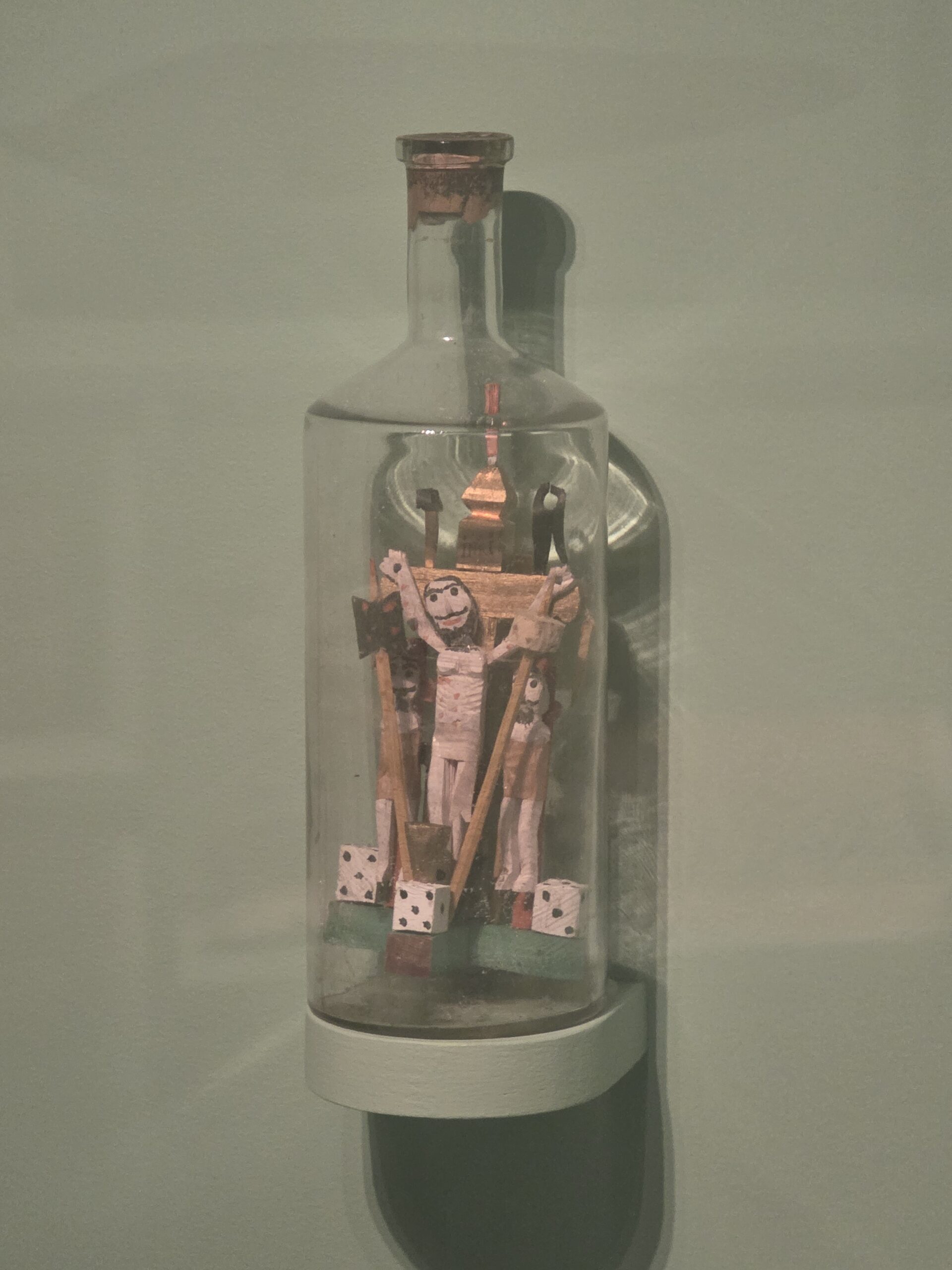
This quirky little thing is a crucifixion in a bottle, but with some dice added to the whole arrangement. The museum notes that it was made in around 1860 by the sailor Edvind Johansson who came from Skepplanda, a little to the north of Gothenburg.
I thought that the dice were some nod towards life being something of a game of chance, but this has shown my lack of knowledge of the Bible. Instead, Roman soldiers threw dice for the clothes of Jesus after crucifying him. These are also known as a ‘God in a bottle’ and were created by sailors, soldiers, prisoners and indeed anyone else who likely had quite a lot of spare time available.
Inside are also hammer and tongs, representing when the Romans nailed Jesus to the cross, and when he was taken back down again. I’m not sure that I’m inspired enough to go and build my own shrine in a bottle, nor indeed are my DIY skills sufficiently good enough to do so (and nor do I have the patience of a saint to fit this arrangement together), but it’s a rather lovely little survival.
I thought that it would be a marvellous idea to stay on a boat when Richard and I went to Gothenburg. I wasn’t sure if he’d like the idea, but it transpired that he did, which is handy as I had already booked my room. This is the centrally located Good Morning hotel which is moored up on the river Göta, which is what the city is named after.
The room was sufficiently spacious and I had a view over the water. The window stayed open via some complex mechanism and that allowed the river air to get in which was rather pleasant. There were no noise issues either internally or externally, so that was suitably peaceful. One thing that I had expected was at least a little movement of the boat in the water, but there was none. If I hadn’t actually walked over a little gangway to get on board, I wouldn’t have realised that this was a hotel on a boat.
I did meander down the corridor to check that Richard’s room wasn’t any better than mine and I’m pleased to say that it wasn’t. Not that I’m petty or anything.
I think I should mention breakfast. I liked breakfast. Here’s the bread selection and Richard was very excited that they had some caramel bread or something niche.
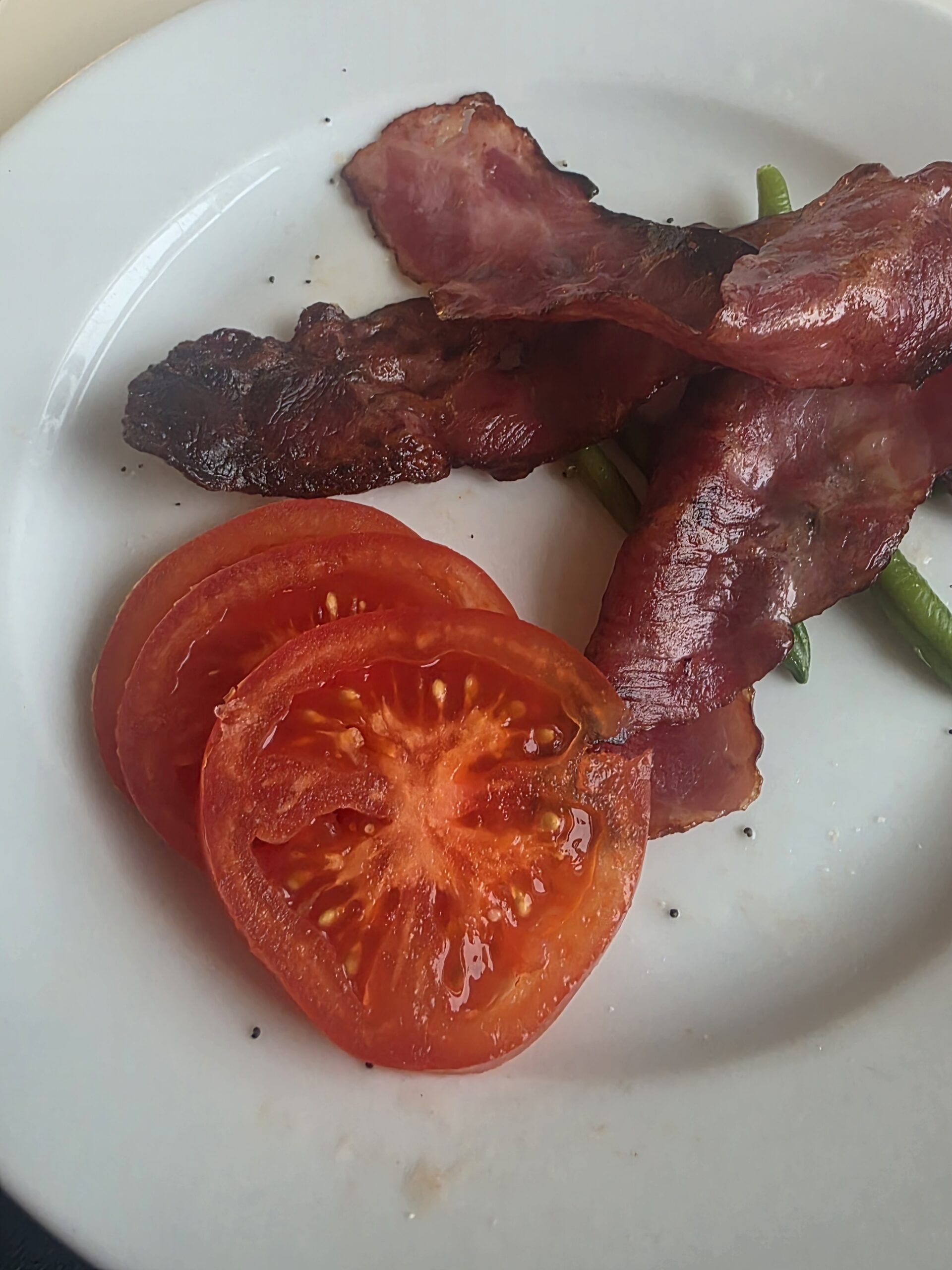
I wasn’t really listening to Richard’s bread story as there was bacon. Now, I don’t normally bother with the hot food at breakfast as I like bread, cheeses, deli meats, tomatoes and all that stuff. I don’t usually have bacon as I like it burnt with no fatty bits and that’s not being picky, I just like things done well. Literally.
On the first morning I had a little bacon with my healthy green beans and tomatoes.
And then I got the same again, before dispensing with the tomatoes and green beans and just getting bacon. Look at that, cooked perfectly. I thought Richard’s “I think you’ve consumed a pig over the weekend” on the third morning was a little excessive, but the bacon was delicious.
The view out of the window at breakfast which was all rather pleasant.
And we popped to the bar for an evening drink and if you look closely you can see Richard and I eagerly awaiting the appearance of a staff member. There were a few beers here, nothing overly exciting, but credible for a bar on a boat.
Anyway, I very much liked this hotel and it came to around £45 a night including breakfast, which I thought was very reasonable to be in the centre of a city such as Gothenburg. The staff members were friendly and one even moved here car so that Richard could park, which was very kind. The breakfast was delicious, the rooms were clean and I’d stay here again when I get around to visiting Gothenburg again.
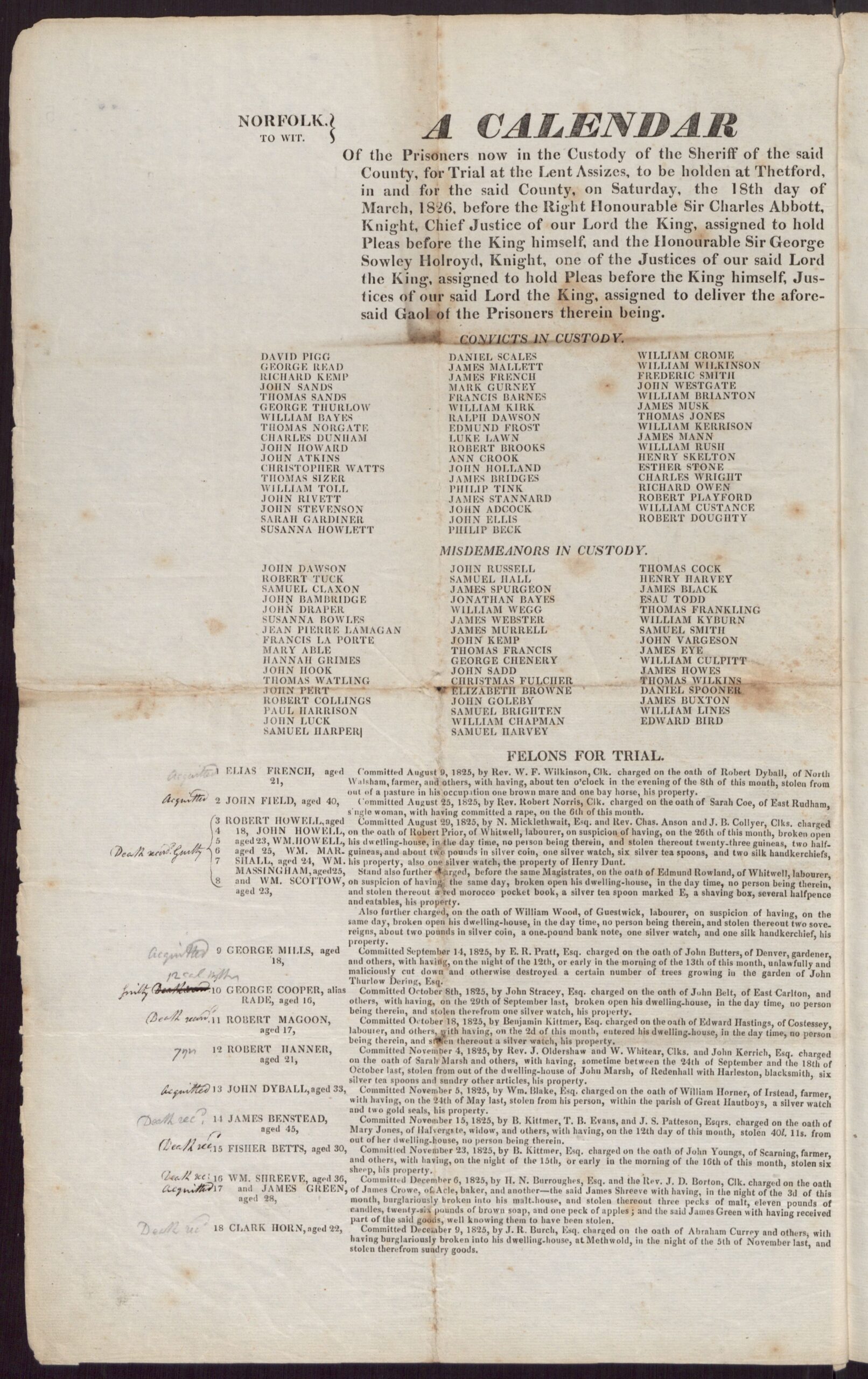
Back to my series of articles from the Norwich Mercury 200 years ago, with this being the report of the sentence of death recorded against Clark Horn. Clark had been born in 1802, the son of John Horn and Mary Horn of Methwold.
There’s something of a brutality about all of this. However, views were changing in 1826 and the death sentence was clearly not working as a deterrent. It was reported in the Norfolk Chronicle of 6 May 1826 that Clark Horn had been removed from Norwich Castle and sent to the Leviathan prison ship.
Then on 7 October 1826, Clark was put on a ship, the Midas, to New South Wales and he arrived there on 15 February 1827. There were 148 prisoners on that ship and 61 of them had life sentences, although Clark’s punishment had by then been reduced to 16 years imprisonment.
He didn’t turn up again in the records until 1843 when it appears that he died in the area of Bathurst, New South Wales. His father, John Horn, missed all of this as he had died in 1808, but his mother, Mary Horn, would have known of the transportation as she died in 1830. It must have been a strange world for Clark Horn and I wonder if he lived an isolated life in one of the work camps. I can’t see that he had any descendants and that makes me wonder about just how many people might have thought about the life of Clark Horn since his crime….
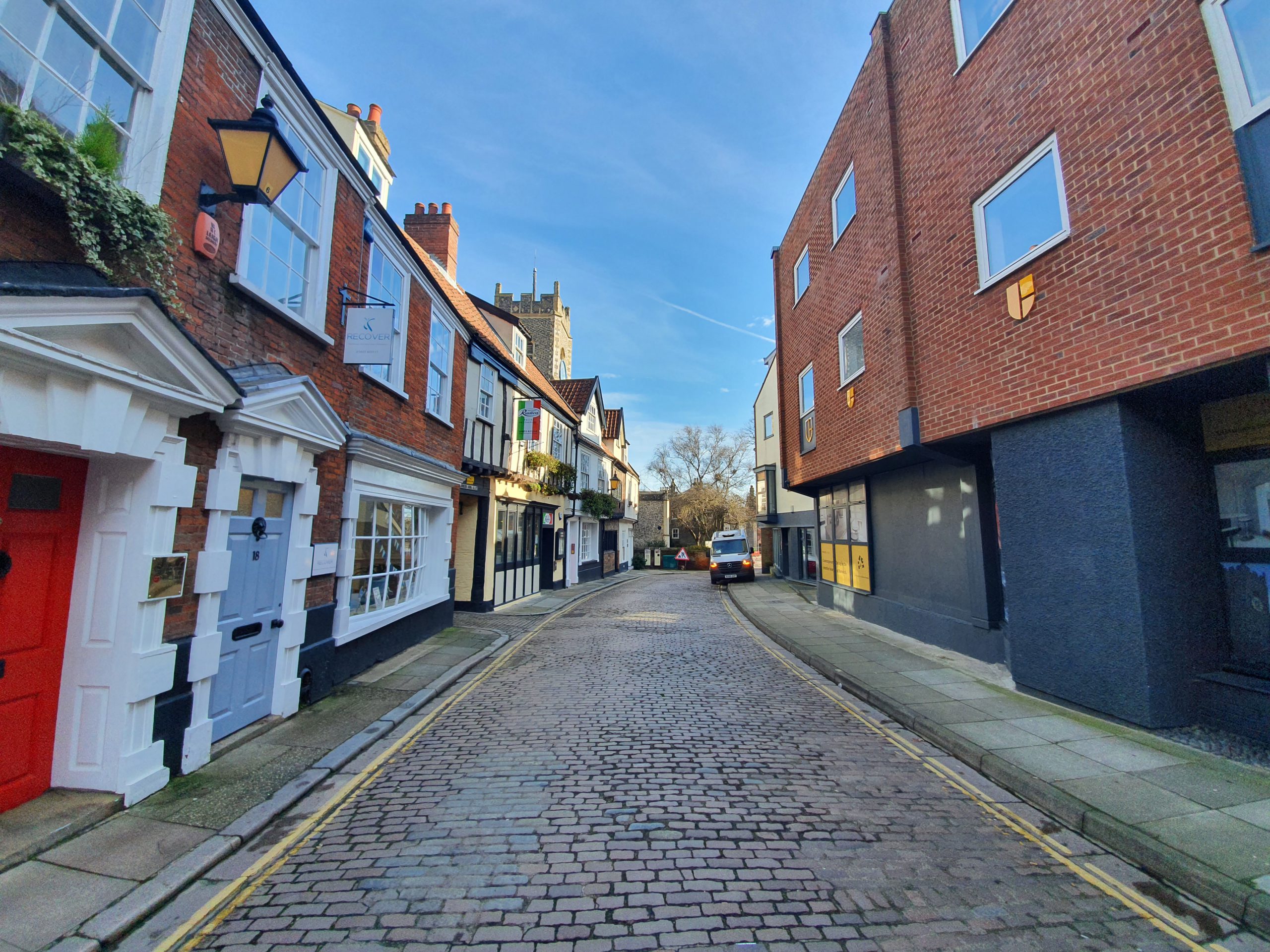
There’s good news about the missing parish boundary marker which was located on Princes House and it seems that the building, and indeed the marker, is now in very good hands. Further information about this parish is at https://www.julianwhite.uk/norwich-history-by-parish-st-george-tombland/.
Andy from Princes House messaged me to say:
“The original design for Princes House from the early seventies was not the moribund architecture which you see now. The hard economic times saw the design diluted and we have played our part to add some interest and curiosity to our side of Princes Street.
You will be pleased to know that we are creating some art which will feature the Hungate St. Peter parish boundary marker which we have had professionally cleaned to remove the paint and cement splatter from it, while retaining its patina. We will describe the relevance of 1834 and the Poor Law Amendment Act and the historical boundaries referenced by the parish boundary marker. Along with this we plan on celebrating pictorially the local churches, those that are still with us and those that are not. It is our intention to have this up and displayed this spring.”
I think I might lead another walk when the work is completed.
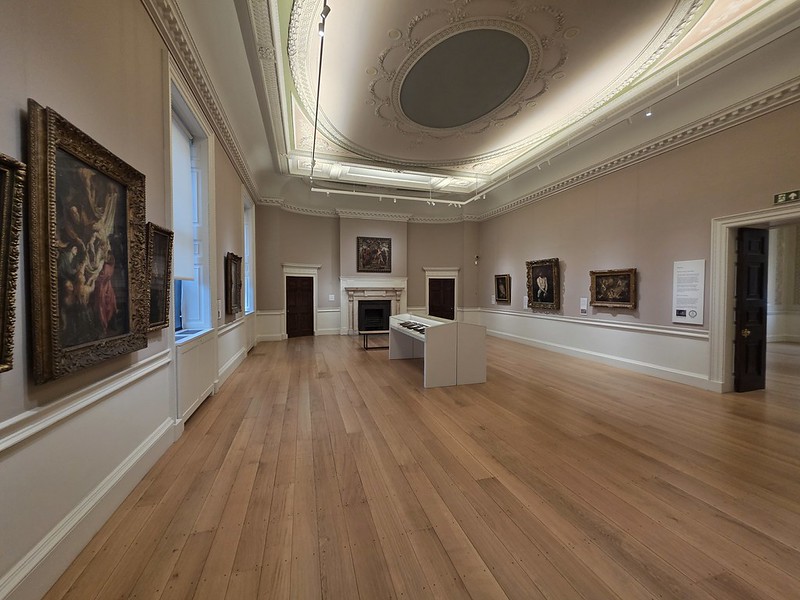
One thing that I really rather liked about the Courtauld is that they’ve got information in each room about how the space was once used. Today, this is Room 6 which is used to display the gallery’s collection of works by Peter Paul Rubens. The plasterwork on the ceiling is by Thomas Collins, who also completed work in other rooms at Somerset House.
However, it was once the Council Room of the Society of Antiquaries, which was created in 1707 to study ancient monuments. Their first meeting was at the Bear Tavern nearby on the Strand and they moved into Somerset House in 1780 and remained there until 1874. They moved at that point to Burlington House on Piccadilly and they’re still there today.
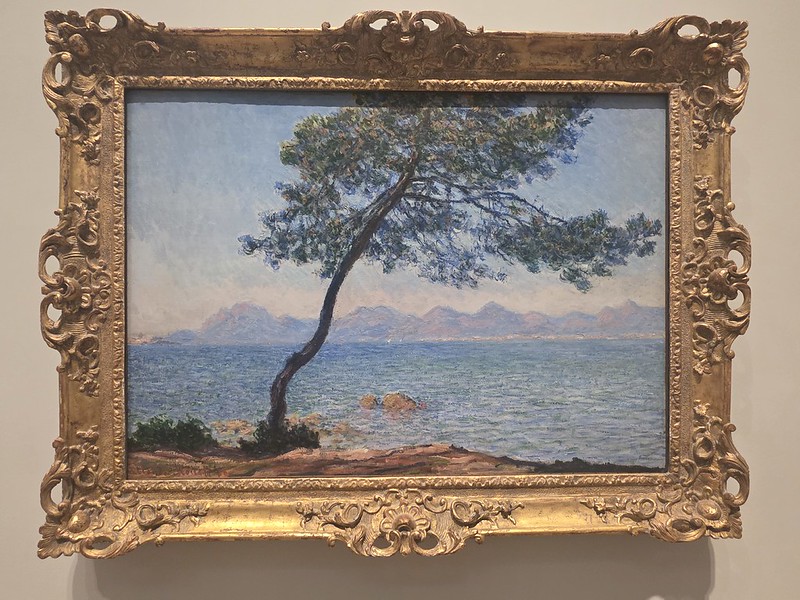
When Claude Monet (1840-1926) arrived in Antibes, on the Mediterranean coast of France, in January 1888, he was not just looking for fresh subject matter he was in pursuit of something far more elusive, namely, light. I don’t know very much about artwork, but every guide to this painting talks about the importance of light. Lovely as it is, it was the history of the painting’s ownership that particularly interested me, but more of that in a moment.
Monet himself said “one must repaint a single subject three times, four times, even twenty times”, which I would say is the amount of effort that I put into this blog, although that might not be entirely true. Anyway, there’s one maritime pine in the painting and we’re supposed to look at that and then dwell on the beauty of the light from the water, the sky and from the mountains.
One thing I like from gallery websites, which I think is all too rare, is seeing the provenance of an artwork. This one is listed by the Courtauld, namely:
“Bought from the artist by Boussod & Valadon, June 1888; (?) with Georges Petit, 1888; Mme Vve Barbedienne, Paris, 1894; sold Hôtel Druout, Paris, 24 February 1894 (lot 39); bought Paul Durand-Ruel; Decap, Paris, 1894; Bernheim-Jeune, Paris, 1907; Baron Caccamisi, Paris, 1907; Mrs Blanche Marchesci, London, c.1910; Paul Rosenberg, Paris; M. Knoedler & Co., London; purchased by Samuel Courtauld, August 1923; Courtauld Bequest, 1948”.
I wondered why a hotel, namely the Hôtel Drouot, had purchased a painting like this, but then I checked and have realised that it’s actually a large auction house in Paris which is still trading. This auction house was implicated in the sale of looted Jewish artworks and Paul Rosenberg, who was a Jewish art collector who owned this artwork for a while, later had some of his collection stolen. It was then purchased by Samuel Courtauld, who ultimately gave it to the gallery which bears his name. Although, if Rosenberg hadn’t of sold it, then it might well have later been part of the collections that were stolen by the Nazis. And on that theme, the son of Blanche Marchesi, namely Leopold Popper-Podhragy, was sentenced to death by the Nazis although he managed to avoid that and lived until 1986, but his artwork collection was also taken.