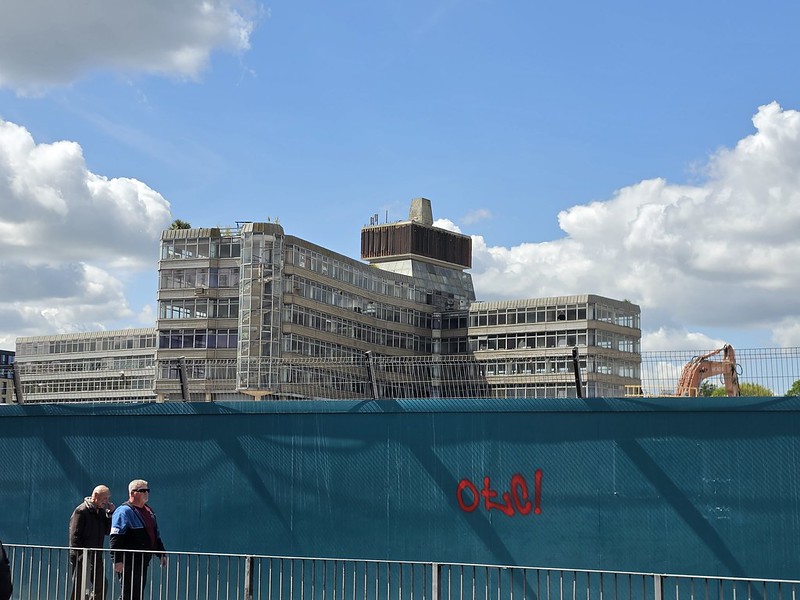
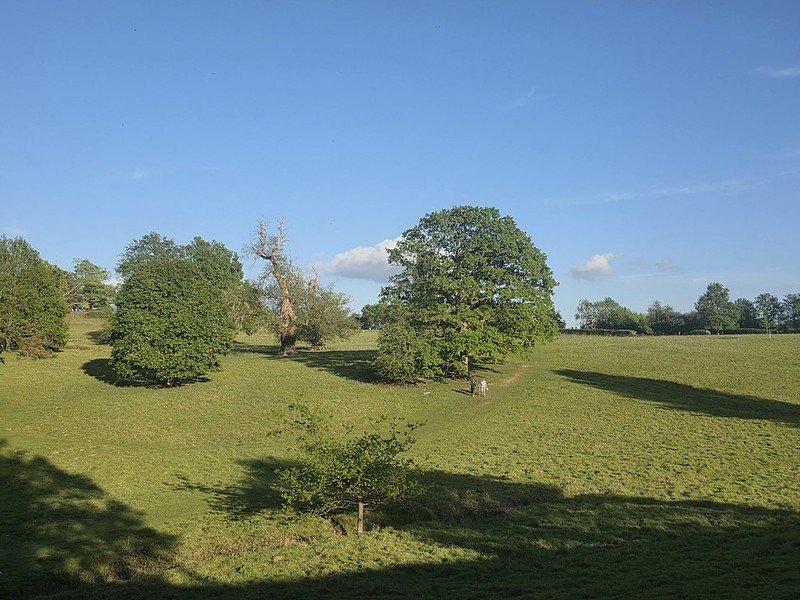
So, the shopping centre at Anglia Square is pretty much all gone now. There are some walls that are still coming down, but it’s nearly entirely rubble and there’s no evidence at all of the Greggs that once stood here. It’ll now be the turn of the larger buildings to be demolished, they present different challenges and may well require specialist asbestos removing handling as well.
Carrying on from part one, this all looks rather refined. I suspect that this wasn’t for the junior members of crew on-board the submarine….
Here’s a photo of a sink. Never let it be said that this blog doesn’t have riveting and fascinating content.
It is genuinely impressive how everything on board this submarine was designed to use as little space as possible. In the days before IT and computers to help with the design, putting this whole thing together must have been a monumental challenge. Combining torpedoes for military use as well as sinks to try and make conditions vaguely comfortable for those on the submarine must have required some ingenuity.
One thing not mentioned by the museum is that when this submarine was decommissioned and sent back to Chatham to go on display, much of the interior was stripped out. Some of the submarines were still in operation around the world and the last thing anyone wanted was for the Soviets to have a little day out at the museum and promptly see how everything fitted together. Much has been restored back to how it might have looked, but many of the fittings aren’t original and elements such as the TV and video player in a previous photo were sourced from elsewhere.
The sound room where operators would monitor the sonar equipment if they could find space to sit down.
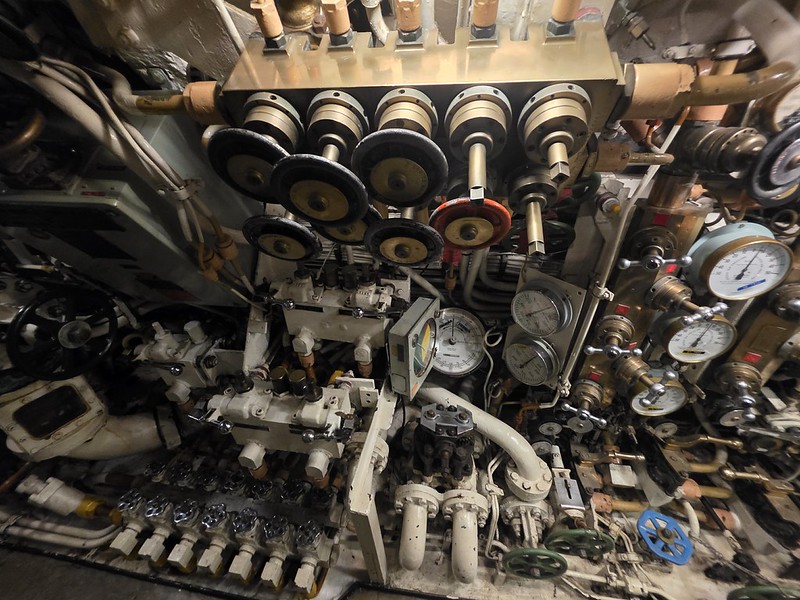
There were a lot of these dials everywhere and I’m sure that they all displayed important information about what was happening in the submarine. One slight problem of the limited space of the tour is that the guide was at the front and anyone further back wasn’t going to hear anything that she might be saying. The one exception to this is when she stopped in an area to ensure that we all knew to have a look through the periscope.
Always handy to have a map as it’s not easy to just have a little look out of the window.
There’s certainly a lot going on here and it was mentioned that submarines aren’t so much driven as balanced, with everything having to be at the right depth, angle and buoyancy. This is something that my friend Liam would manage well, I’d probably be quite good at checking the food stocks were in order.
The engineers on board who understood all of this really would have deserved their pay.
Every valve and dial likely has a consequence, I was quite engaged with just how much of this there was on board.
The communications room and this is somewhere that I might have been able to manage in.
The luxury toilet facilities on board.
Now this is exciting, the heart of the submarine’s operations, the kitchen. Being the chef here must have been challenging, there were around seventy men to feed on board the submarine and there’s not a huge amount of space here to do that.
An example menu.
I had to Google this, “snorting” is the process by which a submarine operates its diesel engines whilst they are submerged.
There seemed like hundreds of metres of wires snaking around the submarine.
A more spacious crew room, although that’s all a bit relative. I imagine it’s something that everyone got used to, with tours lasting for around eight weeks on average, but I’m sure that there must have been a fair few flare-ups between slightly annoyed submariners.
At least they’re not stacked three high down this end of the submarine.
And that was the end of the tour and it all lasted for around twenty minutes. The tours must be constant as another group was entering the submarine at the far end just as we were departing. The guide said that the history of the submarine’s tours was still covered by the Official Secrets Act and so it wasn’t known where Ocelot went around the world, although it’s fairly certain that it was used heavily in the Cold War. As for whether it was used in the Falklands War, there’s no official answer.
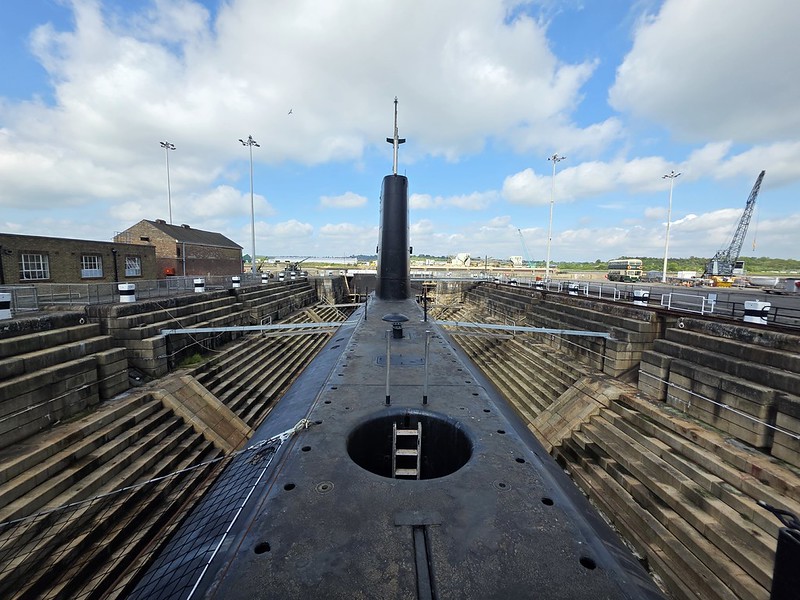
It was all very interesting and the dry dock arrangement here shows the scale and size of the submarine. I did ask the guide about how hot it would have been on board and she said that it was often uncomfortably warm even with the air circulation systems that were in place. There was someone on the tour who used to serve on the submarine, but he was at the back of the group and so if he was offering little pearls of knowledge, I didn’t hear them.
Although there were three more submarines made for the Canadian Navy, this was the end for the Royal Navy at Chatham. Investment was made to allow for the construction and repair of nuclear submarines, but no more were built here. It was announced in 1981 that the site would close in 1984 and although the Falklands War meant the dockyard was used again, it was still closed as expected.
This is HMS Ocelot was the last warship to be made at Chatham and it was launched from No. 7 slip on 5 May 1962, being commissioned into the Royal Navy on 31 January 1964. Chatham had been making submarines since 1908 and had constructed 57 of them over the years, but this was very much the end of an era.
The museum offers free guided tours of the submarine, but they have to be booked and this was the one that was recommended to me in the limited time that I had at the museum. I got there for the tour and noticed that we all had to fit through a circle of this size. I had to have quite a think about that as although I’m an athlete, it did look rather small.
The tour was led by Nat and she was cheerful and personable in the morning. Her task was to guide visitors through the submarine without getting stuck or annoyed, whilst trying to give some history about the whole arrangement.
Ocelot was about 295 feet long overall and had diesel generators and electric motors. This set-up meant that it could travel more quietly submerged than many earlier boats, which was handy during the Cold War when surveillance and intelligence work were important.
The first thing was to get on board the thing and that wasn’t using those steps, but they looked quite similar. I remember in Baltimore, United States, when I went on a guided tour of something similar that I commented on my bravery to the guide. A former member of the US navy giving the tour said that I gave the impression of someone from the Canadian navy, but I ignored that. Anyway, I digress.
After I had nimbly climbed down the steps, the first thing that was visible were the torpedo tubes. There were six at the bow, with another two at the other end, three arranged on each side. The submarine carried 24 of the Mark 8 torpedoes, the rest were handily arranged on the wall in what was already a confined space.
Inside the torpedo tube and the whole process was carefully controlled so the crew could load the weapon from inside the submarine, shut the inner door, flood the tube, open the outer door and fire. After firing, the outer door would be closed, the tube drained and the cycle could begin again. It was a highly disciplined little arrangement because the admiral, or whatever they’re called on a submarine, would likely be annoyed if their submarine had water flooding in.
This little number must have been handy to read in the necessity of getting off the submarine quickly. I’m sure the training for this must have been extensive, if the submarine couldn’t surface then a controlled pressure chamber was the only route off. There seem to be some spelling mistakes on this which would fill me with confidence if I was standing there waiting to be evacuated. But, this is why I’m not in the Royal Navy as I suspect I would focus on matters that weren’t entirely important.
The sleeping area and that must have been dead handy when someone decided that they wanted to play board games. It’s not what I would call spacious, but I doubt many people become submariners if they like having their own space.
The entertainment area for those on board. The submarine was taken out of Royal Navy service in August 1991 and was returned to Chatham in 1992 to be used at the museum.
More of the sleeping areas.
These are the steps up that were visible in my earlier photo. They look a bit steep to me, but I’m scared of heights (and quite a lot of other things).
Sleeping quarters for more decadent members of the crew.
There really wasn’t much space along here. I didn’t take a photo of it, as I was quite focused on not getting stuck, but getting through the hatches wasn’t entirely easy. I’m not saying it was like an obstacle course, but it required grabbing the bar above the hatch and then swinging through into the next stage. Fortunately the woman behind me was about as athletic as my friend Richard, so I didn’t have anyone rushing me as she was having her own dramas.
Anyway, more to follow in this riveting series of posts about a submarine…..
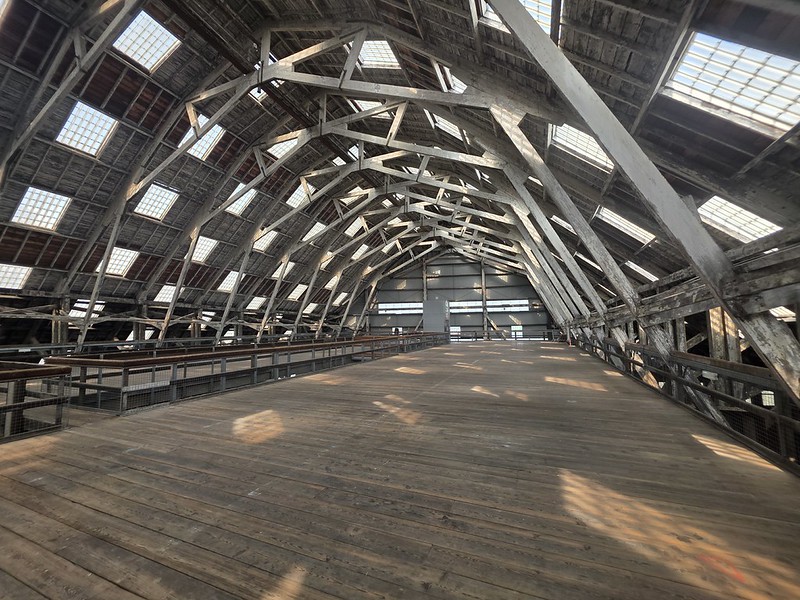
At first glance, the No. 3 Slip Cover at Chatham is a very large wooden shed and Britain has never been short of those, but this one has rather more going on. Built in 1838, it was designed to shelter ships while they were being constructed on the slip beneath, protecting the timber from rain, sun and the general damp enthusiasm of the Medway. When you’re building wooden warships, you don’t really want them getting damp before they’re ready.
The building was designed by Sir Robert Seppings and the curved apse at its landward end was designed to accommodate a ship’s bow. Although buildings of this kind were constructed around the world, there aren’t many surviving and that’s not surprising as they’re not the most subtle arrangement.
There was a lift up here, but as I’m an athlete, I decided to walk up the stairs. I wondered at the time what this floor was doing here in a huge building designed to build ships, but it was added in 1904 to store boats when the whole arrangement became more of a storage shed.
This photo of underneath the mezzanine floor shows the scale of the building. As I had arrived early in the day, there were no other visitors in this area yet, it had a feeling of being a forbidden space with all this junk (or exhibits as the museum might call them) around.
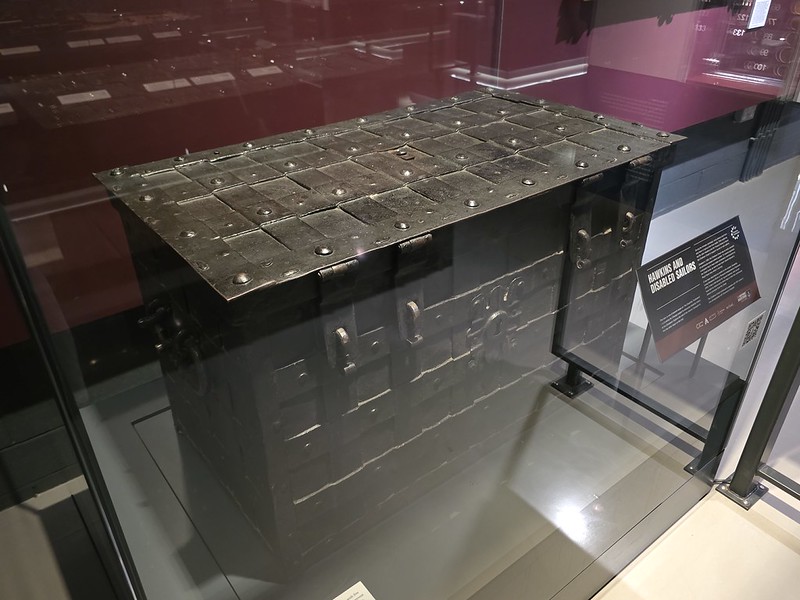
The Chatham Chest didn’t look too exciting to me at first, but it’s what it represents which is perhaps more important. Established in the late sixteenth century, the Chatham Chest was an early naval welfare fund, created to support seamen who had been wounded, disabled or otherwise left unable to work after service at sea. Long before the modern welfare state, pensions bureaucracy and endless forms, this was an attempt to recognise sailors as individuals who needed support after the end of their service.
Sailors contributed a portion of their pay into the fund and money from the chest was then used to provide relief for those who had suffered injury in service. This arrangement is the beginning of institutional responsibility and also there’s a constant that the authorities didn’t really trust those looking after it as it had five different locks to prevent fraud. This tactic didn’t work as money went missing and then King Charles I decided that he would use some to pay off some of his debts. Very handy for the pensioners who were entitled to the money from the chest.
In 1814, after the long pressures of the Napoleonic Wars, the Chatham Chest was amalgamated with Greenwich Hospital, which had become the more formal national institution for supporting naval pensioners. The chest was moved to the National Maritime Museum and, more recently, to Chatham.
I rather like what the museum has done here with its curation of the exhibits as this fund was created by Admiral Sir John Hawkins (1532 – 1595) making him one of the founders of the principle of a welfare state. He has been held in huge regard and in the twentieth century the Royal Navy named a ship after him. Things are more complex and his reputation is being examined as Hawkins was also involved in slavery, but rather than tell visitors what to think, they’ve neatly just told the story from both sides.
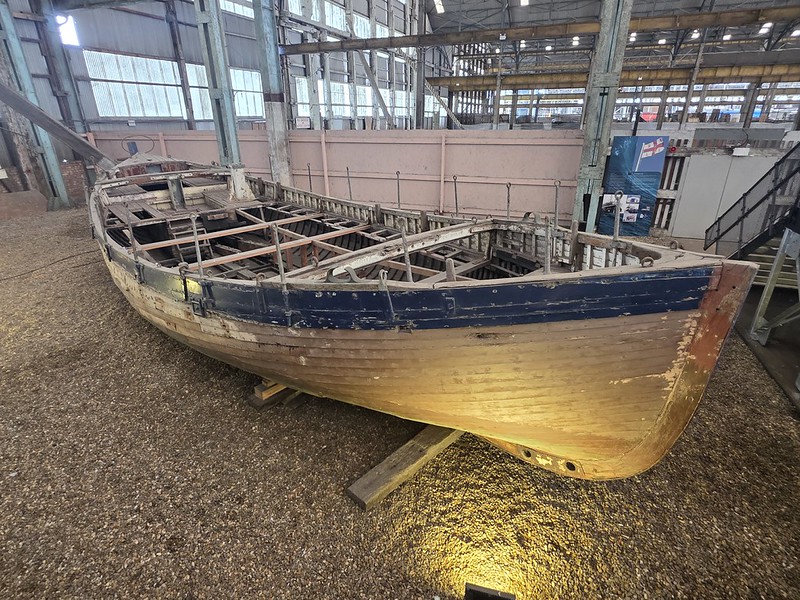
St Paul sits in the Lifeboat Museum with a rather battered dignity of something that has done its duty and would now rather like not to be poked by visitors with cameras. Built by the Beeching Brothers of Great Yarmouth in the clinker style associated with Norfolk and Suffolk beach boats, it is described on the panel as the oldest lifeboat in the RNLI Historic Lifeboat Collection.
It served Kessingland from 1897 to 1931, powered by oars and sail, with a crew of sixteen and a shore party needed to haul it down to the water. Places such as Kessingland, Lowestoft, Caister and Gorleston lived with the sea because of their work and the RNLI and local lifeboat stations depended on courage and the willingness of people to turn out at awful hours in awful weather. During her service, the boat was launched 113 times and 22 lives were saved.
The lifeboat served in Kessingland for 34 years before being converted into a private yacht, Stormcock, for which it was used for over forty years. This has made later conservation work more challenging, as they wanted to retain what was original and not restore the more later additions. It has been on display at the museum in Chatham since April 1996 and I rather like its rawness.
And well done to everyone below who completed this year’s 100 marshals event in Kent. Numerous entrants mentioned that it was particularly challenging, whether from the heat of the first day, the humidity of the first night, the overnight rain, the forested sections or the ascent, but there’s no such thing as an easy 100 and they all did brilliantly to finish. Ten entrants retired, but all credit to them for getting as far as they did and for taking part in such a memorable event. The main event with 500 or so entrants will take place in a few weeks, on the second May Bank Holiday. The route will be very similar and the weather will bring different challenges, but it’ll all be very exciting.
The first number here is just the entrant number, then the name of the entrant, their average speed (in kmph) and their local group. Special well done to the six Norfolk & Suffolk group members who finished, so ruddy, bloody brave as Alan Partridge would say.
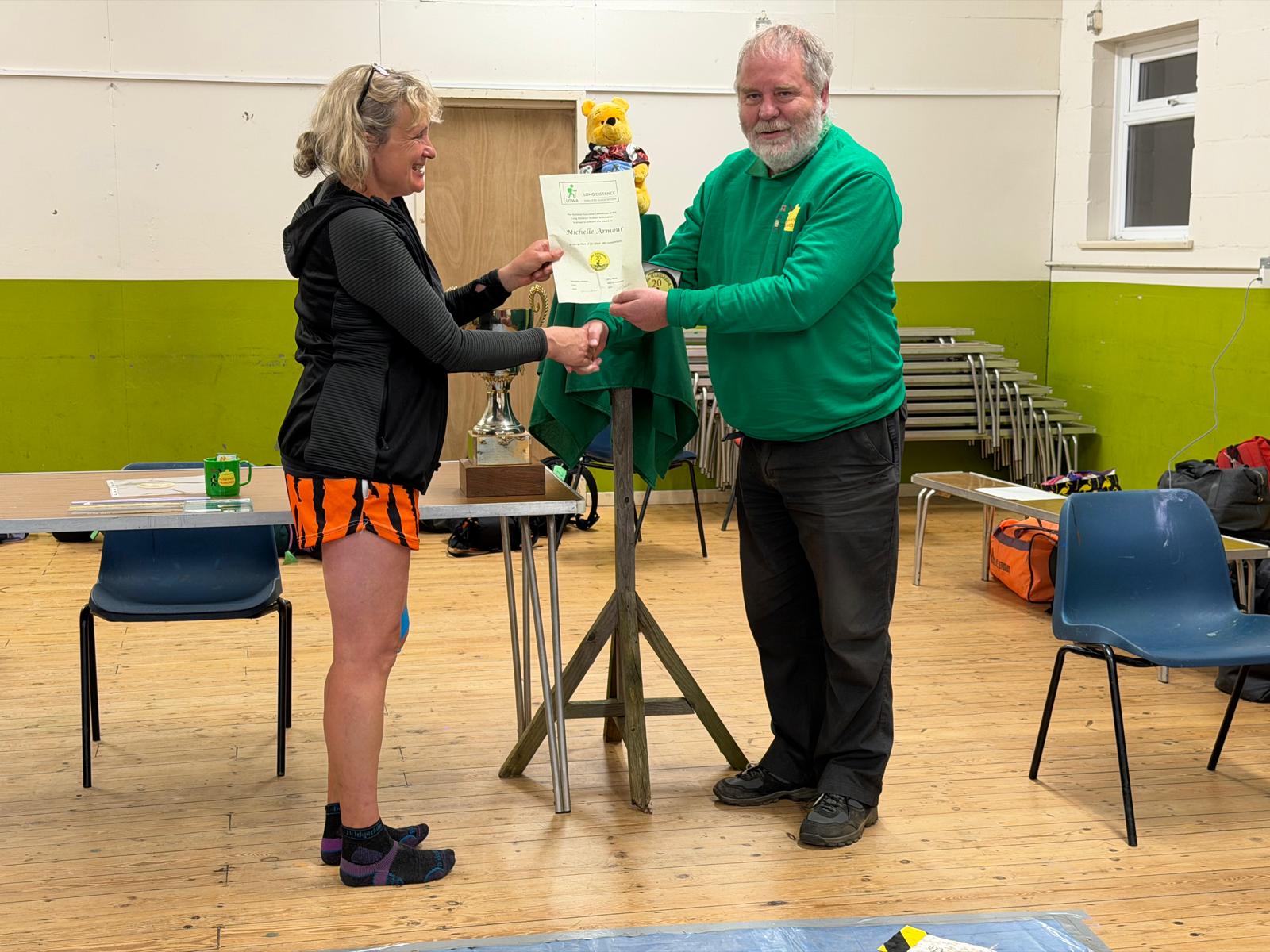
Completing this event meant that Chelle Armour from Norfolk & Suffolk group had successfully finished 20 LDWA 100s. That’s quite an achievement, these events are never easy and they require physical and mental strength to complete. It’s very easy to give up when feet are hurting, tiredness sets in and it all becomes too much, but Chelle is tough and it’s a remarkable thing to complete twenty of them. Here is she is being awarded her 20th LDWA 100 certificate by Peter Jull, this year’s event organiser.
This was Sunday evening when it was still light and around have the entrants had passed through this checkpoint at Halstead.
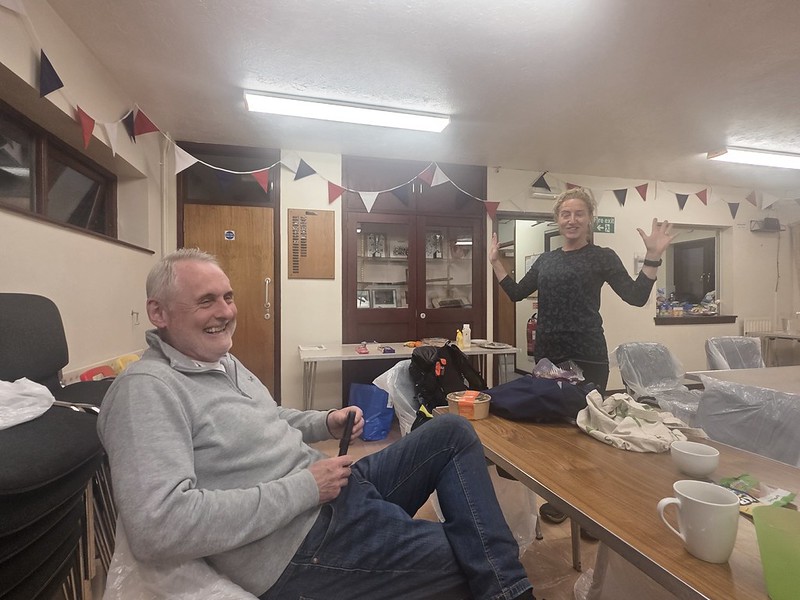
It was calm and quiet at the checkpoint, but at this stage of the event it was more usual for groups to arrive at the same time so there were long periods of quiet and then a sudden rush.
Ken arriving in just as it was starting to get dark.
And a positively enthusiastic Simon.
And then Claire arrived, she was going to be doing the sweeping on the route to ensure that everyone got in safely. I think it’s fair to say that those walkers were in very safe hands, she’s very competent is Claire.
Darkness had definitely descended now and we thought we’d walk out a short distance to meet up with Jane and Hilary.
And there they are.
Hilary had a little sit down and micro-sleep, whilst Jane had a think about why she was doing this event, before claiming once again that it would definitely be her last.
And Helen, another one looking far too jovial, but I didn’t say anything.
Very many thanks to all the checkpoint volunteers who tolerated us being there for an hour or so, and also giving me an entire box of Yum Yums as they had too many of them.
And that was the end of the event for me, I went back to Meopham as I didn’t want to miss my last train (well, bus replacement) back to Chatham. But, a few more posts about other people to come 🙂
This is Sundridge church which was on the route of the 100, but more about this and other local history things in other posts. We decided to set up here as an extra little checkpoint for Jane and Hilary, as Simon and I are really very pro-active in offering assistance.
There were some beautiful views from the churchyard and just in sight here are Jane and Hilary who were looking really rather positive.